Understanding the Impact of Stress
on Brain Development and Learning
   Merriam-Webster define stress as:
    A physical, chemical or emotional factor that
    causes bodily or mental tension
   Acute stress is general short-term with a
    clearly defined beginning and end
   Chronic stress is long-term and prolonged
    stress with no clear ending
   Both acute and chronic stress trigger the
    physiological stress response
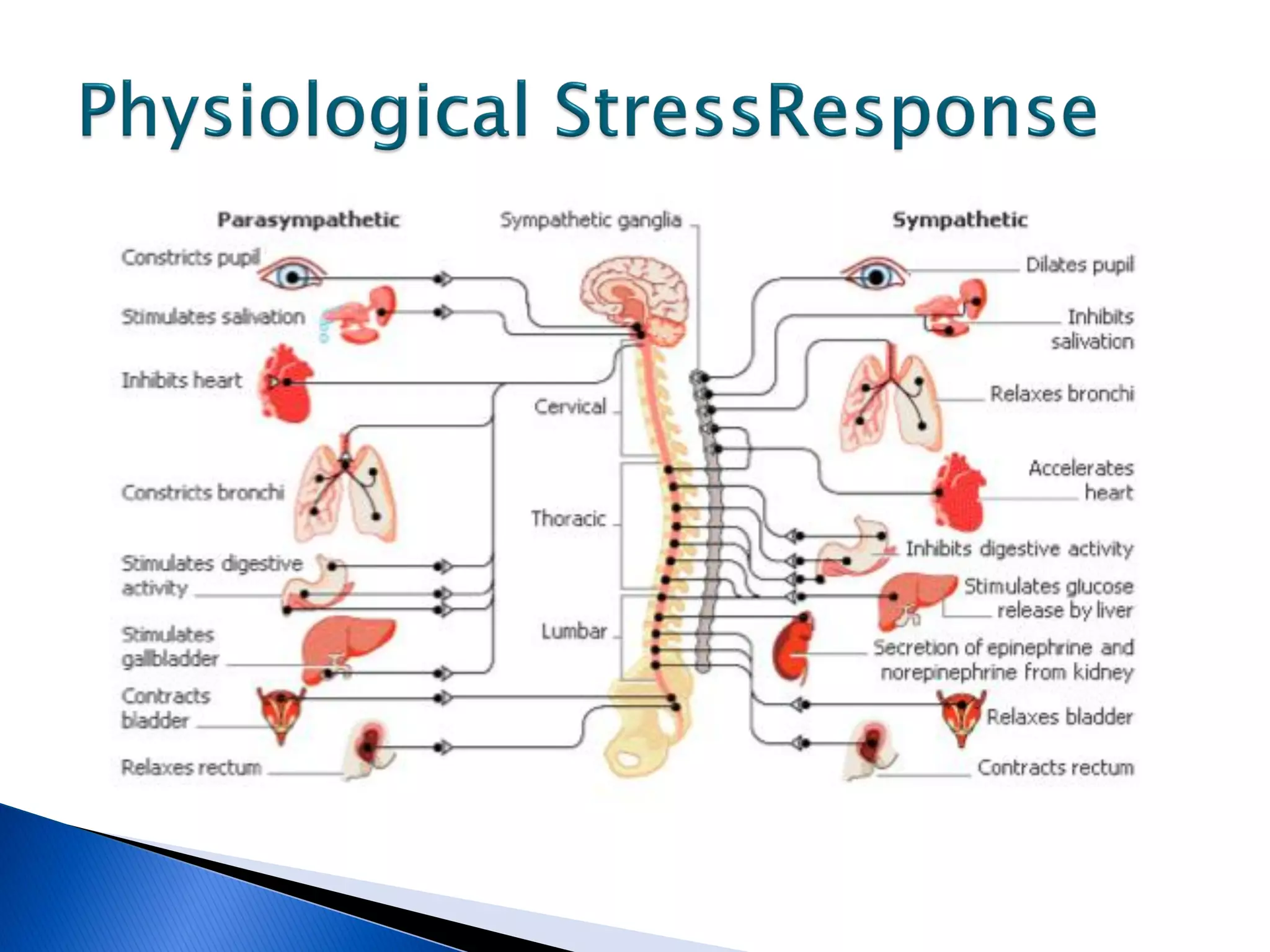
   Triggering of the sympathetic nervous system
    which prepares the body to deal with
    perceived threat by:
    ◦ Increase of heart rate and blood pressure
    ◦ Increase of cortisol – “stress” hormone which has
      anti-inflammatory and immunosuppressive
      properties
    ◦ Decline of parasympathetic activity which regulates
      “automatic” bodily functions and maintains
      homestasis
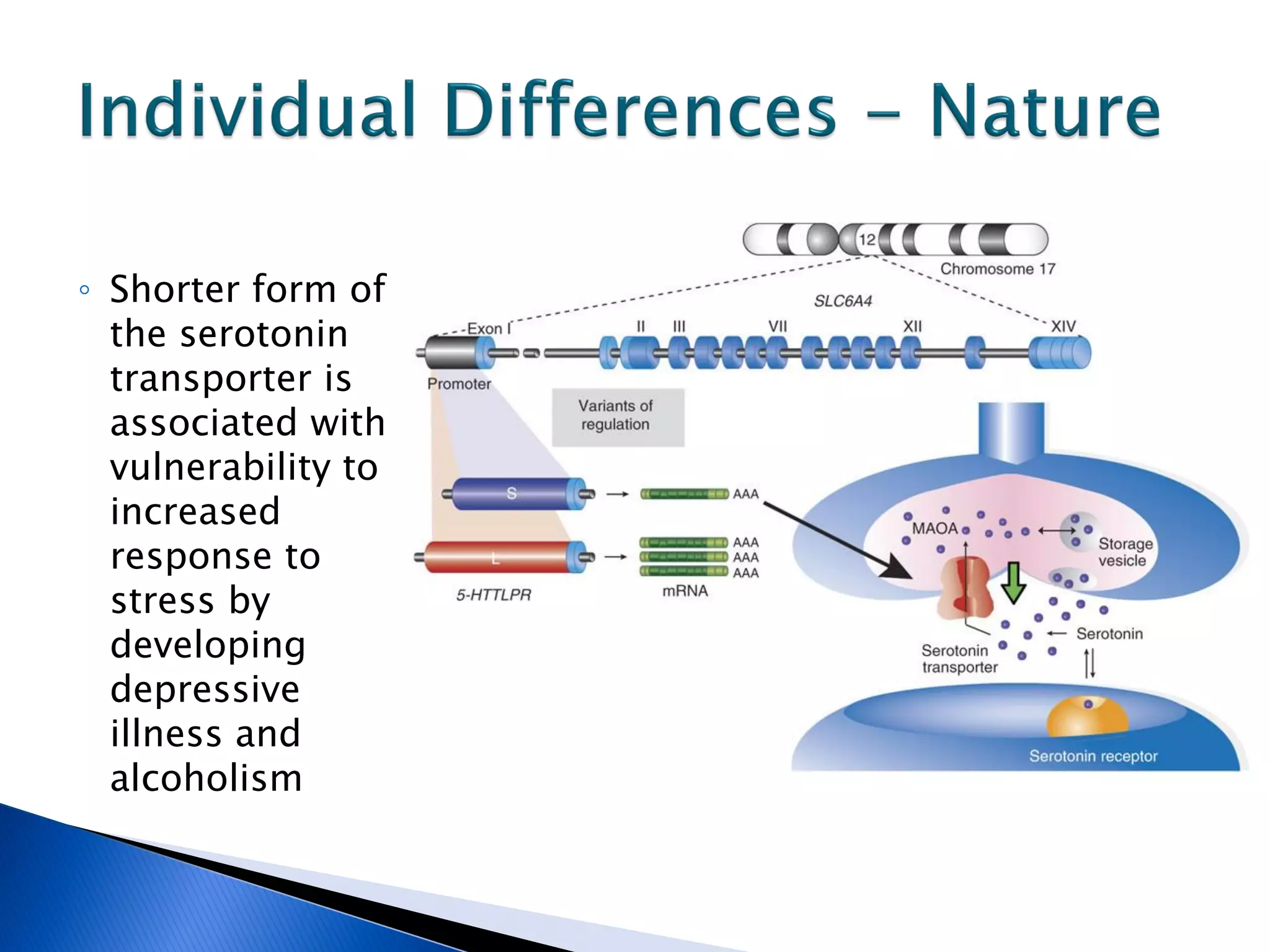
◦ Shorter form of
  the serotonin
  transporter is
  associated with
  vulnerability to
  increased
  response to
  stress by
  developing
  depressive
  illness and
  alcoholism
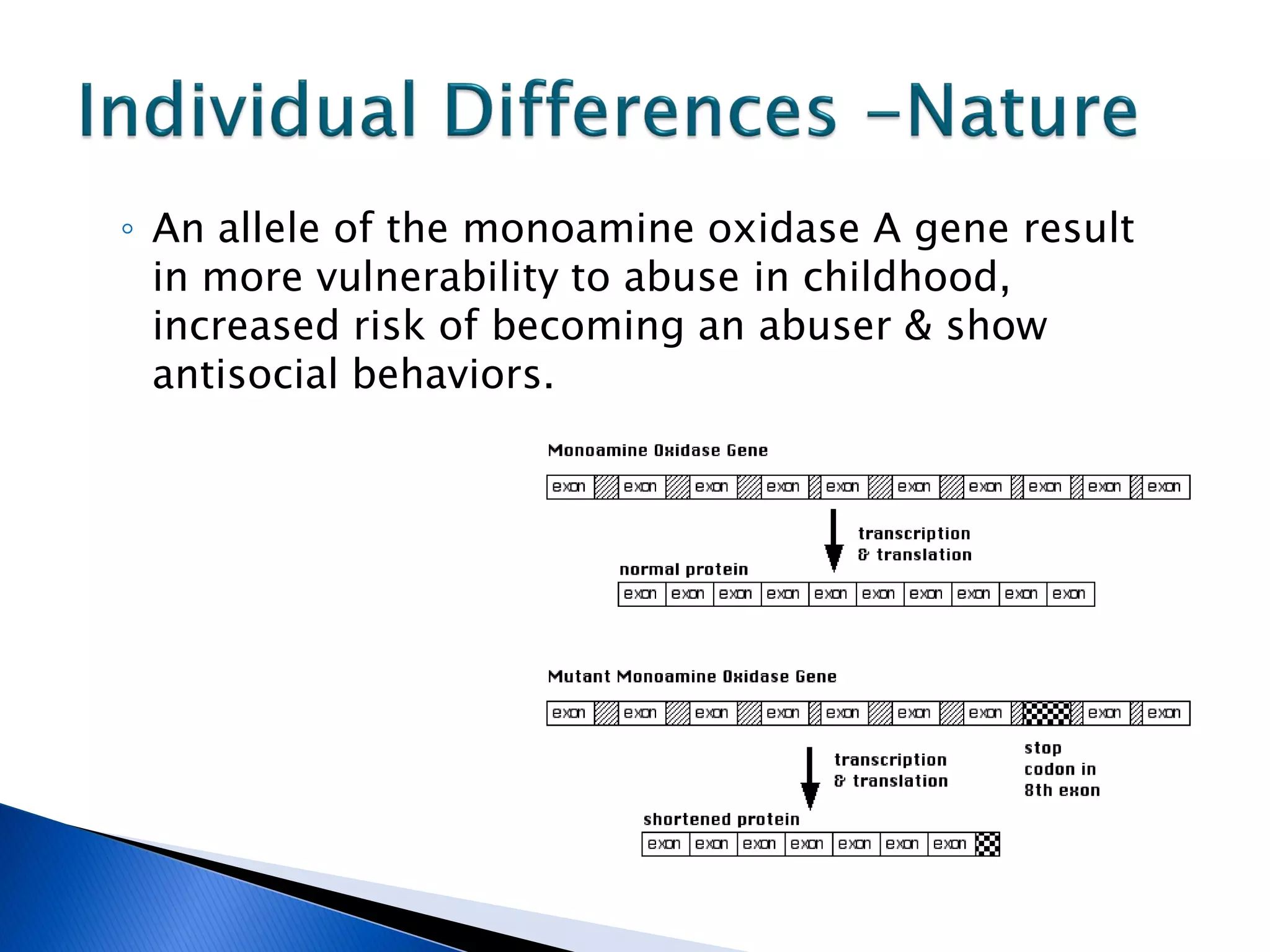
◦ An allele of the monoamine oxidase A gene result
  in more vulnerability to abuse in childhood,
  increased risk of becoming an abuser & show
  antisocial behaviors.
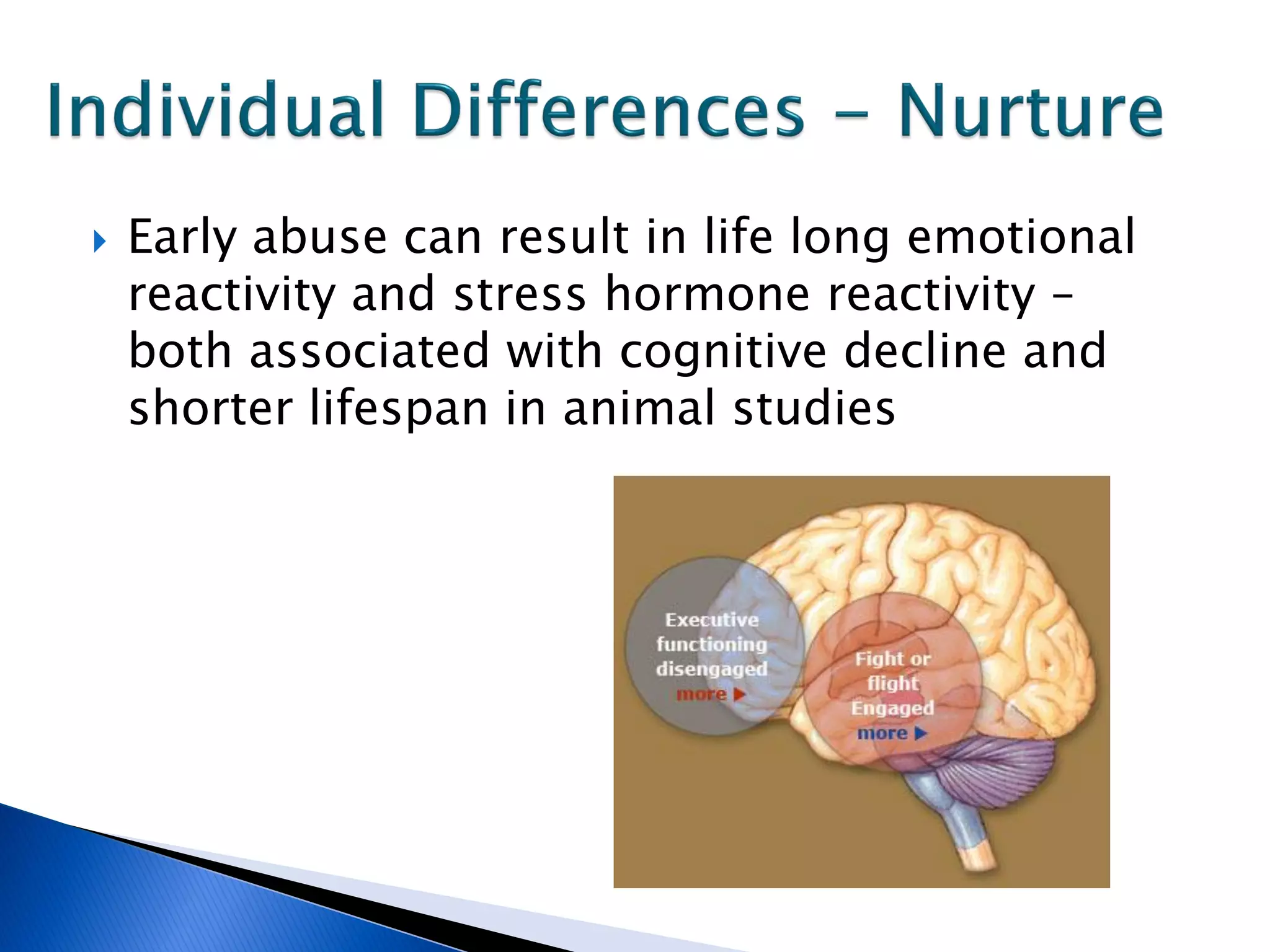
   Early abuse can result in life long emotional
    reactivity and stress hormone reactivity –
    both associated with cognitive decline and
    shorter lifespan in animal studies
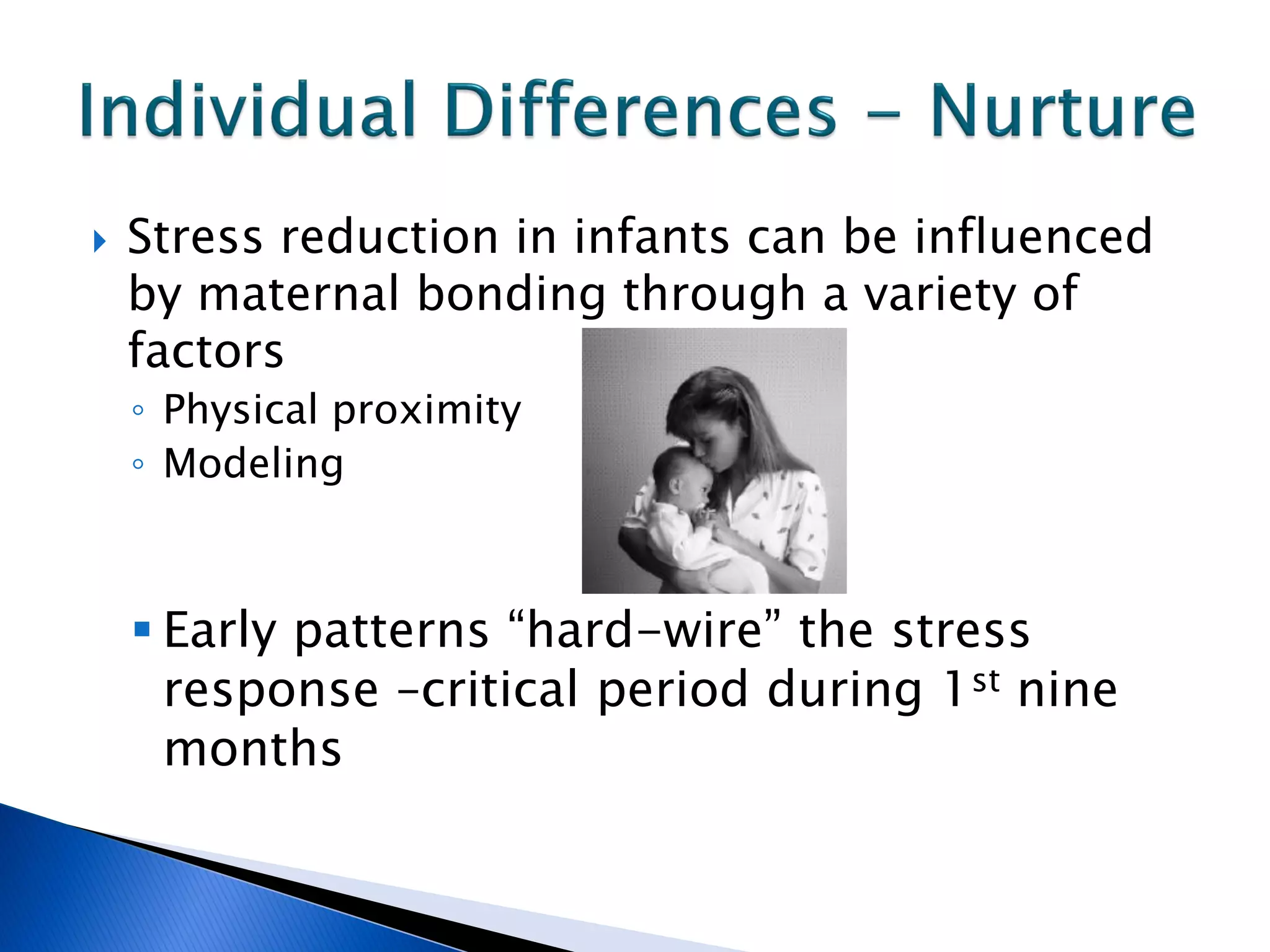
   Stress reduction in infants can be influenced
    by maternal bonding through a variety of
    factors
    ◦ Physical proximity
    ◦ Modeling


     Early patterns “hard-wire” the stress
      response –critical period during 1st nine
      months
   Males most typically mirror the fight or flight
    response

   Females engage fight or flight AND befriend
   There is an inverted relationship between
    learning and levels of cortisol
   During acute stress, higher levels of cortisol
    result in:
    ◦ Enhanced immunity
    ◦ Enhanced memory
    During chronic or prolonged stress,
     the increased levels of cortisol result
     in:
    ◦ lower immune response
    ◦   Impaired cognitive functioning
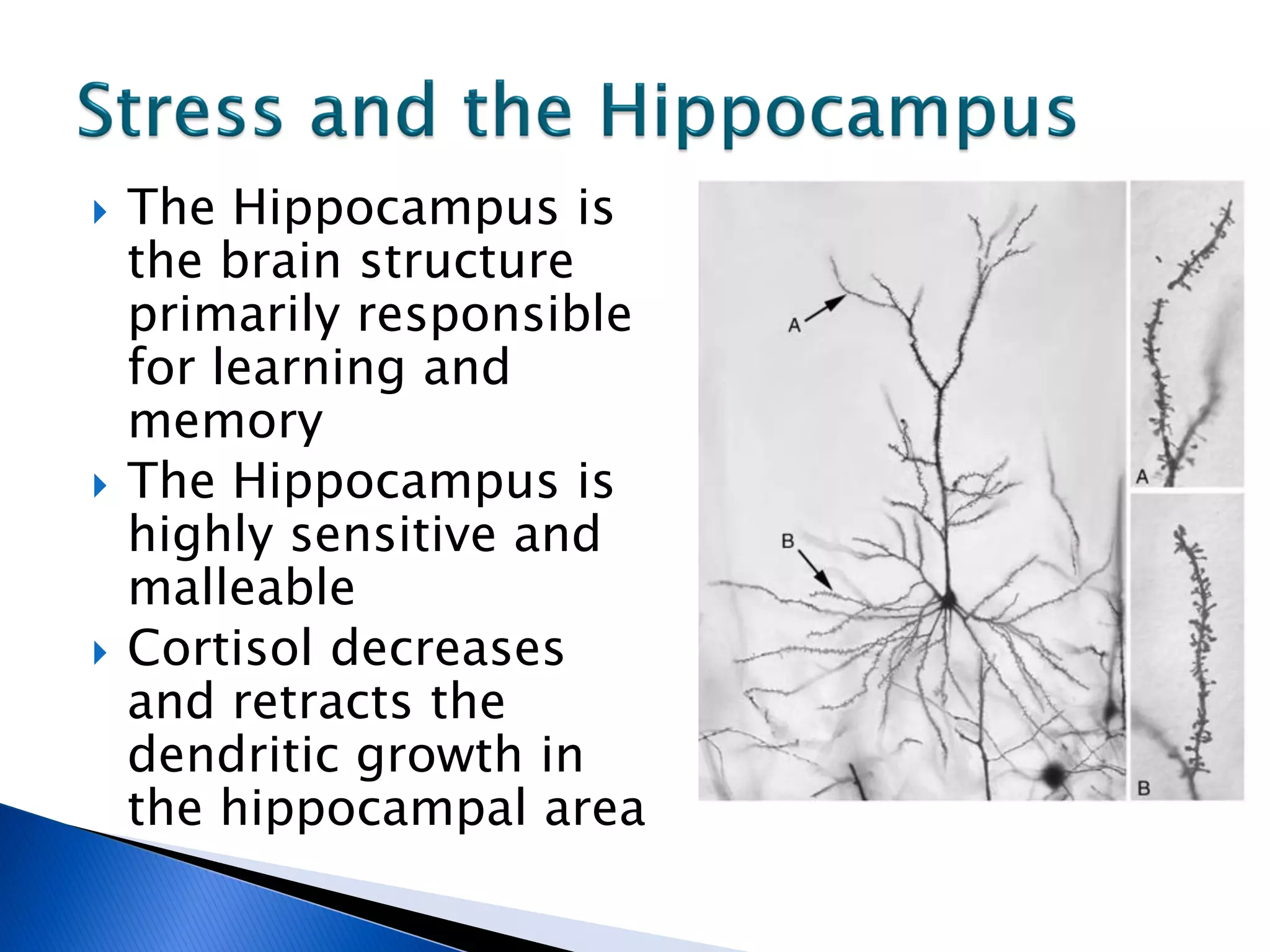
   The Hippocampus is
    the brain structure
    primarily responsible
    for learning and
    memory
   The Hippocampus is
    highly sensitive and
    malleable
   Cortisol decreases
    and retracts the
    dendritic growth in
    the hippocampal area
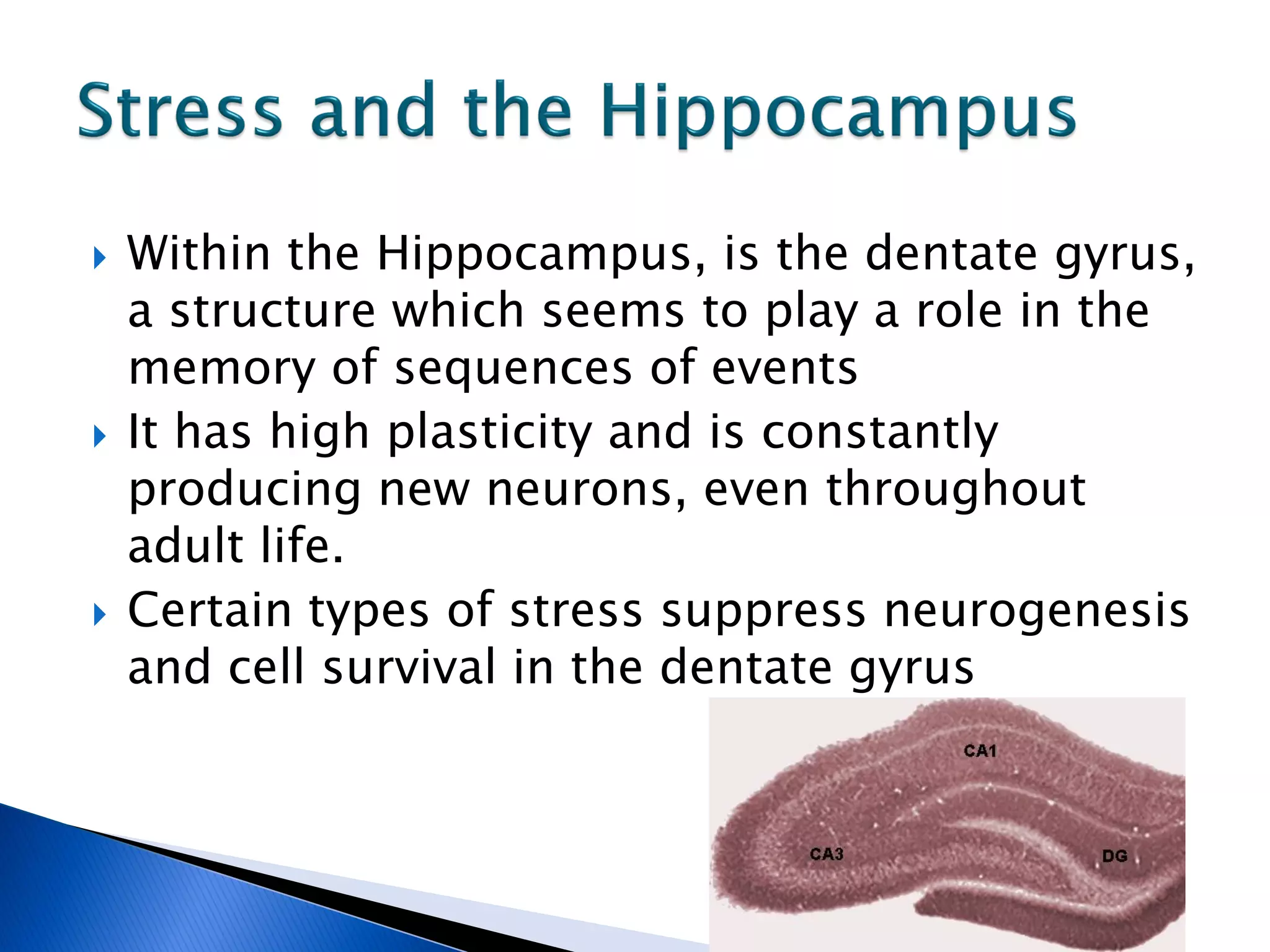
   Within the Hippocampus, is the dentate gyrus,
    a structure which seems to play a role in the
    memory of sequences of events
   It has high plasticity and is constantly
    producing new neurons, even throughout
    adult life.
   Certain types of stress suppress neurogenesis
    and cell survival in the dentate gyrus
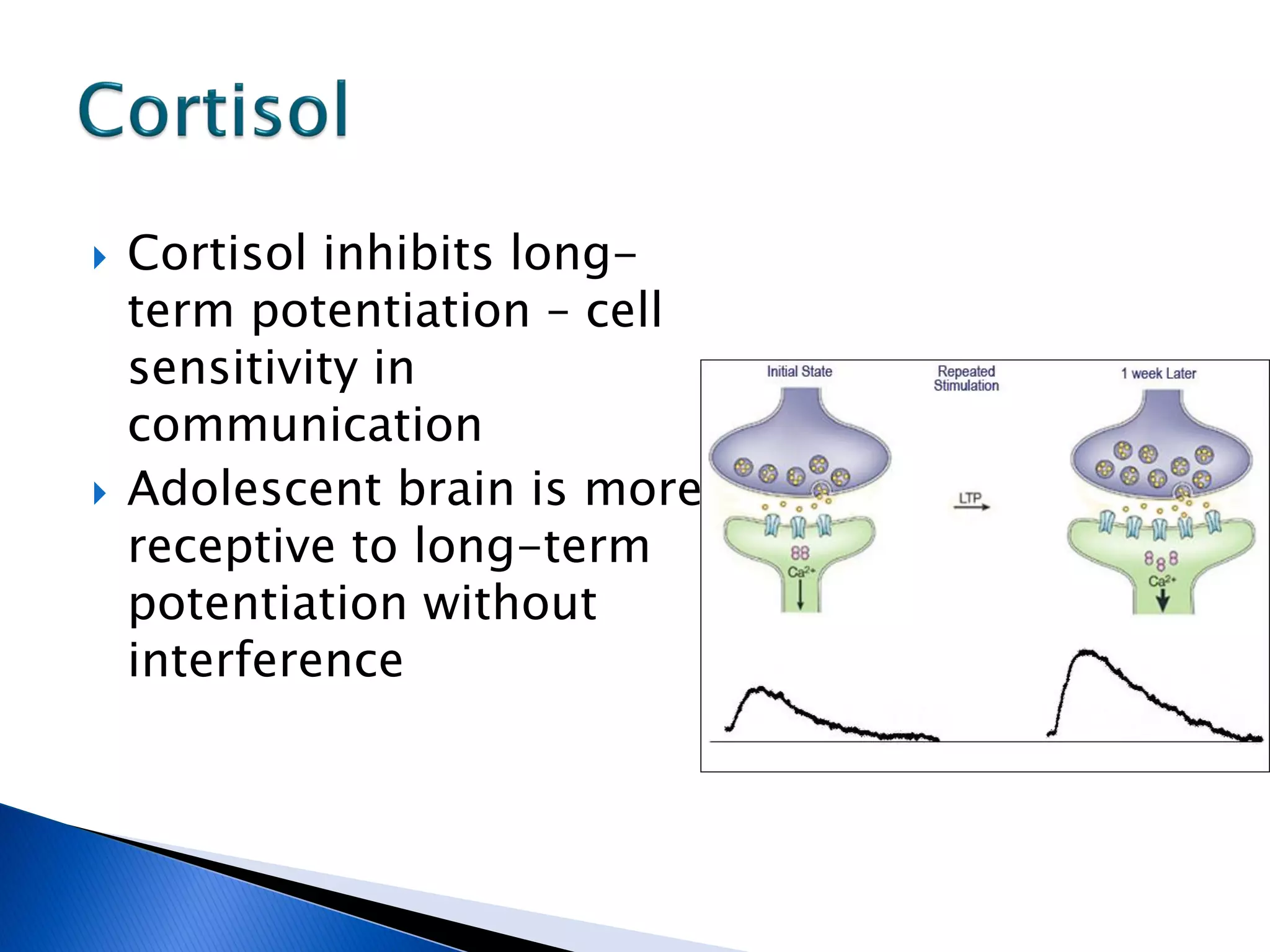
   Cortisol inhibits long-
    term potentiation – cell
    sensitivity in
    communication
   Adolescent brain is more
    receptive to long-term
    potentiation without
    interference
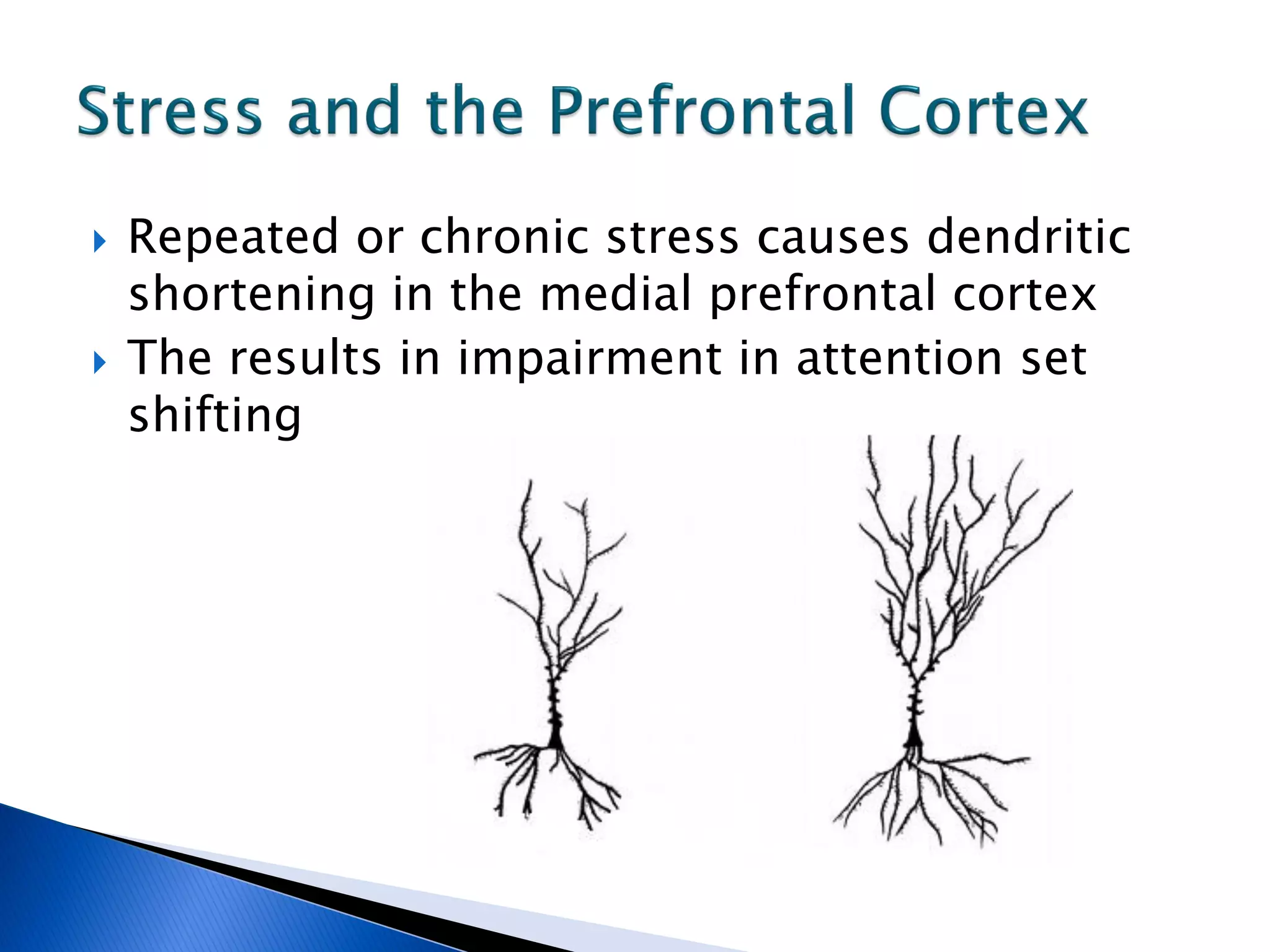
   Repeated or chronic stress causes dendritic
    shortening in the medial prefrontal cortex
   The results in impairment in attention set
    shifting
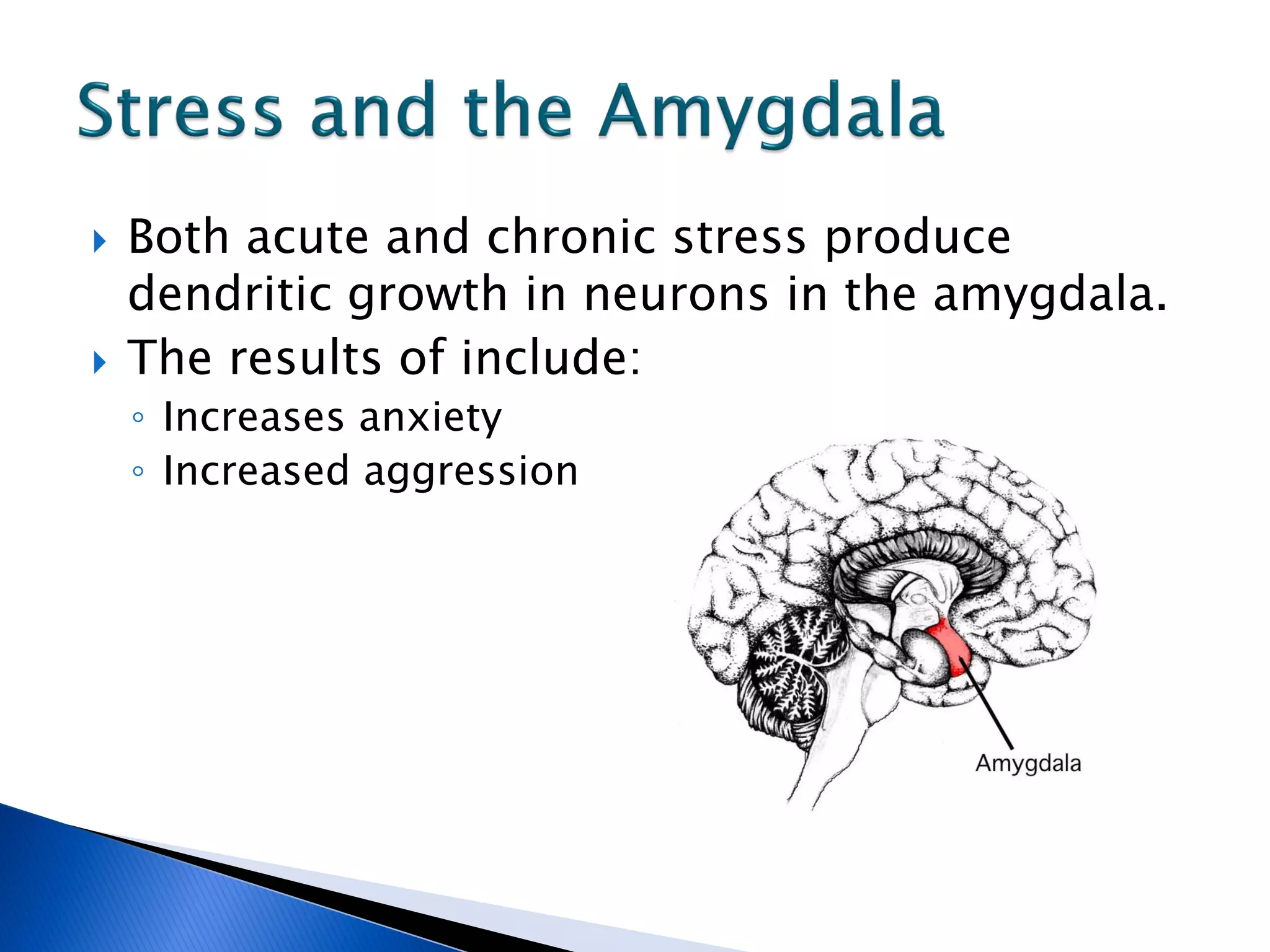
   Both acute and chronic stress produce
    dendritic growth in neurons in the amygdala.
   The results of include:
    ◦ Increases anxiety
    ◦ Increased aggression
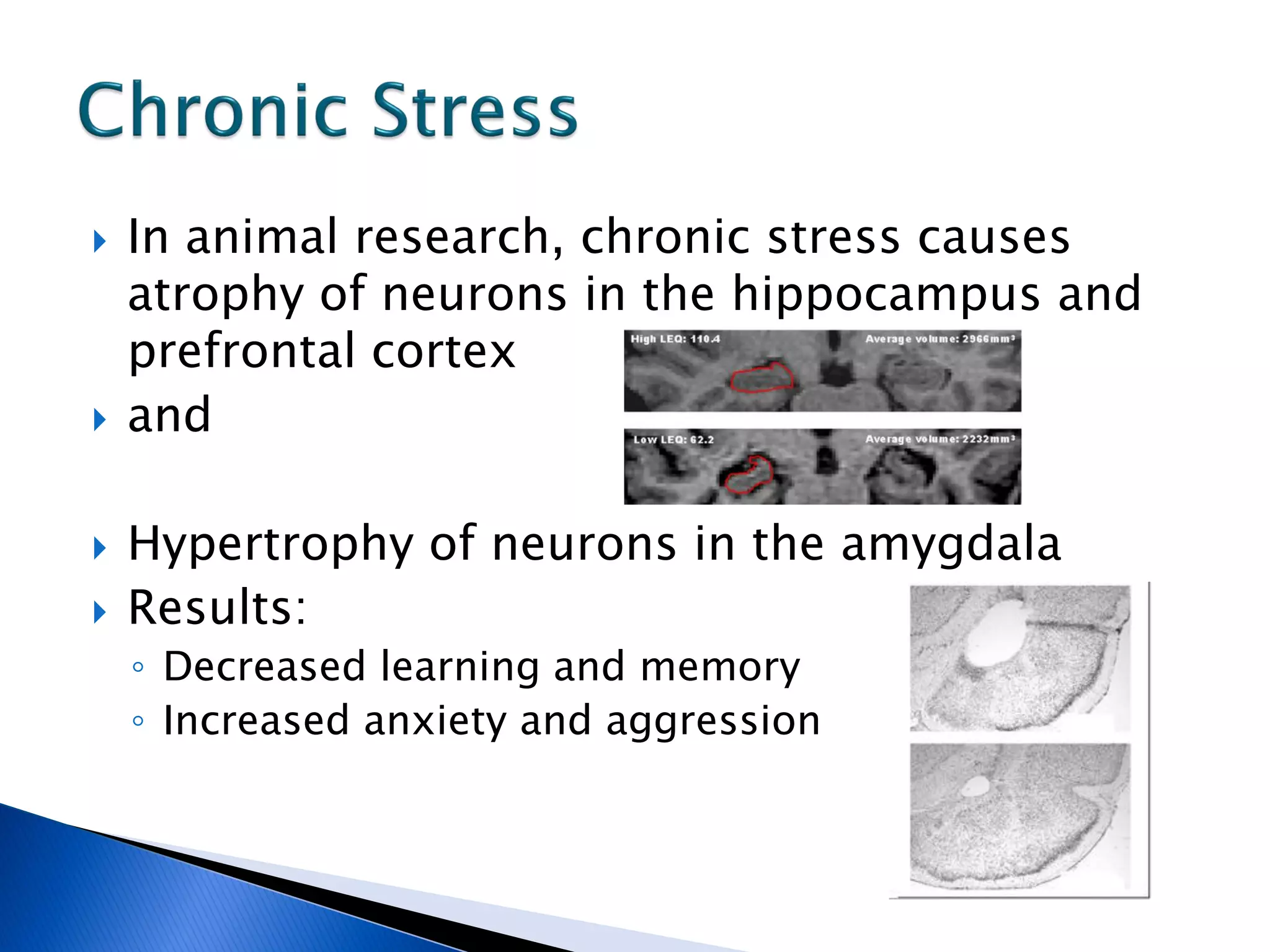
   In animal research, chronic stress causes
    atrophy of neurons in the hippocampus and
    prefrontal cortex
   and

   Hypertrophy of neurons in the amygdala
   Results:
    ◦ Decreased learning and memory
    ◦ Increased anxiety and aggression
   The results from
    animal studies are
    mirrored in humans
    through a loss of
    hippocampal volume
    and an increase in
    amygdala volume in
    MRI studies
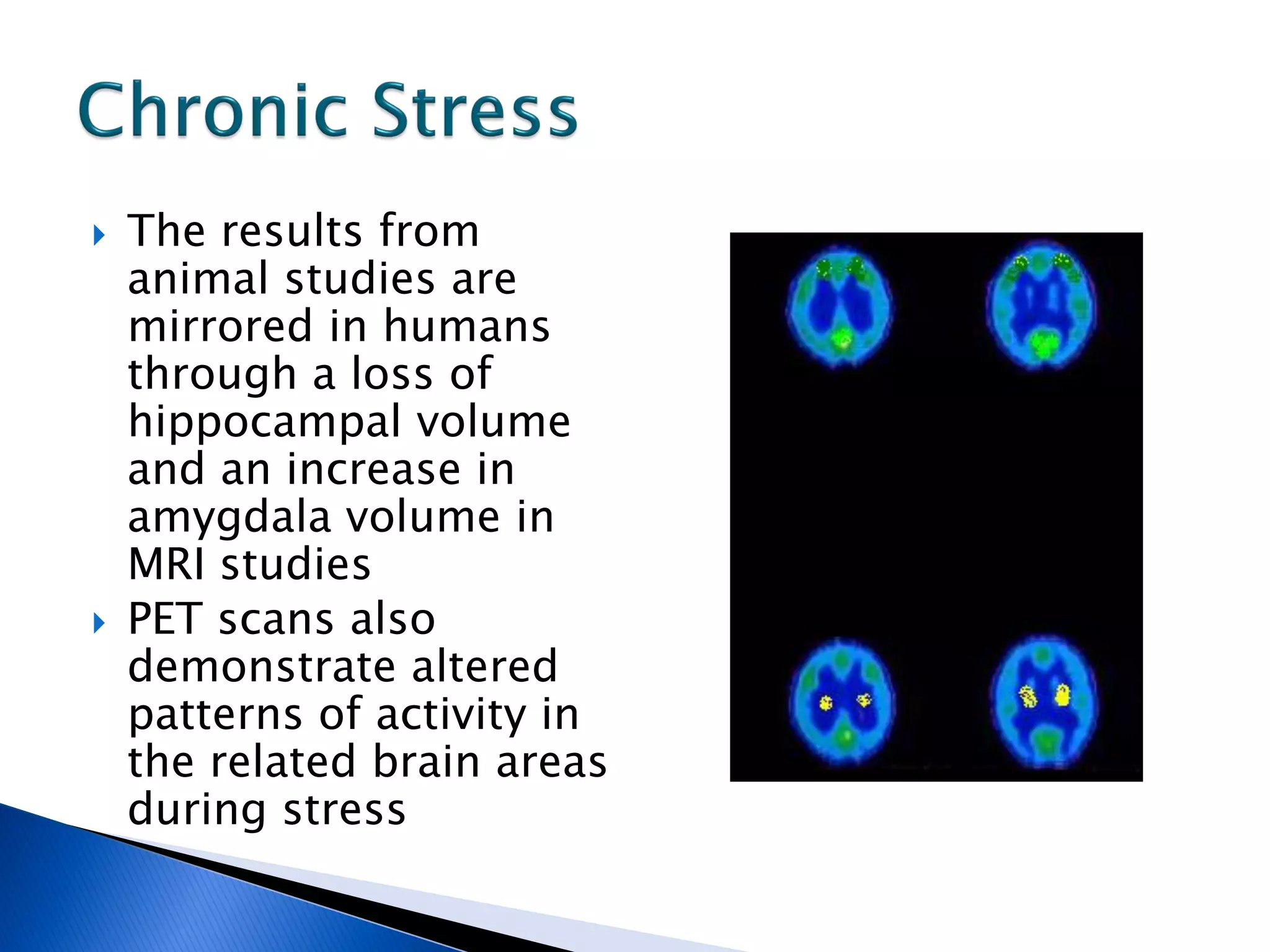
   PET scans also
    demonstrate altered
    patterns of activity in
    the related brain areas
    during stress
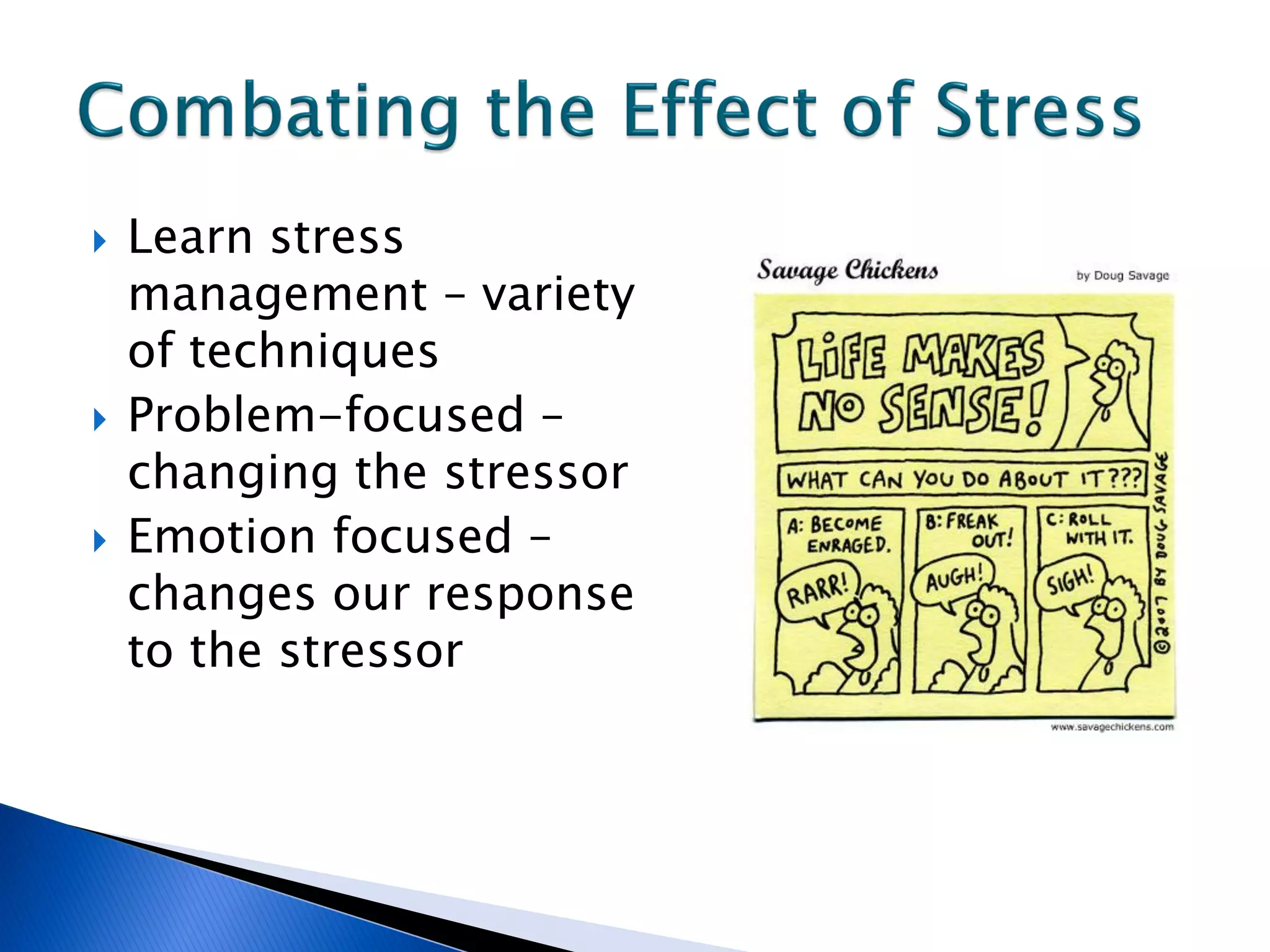
   Learn stress
    management – variety
    of techniques
   Problem-focused –
    changing the stressor
   Emotion focused –
    changes our response
    to the stressor
   Physical

   Cognitive

   Emotional

   Behavioral
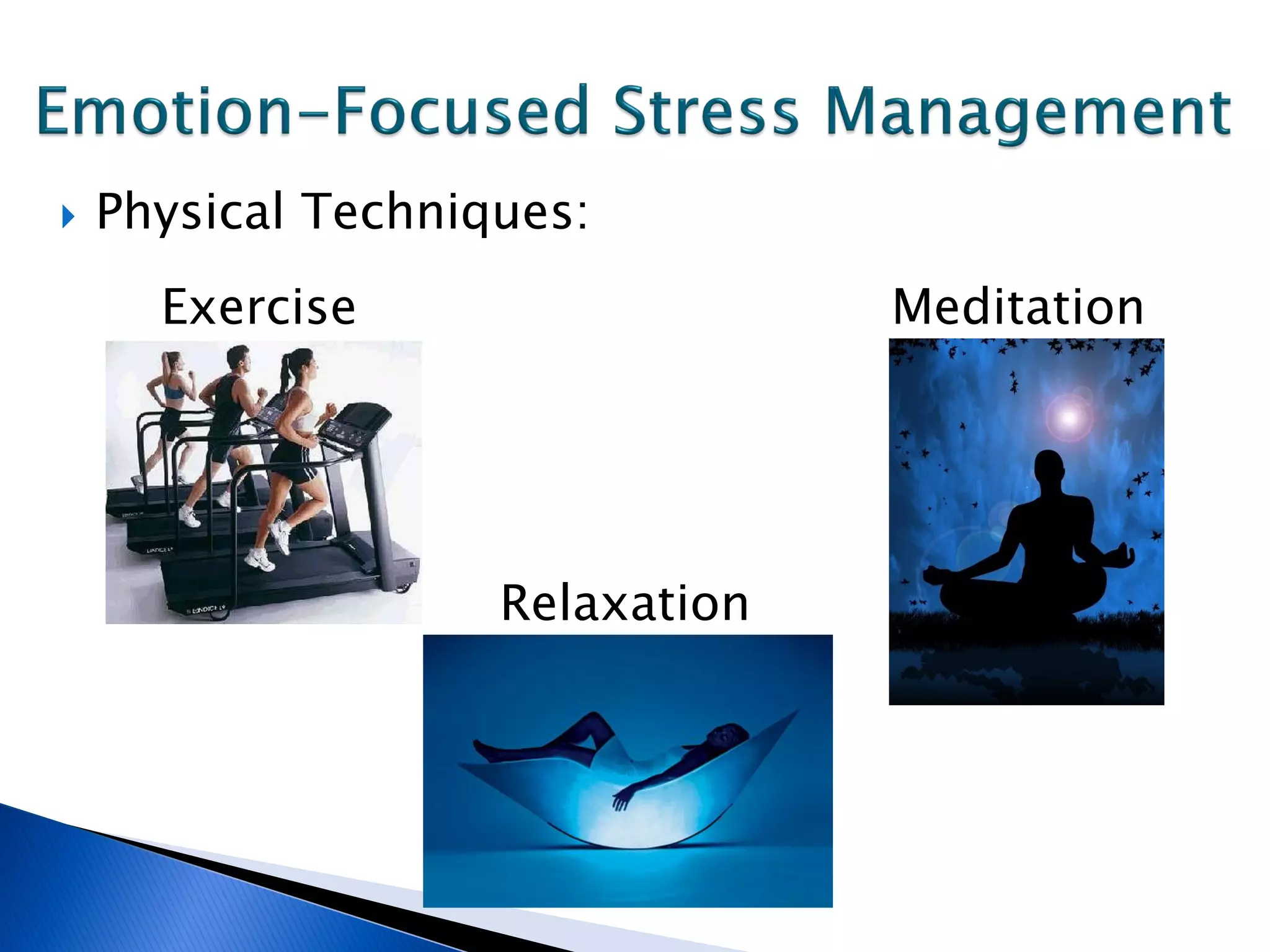
   Physical Techniques:
      Exercise                   Meditation


                    Relaxation
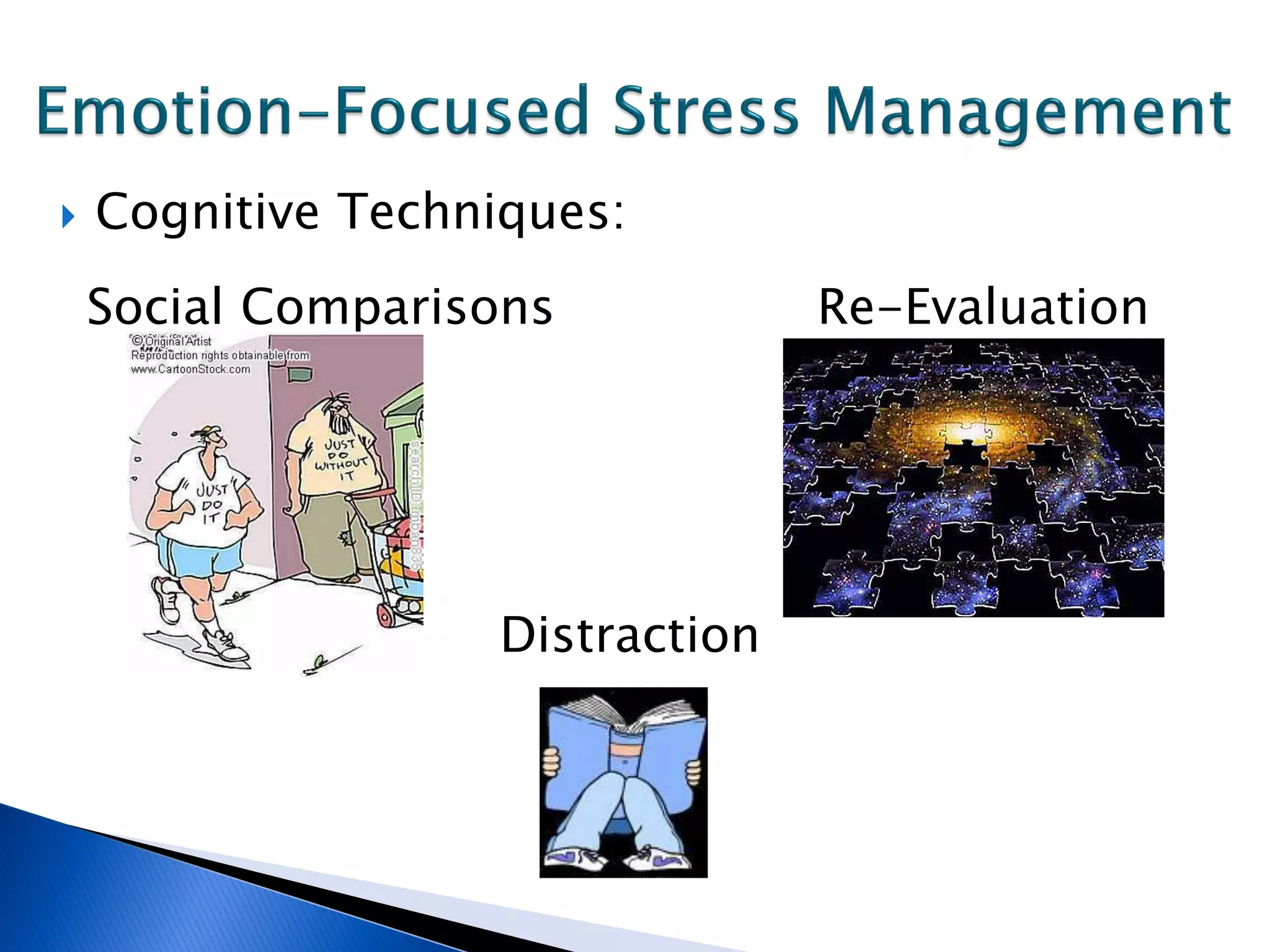
   Cognitive Techniques:
    Social Comparisons           Re-Evaluation


                   Distraction
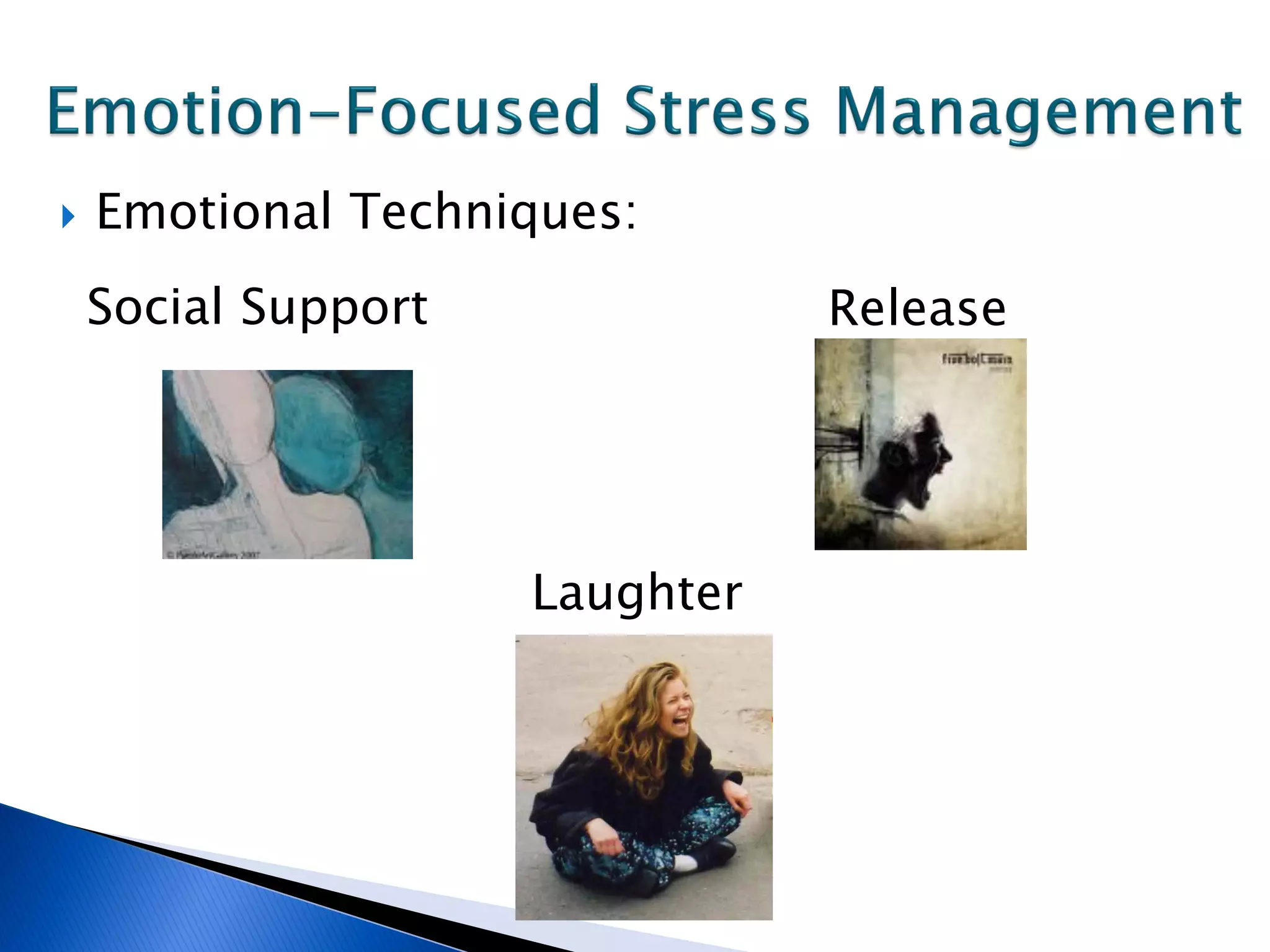
   Emotional Techniques:
    Social Support              Release


                     Laughter
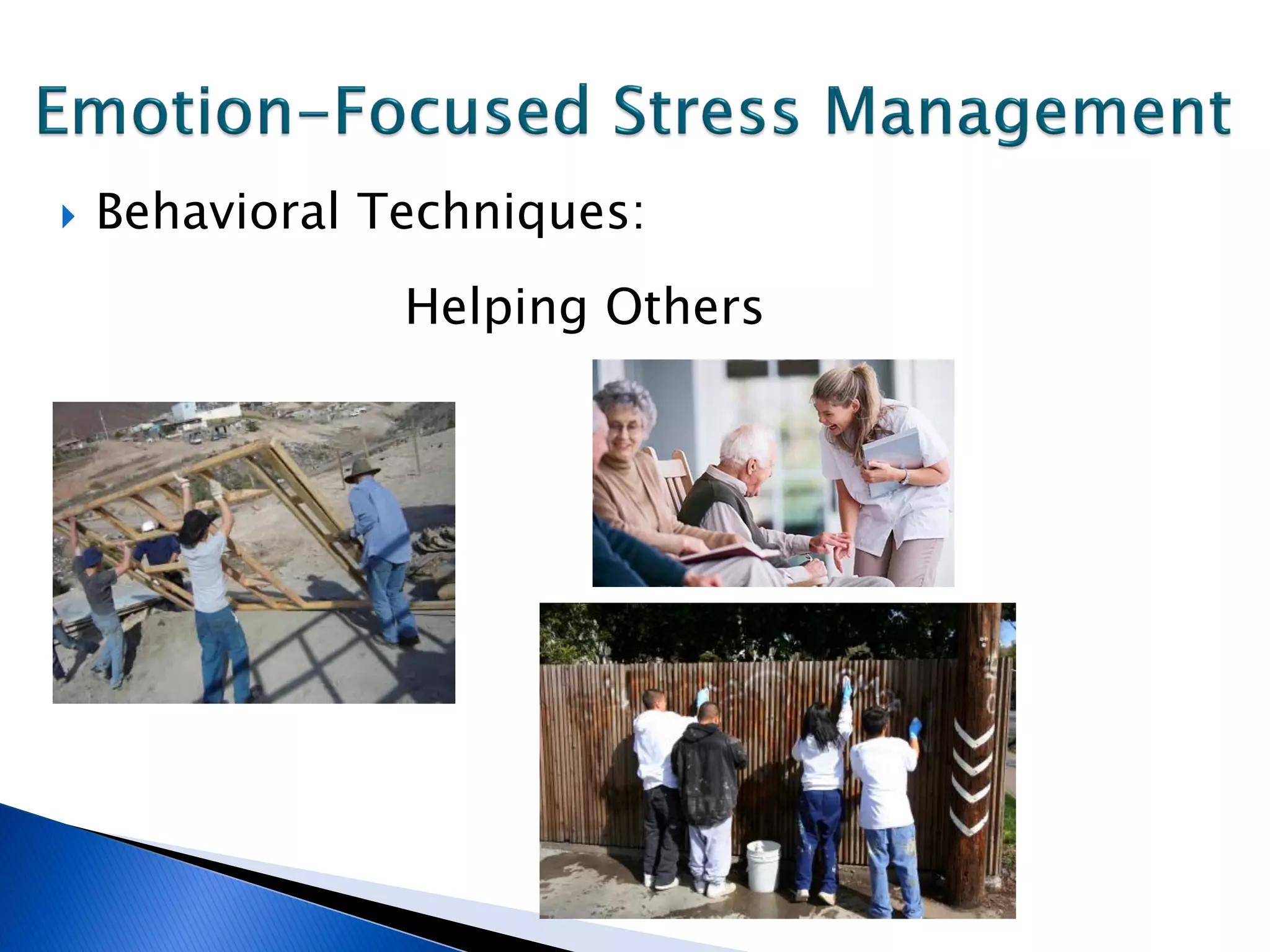
   Behavioral Techniques:
                Helping Others
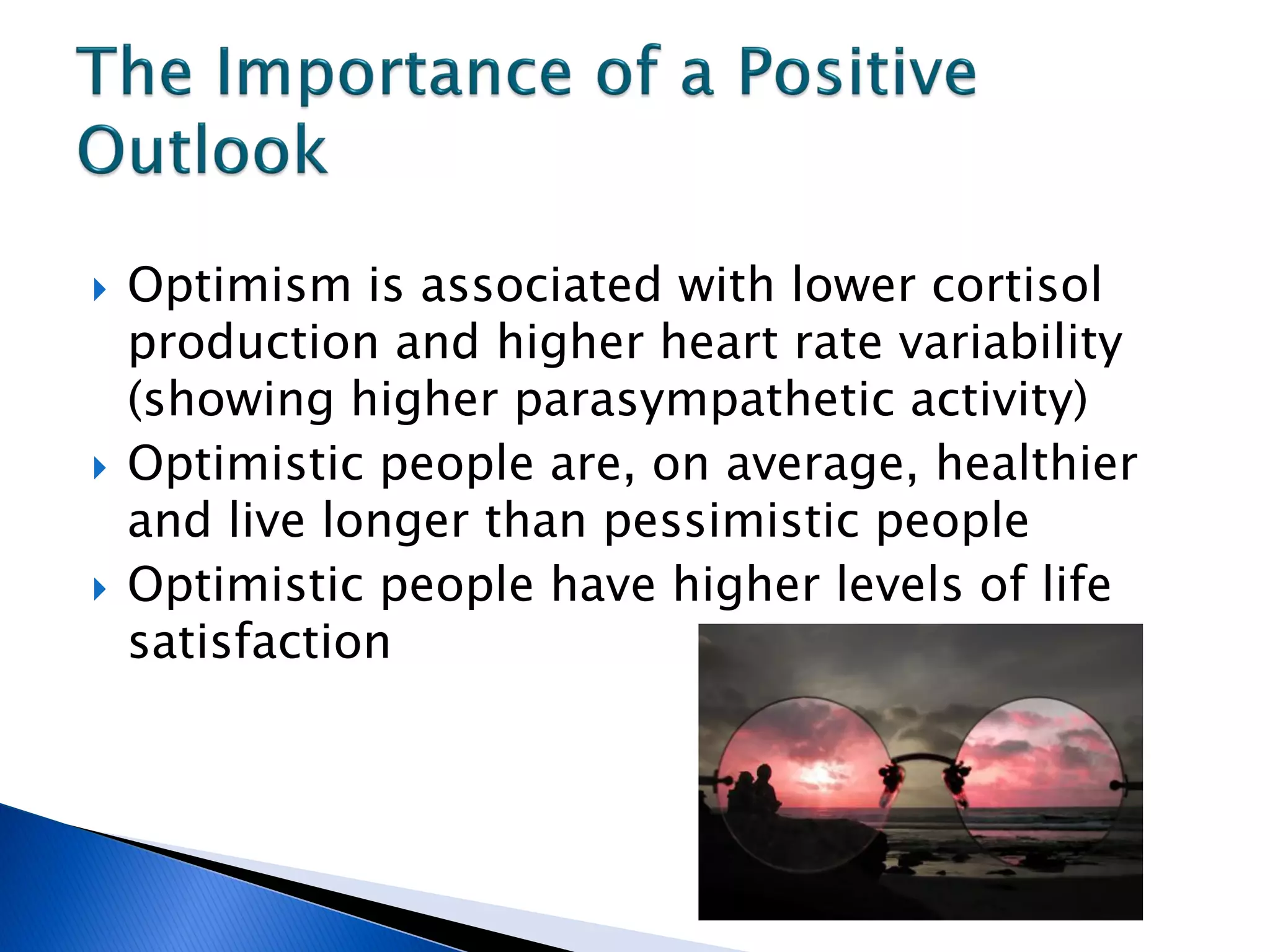
   Optimism is associated with lower cortisol
    production and higher heart rate variability
    (showing higher parasympathetic activity)
   Optimistic people are, on average, healthier
    and live longer than pessimistic people
   Optimistic people have higher levels of life
    satisfaction
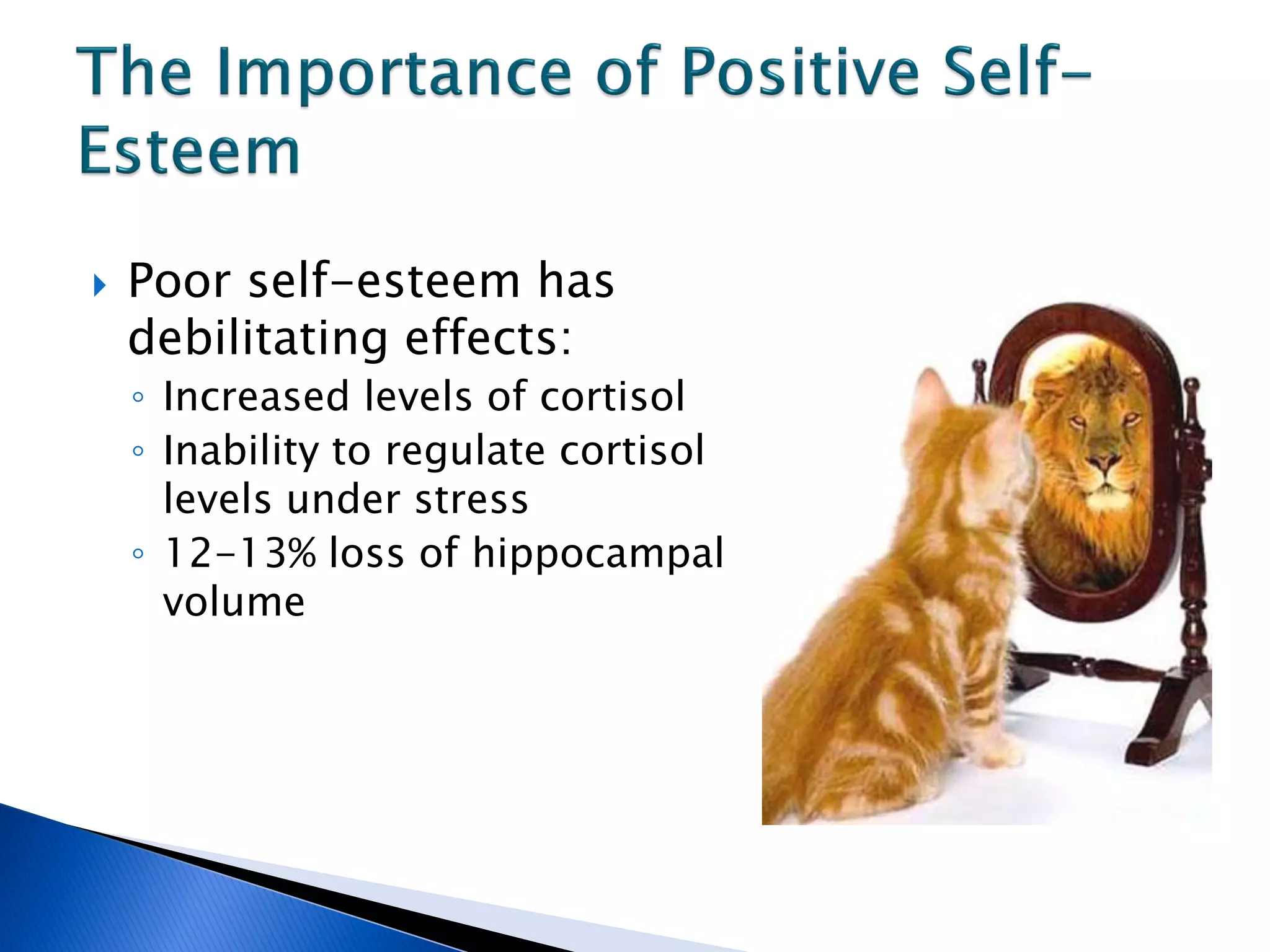
   Poor self-esteem has
    debilitating effects:
    ◦ Increased levels of cortisol
    ◦ Inability to regulate cortisol
      levels under stress
    ◦ 12-13% loss of hippocampal
      volume
   Improve sleep quality and quantity
   Have a good social support system
   Maintain a positive outlook on life
   Maintain a healthy diet
   Avoid smoking
   Regularly exercise – moderate activity
   Build positive self-esteem
   Learn successful stress management
   McEwen, B.S. Protective and damaging effects
    of stress mediators: central role of the brain.
    New England Journal of Medicine. 1998, 338:
    171-179
Q&A
       Robin Donaldson,
rdonaldson@nationalsafeplace.org

The Effects of Stress And The Brain

  • 1.
    Understanding the Impactof Stress on Brain Development and Learning
  • 2.
    Merriam-Webster define stress as: A physical, chemical or emotional factor that causes bodily or mental tension
  • 3.
    Acute stress is general short-term with a clearly defined beginning and end  Chronic stress is long-term and prolonged stress with no clear ending  Both acute and chronic stress trigger the physiological stress response
  • 4.
    Triggering of the sympathetic nervous system which prepares the body to deal with perceived threat by: ◦ Increase of heart rate and blood pressure ◦ Increase of cortisol – “stress” hormone which has anti-inflammatory and immunosuppressive properties ◦ Decline of parasympathetic activity which regulates “automatic” bodily functions and maintains homestasis
  • 6.
    ◦ Shorter formof the serotonin transporter is associated with vulnerability to increased response to stress by developing depressive illness and alcoholism
  • 7.
    ◦ An alleleof the monoamine oxidase A gene result in more vulnerability to abuse in childhood, increased risk of becoming an abuser & show antisocial behaviors.
  • 8.
    Early abuse can result in life long emotional reactivity and stress hormone reactivity – both associated with cognitive decline and shorter lifespan in animal studies
  • 9.
    Stress reduction in infants can be influenced by maternal bonding through a variety of factors ◦ Physical proximity ◦ Modeling  Early patterns “hard-wire” the stress response –critical period during 1st nine months
  • 10.
    Males most typically mirror the fight or flight response  Females engage fight or flight AND befriend
  • 11.
    There is an inverted relationship between learning and levels of cortisol  During acute stress, higher levels of cortisol result in: ◦ Enhanced immunity ◦ Enhanced memory During chronic or prolonged stress, the increased levels of cortisol result in: ◦ lower immune response ◦ Impaired cognitive functioning
  • 12.
    The Hippocampus is the brain structure primarily responsible for learning and memory  The Hippocampus is highly sensitive and malleable  Cortisol decreases and retracts the dendritic growth in the hippocampal area
  • 13.
    Within the Hippocampus, is the dentate gyrus, a structure which seems to play a role in the memory of sequences of events  It has high plasticity and is constantly producing new neurons, even throughout adult life.  Certain types of stress suppress neurogenesis and cell survival in the dentate gyrus
  • 14.
    Cortisol inhibits long- term potentiation – cell sensitivity in communication  Adolescent brain is more receptive to long-term potentiation without interference
  • 15.
    Repeated or chronic stress causes dendritic shortening in the medial prefrontal cortex  The results in impairment in attention set shifting
  • 16.
    Both acute and chronic stress produce dendritic growth in neurons in the amygdala.  The results of include: ◦ Increases anxiety ◦ Increased aggression
  • 17.
    In animal research, chronic stress causes atrophy of neurons in the hippocampus and prefrontal cortex  and  Hypertrophy of neurons in the amygdala  Results: ◦ Decreased learning and memory ◦ Increased anxiety and aggression
  • 18.
    The results from animal studies are mirrored in humans through a loss of hippocampal volume and an increase in amygdala volume in MRI studies  PET scans also demonstrate altered patterns of activity in the related brain areas during stress
  • 19.
    Learn stress management – variety of techniques  Problem-focused – changing the stressor  Emotion focused – changes our response to the stressor
  • 20.
    Physical  Cognitive  Emotional  Behavioral
  • 21.
    Physical Techniques: Exercise Meditation Relaxation
  • 22.
    Cognitive Techniques: Social Comparisons Re-Evaluation Distraction
  • 23.
    Emotional Techniques: Social Support Release Laughter
  • 24.
    Behavioral Techniques: Helping Others
  • 25.
    Optimism is associated with lower cortisol production and higher heart rate variability (showing higher parasympathetic activity)  Optimistic people are, on average, healthier and live longer than pessimistic people  Optimistic people have higher levels of life satisfaction
  • 26.
    Poor self-esteem has debilitating effects: ◦ Increased levels of cortisol ◦ Inability to regulate cortisol levels under stress ◦ 12-13% loss of hippocampal volume
  • 27.
    Improve sleep quality and quantity  Have a good social support system  Maintain a positive outlook on life  Maintain a healthy diet  Avoid smoking  Regularly exercise – moderate activity  Build positive self-esteem  Learn successful stress management
  • 28.
    McEwen, B.S. Protective and damaging effects of stress mediators: central role of the brain. New England Journal of Medicine. 1998, 338: 171-179
  • 29.
    Q&A Robin Donaldson, rdonaldson@nationalsafeplace.org

Editor's Notes

  • #7 Individual differences in stress response are genetically influenced
  • #8 statistical correlation between violence and the levels of MAO assayed in blood platelets. Lower MAO activity is found in violent criminals, both male and female. The gene for monoamine oxidase A (MAO-A) is located on the X chromosome and individuals with deletions and point mutations are known. Thus MAO-A defects are sex-linked. Alterations in the MAO-A gene result in marked changes in monoamine metabolism and are associated with variable cognitive deficits and behavioral changes in both humans and transgenic mice. The incidence of severe MAO-A defects is extremely low, and unlikely to account for more than a tiny proportion of criminal behavior. On the other hand, it is conceivable that the wider correlation between MAO levels and violent crime is due to genetic alterations that result in moderate reduction of monoamine oxidase activity.
  • #9 Individual differences in stress responses also appear to be related to maternal care and early attachment
  • #20 An important factor in all healthy coping skills is the idea of control
  • #23 Researchers have studied the “belief hormonal response” triggered even with placebos and discovered that “belief” turns on endorphins