The Digestive system 
Bio 120 
Kun Li 
10/22/2014
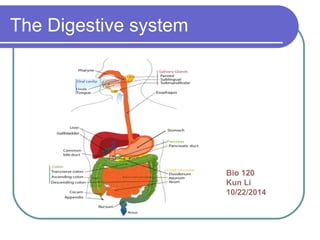
General of the Digestive system 
The digestive tract is a long twisting tube 
that starts at the mouth and ends at the 
anus. 
Digestion is the complex process of 
turning the food you eat into nutrients 
The digestion process also involves 
creating waste to be eliminated.
Four terms of the digestive system 
Liver 
Stomach 
Gallbladder 
Pancreas
Structure of Liver 
 Lies in the upper 
right quadrant 
 Four primary 
lobes: 
1. Right lobe 
2. Left lobe 
3. Caudate lobe 
4. Quadrate
Function of Liver 
 produces bile for the break down of fats 
 converts glucose (sugars) to glycogen (stored sugar) 
 filters harmful substances from the blood such as alcohol 
 storage of vitamins and minerals (Vitamin A, D, E, & K) 
 responsible for producing cholesterol. produces about 80% within the 
body. 
 matures red blood cells
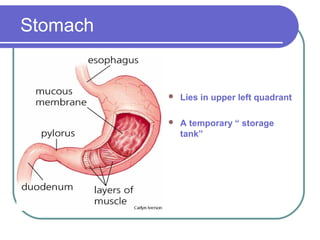
Stomach 
 Lies in upper left quadrant 
 A temporary “ storage 
tank”
Function of Stomach 
 Storing the food we eat. 
 Breaking down the food into a liquidly mixture called chyme. 
 Mixing enzymes which is are chemicals that break down 
food. 
 Slowly empties that liquidly mixture into the small intestine.
Gallbladder 
Location: Inferior 
margin of the liver 
 A thin-walled green 
muscular sac
Function of Gallbladder 
The gall bladder stores and concentrates 
bile from the liver 
 Releases bile into the small intestine 
(duodenum) to further digest food there.
Pancreas 
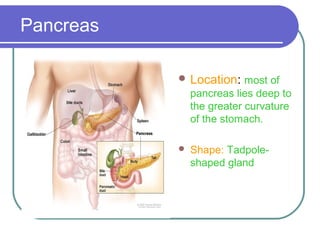
Location: most of 
pancreas lies deep to 
the greater curvature 
of the stomach. 
 Shape: Tadpole-shaped 
gland
Function of Pancreas 
 Endocrine function: 
produce the hormones insulin and glucagon. 
 Insulin: 
1. lowering blood sugar levels and allowing the body’s 
cells to use glucose for energy. 
2. Insulin is released after eating protein and especially 
after eating carbohydrates, which increase glucose 
levels in the blood.

The digestive system

  • 1.
    The Digestive system Bio 120 Kun Li 10/22/2014
  • 2.
    General of theDigestive system The digestive tract is a long twisting tube that starts at the mouth and ends at the anus. Digestion is the complex process of turning the food you eat into nutrients The digestion process also involves creating waste to be eliminated.
  • 3.
    Four terms ofthe digestive system Liver Stomach Gallbladder Pancreas
  • 4.
    Structure of Liver  Lies in the upper right quadrant  Four primary lobes: 1. Right lobe 2. Left lobe 3. Caudate lobe 4. Quadrate
  • 5.
    Function of Liver  produces bile for the break down of fats  converts glucose (sugars) to glycogen (stored sugar)  filters harmful substances from the blood such as alcohol  storage of vitamins and minerals (Vitamin A, D, E, & K)  responsible for producing cholesterol. produces about 80% within the body.  matures red blood cells
  • 6.
    Stomach  Liesin upper left quadrant  A temporary “ storage tank”
  • 7.
    Function of Stomach  Storing the food we eat.  Breaking down the food into a liquidly mixture called chyme.  Mixing enzymes which is are chemicals that break down food.  Slowly empties that liquidly mixture into the small intestine.
  • 8.
    Gallbladder Location: Inferior margin of the liver  A thin-walled green muscular sac
  • 9.
    Function of Gallbladder The gall bladder stores and concentrates bile from the liver  Releases bile into the small intestine (duodenum) to further digest food there.
  • 10.
    Pancreas Location: mostof pancreas lies deep to the greater curvature of the stomach.  Shape: Tadpole-shaped gland
  • 11.
    Function of Pancreas  Endocrine function: produce the hormones insulin and glucagon.  Insulin: 1. lowering blood sugar levels and allowing the body’s cells to use glucose for energy. 2. Insulin is released after eating protein and especially after eating carbohydrates, which increase glucose levels in the blood.