Develop your
own teaching
style that
promotes
• Responsibility,
• Cooperation,
• Courage, and
• Self-esteem
2
The Continuum
Authoritarian.....
Permissive .....
Democratic.....
3
Equal and Different
The teacher’s role is that of a leader, while
the student plays the role of the learner.
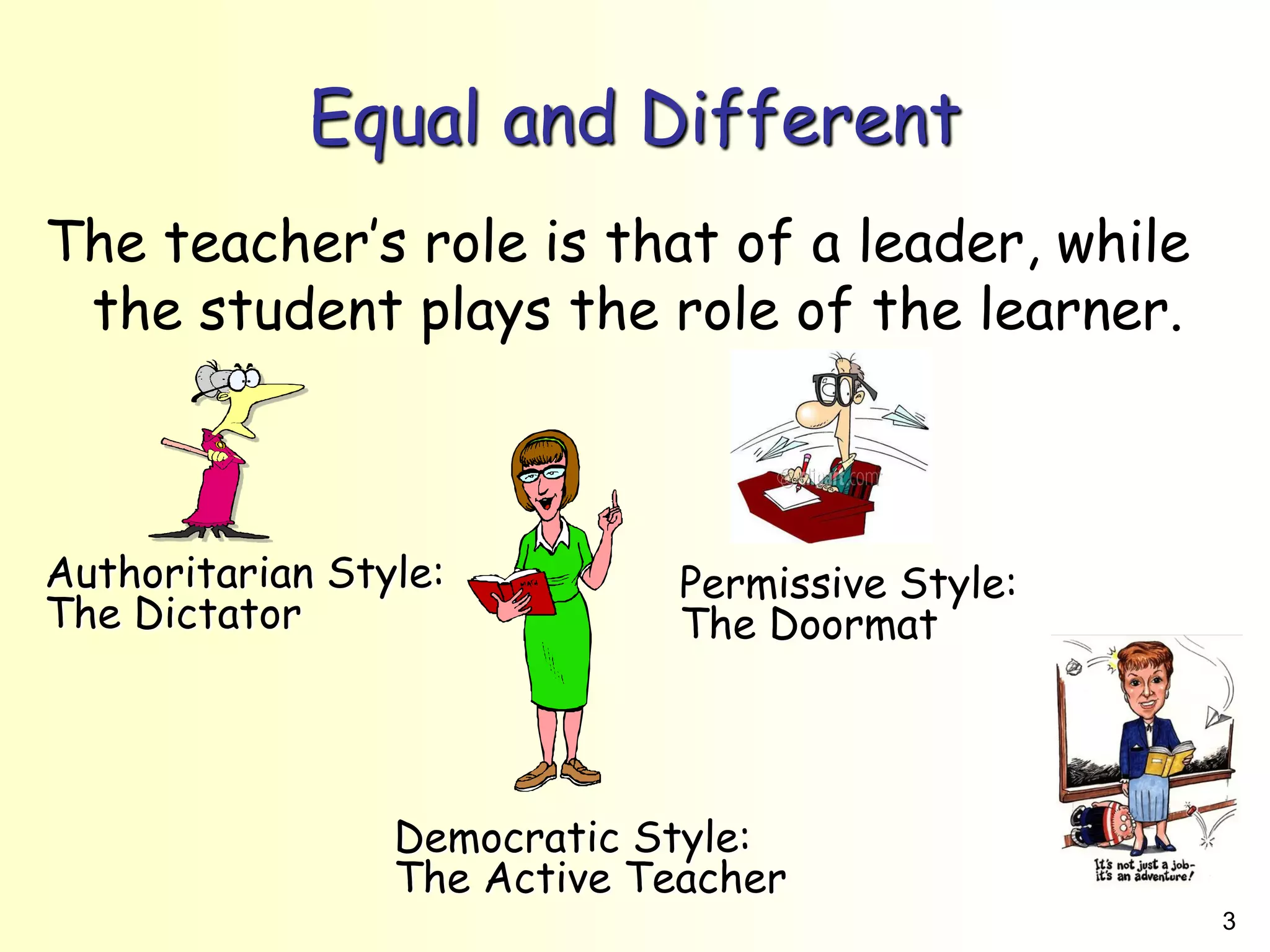
Authoritarian Style:
The Dictator
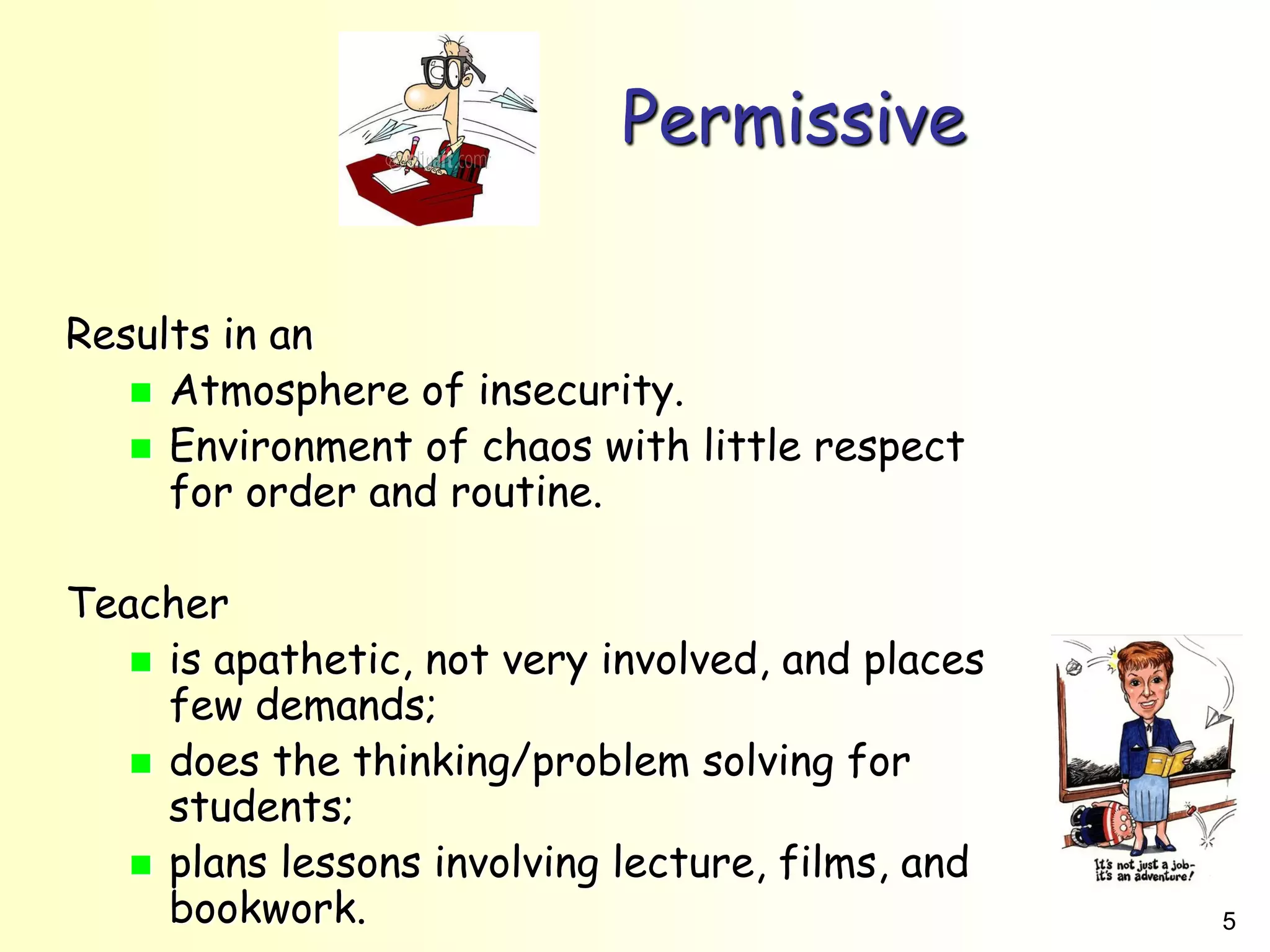
Permissive Style:
The Doormat
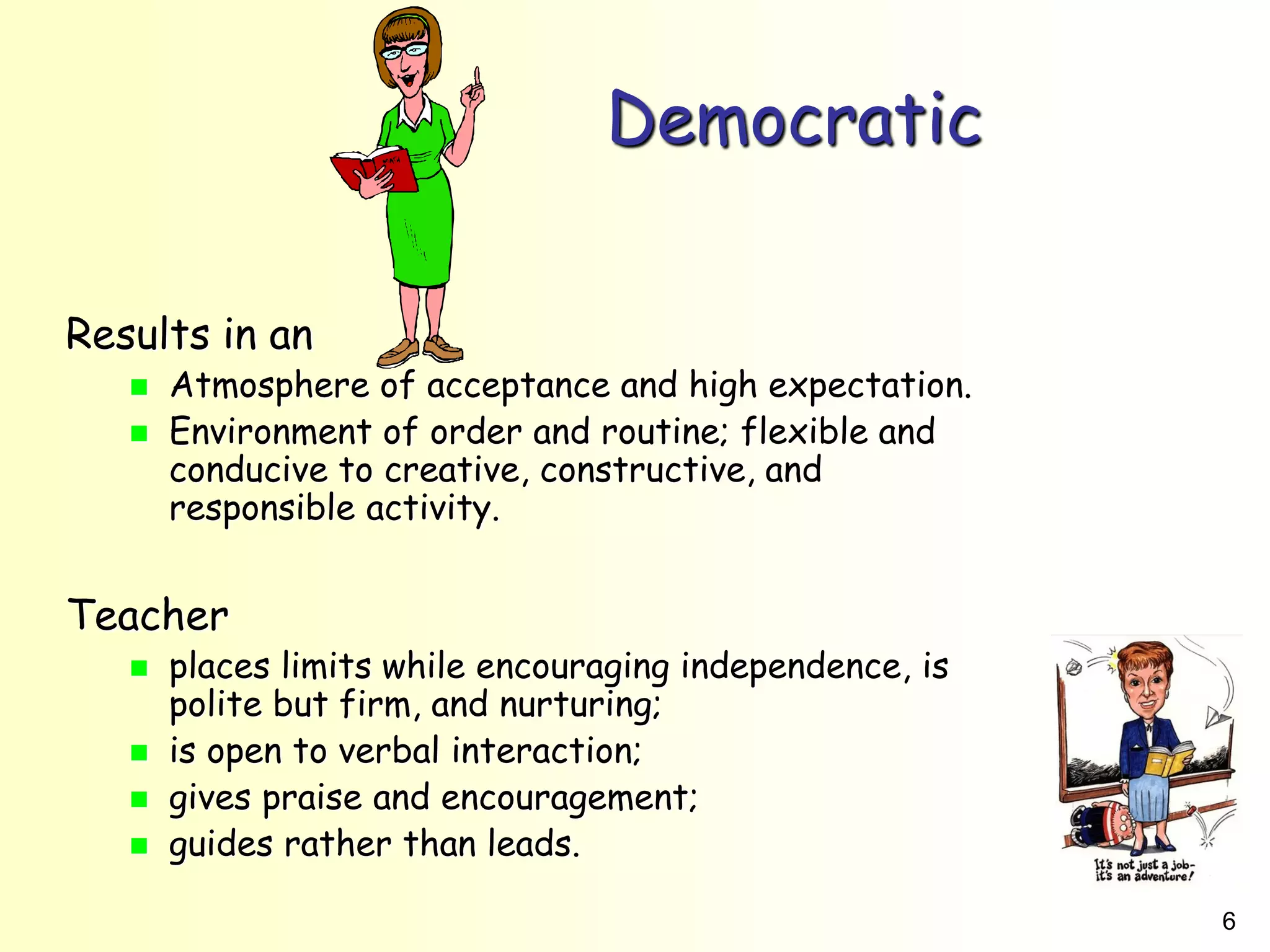
Democratic Style:
The Active Teacher
4
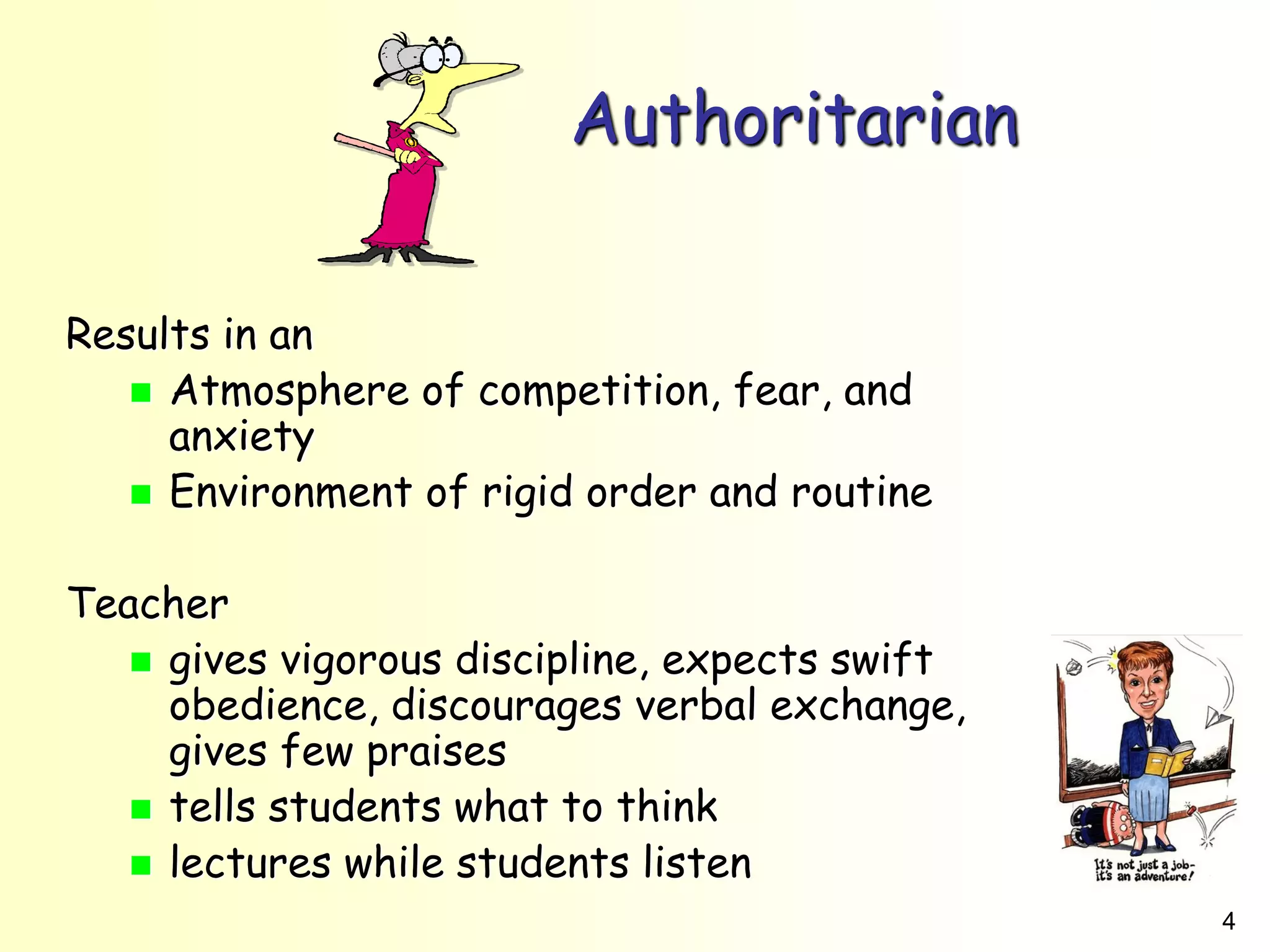
Authoritarian
Results in an
 Atmosphere of competition, fear, and
anxiety
 Environment of rigid order and routine
Teacher
 gives vigorous discipline, expects swift
obedience, discourages verbal exchange,
gives few praises
 tells students what to think
 lectures while students listen
5
Permissive
Results in an
 Atmosphere of insecurity.
 Environment of chaos with little respect
for order and routine.
Teacher
 is apathetic, not very involved, and places
few demands;
 does the thinking/problem solving for
students;
 plans lessons involving lecture, films, and
bookwork.
6
Democratic
Results in an
 Atmosphere of acceptance and high expectation.
 Environment of order and routine; flexible and
conducive to creative, constructive, and
responsible activity.
Teacher
 places limits while encouraging independence, is
polite but firm, and nurturing;
 is open to verbal interaction;
 gives praise and encouragement;
 guides rather than leads.
Authoritarian
outcomes
Permissive
outcomes
Democratic
outcomes
Students
 Own and solve
their problems.
 Learn self-
reliance and
socially
competent
behavior.
 Are more likely
to achieve and
be motivated
 Learn from
their mistakes
Students
 Are less likely
to become
socially
competent; be
motivated to
achieve, and
gain self
control.
 Have not been
taught to
cooperate or
contribute in
constructive
ways.
Students
 Are given few
opportunities for
achievement,
motivation, self-
control, and discipline.
 Spirits are broken
 Feel powerless and
may rebel and disrupt
class or comply and
become a pleaser.
 Have little
opportunity to
enhance motivation,
personal goals, or
communication skills.
7
8
General Classroom Management
Strategies
• Holding and communicating high
expectations for student learning
and behavior
• Establishing and clearly teaching
classroom rules, procedures and
consequences
• Enforcing classroom guidelines
promptly, consistently, and equitably

Teaching styles

  • 1.
    Develop your own teaching stylethat promotes • Responsibility, • Cooperation, • Courage, and • Self-esteem
  • 2.
  • 3.
    3 Equal and Different Theteacher’s role is that of a leader, while the student plays the role of the learner. Authoritarian Style: The Dictator Permissive Style: The Doormat Democratic Style: The Active Teacher
  • 4.
    4 Authoritarian Results in an Atmosphere of competition, fear, and anxiety  Environment of rigid order and routine Teacher  gives vigorous discipline, expects swift obedience, discourages verbal exchange, gives few praises  tells students what to think  lectures while students listen
  • 5.
    5 Permissive Results in an Atmosphere of insecurity.  Environment of chaos with little respect for order and routine. Teacher  is apathetic, not very involved, and places few demands;  does the thinking/problem solving for students;  plans lessons involving lecture, films, and bookwork.
  • 6.
    6 Democratic Results in an Atmosphere of acceptance and high expectation.  Environment of order and routine; flexible and conducive to creative, constructive, and responsible activity. Teacher  places limits while encouraging independence, is polite but firm, and nurturing;  is open to verbal interaction;  gives praise and encouragement;  guides rather than leads.
  • 7.
    Authoritarian outcomes Permissive outcomes Democratic outcomes Students  Own andsolve their problems.  Learn self- reliance and socially competent behavior.  Are more likely to achieve and be motivated  Learn from their mistakes Students  Are less likely to become socially competent; be motivated to achieve, and gain self control.  Have not been taught to cooperate or contribute in constructive ways. Students  Are given few opportunities for achievement, motivation, self- control, and discipline.  Spirits are broken  Feel powerless and may rebel and disrupt class or comply and become a pleaser.  Have little opportunity to enhance motivation, personal goals, or communication skills. 7
  • 8.
    8 General Classroom Management Strategies •Holding and communicating high expectations for student learning and behavior • Establishing and clearly teaching classroom rules, procedures and consequences • Enforcing classroom guidelines promptly, consistently, and equitably