The Advantages & Disadvantages
of Big Data
Vincent J. Amoruccio, MS, MA
www.VincentAmoruccio.com
Agenda
What Big Data
IS
What Big Data
IS NOT
The
Advantages &
Disadvantages
of BIG DATA
What is Big?
(a fun comparison)
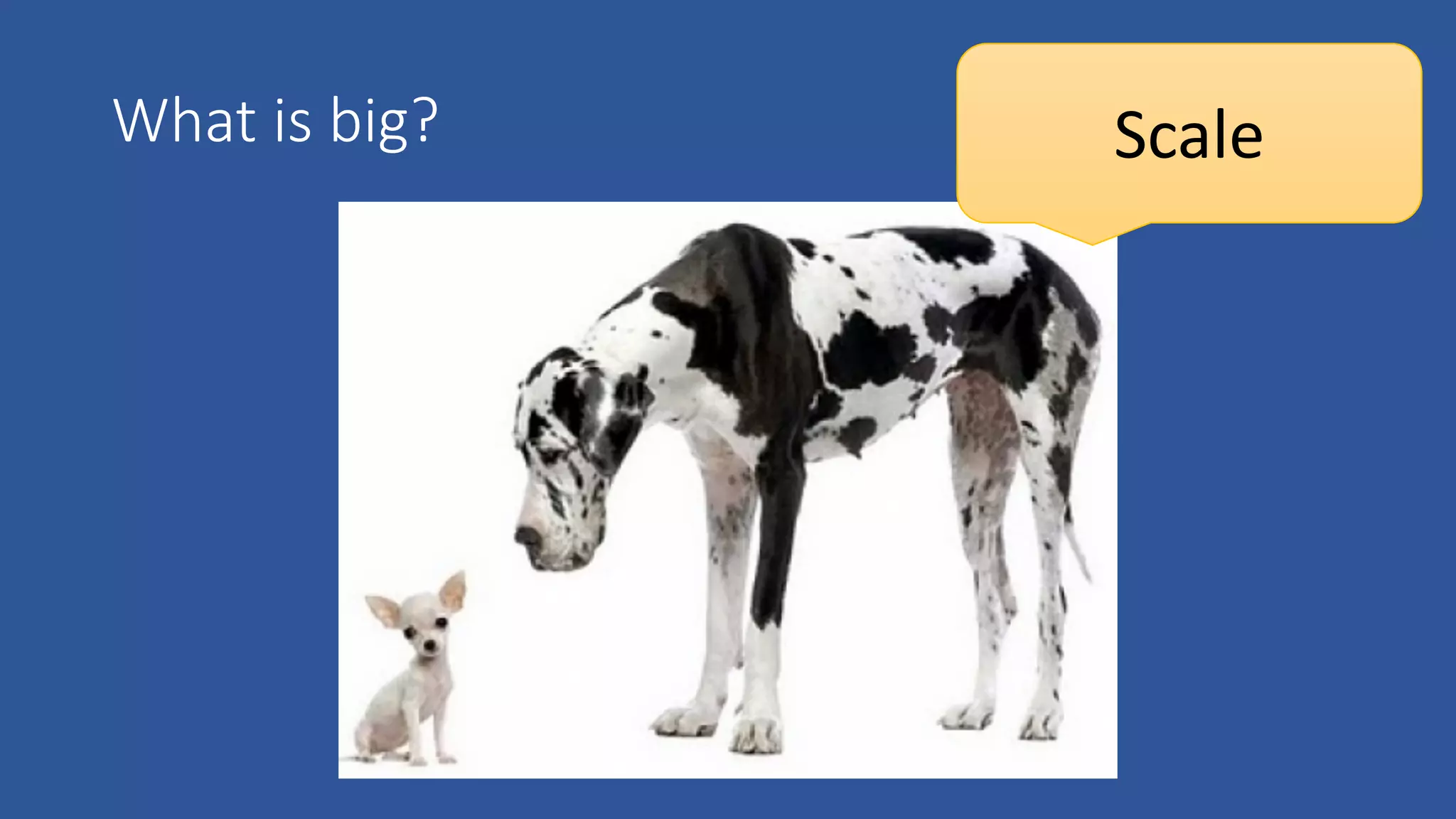
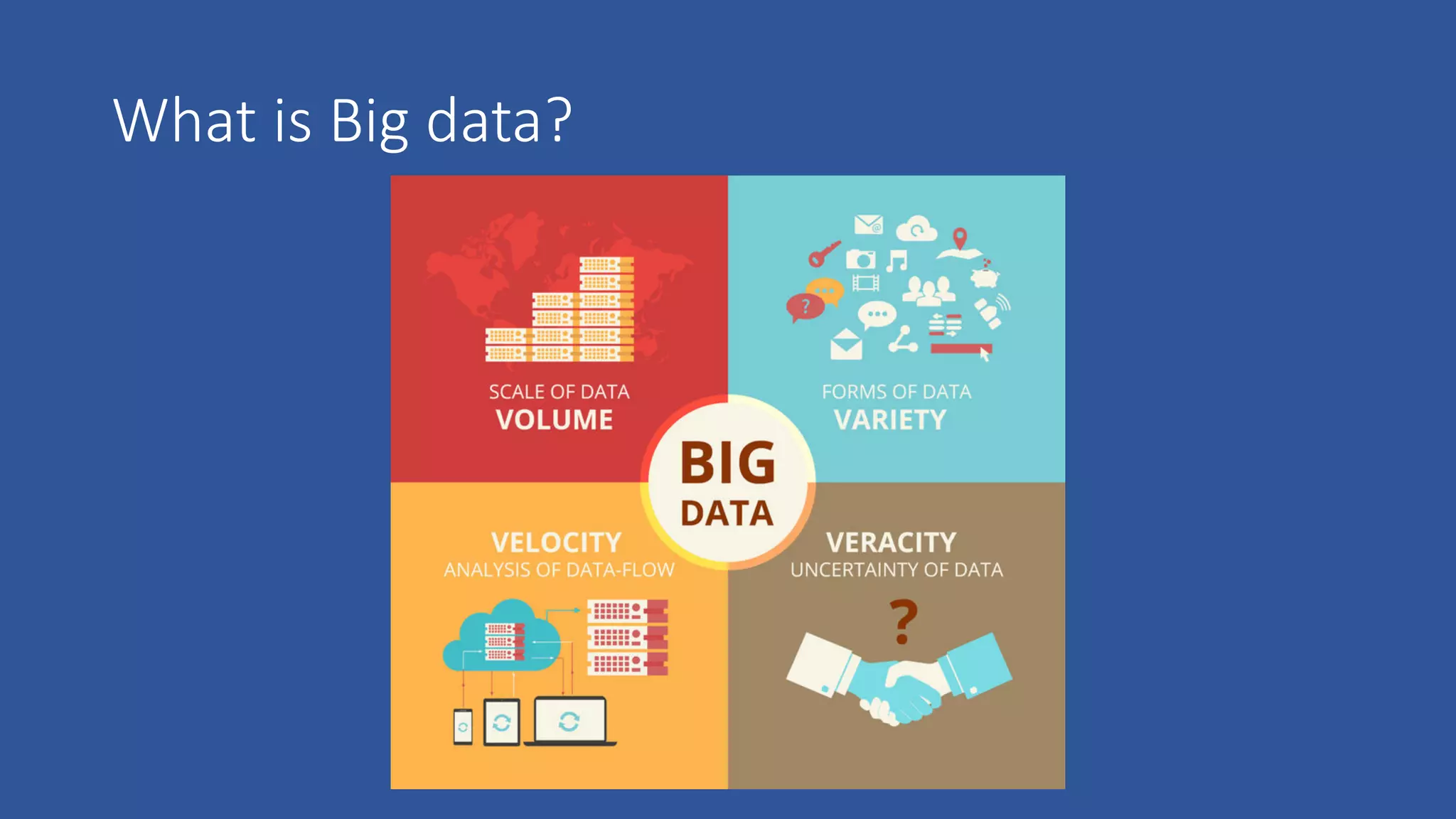
What is big? Scale
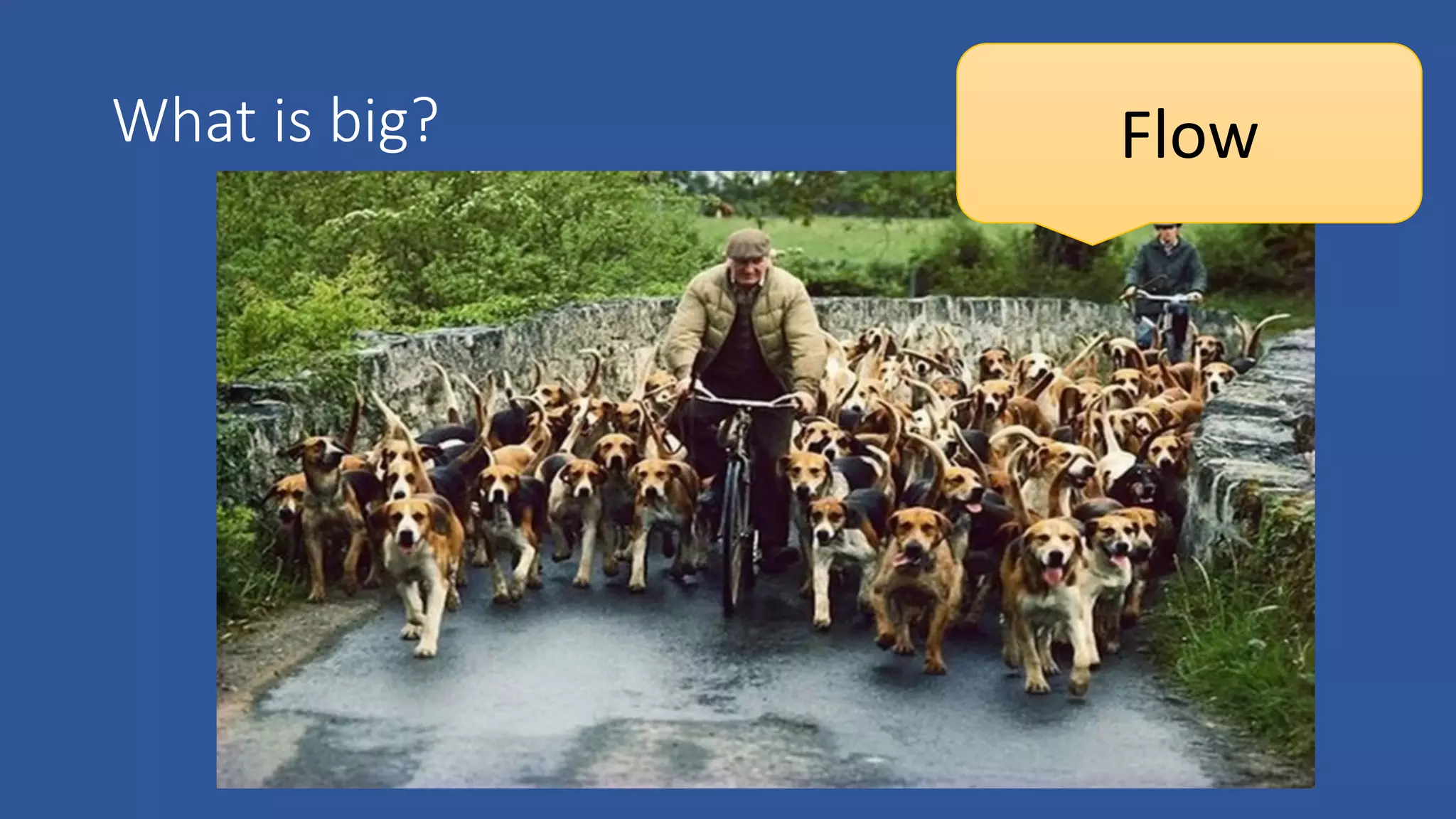
What is big? Flow
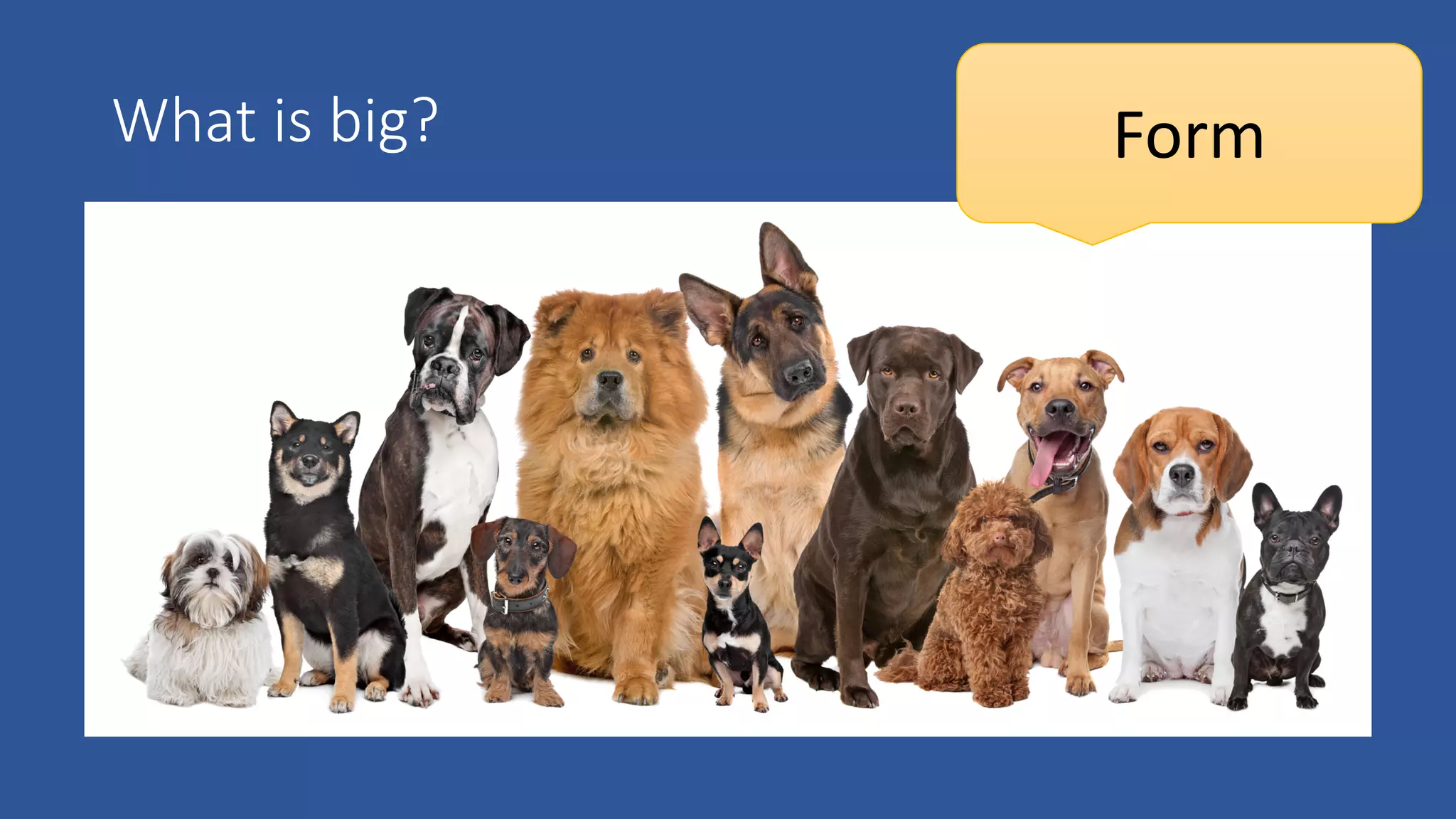
What is big? Form
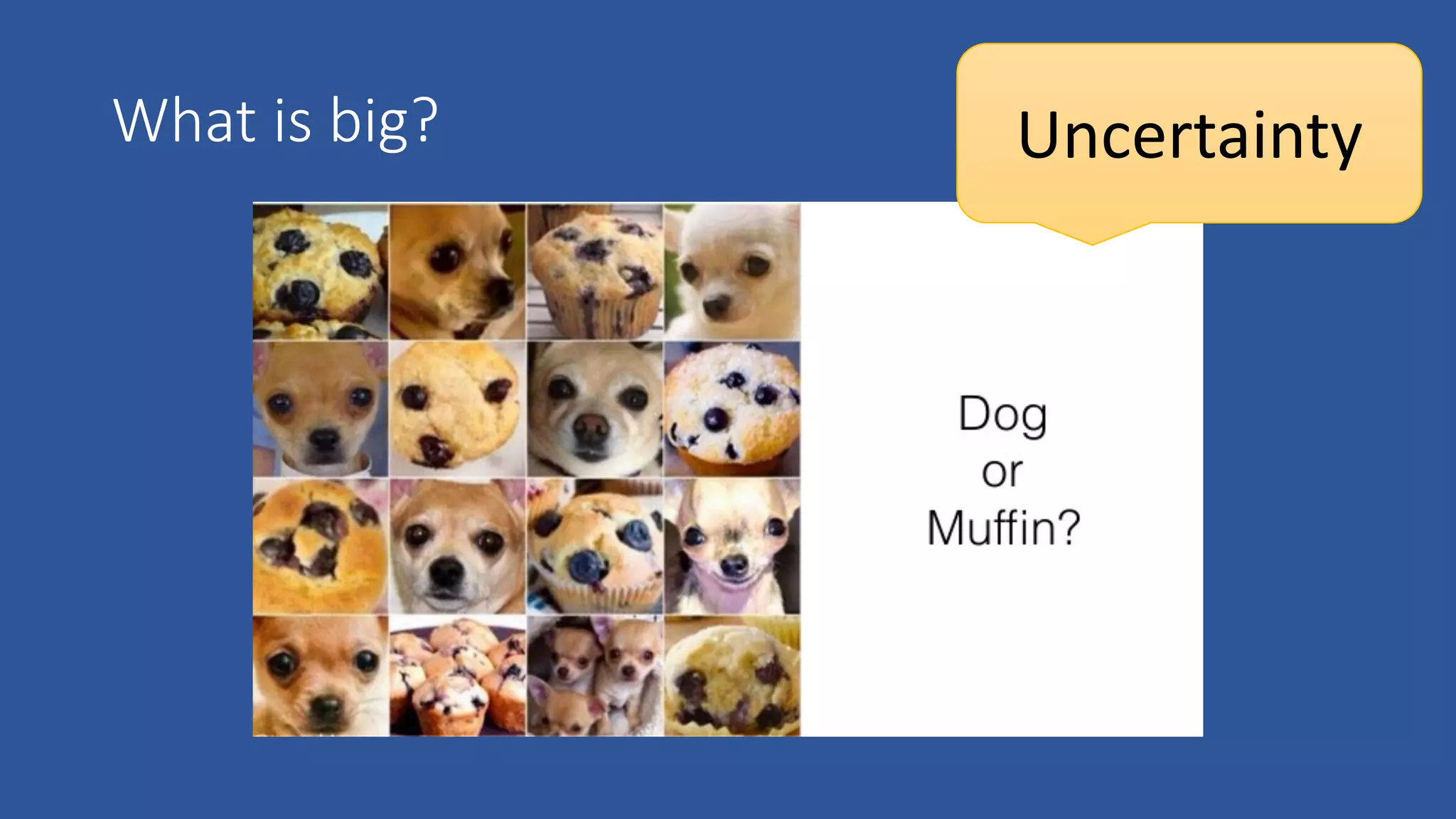
What is big? Uncertainty
What is Big Data?
(Probably THE biggest challenge)
What is Big Data?
Extremely large data sets that may be
analyzed computationally to reveal
patterns, trends, and associations,
especially relating to human behavior
and interactions. [dictionary.com]
'Big data' is the new science of understanding
and predicting human behavior by studying
large volumes of unstructured data. Big data is
also known as 'predictive analytics'. ... Big data
is a messy new science that changes weekly, and
only a few experts understand it all.
[lifewire.com]
Big data is an evolving term that
describes any voluminous amount of
structure, semistructured, and
unstructured data that has the potential
to be mined for information.
[techtarget.com]
Big data is a term used to refer to the study and
applications of data sets that are so big and
complex that traditional data-processing
application software are inadequate to deal
with them. [wikipedia.com]
What is Big data?
Big Data – 4 V’s
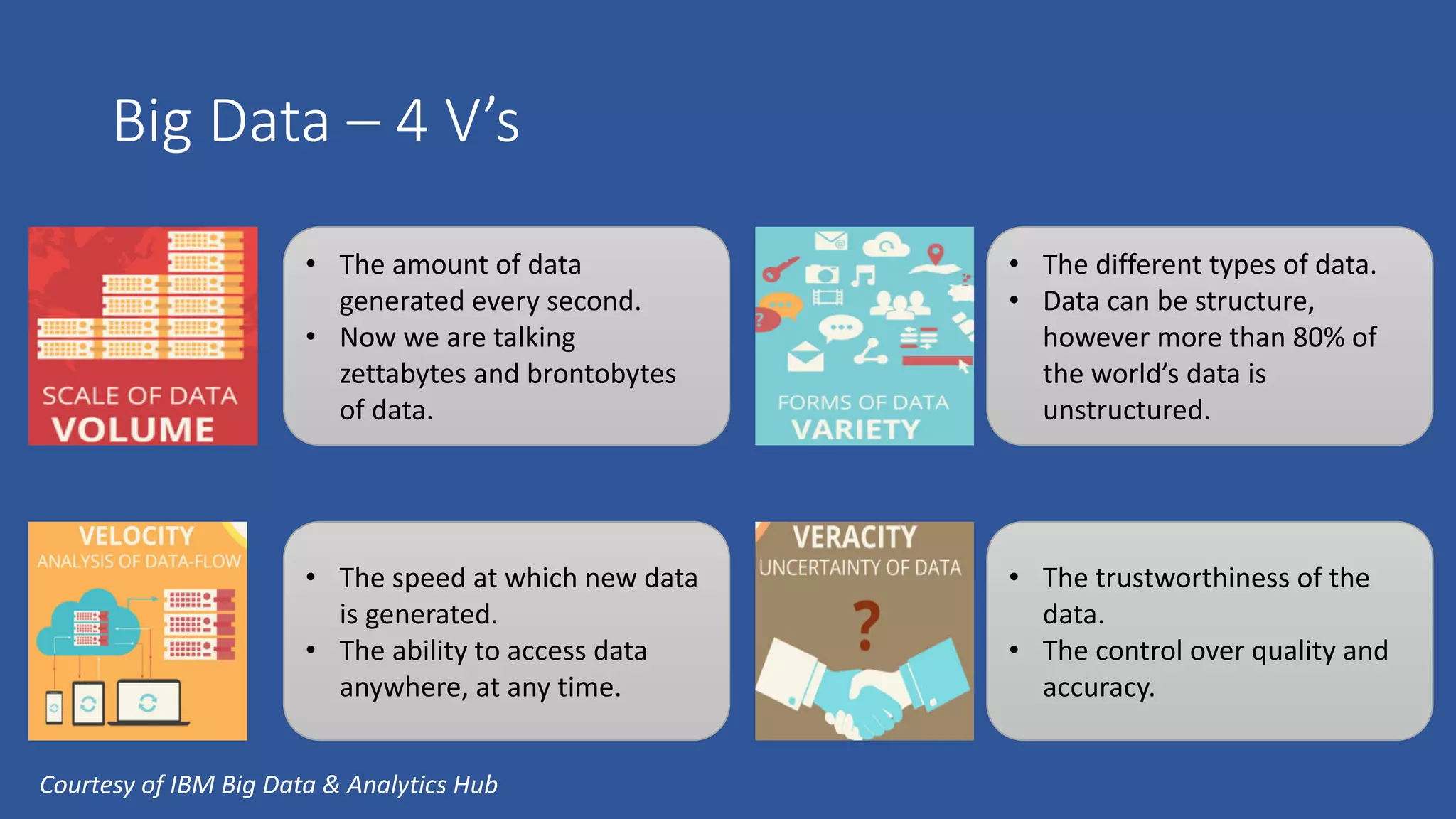
• The amount of data
generated every second.
• Now we are talking
zettabytes and brontobytes
of data.
• The speed at which new data
is generated.
• The ability to access data
anywhere, at any time.
• The trustworthiness of the
data.
• The control over quality and
accuracy.
• The different types of data.
• Data can be structure,
however more than 80% of
the world’s data is
unstructured.
Courtesy of IBM Big Data & Analytics Hub
What is Big Data…not?
(Big Data Myths…probably another challenge)
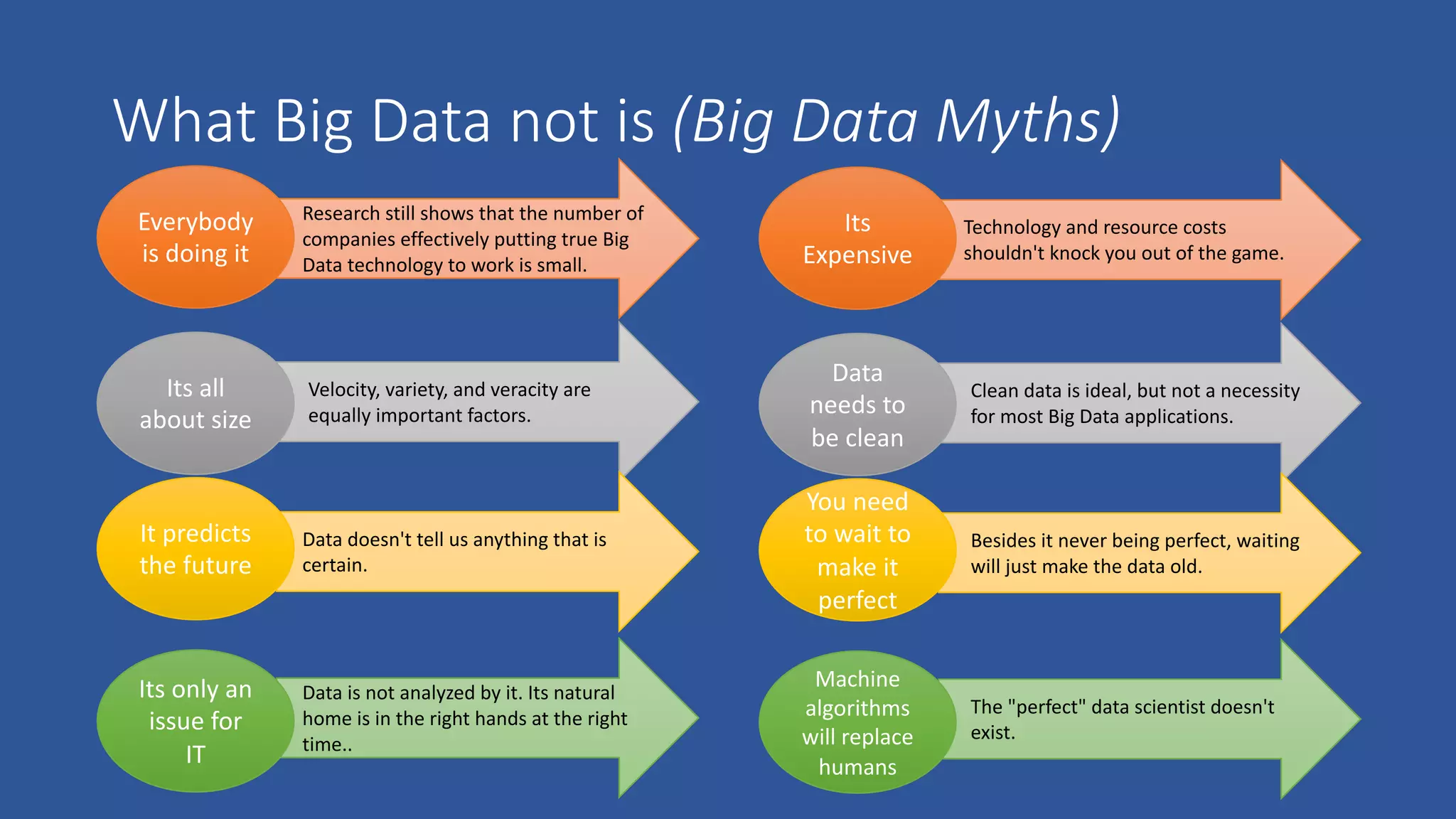
What Big Data not is (Big Data Myths)
Research still shows that the number of
companies effectively putting true Big
Data technology to work is small.
Everybody
is doing it
Velocity, variety, and veracity are
equally important factors.
Its all
about size
Data doesn't tell us anything that is
certain.
It predicts
the future
Data is not analyzed by it. Its natural
home is in the right hands at the right
time..
Its only an
issue for
IT
Technology and resource costs
shouldn't knock you out of the game.
Its
Expensive
Clean data is ideal, but not a necessity
for most Big Data applications.
Data
needs to
be clean
Besides it never being perfect, waiting
will just make the data old.
You need
to wait to
make it
perfect
The "perfect" data scientist doesn't
exist.
Machine
algorithms
will replace
humans
Advantages & Disadvantages
of Big Data
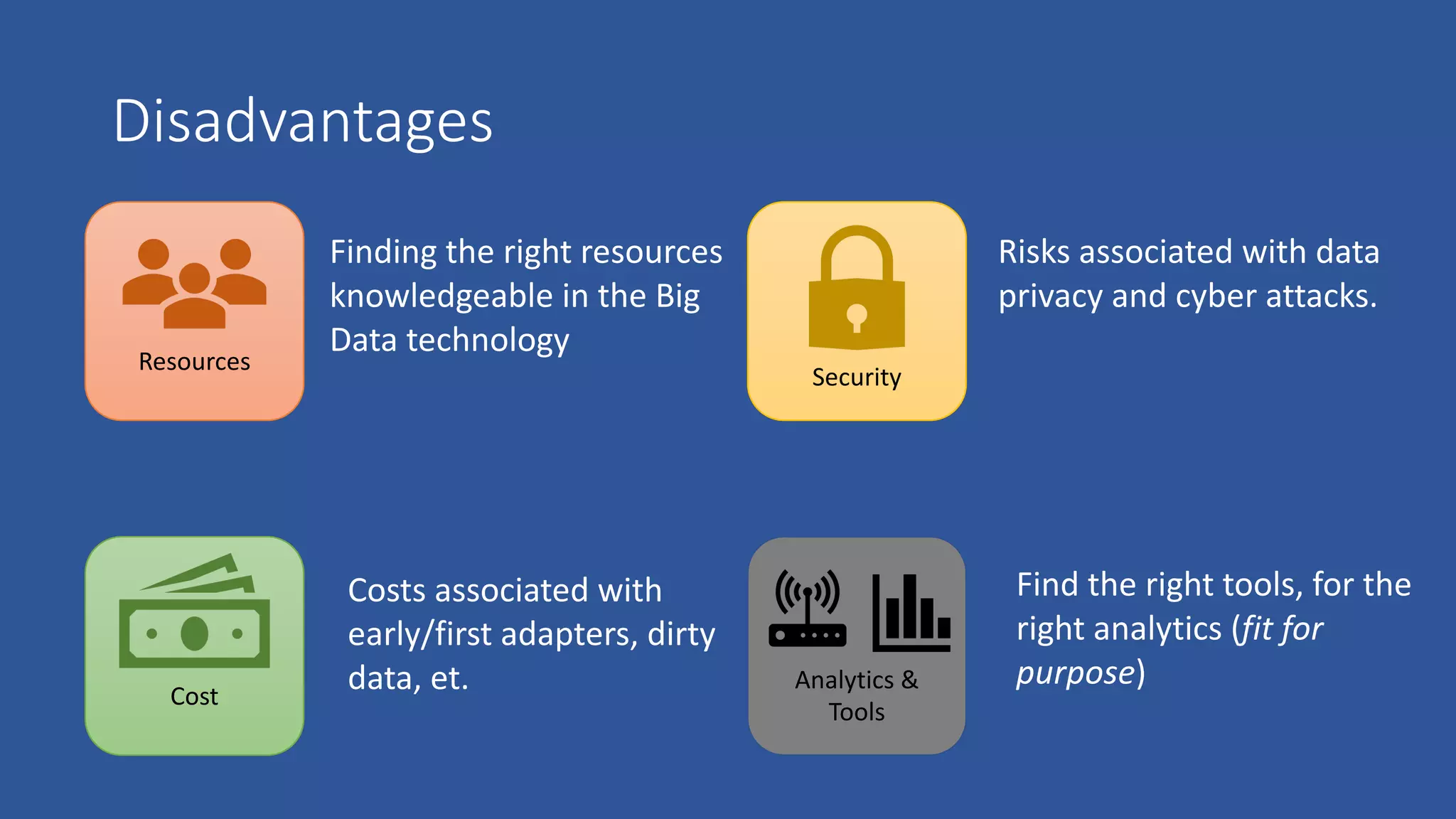
Disadvantages
Resources
Finding the right resources
knowledgeable in the Big
Data technology
Cost
Costs associated with
early/first adapters, dirty
data, et.
Security
Risks associated with data
privacy and cyber attacks.
Analytics &
Tools
Find the right tools, for the
right analytics (fit for
purpose)
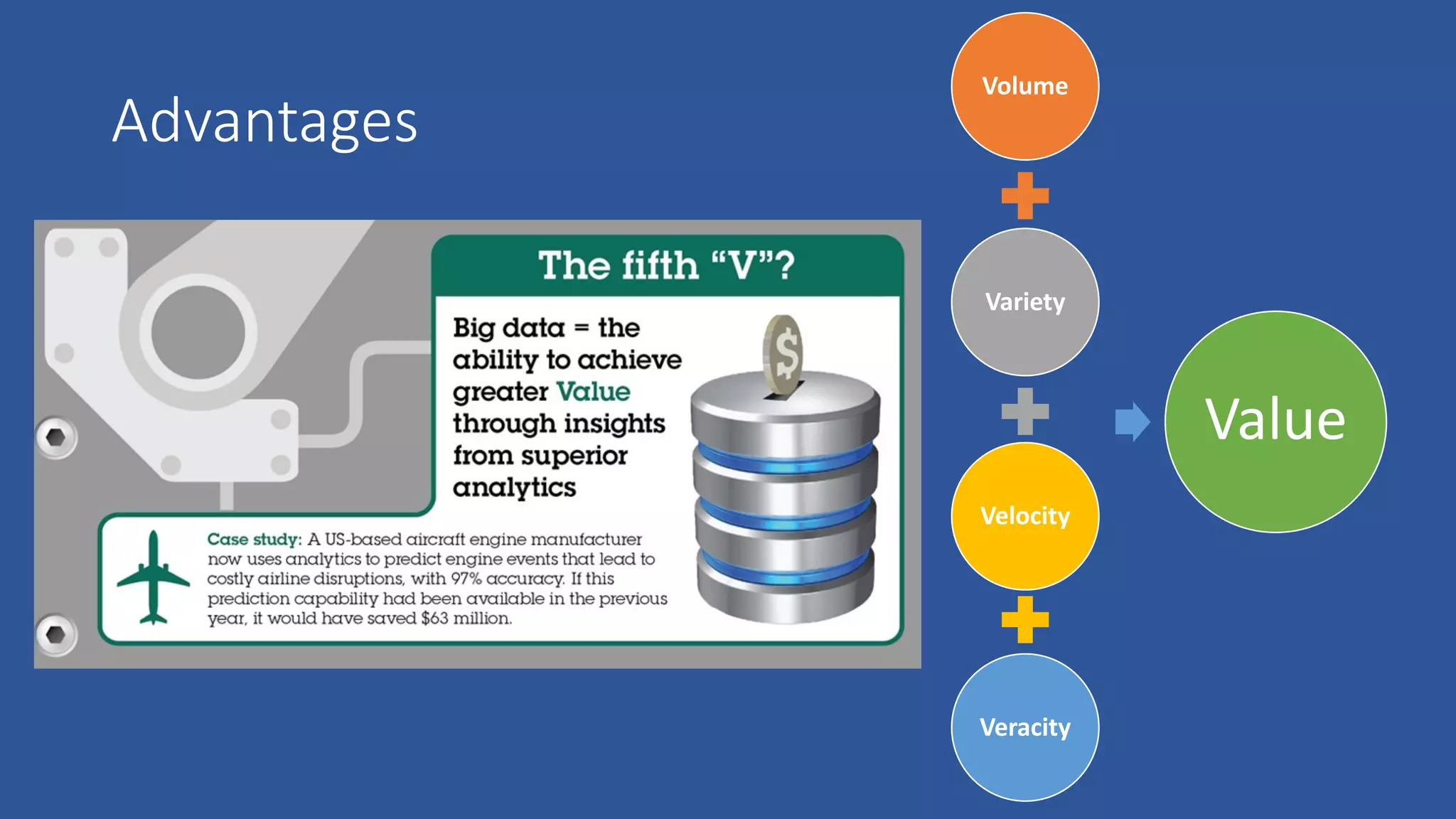
Advantages
Volume
Variety
Velocity
Veracity
Value
The Advantages and Disadvantages of Big Data

The Advantages and Disadvantages of Big Data

  • 1.
    The Advantages &Disadvantages of Big Data Vincent J. Amoruccio, MS, MA www.VincentAmoruccio.com
  • 2.
    Agenda What Big Data IS WhatBig Data IS NOT The Advantages & Disadvantages of BIG DATA
  • 3.
    What is Big? (afun comparison)
  • 4.
  • 5.
  • 6.
  • 7.
    What is big?Uncertainty
  • 8.
    What is BigData? (Probably THE biggest challenge)
  • 9.
    What is BigData? Extremely large data sets that may be analyzed computationally to reveal patterns, trends, and associations, especially relating to human behavior and interactions. [dictionary.com] 'Big data' is the new science of understanding and predicting human behavior by studying large volumes of unstructured data. Big data is also known as 'predictive analytics'. ... Big data is a messy new science that changes weekly, and only a few experts understand it all. [lifewire.com] Big data is an evolving term that describes any voluminous amount of structure, semistructured, and unstructured data that has the potential to be mined for information. [techtarget.com] Big data is a term used to refer to the study and applications of data sets that are so big and complex that traditional data-processing application software are inadequate to deal with them. [wikipedia.com]
  • 10.
  • 11.
    Big Data –4 V’s • The amount of data generated every second. • Now we are talking zettabytes and brontobytes of data. • The speed at which new data is generated. • The ability to access data anywhere, at any time. • The trustworthiness of the data. • The control over quality and accuracy. • The different types of data. • Data can be structure, however more than 80% of the world’s data is unstructured. Courtesy of IBM Big Data & Analytics Hub
  • 12.
    What is BigData…not? (Big Data Myths…probably another challenge)
  • 13.
    What Big Datanot is (Big Data Myths) Research still shows that the number of companies effectively putting true Big Data technology to work is small. Everybody is doing it Velocity, variety, and veracity are equally important factors. Its all about size Data doesn't tell us anything that is certain. It predicts the future Data is not analyzed by it. Its natural home is in the right hands at the right time.. Its only an issue for IT Technology and resource costs shouldn't knock you out of the game. Its Expensive Clean data is ideal, but not a necessity for most Big Data applications. Data needs to be clean Besides it never being perfect, waiting will just make the data old. You need to wait to make it perfect The "perfect" data scientist doesn't exist. Machine algorithms will replace humans
  • 14.
  • 15.
    Disadvantages Resources Finding the rightresources knowledgeable in the Big Data technology Cost Costs associated with early/first adapters, dirty data, et. Security Risks associated with data privacy and cyber attacks. Analytics & Tools Find the right tools, for the right analytics (fit for purpose)
  • 16.