BIG DATA MANAGEMENT
Prepared By:
Vikram Valmik
CONTENT
• Introduction
• What is Big Data
• Charecteristics of Big Data
• Types of Data Analytics
• Process of Data Analytics
• Tools Used in Big Data Analytics
• Big Data Sources
• Big Data Generation
• Benefits of Big Data Analytics
• References
INTRODUCTION
• Big Data may well be the Next Big Thing in the IT world.
• Big data burst upon the scene in the first decade of the 21st century.
• The first organization to embrace it where online and startup firms.
Firms like Google, eBay, LinkedIn, and Facebook were built around big
data from the beginning.
• Like many new information technologies, big data can bring about
dramatic cost reductions, substantial improvements in the time
required to perform a computing task, or new product and service
offerings.
What IS BIG DATA?
• ‘Big Data’ is similar to ‘small data’, but bigger in size.
• But having data bigger it requires different approaches:
-Techniques, tools and architecture
• An aim to solve new problems or old problems in a better way.
• Big Data generates value from the storage and processing of very
large quantities of digital information that cannot be analysed with
traditional computing techniques.
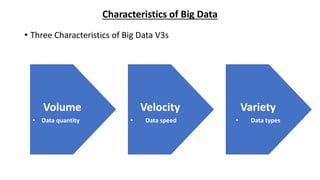
Characteristics of Big Data
• Three Characteristics of Big Data V3s
Volume
• Data quantity
Velocity
• Data speed
Variety
• Data types
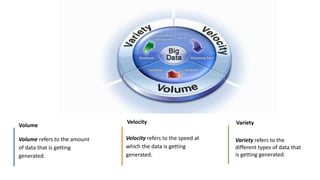
Variety refers to the
different types of data that
is getting generated.
Volume refers to the amount
of data that is getting
generated.
Volume
Velocity Variety
Velocity refers to the speed at
which the data is getting
generated.
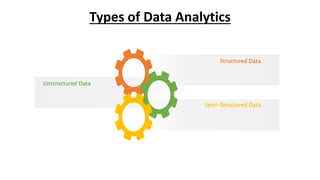
Structured Data
Unstructured Data
Semi-Structured Data
Types of Data Analytics
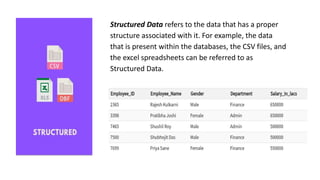
Structured Data refers to the data that has a proper
structure associated with it. For example, the data
that is present within the databases, the CSV files, and
the excel spreadsheets can be referred to as
Structured Data.
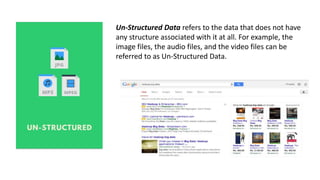
Un-Structured Data refers to the data that does not have
any structure associated with it at all. For example, the
image files, the audio files, and the video files can be
referred to as Un-Structured Data.
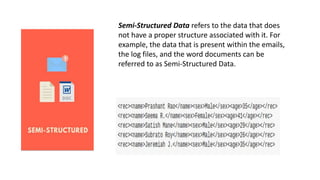
Semi-Structured Data refers to the data that does
not have a proper structure associated with it. For
example, the data that is present within the emails,
the log files, and the word documents can be
referred to as Semi-Structured Data.
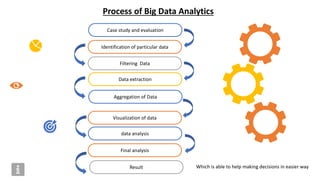
Which is able to help making decisions in easier way
Case study and evaluation
Identification of particular data
Filtering Data
Data extraction
Aggregation of Data
Visualization of data
data analysis
Final analysis
Result
Process of Big Data Analytics
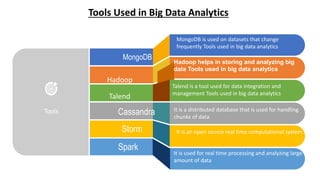
MongoDB
Hadoop
Talend
Cassandra
Storm
Spark
Tools
Hadoop helps in storing and analyzing big
data Tools used in big data analytics
MongoDB is used on datasets that change
frequently Tools used in big data analytics
Talend is a tool used for data integration and
management Tools used in big data analytics
It is a distributed database that is used for handling
chunks of data
It is used for real time processing and analyzing large
amount of data
It is an open source real time computational system
Tools Used in Big Data Analytics
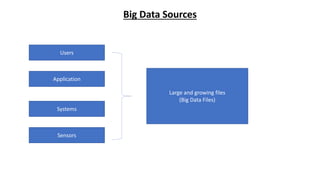
Big Data Sources
Users
Application
Sensors
Systems
Large and growing files
(Big Data Files)
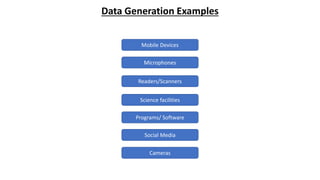
Data Generation Examples
Mobile Devices
Microphones
Readers/Scanners
Science facilities
Programs/ Software
Social Media
Cameras
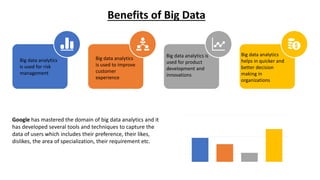
Big data analytics
is used for risk
management
Big data analytics
is used to improve
customer
experience
Big data analytics is
used for product
development and
innovations
Big data analytics
helps in quicker and
better decision
making in
organizations
Google has mastered the domain of big data analytics and it
has developed several tools and techniques to capture the
data of users which includes their preference, their likes,
dislikes, the area of specialization, their requirement etc.
Benefits of Big Data
references
• www.Wikipedia.com
• www.slideshare.com
• www.computereducation.org
• Books-
 Big Data by Viktor Mayer-Schonberger

Second Presentation Big Data2222222.pptx

  • 1.
  • 2.
    CONTENT • Introduction • Whatis Big Data • Charecteristics of Big Data • Types of Data Analytics • Process of Data Analytics • Tools Used in Big Data Analytics • Big Data Sources • Big Data Generation • Benefits of Big Data Analytics • References
  • 3.
    INTRODUCTION • Big Datamay well be the Next Big Thing in the IT world. • Big data burst upon the scene in the first decade of the 21st century. • The first organization to embrace it where online and startup firms. Firms like Google, eBay, LinkedIn, and Facebook were built around big data from the beginning. • Like many new information technologies, big data can bring about dramatic cost reductions, substantial improvements in the time required to perform a computing task, or new product and service offerings.
  • 4.
    What IS BIGDATA? • ‘Big Data’ is similar to ‘small data’, but bigger in size. • But having data bigger it requires different approaches: -Techniques, tools and architecture • An aim to solve new problems or old problems in a better way. • Big Data generates value from the storage and processing of very large quantities of digital information that cannot be analysed with traditional computing techniques.
  • 5.
    Characteristics of BigData • Three Characteristics of Big Data V3s Volume • Data quantity Velocity • Data speed Variety • Data types
  • 6.
    Variety refers tothe different types of data that is getting generated. Volume refers to the amount of data that is getting generated. Volume Velocity Variety Velocity refers to the speed at which the data is getting generated.
  • 7.
  • 8.
    Structured Data refersto the data that has a proper structure associated with it. For example, the data that is present within the databases, the CSV files, and the excel spreadsheets can be referred to as Structured Data.
  • 9.
    Un-Structured Data refersto the data that does not have any structure associated with it at all. For example, the image files, the audio files, and the video files can be referred to as Un-Structured Data.
  • 10.
    Semi-Structured Data refersto the data that does not have a proper structure associated with it. For example, the data that is present within the emails, the log files, and the word documents can be referred to as Semi-Structured Data.
  • 11.
    Which is ableto help making decisions in easier way Case study and evaluation Identification of particular data Filtering Data Data extraction Aggregation of Data Visualization of data data analysis Final analysis Result Process of Big Data Analytics
  • 12.
    MongoDB Hadoop Talend Cassandra Storm Spark Tools Hadoop helps instoring and analyzing big data Tools used in big data analytics MongoDB is used on datasets that change frequently Tools used in big data analytics Talend is a tool used for data integration and management Tools used in big data analytics It is a distributed database that is used for handling chunks of data It is used for real time processing and analyzing large amount of data It is an open source real time computational system Tools Used in Big Data Analytics
  • 13.
  • 14.
    Data Generation Examples MobileDevices Microphones Readers/Scanners Science facilities Programs/ Software Social Media Cameras
  • 15.
    Big data analytics isused for risk management Big data analytics is used to improve customer experience Big data analytics is used for product development and innovations Big data analytics helps in quicker and better decision making in organizations Google has mastered the domain of big data analytics and it has developed several tools and techniques to capture the data of users which includes their preference, their likes, dislikes, the area of specialization, their requirement etc. Benefits of Big Data
  • 16.
    references • www.Wikipedia.com • www.slideshare.com •www.computereducation.org • Books-  Big Data by Viktor Mayer-Schonberger