Thalassemia
INTRODUCTION:
 Thalassemia, a hereditary (genetic disorder) is
characterized by defective synthesis in the
polypeptide chains of the protein component of
haemoglobin or decreased production of
haemoglobin, a molecule found inside blood
cells (RBCs) that transports oxygen the body.
Consequently, Red Blood Cells synthesis is also
impaired.
DEFINITION:
 Thalassemia is defined as, “a group of
inherited disorders characterized by
reduced or absent amounts of
haemoglobin, the oxygen-carrying
protein inside the red blood cells.”
TYPES OF
THALASSEMIA:
 The two main types of thalassemia,
1. Alpha
2. Beta
 Named for the two protein chains that
make up normal haemoglobin.
Haemoglobin includes two kinds of protein
chains called alpha globin chains and beta
globin chains.
 Alpha Thalassemia:
 Alpha thalassemia occurs when one or
more of the four genes needed for making
the alpha globin chain of haemoglobin are
variant or missing.
 Moderate to severe anaemia results when
more than two genes are affected.
 The most severe form of alpha thalassemia
is known as alpha thalassemia major
 Beta thalassemia:
 Beta thalassemia occurs when one or both of
the two genes needed making the polypeptide
globin chain of haemoglobin is defective.
 The severity of illness depends on whether one
or both genes are affected and the nature of
abnormality.
 If both genes are affected, anaemia can range
from moderate to severe.
 Beta-thalassemia is grouped into
three categories
1. Minor (trait),
2. Intermedia and
3. Major (cooley's anemia).
 Beta-thalassemia Minor (trait):
 If one gene is affected, person is carrier
and has mild anemia. This condition is
called beta thalassemia trait or beta
thalassemia minor.
 Beta thalassemia minor often goes
undiagnosed because kids with the
condition have no real symptoms other
than mild anemia and small red blood
cells.
 Beta-Thalassemia Intermedia:
 Children with beta thalassemia
intermedia have varing effect from
disease – mild anaemia might be their
only symptoms or might they require
regular blood transfusion.
 Beta thalassemia major:
 Beta thalassemia major also called
Cooley’s anaemia, severe condition in
which regular blood transfusions are
necessary for child to survive.
CAUSES AND RISK
FACTORS:
 Family History:
 Ancestry:
CLINICAL
MANIFESTATIONS
 Fatigue
 Weakness
 Pale or yellowish skin
 Facial bone deformities
 Slow growth
 Abdominal swelling
 Dark urine
DIAGNOSTIC
EVALUATIONS
 Hb level decreased.
 Increased number of RBC.
 Low mean corpuscular volume and mean
corpuscular hemoglobin concentration.
 Peripheral blood smear many anisopoikilocytes,
nucleated RBCs.
 Reticulocyte count low, usually less than 10%.
 Hemoglobin electrophoresis elevated levels of
HbF and HbA2; limited amount of HbA
MANAGEMENT
 Treatment for thalassemia depends on which
type have and how severe it is.
 Treatments for mild thalassemia
 Signs and symptoms are usually mild with
thalassemia minor and little, if any, treatment is
needed.
 Occasionally, may need a blood transfusion,
particularly after surgery, after having a baby or
to help manage thalassemia complications.
 Treatments for moderate to severe
thalassemia
 Treatments for moderate to severe thalassemia
may include:
 Frequent and regular blood transfusions of
packed RBCs to maintain Hb levels above 10
g/dL.
Washed, packed RBCs are usually used to
minimize the possibility of transfusion
reactions. If unavailable, leukofiltered cells
can be substituted.
The frequency and amount of transfusions
depend on the size of the child, usually 10
to 15 mL packed RBC per kg body weight
every 2 to 3 weeks.
 Iron chelation therapy with deferoxamine
(Desferal) reduces the toxic adverse effects
of excess iron; increases iron excretion
through urine and feces.
I.V. infusion of 100 to 150 mg/kg per day
given in hospital during blood transfusion
or for child with high ferritin level and
poor compliance with home chelation
therapy.
Subcutaneous infusion of 50 mg/kg per
day usually infused 12 hours during night
for home therapy.
Splenectomy.
 Supportive management of
complications.
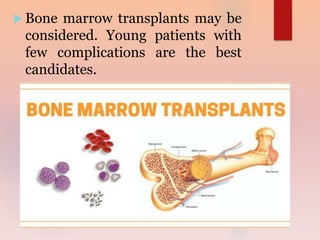
 Bone marrow transplants may be
considered. Young patients with
few complications are the best
candidates.
 Prognosis is poor because no cure is
known; commonly fatal in late
adolescence or early adulthood.
Nursing Assessment
 Obtain family history of
thalassemia or unexplained
anemia or heart failure.
 Perform whole body
examination to assess for
anemia and systemic
complications of thalassemia.
 Measure growth and
development parameters.
Nursing Diagnoses
 Ineffective Tissue Perfusion related to
abnormal Hb
 Chronic Pain related to progression of
disease in bone
 Activity Intolerance related to bone pain,
cardiac dysfunction, and anemia
 Risk for Infection related to progressive
anemia and splenectomy
 Deficient Knowledge related to iron
chelation therapy
 Disturbed Body Image related to
endocrine and skeletal
abnormalities
 Ineffective Family Coping related
to poor prognosis
thalassemia-medicine

thalassemia-medicine

  • 1.
  • 2.
    INTRODUCTION:  Thalassemia, ahereditary (genetic disorder) is characterized by defective synthesis in the polypeptide chains of the protein component of haemoglobin or decreased production of haemoglobin, a molecule found inside blood cells (RBCs) that transports oxygen the body. Consequently, Red Blood Cells synthesis is also impaired.
  • 3.
    DEFINITION:  Thalassemia isdefined as, “a group of inherited disorders characterized by reduced or absent amounts of haemoglobin, the oxygen-carrying protein inside the red blood cells.”
  • 4.
    TYPES OF THALASSEMIA:  Thetwo main types of thalassemia, 1. Alpha 2. Beta  Named for the two protein chains that make up normal haemoglobin. Haemoglobin includes two kinds of protein chains called alpha globin chains and beta globin chains.
  • 5.
     Alpha Thalassemia: Alpha thalassemia occurs when one or more of the four genes needed for making the alpha globin chain of haemoglobin are variant or missing.  Moderate to severe anaemia results when more than two genes are affected.  The most severe form of alpha thalassemia is known as alpha thalassemia major
  • 6.
     Beta thalassemia: Beta thalassemia occurs when one or both of the two genes needed making the polypeptide globin chain of haemoglobin is defective.  The severity of illness depends on whether one or both genes are affected and the nature of abnormality.  If both genes are affected, anaemia can range from moderate to severe.
  • 7.
     Beta-thalassemia isgrouped into three categories 1. Minor (trait), 2. Intermedia and 3. Major (cooley's anemia).
  • 8.
     Beta-thalassemia Minor(trait):  If one gene is affected, person is carrier and has mild anemia. This condition is called beta thalassemia trait or beta thalassemia minor.  Beta thalassemia minor often goes undiagnosed because kids with the condition have no real symptoms other than mild anemia and small red blood cells.
  • 9.
     Beta-Thalassemia Intermedia: Children with beta thalassemia intermedia have varing effect from disease – mild anaemia might be their only symptoms or might they require regular blood transfusion.
  • 10.
     Beta thalassemiamajor:  Beta thalassemia major also called Cooley’s anaemia, severe condition in which regular blood transfusions are necessary for child to survive.
  • 11.
    CAUSES AND RISK FACTORS: Family History:  Ancestry:
  • 12.
    CLINICAL MANIFESTATIONS  Fatigue  Weakness Pale or yellowish skin  Facial bone deformities  Slow growth  Abdominal swelling  Dark urine
  • 13.
    DIAGNOSTIC EVALUATIONS  Hb leveldecreased.  Increased number of RBC.  Low mean corpuscular volume and mean corpuscular hemoglobin concentration.  Peripheral blood smear many anisopoikilocytes, nucleated RBCs.  Reticulocyte count low, usually less than 10%.  Hemoglobin electrophoresis elevated levels of HbF and HbA2; limited amount of HbA
  • 14.
    MANAGEMENT  Treatment forthalassemia depends on which type have and how severe it is.  Treatments for mild thalassemia  Signs and symptoms are usually mild with thalassemia minor and little, if any, treatment is needed.  Occasionally, may need a blood transfusion, particularly after surgery, after having a baby or to help manage thalassemia complications.
  • 15.
     Treatments formoderate to severe thalassemia  Treatments for moderate to severe thalassemia may include:
  • 16.
     Frequent andregular blood transfusions of packed RBCs to maintain Hb levels above 10 g/dL. Washed, packed RBCs are usually used to minimize the possibility of transfusion reactions. If unavailable, leukofiltered cells can be substituted. The frequency and amount of transfusions depend on the size of the child, usually 10 to 15 mL packed RBC per kg body weight every 2 to 3 weeks.
  • 18.
     Iron chelationtherapy with deferoxamine (Desferal) reduces the toxic adverse effects of excess iron; increases iron excretion through urine and feces. I.V. infusion of 100 to 150 mg/kg per day given in hospital during blood transfusion or for child with high ferritin level and poor compliance with home chelation therapy. Subcutaneous infusion of 50 mg/kg per day usually infused 12 hours during night for home therapy.
  • 20.
  • 21.
     Supportive managementof complications.
  • 22.
     Bone marrowtransplants may be considered. Young patients with few complications are the best candidates.
  • 23.
     Prognosis ispoor because no cure is known; commonly fatal in late adolescence or early adulthood.
  • 24.
    Nursing Assessment  Obtainfamily history of thalassemia or unexplained anemia or heart failure.  Perform whole body examination to assess for anemia and systemic complications of thalassemia.  Measure growth and development parameters.
  • 25.
    Nursing Diagnoses  IneffectiveTissue Perfusion related to abnormal Hb  Chronic Pain related to progression of disease in bone  Activity Intolerance related to bone pain, cardiac dysfunction, and anemia  Risk for Infection related to progressive anemia and splenectomy  Deficient Knowledge related to iron chelation therapy
  • 26.
     Disturbed BodyImage related to endocrine and skeletal abnormalities  Ineffective Family Coping related to poor prognosis