OIL PASTELS
Technique Oil pastels are actually a pretty old type of art material.  They have a wide variety of uses, and can be used in a wide variety of ways. On the following slides we’ll look at a few different oil pastel tecniques.
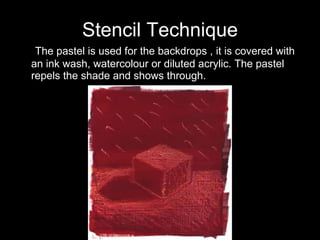
Stencil Technique The pastel is used for the backdrops , it is covered with an ink wash, watercolour or diluted acrylic. The pastel repels the shade and shows through.
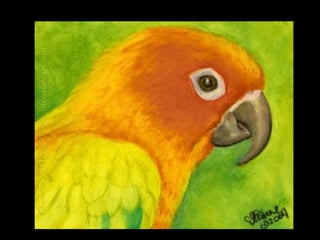
Blending Technique based on the blending of colours using the finger, stump or mineral spirits/turpentine/turpenoid.
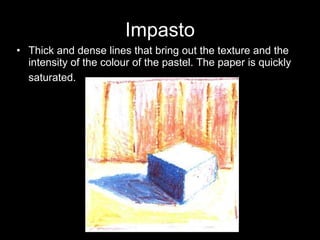
Impasto Thick and dense lines that bring out the texture and the intensity of the colour of the pastel. The paper is quickly saturated.
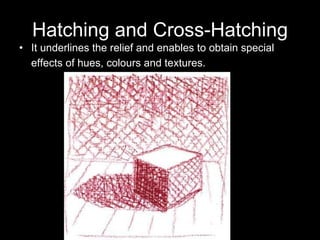
Hatching and Cross-Hatching It underlines the relief and enables to obtain special effects of hues, colours and textures.
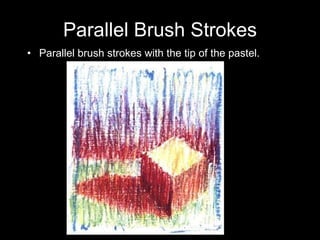
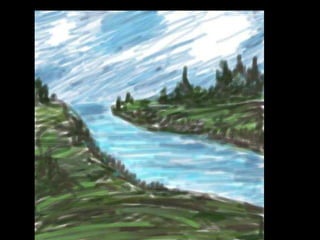
Parallel Brush Strokes Parallel brush strokes with the tip of the pastel.
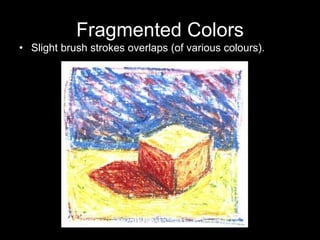
Fragmented Colors Slight brush strokes overlaps (of various colours).
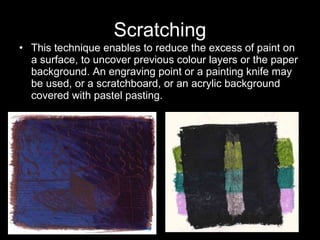
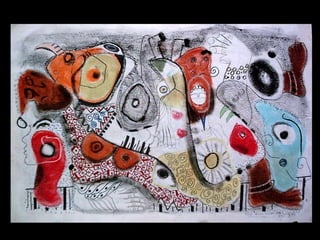
Scratching This technique enables to reduce the excess of paint on a surface, to uncover previous colour layers or the paper background. An engraving point or a painting knife may be used, or a scratchboard, or an acrylic background covered with pastel pasting.


Oil Pastel Technique

  • 1.
  • 2.
    Technique Oil pastelsare actually a pretty old type of art material. They have a wide variety of uses, and can be used in a wide variety of ways. On the following slides we’ll look at a few different oil pastel tecniques.
  • 3.
    Stencil Technique Thepastel is used for the backdrops , it is covered with an ink wash, watercolour or diluted acrylic. The pastel repels the shade and shows through.
  • 4.
    Blending Technique basedon the blending of colours using the finger, stump or mineral spirits/turpentine/turpenoid.
  • 5.
    Impasto Thick anddense lines that bring out the texture and the intensity of the colour of the pastel. The paper is quickly saturated.
  • 6.
    Hatching and Cross-HatchingIt underlines the relief and enables to obtain special effects of hues, colours and textures.
  • 7.
    Parallel Brush StrokesParallel brush strokes with the tip of the pastel.
  • 8.
    Fragmented Colors Slightbrush strokes overlaps (of various colours).
  • 9.
    Scratching This techniqueenables to reduce the excess of paint on a surface, to uncover previous colour layers or the paper background. An engraving point or a painting knife may be used, or a scratchboard, or an acrylic background covered with pastel pasting.
  • 10.
  • 11.
  • 12.
  • 13.
  • 14.
  • 15.
  • 16.
  • 17.
  • 18.
  • 19.
  • 20.
  • 21.
  • 22.
  • 23.
  • 24.
  • 25.
  • 26.
  • 27.
  • 28.