TEXT STRUCTURES 
The way we organize what we say! 
Chronological – Sequential – Cause/Effect – Problem/Solution – Compare/Contrast – Proposition/Support
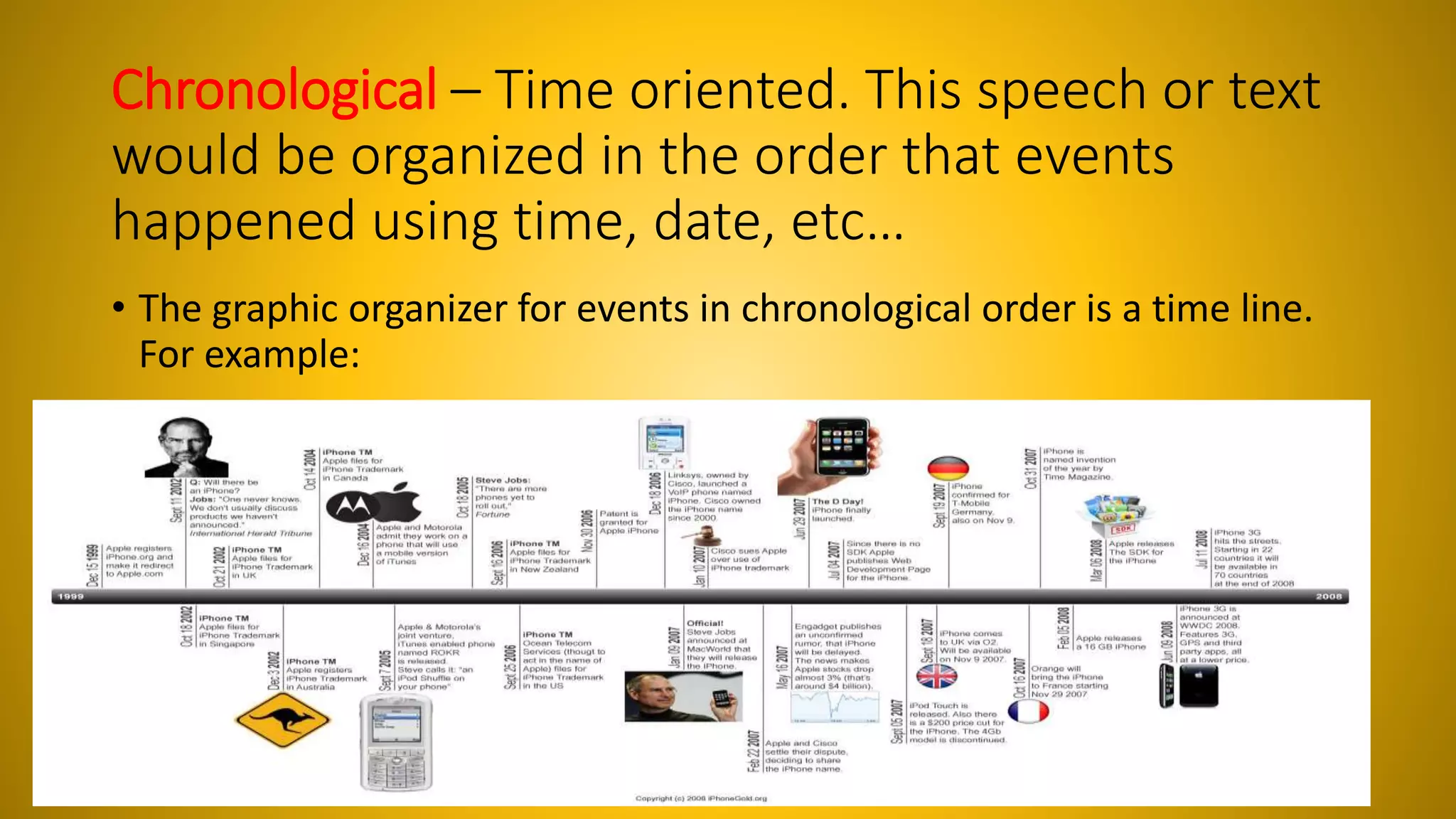
Chronological – Time oriented. This speech or text 
would be organized in the order that events 
happened using time, date, etc… 
• The graphic organizer for events in chronological order is a time line. 
For example:
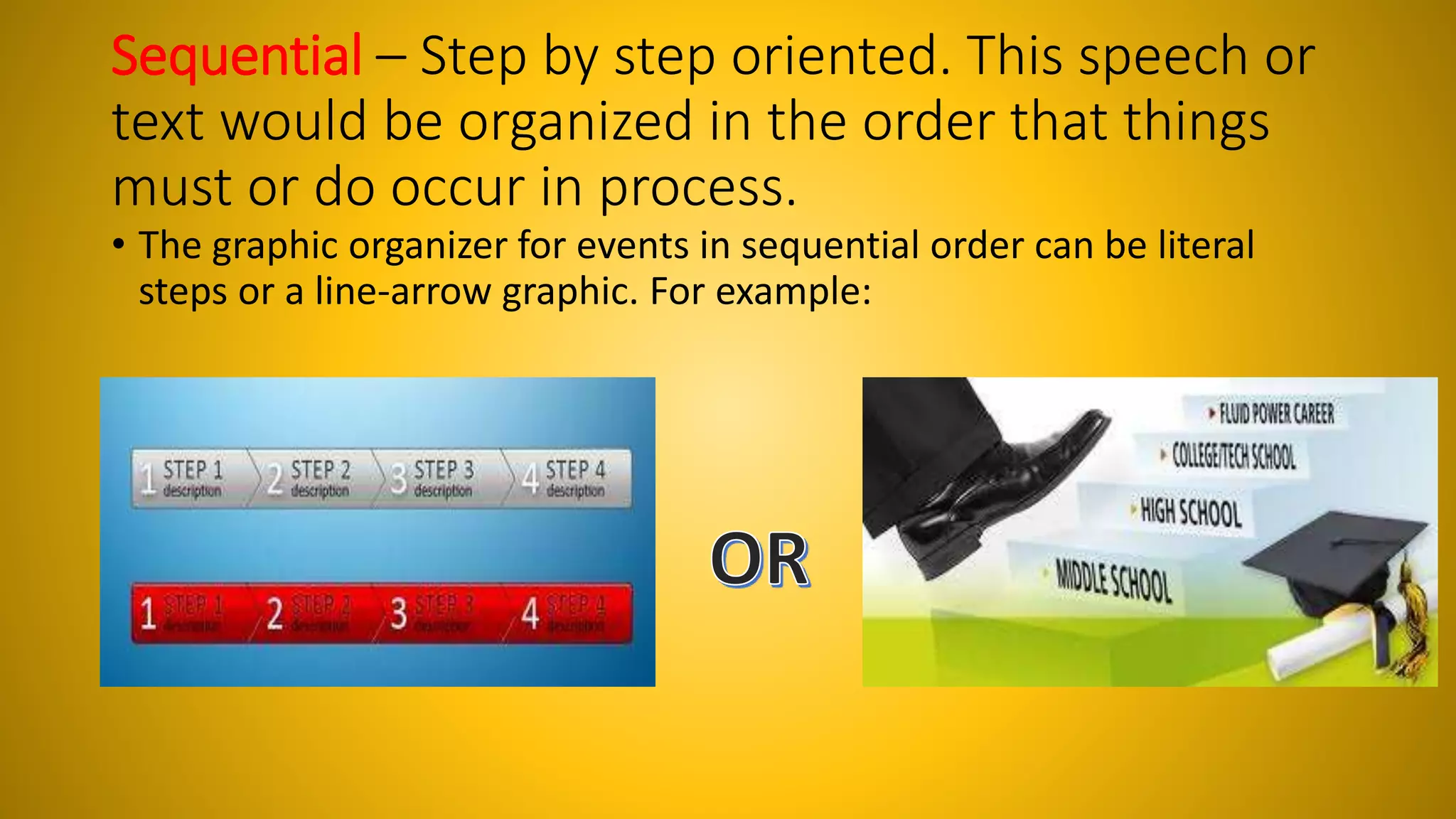
Sequential – Step by step oriented. This speech or 
text would be organized in the order that things 
must or do occur in process. 
• The graphic organizer for events in sequential order can be literal 
steps or a line-arrow graphic. For example:
Cause and Effect – Action and reaction oriented. 
This speech or text would be organized by pointing 
out an event (cause) and its consequences 
(effect). The effect can be positive, negative, or neutral. 
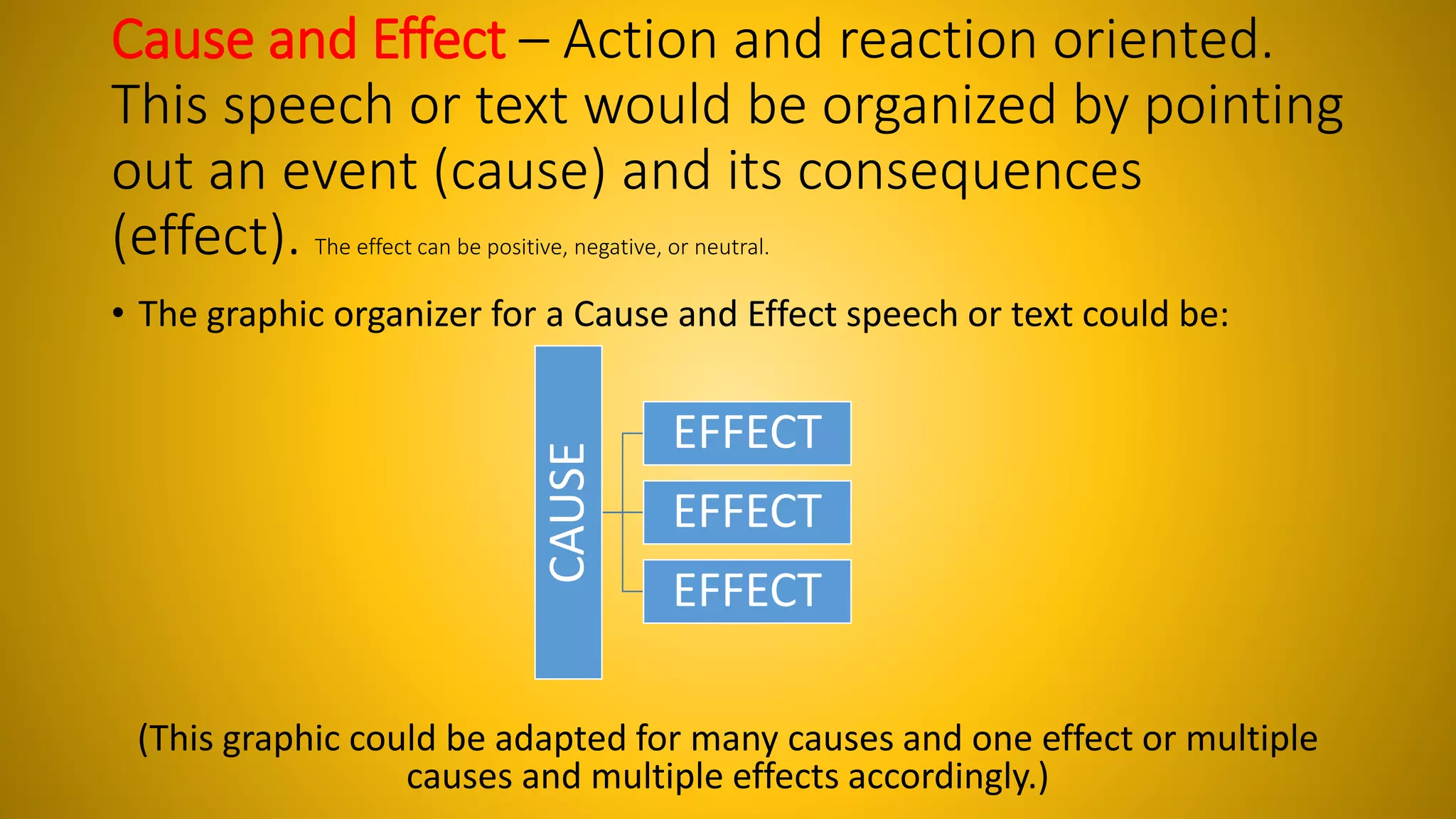
• The graphic organizer for a Cause and Effect speech or text could be: 
CAUSE 
EFFECT 
EFFECT 
EFFECT 
(This graphic could be adapted for many causes and one effect or multiple 
causes and multiple effects accordingly.)
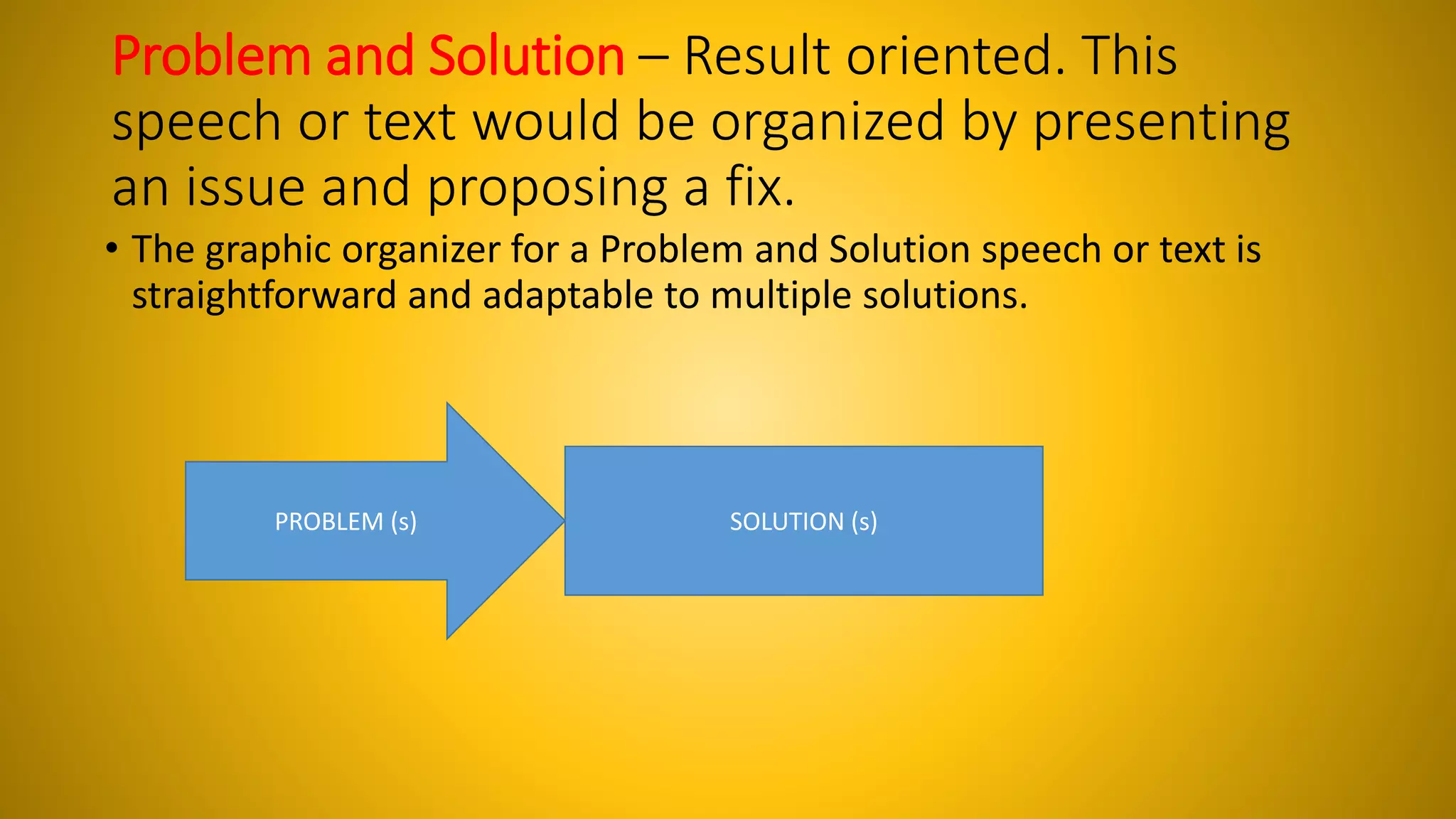
Problem and Solution – Result oriented. This 
speech or text would be organized by presenting 
an issue and proposing a fix. 
• The graphic organizer for a Problem and Solution speech or text is 
straightforward and adaptable to multiple solutions. 
PROBLEM (s) SOLUTION (s)
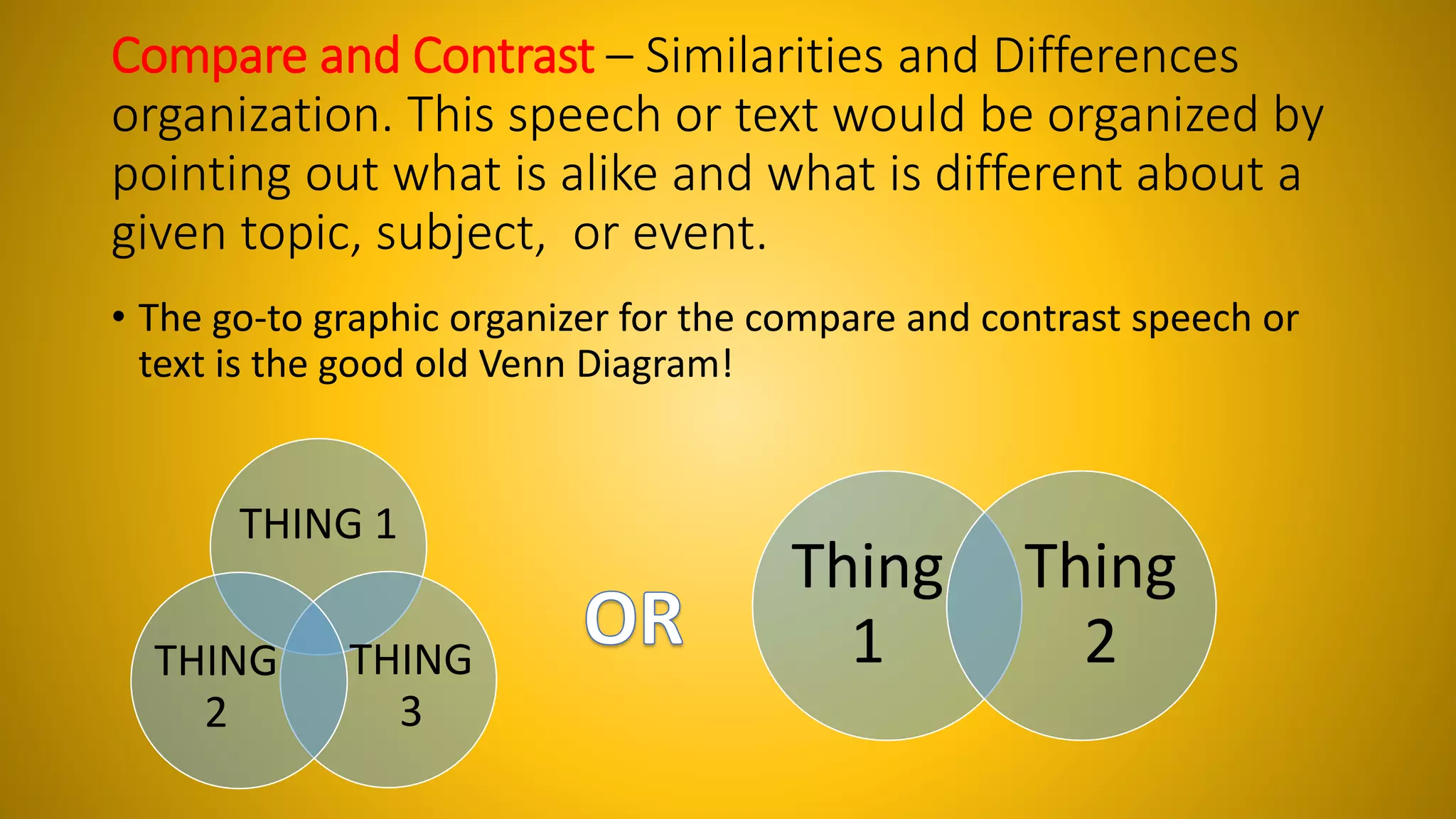
Compare and Contrast – Similarities and Differences 
organization. This speech or text would be organized by 
pointing out what is alike and what is different about a 
given topic, subject, or event. 
• The go-to graphic organizer for the compare and contrast speech or 
text is the good old Venn Diagram! 
THING 1 
THING 
3 
THING 
2 
Thing 
1 
Thing 
2
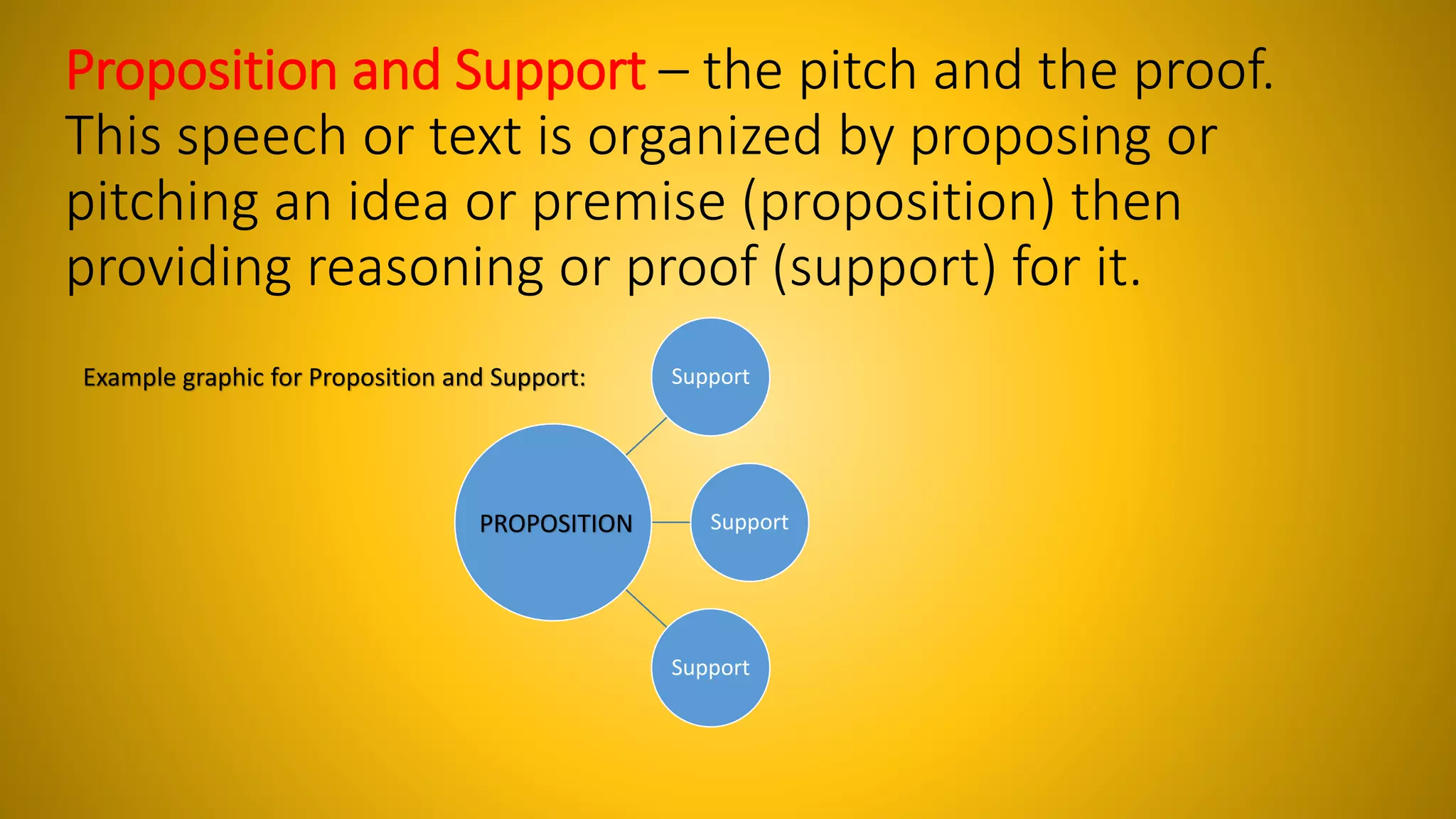
Proposition and Support – the pitch and the proof. 
This speech or text is organized by proposing or 
pitching an idea or premise (proposition) then 
providing reasoning or proof (support) for it. 
Support 
Support 
Support 
Example graphic for Proposition and Support: 
PROPOSITION
STEPS to FIND TEXT STRUCTURE as a 
listener/reader 
• Think about the information presented – analyze or close read it – 
BREAK IT DOWN 
• Decide what structure best applies to the speech or text 
• Mentally or literally place the speech or text on the appropriate 
graphic – BREAK IT DOWN AGAIN 
• Categorize for impact and effectiveness – ANALYZE IT
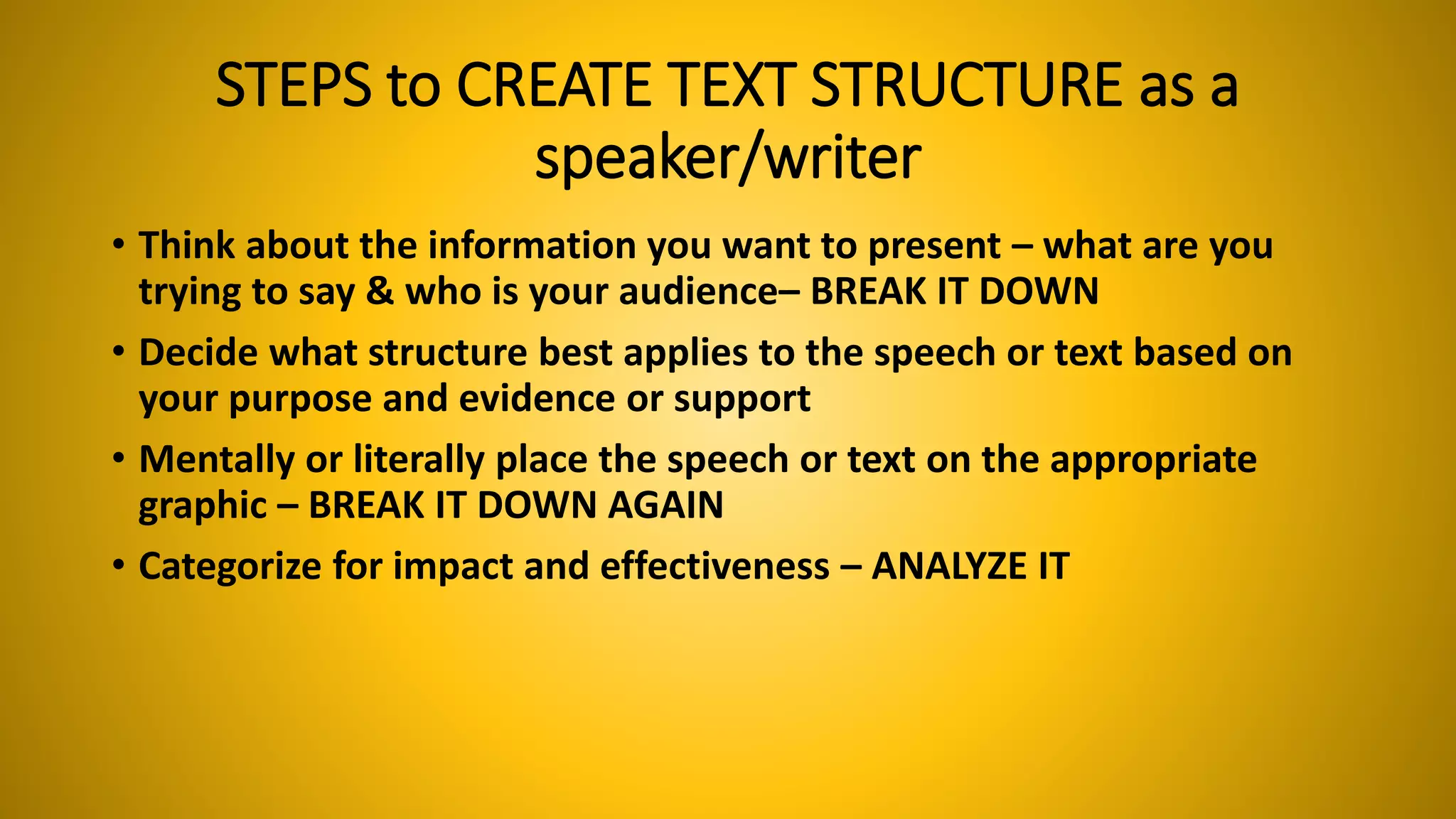
STEPS to CREATE TEXT STRUCTURE as a 
speaker/writer 
• Think about the information you want to present – what are you 
trying to say & who is your audience– BREAK IT DOWN 
• Decide what structure best applies to the speech or text based on 
your purpose and evidence or support 
• Mentally or literally place the speech or text on the appropriate 
graphic – BREAK IT DOWN AGAIN 
• Categorize for impact and effectiveness – ANALYZE IT

Textstructures 140205132119-phpapp02

  • 1.
    TEXT STRUCTURES Theway we organize what we say! Chronological – Sequential – Cause/Effect – Problem/Solution – Compare/Contrast – Proposition/Support
  • 2.
    Chronological – Timeoriented. This speech or text would be organized in the order that events happened using time, date, etc… • The graphic organizer for events in chronological order is a time line. For example:
  • 3.
    Sequential – Stepby step oriented. This speech or text would be organized in the order that things must or do occur in process. • The graphic organizer for events in sequential order can be literal steps or a line-arrow graphic. For example:
  • 4.
    Cause and Effect– Action and reaction oriented. This speech or text would be organized by pointing out an event (cause) and its consequences (effect). The effect can be positive, negative, or neutral. • The graphic organizer for a Cause and Effect speech or text could be: CAUSE EFFECT EFFECT EFFECT (This graphic could be adapted for many causes and one effect or multiple causes and multiple effects accordingly.)
  • 5.
    Problem and Solution– Result oriented. This speech or text would be organized by presenting an issue and proposing a fix. • The graphic organizer for a Problem and Solution speech or text is straightforward and adaptable to multiple solutions. PROBLEM (s) SOLUTION (s)
  • 6.
    Compare and Contrast– Similarities and Differences organization. This speech or text would be organized by pointing out what is alike and what is different about a given topic, subject, or event. • The go-to graphic organizer for the compare and contrast speech or text is the good old Venn Diagram! THING 1 THING 3 THING 2 Thing 1 Thing 2
  • 7.
    Proposition and Support– the pitch and the proof. This speech or text is organized by proposing or pitching an idea or premise (proposition) then providing reasoning or proof (support) for it. Support Support Support Example graphic for Proposition and Support: PROPOSITION
  • 8.
    STEPS to FINDTEXT STRUCTURE as a listener/reader • Think about the information presented – analyze or close read it – BREAK IT DOWN • Decide what structure best applies to the speech or text • Mentally or literally place the speech or text on the appropriate graphic – BREAK IT DOWN AGAIN • Categorize for impact and effectiveness – ANALYZE IT
  • 9.
    STEPS to CREATETEXT STRUCTURE as a speaker/writer • Think about the information you want to present – what are you trying to say & who is your audience– BREAK IT DOWN • Decide what structure best applies to the speech or text based on your purpose and evidence or support • Mentally or literally place the speech or text on the appropriate graphic – BREAK IT DOWN AGAIN • Categorize for impact and effectiveness – ANALYZE IT