Text Structures
in Expository
Writing
Expository writing aims to
inform, explain, or
describe. It utilizes various
text structures to organize
information effectively.
Understanding these
structures enhances both
writing and comprehension
skills.
Common Text Structures in Expository Writing
Descriptive
Focuses on detailing
characteristics and features
of a subject.
Sequential
Presents information in a
step-by-step or
chronological order.
Compare/Contrast
Highlights similarities and
differences between two or
more subjects.
Cause/Effect
Examines the relationships
between events and their
outcomes.
Descriptive Structure:
Describing Characteristics
1 Vivid Details
Uses sensory language to
paint a clear picture in the
reader's mind.
2 Organized
Presentation
Arranges details logically,
often from general to
specific or by importance.
3 Focused Purpose
Aims to create a strong, lasting impression of the subject.
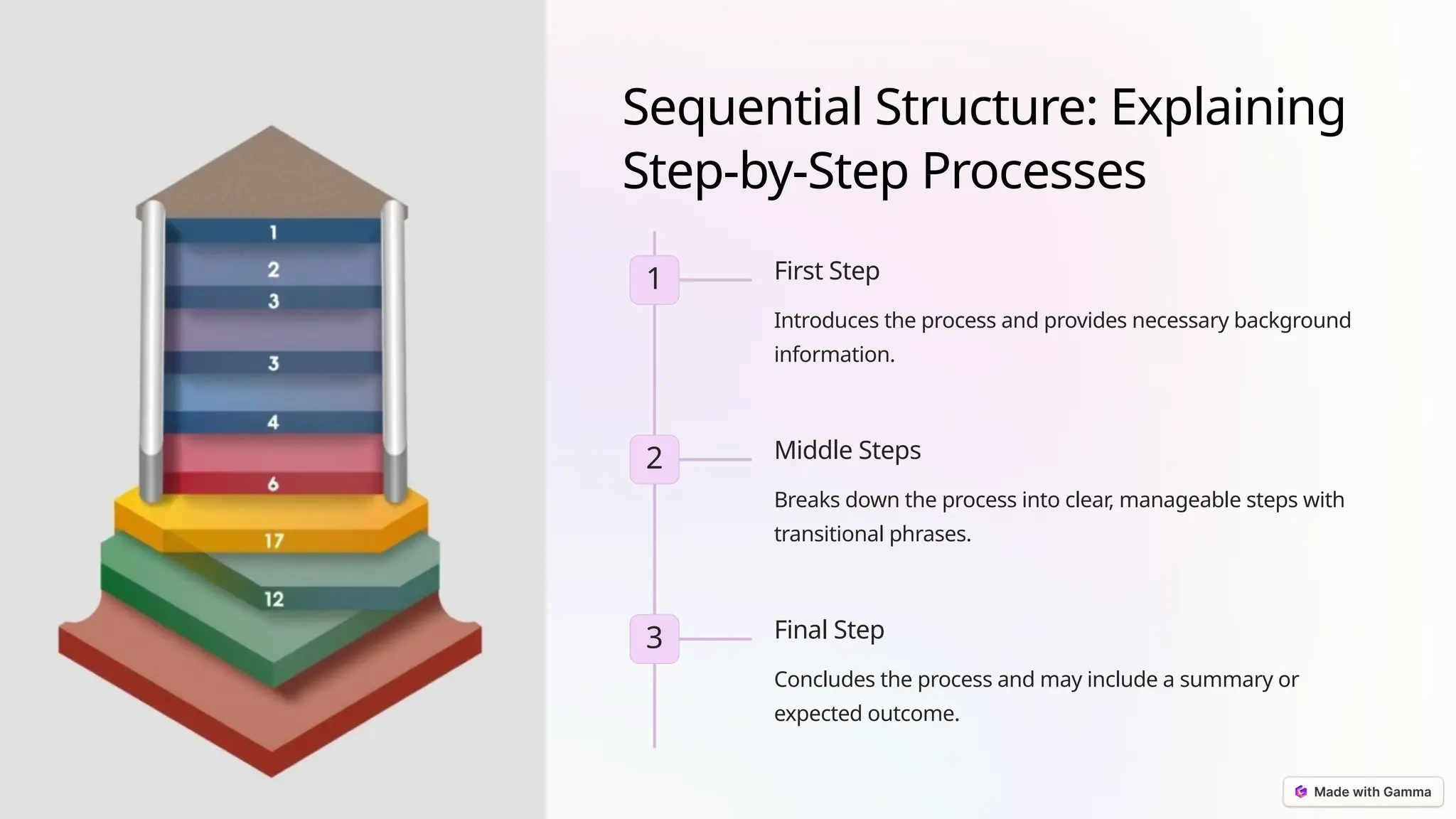
Sequential Structure: Explaining
Step-by-Step Processes
1 First Step
Introduces the process and provides necessary background
information.
2 Middle Steps
Breaks down the process into clear, manageable steps with
transitional phrases.
3 Final Step
Concludes the process and may include a summary or
expected outcome.
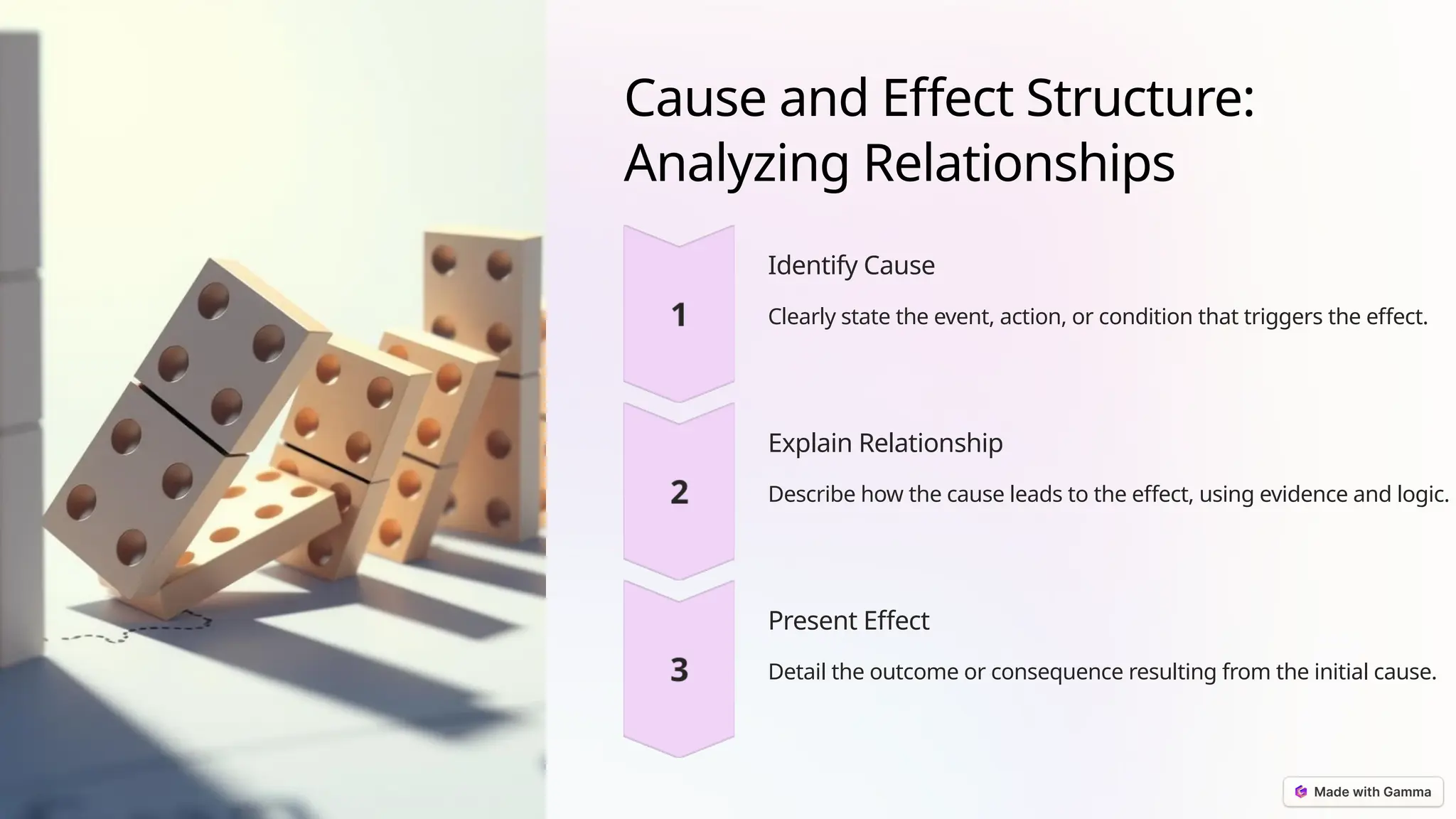
Cause and Effect Structure:
Analyzing Relationships
Identify Cause
Clearly state the event, action, or condition that triggers the effect.
Explain Relationship
Describe how the cause leads to the effect, using evidence and logic.
Present Effect
Detail the outcome or consequence resulting from the initial cause.
Comparison and Contrast Structure: Highlighting
Similarities and Differences
Subject A
Describe key features and
characteristics of the first subject.
Similarities
Highlight shared attributes or
commonalities between both
subjects.
Subject B
Detail unique aspects and traits of
the second subject.
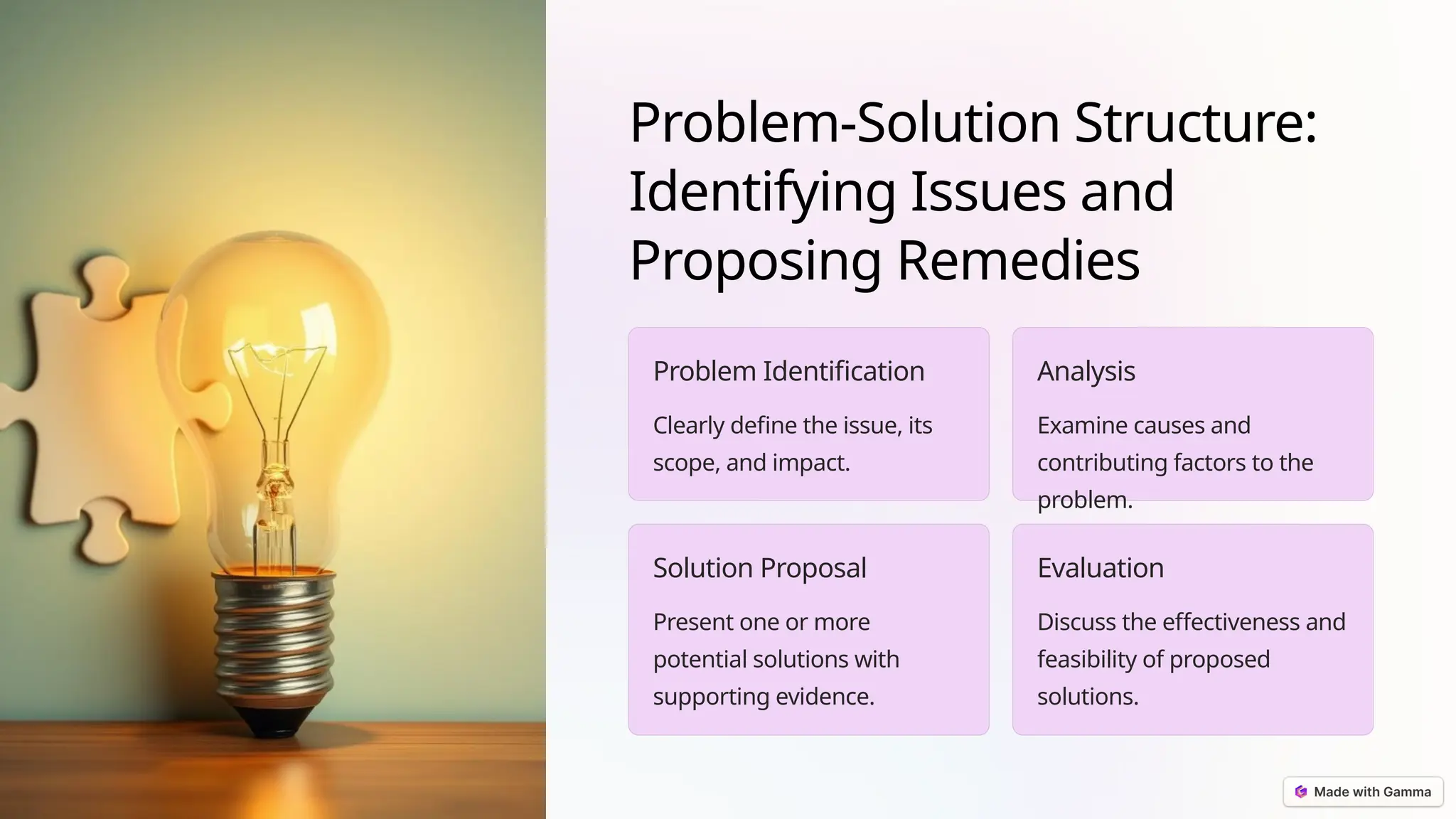
Problem-Solution Structure:
Identifying Issues and
Proposing Remedies
Problem Identification
Clearly define the issue, its
scope, and impact.
Analysis
Examine causes and
contributing factors to the
problem.
Solution Proposal
Present one or more
potential solutions with
supporting evidence.
Evaluation
Discuss the effectiveness and
feasibility of proposed
solutions.
Chronological Structure:
Organizing Events Over Time
1 Early Period
Introduce the beginning of the timeline, setting the context.
2 Middle Events
Present key occurrences in order, using clear time markers.
3 Recent Developments
Conclude with the most recent events or current state.
Examples of Expository Texts
1 Textbooks
Utilize various structures
to explain complex topics
in an accessible manner.
2 News Articles
Often employ problem-
solution or cause-effect
structures to report
current events.
3 How-to Guides
Use sequential structure
to break down processes
into manageable steps.
4 Scientific Papers
Combine multiple
structures to present
research findings and
analyses.
Identifying Text Structures in
Everyday Expository Writing
Structure Common Indicators Example Text Type
Descriptive "Characteristics
include..."
Product Reviews
Sequential "First... Next...
Finally..."
Recipes
Cause/Effect "As a result...
Because..."
Environmental
Reports
Compare/Contrast "Similarly... In
contrast..."
Movie Reviews

Text-Structures-in-Expository-Writing.pptx

  • 1.
  • 2.
    Expository writing aimsto inform, explain, or describe. It utilizes various text structures to organize information effectively. Understanding these structures enhances both writing and comprehension skills.
  • 3.
    Common Text Structuresin Expository Writing Descriptive Focuses on detailing characteristics and features of a subject. Sequential Presents information in a step-by-step or chronological order. Compare/Contrast Highlights similarities and differences between two or more subjects. Cause/Effect Examines the relationships between events and their outcomes.
  • 4.
    Descriptive Structure: Describing Characteristics 1Vivid Details Uses sensory language to paint a clear picture in the reader's mind. 2 Organized Presentation Arranges details logically, often from general to specific or by importance. 3 Focused Purpose Aims to create a strong, lasting impression of the subject.
  • 5.
    Sequential Structure: Explaining Step-by-StepProcesses 1 First Step Introduces the process and provides necessary background information. 2 Middle Steps Breaks down the process into clear, manageable steps with transitional phrases. 3 Final Step Concludes the process and may include a summary or expected outcome.
  • 6.
    Cause and EffectStructure: Analyzing Relationships Identify Cause Clearly state the event, action, or condition that triggers the effect. Explain Relationship Describe how the cause leads to the effect, using evidence and logic. Present Effect Detail the outcome or consequence resulting from the initial cause.
  • 7.
    Comparison and ContrastStructure: Highlighting Similarities and Differences Subject A Describe key features and characteristics of the first subject. Similarities Highlight shared attributes or commonalities between both subjects. Subject B Detail unique aspects and traits of the second subject.
  • 8.
    Problem-Solution Structure: Identifying Issuesand Proposing Remedies Problem Identification Clearly define the issue, its scope, and impact. Analysis Examine causes and contributing factors to the problem. Solution Proposal Present one or more potential solutions with supporting evidence. Evaluation Discuss the effectiveness and feasibility of proposed solutions.
  • 9.
    Chronological Structure: Organizing EventsOver Time 1 Early Period Introduce the beginning of the timeline, setting the context. 2 Middle Events Present key occurrences in order, using clear time markers. 3 Recent Developments Conclude with the most recent events or current state.
  • 10.
    Examples of ExpositoryTexts 1 Textbooks Utilize various structures to explain complex topics in an accessible manner. 2 News Articles Often employ problem- solution or cause-effect structures to report current events. 3 How-to Guides Use sequential structure to break down processes into manageable steps. 4 Scientific Papers Combine multiple structures to present research findings and analyses.
  • 11.
    Identifying Text Structuresin Everyday Expository Writing Structure Common Indicators Example Text Type Descriptive "Characteristics include..." Product Reviews Sequential "First... Next... Finally..." Recipes Cause/Effect "As a result... Because..." Environmental Reports Compare/Contrast "Similarly... In contrast..." Movie Reviews