Common Text Structures
K. DEVENDRAKULA THIRUMAGAL
Assistant professor
Lakshmi College of Education,
Gandhigram ,Dindigul,
Tamilnadu
India
k.thirumagal84@gmail.com
Common text structure
• It is important understand that there is no “official “ list
of text structure
Compare- contrast structure
Cause-effect structure
Sequence structure
Problem-Solution structure
Descriptive structure
Question-answer structure
Cyclical structure
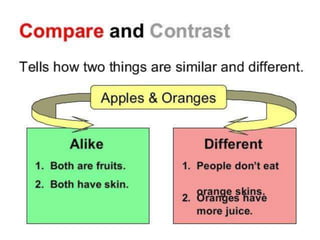
Compare- contrast structure
This text structure shows how two or more ideas or
items.
This text structure is also fairly easy for students to
understand.
This text may use a clustered approach, with details
about one topic followed by details about the other.
The text may also show an alternating approach , with
the author going back between the two topics.
cont..
Transition words may includes
Like
Similar
Unlike
On the other hand
Also
Cause-effect structure
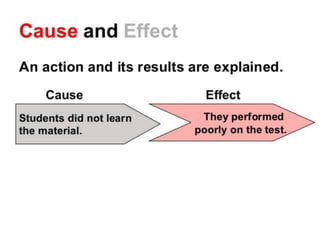
This text structure shows how one or more causes
leds to one or more effects.
This text structure also has a strong component,
since causes come before effects.
Time order transitions are also used , which can
lead to some confusion for students.
Cont..
Another complication is that many texts do not include
just one cause leading to one effect, instead there may be
several causes and several effects.
Transitions words such as
Cause
Effect
As a result
Consequently
Because
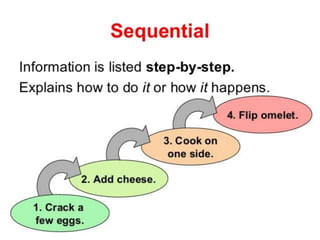
Sequence structure
This text structure gives readers a chronological of events
or a list of steps in a procedure.
A process is explained.
Transitions words such as
• First,second,third
• Next before
• Finally
• During
• In the end
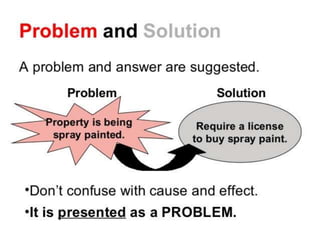
Problem-solution structure
This text structure presents a problem, and shows
how it can be (or has been) solved.
This text structure can be confused with cause and
effect.
Transitions may include problem, solution,
solve,effect,hopeful,issue, as a result, causes.
Description structure
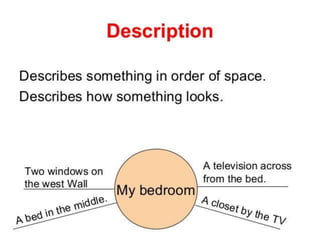
This text structure shows what an item or place
is like.
Information is organised in order of space(top to
bottom, left to right)
Transitions in this structure might include spatial
words such as next to, on the top of, beside, for
example, for instance, most important, in front, to
begin with, near.
Question-answer structure
A question is asked and an answer is given.
Transition words such as
• What
• Where
• Who
• Why
• How
• When
Cyclical Structure
This structure starts with an event
then progresses through a series until it
is back to the beginning event.
Common text structures

Common text structures

  • 1.
    Common Text Structures K.DEVENDRAKULA THIRUMAGAL Assistant professor Lakshmi College of Education, Gandhigram ,Dindigul, Tamilnadu India k.thirumagal84@gmail.com
  • 2.
    Common text structure •It is important understand that there is no “official “ list of text structure Compare- contrast structure Cause-effect structure Sequence structure Problem-Solution structure Descriptive structure Question-answer structure Cyclical structure
  • 3.
    Compare- contrast structure Thistext structure shows how two or more ideas or items. This text structure is also fairly easy for students to understand. This text may use a clustered approach, with details about one topic followed by details about the other. The text may also show an alternating approach , with the author going back between the two topics.
  • 4.
    cont.. Transition words mayincludes Like Similar Unlike On the other hand Also
  • 6.
    Cause-effect structure This textstructure shows how one or more causes leds to one or more effects. This text structure also has a strong component, since causes come before effects. Time order transitions are also used , which can lead to some confusion for students.
  • 7.
    Cont.. Another complication isthat many texts do not include just one cause leading to one effect, instead there may be several causes and several effects. Transitions words such as Cause Effect As a result Consequently Because
  • 9.
    Sequence structure This textstructure gives readers a chronological of events or a list of steps in a procedure. A process is explained. Transitions words such as • First,second,third • Next before • Finally • During • In the end
  • 11.
    Problem-solution structure This textstructure presents a problem, and shows how it can be (or has been) solved. This text structure can be confused with cause and effect. Transitions may include problem, solution, solve,effect,hopeful,issue, as a result, causes.
  • 13.
    Description structure This textstructure shows what an item or place is like. Information is organised in order of space(top to bottom, left to right) Transitions in this structure might include spatial words such as next to, on the top of, beside, for example, for instance, most important, in front, to begin with, near.
  • 15.
    Question-answer structure A questionis asked and an answer is given. Transition words such as • What • Where • Who • Why • How • When
  • 16.
    Cyclical Structure This structurestarts with an event then progresses through a series until it is back to the beginning event.