Sampling
 Population:
The whole bulk of the material available for testing is termed as population.
 Sample:
The sample is a relatively small number of individual members which is selected to
represent that population. A sample must consist of a number of individual. An
individual is one member of the population.
 Sampling:
Selection of material from the whole bulk for testing.
 There are two types of sampling methods-
1) Random sampling:
-A method of selecting the individual where every individual of a sample in the
population has an equal chance of being selected.
-the number of sample must be sufficiently large to include all variation of the
individuals in the population.
Sampling
2) Biased sampling method:
 In biased sampling method, the selection of an individual is influenced by
factors other than chance.
 Hence the sample does not truly represent the bulk.
 Depending on the position of the sampling person.
 Factors affecting sampling methods:
 The form of the material
 Amount of material available
 Nature of the test
 Type of testing instrument
 Information required
 Degree of accuracy required
Sampling
 Sampling methods for different textile materials:
 Sampling for the determination of fiber properties
 Sampling methods for yarn
 Sampling methods for fabric
 Sampling for the determination of fibre properties:
 It depends upon the form in which the fibre is available. Different techniques for
different form of fibres-
 Fibres in bale
 Fibres in sliver
 Fibres in yarn etc
Sampling
 Some techniques / methods involved for
sampling fibres-
The squaring technique
The cut squaring method
The zoning technique (for raw cotton)
Dye sampling method (for wool)
The tong sampling method (for wool)
Core sampling method (for wool)
Sampling
 Sampling methods for yarn :
 Samples are randomly selected by various methods which differ according
to the tests required.
 Sampling for the determination of yarn count (yarn from different packages)
 Sampling for the determination of yarn count (yarn removed from fabric)
 Sampling for the determination of yarn twist (yarn from packages)
 Sampling for the determination of lea strength of spun yarn
 Sampling for the determination of single thread tensile test (from any yarn
package or from any woven/knitted fabric)
Sampling
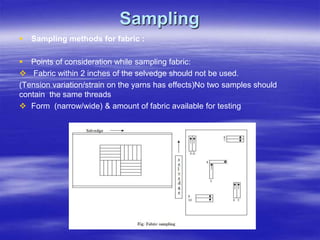
 Sampling methods for fabric :
 Points of consideration while sampling fabric:
 Fabric within 2 inches of the selvedge should not be used.
(Tension variation/strain on the yarns has effects)No two samples should
contain the same threads
 Form (narrow/wide) & amount of fabric available for testing

Textile Testing and Quality Control

  • 1.
    Sampling  Population: The wholebulk of the material available for testing is termed as population.  Sample: The sample is a relatively small number of individual members which is selected to represent that population. A sample must consist of a number of individual. An individual is one member of the population.  Sampling: Selection of material from the whole bulk for testing.  There are two types of sampling methods- 1) Random sampling: -A method of selecting the individual where every individual of a sample in the population has an equal chance of being selected. -the number of sample must be sufficiently large to include all variation of the individuals in the population.
  • 2.
    Sampling 2) Biased samplingmethod:  In biased sampling method, the selection of an individual is influenced by factors other than chance.  Hence the sample does not truly represent the bulk.  Depending on the position of the sampling person.  Factors affecting sampling methods:  The form of the material  Amount of material available  Nature of the test  Type of testing instrument  Information required  Degree of accuracy required
  • 3.
    Sampling  Sampling methodsfor different textile materials:  Sampling for the determination of fiber properties  Sampling methods for yarn  Sampling methods for fabric  Sampling for the determination of fibre properties:  It depends upon the form in which the fibre is available. Different techniques for different form of fibres-  Fibres in bale  Fibres in sliver  Fibres in yarn etc
  • 4.
    Sampling  Some techniques/ methods involved for sampling fibres- The squaring technique The cut squaring method The zoning technique (for raw cotton) Dye sampling method (for wool) The tong sampling method (for wool) Core sampling method (for wool)
  • 5.
    Sampling  Sampling methodsfor yarn :  Samples are randomly selected by various methods which differ according to the tests required.  Sampling for the determination of yarn count (yarn from different packages)  Sampling for the determination of yarn count (yarn removed from fabric)  Sampling for the determination of yarn twist (yarn from packages)  Sampling for the determination of lea strength of spun yarn  Sampling for the determination of single thread tensile test (from any yarn package or from any woven/knitted fabric)
  • 6.
    Sampling  Sampling methodsfor fabric :  Points of consideration while sampling fabric:  Fabric within 2 inches of the selvedge should not be used. (Tension variation/strain on the yarns has effects)No two samples should contain the same threads  Form (narrow/wide) & amount of fabric available for testing