Name - Tapaswini PattnayakName - Tapaswini Pattnayak
Roll - 16Roll - 16
Subject – ScienceSubject – Science
Sub-teacher – B.K.DASSub-teacher – B.K.DAS
Synthetic Fibres And Plastics
What are synthetic fibers
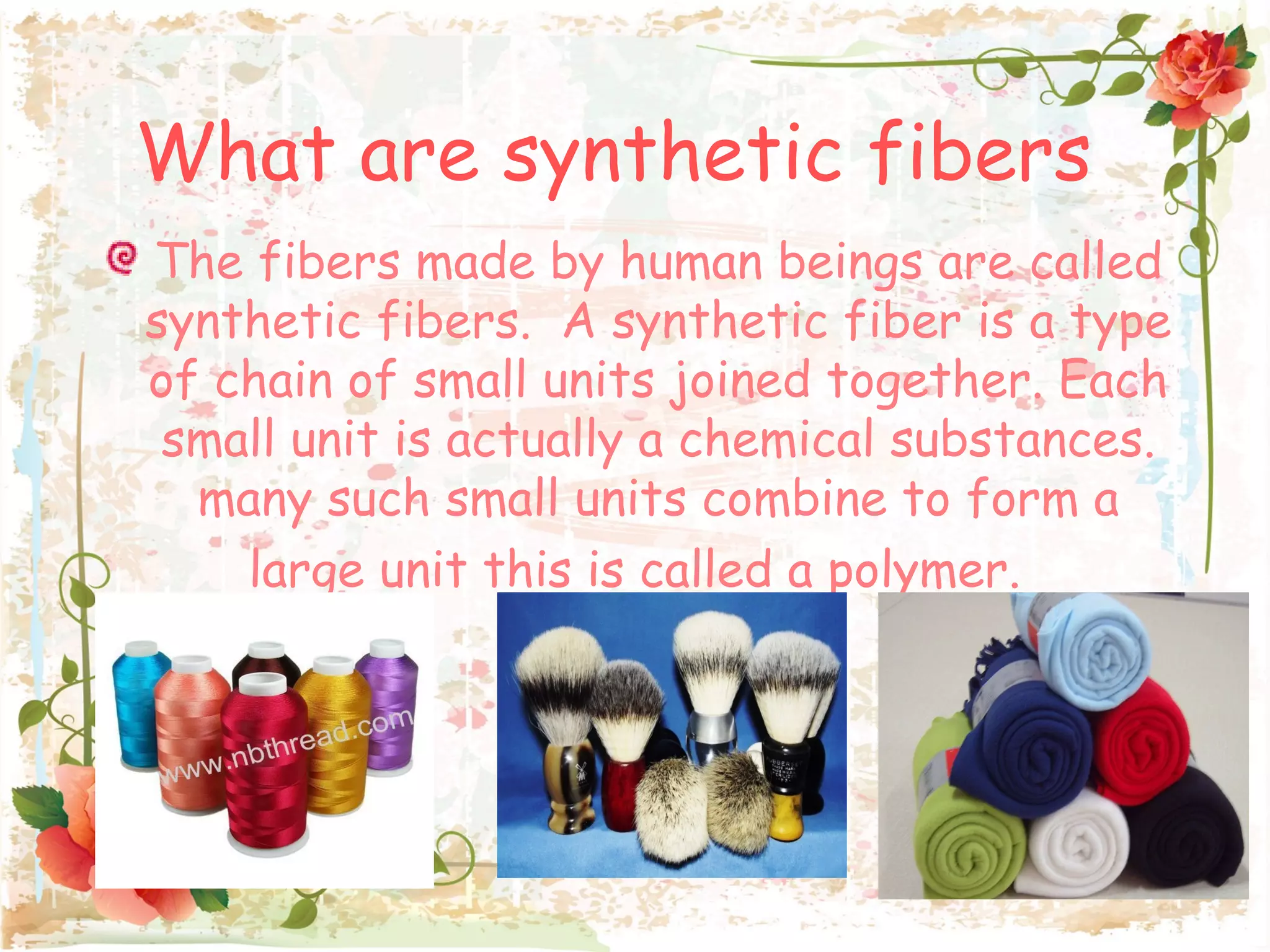
The fibers made by human beings are called
synthetic fibers. A synthetic fiber is a type
of chain of small units joined together. Each
small unit is actually a chemical substances.
many such small units combine to form a
large unit this is called a polymer.
Types Of Synthetic fibres
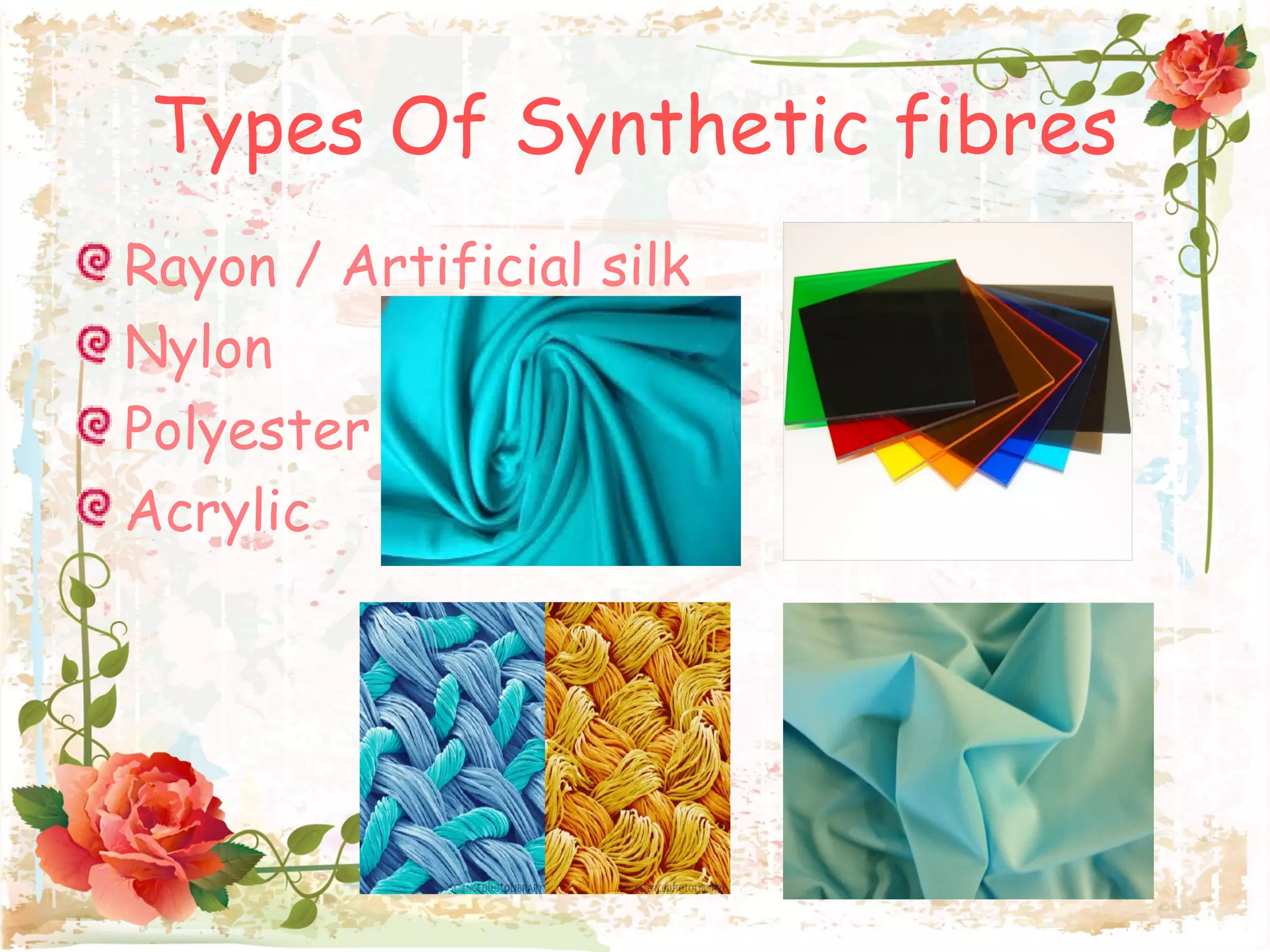
Rayon / Artificial silk
Nylon
Polyester
Acrylic
Rayon or artificial silk
Rayon was the first man-made fibre from
a natural base material. Rayon is prepared
from cellulose. Rayon has silk like
appearance hence it known as artificial
silk. Rayon is mixed with cotton to make
bed sheets or mixed with wool to make
carpets.
Nylon
Nylon was first developed in by American
scientist, Wallace H. carthers for m/s
DuPont de Nemours & company America in
1935. It is a strongest synthetic plastic
material which can be moulded to any
shape. People believed that nylon has been
named since its products were
simultaneously launched in new York and
London.
Uses of nylon fibre
Nylon fibre is used for fine sarees ,
thread, reel thread, ropes, fishing lines
and fishing nets, carpets, rain coat,
swim wear, parachutes, umbrella etc.
Polyester
Alcohol and organic acids react
together to make compounds called
esters which are polymers. These are
therefore called polyesters.
Acrylic
Acrylic fibre is commonly known by
different trade names such as ‘acrilan’ ,
‘Orlon’, ‘Zefan’ . It is a synthetic wool-
like fibre with crimps.
Plastic
Plastic is also a polymer like the synthetic fibre. All
plastics do not have the same type of arrangement
of units. In some it is linear, whereas in others it is
cross-linked.
Plastics are two types-
1. thermoplastics
2. thermosetting
Thermoplastic
some plastic articles can bend easily
while some break when forced to bend.
When we add hot water to a plastic
bottle, it gets deformed. Such plastic
which gets deformed easily on heating
and can be bent easily are known as
thermoplastics.
Thermosetting
some plastics which when moulded
once, cannot be softened by heating.
These are called thermosetting.
Plastic is non-reactive
You know that metals like iron
get rusted when left exposed to
moisture and air. But plastics do not
react with water and air. They are not
corroded easily. That is why they are
used to store various kinds of material,
including many chemicals.
Plastic is light, strong and
durable
Talk to your parents or grandparents about
the types of buckets that were used in the
past. What is the material of the buckets or
mugs you are using today? What are the
advantages of using a plastic container? Since
plastic is very light, strong, durable and can
be moulded into different shapes and sizes, it
is used for various purposes. Plastics are
generally cheaper than metals. They are
widely used in industry and for household
articles.
Plastics are poor conductors
plastics are poor conductors of heat and
electricity. That is why electrical wires
have plastic covering, and handles of
screw drivers are made of plastic. As
mentioned above, handles of frying pans
are also made of plastics.
Plastic and environment
• When we go to the market, we get usually things
wrapped in plastic or packed in polythene bags. That
is one reason why plastic waste keeps getting
accumulated in our homes. Ultimately, plastic finds its
way in the garbage. Disposal of plastic is a major
problem.  A material which gets decomposed through
natural processes, such as action by bacteria, is called
biodegradable . A material which is not easily
decomposed by natural processes is termed as non-
biodegradable
Please save the environment
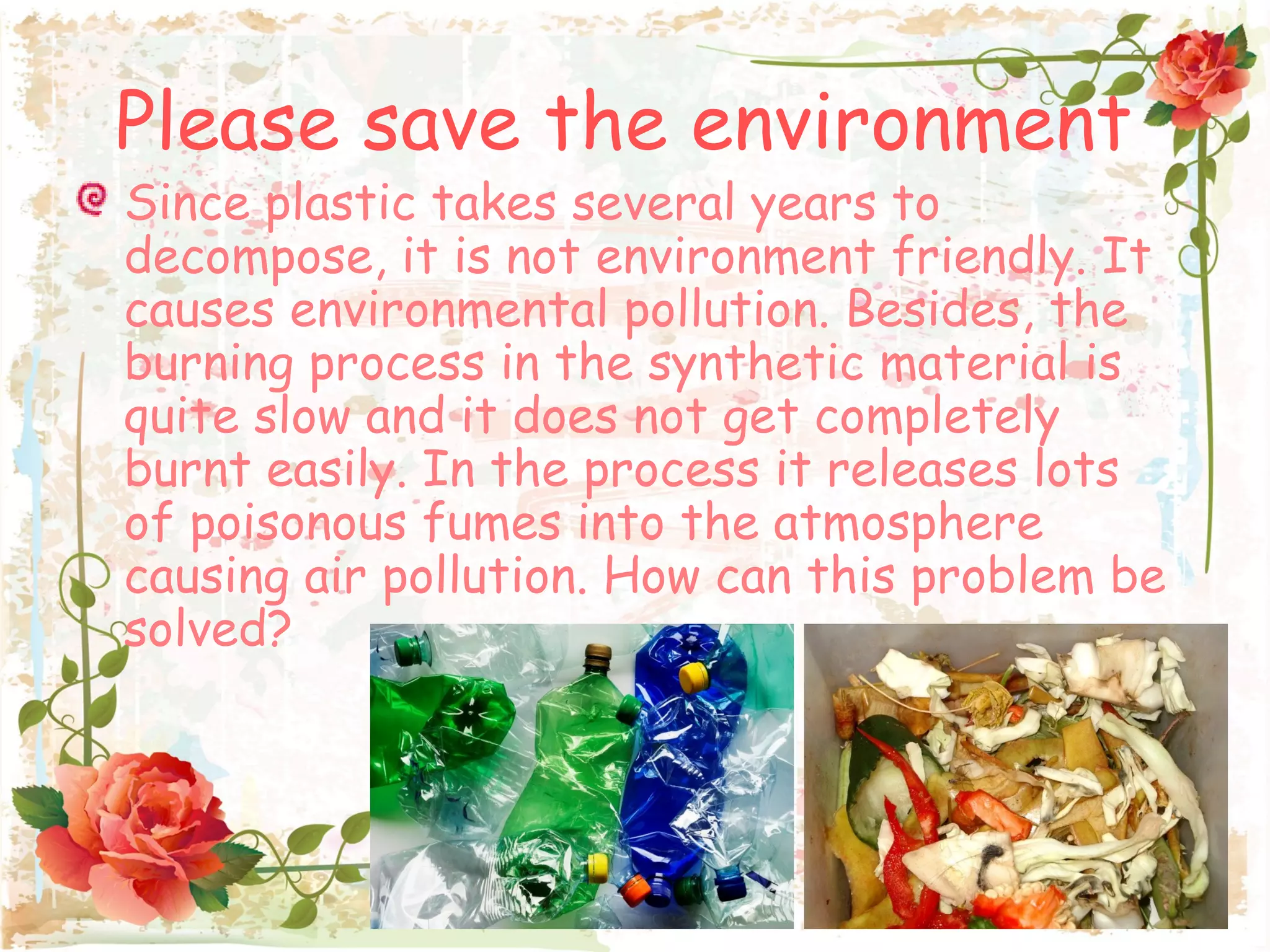
Since plastic takes several years to
decompose, it is not environment friendly. It
causes environmental pollution. Besides, the
burning process in the synthetic material is
quite slow and it does not get completely
burnt easily. In the process it releases lots
of poisonous fumes into the atmosphere
causing air pollution. How can this problem be
solved?
Avoid the use of plastics as far as possible.
Make use of bags made of cotton or jute when
you go for shopping. The biodegradable and
non- biodegradable wastes should be collected
separately and disposed off separately.
Practice this in your homes. It is better to
recycle the plastic waste. Most of the
thermoplastics can be recycled. Make a list of
items that can be recycled. However, during
recycling certain coloring agents are added.
This limits its usage especially for storage of
food.
Do not throw plastic bags in the water bodies or on
the road.
Take a cotton carry-bag or a jute bag while going for
shopping.
 Try to minimize the use of plastic materials e.g., use
a steel lunch box instead of a plastic one.
Lets take a
promise
Synthetic fibres

Synthetic fibres

  • 1.
    Name - TapaswiniPattnayakName - Tapaswini Pattnayak Roll - 16Roll - 16 Subject – ScienceSubject – Science Sub-teacher – B.K.DASSub-teacher – B.K.DAS Synthetic Fibres And Plastics
  • 2.
    What are syntheticfibers The fibers made by human beings are called synthetic fibers. A synthetic fiber is a type of chain of small units joined together. Each small unit is actually a chemical substances. many such small units combine to form a large unit this is called a polymer.
  • 3.
    Types Of Syntheticfibres Rayon / Artificial silk Nylon Polyester Acrylic
  • 4.
    Rayon or artificialsilk Rayon was the first man-made fibre from a natural base material. Rayon is prepared from cellulose. Rayon has silk like appearance hence it known as artificial silk. Rayon is mixed with cotton to make bed sheets or mixed with wool to make carpets.
  • 5.
    Nylon Nylon was firstdeveloped in by American scientist, Wallace H. carthers for m/s DuPont de Nemours & company America in 1935. It is a strongest synthetic plastic material which can be moulded to any shape. People believed that nylon has been named since its products were simultaneously launched in new York and London.
  • 6.
    Uses of nylonfibre Nylon fibre is used for fine sarees , thread, reel thread, ropes, fishing lines and fishing nets, carpets, rain coat, swim wear, parachutes, umbrella etc.
  • 7.
    Polyester Alcohol and organicacids react together to make compounds called esters which are polymers. These are therefore called polyesters.
  • 8.
    Acrylic Acrylic fibre iscommonly known by different trade names such as ‘acrilan’ , ‘Orlon’, ‘Zefan’ . It is a synthetic wool- like fibre with crimps.
  • 9.
    Plastic Plastic is alsoa polymer like the synthetic fibre. All plastics do not have the same type of arrangement of units. In some it is linear, whereas in others it is cross-linked. Plastics are two types- 1. thermoplastics 2. thermosetting
  • 10.
    Thermoplastic some plastic articlescan bend easily while some break when forced to bend. When we add hot water to a plastic bottle, it gets deformed. Such plastic which gets deformed easily on heating and can be bent easily are known as thermoplastics.
  • 11.
    Thermosetting some plastics whichwhen moulded once, cannot be softened by heating. These are called thermosetting.
  • 12.
    Plastic is non-reactive Youknow that metals like iron get rusted when left exposed to moisture and air. But plastics do not react with water and air. They are not corroded easily. That is why they are used to store various kinds of material, including many chemicals.
  • 13.
    Plastic is light,strong and durable Talk to your parents or grandparents about the types of buckets that were used in the past. What is the material of the buckets or mugs you are using today? What are the advantages of using a plastic container? Since plastic is very light, strong, durable and can be moulded into different shapes and sizes, it is used for various purposes. Plastics are generally cheaper than metals. They are widely used in industry and for household articles.
  • 14.
    Plastics are poorconductors plastics are poor conductors of heat and electricity. That is why electrical wires have plastic covering, and handles of screw drivers are made of plastic. As mentioned above, handles of frying pans are also made of plastics.
  • 15.
    Plastic and environment •When we go to the market, we get usually things wrapped in plastic or packed in polythene bags. That is one reason why plastic waste keeps getting accumulated in our homes. Ultimately, plastic finds its way in the garbage. Disposal of plastic is a major problem.  A material which gets decomposed through natural processes, such as action by bacteria, is called biodegradable . A material which is not easily decomposed by natural processes is termed as non- biodegradable
  • 16.
    Please save theenvironment Since plastic takes several years to decompose, it is not environment friendly. It causes environmental pollution. Besides, the burning process in the synthetic material is quite slow and it does not get completely burnt easily. In the process it releases lots of poisonous fumes into the atmosphere causing air pollution. How can this problem be solved?
  • 17.
    Avoid the useof plastics as far as possible. Make use of bags made of cotton or jute when you go for shopping. The biodegradable and non- biodegradable wastes should be collected separately and disposed off separately. Practice this in your homes. It is better to recycle the plastic waste. Most of the thermoplastics can be recycled. Make a list of items that can be recycled. However, during recycling certain coloring agents are added. This limits its usage especially for storage of food.
  • 18.
    Do not throwplastic bags in the water bodies or on the road. Take a cotton carry-bag or a jute bag while going for shopping.  Try to minimize the use of plastic materials e.g., use a steel lunch box instead of a plastic one. Lets take a promise