TETRACYCLINES
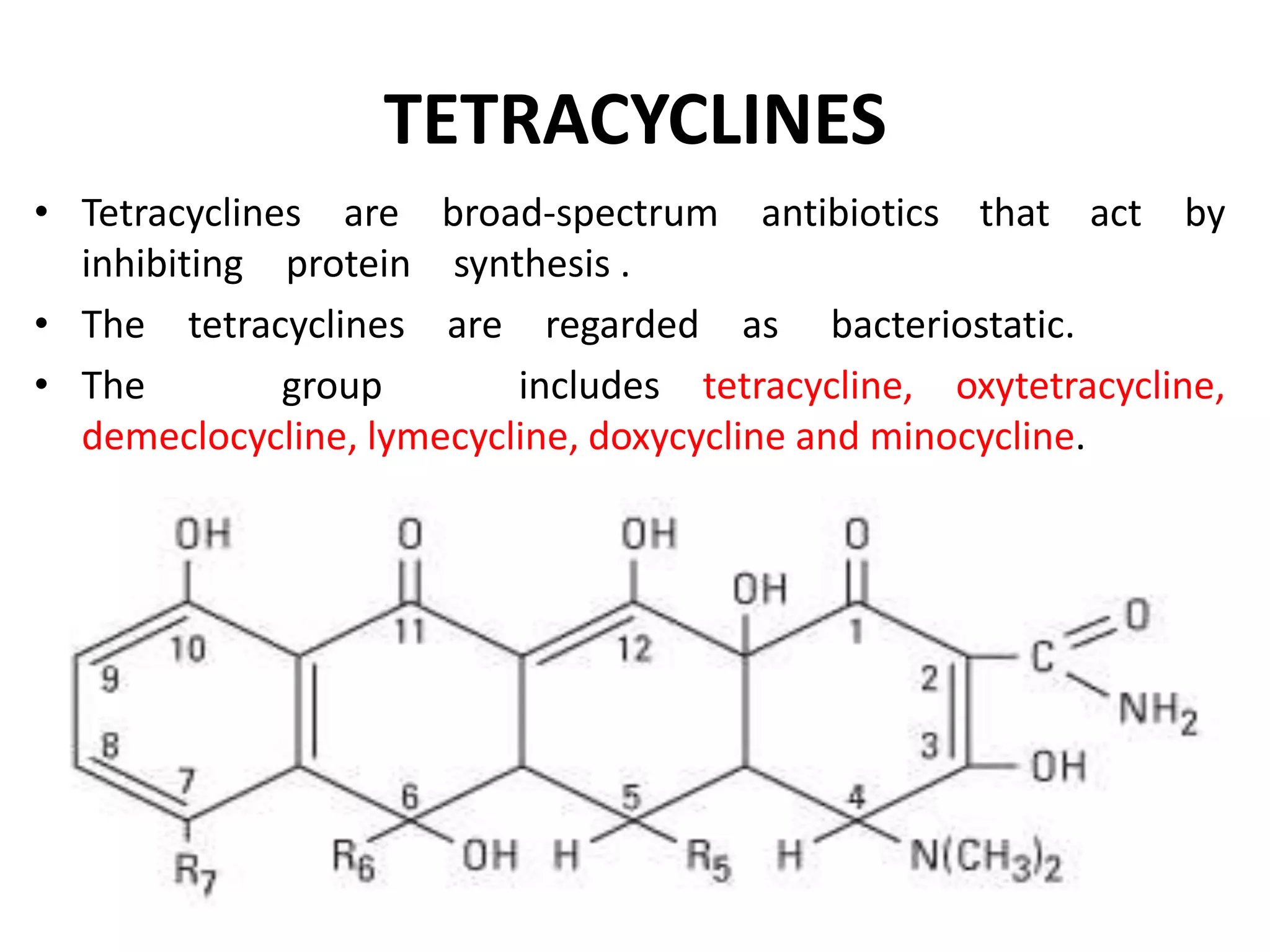
• Tetracyclines are broad-spectrum antibiotics that act by
inhibiting protein synthesis .
• The tetracyclines are regarded as bacteriostatic.
• The group includes tetracycline, oxytetracycline,
demeclocycline, lymecycline, doxycycline and minocycline.
Mechanism of Action
• Following uptake into susceptible organisms
by active transport, tetracyclines act by
inhibiting protein synthesis.
• Inside the bacterial cell, tetracycline bind reversibly to
the 30s subunit of the bacterial ribosome, blocking the
binding of aminoacyl-tRNA to the acceptor site on the
mRNA complex.
• This prevents addition of amino acids to the growing
peptide & bacterial protein synthesis is blocked.
Therapeutic Uses
1.Rickettsial Infections
• Doxycycline is the drug of choice for treatment of Rocky Mountain
spotted fever (fever and skin spots caused by ticks).
2.Mycoplasma Infections
• Treatment of pneumonia with tetracycline shortens the duration of
fever, cough, malaise (discomfort, illness, or unease), fatigue,
pulmonary rashes, and radiological abnormalities in the lungs
3.Chlamydia Infection
• Trachomatis (Eye disorder) and inclusion conjunctivitis
• Nonspecific urethritis, Acute pelvic inflammatory disease.
4.Bacillary Infections
• Tetracyclines are effective for acute and chronic infections including
Tularemia (acute plague), Cholera (Vibrio cholera) and gonorrhea.
5.Other Infections
• Acne: Tetracyclines are useful acne vulgaris.
• Gastrointestinal infection
• Sexual infection: Syphilis, Gonorrhoea, etc.
Oral Dose
• The oral dosage for rapidly excreted tetracyclines, equivalent to
tetracycline hydrochloride, is 0.25-0.5 g four times daily for
adults and 20-40 mg/kg/d for children (12 years of age and
older).
• For severe systemic infections, the higher dosage is indicated, at
least for the first few days.
• The daily dose is 600 mg for demeclocycline or methacycline,
• 100 mg once or twice daily for doxycycline, and
• 100 mg twice daily for minocycline.
Parenteral Dose
• Several tetracyclines are available for intravenous injection in
doses of 0.1-0.5 g every 6-12 hours (similar to oral doses) but
doxycycline is the usual preferred agent, at a dosage of 100 mg
every 12-24 hours.
Adverse Effect
• GI Problem: Nausea, vomiting, diarrhoea, abdominal discomfort,
epigastric burning etc.
• Phototoxicity: Sun burn-like skin reaction on exposed part,
Onycholyris (detached nail), pigmentation nail etc.
• Hepatotoxicity: Fatty liver, jaundice, acidosis, azotemia
(increased nitrogenous bodies in blood)
• Renal Toxicity: Aggregate uremia, azotemia (due to metabolism
of amino acid)
• Noncalcified Bone: discoloration and pigmentation of teeth in
children may occur due to tetracycline intake by pregnant
women
• Hypersensitivity reaction: Rashes, urticaria, generalized
exfoliative dermatitis, angioedema, anaphylaxis, burning eye,
vaginitis etc.
• Super infection: through mouth, skin or vagina may be involved;
intestinal super infection is most prominent,
pseudomembranous enterocolitis is most serious
Contraindication and Precaution
• Tetracyclines are contraindicated to Pregnancy and lactating
mother, so it is not use in those patients. (complex formation
with Ca++, Mg++ & Al+++)
• It is also not useful in patients with Hepatic and kidney
disease (Although, Doxycycline is used in patient with renal
impairment)
• It should not be used to children of less than 12 years of age
• Intramuscular injection is not recommended because of pain
and inflammation at the injection site.
Aminoglycosides
• Aminoglycosides are the semisynthetic antibiotics that
inhibits the protein synthesis & have bactericidal action.
• They are used most widely against gram –ve enteric
bacteria, especially in bacteremia & sepsis.
• Examples:
• Streptomycin,
• Kanamycin,
• Amikacin,
• Tobramycin,
• Gentamicin, and
• Neomycin
Mechanism of Action
• Aminoglycoside binds to the 30s ribosomal
subunit and interferes protein synthesis.
• Inhibition of protein synthesis may occur due to:
Interference with peptide formation
Misreading of mRNA
Breakup of polysomes
Mechanism of Action
Therapeutic Uses
• Streptomycin: Tubercular infection, Bacterial
endocarditis, Tularemia (like plague transmitted by
rabbit), plague
• Gentamycin: Urinary tract infection (UTI),
Pneumonia, Meningitis
• Tobramycin: Pneumonia, Osteomyelitis
• Neomycin: Burns, wounds, skin ulcers, infected
dermatitis
• Kanamycin: treatment of serious bacterial infections
• Amikacin: treatment of various bacterial infections
Aminoglycosides Dose
Streptomycin For TB: 15 mg/kg daily, (maximum of 1 g) for 30-60 days.
In the treatment of non-tubercular infections, usual adult doses
of 1 to 2 g daily in divided doses are given.
Kanamycin In acute infections 15 mg/kg daily IM, (maximum 1.5 g) in 2 to 4
divided doses for 7 to 10 days OR intravenous infusion of a 0.25
to 0.5% solution over 30 to 60 min.
Amikacin 15 mg/kg daily IM in equally divided doses every 8 or 12 hours.
In life-threatening infections, the dose may be increased to
500mg q8h
250 mg b.i.d may be given for the treatment of urinary-tract
infections.
Tobramycin 3-5mg/kg daily in divided doses
0.3% eye ointment
Gentamycin The usual dose of infection is 3-5mg/kg TDS for 7 to 10 days.
For urinary-tract infections, if renal function is not impaired,
160 mg once daily may be used.
Neomycin 0.25-1g q.i.d oral
0.3-0.5% topical
Adverse Effects
1.Ototoxicity:
• Progressive destruction of vestibular or cochlear sensory cells.
• It may damage vestibular and auditory function of 8th cranial nerve.
• Streptomycin and Gentamycin predominantly produce vestibular effects.
• Neomycin, Kanamycin, Amikacin primarily effect auditory function.
• Tobramycin may affect both.
2.Nephrotoxicity:
• Accumulation of aminoglycosides in proximal tubular cells may cause
nephrotoxicity.
3.Neuromuscular paralysis:
• Most often occurs after direct intraperitoneal or intrapleural application of large
doses of aminoglycosides.
• Occurs due to decrease in both the release of acetylcholine from prejunctional
nerve endings and the sensitivity of the postsynaptic site.
4.Allergic reactions:
• Contact dermatitis is a common reaction to topically applied neomycin.
• Rare hypersensitivity reactions; including skin rashes, eosinophilia, fever,
angioedema, exfoliative dermatitis, stomatitis, and anaphylactic shock.
Contraindication and Precaution
Contraindication
• Women, late in pregnancy, administration of
aminoglycosides may cause accumulation in fetal
plasma, and amniotic fluid (yellowish liquid that
surrounds the fetus during pregnancy). This may cause
loss of hearing of children.
Precaution
• Aminoglycosides produces reversible and irreversible
vestibular, cochlear and renal toxicity. Thus they are
limited to use.
CHLORAMPHENICOL
• Chloramphenicol is a broad spectrum antibiotic that
inhibits bacterial protein synthesis by binding to 50s
ribosomal subunit.
• It was originally isolated from cultures of
Streptomyces.
• Chloramphenicol has a wide spectrum
of antimicrobial activity, including Gram-
negative and Gram-positive organisms
and rickettsiae.
• It is bacteriostatic for most organisms
but kills H. influenzae.
• Resistance, caused by the production of
chloramphenicol acetyltransferase, is plasmid
mediated.
Mechanism of action
• Chloramphenicol inhibits bacterial protein synthesis
by interfering with ‘transfer’ of the elongating
peptide chain to the newly attached aminoacyl-tRNA
at the ribosome-mRNA complex.
• It specifically attaches to the 50s ribosome near the
acceptor (A) site and prevents peptide bond
formation between the newly attached aminoacid
and the nascent peptide chain without interfering
with the aminoacyl-tRNA attachment to the 30S
ribosome (the step blocked by tetracycline).
• At high doses, it can inhibit mammalian
mitochondrial protein synthesis as well. Bone
marrow cells are especially susceptible.
Therapeutic Uses
• Infections caused by Haemophilus influenzae
resistant to other drugs.
• Bacterial Meningitis in patients in whom
penicillin cannot be used.
• Bacterial conjunctivitis (given topically).
• Typhoid fever: chloramphenicol 0.5 g q6h (children
50mg/kg) till fever subsides then 0.25g q6h for 7
days
• Anaerobic infections
• Rickettsial Diseases
• Brucellosis
Dosage: 250-500mg q6h orally; 0.5% eye/ear drops
Adverse Effects
1. Bone marrow depression, resulting in pancytopenia
(a decrease in all blood cell elements)
2. ‘grey baby syndrome’ in newborns—vomiting, diarrhoea,
flaccidity, low temperature and an ashen-grey
colour—which carries 40% mortality.
3. Hypersensitivity reactions can occur.
4. Gastrointestinal disturbances secondary to alteration
of the intestinal microbial flora.
Contraindications
1. Pregnancy & Lactation
2. Anemia
3. Hepatic diseases
4. Premature babies
Macrolides
• Macrolides are antibiotics that inhibits bacterial protein synthesis by
binding to 50s ribosomal subunits.
• Generally considered to be bacteriostatic, they may be bactericidal at
higher doses.
e.g: Erythromycin, Roxithromycin, Clarithromycin and Azithromycin.
Mechanism of Action
• The macrolides bind irreversibly to a site on the 50s subunit of the
bacterial ribosome, thus inhibiting the translocation steps of protein
synthesis.
• It prevents translocation step where newly synthesized elongated
peptide chain moves from the acceptor site to the donor site.
• Hence, ribosome does not move along mRNA to expose the next
codon causes peptide bond termination and protein synthesis is
inhibited.
Mechanism of Action
Therapeutic Uses
• Mycoplasmal Pneumonia
• Legionnaires Pneumonia
• Whooping cough
• Chancroid
• Streptococcal pharyngitis, tonsilitis
• Syphilis, Gonorrhoea
• SABE (subacute bacterial endocarditis)
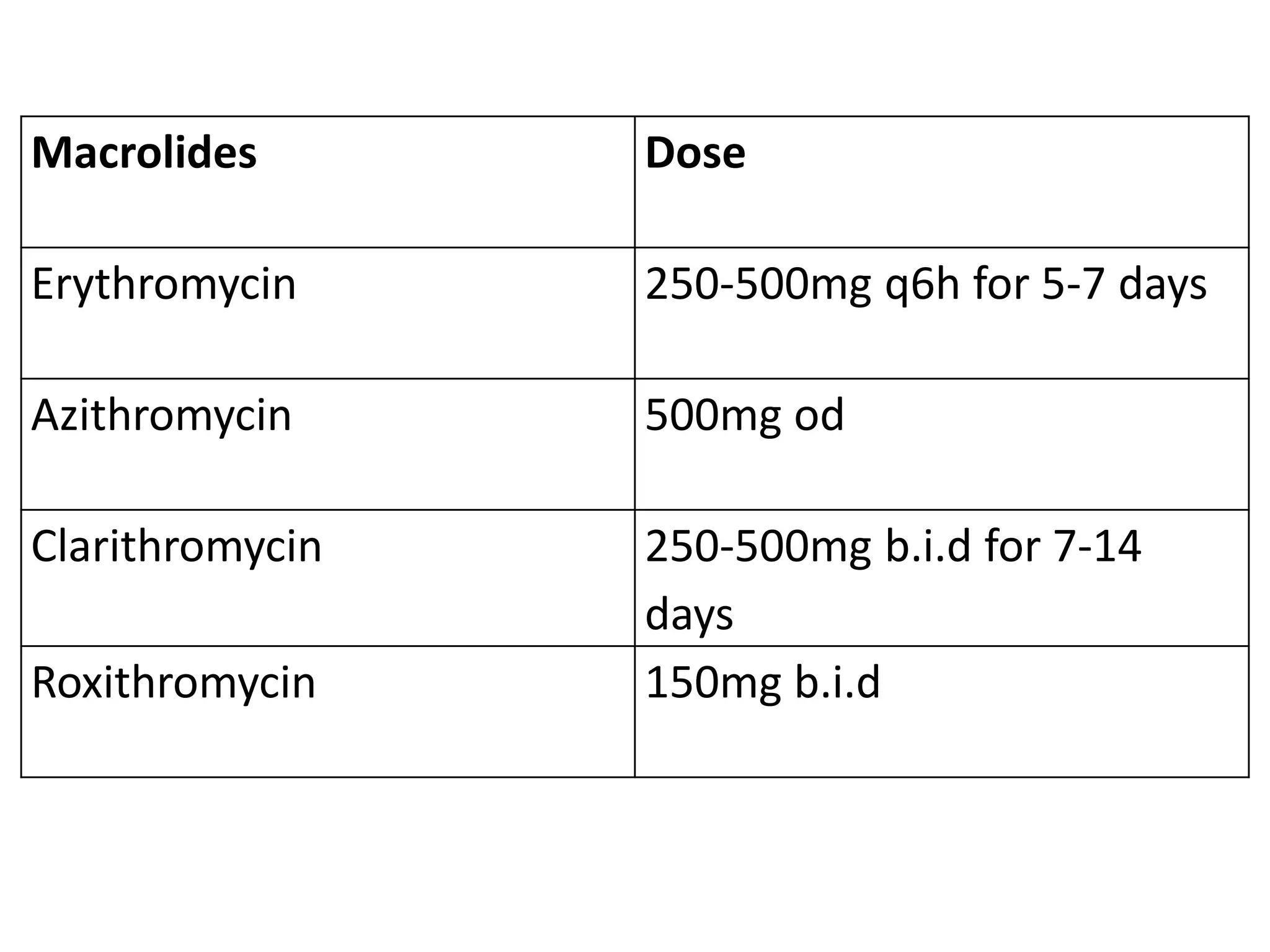
Macrolides Dose
Erythromycin 250-500mg q6h for 5-7 days
Azithromycin 500mg od
Clarithromycin 250-500mg b.i.d for 7-14
days
Roxithromycin 150mg b.i.d
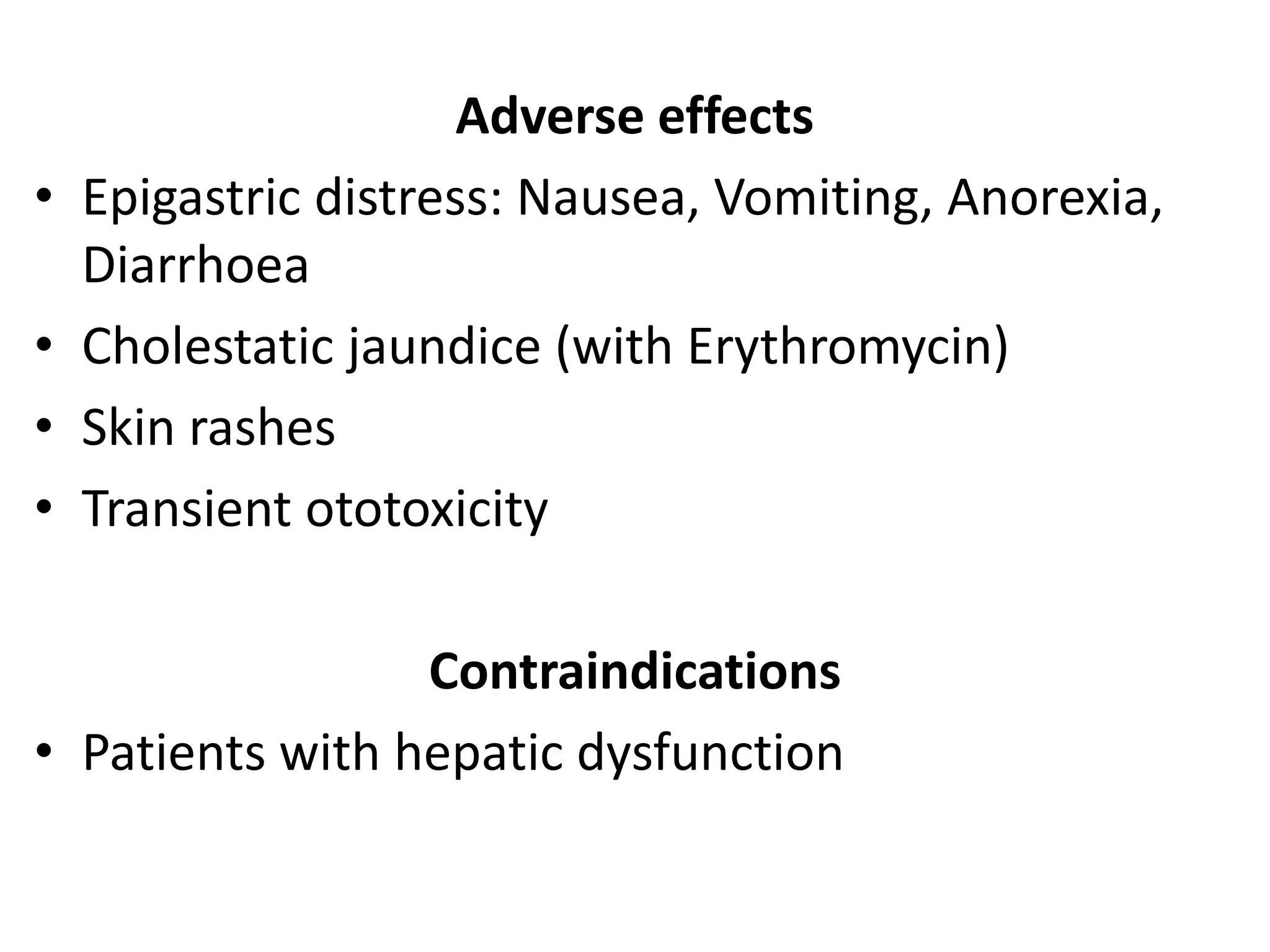
Adverse effects
• Epigastric distress: Nausea, Vomiting, Anorexia,
Diarrhoea
• Cholestatic jaundice (with Erythromycin)
• Skin rashes
• Transient ototoxicity
Contraindications
• Patients with hepatic dysfunction

Tetracyclines, Aminoglycosides, Chloramphenicol, Macrolides

  • 1.
    TETRACYCLINES • Tetracyclines arebroad-spectrum antibiotics that act by inhibiting protein synthesis . • The tetracyclines are regarded as bacteriostatic. • The group includes tetracycline, oxytetracycline, demeclocycline, lymecycline, doxycycline and minocycline.
  • 2.
    Mechanism of Action •Following uptake into susceptible organisms by active transport, tetracyclines act by inhibiting protein synthesis. • Inside the bacterial cell, tetracycline bind reversibly to the 30s subunit of the bacterial ribosome, blocking the binding of aminoacyl-tRNA to the acceptor site on the mRNA complex. • This prevents addition of amino acids to the growing peptide & bacterial protein synthesis is blocked.
  • 5.
    Therapeutic Uses 1.Rickettsial Infections •Doxycycline is the drug of choice for treatment of Rocky Mountain spotted fever (fever and skin spots caused by ticks). 2.Mycoplasma Infections • Treatment of pneumonia with tetracycline shortens the duration of fever, cough, malaise (discomfort, illness, or unease), fatigue, pulmonary rashes, and radiological abnormalities in the lungs 3.Chlamydia Infection • Trachomatis (Eye disorder) and inclusion conjunctivitis • Nonspecific urethritis, Acute pelvic inflammatory disease. 4.Bacillary Infections • Tetracyclines are effective for acute and chronic infections including Tularemia (acute plague), Cholera (Vibrio cholera) and gonorrhea. 5.Other Infections • Acne: Tetracyclines are useful acne vulgaris. • Gastrointestinal infection • Sexual infection: Syphilis, Gonorrhoea, etc.
  • 6.
    Oral Dose • Theoral dosage for rapidly excreted tetracyclines, equivalent to tetracycline hydrochloride, is 0.25-0.5 g four times daily for adults and 20-40 mg/kg/d for children (12 years of age and older). • For severe systemic infections, the higher dosage is indicated, at least for the first few days. • The daily dose is 600 mg for demeclocycline or methacycline, • 100 mg once or twice daily for doxycycline, and • 100 mg twice daily for minocycline. Parenteral Dose • Several tetracyclines are available for intravenous injection in doses of 0.1-0.5 g every 6-12 hours (similar to oral doses) but doxycycline is the usual preferred agent, at a dosage of 100 mg every 12-24 hours.
  • 7.
    Adverse Effect • GIProblem: Nausea, vomiting, diarrhoea, abdominal discomfort, epigastric burning etc. • Phototoxicity: Sun burn-like skin reaction on exposed part, Onycholyris (detached nail), pigmentation nail etc. • Hepatotoxicity: Fatty liver, jaundice, acidosis, azotemia (increased nitrogenous bodies in blood) • Renal Toxicity: Aggregate uremia, azotemia (due to metabolism of amino acid) • Noncalcified Bone: discoloration and pigmentation of teeth in children may occur due to tetracycline intake by pregnant women • Hypersensitivity reaction: Rashes, urticaria, generalized exfoliative dermatitis, angioedema, anaphylaxis, burning eye, vaginitis etc. • Super infection: through mouth, skin or vagina may be involved; intestinal super infection is most prominent, pseudomembranous enterocolitis is most serious
  • 8.
    Contraindication and Precaution •Tetracyclines are contraindicated to Pregnancy and lactating mother, so it is not use in those patients. (complex formation with Ca++, Mg++ & Al+++) • It is also not useful in patients with Hepatic and kidney disease (Although, Doxycycline is used in patient with renal impairment) • It should not be used to children of less than 12 years of age • Intramuscular injection is not recommended because of pain and inflammation at the injection site.
  • 9.
    Aminoglycosides • Aminoglycosides arethe semisynthetic antibiotics that inhibits the protein synthesis & have bactericidal action. • They are used most widely against gram –ve enteric bacteria, especially in bacteremia & sepsis. • Examples: • Streptomycin, • Kanamycin, • Amikacin, • Tobramycin, • Gentamicin, and • Neomycin
  • 10.
    Mechanism of Action •Aminoglycoside binds to the 30s ribosomal subunit and interferes protein synthesis. • Inhibition of protein synthesis may occur due to: Interference with peptide formation Misreading of mRNA Breakup of polysomes
  • 11.
  • 13.
    Therapeutic Uses • Streptomycin:Tubercular infection, Bacterial endocarditis, Tularemia (like plague transmitted by rabbit), plague • Gentamycin: Urinary tract infection (UTI), Pneumonia, Meningitis • Tobramycin: Pneumonia, Osteomyelitis • Neomycin: Burns, wounds, skin ulcers, infected dermatitis • Kanamycin: treatment of serious bacterial infections • Amikacin: treatment of various bacterial infections
  • 14.
    Aminoglycosides Dose Streptomycin ForTB: 15 mg/kg daily, (maximum of 1 g) for 30-60 days. In the treatment of non-tubercular infections, usual adult doses of 1 to 2 g daily in divided doses are given. Kanamycin In acute infections 15 mg/kg daily IM, (maximum 1.5 g) in 2 to 4 divided doses for 7 to 10 days OR intravenous infusion of a 0.25 to 0.5% solution over 30 to 60 min. Amikacin 15 mg/kg daily IM in equally divided doses every 8 or 12 hours. In life-threatening infections, the dose may be increased to 500mg q8h 250 mg b.i.d may be given for the treatment of urinary-tract infections. Tobramycin 3-5mg/kg daily in divided doses 0.3% eye ointment Gentamycin The usual dose of infection is 3-5mg/kg TDS for 7 to 10 days. For urinary-tract infections, if renal function is not impaired, 160 mg once daily may be used. Neomycin 0.25-1g q.i.d oral 0.3-0.5% topical
  • 15.
    Adverse Effects 1.Ototoxicity: • Progressivedestruction of vestibular or cochlear sensory cells. • It may damage vestibular and auditory function of 8th cranial nerve. • Streptomycin and Gentamycin predominantly produce vestibular effects. • Neomycin, Kanamycin, Amikacin primarily effect auditory function. • Tobramycin may affect both. 2.Nephrotoxicity: • Accumulation of aminoglycosides in proximal tubular cells may cause nephrotoxicity. 3.Neuromuscular paralysis: • Most often occurs after direct intraperitoneal or intrapleural application of large doses of aminoglycosides. • Occurs due to decrease in both the release of acetylcholine from prejunctional nerve endings and the sensitivity of the postsynaptic site. 4.Allergic reactions: • Contact dermatitis is a common reaction to topically applied neomycin. • Rare hypersensitivity reactions; including skin rashes, eosinophilia, fever, angioedema, exfoliative dermatitis, stomatitis, and anaphylactic shock.
  • 16.
    Contraindication and Precaution Contraindication •Women, late in pregnancy, administration of aminoglycosides may cause accumulation in fetal plasma, and amniotic fluid (yellowish liquid that surrounds the fetus during pregnancy). This may cause loss of hearing of children. Precaution • Aminoglycosides produces reversible and irreversible vestibular, cochlear and renal toxicity. Thus they are limited to use.
  • 17.
    CHLORAMPHENICOL • Chloramphenicol isa broad spectrum antibiotic that inhibits bacterial protein synthesis by binding to 50s ribosomal subunit. • It was originally isolated from cultures of Streptomyces. • Chloramphenicol has a wide spectrum of antimicrobial activity, including Gram- negative and Gram-positive organisms and rickettsiae. • It is bacteriostatic for most organisms but kills H. influenzae. • Resistance, caused by the production of chloramphenicol acetyltransferase, is plasmid mediated.
  • 18.
    Mechanism of action •Chloramphenicol inhibits bacterial protein synthesis by interfering with ‘transfer’ of the elongating peptide chain to the newly attached aminoacyl-tRNA at the ribosome-mRNA complex. • It specifically attaches to the 50s ribosome near the acceptor (A) site and prevents peptide bond formation between the newly attached aminoacid and the nascent peptide chain without interfering with the aminoacyl-tRNA attachment to the 30S ribosome (the step blocked by tetracycline). • At high doses, it can inhibit mammalian mitochondrial protein synthesis as well. Bone marrow cells are especially susceptible.
  • 20.
    Therapeutic Uses • Infectionscaused by Haemophilus influenzae resistant to other drugs. • Bacterial Meningitis in patients in whom penicillin cannot be used. • Bacterial conjunctivitis (given topically). • Typhoid fever: chloramphenicol 0.5 g q6h (children 50mg/kg) till fever subsides then 0.25g q6h for 7 days • Anaerobic infections • Rickettsial Diseases • Brucellosis Dosage: 250-500mg q6h orally; 0.5% eye/ear drops
  • 21.
    Adverse Effects 1. Bonemarrow depression, resulting in pancytopenia (a decrease in all blood cell elements) 2. ‘grey baby syndrome’ in newborns—vomiting, diarrhoea, flaccidity, low temperature and an ashen-grey colour—which carries 40% mortality. 3. Hypersensitivity reactions can occur. 4. Gastrointestinal disturbances secondary to alteration of the intestinal microbial flora. Contraindications 1. Pregnancy & Lactation 2. Anemia 3. Hepatic diseases 4. Premature babies
  • 22.
    Macrolides • Macrolides areantibiotics that inhibits bacterial protein synthesis by binding to 50s ribosomal subunits. • Generally considered to be bacteriostatic, they may be bactericidal at higher doses. e.g: Erythromycin, Roxithromycin, Clarithromycin and Azithromycin. Mechanism of Action • The macrolides bind irreversibly to a site on the 50s subunit of the bacterial ribosome, thus inhibiting the translocation steps of protein synthesis. • It prevents translocation step where newly synthesized elongated peptide chain moves from the acceptor site to the donor site. • Hence, ribosome does not move along mRNA to expose the next codon causes peptide bond termination and protein synthesis is inhibited.
  • 23.
  • 24.
    Therapeutic Uses • MycoplasmalPneumonia • Legionnaires Pneumonia • Whooping cough • Chancroid • Streptococcal pharyngitis, tonsilitis • Syphilis, Gonorrhoea • SABE (subacute bacterial endocarditis)
  • 25.
    Macrolides Dose Erythromycin 250-500mgq6h for 5-7 days Azithromycin 500mg od Clarithromycin 250-500mg b.i.d for 7-14 days Roxithromycin 150mg b.i.d
  • 26.
    Adverse effects • Epigastricdistress: Nausea, Vomiting, Anorexia, Diarrhoea • Cholestatic jaundice (with Erythromycin) • Skin rashes • Transient ototoxicity Contraindications • Patients with hepatic dysfunction