Testing...
Why Bother?
Presented by:
William (Chip)Valutis, PhD
Why do we need objective data?
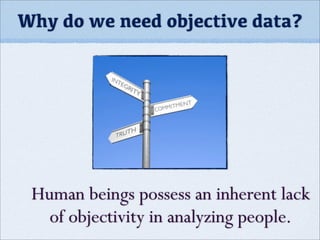
Human beings possess an inherent lack
of objectivity in analyzing people.
Why do we need objective data?
To make good hiring decisions
To effectively develop managers and leaders
To correctly determine the strengths and
weaknesses of our workers
To plan succession and internal selection
To be professional in our Human Resources
Management
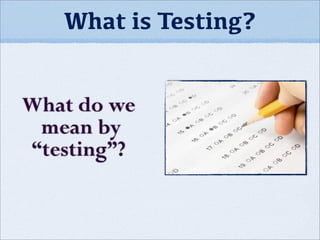
What is Testing?
What do we
mean by
“testing”?
When we speak of
testing, we refer to the
use of tests and surveys to
get a good snapshot of an
individual’s or group’s
characteristics and
qualities.
What do we mean by “testing”?
What can be
measured through
testing?
In general, we can reliably measure
relevant aspects of people’s...
Knowledge
Skills
Abilities
Aptitudes
Values
Personal
Characteristics
Problem-solving abilities
General knowledge base and learning potential
Critical thinking skills
Sales aptitude
Selling style
Management potential
Specific examples
Specific examples (cont’d.)
Leadership style
Leadership effectiveness
Customer service orientation
Industrial skills and aptitudes
Personality characteristics
Specific work behavior and characteristics
When would business
organizations benefit
from the use of testing?
Some common scenarios:
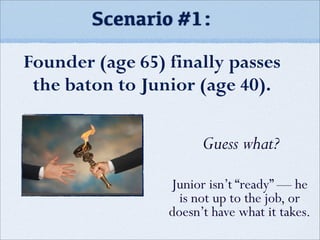
Scenario #1:
Founder (age 65) finally passes
the baton to Junior (age 40).
Guess what?
Junior isn’t “ready” — he
is not up to the job, or
doesn’t have what it takes.
Solution:
Successor Development
Plan the right experiences early
Assess knowledge, skills, abilities and personality
characteristics (KSAPCs)
Evaluate job fit
Determine course of action
On-the-job training
Formal education
Use of mentors
Potential search for interim or different successor
Scenario #2:
Executives and
managers have great
talent, but . . .
They’re lousy leaders and managers.
Test them to determine their KSAPCs,
especially leadership style and talent
Consider using a 360° Feedback
assessment to measure perceptions of
leader effectiveness
Train and develop leadership skills based
on results
Solution:
Assess & develop leadership skills
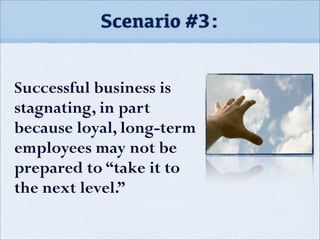
Scenario #3:
Successful business is
stagnating, in part
because loyal, long-term
employees may not be
prepared to “take it to
the next level.”
Solution:
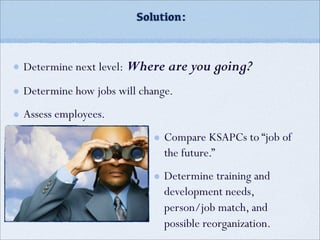
Determine next level: Where are you going?
Determine how jobs will change.
Assess employees.
Compare KSAPCs to “job of
the future.”
Determine training and
development needs,
person/job match, and
possible reorganization.
Scenario #4:
You’re having trouble hiring
good help.
You’ve dabbled in some
testing but it hasn’t made
your problems go away.
Engage in a job description process.
Specify what qualities are needed
in successful applicants.
Seek valid ways to assess those
qualities.
Use multiple methods to help evaluate
candidate/job match (tests are one tool).
If unsure about legal parameters and test usage,
seek consultation.
Solution:
Assess Applicants During Selection Process
Scenario #5:
You’d like to use testing,
but you are wary of legal
issues and don’t know
what level of performance
to use as a standard.
Solution:
Explore your testing options.
Find out how you might ensure valid use of tests. For
example:
Use of profile studies to validate tests
Informed use of well-validated tests
Understand basics of discrimination
Keep records of impact
Use tests appropriately
Check out the rest of this series here:
Want more information?
Visit our website
Send us an email

Testing - Why Bother?

  • 1.
  • 2.
    Why do weneed objective data? Human beings possess an inherent lack of objectivity in analyzing people.
  • 3.
    Why do weneed objective data? To make good hiring decisions To effectively develop managers and leaders To correctly determine the strengths and weaknesses of our workers To plan succession and internal selection To be professional in our Human Resources Management
  • 4.
    What is Testing? Whatdo we mean by “testing”?
  • 5.
    When we speakof testing, we refer to the use of tests and surveys to get a good snapshot of an individual’s or group’s characteristics and qualities. What do we mean by “testing”?
  • 6.
    What can be measuredthrough testing?
  • 7.
    In general, wecan reliably measure relevant aspects of people’s... Knowledge Skills Abilities Aptitudes Values Personal Characteristics
  • 8.
    Problem-solving abilities General knowledgebase and learning potential Critical thinking skills Sales aptitude Selling style Management potential Specific examples
  • 9.
    Specific examples (cont’d.) Leadershipstyle Leadership effectiveness Customer service orientation Industrial skills and aptitudes Personality characteristics Specific work behavior and characteristics
  • 10.
    When would business organizationsbenefit from the use of testing? Some common scenarios:
  • 11.
    Scenario #1: Founder (age65) finally passes the baton to Junior (age 40). Guess what? Junior isn’t “ready” — he is not up to the job, or doesn’t have what it takes.
  • 12.
    Solution: Successor Development Plan theright experiences early Assess knowledge, skills, abilities and personality characteristics (KSAPCs) Evaluate job fit Determine course of action On-the-job training Formal education Use of mentors Potential search for interim or different successor
  • 13.
    Scenario #2: Executives and managershave great talent, but . . . They’re lousy leaders and managers.
  • 14.
    Test them todetermine their KSAPCs, especially leadership style and talent Consider using a 360° Feedback assessment to measure perceptions of leader effectiveness Train and develop leadership skills based on results Solution: Assess & develop leadership skills
  • 15.
    Scenario #3: Successful businessis stagnating, in part because loyal, long-term employees may not be prepared to “take it to the next level.”
  • 16.
    Solution: Determine next level:Where are you going? Determine how jobs will change. Assess employees. Compare KSAPCs to “job of the future.” Determine training and development needs, person/job match, and possible reorganization.
  • 17.
    Scenario #4: You’re havingtrouble hiring good help. You’ve dabbled in some testing but it hasn’t made your problems go away.
  • 18.
    Engage in ajob description process. Specify what qualities are needed in successful applicants. Seek valid ways to assess those qualities. Use multiple methods to help evaluate candidate/job match (tests are one tool). If unsure about legal parameters and test usage, seek consultation. Solution: Assess Applicants During Selection Process
  • 19.
    Scenario #5: You’d liketo use testing, but you are wary of legal issues and don’t know what level of performance to use as a standard.
  • 20.
    Solution: Explore your testingoptions. Find out how you might ensure valid use of tests. For example: Use of profile studies to validate tests Informed use of well-validated tests Understand basics of discrimination Keep records of impact Use tests appropriately
  • 21.
    Check out therest of this series here: Want more information? Visit our website Send us an email