The Spitler Group LLC Human Capital Development BEHAVIORAL ASSESSMENTS Bing G. Spitler Spitler Group LLC (513) 382-7675
Contents The History of Assessments Reliability and Validity Types of Assessments What to Look for in an Assessment How Assessments can Improve Hiring
The History of Assessments
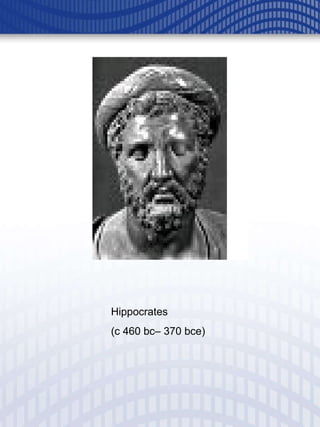
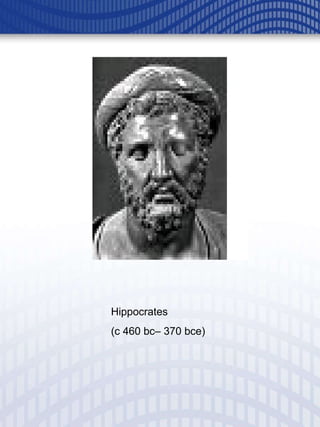
Hippocrates  (c 460 bc– 370 bce)
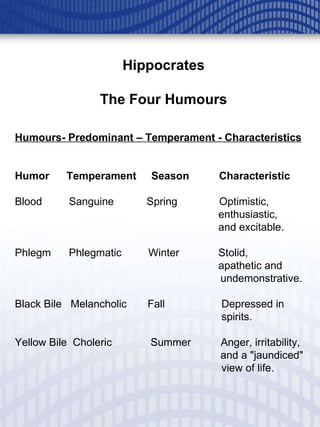
Hippocrates The Four Humours Humours- Predominant – Temperament - Characteristics   Humor   Temperament  Season  Characteristic Blood  Sanguine  Spring  Optimistic,    enthusiastic,    and excitable.  Phlegm  Phlegmatic  Winter   Stolid,    apathetic and    undemonstrative. Black Bile  Melancholic  Fall  Depressed in    spirits.  Yellow Bile  Choleric  Summer  Anger, irritability,    and a "jaundiced"    view of life.
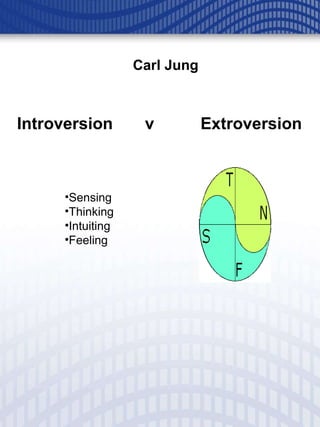
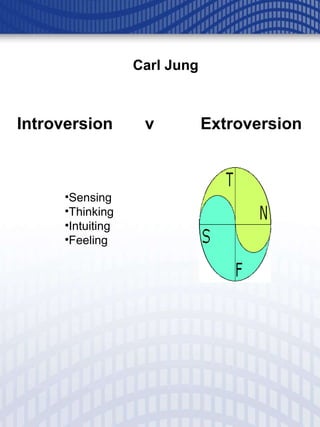
Carl Jung Introversion v  Extroversion Sensing Thinking Intuiting Feeling
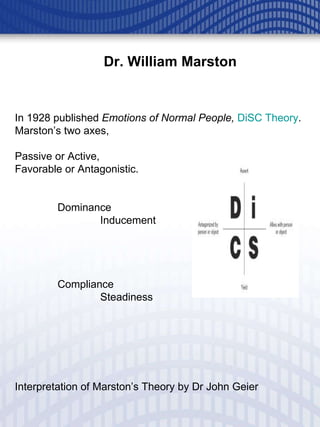
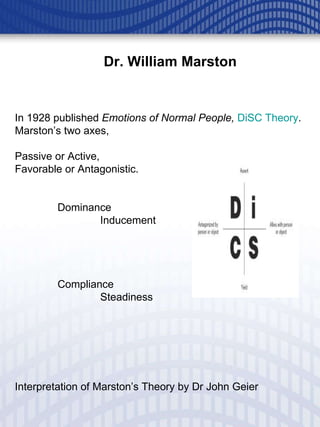
Dr. William Marston In 1928 published  Emotions of Normal People,   DiSC Theory . Marston’s two axes,  Passive or Active,  Favorable or Antagonistic.  Dominance   Inducement  Compliance Steadiness Interpretation of Marston’s Theory by Dr John Geier
Stanley Smith Stevens Psychologist “ Scales of Measurement” More accurate measurements of behavior
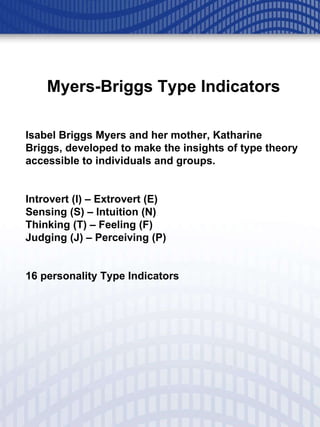
Myers-Briggs Type Indicators Isabel Briggs Myers and her mother, Katharine Briggs, developed to make the insights of type theory accessible to individuals and groups.  Introvert (I) – Extrovert (E) Sensing (S) – Intuition (N) Thinking (T) – Feeling (F) Judging (J) – Perceiving (P) 16 personality Type Indicators
The Standards for Educational and  Psychological Testing   The Standards for Educational and  Psychological Testing  is a set of  Testing standards developed jointly by:  The American Educational Research Association (AERA) American Psychological Association (APA), and  The National Council on Measurement in Education (NCME).
Leading Clinical Psychological Research Minnesota Multiphasic Personality Inventory (MMPI)  California Psychological Inventory (CPI) The validity of assessments are often compared to the results of the clinical studies
TESTING AND ASSESSMENT: AN EMPLOYER’S GUIDE TO GOOD PRACTICES U.S. Department of Labor Employment and Training Administration 1999
Department of Labor Assessment instruments should account for no more than one-third (1/3) of the decision making process.
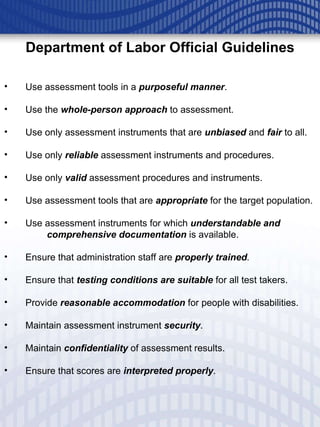
Department of Labor Official Guidelines Use assessment tools in a  purposeful manner .  Use the  whole-person approach   to assessment. Use only assessment instruments that are   unbiased   and  fair   to all.  Use only  reliable   assessment instruments and procedures. Use only  valid  assessment procedures and instruments.  Use assessment tools that are  appropriate  for the target population.  Use assessment instruments for which  understandable and  comprehensive documentation   is available. Ensure that administration staff are  properly trained . Ensure that  testing conditions are suitable   for all test takers. Provide  reasonable accommodation   for people with disabilities. Maintain assessment instrument  security . Maintain  confidentiality   of assessment results. Ensure that scores are  interpreted properly .
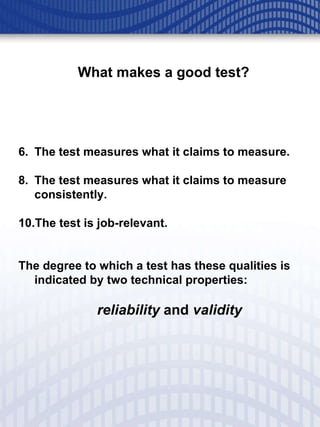
What makes a good test? The test measures what it claims to measure.  The test measures what it claims to measure consistently. The test is job-relevant. The degree to which a test has these qualities is indicated by two technical properties:    reliability  and  validity
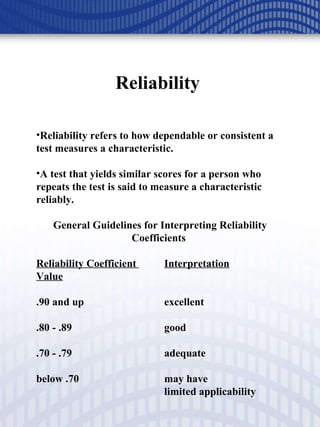
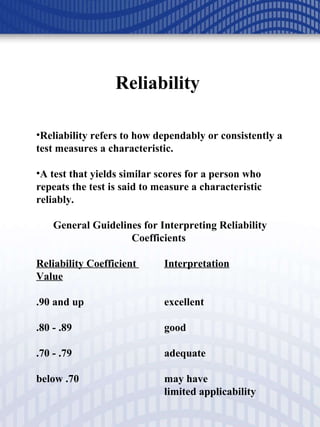
Reliability  Reliability refers to how dependable or consistent a test measures a characteristic.  A test that yields similar scores for a person who repeats the test is said to measure a characteristic reliably. General Guidelines for Interpreting Reliability Coefficients  Reliability Coefficient  Interpretation Value .90 and up  excellent .80 - .89  good .70 - .79  adequate below .70  may have  limited applicability
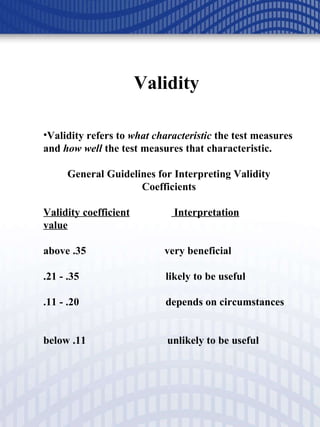
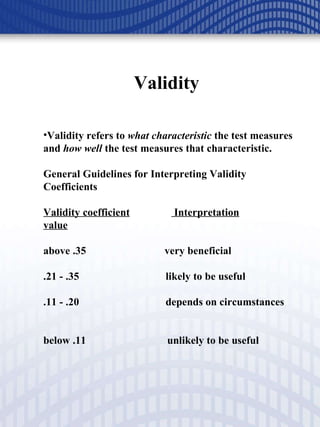
Validity  Validity refers to  what characteristic  the test measures and  how well  the test measures that characteristic. General Guidelines for Interpreting Validity Coefficients Validity coefficient  Interpretation value above .35  very beneficial .21 - .35  likely to be useful .11 - .20  depends on circumstances    below .11  unlikely to be useful
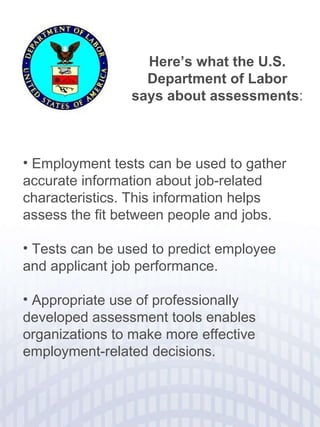
Here’s what the U.S. Department of Labor says about assessments : Employment tests can be used to gather accurate information about job-related characteristics. This information helps assess the fit between people and jobs. Tests can be used to predict employee and applicant job performance. Appropriate use of professionally developed assessment tools enables organizations to make more effective employment-related decisions.
Types of Assessments
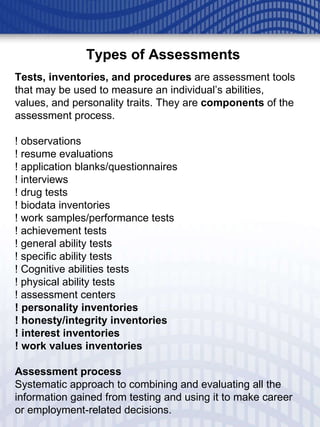
Tests, inventories, and procedures  are assessment tools that may be used to measure an individual’s abilities, values, and personality traits. They are  components  of the assessment process. ! observations ! resume evaluations ! application blanks/questionnaires ! interviews ! drug tests ! biodata inventories ! work samples/performance tests ! achievement tests ! general ability tests ! specific ability tests ! Cognitive abilities tests ! physical ability tests ! assessment centers ! personality inventories ! honesty/integrity inventories ! interest inventories ! work values inventories Assessment process Systematic approach to combining and evaluating all the information gained from testing and using it to make career or employment-related decisions. Types of Assessments
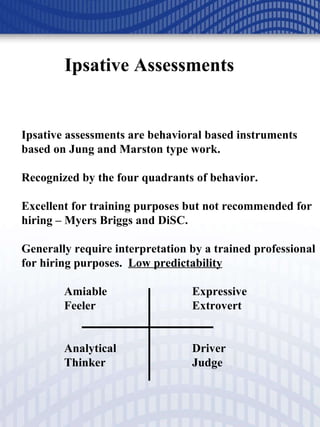
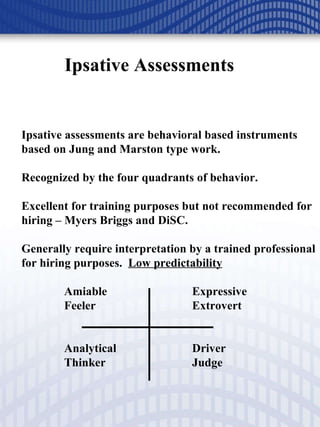
Ipsative Assessments Ipsative assessments are behavioral based instruments based on Jung and Marston type work. Recognized by the four quadrants of behavior. Excellent for training purposes but not recommended for hiring – Myers Briggs and DiSC. Generally require interpretation by a trained professional for hiring purposes.  Low predictability Amiable Expressive Feeler Extrovert Analytical  Driver Thinker Judge
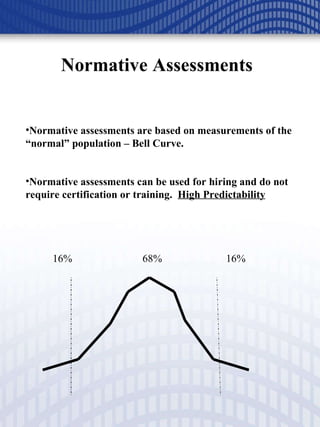
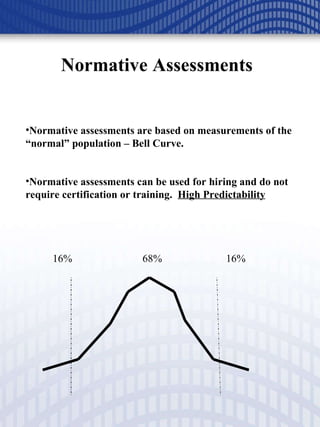
Normative Assessments Normative assessments are based on measurements of the “normal” population – Bell Curve. Normative assessments can be used for hiring and do not require certification or training.  High Predictability 16%  68%   16%
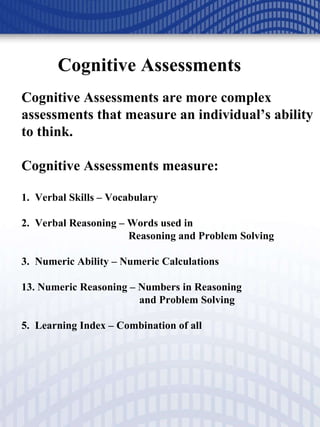
Cognitive Assessments Cognitive Assessments are more complex assessments that measure an individual’s ability to think.  Cognitive Assessments measure: 1.  Verbal Skills – Vocabulary 2.  Verbal Reasoning – Words used in    Reasoning and Problem Solving 3.  Numeric Ability – Numeric Calculations Numeric Reasoning – Numbers in Reasoning    and Problem Solving 5.  Learning Index – Combination of all
Assessments for Hiring and Promotions
1)  Personality indicators Myers-Briggs Type Indicator Kersey-bates Temperament  Jung Type Indicators 2)  Personality Style The Marston 4 Quadrant Theory – DiSC Wilson Learning Challey Predictive Index The Brickman 3)  Personality Traits MMPI 16 PF Hogan 4)  Honesty/Integrity Reid/London House Profiles International: Step One Survey II 5 Groups of Assessments
5 Groups of Assessments 5)  Whole Person or Total Person Battery (Multi-construct and Job Matches)  Measures abilities, interests and behavior. Wonderlic Personnel Test Profiles International:  PXT The Caliper Points to consider: Not all exceed the co-efficiency rating of .70 for predictability? Not all provide a Legal Opinion Letter? Many require expensive and extensive training and  certification? Most are written in “Psycho-babble” instead of simple  business language? Not all assessments are the same and most are not recommended for hiring.
What to Look for in a Behavioral  Assessment
Behavioral Assessments The Department of Labor’s 13 Official Guidelines for  Testing and Assessments A Technical Manual (Documented methods and  results) Reliability and Validity Analysis (Updated every  three years) Assessments should predict future performance An assessment should include a “Distortion Factor”  that measures the candidate’s level of candor Internet technology (Easy access and fast results) Results should be quickly available Results should be easy to read Produced by a reputable company – In-house research and development Legal Opinion Letter Available upon Request
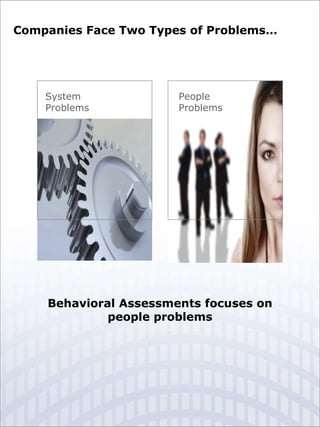
Companies Face Two Types of Problems… Behavioral Assessments focuses on people problems People Problems System Problems
Behavioral Assessments  Why are assessments so important now? Cost of hiring  Turnover Costs Level of Productivity Increased illicit drug use The Labor Crisis Talent Acquisition Improve Hiring Raising the Bar of Employee  Performance Employees as a “Competitive  Advantage”
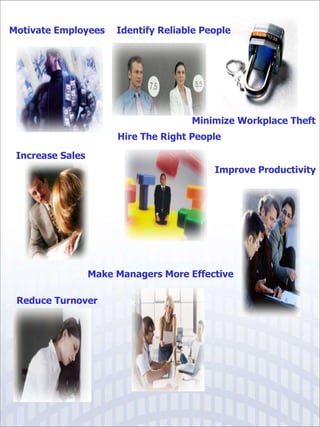
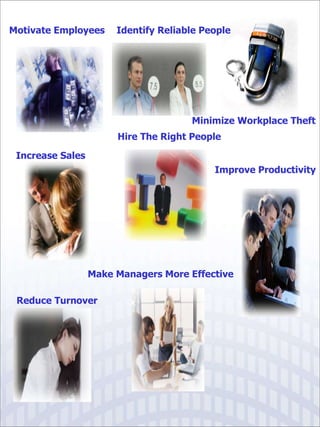
Motivate Employees Identify Reliable People Minimize Workplace Theft Improve Productivity Hire The Right People Increase Sales Reduce Turnover Make Managers More Effective
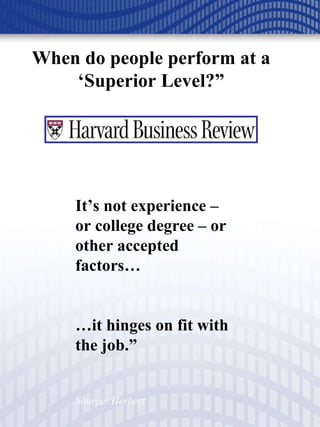
When do people perform at a ‘Superior Level?” It’s not experience – or college degree – or other accepted factors… … it hinges on fit with the job.” Source: Herbert
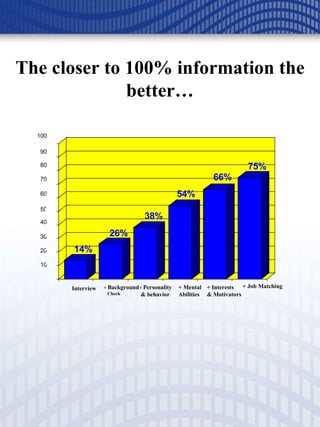
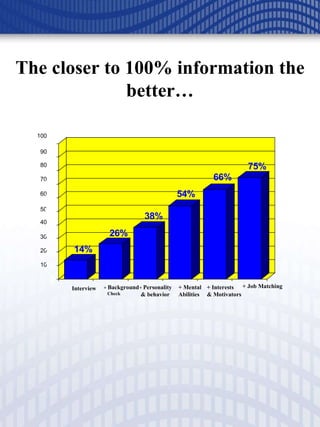
The closer to 100% information the better… Interview +  Background Check +  Personality & behavior + Mental Abilities + Interests  & Motivators + Job Matching
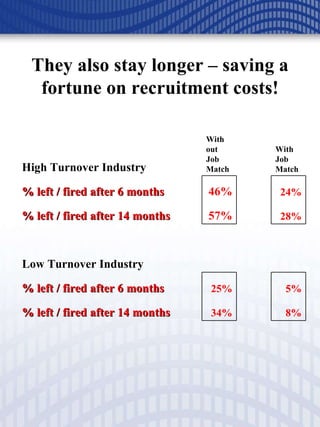
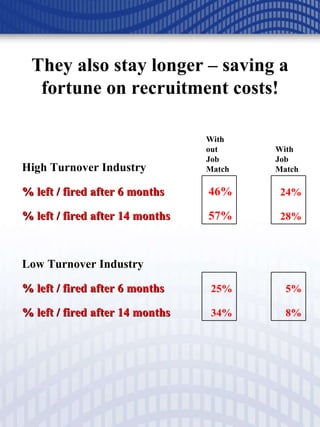
They also stay longer – saving a fortune on recruitment costs! 8% 34% % left / fired after 14 months 5% 25% % left / fired after 6 months  Low Turnover Industry 28% 57% % left / fired after 14 months 24% 46% % left / fired after 6 months With Job Match With out Job Match High Turnover Industry
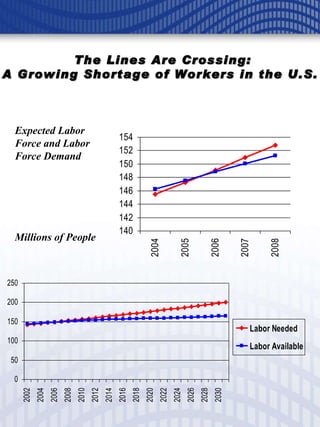
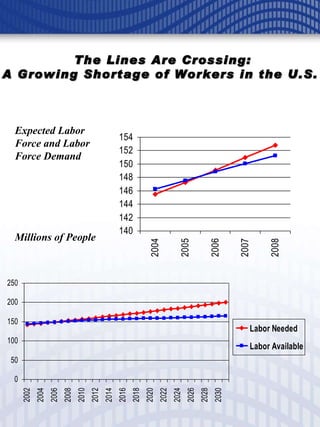
The Lines Are Crossing: A Growing Shortage of Workers in the U.S. Expected Labor Force and Labor Force Demand Millions of People
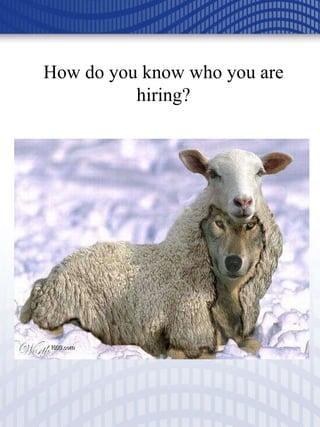
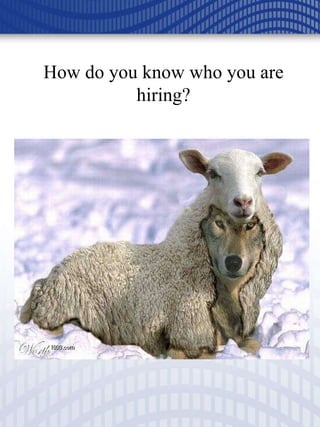
How do you know who you are hiring?
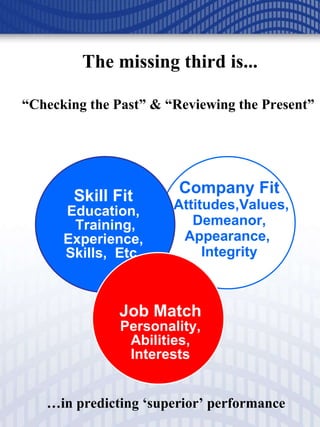
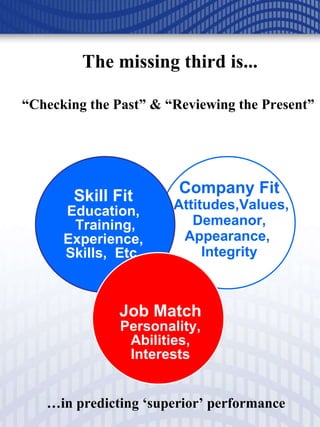
The missing third is... “ Checking the Past” & “Reviewing the Present” … in predicting ‘superior’ performance Company Fit Attitudes,Values, Demeanor, Appearance,  Integrity Skill Fit Education, Training, Experience, Skills,  Etc. Job Match Personality, Abilities, Interests
A ssessment Sample Step One Survey II Pre-employment 72 Questions Profiles International, Inc.
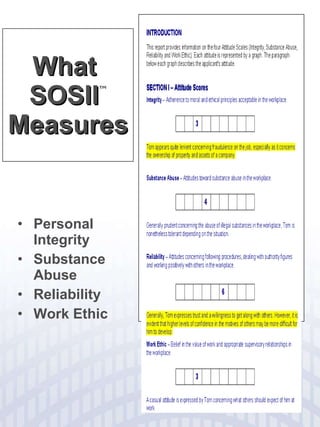
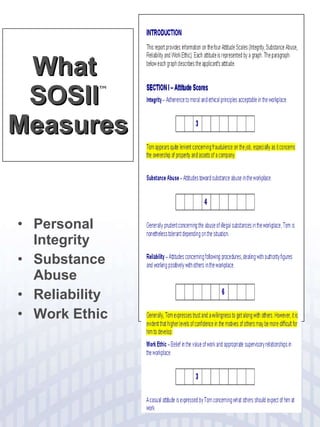
Personal Integrity Substance Abuse Reliability Work Ethic What  SOSII ™  Measures
Assessment Sample Profiles XT Whole Person Assessment 270 Questions Profiles International, Inc.
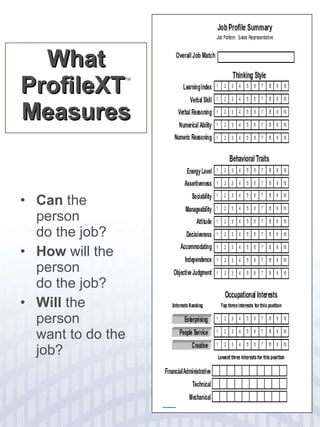
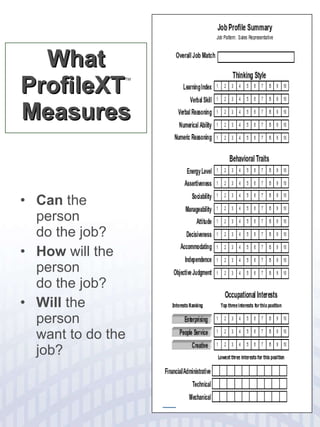
Can  the person do the job? How  will the person do the job? Will  the person want to do the job? What ProfileXT ™  Measures
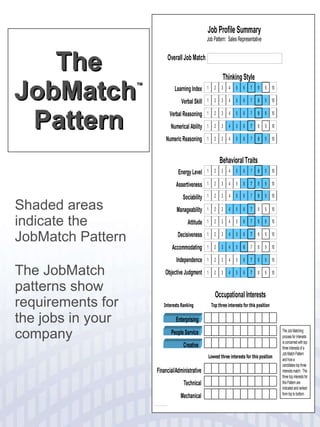
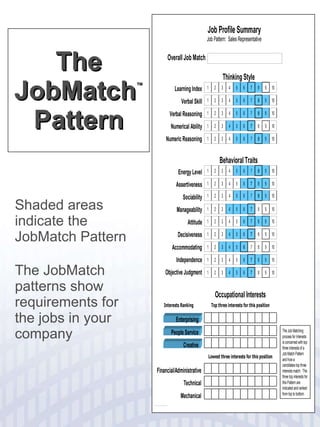
The JobMatch ™  Pattern Shaded areas indicate the JobMatch Pattern The JobMatch patterns show requirements for the jobs in your company
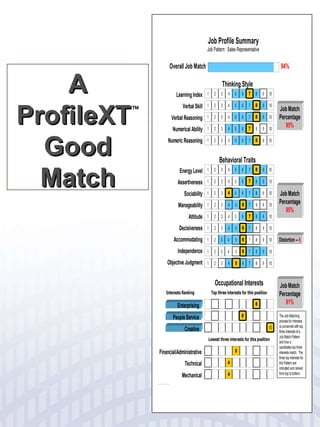
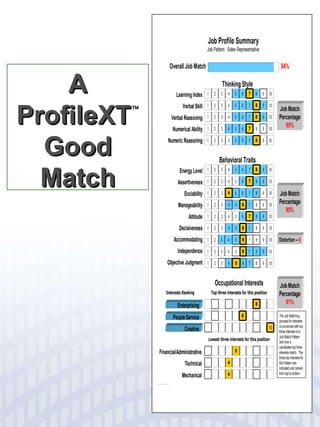
A ProfileXT ™ Good Match
Final Thoughts
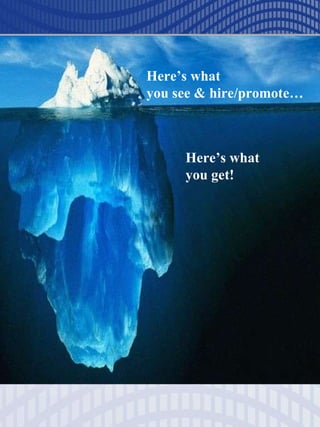
Here’s what  you see & hire/promote…
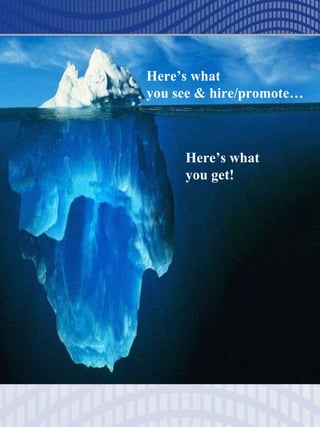
Here’s what  you see & hire/promote… Here’s what  you get!
The Spitler Group LLC BEHAVIORAL ASSESSMENTS Bing G. Spitler Spitler Group LLC 513 382-7675
Contents The History of Assessments Department of Labor Reliability and Validity Types of Assessments What to Look for in an Assessment How Assessments can Improve Hiring
The History of Assessments
Hippocrates  (c 460 bc– 370 bce)
Hippocrates The Four Humours Humours- Predominant – Temperament - Characteristics   Humor   Temperament  Season  Characteristic Blood  Sanguine  Spring  Optimistic,    enthusiastic,    and excitable.  Phlegm  Phlegmatic  Winter   Stolid,    apathetic and    undemonstrative. Black Bile  Melancholic  Fall  Depressed in    spirits.  Yellow Bile  Choleric  Summer  Anger, irritability,    and a "jaundiced"    view of life.
Carl Jung Introversion v  Extroversion Sensing Thinking Intuiting Feeling
Dr. William Marston In 1928 published  Emotions of Normal People,   DiSC Theory . Marston’s two axes,  Passive or Active,  Favorable or Antagonistic.  Dominance   Inducement  Compliance Steadiness Interpretation of Marston’s Theory by Dr John Geier
Stanley Smith Stevens Psychologist “ Scales of Measurement” More accurate measurements of behavior
Myers-Briggs Type Indicators Isabel Briggs Myers and her mother, Katharine Briggs, developed to make the insights of type theory accessible to individuals and groups.  Introvert (I) – Extrovert (E) Sensing (S) – Intuition (N) Thinking (T) – Feeling (F) Judging (J) – Perceiving (P) 16 personality Type Indicators
The Standards for Educational and  Psychological Testing   The Standards for Educational and  Psychological Testing  is a set of  Testing standards developed jointly by:  The American Educational Research Association (AERA) American Psychological Association (APA), and  The National Council on Measurement in Education (NCME).
Leading Clinical Psychological Research Minnesota Multiphasic Personality Inventory (MMPI)  California Psychological Inventory (CPI) The validity of assessments are often compared to the results of the clinical studies
TESTING AND ASSESSMENT: AN EMPLOYER’S GUIDE TO GOOD PRACTICES U.S. Department of Labor Employment and Training Administration 1999
Department of Labor “ The Rule” Assessment instruments should account for no more than one-third (1/3) of the decision making process.
Department of Labor Official Guidelines Use assessment tools in a  purposeful manner .  Use the  whole-person approach   to assessment. Use only assessment instruments that are   unbiased   and  fair   to all.  Use only  reliable   assessment instruments and procedures. Use only  valid  assessment procedures and instruments.  Use assessment tools that are  appropriate  for the target population.  Use assessment instruments for which  understandable and  comprehensive documentation   is available. Ensure that administration staff are  properly trained . Ensure that  testing conditions are suitable   for all test takers. Provide  reasonable accommodation   for people with disabilities. Maintain assessment instrument  security . Maintain  confidentiality   of assessment results. Ensure that scores are  interpreted properly .
What makes a good test? The test measures what it claims to measure.  The test measures what it claims to measure consistently. The test is job-relevant. The degree to which a test has these qualities is indicated by two technical properties:    reliability  and  validity
Reliability  Reliability refers to how dependably or consistently a test measures a characteristic.  A test that yields similar scores for a person who repeats the test is said to measure a characteristic reliably. General Guidelines for Interpreting Reliability Coefficients  Reliability Coefficient  Interpretation Value .90 and up  excellent .80 - .89  good .70 - .79  adequate below .70  may have  limited applicability
Validity  Validity refers to  what characteristic  the test measures and  how well  the test measures that characteristic. General Guidelines for Interpreting Validity Coefficients Validity coefficient  Interpretation value above .35  very beneficial .21 - .35  likely to be useful .11 - .20  depends on circumstances    below .11  unlikely to be useful
Here’s what the U.S. Department of Labor says about assessments : Employment tests can be used to gather accurate information about job-related characteristics. This information helps assess the fit between people and jobs. Tests can be used to predict employee and applicant job performance. Appropriate use of professionally developed assessment tools enables organizations to make more effective employment-related decisions.
Types of Assessments
Tests, inventories, and procedures  are assessment tools that may be used to measure an individual’s abilities, values, and personality traits. They are  components  of the assessment process. ! observations ! resume evaluations ! application blanks/questionnaires ! interviews ! drug tests ! biodata inventories ! work samples/performance tests ! achievement tests ! general ability tests ! specific ability tests ! ! medical tests ! physical ability tests ! assessment centers ! personality inventories ! honesty/integrity inventories ! interest inventories ! work values inventories Assessment process Systematic approach to combining and evaluating all the information gained from testing and using it to make career or employment-related decisions. Types of Assessments
Ipsative Assessments Ipsative assessments are behavioral based instruments based on Jung and Marston type work. Recognized by the four quadrants of behavior. Excellent for training purposes but not recommended for hiring – Myers Briggs and DiSC. Generally require interpretation by a trained professional for hiring purposes.  Low predictability Amiable Expressive Feeler Extrovert Analytical  Driver Thinker Judge
Normative Assessments Normative assessments are based on measurements of the “normal” population – Bell Curve. Normative assessments can be used for hiring and do not require certification or training.  High Predictability 16%  68%   16%
Cognitive Assessments Cognitive Assessments are more complex assessments that measure an individual’s ability to think.  Cognitive Assessments measure: 1.  Verbal Skills – Vocabulary 2.  Verbal Reasoning – Words used in    Reasoning and Problem Solving 3.  Numeric Ability – Numeric Calculations Numeric Reasoning – Numbers in Reasoning    and Problem Solving 5.  Learning Index – Combination of all
Assessments for Hiring and Promotions
1)  Personality indicators Myers-Briggs Type Indicator Kersey-bates Temperament  Jung Type Indicators 2)  Personality Style The Marston 4 Quadrant Theory – DiSC Wilson Learning Challey Predictive Index The Brickman 3)  Personality Traits MMPI 16 PF Hogan 4)  Honesty/Integrity Reid/London House Profiles International: Step One Survey II 5 Groups of Assessments
5 Groups of Assessments 5)  Whole Person or Total Person Battery (Multi-construct and Job Matches)  Measures abilities, interests and behavior. Wonderlic Personnel Test Profiles International:  PXT The Caliper Points to consider: Not all exceed the co-efficiency rating of .70 for predictability? Not all provide a Legal Opinion Letter? Many require expensive and extensive training and  certification? Most are written in “Psycho-babble” instead of simple  business language? Are they cost effective?
What to Look for in a Behavioral  Assessment
Behavioral Assessments The Department of Labor’s 13 Official Guidelines for  Testing and Assessments A Technical Manual (Documented methods and  results) Reliability and Validity Analysis (Current within last three years) Assessments should predict future performance An assessment should include a “Distortion Factor”  that measures the candidate’s level of candor Internet technology (Easy access and fast results) Results should be quickly available Results should be easy to read Produced by a reputable company – In-house research and development Legal Opinion Letter Available upon Request
Companies Face Two Types of Problems… Assessments focuses on people problems. People Problems System Problems
Behavioral Assessment and Recruiting Why are assessments so important now? Cost of hiring  Turnover Costs Level of Productivity Increased illicit drug use The Labor Crisis Talent Acquisition Improve Hiring Raising the Bar of Employee  Performance Employees as a “Competitive  Advantage”
Motivate Employees Identify Reliable People Minimize Workplace Theft Improve Productivity Hire The Right People Increase Sales Reduce Turnover Make Managers More Effective
When do people perform at a ‘Superior Level?” It’s not experience – or college degree – or other accepted factors… … it hinges on fit with the job.” Source: Herbert
The closer to 100% information the better… Interview +  Background Check +  Personality & behavior + Mental Abilities + Interests  & Motivators + Job Matching
They also stay longer – saving a fortune on recruitment costs! 8% 34% % left / fired after 14 months 5% 25% % left / fired after 6 months  Low Turnover Industry 28% 57% % left / fired after 14 months 24% 46% % left / fired after 6 months With Job Match With out Job Match High Turnover Industry
The Lines Are Crossing: A Growing Shortage of Workers in the U.S. Expected Labor Force and Labor Force Demand Millions of People
How do you know who you are hiring?
The missing third is... “ Checking the Past” & “Reviewing the Present” … in predicting ‘superior’ performance Company Fit Attitudes,Values, Demeanor, Appearance,  Integrity Skill Fit Education, Training, Experience, Skills,  Etc. Job Match Personality, Abilities, Interests
A ssessment Sample Step One Survey II Pre-employment 72 Questions Profiles International, Inc.
Personal Integrity Substance Abuse Reliability Work Ethic What  SOSII ™  Measures
Assessment Sample Profiles XT Whole Person Assessment 270 Questions Profiles International, Inc.
Can  the person do the job? How  will the person do the job? Will  the person want to do the job? What ProfileXT ™  Measures
The JobMatch ™  Pattern Shaded areas indicate the JobMatch Pattern The JobMatch patterns show requirements for the jobs in your company
A ProfileXT ™ Good Match
Final Thoughts
Here’s what  you see & hire/promote…
Here’s what  you see & hire/promote… Here’s what  you get!
The Spitler Group LLC BEHAVIORAL ASSESSMENTS Bing G. Spitler Spitler Group LLC 513 382-7675
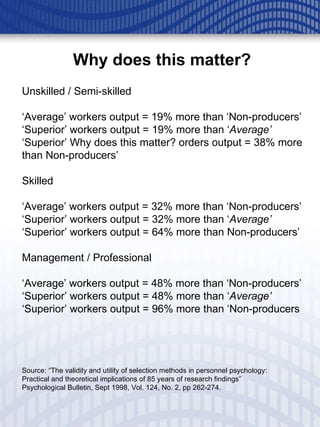
Why does this matter? Unskilled / Semi-skilled ‘ Average’ workers output = 19% more than ‘Non-producers’  ‘ Superior’ workers output = 19% more than ‘ Average’   ‘ Superior’  Why does this matter?  orders output = 38% more than Non-producers’ Skilled ‘ Average’ workers output = 32% more than ‘Non-producers’  ‘ Superior’ workers output = 32% more than ‘ Average’   ‘ Superior’ workers output = 64% more than Non-producers’ Management / Professional ‘ Average’ workers output = 48% more than ‘Non-producers’  ‘ Superior’ workers output = 48% more than ‘ Average’   ‘ Superior’ workers output = 96% more than ‘Non-producers Source: “The validity and utility of selection methods in personnel psychology:  Practical and theoretical implications of 85 years of research findings”  Psychological Bulletin, Sept 1998, Vol. 124, No. 2, pp 262-274.

Assessment History Ii

  • 1.
    The Spitler GroupLLC Human Capital Development BEHAVIORAL ASSESSMENTS Bing G. Spitler Spitler Group LLC (513) 382-7675
  • 2.
    The Spitler GroupLLC Human Capital Development BEHAVIORAL ASSESSMENTS Bing G. Spitler Spitler Group LLC (513) 382-7675
  • 3.
    Contents The Historyof Assessments Reliability and Validity Types of Assessments What to Look for in an Assessment How Assessments can Improve Hiring
  • 4.
    The History ofAssessments
  • 5.
    Hippocrates (c460 bc– 370 bce)
  • 6.
    Hippocrates The FourHumours Humours- Predominant – Temperament - Characteristics Humor Temperament Season Characteristic Blood Sanguine Spring Optimistic, enthusiastic, and excitable. Phlegm Phlegmatic Winter Stolid, apathetic and undemonstrative. Black Bile Melancholic Fall Depressed in spirits. Yellow Bile Choleric Summer Anger, irritability, and a "jaundiced" view of life.
  • 7.
    Carl Jung Introversionv Extroversion Sensing Thinking Intuiting Feeling
  • 8.
    Dr. William MarstonIn 1928 published Emotions of Normal People, DiSC Theory . Marston’s two axes, Passive or Active, Favorable or Antagonistic. Dominance Inducement Compliance Steadiness Interpretation of Marston’s Theory by Dr John Geier
  • 9.
    Stanley Smith StevensPsychologist “ Scales of Measurement” More accurate measurements of behavior
  • 10.
    Myers-Briggs Type IndicatorsIsabel Briggs Myers and her mother, Katharine Briggs, developed to make the insights of type theory accessible to individuals and groups. Introvert (I) – Extrovert (E) Sensing (S) – Intuition (N) Thinking (T) – Feeling (F) Judging (J) – Perceiving (P) 16 personality Type Indicators
  • 11.
    The Standards forEducational and Psychological Testing The Standards for Educational and Psychological Testing is a set of Testing standards developed jointly by: The American Educational Research Association (AERA) American Psychological Association (APA), and The National Council on Measurement in Education (NCME).
  • 12.
    Leading Clinical PsychologicalResearch Minnesota Multiphasic Personality Inventory (MMPI) California Psychological Inventory (CPI) The validity of assessments are often compared to the results of the clinical studies
  • 13.
    TESTING AND ASSESSMENT:AN EMPLOYER’S GUIDE TO GOOD PRACTICES U.S. Department of Labor Employment and Training Administration 1999
  • 14.
    Department of LaborAssessment instruments should account for no more than one-third (1/3) of the decision making process.
  • 15.
    Department of LaborOfficial Guidelines Use assessment tools in a purposeful manner . Use the whole-person approach to assessment. Use only assessment instruments that are unbiased and fair to all. Use only reliable assessment instruments and procedures. Use only valid assessment procedures and instruments. Use assessment tools that are appropriate for the target population. Use assessment instruments for which understandable and comprehensive documentation is available. Ensure that administration staff are properly trained . Ensure that testing conditions are suitable for all test takers. Provide reasonable accommodation for people with disabilities. Maintain assessment instrument security . Maintain confidentiality of assessment results. Ensure that scores are interpreted properly .
  • 16.
    What makes agood test? The test measures what it claims to measure. The test measures what it claims to measure consistently. The test is job-relevant. The degree to which a test has these qualities is indicated by two technical properties: reliability and validity
  • 17.
    Reliability Reliabilityrefers to how dependable or consistent a test measures a characteristic. A test that yields similar scores for a person who repeats the test is said to measure a characteristic reliably. General Guidelines for Interpreting Reliability Coefficients Reliability Coefficient Interpretation Value .90 and up excellent .80 - .89 good .70 - .79 adequate below .70 may have limited applicability
  • 18.
    Validity Validityrefers to what characteristic the test measures and how well the test measures that characteristic. General Guidelines for Interpreting Validity Coefficients Validity coefficient Interpretation value above .35 very beneficial .21 - .35 likely to be useful .11 - .20 depends on circumstances below .11 unlikely to be useful
  • 19.
    Here’s what theU.S. Department of Labor says about assessments : Employment tests can be used to gather accurate information about job-related characteristics. This information helps assess the fit between people and jobs. Tests can be used to predict employee and applicant job performance. Appropriate use of professionally developed assessment tools enables organizations to make more effective employment-related decisions.
  • 20.
  • 21.
    Tests, inventories, andprocedures are assessment tools that may be used to measure an individual’s abilities, values, and personality traits. They are components of the assessment process. ! observations ! resume evaluations ! application blanks/questionnaires ! interviews ! drug tests ! biodata inventories ! work samples/performance tests ! achievement tests ! general ability tests ! specific ability tests ! Cognitive abilities tests ! physical ability tests ! assessment centers ! personality inventories ! honesty/integrity inventories ! interest inventories ! work values inventories Assessment process Systematic approach to combining and evaluating all the information gained from testing and using it to make career or employment-related decisions. Types of Assessments
  • 22.
    Ipsative Assessments Ipsativeassessments are behavioral based instruments based on Jung and Marston type work. Recognized by the four quadrants of behavior. Excellent for training purposes but not recommended for hiring – Myers Briggs and DiSC. Generally require interpretation by a trained professional for hiring purposes. Low predictability Amiable Expressive Feeler Extrovert Analytical Driver Thinker Judge
  • 23.
    Normative Assessments Normativeassessments are based on measurements of the “normal” population – Bell Curve. Normative assessments can be used for hiring and do not require certification or training. High Predictability 16% 68% 16%
  • 24.
    Cognitive Assessments CognitiveAssessments are more complex assessments that measure an individual’s ability to think. Cognitive Assessments measure: 1. Verbal Skills – Vocabulary 2. Verbal Reasoning – Words used in Reasoning and Problem Solving 3. Numeric Ability – Numeric Calculations Numeric Reasoning – Numbers in Reasoning and Problem Solving 5. Learning Index – Combination of all
  • 25.
    Assessments for Hiringand Promotions
  • 26.
    1) Personalityindicators Myers-Briggs Type Indicator Kersey-bates Temperament Jung Type Indicators 2) Personality Style The Marston 4 Quadrant Theory – DiSC Wilson Learning Challey Predictive Index The Brickman 3) Personality Traits MMPI 16 PF Hogan 4) Honesty/Integrity Reid/London House Profiles International: Step One Survey II 5 Groups of Assessments
  • 27.
    5 Groups ofAssessments 5) Whole Person or Total Person Battery (Multi-construct and Job Matches) Measures abilities, interests and behavior. Wonderlic Personnel Test Profiles International: PXT The Caliper Points to consider: Not all exceed the co-efficiency rating of .70 for predictability? Not all provide a Legal Opinion Letter? Many require expensive and extensive training and certification? Most are written in “Psycho-babble” instead of simple business language? Not all assessments are the same and most are not recommended for hiring.
  • 28.
    What to Lookfor in a Behavioral Assessment
  • 29.
    Behavioral Assessments TheDepartment of Labor’s 13 Official Guidelines for Testing and Assessments A Technical Manual (Documented methods and results) Reliability and Validity Analysis (Updated every three years) Assessments should predict future performance An assessment should include a “Distortion Factor” that measures the candidate’s level of candor Internet technology (Easy access and fast results) Results should be quickly available Results should be easy to read Produced by a reputable company – In-house research and development Legal Opinion Letter Available upon Request
  • 30.
    Companies Face TwoTypes of Problems… Behavioral Assessments focuses on people problems People Problems System Problems
  • 31.
    Behavioral Assessments Why are assessments so important now? Cost of hiring Turnover Costs Level of Productivity Increased illicit drug use The Labor Crisis Talent Acquisition Improve Hiring Raising the Bar of Employee Performance Employees as a “Competitive Advantage”
  • 32.
    Motivate Employees IdentifyReliable People Minimize Workplace Theft Improve Productivity Hire The Right People Increase Sales Reduce Turnover Make Managers More Effective
  • 33.
    When do peopleperform at a ‘Superior Level?” It’s not experience – or college degree – or other accepted factors… … it hinges on fit with the job.” Source: Herbert
  • 34.
    The closer to100% information the better… Interview + Background Check + Personality & behavior + Mental Abilities + Interests & Motivators + Job Matching
  • 35.
    They also staylonger – saving a fortune on recruitment costs! 8% 34% % left / fired after 14 months 5% 25% % left / fired after 6 months Low Turnover Industry 28% 57% % left / fired after 14 months 24% 46% % left / fired after 6 months With Job Match With out Job Match High Turnover Industry
  • 36.
    The Lines AreCrossing: A Growing Shortage of Workers in the U.S. Expected Labor Force and Labor Force Demand Millions of People
  • 37.
    How do youknow who you are hiring?
  • 38.
    The missing thirdis... “ Checking the Past” & “Reviewing the Present” … in predicting ‘superior’ performance Company Fit Attitudes,Values, Demeanor, Appearance, Integrity Skill Fit Education, Training, Experience, Skills, Etc. Job Match Personality, Abilities, Interests
  • 39.
    A ssessment SampleStep One Survey II Pre-employment 72 Questions Profiles International, Inc.
  • 40.
    Personal Integrity SubstanceAbuse Reliability Work Ethic What SOSII ™ Measures
  • 41.
    Assessment Sample ProfilesXT Whole Person Assessment 270 Questions Profiles International, Inc.
  • 42.
    Can theperson do the job? How will the person do the job? Will the person want to do the job? What ProfileXT ™ Measures
  • 43.
    The JobMatch ™ Pattern Shaded areas indicate the JobMatch Pattern The JobMatch patterns show requirements for the jobs in your company
  • 44.
    A ProfileXT ™Good Match
  • 45.
  • 46.
    Here’s what you see & hire/promote…
  • 47.
    Here’s what you see & hire/promote… Here’s what you get!
  • 48.
    The Spitler GroupLLC BEHAVIORAL ASSESSMENTS Bing G. Spitler Spitler Group LLC 513 382-7675
  • 49.
    Contents The Historyof Assessments Department of Labor Reliability and Validity Types of Assessments What to Look for in an Assessment How Assessments can Improve Hiring
  • 50.
    The History ofAssessments
  • 51.
    Hippocrates (c460 bc– 370 bce)
  • 52.
    Hippocrates The FourHumours Humours- Predominant – Temperament - Characteristics Humor Temperament Season Characteristic Blood Sanguine Spring Optimistic, enthusiastic, and excitable. Phlegm Phlegmatic Winter Stolid, apathetic and undemonstrative. Black Bile Melancholic Fall Depressed in spirits. Yellow Bile Choleric Summer Anger, irritability, and a "jaundiced" view of life.
  • 53.
    Carl Jung Introversionv Extroversion Sensing Thinking Intuiting Feeling
  • 54.
    Dr. William MarstonIn 1928 published Emotions of Normal People, DiSC Theory . Marston’s two axes, Passive or Active, Favorable or Antagonistic. Dominance Inducement Compliance Steadiness Interpretation of Marston’s Theory by Dr John Geier
  • 55.
    Stanley Smith StevensPsychologist “ Scales of Measurement” More accurate measurements of behavior
  • 56.
    Myers-Briggs Type IndicatorsIsabel Briggs Myers and her mother, Katharine Briggs, developed to make the insights of type theory accessible to individuals and groups. Introvert (I) – Extrovert (E) Sensing (S) – Intuition (N) Thinking (T) – Feeling (F) Judging (J) – Perceiving (P) 16 personality Type Indicators
  • 57.
    The Standards forEducational and Psychological Testing The Standards for Educational and Psychological Testing is a set of Testing standards developed jointly by: The American Educational Research Association (AERA) American Psychological Association (APA), and The National Council on Measurement in Education (NCME).
  • 58.
    Leading Clinical PsychologicalResearch Minnesota Multiphasic Personality Inventory (MMPI) California Psychological Inventory (CPI) The validity of assessments are often compared to the results of the clinical studies
  • 59.
    TESTING AND ASSESSMENT:AN EMPLOYER’S GUIDE TO GOOD PRACTICES U.S. Department of Labor Employment and Training Administration 1999
  • 60.
    Department of Labor“ The Rule” Assessment instruments should account for no more than one-third (1/3) of the decision making process.
  • 61.
    Department of LaborOfficial Guidelines Use assessment tools in a purposeful manner . Use the whole-person approach to assessment. Use only assessment instruments that are unbiased and fair to all. Use only reliable assessment instruments and procedures. Use only valid assessment procedures and instruments. Use assessment tools that are appropriate for the target population. Use assessment instruments for which understandable and comprehensive documentation is available. Ensure that administration staff are properly trained . Ensure that testing conditions are suitable for all test takers. Provide reasonable accommodation for people with disabilities. Maintain assessment instrument security . Maintain confidentiality of assessment results. Ensure that scores are interpreted properly .
  • 62.
    What makes agood test? The test measures what it claims to measure. The test measures what it claims to measure consistently. The test is job-relevant. The degree to which a test has these qualities is indicated by two technical properties: reliability and validity
  • 63.
    Reliability Reliabilityrefers to how dependably or consistently a test measures a characteristic. A test that yields similar scores for a person who repeats the test is said to measure a characteristic reliably. General Guidelines for Interpreting Reliability Coefficients Reliability Coefficient Interpretation Value .90 and up excellent .80 - .89 good .70 - .79 adequate below .70 may have limited applicability
  • 64.
    Validity Validityrefers to what characteristic the test measures and how well the test measures that characteristic. General Guidelines for Interpreting Validity Coefficients Validity coefficient Interpretation value above .35 very beneficial .21 - .35 likely to be useful .11 - .20 depends on circumstances below .11 unlikely to be useful
  • 65.
    Here’s what theU.S. Department of Labor says about assessments : Employment tests can be used to gather accurate information about job-related characteristics. This information helps assess the fit between people and jobs. Tests can be used to predict employee and applicant job performance. Appropriate use of professionally developed assessment tools enables organizations to make more effective employment-related decisions.
  • 66.
  • 67.
    Tests, inventories, andprocedures are assessment tools that may be used to measure an individual’s abilities, values, and personality traits. They are components of the assessment process. ! observations ! resume evaluations ! application blanks/questionnaires ! interviews ! drug tests ! biodata inventories ! work samples/performance tests ! achievement tests ! general ability tests ! specific ability tests ! ! medical tests ! physical ability tests ! assessment centers ! personality inventories ! honesty/integrity inventories ! interest inventories ! work values inventories Assessment process Systematic approach to combining and evaluating all the information gained from testing and using it to make career or employment-related decisions. Types of Assessments
  • 68.
    Ipsative Assessments Ipsativeassessments are behavioral based instruments based on Jung and Marston type work. Recognized by the four quadrants of behavior. Excellent for training purposes but not recommended for hiring – Myers Briggs and DiSC. Generally require interpretation by a trained professional for hiring purposes. Low predictability Amiable Expressive Feeler Extrovert Analytical Driver Thinker Judge
  • 69.
    Normative Assessments Normativeassessments are based on measurements of the “normal” population – Bell Curve. Normative assessments can be used for hiring and do not require certification or training. High Predictability 16% 68% 16%
  • 70.
    Cognitive Assessments CognitiveAssessments are more complex assessments that measure an individual’s ability to think. Cognitive Assessments measure: 1. Verbal Skills – Vocabulary 2. Verbal Reasoning – Words used in Reasoning and Problem Solving 3. Numeric Ability – Numeric Calculations Numeric Reasoning – Numbers in Reasoning and Problem Solving 5. Learning Index – Combination of all
  • 71.
    Assessments for Hiringand Promotions
  • 72.
    1) Personalityindicators Myers-Briggs Type Indicator Kersey-bates Temperament Jung Type Indicators 2) Personality Style The Marston 4 Quadrant Theory – DiSC Wilson Learning Challey Predictive Index The Brickman 3) Personality Traits MMPI 16 PF Hogan 4) Honesty/Integrity Reid/London House Profiles International: Step One Survey II 5 Groups of Assessments
  • 73.
    5 Groups ofAssessments 5) Whole Person or Total Person Battery (Multi-construct and Job Matches) Measures abilities, interests and behavior. Wonderlic Personnel Test Profiles International: PXT The Caliper Points to consider: Not all exceed the co-efficiency rating of .70 for predictability? Not all provide a Legal Opinion Letter? Many require expensive and extensive training and certification? Most are written in “Psycho-babble” instead of simple business language? Are they cost effective?
  • 74.
    What to Lookfor in a Behavioral Assessment
  • 75.
    Behavioral Assessments TheDepartment of Labor’s 13 Official Guidelines for Testing and Assessments A Technical Manual (Documented methods and results) Reliability and Validity Analysis (Current within last three years) Assessments should predict future performance An assessment should include a “Distortion Factor” that measures the candidate’s level of candor Internet technology (Easy access and fast results) Results should be quickly available Results should be easy to read Produced by a reputable company – In-house research and development Legal Opinion Letter Available upon Request
  • 76.
    Companies Face TwoTypes of Problems… Assessments focuses on people problems. People Problems System Problems
  • 77.
    Behavioral Assessment andRecruiting Why are assessments so important now? Cost of hiring Turnover Costs Level of Productivity Increased illicit drug use The Labor Crisis Talent Acquisition Improve Hiring Raising the Bar of Employee Performance Employees as a “Competitive Advantage”
  • 78.
    Motivate Employees IdentifyReliable People Minimize Workplace Theft Improve Productivity Hire The Right People Increase Sales Reduce Turnover Make Managers More Effective
  • 79.
    When do peopleperform at a ‘Superior Level?” It’s not experience – or college degree – or other accepted factors… … it hinges on fit with the job.” Source: Herbert
  • 80.
    The closer to100% information the better… Interview + Background Check + Personality & behavior + Mental Abilities + Interests & Motivators + Job Matching
  • 81.
    They also staylonger – saving a fortune on recruitment costs! 8% 34% % left / fired after 14 months 5% 25% % left / fired after 6 months Low Turnover Industry 28% 57% % left / fired after 14 months 24% 46% % left / fired after 6 months With Job Match With out Job Match High Turnover Industry
  • 82.
    The Lines AreCrossing: A Growing Shortage of Workers in the U.S. Expected Labor Force and Labor Force Demand Millions of People
  • 83.
    How do youknow who you are hiring?
  • 84.
    The missing thirdis... “ Checking the Past” & “Reviewing the Present” … in predicting ‘superior’ performance Company Fit Attitudes,Values, Demeanor, Appearance, Integrity Skill Fit Education, Training, Experience, Skills, Etc. Job Match Personality, Abilities, Interests
  • 85.
    A ssessment SampleStep One Survey II Pre-employment 72 Questions Profiles International, Inc.
  • 86.
    Personal Integrity SubstanceAbuse Reliability Work Ethic What SOSII ™ Measures
  • 87.
    Assessment Sample ProfilesXT Whole Person Assessment 270 Questions Profiles International, Inc.
  • 88.
    Can theperson do the job? How will the person do the job? Will the person want to do the job? What ProfileXT ™ Measures
  • 89.
    The JobMatch ™ Pattern Shaded areas indicate the JobMatch Pattern The JobMatch patterns show requirements for the jobs in your company
  • 90.
    A ProfileXT ™Good Match
  • 91.
  • 92.
    Here’s what you see & hire/promote…
  • 93.
    Here’s what you see & hire/promote… Here’s what you get!
  • 94.
    The Spitler GroupLLC BEHAVIORAL ASSESSMENTS Bing G. Spitler Spitler Group LLC 513 382-7675
  • 95.
    Why does thismatter? Unskilled / Semi-skilled ‘ Average’ workers output = 19% more than ‘Non-producers’ ‘ Superior’ workers output = 19% more than ‘ Average’ ‘ Superior’ Why does this matter? orders output = 38% more than Non-producers’ Skilled ‘ Average’ workers output = 32% more than ‘Non-producers’ ‘ Superior’ workers output = 32% more than ‘ Average’ ‘ Superior’ workers output = 64% more than Non-producers’ Management / Professional ‘ Average’ workers output = 48% more than ‘Non-producers’ ‘ Superior’ workers output = 48% more than ‘ Average’ ‘ Superior’ workers output = 96% more than ‘Non-producers Source: “The validity and utility of selection methods in personnel psychology: Practical and theoretical implications of 85 years of research findings” Psychological Bulletin, Sept 1998, Vol. 124, No. 2, pp 262-274.

Editor's Notes

  • #41 The Profile is a three-part assessment. It compares individuals to customized Job Match patterns in order to predict Job Success by assessing Thinking Style, Occupational Interests, and Behavioral Traits.  
  • #43 The Profile is a three-part assessment. It compares individuals to customized Job Match patterns in order to predict Job Success by assessing Thinking Style, Occupational Interests, and Behavioral Traits.  
  • #44 This is an example of a Job Match Pattern.   The shaded areas indicate the pattern you want your job candidates to match.   These patterns are always customized to fit the jobs in your company because they are based on the qualities and characteristics of the people who are your best employees. The pattern is a composite of the shared characteristics of the people who are the best performers in this particular job.   By hiring people who have comparable characteristics, you bring people into your organization that are just like the people who perform the best for you. This is Job Match, and it is your best method for predicting Job Success.
  • #45 For example, this graph represents good Job Match.   The shaded areas are the Job Match Pattern, and the numbers are the applicant’s scores.   The numbers within the shaded areas indicate Job Match.   You can tell at a glance whether or not a job candidate is like your best employees.   Do you see how easy it is to use The Profile ?
  • #87 The Profile is a three-part assessment. It compares individuals to customized Job Match patterns in order to predict Job Success by assessing Thinking Style, Occupational Interests, and Behavioral Traits.  
  • #89 The Profile is a three-part assessment. It compares individuals to customized Job Match patterns in order to predict Job Success by assessing Thinking Style, Occupational Interests, and Behavioral Traits.  
  • #90 This is an example of a Job Match Pattern.   The shaded areas indicate the pattern you want your job candidates to match.   These patterns are always customized to fit the jobs in your company because they are based on the qualities and characteristics of the people who are your best employees. The pattern is a composite of the shared characteristics of the people who are the best performers in this particular job.   By hiring people who have comparable characteristics, you bring people into your organization that are just like the people who perform the best for you. This is Job Match, and it is your best method for predicting Job Success.
  • #91 For example, this graph represents good Job Match.   The shaded areas are the Job Match Pattern, and the numbers are the applicant’s scores.   The numbers within the shaded areas indicate Job Match.   You can tell at a glance whether or not a job candidate is like your best employees.   Do you see how easy it is to use The Profile ?