Hiring Well —
The Fundamentals


        Presented by:

   Wm. (Chip) Valutis, PhD
1: Know the Job
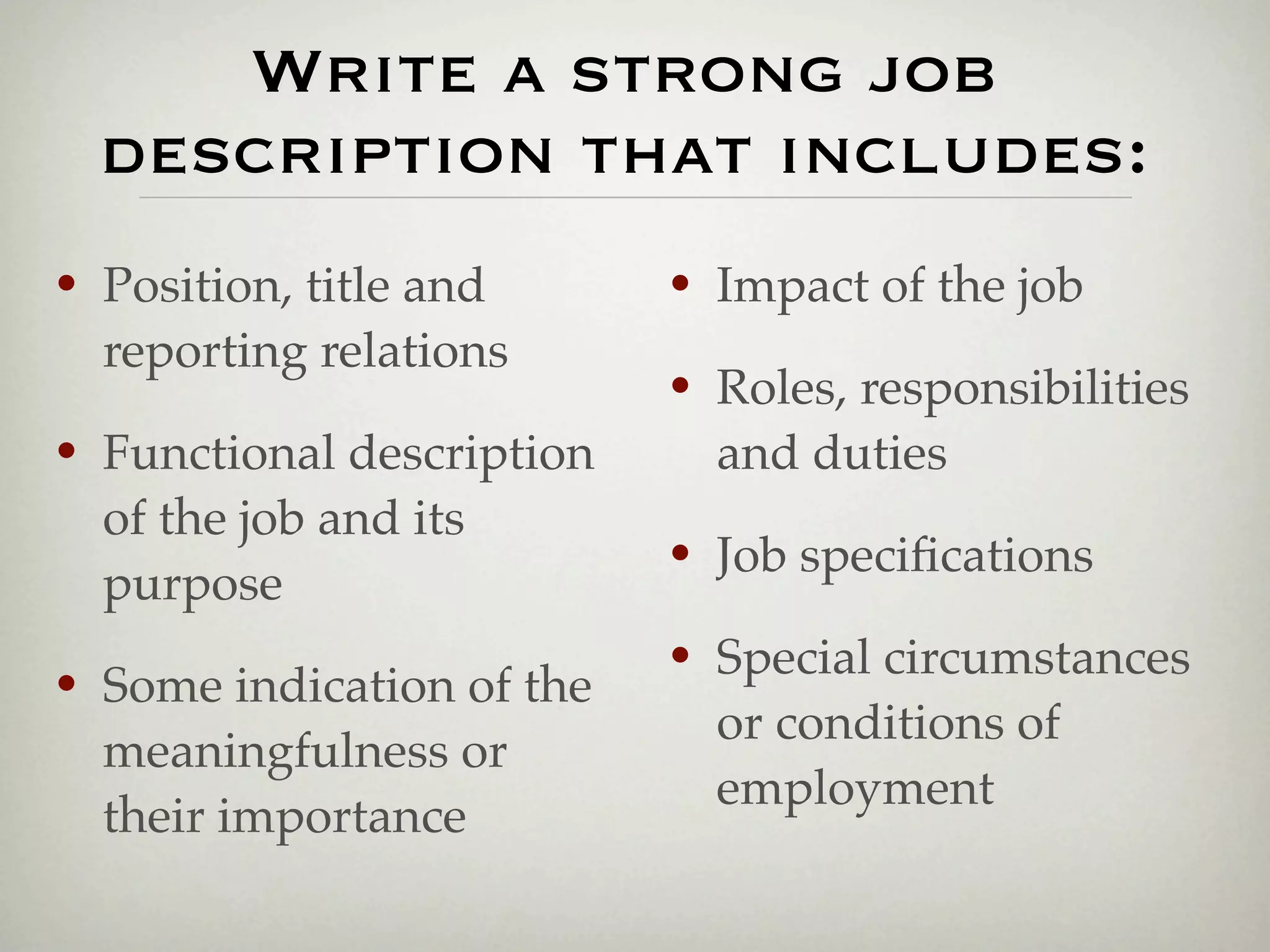
Write a strong job
    description that includes:
•   Position, title and      •   Impact of the job
    reporting relations
                             •   Roles, responsibilities
•   Functional description       and duties
    of the job and its
    purpose
                             •   Job specifications

•   Some indication of the
                             •   Special circumstances
                                 or conditions of
    meaningfulness or
                                 employment
    their importance
2: Determine the
  “Factors for
    Success”
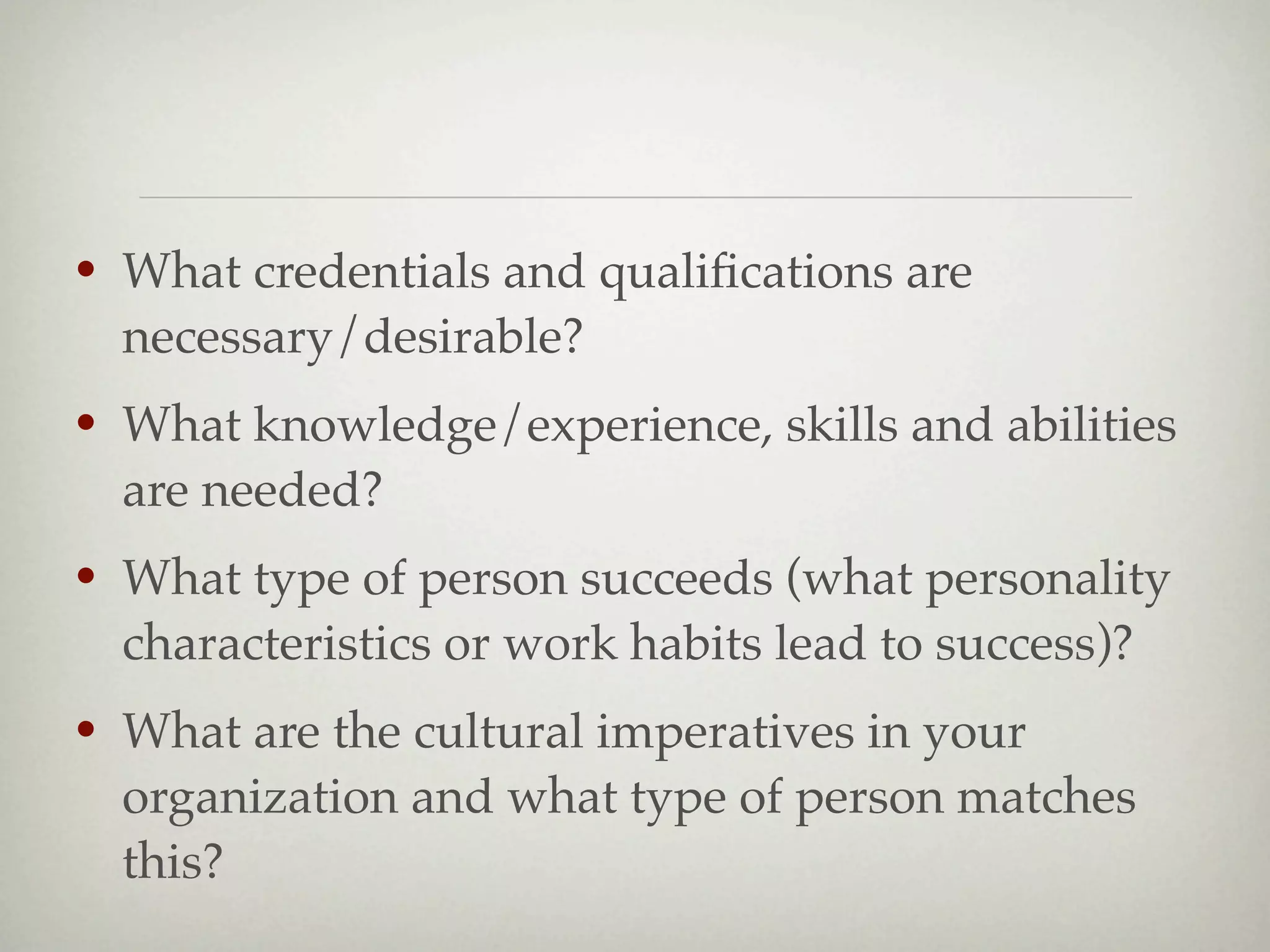
•   What credentials and qualifications are
    necessary/desirable?
•   What knowledge/experience, skills and abilities
    are needed?
•   What type of person succeeds (what personality
    characteristics or work habits lead to success)?
•   What are the cultural imperatives in your
    organization and what type of person matches
    this?
3: Consider
Internal/External
    Variables
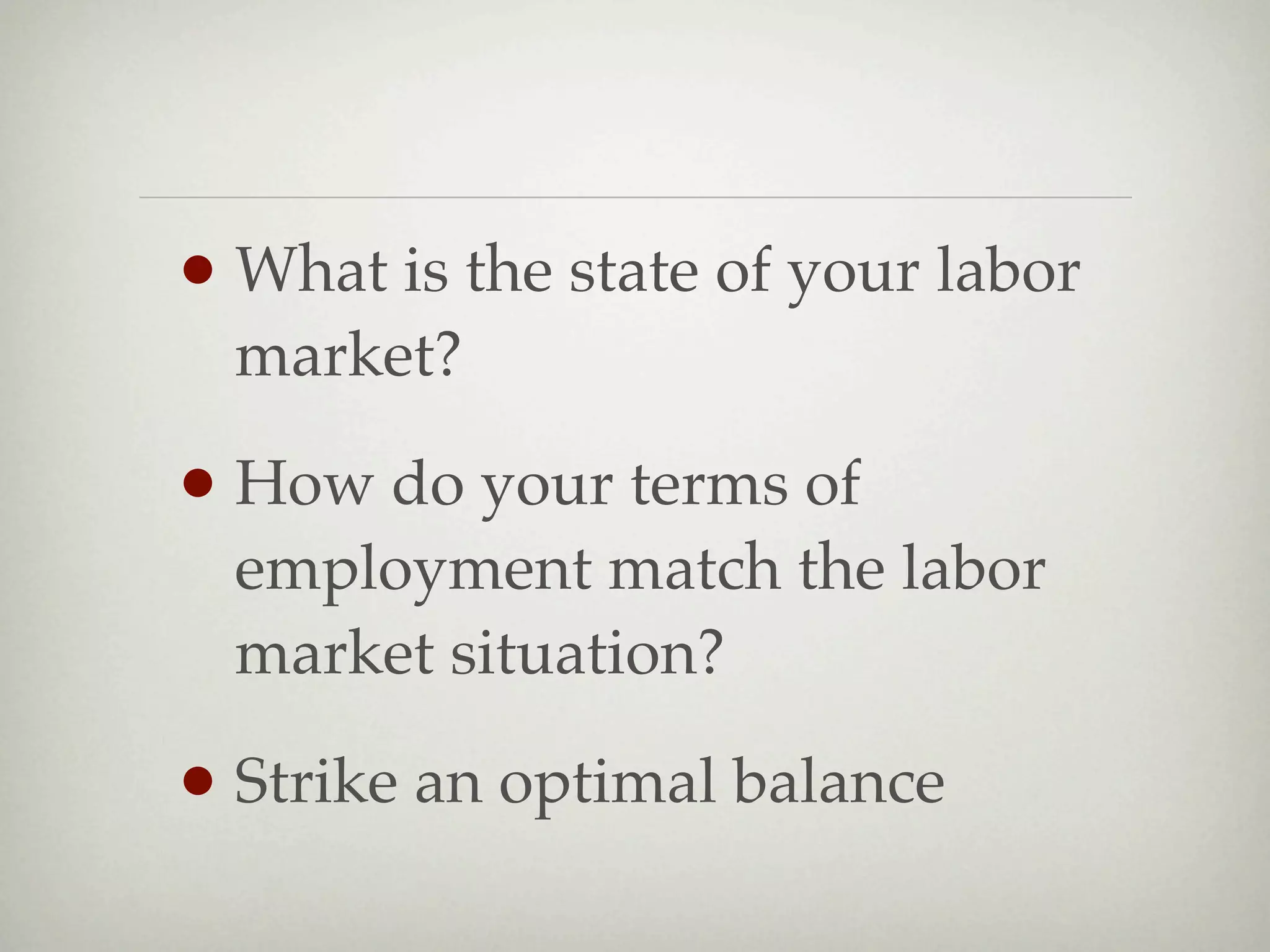
• What is the state of your labor
  market?

• How do your terms of
  employment match the labor
  market situation?

• Strike an optimal balance
4: Learn the Legal
   Fundamentals
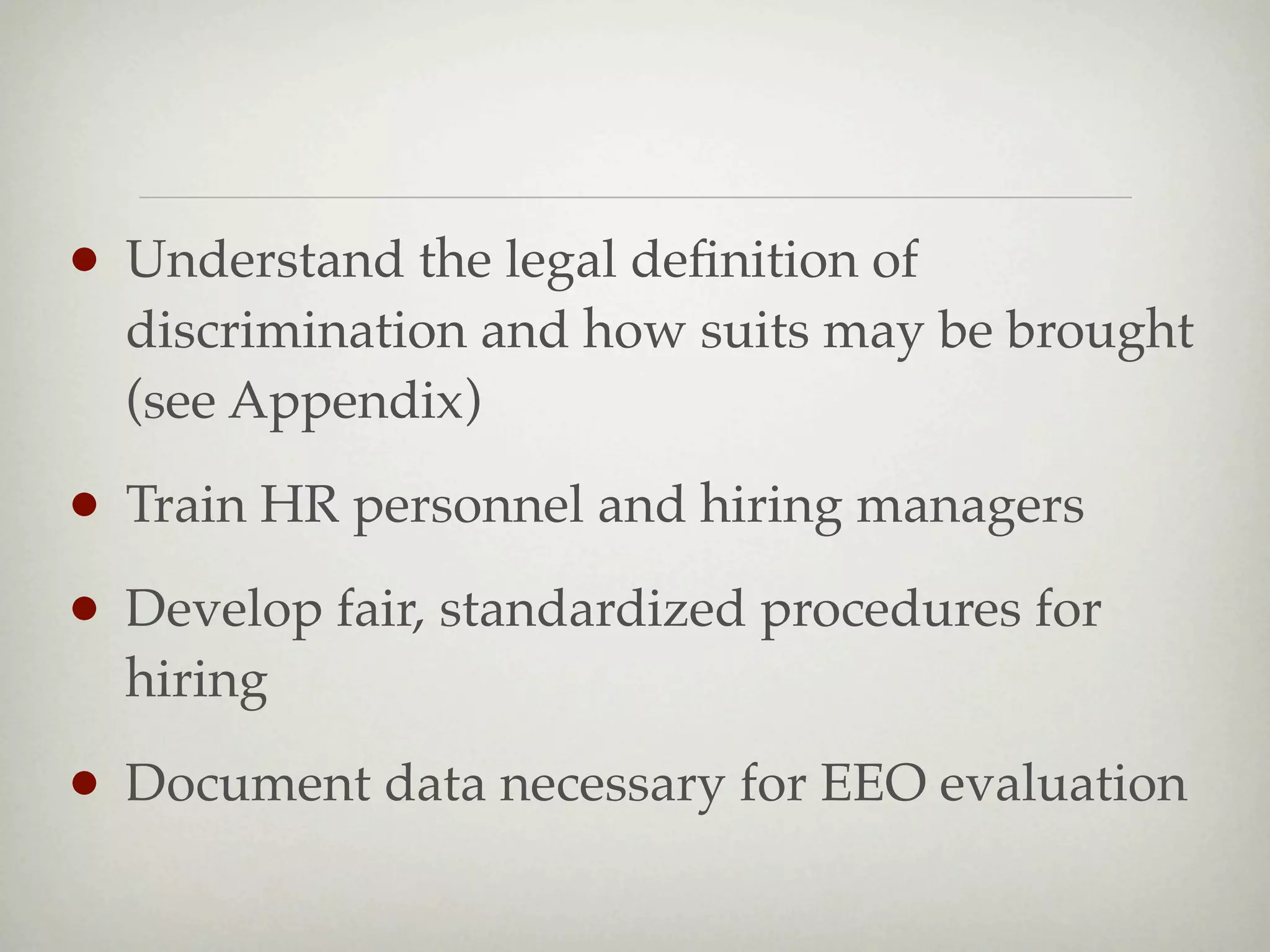
• Understand the legal definition of
  discrimination and how suits may be brought
  (see Appendix)

• Train HR personnel and hiring managers
• Develop fair, standardized procedures for
  hiring

• Document data necessary for EEO evaluation
5: Build a Model
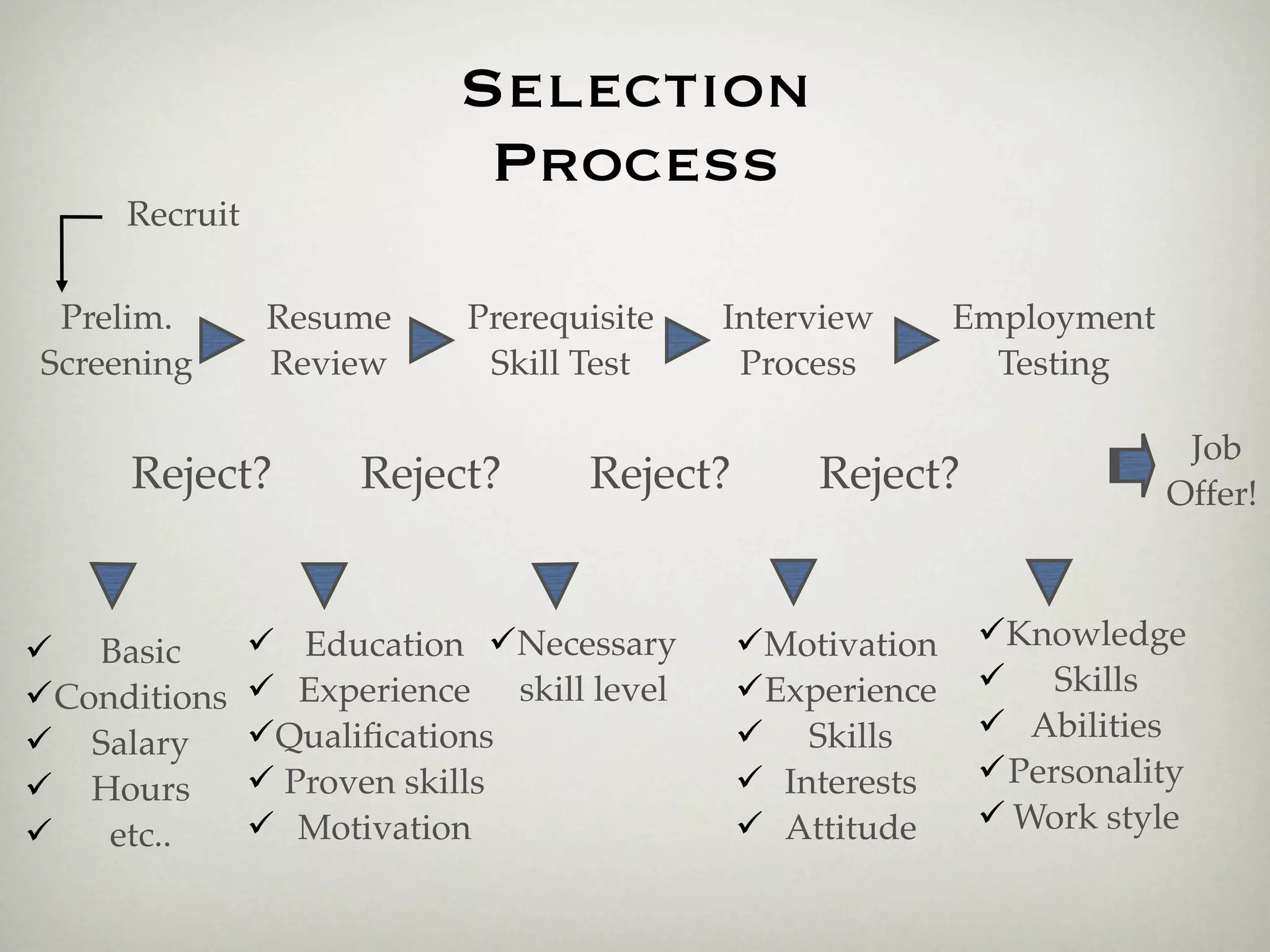
Selection
                            Process
      Recruit

 Prelim.         Resume     Prerequisite   Interview        Employment
Screening        Review      Skill Test     Process           Testing

                                                                          Job
      Reject?         Reject?      Reject?       Reject?                 Offer!


                 Education Necessary       Motivation     Knowledge
 Basic
                 Experience skill level      Experience     Skills
 Conditions
                Qualifications                Skills         Abilities
 Salary
                 Proven skills               Interests      Personality
 Hours
                 Motivation                  Attitude       Work style
    etc..
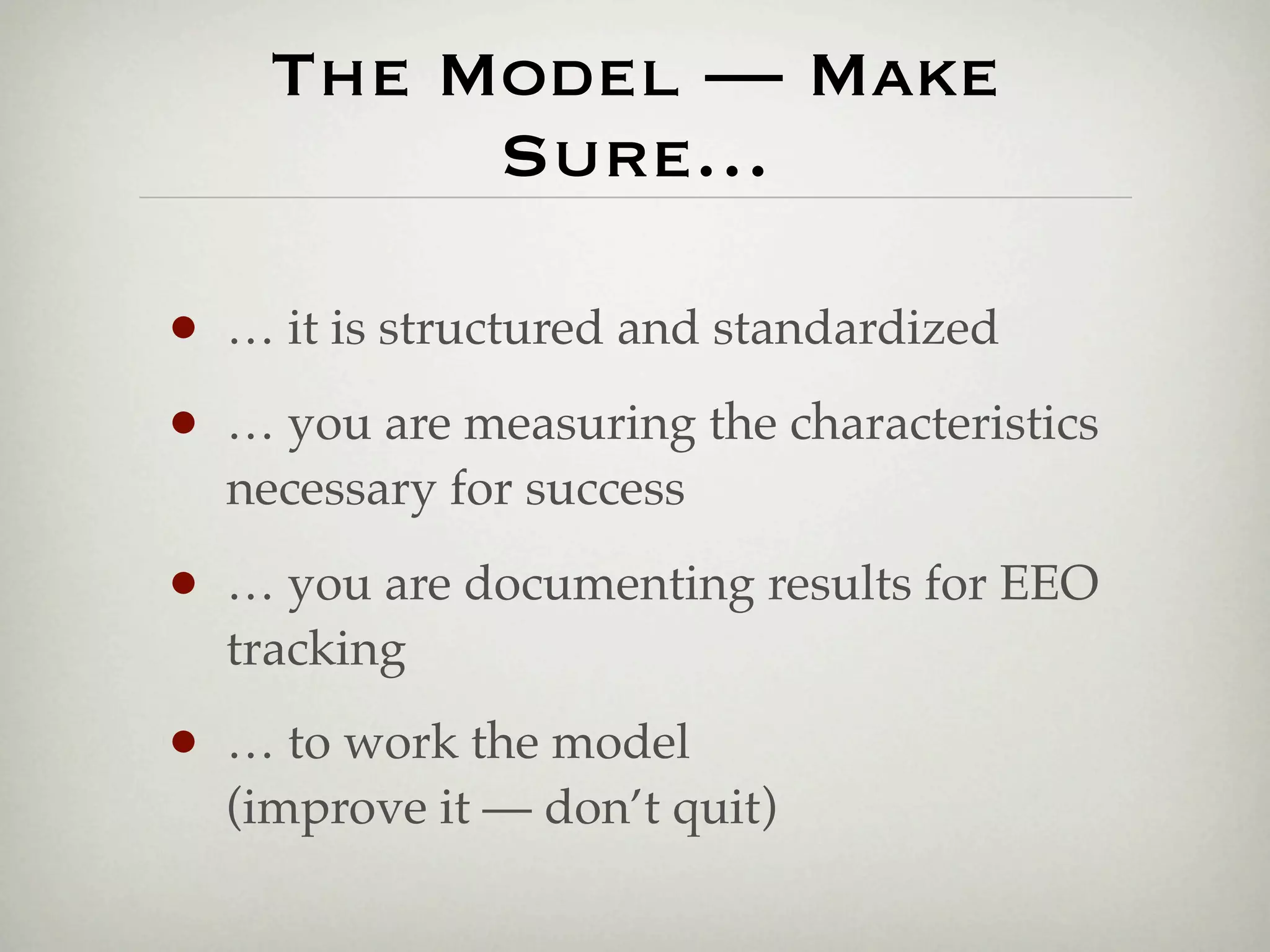
The Model — Make
          Sure…

•   … it is structured and standardized

•   … you are measuring the characteristics
    necessary for success

•   … you are documenting results for EEO
    tracking

•   … to work the model
    (improve it — don’t quit)
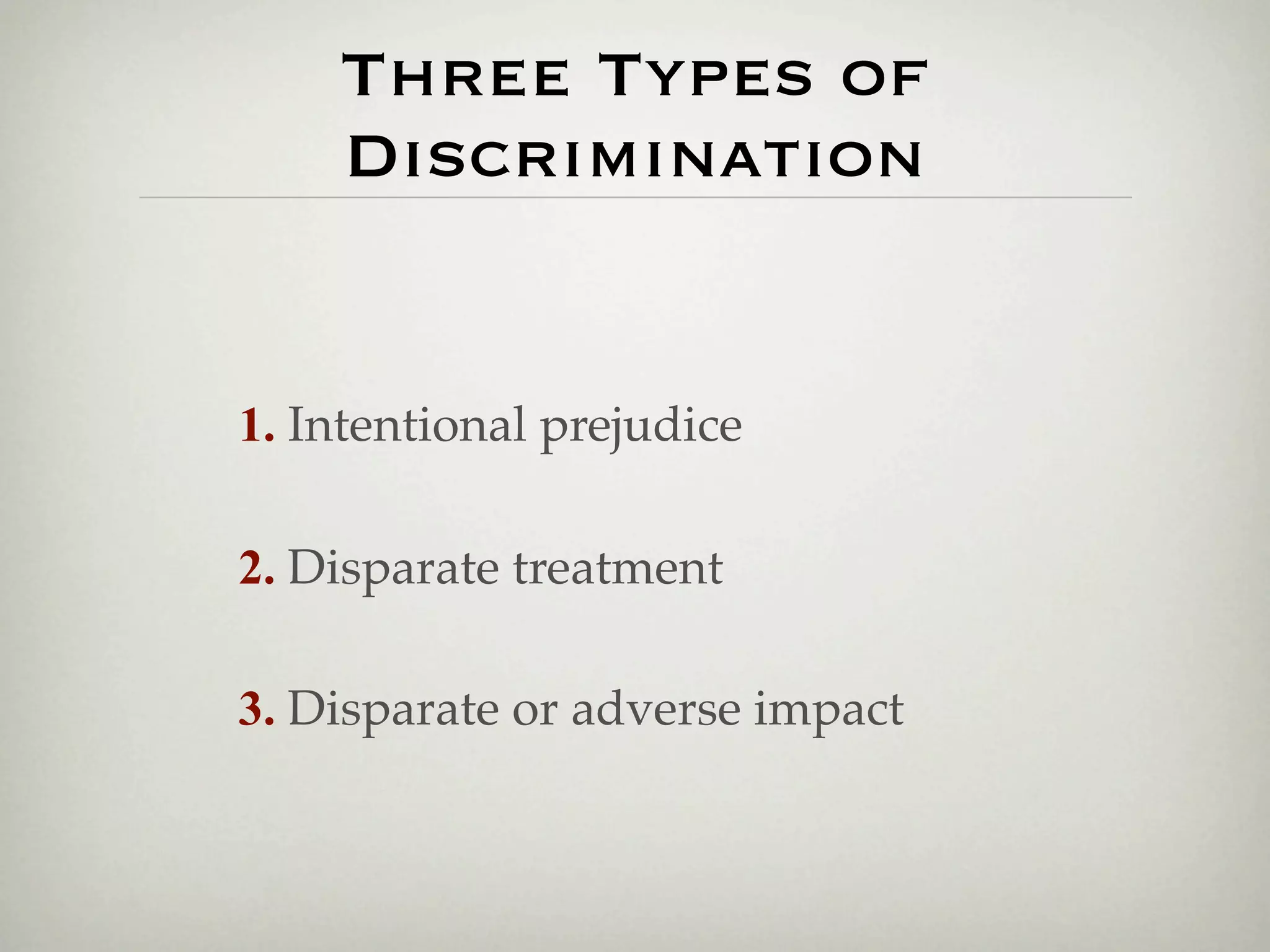
Three Types of
    Discrimination


1. Intentional prejudice

2. Disparate treatment

3. Disparate or adverse impact
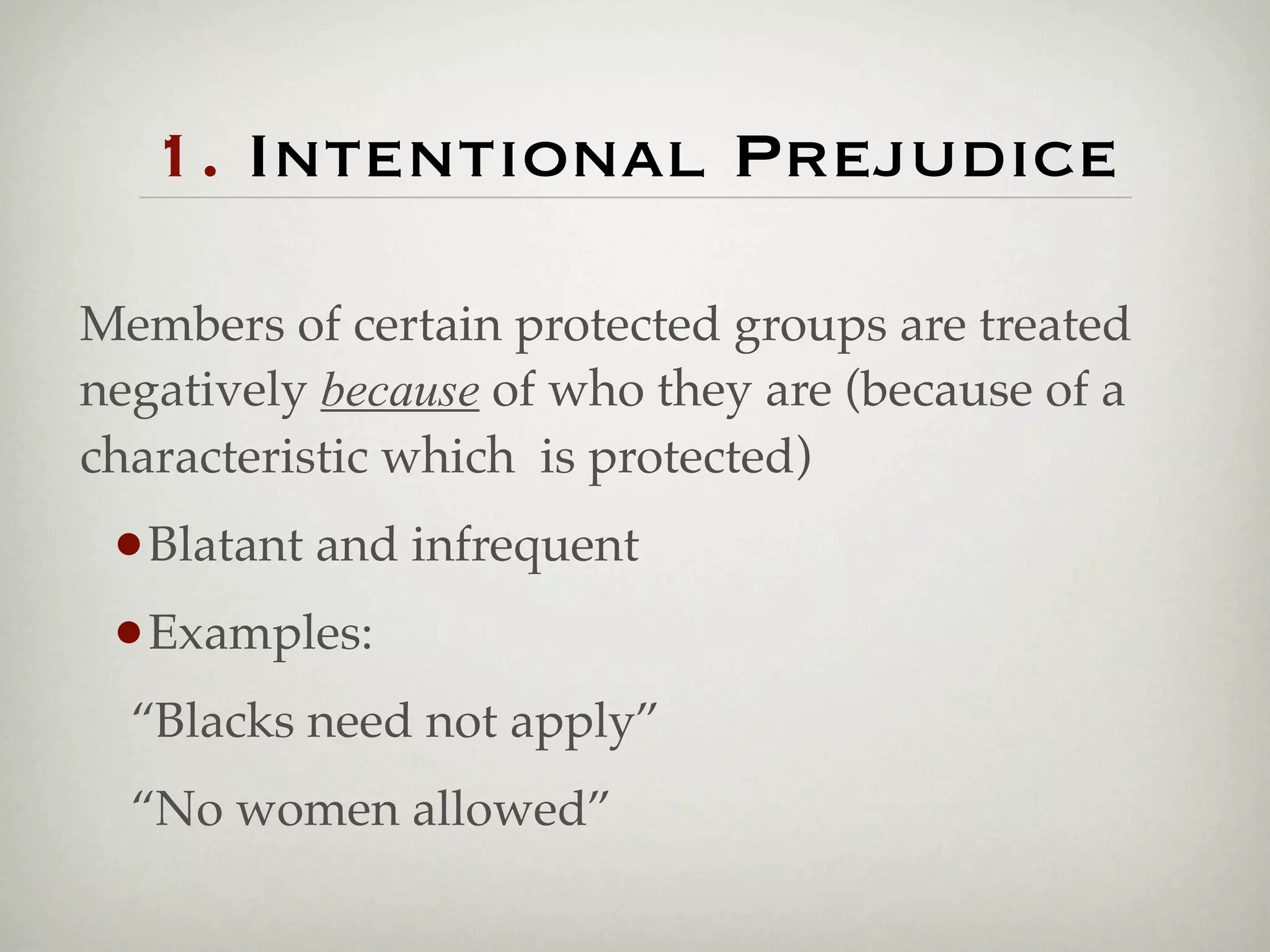
1. Intentional Prejudice

Members of certain protected groups are treated
negatively because of who they are (because of a
characteristic which is protected)
 •Blatant and infrequent
 •Examples:
! “Blacks need not apply”
! “No women allowed”
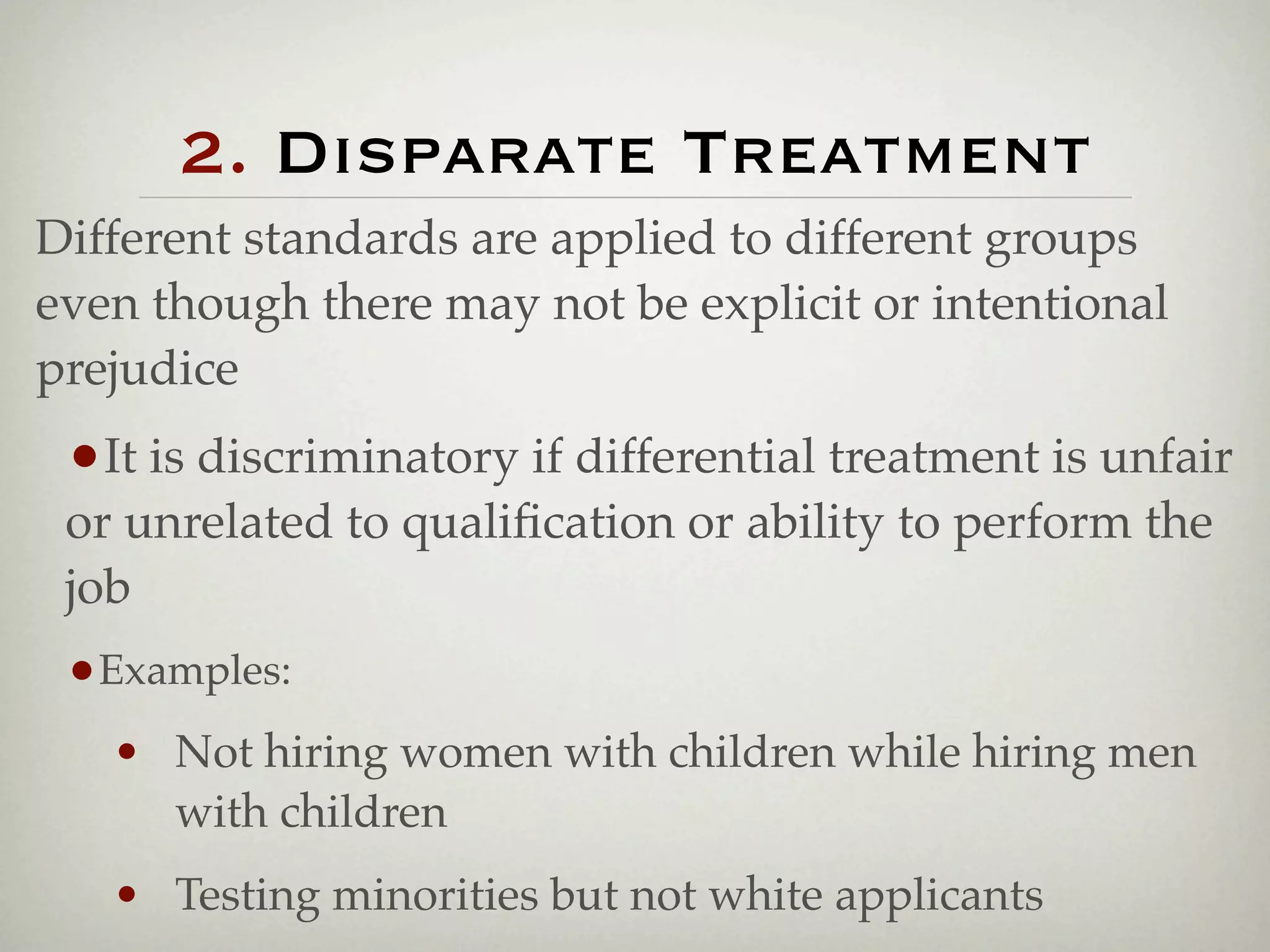
2. Disparate Treatment
Different standards are applied to different groups
even though there may not be explicit or intentional
prejudice
 •It is discriminatory if differential treatment is unfair
 or unrelated to qualification or ability to perform the
 job
 •Examples:
   • Not hiring women with children while hiring men
     with children
   • Testing minorities but not white applicants
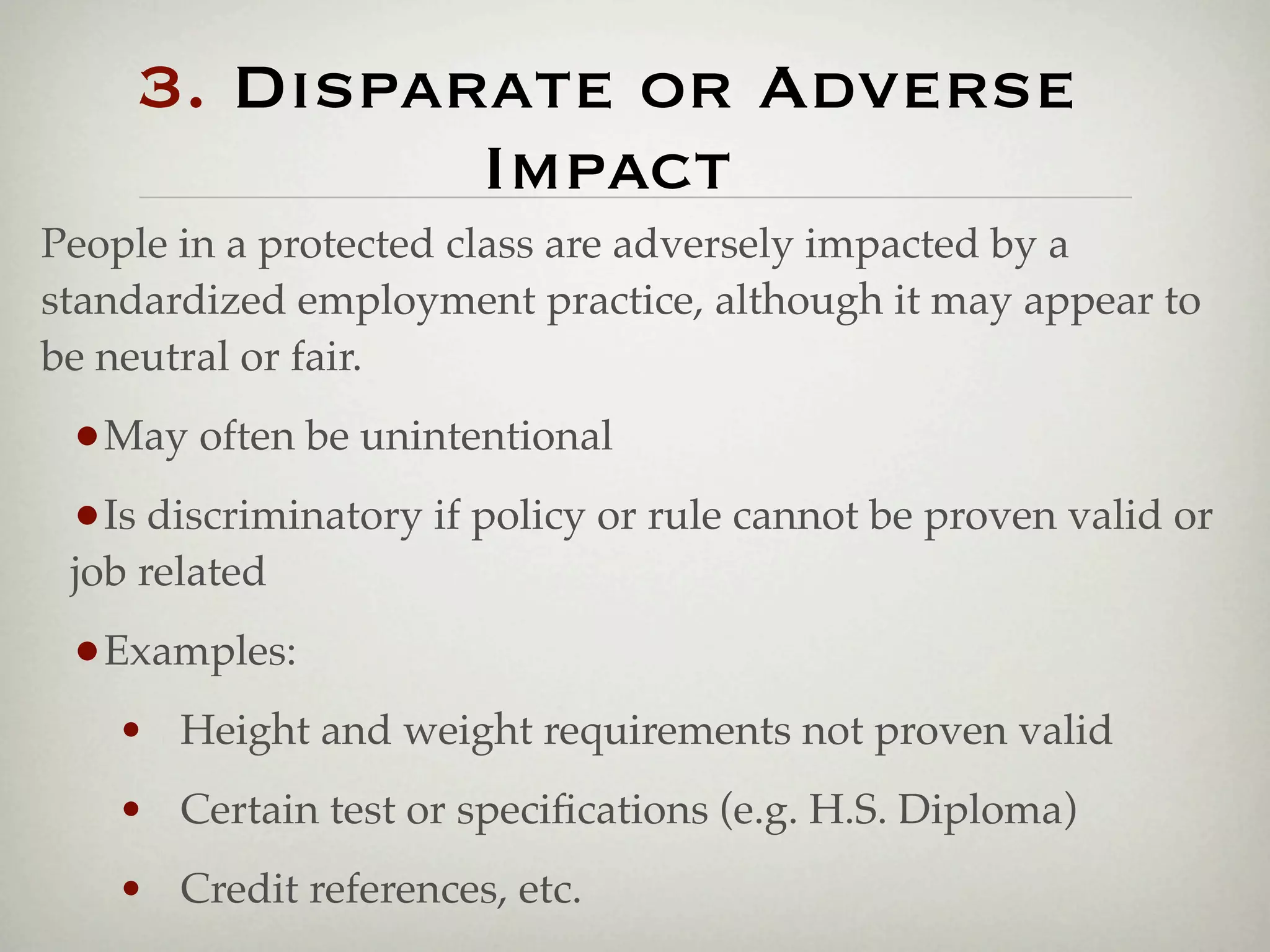
3. Disparate or Adverse
             Impact
People in a protected class are adversely impacted by a
standardized employment practice, although it may appear to
be neutral or fair.

 •May often be unintentional
 •Is discriminatory if policy or rule cannot be proven valid or
 job related

 •Examples:
   • Height and weight requirements not proven valid
   • Certain test or specifications (e.g. H.S. Diploma)
   • Credit references, etc.
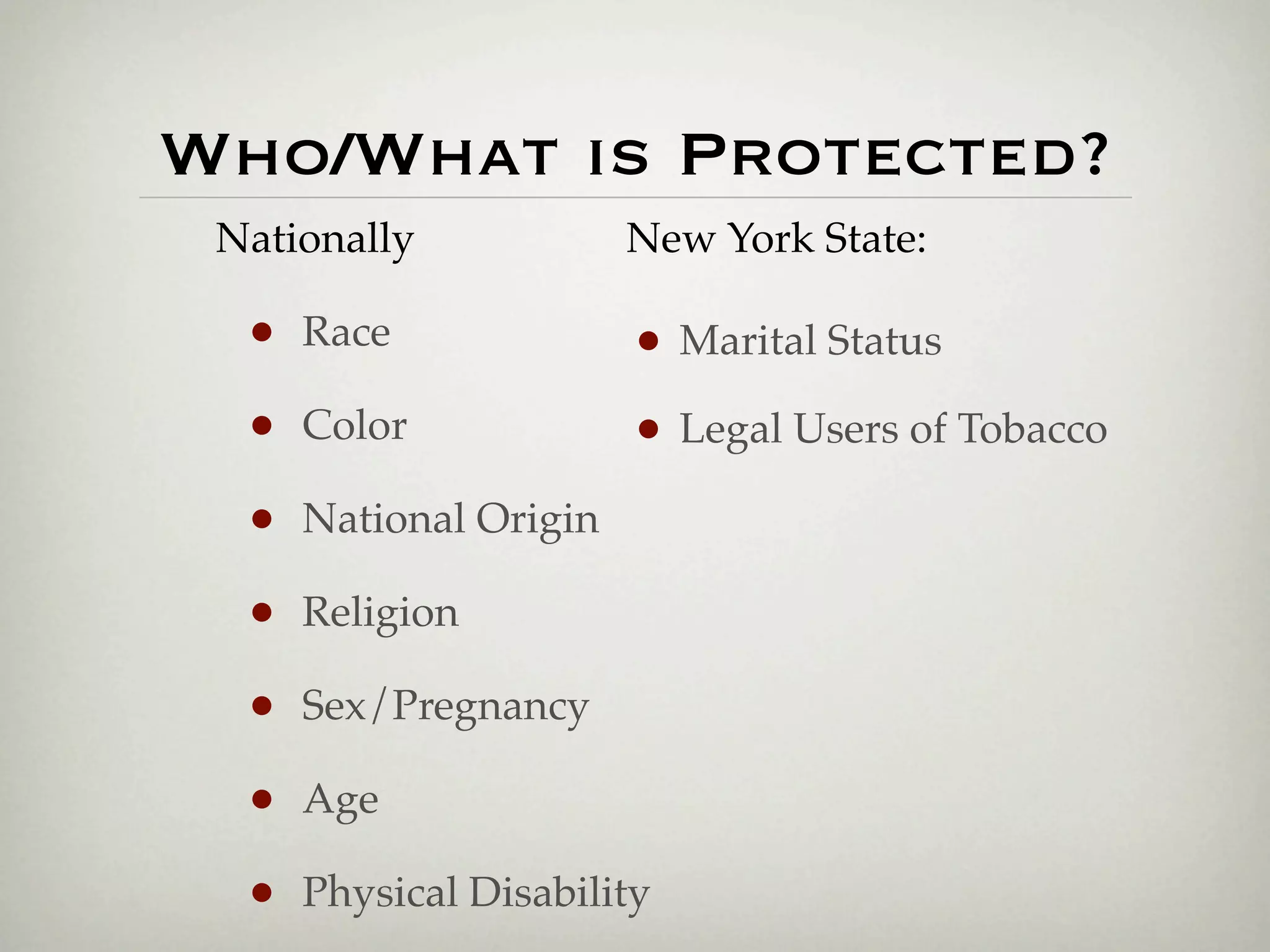
Who/What is Protected?
 Nationally             New York State:

  •   Race              • Marital Status
  •   Color             • Legal Users of Tobacco
  •   National Origin

  •   Religion

  •   Sex/Pregnancy

  •   Age

  •   Physical Disability
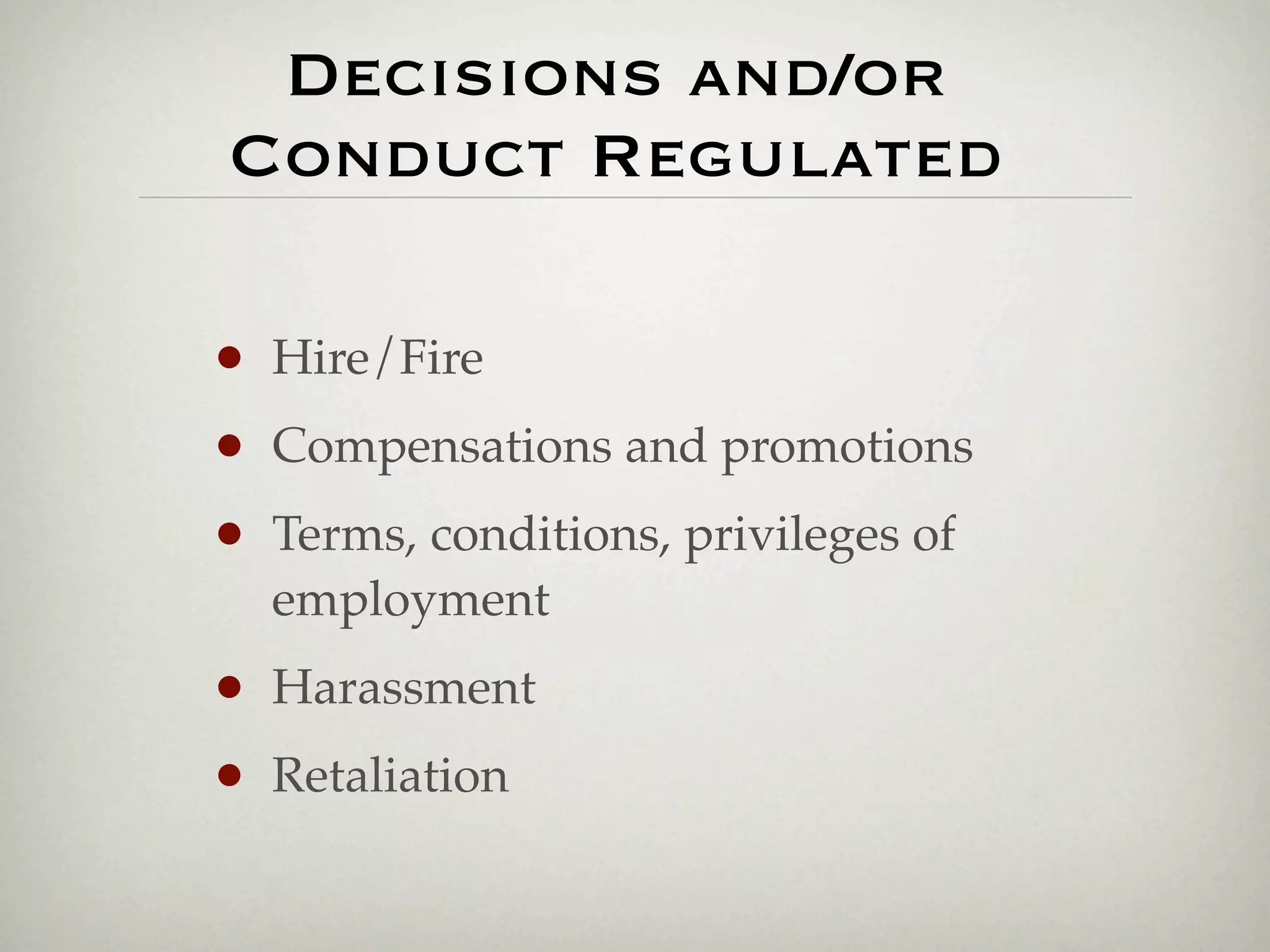
Decisions and/or
Conduct Regulated

•   Hire/Fire
•   Compensations and promotions
•   Terms, conditions, privileges of
    employment
•   Harassment
•   Retaliation
VALUTIS CONSULTING IS A FULL SERVICE MANAGEMENT CONSULTANT
 FIRM. OUR APPROACH IS TO INVESTIGATE AND UNDERSTAND
 ORGANIZATIONAL ISSUES, CUSTOMIZE REALISTIC SOLUTIONS AND
 DESIGN PRACTICAL STRATEGIES TO MOVE CLIENTS TOWARD THEIR
 SPECIFIC BUSINESS AND PERSONAL GOALS. OUR MISSION IS TO HELP
 OUR CLIENTS UNLOCK THE POTENTIAL OF THEIR ORGANIZATION AND
 ITS PEOPLE.


 PLEASE FEEL TO CONTACT US WITH ANY QUESTIONS OR TO SCHEDULE
AN APPOINTMENT TO DISCUSS YOUR ORGANIZATION’S NEEDS AND HOW
                        WE CAN HELP.

  (716)634-2553     CHIP@VALUTISCONSULTING.COM


         www.valutisconsulting.com - website
      http://gettingresultsthruothers.com - blog

Hiring Well- the Fundamentals 2012

  • 1.
    Hiring Well — TheFundamentals Presented by: Wm. (Chip) Valutis, PhD
  • 2.
  • 3.
    Write a strongjob description that includes: • Position, title and • Impact of the job reporting relations • Roles, responsibilities • Functional description and duties of the job and its purpose • Job specifications • Some indication of the • Special circumstances or conditions of meaningfulness or employment their importance
  • 4.
    2: Determine the “Factors for Success”
  • 5.
    What credentials and qualifications are necessary/desirable? • What knowledge/experience, skills and abilities are needed? • What type of person succeeds (what personality characteristics or work habits lead to success)? • What are the cultural imperatives in your organization and what type of person matches this?
  • 6.
  • 7.
    • What isthe state of your labor market? • How do your terms of employment match the labor market situation? • Strike an optimal balance
  • 8.
    4: Learn theLegal Fundamentals
  • 9.
    • Understand thelegal definition of discrimination and how suits may be brought (see Appendix) • Train HR personnel and hiring managers • Develop fair, standardized procedures for hiring • Document data necessary for EEO evaluation
  • 10.
  • 11.
    Selection Process Recruit Prelim. Resume Prerequisite Interview Employment Screening Review Skill Test Process Testing Job Reject? Reject? Reject? Reject? Offer!  Education Necessary Motivation Knowledge  Basic  Experience skill level  Experience  Skills  Conditions Qualifications  Skills  Abilities  Salary  Proven skills  Interests  Personality  Hours  Motivation  Attitude  Work style  etc..
  • 12.
    The Model —Make Sure… • … it is structured and standardized • … you are measuring the characteristics necessary for success • … you are documenting results for EEO tracking • … to work the model (improve it — don’t quit)
  • 13.
    Three Types of Discrimination 1. Intentional prejudice 2. Disparate treatment 3. Disparate or adverse impact
  • 14.
    1. Intentional Prejudice Membersof certain protected groups are treated negatively because of who they are (because of a characteristic which is protected) •Blatant and infrequent •Examples: ! “Blacks need not apply” ! “No women allowed”
  • 15.
    2. Disparate Treatment Differentstandards are applied to different groups even though there may not be explicit or intentional prejudice •It is discriminatory if differential treatment is unfair or unrelated to qualification or ability to perform the job •Examples: • Not hiring women with children while hiring men with children • Testing minorities but not white applicants
  • 16.
    3. Disparate orAdverse Impact People in a protected class are adversely impacted by a standardized employment practice, although it may appear to be neutral or fair. •May often be unintentional •Is discriminatory if policy or rule cannot be proven valid or job related •Examples: • Height and weight requirements not proven valid • Certain test or specifications (e.g. H.S. Diploma) • Credit references, etc.
  • 17.
    Who/What is Protected? Nationally New York State: • Race • Marital Status • Color • Legal Users of Tobacco • National Origin • Religion • Sex/Pregnancy • Age • Physical Disability
  • 18.
    Decisions and/or Conduct Regulated • Hire/Fire • Compensations and promotions • Terms, conditions, privileges of employment • Harassment • Retaliation
  • 19.
    VALUTIS CONSULTING ISA FULL SERVICE MANAGEMENT CONSULTANT FIRM. OUR APPROACH IS TO INVESTIGATE AND UNDERSTAND ORGANIZATIONAL ISSUES, CUSTOMIZE REALISTIC SOLUTIONS AND DESIGN PRACTICAL STRATEGIES TO MOVE CLIENTS TOWARD THEIR SPECIFIC BUSINESS AND PERSONAL GOALS. OUR MISSION IS TO HELP OUR CLIENTS UNLOCK THE POTENTIAL OF THEIR ORGANIZATION AND ITS PEOPLE. PLEASE FEEL TO CONTACT US WITH ANY QUESTIONS OR TO SCHEDULE AN APPOINTMENT TO DISCUSS YOUR ORGANIZATION’S NEEDS AND HOW WE CAN HELP. (716)634-2553 CHIP@VALUTISCONSULTING.COM www.valutisconsulting.com - website http://gettingresultsthruothers.com - blog