
Delivered by: Laura Casci  AVP for Test Process Consultancy Test Process Review The Final Step to Enlightenment:  The First Step to Improvement
Agenda Why Invest in Testing? Definitions Test Process Review (TPR) Test Process Improvement (TPI) Test Process Reviews What should a TPR Deliver? The Pitfalls to Avoid Ensuring Success Test Process Improvement What should a TPI Deliver? The Pitfalls to Avoid Ensuring Success Summary Convince the “Boss” The 10 Steps to Success
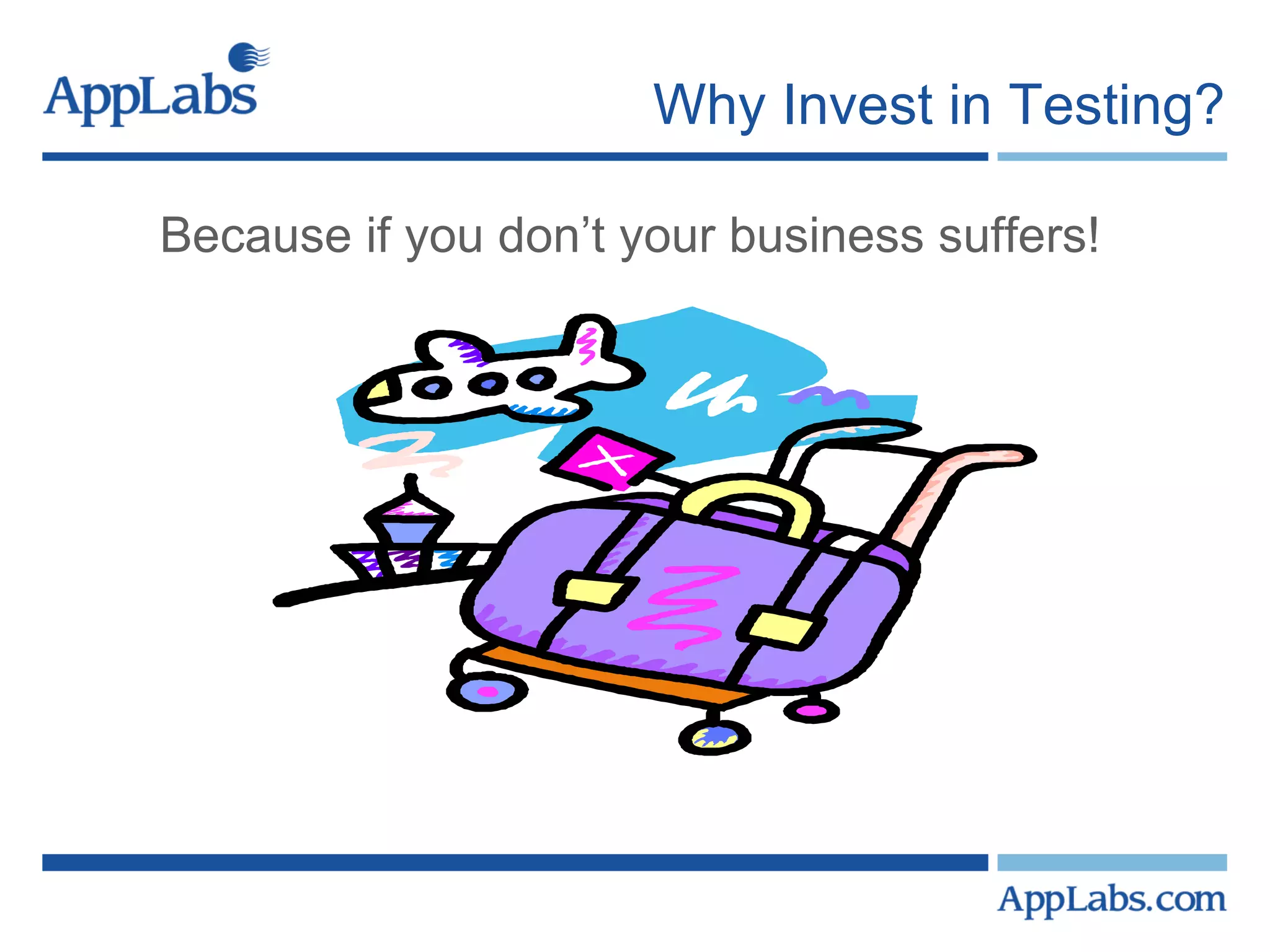
Why Invest in Testing? Because if you don’t your business suffers!
Definitions Test Process Review TPR is the process of  reviewing  all or part  of an organisations current testing processes and key testing dependencies, to both baseline an organisations current testing position and offer recommendations for improvement that are aligned to the organisations  Business and Test objectives. Test Process Improvement TPI is the process of agreeing and implementing recommendations to improve all or part of the organisations current test processes and key test dependencies in alignment with the organisations  Business and Test objectives.
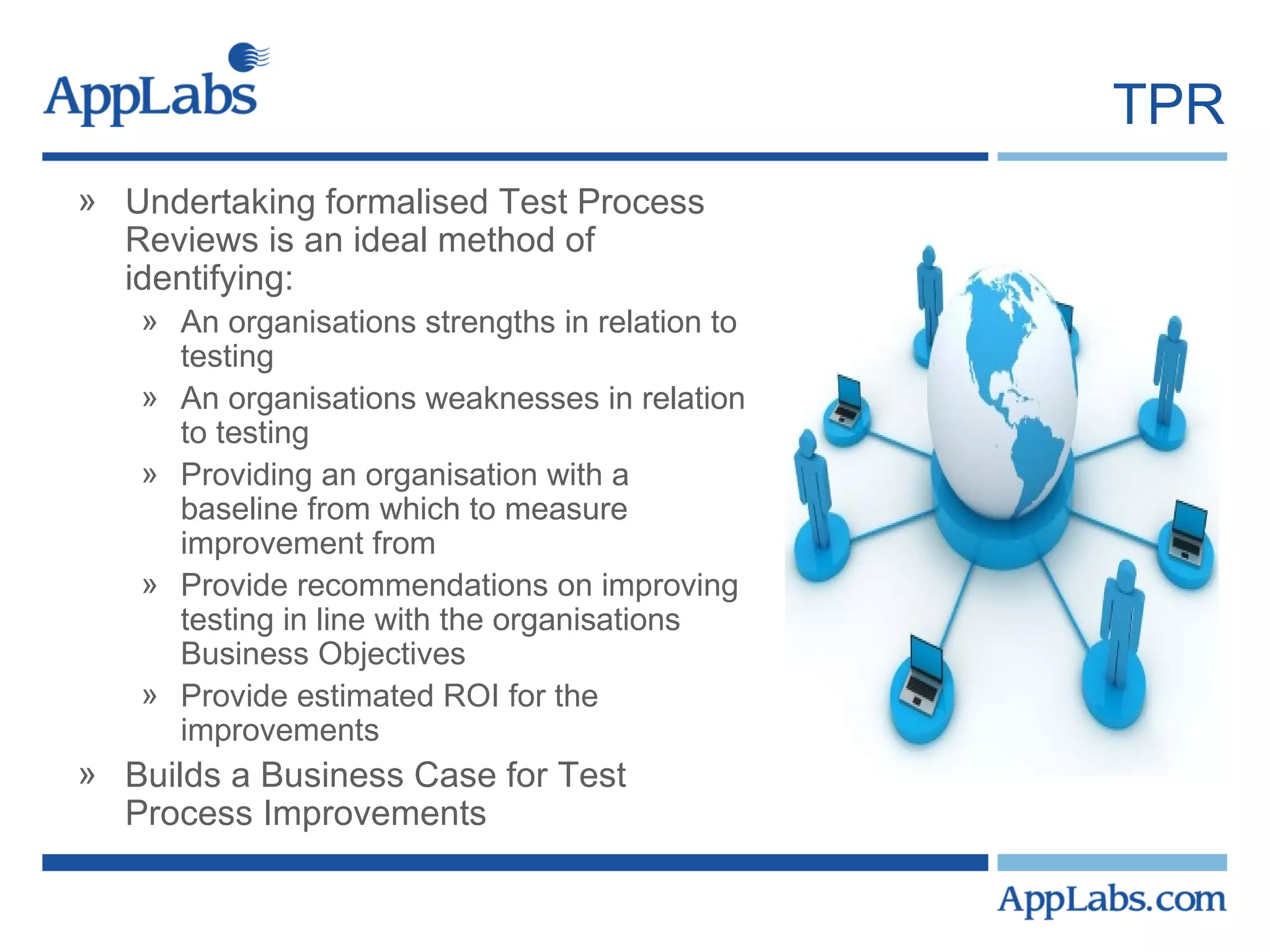
TPR Undertaking formalised Test Process Reviews is an ideal method of identifying: An organisations strengths in relation to testing An organisations weaknesses in relation to testing Providing an organisation with a baseline from which to measure improvement from Provide recommendations on improving testing in line with the organisations Business Objectives Provide estimated ROI for the improvements Builds a Business Case for Test Process Improvements
Avoid the Pitfalls Organisations often invest in Test Process Reviews but they often fail to hit the mark.  Reasons for failure include: The right people not involved in the TPR Organisations use the wrong TPR model for them  Don’t understand or define their Business Objectives  Don’t understand or define their Testing Objectives Don’t secure sponsorship and buy-in to invest in and implement the agreed recommendations Use the TPR as an audit tool
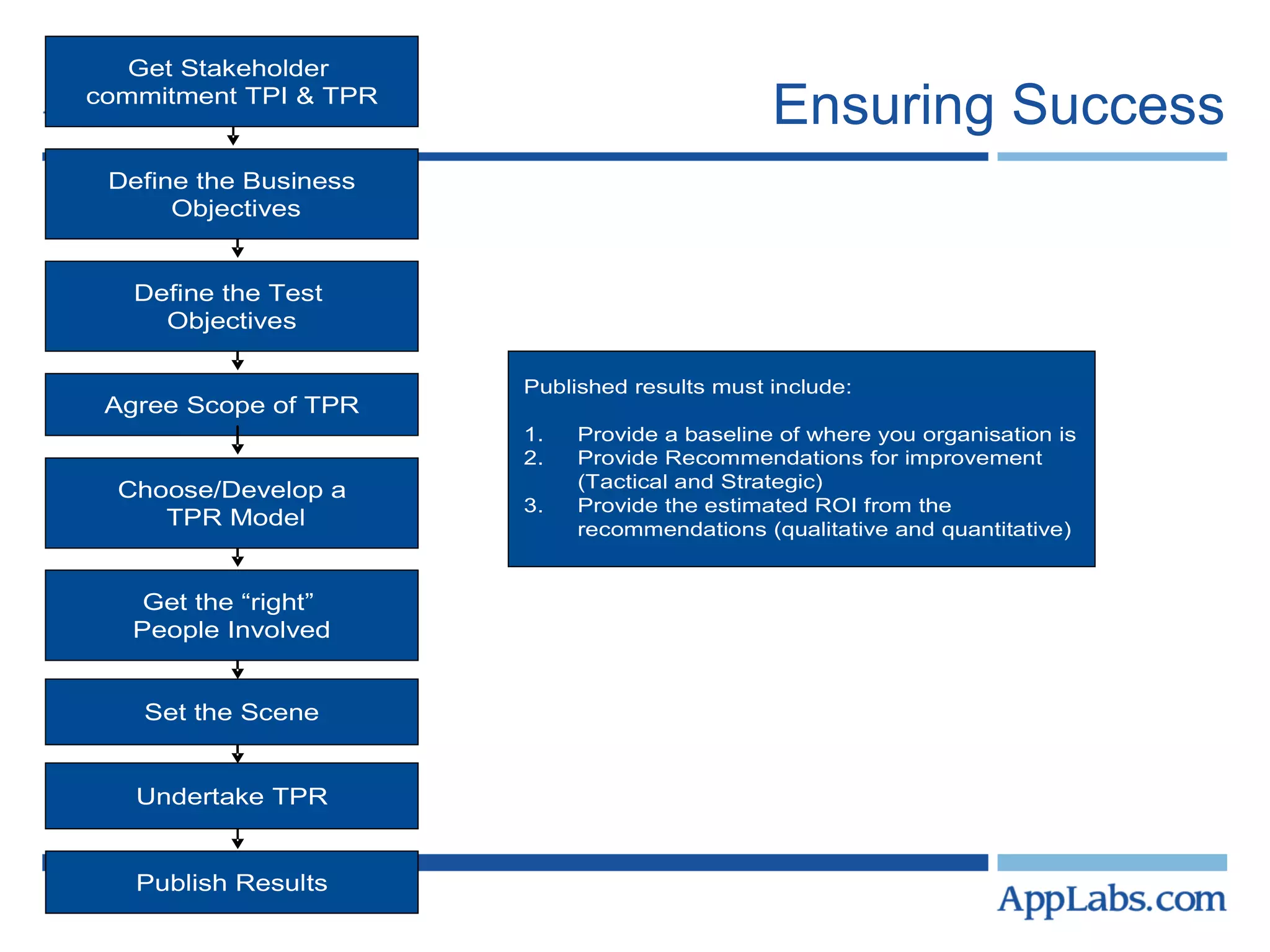
Ensuring Success
TPI Undertaking formalised Test Process Improvement is an ideal method of : Implementing agreed Strategic and Tactical test improvements that meet you Business objectives Implementing agreed Strategic and Tactical test improvements that meet you Test  objectives Making changes to test processes that are structured and controlled Rolling out the required supporting processes to enable a smooth transition to any new test processes.
Avoid the Pitfalls Implementation No buy in to change Potential benefits not understood or highlighted No metrics to prove success/failure No ownership No pilot implementations No flexibility No support for impacted resources or supporting processes No training Post Implementation No ownership No method of processing improvements No audits No training for new staff ( permanent and contract)
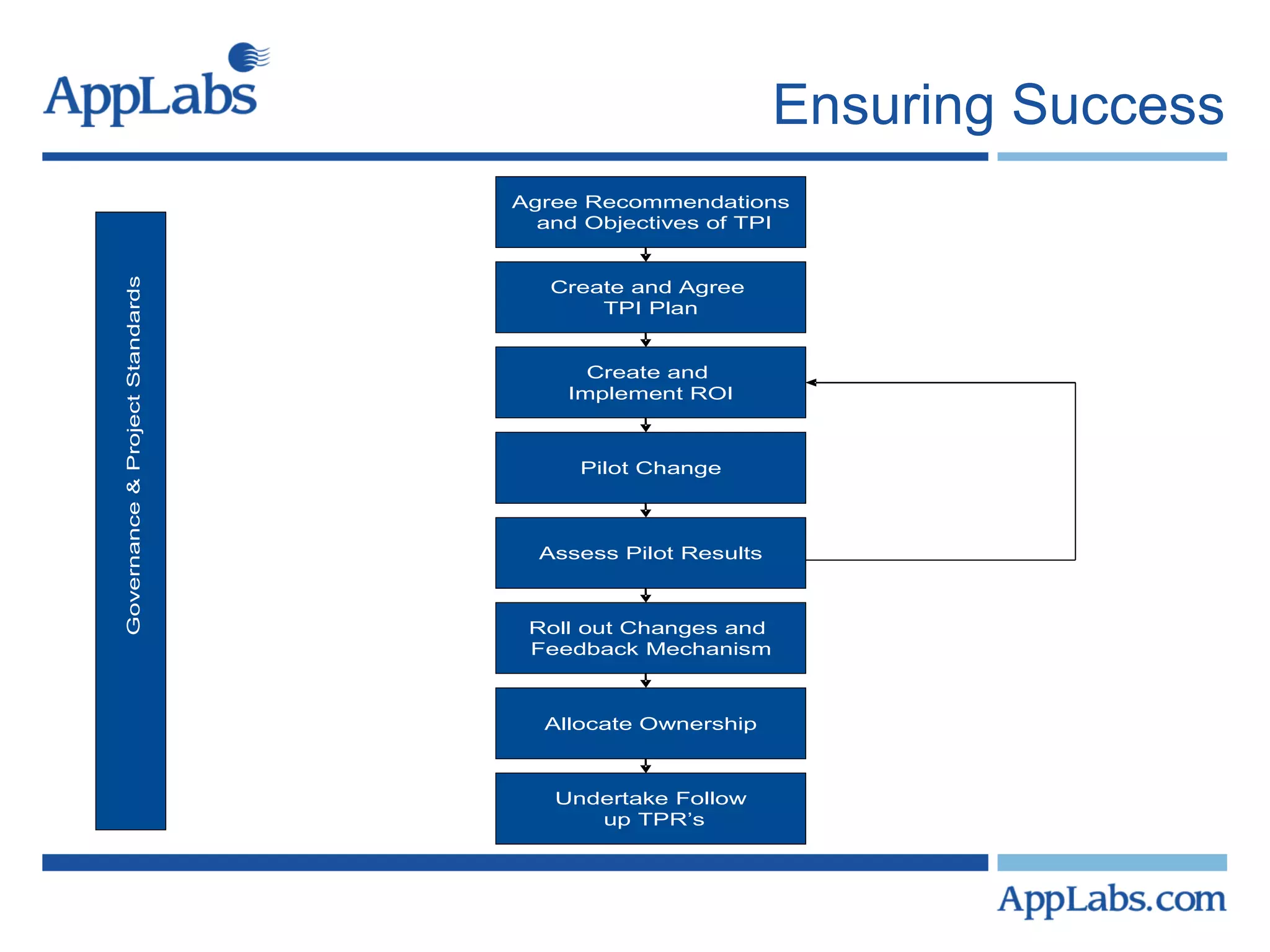
Ensuring Success
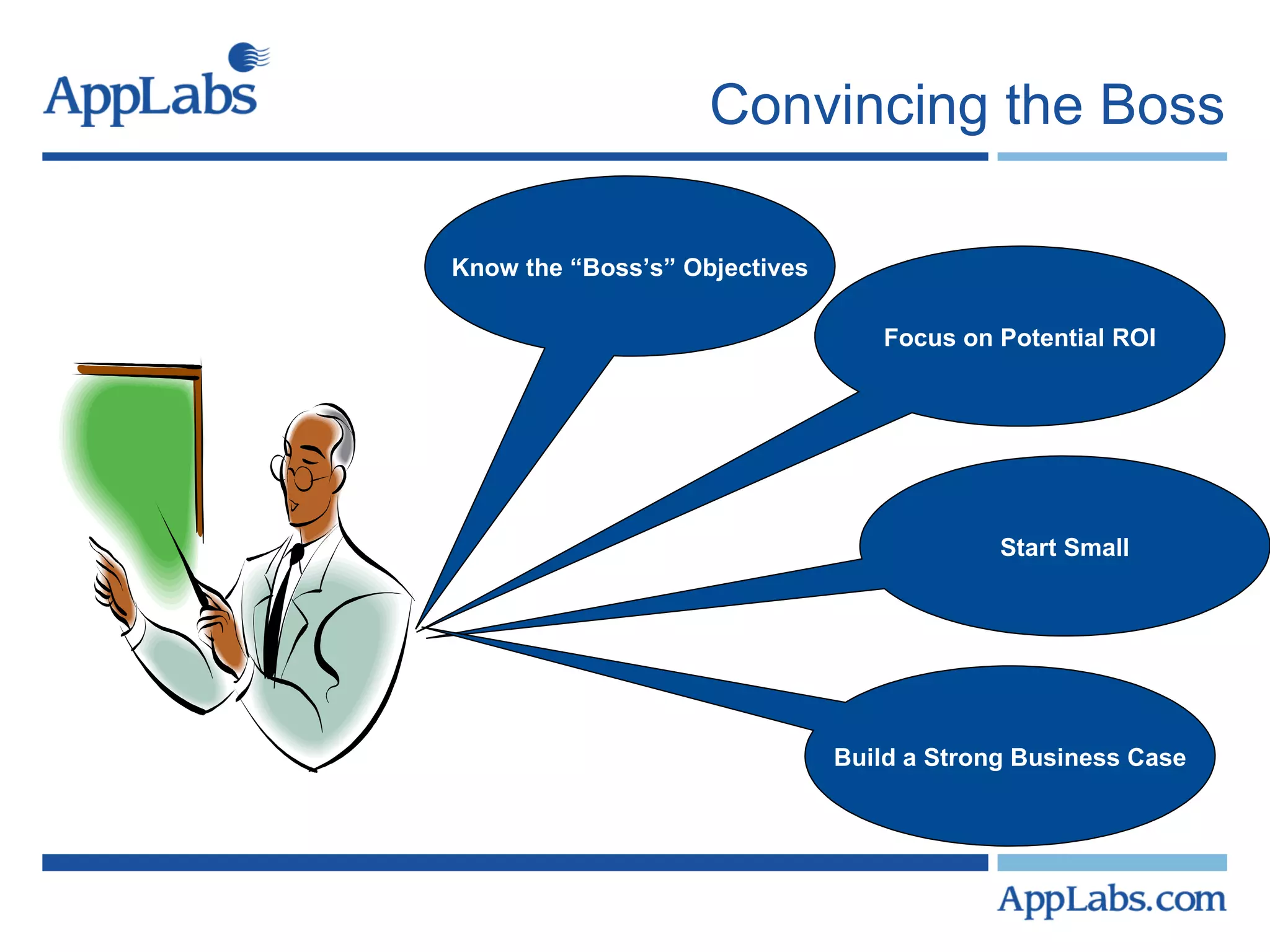
Convincing the Boss Know the “Boss’s” Objectives Focus on Potential ROI Start Small Build a Strong Business Case
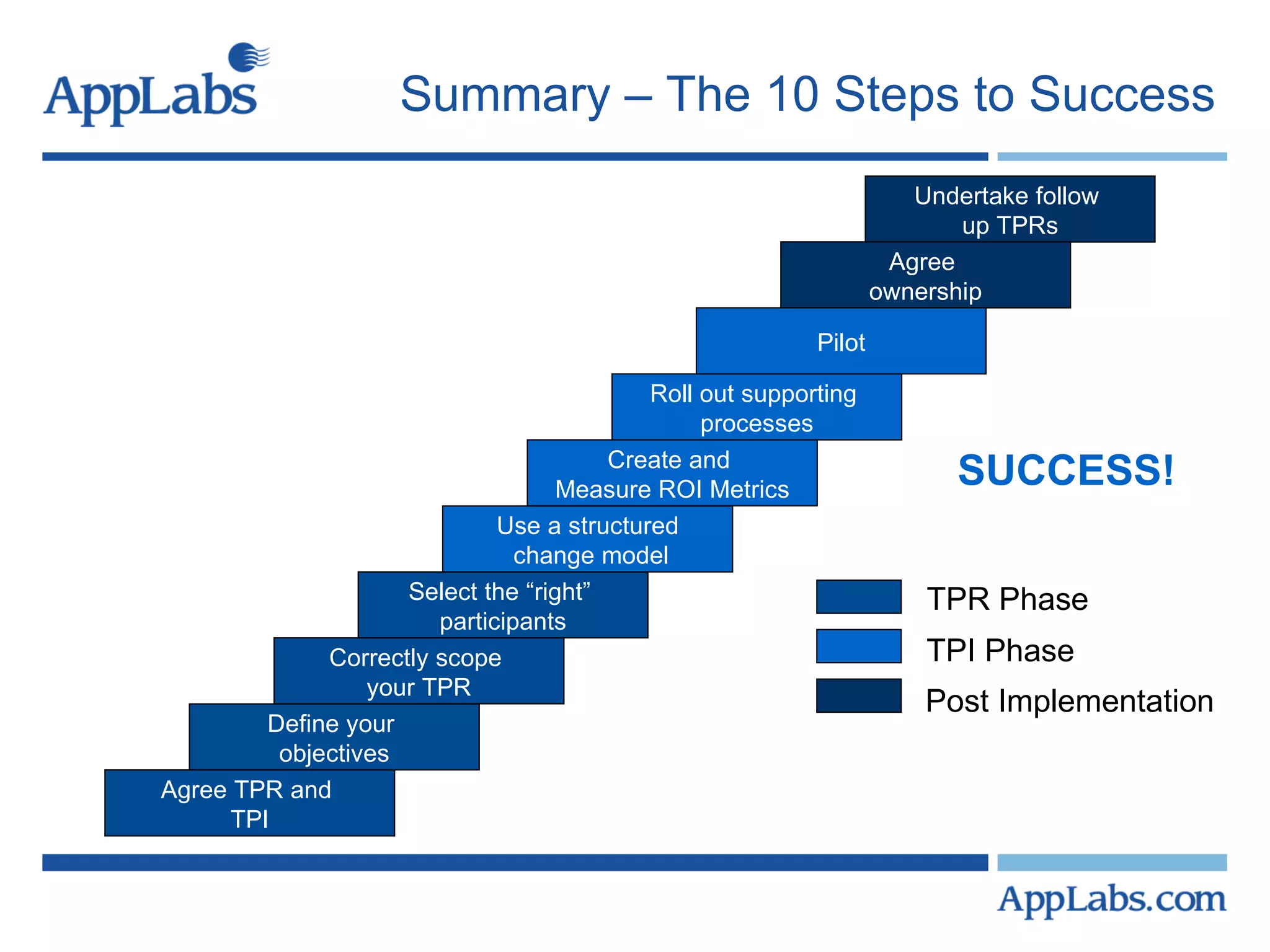
Summary – The 10 Steps to Success SUCCESS!   Agree TPR and  TPI Define your  objectives Correctly scope  your TPR Select the “right”  participants Use a structured change model Create and  Measure ROI Metrics Roll out supporting  processes Undertake follow  up TPRs Agree  ownership Pilot TPR Phase TPI Phase Post Implementation
Please forward any queries to: [email_address]
 

Test Process Review,The Final Step To Enlightenment The First Step To Improvement From AppLabs

  • 1.
  • 2.
    Delivered by: LauraCasci AVP for Test Process Consultancy Test Process Review The Final Step to Enlightenment: The First Step to Improvement
  • 3.
    Agenda Why Investin Testing? Definitions Test Process Review (TPR) Test Process Improvement (TPI) Test Process Reviews What should a TPR Deliver? The Pitfalls to Avoid Ensuring Success Test Process Improvement What should a TPI Deliver? The Pitfalls to Avoid Ensuring Success Summary Convince the “Boss” The 10 Steps to Success
  • 4.
    Why Invest inTesting? Because if you don’t your business suffers!
  • 5.
    Definitions Test ProcessReview TPR is the process of reviewing all or part of an organisations current testing processes and key testing dependencies, to both baseline an organisations current testing position and offer recommendations for improvement that are aligned to the organisations Business and Test objectives. Test Process Improvement TPI is the process of agreeing and implementing recommendations to improve all or part of the organisations current test processes and key test dependencies in alignment with the organisations Business and Test objectives.
  • 6.
    TPR Undertaking formalisedTest Process Reviews is an ideal method of identifying: An organisations strengths in relation to testing An organisations weaknesses in relation to testing Providing an organisation with a baseline from which to measure improvement from Provide recommendations on improving testing in line with the organisations Business Objectives Provide estimated ROI for the improvements Builds a Business Case for Test Process Improvements
  • 7.
    Avoid the PitfallsOrganisations often invest in Test Process Reviews but they often fail to hit the mark. Reasons for failure include: The right people not involved in the TPR Organisations use the wrong TPR model for them Don’t understand or define their Business Objectives Don’t understand or define their Testing Objectives Don’t secure sponsorship and buy-in to invest in and implement the agreed recommendations Use the TPR as an audit tool
  • 8.
  • 9.
    TPI Undertaking formalisedTest Process Improvement is an ideal method of : Implementing agreed Strategic and Tactical test improvements that meet you Business objectives Implementing agreed Strategic and Tactical test improvements that meet you Test objectives Making changes to test processes that are structured and controlled Rolling out the required supporting processes to enable a smooth transition to any new test processes.
  • 10.
    Avoid the PitfallsImplementation No buy in to change Potential benefits not understood or highlighted No metrics to prove success/failure No ownership No pilot implementations No flexibility No support for impacted resources or supporting processes No training Post Implementation No ownership No method of processing improvements No audits No training for new staff ( permanent and contract)
  • 11.
  • 12.
    Convincing the BossKnow the “Boss’s” Objectives Focus on Potential ROI Start Small Build a Strong Business Case
  • 13.
    Summary – The10 Steps to Success SUCCESS! Agree TPR and TPI Define your objectives Correctly scope your TPR Select the “right” participants Use a structured change model Create and Measure ROI Metrics Roll out supporting processes Undertake follow up TPRs Agree ownership Pilot TPR Phase TPI Phase Post Implementation
  • 14.
    Please forward anyqueries to: [email_address]
  • 15.