BusinessProcess ImprovementBy: Richard T. Sengson
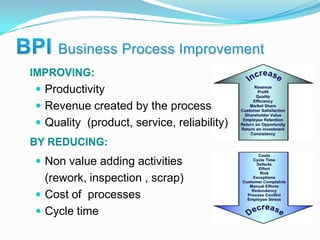
BPIBusiness Process ImprovementIMPROVING:ProductivityRevenue created by the processQuality  (product, service, reliability)BY REDUCING:Non value adding activities (rework, inspection , scrap)Cost of  processes
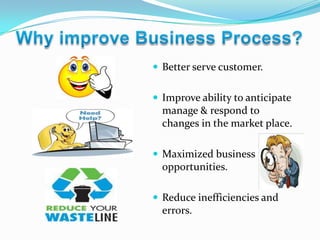
Cycle timeWhy improve Business Process?Better serve customer.Improve ability to anticipate manage & respond to changes in the market place.Maximized business opportunities.Reduce inefficiencies and errors.
Core Objectives of BPI1.Effectiveness — Does the process meet customer needs?2.Efficiency — Does it cut down on the usage of resources?3.Adaptability — Is the process flexible enough to change as requirements change?
Key resources for          Process  Improvement  Senior Leaders ( CEO, Senior Executives )Align key stake holders and recognized the process of  PICreate or support  an environment that  changes to     happen.Project Leaders/Change AgentsFacilitate the change Provide support and expertiseAssist with identification of improvements
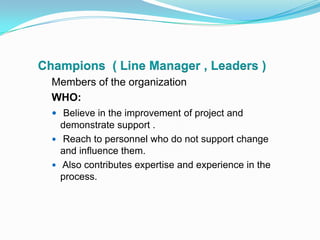
Champions  ( Line Manager , Leaders )Members of the organization WHO:Believe in the improvement of project and demonstrate support . Reach to personnel who do not support change and influence them. Also contributes expertise and experience in the process.
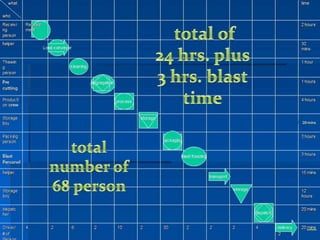
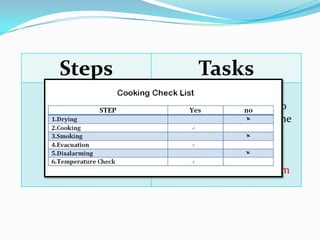
 total of 24 hrs. plus 3 hrs. blast timetotal number of 68 person
Customer SatisfactionFine-tuning processes gives an organization a competitive advantage in a global marketplace.
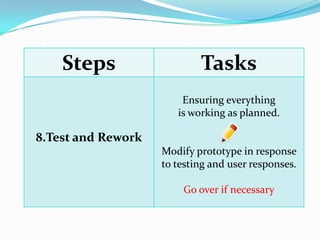
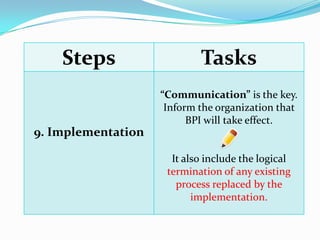
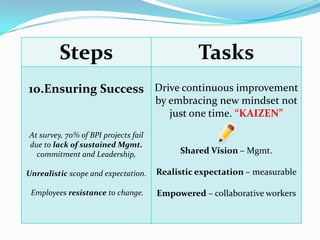
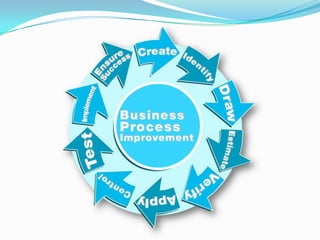
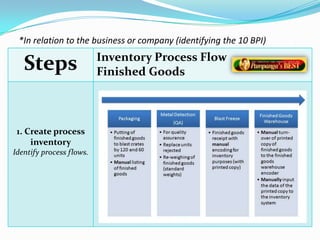
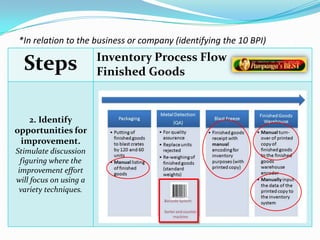
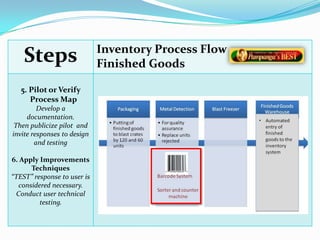
*In relation to the business or company (identifying the 10 BPI)
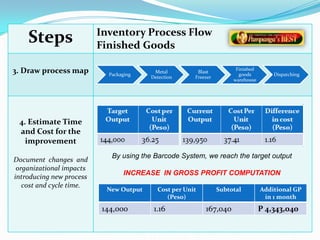
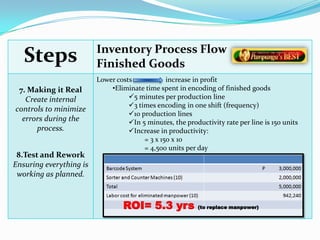
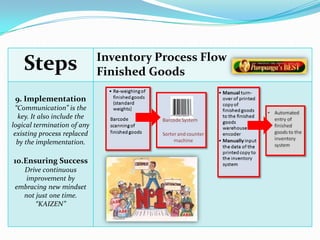
By using the Barcode System, we reach the target outputINCREASE  IN GROSS PROFIT COMPUTATION
ROI= 5.3 yrs (to replace manpower)
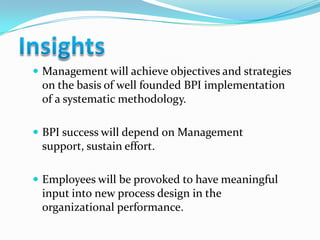
InsightsManagement will achieve objectives and strategies on the basis of well founded BPI implementation of a systematic methodology.BPI success will depend on Management support, sustain effort.Employees will be provoked to have meaningful input into new process design in the organizational performance.
Thank You andGod Bless!

Special report bpi

  • 1.
  • 2.
    BPIBusiness Process ImprovementIMPROVING:ProductivityRevenuecreated by the processQuality (product, service, reliability)BY REDUCING:Non value adding activities (rework, inspection , scrap)Cost of processes
  • 3.
    Cycle timeWhy improveBusiness Process?Better serve customer.Improve ability to anticipate manage & respond to changes in the market place.Maximized business opportunities.Reduce inefficiencies and errors.
  • 4.
    Core Objectives ofBPI1.Effectiveness — Does the process meet customer needs?2.Efficiency — Does it cut down on the usage of resources?3.Adaptability — Is the process flexible enough to change as requirements change?
  • 5.
    Key resources for Process Improvement Senior Leaders ( CEO, Senior Executives )Align key stake holders and recognized the process of PICreate or support an environment that changes to happen.Project Leaders/Change AgentsFacilitate the change Provide support and expertiseAssist with identification of improvements
  • 6.
    Champions (Line Manager , Leaders )Members of the organization WHO:Believe in the improvement of project and demonstrate support . Reach to personnel who do not support change and influence them. Also contributes expertise and experience in the process.
  • 9.
    total of24 hrs. plus 3 hrs. blast timetotal number of 68 person
  • 18.
    Customer SatisfactionFine-tuning processesgives an organization a competitive advantage in a global marketplace.
  • 19.
    *In relation tothe business or company (identifying the 10 BPI)
  • 20.
    *In relation tothe business or company (identifying the 10 BPI)
  • 21.
    By using theBarcode System, we reach the target outputINCREASE IN GROSS PROFIT COMPUTATION
  • 23.
    ROI= 5.3 yrs(to replace manpower)
  • 25.
    InsightsManagement will achieveobjectives and strategies on the basis of well founded BPI implementation of a systematic methodology.BPI success will depend on Management support, sustain effort.Employees will be provoked to have meaningful input into new process design in the organizational performance.
  • 26.