Chapter No.38
Introduction to Business Studies
BY:- ISRAR K. RAJA.
Preston University, Islamabad.
Effectiveness and Efficiency
 Effectiveness is concerned with the achievement of
objectives. It achieving what is set out to do.
 It is also measured in terms of timeliness or quality.
 It can be measured by using this formula:
 = Actual Output / Expected Output X 100
 Efficiency is concerned with the input of resources and can
be expressed numerically as:
 = resources actually used / Resources planned to be used X
100
 Effectiveness focuses on output and Efficiency
focuses on inputs.
Productivity
 Is a measure of the efficiency with which a firm turns
inputs into output.
 It is output per unit of input.
 Producing more with the same quantity of inputs
 Producing the same quantity with fewer inputs
 Output rising faster than input or output falling more
slowly than inputs.
 Output per Employee = total output/total no. employees
 Output per person per hour = total output/total hours
worked
Productivity
 If labor employed to produce non-standard products,
then productivity could be expressed in monetary
terms.
 Value of output per person = value of output/total no.
employed
 Value added per employee = value added by the
firm/total number employed
Factors influence Productivity
 The education, training and skills of the workforce
 The stock of capital at the disposal of workers
 The efficiency of organization
 The best utilization of human resources
 Working conditions
 Industrial relations
 Employees motivation
Factors influence Productivity of
capital
 The technology incorporated in the capital
 The age of capital stock
 The skills of workforce
 Production planning
 Inventory management
 Product diversity
 Process and layout
 Some organizations are capital-intensive while others
are labor-intensive.
 Total factor productivity =total output/inputs of all
factors of production
Causes of Low Productivity
 Planning
 Management
 Employee motivation
 Training
 Waste
 Process or systems of work
Factors to Raise Productivity
 Work simplification
 Rationalization
 Capital investment
 Material utilization
 Improved planning
 Changes in the human resource mix
 Facilities improvement
 Organizational change
 Simplification and standardization
 Outsourcing
Work Study
 Is a generic term for a series of analytic techniques
used to determine the most efficient use of labor in
relation to the other inputs into the productive
process. It aims to;
Purpose of Work Study
 Improve the flow of work to avoid bottlenecks in
production processes
 Improve employees performance
 Improve utilization of space, equipment and material
 Increase the efficiency, productivity and ultimately
profitability
 Providing the basis for incentives
 Improve planning by standardization and procedures
 Better distribution among workforce
 Provide a basis for costing of jobs in the future.
Work Study
 Work study two aspects
 Method Study
 Work Measurement-Time Study
Steps in Method Study
 Select the job to be study
 Observe and record information about the job and
methods used. Process, Flow charts, motion chart, layout
models and templates, string diagrams, film , video
 Examine and analyze the information
 Identify ways of improving the methods by
eliminating/combining operations, devising new process,
altering machines and sequences.
 Develop revised/ improved methods
 Implement the new methods
 Record and evaluate the new methods, making
adjustments where necessary.
Work measurement
 Select the work to be measured
 Define the basis fro measurement
 Undertake the measurement
 Obtain details of work
 Rate the performance in relation to average
 Establish standard time and performance
 Standard time;-the total time in which a job should be
completed at standard performance by a trained and
competent individual in normal circumstances
 Standard Performance:-it is the rate of output that
competent workers will naturally achieve.
Techniques for Indirect Time Study
 Synthetic Timing:-applies to a job that is only
marginally different from one for which there has been
a direct time study.
 Predetermined motion time study (PMTS):- requires
the identification of basic human motions to which
times are attached to build a composite time.
 Analytical estimating;- it is more subjective, is issued
for one-off jobs and involves an estimate of time based
on experience.
Benchmarking
 A benchmarking is a standard or reference point.
 The continuous process of measuring products,
services and practices against the toughest
competitors or those regarded as industry leaders.
Types of Benchmarking
 Competitive benchmarking involves comparing the
performance of an organization’s products and
processes with those of a key competitor.
 Internal benchmarking involves comparisons between
one part of the organization with similar practices in
other parts of same organization.
 Functional Benchmarking is the direct comparison of
a function in two or more organizations, which may or
may not be in the same industry.
 Generic benchmarking involves a comparison with the
practices of world-class organizations.
Benefits of Benchmarking
 Identify best practice
 Setting performance goals
 Ways to improve performance
 Learning from others
 Look outwards
 Motivate staff
 Warning against competitive disadvantage
 Continuous updating of perforamance
Business process re-engineering(BPR)
 It involves the redesigning of core business processes
 Streamlining operations
 Eliminating wasteful non-value added steps
 Rethinking of process from a holistic view taking into
account technologies, strategy, human resource.
 It focuses not on individual function but on process.
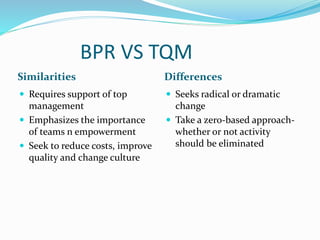
BPR VS TQM
Similarities Differences
 Requires support of top
management
 Emphasizes the importance
of teams n empowerment
 Seek to reduce costs, improve
quality and change culture
 Seeks radical or dramatic
change
 Take a zero-based approach-
whether or not activity
should be eliminated
Advantages of BPR
 Revolves around customers needs
 Appropriate focus to the business
 Reduction in cost
 Increases competitiveness
 Encourages a strategic view of operational process
 Overcome short-sightedness
 Concentration on functional boundaries
 Elimination of unnecessary activities
 Encourages creativity and innovation
Criticism of BPR
 Requires considerable commitment
 Not one time cost cutting exercise
 High cost can damage companies already in trouble
 Requires a high level of expertise and good team work.

Efficiency

  • 1.
    Chapter No.38 Introduction toBusiness Studies BY:- ISRAR K. RAJA. Preston University, Islamabad.
  • 2.
    Effectiveness and Efficiency Effectiveness is concerned with the achievement of objectives. It achieving what is set out to do.  It is also measured in terms of timeliness or quality.  It can be measured by using this formula:  = Actual Output / Expected Output X 100  Efficiency is concerned with the input of resources and can be expressed numerically as:  = resources actually used / Resources planned to be used X 100  Effectiveness focuses on output and Efficiency focuses on inputs.
  • 3.
    Productivity  Is ameasure of the efficiency with which a firm turns inputs into output.  It is output per unit of input.  Producing more with the same quantity of inputs  Producing the same quantity with fewer inputs  Output rising faster than input or output falling more slowly than inputs.  Output per Employee = total output/total no. employees  Output per person per hour = total output/total hours worked
  • 4.
    Productivity  If laboremployed to produce non-standard products, then productivity could be expressed in monetary terms.  Value of output per person = value of output/total no. employed  Value added per employee = value added by the firm/total number employed
  • 5.
    Factors influence Productivity The education, training and skills of the workforce  The stock of capital at the disposal of workers  The efficiency of organization  The best utilization of human resources  Working conditions  Industrial relations  Employees motivation
  • 6.
    Factors influence Productivityof capital  The technology incorporated in the capital  The age of capital stock  The skills of workforce  Production planning  Inventory management  Product diversity  Process and layout  Some organizations are capital-intensive while others are labor-intensive.  Total factor productivity =total output/inputs of all factors of production
  • 7.
    Causes of LowProductivity  Planning  Management  Employee motivation  Training  Waste  Process or systems of work
  • 8.
    Factors to RaiseProductivity  Work simplification  Rationalization  Capital investment  Material utilization  Improved planning  Changes in the human resource mix  Facilities improvement  Organizational change  Simplification and standardization  Outsourcing
  • 9.
    Work Study  Isa generic term for a series of analytic techniques used to determine the most efficient use of labor in relation to the other inputs into the productive process. It aims to;
  • 10.
    Purpose of WorkStudy  Improve the flow of work to avoid bottlenecks in production processes  Improve employees performance  Improve utilization of space, equipment and material  Increase the efficiency, productivity and ultimately profitability  Providing the basis for incentives  Improve planning by standardization and procedures  Better distribution among workforce  Provide a basis for costing of jobs in the future.
  • 11.
    Work Study  Workstudy two aspects  Method Study  Work Measurement-Time Study
  • 12.
    Steps in MethodStudy  Select the job to be study  Observe and record information about the job and methods used. Process, Flow charts, motion chart, layout models and templates, string diagrams, film , video  Examine and analyze the information  Identify ways of improving the methods by eliminating/combining operations, devising new process, altering machines and sequences.  Develop revised/ improved methods  Implement the new methods  Record and evaluate the new methods, making adjustments where necessary.
  • 13.
    Work measurement  Selectthe work to be measured  Define the basis fro measurement  Undertake the measurement  Obtain details of work  Rate the performance in relation to average  Establish standard time and performance  Standard time;-the total time in which a job should be completed at standard performance by a trained and competent individual in normal circumstances  Standard Performance:-it is the rate of output that competent workers will naturally achieve.
  • 14.
    Techniques for IndirectTime Study  Synthetic Timing:-applies to a job that is only marginally different from one for which there has been a direct time study.  Predetermined motion time study (PMTS):- requires the identification of basic human motions to which times are attached to build a composite time.  Analytical estimating;- it is more subjective, is issued for one-off jobs and involves an estimate of time based on experience.
  • 15.
    Benchmarking  A benchmarkingis a standard or reference point.  The continuous process of measuring products, services and practices against the toughest competitors or those regarded as industry leaders.
  • 16.
    Types of Benchmarking Competitive benchmarking involves comparing the performance of an organization’s products and processes with those of a key competitor.  Internal benchmarking involves comparisons between one part of the organization with similar practices in other parts of same organization.  Functional Benchmarking is the direct comparison of a function in two or more organizations, which may or may not be in the same industry.  Generic benchmarking involves a comparison with the practices of world-class organizations.
  • 17.
    Benefits of Benchmarking Identify best practice  Setting performance goals  Ways to improve performance  Learning from others  Look outwards  Motivate staff  Warning against competitive disadvantage  Continuous updating of perforamance
  • 18.
    Business process re-engineering(BPR) It involves the redesigning of core business processes  Streamlining operations  Eliminating wasteful non-value added steps  Rethinking of process from a holistic view taking into account technologies, strategy, human resource.  It focuses not on individual function but on process.
  • 19.
    BPR VS TQM SimilaritiesDifferences  Requires support of top management  Emphasizes the importance of teams n empowerment  Seek to reduce costs, improve quality and change culture  Seeks radical or dramatic change  Take a zero-based approach- whether or not activity should be eliminated
  • 20.
    Advantages of BPR Revolves around customers needs  Appropriate focus to the business  Reduction in cost  Increases competitiveness  Encourages a strategic view of operational process  Overcome short-sightedness  Concentration on functional boundaries  Elimination of unnecessary activities  Encourages creativity and innovation
  • 21.
    Criticism of BPR Requires considerable commitment  Not one time cost cutting exercise  High cost can damage companies already in trouble  Requires a high level of expertise and good team work.