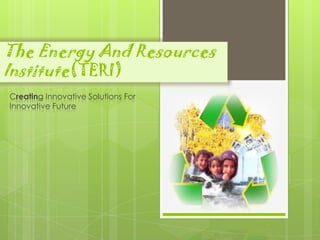

The Energy And Resources Institute (TERI) 
Creating Innovative Solutions For 
Innovative Future 
Made By: Apoorva Gupta
Introduction 
 Established in 1974, 
 Its registered headquarter is in New Delhi, 
 Philosophy: 
 ‘dependence on entrepreneurial skills for 
societal benefit through development and 
dissemination of intellectual property.’ 
 Only institution having global recognition 
 Solving the problem of: 
I. depletion of earth’s resources 
II. polluting methods of using resources
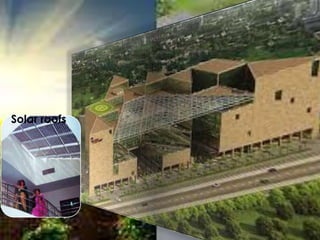
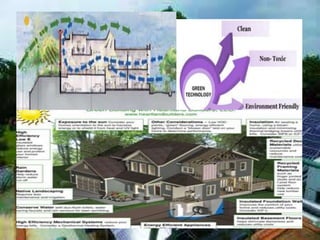
Solar roofs
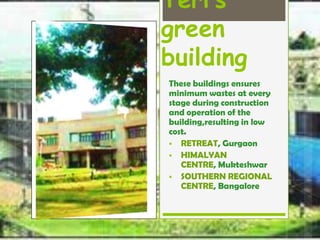
Teri’s green 
building 
These buildings ensures 
minimum wastes at every 
stage during construction 
and operation of the 
building,resulting in low 
cost. 
 RETREAT, Gurgaon 
 HIMALYAN CENTRE, 
Mukteshwar 
 SOUTHERN 
REGIONAL CENTRE, 
Bangalore
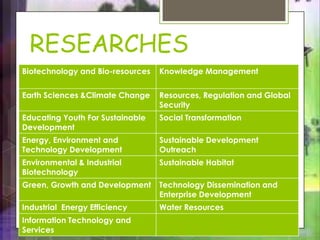
RESEARCHES 
Biotechnology and Bio-resources Knowledge Management 
Earth Sciences &Climate Change Resources, Regulation and Global 
Security 
Educating Youth For Sustainable 
Development 
Social Transformation 
Energy, Environment and 
Technology Development 
Sustainable Development 
Outreach 
Environmental & Industrial 
Biotechnology 
Sustainable Habitat 
Green, Growth and Development Technology Dissemination and 
Enterprise Development 
Industrial Energy Efficiency Water Resources 
Information Technology and 
Services
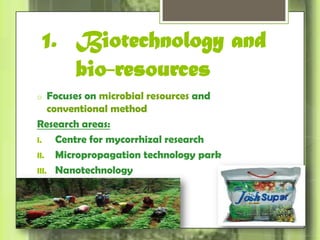
1. Biotechnology and 
bio-resources 
o Focuses on microbial resources and 
conventional method 
Research areas: 
I. Centre for mycorrhizal research 
II. Micropropagation technology park 
III. Nanotechnology
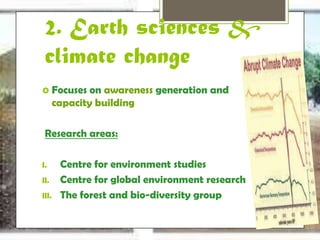
2. Earth sciences & 
climate change 
 Focuses on awareness generation and 
capacity building 
Research areas: 
I. Centre for environment studies 
II. Centre for global environment research 
III. The forest and bio-diversity group
3. Educating youth for 
sustainable development 
 Focuses on personality development and 
nation building 
Research Areas: 
I. Environmental Education and Awareness
4. Energy environment 
and technology 
development 
 Focuses on products and services based on 
renewable energy 
Research areas: 
I. Biomass energy technology application 
II. Centre for distributed generation 
III. Renewable energy technology application 
IV. Resource efficient process technology 
application
5.Environmental and 
industrial biotechnology 
 Focuses on harnessing India’s biotechnology 
Research areas: 
I. Agricultural & rural extension 
II. Bioremediation technology 
III. Biotechnology 
IV. Microbial biotechnology 
V. Plant biotechnology
6.Green growth & 
development 
 Focuses on solutions for assessment 
Research areas: 
I. Centre for research on energy security 
II. Green growth strategies 
III. Modelling and scenario building 
IV. Science, technology and innovative area
7.Industrial energy 
efficiency 
 Development and promotion of technological 
solutions 
Research areas: 
I. Energy regulation and practices 
II. Industrial energy, bangalore 
III. Industrial energy efficiency and sustainable 
technology
8. Information technology 
and services 
 To provide accurate, timely and relevant 
information 
Research areas: 
I. Centre for e-learning 
II. Centre for IT applications 
III. Centre for it infrastructure and networking 
IV. Online communication 
V. Web and infrastructure media
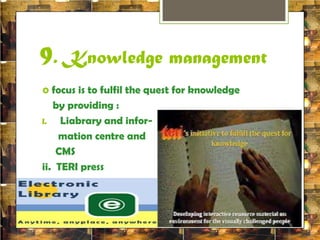
9. Knowledge management 
 focus is to fulfil the quest for knowledge 
by providing : 
I. Liabrary and infor-mation 
centre and 
CMS 
ii. TERI press
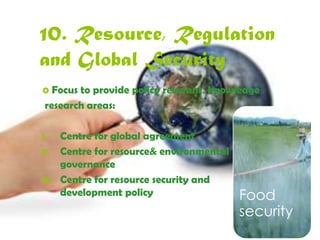
10. Resource, 
Regulation and Global 
Security 
 Focus to provide policy relevant knowledge 
research areas: 
I. Centre for global agreement 
II. Centre for resource& environmental 
governance 
III. Centre for resource security and 
development policy Food 
security
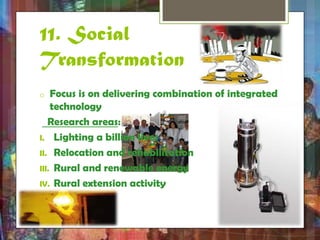
11. Social 
Transformation 
o Focus is on delivering combination of integrated 
technology 
Research areas: 
I. Lighting a billion lives 
II. Relocation and rehabilitation 
III. Rural and renewable energy 
IV. Rural extension activity
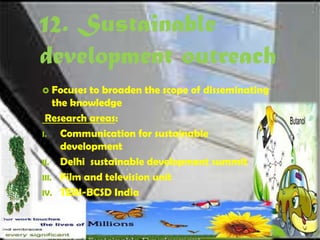
12. Sustainable 
development 
outreach 
 Focuses to broaden the scope of 
disseminating the knowledge 
Research areas: 
I. Communication for sustainable 
development 
II. Delhi sustainable development summit 
III. Film and television unit 
IV. TERI-BCSD India
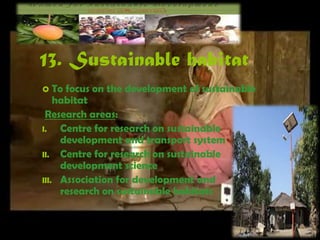
13. Sustainable habitat 
 To focus on the development of sustainable 
habitat 
Research areas: 
I. Centre for research on sustainable 
development and transport system 
II. Centre for research on sustainable 
development science 
III. Association for development and 
research on sustainable habitats
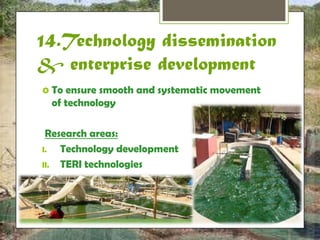
14.Technology 
dissemination & 
enterprise development 
 To ensure smooth and systematic movement 
of technology 
Research areas: 
I. Technology development 
II. TERI technologies
15.Water resources 
 To ensure social, environmental and 
economic sustainability of water 
Research areas: 
I. Centre for himalyan ecology 
II. Water resources policies and management
REFERENCE 
 Online document. Guided to APA format. 
TERI. Retrieved from 
http:// www.teriorg.in
THANK 
YOU!

TERI-The Energy And Resource Institute

  • 1.
    The Energy AndResources Institute (TERI) Creating Innovative Solutions For Innovative Future Made By: Apoorva Gupta
  • 2.
    Introduction  Establishedin 1974,  Its registered headquarter is in New Delhi,  Philosophy:  ‘dependence on entrepreneurial skills for societal benefit through development and dissemination of intellectual property.’  Only institution having global recognition  Solving the problem of: I. depletion of earth’s resources II. polluting methods of using resources
  • 3.
  • 4.
    Teri’s green building These buildings ensures minimum wastes at every stage during construction and operation of the building,resulting in low cost.  RETREAT, Gurgaon  HIMALYAN CENTRE, Mukteshwar  SOUTHERN REGIONAL CENTRE, Bangalore
  • 6.
    RESEARCHES Biotechnology andBio-resources Knowledge Management Earth Sciences &Climate Change Resources, Regulation and Global Security Educating Youth For Sustainable Development Social Transformation Energy, Environment and Technology Development Sustainable Development Outreach Environmental & Industrial Biotechnology Sustainable Habitat Green, Growth and Development Technology Dissemination and Enterprise Development Industrial Energy Efficiency Water Resources Information Technology and Services
  • 7.
    1. Biotechnology and bio-resources o Focuses on microbial resources and conventional method Research areas: I. Centre for mycorrhizal research II. Micropropagation technology park III. Nanotechnology
  • 8.
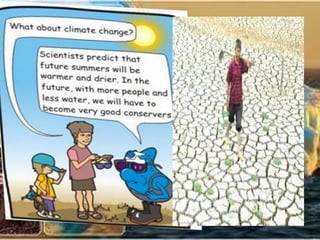
    2. Earth sciences& climate change  Focuses on awareness generation and capacity building Research areas: I. Centre for environment studies II. Centre for global environment research III. The forest and bio-diversity group
  • 10.
    3. Educating youthfor sustainable development  Focuses on personality development and nation building Research Areas: I. Environmental Education and Awareness
  • 11.
    4. Energy environment and technology development  Focuses on products and services based on renewable energy Research areas: I. Biomass energy technology application II. Centre for distributed generation III. Renewable energy technology application IV. Resource efficient process technology application
  • 12.
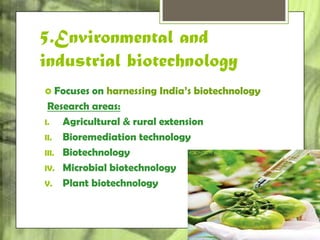
    5.Environmental and industrialbiotechnology  Focuses on harnessing India’s biotechnology Research areas: I. Agricultural & rural extension II. Bioremediation technology III. Biotechnology IV. Microbial biotechnology V. Plant biotechnology
  • 13.
    6.Green growth & development  Focuses on solutions for assessment Research areas: I. Centre for research on energy security II. Green growth strategies III. Modelling and scenario building IV. Science, technology and innovative area
  • 14.
    7.Industrial energy efficiency  Development and promotion of technological solutions Research areas: I. Energy regulation and practices II. Industrial energy, bangalore III. Industrial energy efficiency and sustainable technology
  • 16.
    8. Information technology and services  To provide accurate, timely and relevant information Research areas: I. Centre for e-learning II. Centre for IT applications III. Centre for it infrastructure and networking IV. Online communication V. Web and infrastructure media
  • 17.
    9. Knowledge management  focus is to fulfil the quest for knowledge by providing : I. Liabrary and infor-mation centre and CMS ii. TERI press
  • 18.
    10. Resource, Regulationand Global Security  Focus to provide policy relevant knowledge research areas: I. Centre for global agreement II. Centre for resource& environmental governance III. Centre for resource security and development policy Food security
  • 19.
    11. Social Transformation o Focus is on delivering combination of integrated technology Research areas: I. Lighting a billion lives II. Relocation and rehabilitation III. Rural and renewable energy IV. Rural extension activity
  • 20.
    12. Sustainable development outreach  Focuses to broaden the scope of disseminating the knowledge Research areas: I. Communication for sustainable development II. Delhi sustainable development summit III. Film and television unit IV. TERI-BCSD India
  • 21.
    13. Sustainable habitat  To focus on the development of sustainable habitat Research areas: I. Centre for research on sustainable development and transport system II. Centre for research on sustainable development science III. Association for development and research on sustainable habitats
  • 22.
    14.Technology dissemination & enterprise development  To ensure smooth and systematic movement of technology Research areas: I. Technology development II. TERI technologies
  • 23.
    15.Water resources To ensure social, environmental and economic sustainability of water Research areas: I. Centre for himalyan ecology II. Water resources policies and management
  • 24.
    REFERENCE  Onlinedocument. Guided to APA format. TERI. Retrieved from http:// www.teriorg.in
  • 25.