1
THE BUSINESS CASE FOR GREEN BUILDINGS
By: Hashim Abuelgasim MBA, PMP,LEED AP BD+C
Chief Sustainability Officer – PeoPla Green Institute
2
1. Introduction – The Triple Bottom Line
2. The Business Case For Green
3. The Cost Dilemma
4. Recommendations
AGENDA
3
TRIPLE BOTTOM LINE
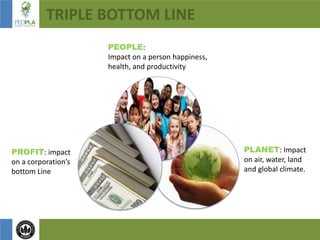
PLANET: Impact
on air, water, land
and global climate.
PEOPLE:
Impact on a person happiness,
health, and productivity
PROFIT: impact
on a corporation’s
bottom Line
4
THE BUSINESS CASE FOR GREEN BUILDINGS
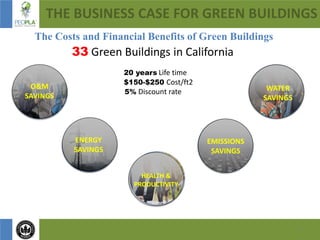
33 Green Buildings in California
$150-$250 Cost/ft2
20 years Life time
5% Discount rate
The Costs and Financial Benefits of Green Buildings
O&M
SAVINGS
ENERGY
SAVINGS
HEALTH &
PRODUCTIVITY
EMISSIONS
SAVINGS
WATER
SAVINGS
5
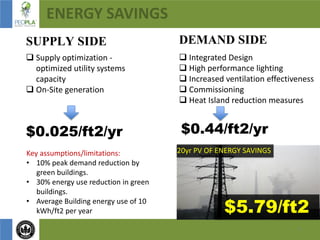
ENERGY SAVINGS
 Integrated Design
 High performance lighting
 Increased ventilation effectiveness
 Commissioning
 Heat Island reduction measures
 Supply optimization -
optimized utility systems
capacity
 On-Site generation
DEMAND SIDESUPPLY SIDE
$0.025/ft2/yr $0.44/ft2/yr
20yr PV OF ENERGY SAVINGS
$5.79/ft2
Key assumptions/limitations:
• 10% peak demand reduction by
green buildings.
• 30% energy use reduction in green
buildings.
• Average Building energy use of 10
kWh/ft2 per year
6
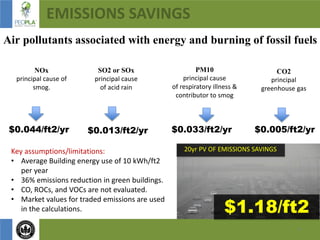
EMISSIONS SAVINGS
$0.044/ft2/yr
20yr PV OF EMISSIONS SAVINGS
$1.18/ft2
Key assumptions/limitations:
• Average Building energy use of 10 kWh/ft2
per year
• 36% emissions reduction in green buildings.
• CO, ROCs, and VOCs are not evaluated.
• Market values for traded emissions are used
in the calculations.
Air pollutants associated with energy and burning of fossil fuels
NOx
principal cause of
smog.
PM10
principal cause
of respiratory illness &
contributor to smog
SO2 or SOx
principal cause
of acid rain
CO2
principal
greenhouse gas
$0.005/ft2/yr$0.033/ft2/yr$0.013/ft2/yr
7
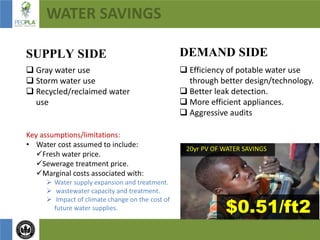
WATER SAVINGS
 Efficiency of potable water use
through better design/technology.
 Better leak detection.
 More efficient appliances.
 Aggressive audits
 Gray water use
 Storm water use
 Recycled/reclaimed water
use
DEMAND SIDESUPPLY SIDE
20yr PV OF WATER SAVINGS
$0.51/ft2
Key assumptions/limitations:
• Water cost assumed to include:
Fresh water price.
Sewerage treatment price.
Marginal costs associated with:
 Water supply expansion and treatment.
 wastewater capacity and treatment.
 Impact of climate change on the cost of
future water supplies.
8
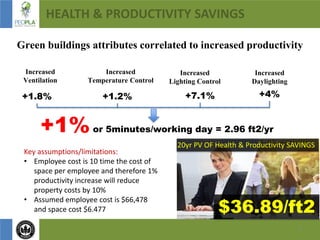
HEALTH & PRODUCTIVITY SAVINGS
Green buildings attributes correlated to increased productivity
20yr PV OF Health & Productivity SAVINGS
$36.89/ft2
Key assumptions/limitations:
• Employee cost is 10 time the cost of
space per employee and therefore 1%
productivity increase will reduce
property costs by 10%
• Assumed employee cost is $66,478
and space cost $6.477
Increased
Ventilation
Increased
Temperature Control
+1.8%
Increased
Lighting Control
Increased
Daylighting
+1.2% +7.1% +4%
+1%or 5minutes/working day = 2.96 ft2/yr
9
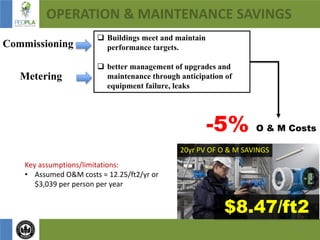
OPERATION & MAINTENANCE SAVINGS
20yr PV OF O & M SAVINGS
$8.47/ft2
Key assumptions/limitations:
• Assumed O&M costs = 12.25/ft2/yr or
$3,039 per person per year
Commissioning
Metering
-5% O & M Costs
 Buildings meet and maintain
performance targets.
 better management of upgrades and
maintenance through anticipation of
equipment failure, leaks
10
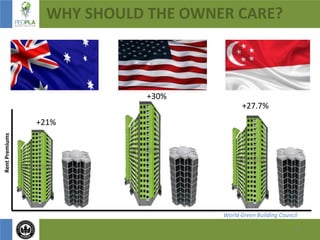
WHY SHOULD THE OWNER CARE?
+21%
+30%
+27.7%
RentPremiums
World Green Building Council
11
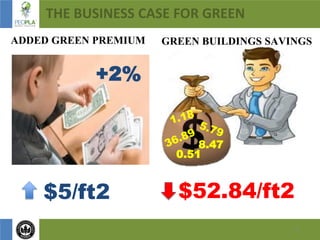
THE BUSINESS CASE FOR GREEN
8.47
0.51
$52.84/ft2
ADDED GREEN PREMIUM
+2%
$5/ft2
GREEN BUILDINGS SAVINGS
12
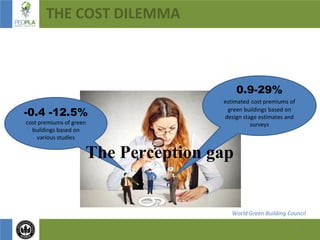
THE COST DILEMMA
-0.4 -12.5%
cost premiums of green
buildings based on
various studies
0.9-29%
estimated cost premiums of
green buildings based on
design stage estimates and
surveys
The Perception gap
World Green Building Council
13
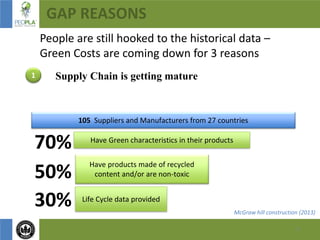
GAP REASONS
People are still hooked to the historical data –
Green Costs are coming down for 3 reasons
105 Suppliers and Manufacturers from 27 countries
Have Green characteristics in their products
70%
Have products made of recycled
content and/or are non-toxic50%
McGraw hill construction (2013)
1 Supply Chain is getting mature
Life Cycle data provided
30%
14
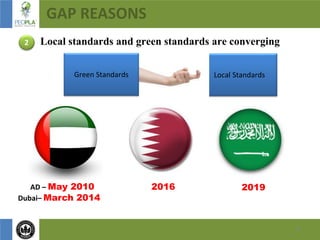
GAP REASONS
Local standards and green standards are converging
Green Standards Local Standards
AD – May 2010
Dubai– March 2014
2016 2019
2
15
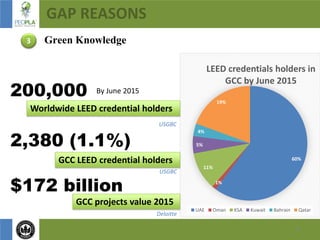
GAP REASONS
3 Green Knowledge
60%
1%
11%
5%
4%
19%
LEED credentials holders in
GCC by June 2015
UAE Oman KSA Kuwait Bahrain Qatar
Worldwide LEED credential holders
200,000
2,380 (1.1%)
GCC LEED credential holders
$172 billion
GCC projects value 2015
Deloitte
USGBC
USGBC
By June 2015
16
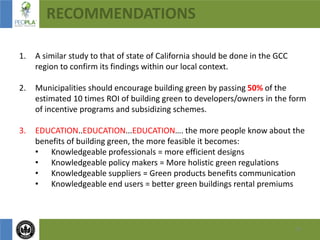
RECOMMENDATIONS
1. A similar study to that of state of California should be done in the GCC
region to confirm its findings within our local context.
2. Municipalities should encourage building green by passing 50% of the
estimated 10 times ROI of building green to developers/owners in the form
of incentive programs and subsidizing schemes.
3. EDUCATION..EDUCATION...EDUCATION…. the more people know about the
benefits of building green, the more feasible it becomes:
• Knowledgeable professionals = more efficient designs
• Knowledgeable policy makers = More holistic green regulations
• Knowledgeable suppliers = Green products benefits communication
• Knowledgeable end users = better green buildings rental premiums
17
THANK YOU
www.peopla.ae

Business Case for Green Buildings

  • 1.
    1 THE BUSINESS CASEFOR GREEN BUILDINGS By: Hashim Abuelgasim MBA, PMP,LEED AP BD+C Chief Sustainability Officer – PeoPla Green Institute
  • 2.
    2 1. Introduction –The Triple Bottom Line 2. The Business Case For Green 3. The Cost Dilemma 4. Recommendations AGENDA
  • 3.
    3 TRIPLE BOTTOM LINE PLANET:Impact on air, water, land and global climate. PEOPLE: Impact on a person happiness, health, and productivity PROFIT: impact on a corporation’s bottom Line
  • 4.
    4 THE BUSINESS CASEFOR GREEN BUILDINGS 33 Green Buildings in California $150-$250 Cost/ft2 20 years Life time 5% Discount rate The Costs and Financial Benefits of Green Buildings O&M SAVINGS ENERGY SAVINGS HEALTH & PRODUCTIVITY EMISSIONS SAVINGS WATER SAVINGS
  • 5.
    5 ENERGY SAVINGS  IntegratedDesign  High performance lighting  Increased ventilation effectiveness  Commissioning  Heat Island reduction measures  Supply optimization - optimized utility systems capacity  On-Site generation DEMAND SIDESUPPLY SIDE $0.025/ft2/yr $0.44/ft2/yr 20yr PV OF ENERGY SAVINGS $5.79/ft2 Key assumptions/limitations: • 10% peak demand reduction by green buildings. • 30% energy use reduction in green buildings. • Average Building energy use of 10 kWh/ft2 per year
  • 6.
    6 EMISSIONS SAVINGS $0.044/ft2/yr 20yr PVOF EMISSIONS SAVINGS $1.18/ft2 Key assumptions/limitations: • Average Building energy use of 10 kWh/ft2 per year • 36% emissions reduction in green buildings. • CO, ROCs, and VOCs are not evaluated. • Market values for traded emissions are used in the calculations. Air pollutants associated with energy and burning of fossil fuels NOx principal cause of smog. PM10 principal cause of respiratory illness & contributor to smog SO2 or SOx principal cause of acid rain CO2 principal greenhouse gas $0.005/ft2/yr$0.033/ft2/yr$0.013/ft2/yr
  • 7.
    7 WATER SAVINGS  Efficiencyof potable water use through better design/technology.  Better leak detection.  More efficient appliances.  Aggressive audits  Gray water use  Storm water use  Recycled/reclaimed water use DEMAND SIDESUPPLY SIDE 20yr PV OF WATER SAVINGS $0.51/ft2 Key assumptions/limitations: • Water cost assumed to include: Fresh water price. Sewerage treatment price. Marginal costs associated with:  Water supply expansion and treatment.  wastewater capacity and treatment.  Impact of climate change on the cost of future water supplies.
  • 8.
    8 HEALTH & PRODUCTIVITYSAVINGS Green buildings attributes correlated to increased productivity 20yr PV OF Health & Productivity SAVINGS $36.89/ft2 Key assumptions/limitations: • Employee cost is 10 time the cost of space per employee and therefore 1% productivity increase will reduce property costs by 10% • Assumed employee cost is $66,478 and space cost $6.477 Increased Ventilation Increased Temperature Control +1.8% Increased Lighting Control Increased Daylighting +1.2% +7.1% +4% +1%or 5minutes/working day = 2.96 ft2/yr
  • 9.
    9 OPERATION & MAINTENANCESAVINGS 20yr PV OF O & M SAVINGS $8.47/ft2 Key assumptions/limitations: • Assumed O&M costs = 12.25/ft2/yr or $3,039 per person per year Commissioning Metering -5% O & M Costs  Buildings meet and maintain performance targets.  better management of upgrades and maintenance through anticipation of equipment failure, leaks
  • 10.
    10 WHY SHOULD THEOWNER CARE? +21% +30% +27.7% RentPremiums World Green Building Council
  • 11.
    11 THE BUSINESS CASEFOR GREEN 8.47 0.51 $52.84/ft2 ADDED GREEN PREMIUM +2% $5/ft2 GREEN BUILDINGS SAVINGS
  • 12.
    12 THE COST DILEMMA -0.4-12.5% cost premiums of green buildings based on various studies 0.9-29% estimated cost premiums of green buildings based on design stage estimates and surveys The Perception gap World Green Building Council
  • 13.
    13 GAP REASONS People arestill hooked to the historical data – Green Costs are coming down for 3 reasons 105 Suppliers and Manufacturers from 27 countries Have Green characteristics in their products 70% Have products made of recycled content and/or are non-toxic50% McGraw hill construction (2013) 1 Supply Chain is getting mature Life Cycle data provided 30%
  • 14.
    14 GAP REASONS Local standardsand green standards are converging Green Standards Local Standards AD – May 2010 Dubai– March 2014 2016 2019 2
  • 15.
    15 GAP REASONS 3 GreenKnowledge 60% 1% 11% 5% 4% 19% LEED credentials holders in GCC by June 2015 UAE Oman KSA Kuwait Bahrain Qatar Worldwide LEED credential holders 200,000 2,380 (1.1%) GCC LEED credential holders $172 billion GCC projects value 2015 Deloitte USGBC USGBC By June 2015
  • 16.
    16 RECOMMENDATIONS 1. A similarstudy to that of state of California should be done in the GCC region to confirm its findings within our local context. 2. Municipalities should encourage building green by passing 50% of the estimated 10 times ROI of building green to developers/owners in the form of incentive programs and subsidizing schemes. 3. EDUCATION..EDUCATION...EDUCATION…. the more people know about the benefits of building green, the more feasible it becomes: • Knowledgeable professionals = more efficient designs • Knowledgeable policy makers = More holistic green regulations • Knowledgeable suppliers = Green products benefits communication • Knowledgeable end users = better green buildings rental premiums
  • 17.