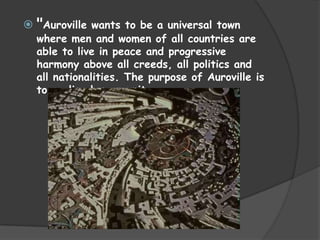
 "Auroville wants to be a universal town
  where men and women of all countries are
  able to live in peace and progressive
  harmony above all creeds, all politics and
  all nationalities. The purpose of Auroville is
  to realise human unity
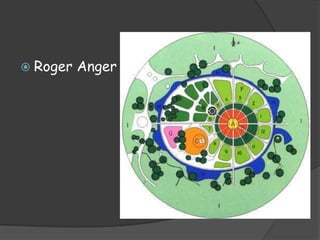
 Roger   Anger
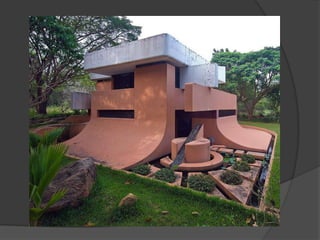
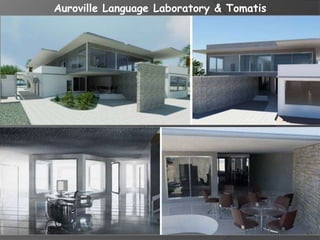
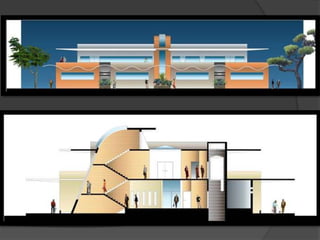
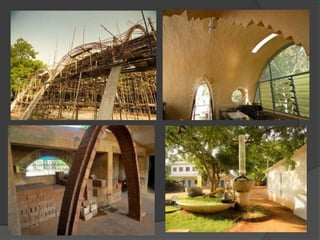
Auroville Language Laboratory & Tomatis
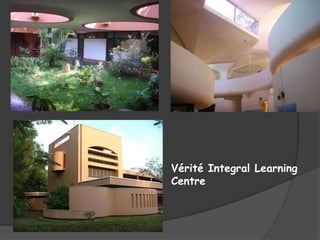
Vérité Integral Learning
Centre
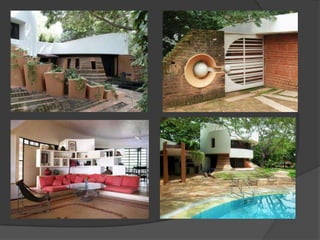
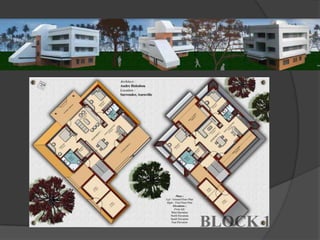
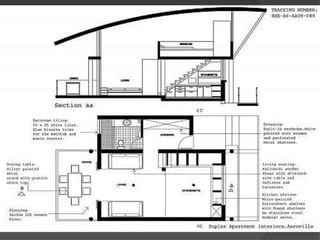
ANUPAMA KUNDU RESIDENCE
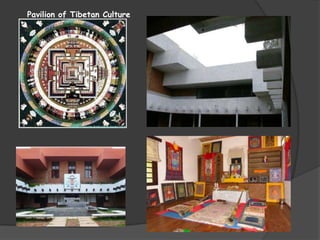
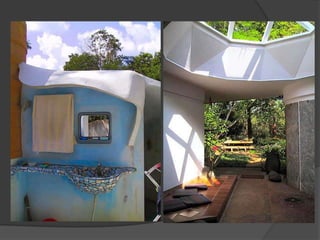
Pavilion of Tibetan Culture
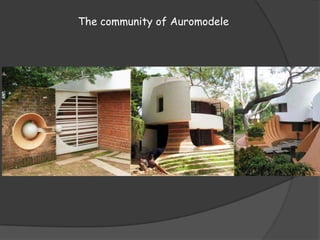
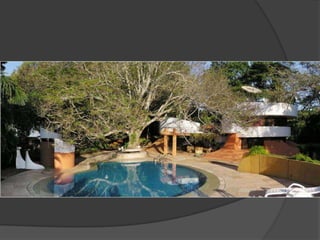
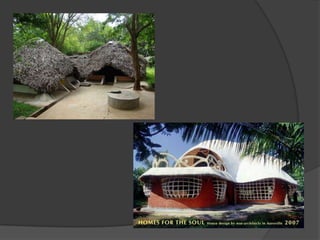
The community of Auromodele
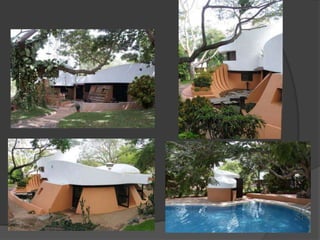
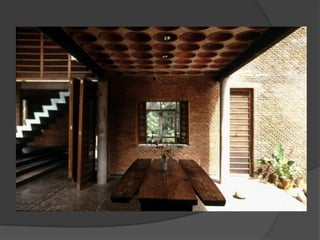
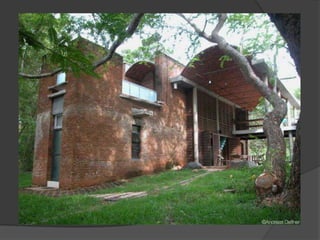
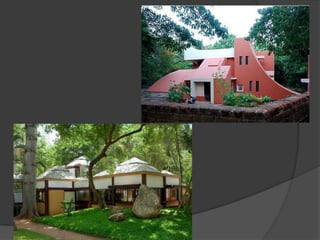
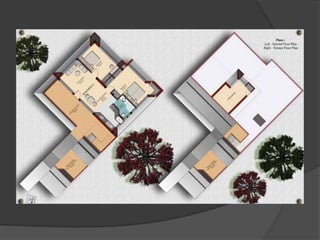
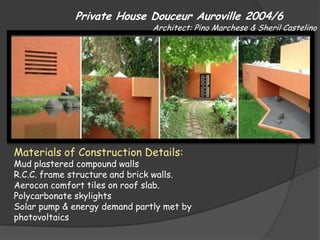
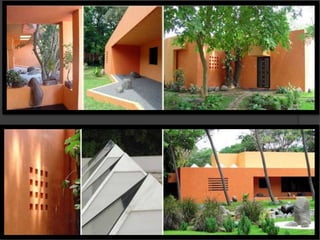
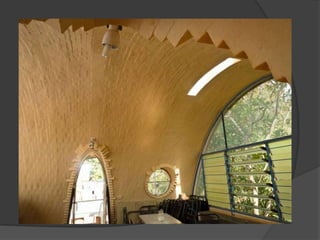
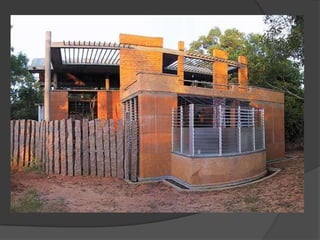
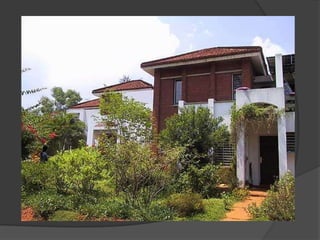
Private House Douceur Auroville 2004/6
                               Architect: Pino Marchese & Sheril Castelino


Materials of Construction Details:
Mud plastered compound walls
R.C.C. frame structure and brick walls.
Aerocon comfort tiles on roof slab.
Polycarbonate skylights
Solar pump & energy demand partly met by
photovoltaics
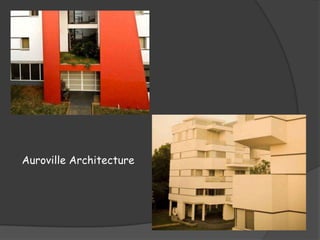
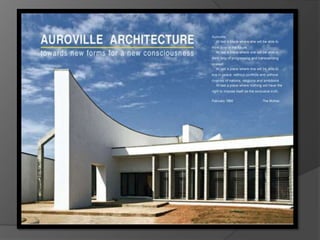
Auroville Architecture
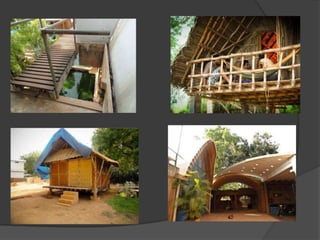
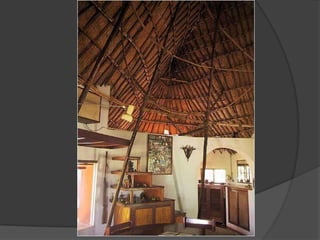
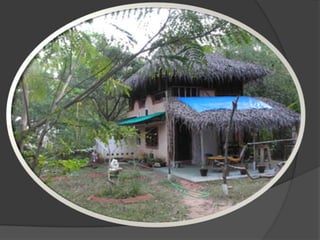
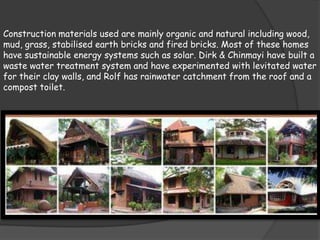
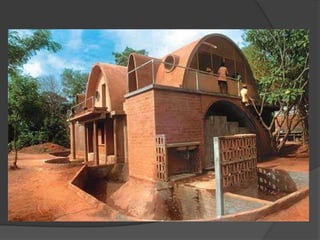
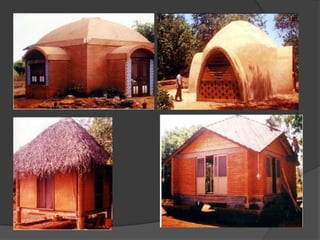
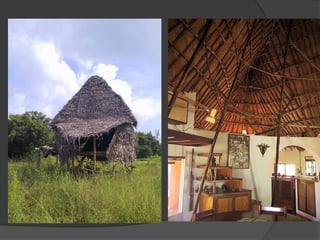
Construction materials used are mainly organic and natural including wood,
mud, grass, stabilised earth bricks and fired bricks. Most of these homes
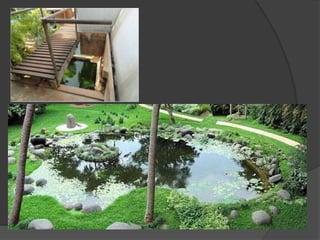
have sustainable energy systems such as solar. Dirk & Chinmayi have built a
waste water treatment system and have experimented with levitated water
for their clay walls, and Rolf has rainwater catchment from the roof and a
compost toilet.
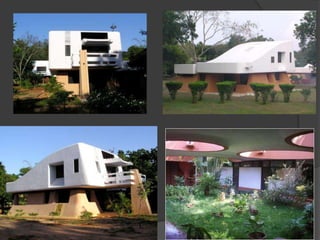
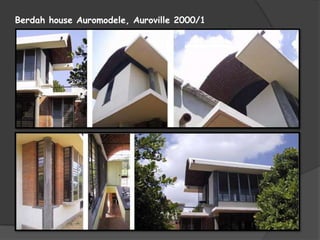
Berdah house Auromodele, Auroville 2000/1
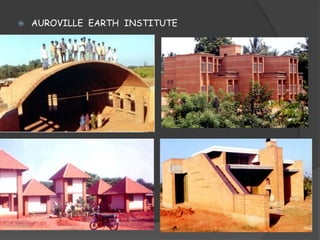
   AUROVILLE EARTH INSTITUTE
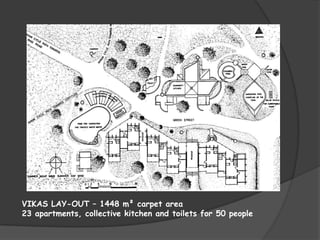
VIKAS LAY-OUT – 1448 m² carpet area
23 apartments, collective kitchen and toilets for 50 people
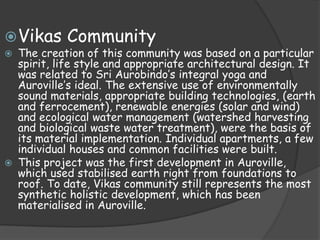
 Vikas     Community
 The creation of this community was based on a particular
  spirit, life style and appropriate architectural design. It
  was related to Sri Aurobindo’s integral yoga and
  Auroville’s ideal. The extensive use of environmentally
  sound materials, appropriate building technologies, (earth
  and ferrocement), renewable energies (solar and wind)
  and ecological water management (watershed harvesting
  and biological waste water treatment), were the basis of
  its material implementation. Individual apartments, a few
  individual houses and common facilities were built.
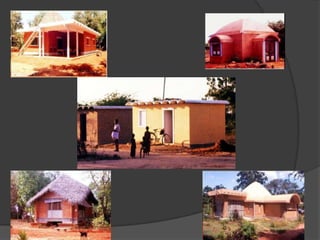
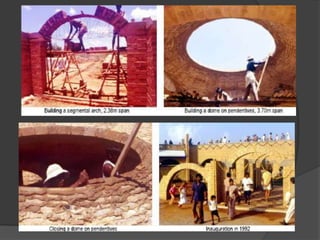
 This project was the first development in Auroville,
  which used stabilised earth right from foundations to
  roof. To date, Vikas community still represents the most
  synthetic holistic development, which has been
  materialised in Auroville.
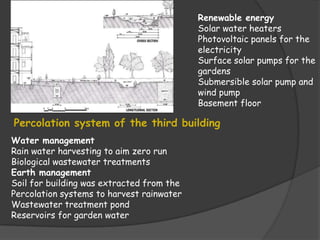
Renewable energy
                                           Solar water heaters
                                           Photovoltaic panels for the
                                           electricity
                                           Surface solar pumps for the
                                           gardens
                                           Submersible solar pump and
                                           wind pump
                                           Basement floor

Percolation system of the third building
Water management
Rain water harvesting to aim zero run
Biological wastewater treatments
Earth management
Soil for building was extracted from the
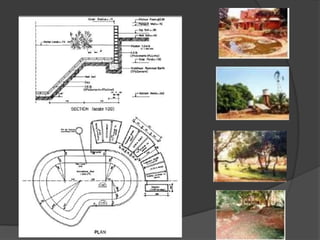
Percolation systems to harvest rainwater
Wastewater treatment pond
Reservoirs for garden water
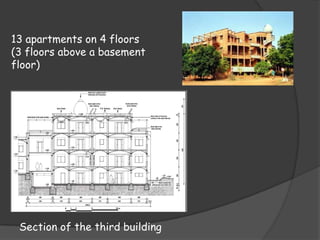
13 apartments on 4 floors
(3 floors above a basement
floor)


 Section of the third building
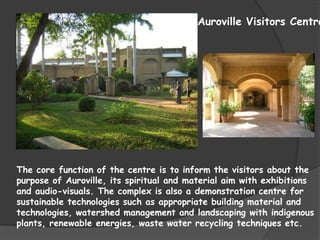
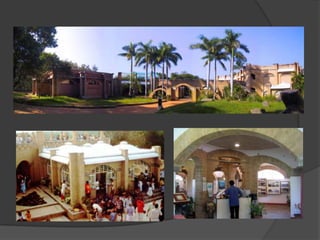
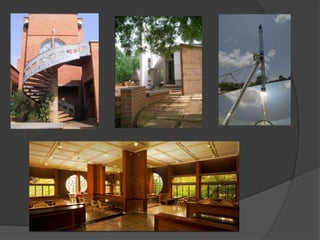
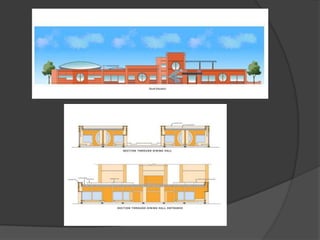
Auroville Visitors Centre


The core function of the centre is to inform the visitors about the
purpose of Auroville, its spiritual and material aim with exhibitions
and audio-visuals. The complex is also a demonstration centre for
sustainable technologies such as appropriate building material and
technologies, watershed management and landscaping with indigenous
plants, renewable energies, waste water recycling techniques etc.
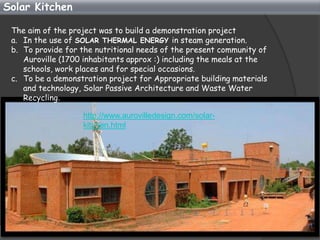
Solar Kitchen

 The aim of the project was to build a demonstration project
 a. In the use of SOLAR THERMAL ENERGY in steam generation.
 b. To provide for the nutritional needs of the present community of
    Auroville (1700 inhabitants approx :) including the meals at the
    schools, work places and for special occasions.
 c. To be a demonstration project for Appropriate building materials
    and technology, Solar Passive Architecture and Waste Water
    Recycling.

                   http://www.aurovilledesign.com/solar-
                   kitchen.html
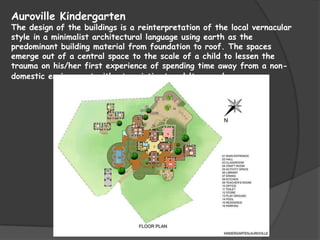
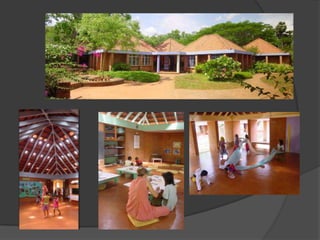
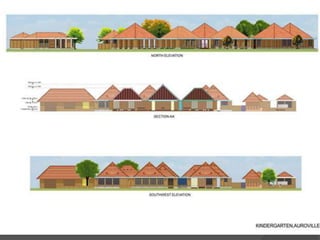
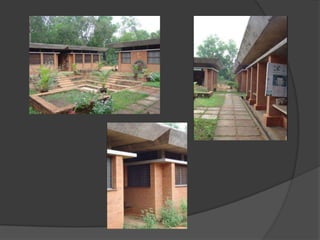
Auroville Kindergarten
The design of the buildings is a reinterpretation of the local vernacular
style in a minimalist architectural language using earth as the
predominant building material from foundation to roof. The spaces
emerge out of a central space to the scale of a child to lessen the
trauma on his/her first experience of spending time away from a non-
domestic environment without an intimate adult around.
.
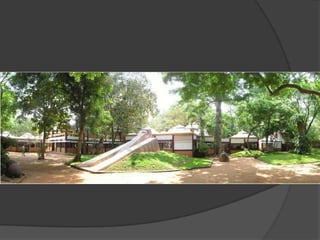
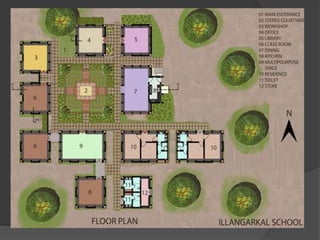
Auroville Illangarkal
Auroville as part of its regional development program undertakes several
activities in partnership with local village bodies like the women’s self help
groups, youth clubs, adult literacy program, vocational and livelihood skills
training and rural health centres. Ilangarkal School is the hub for some of
these programs with class rooms / workshop spaces / crafts centre /
library / dining +kitchen / admin / computer training and 2 dormitories’ for
residential students.


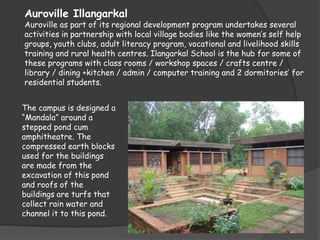
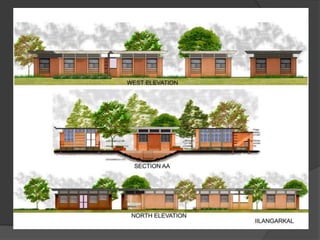
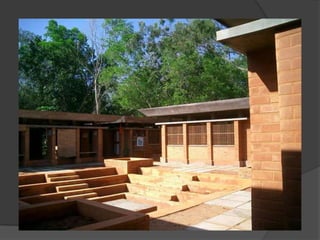
The campus is designed a
“Mandala” around a
stepped pond cum
amphitheatre. The
compressed earth blocks
used for the buildings
are made from the
excavation of this pond
and roofs of the
buildings are turfs that
collect rain water and
channel it to this pond.
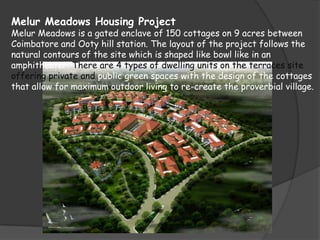
Melur Meadows Housing Project
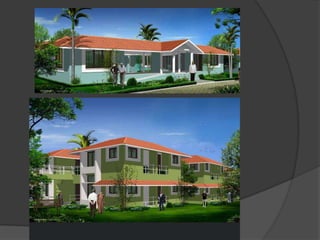
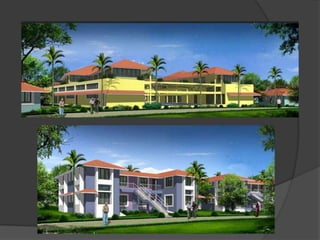
Melur Meadows is a gated enclave of 150 cottages on 9 acres between
Coimbatore and Ooty hill station. The layout of the project follows the
natural contours of the site which is shaped like bowl like in an
amphitheater. There are 4 types of dwelling units on the terraces site
offering private and public green spaces with the design of the cottages
that allow for maximum outdoor living to re-create the proverbial village.
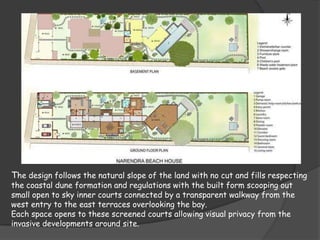
The design follows the natural slope of the land with no cut and fills respecting
the coastal dune formation and regulations with the built form scooping out
small open to sky inner courts connected by a transparent walkway from the
west entry to the east terraces overlooking the bay.
Each space opens to these screened courts allowing visual privacy from the
invasive developments around site.
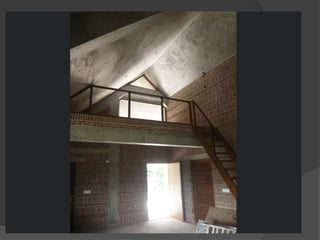
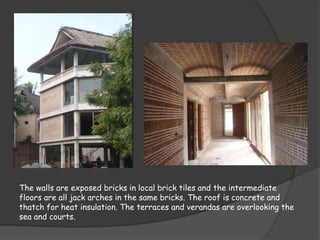
The walls are exposed bricks in local brick tiles and the intermediate
floors are all jack arches in the same bricks. The roof is concrete and
thatch for heat insulation. The terraces and verandas are overlooking the
sea and courts.
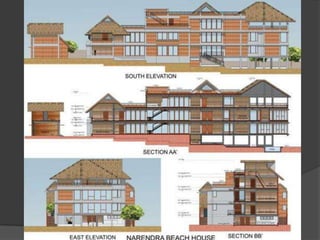
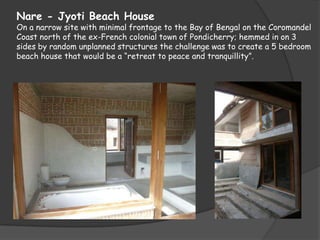
Nare - Jyoti Beach House
On a narrow site with minimal frontage to the Bay of Bengal on the Coromandel
Coast north of the ex-French colonial town of Pondicherry; hemmed in on 3
sides by random unplanned structures the challenge was to create a 5 bedroom
beach house that would be a “retreat to peace and tranquillity”.