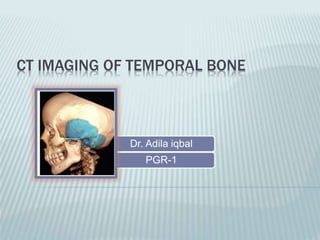
CT IMAGING OF TEMPORAL BONE
Dr. Adila iqbal
PGR-1
CT PROTOCOL
 Axial supine 1mm
 Coronal Prone 1mm
 120 kv@200mA :1sec
 512x512 @140mmFOV
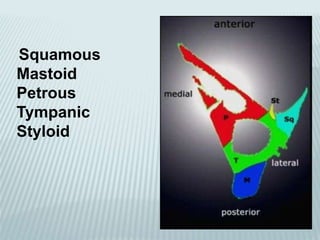
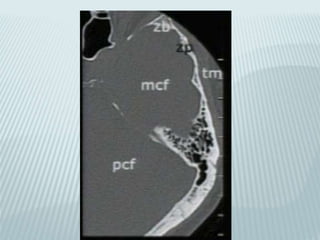
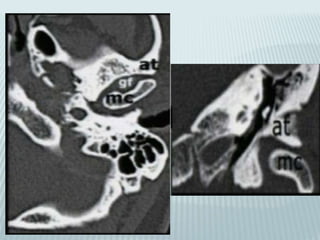
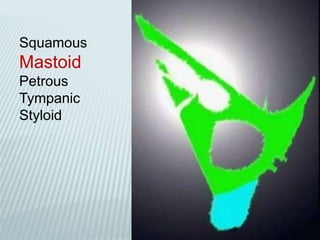
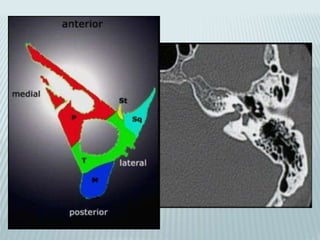
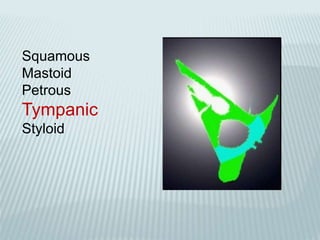
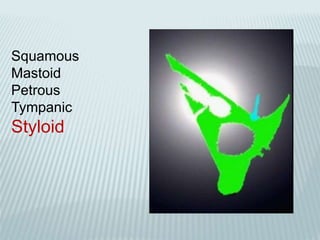
Squamous
Mastoid
Petrous
Tympanic
Styloid
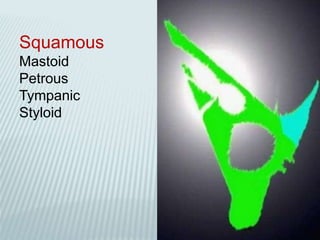
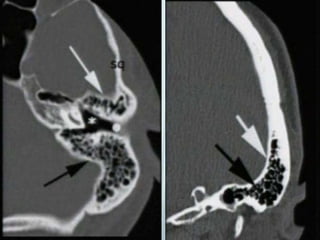
Squamous
Mastoid
Petrous
Tympanic
Styloid
Squamous
Mastoid
Petrous
Tympanic
Styloid
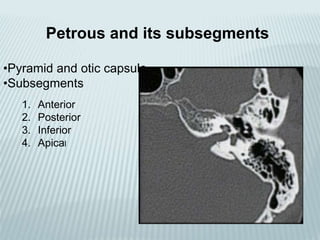
Petrous and its subsegments
•Pyramid and otic capsule
•Subsegments
1. Anterior
2. Posterior
3. Inferior
4. Apical
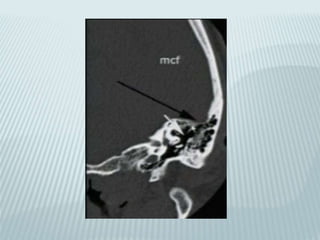
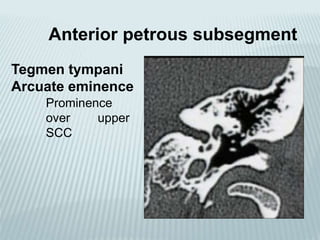
Anterior petrous subsegment
Tegmen tympani
Arcuate eminence
Prominence
over upper
SCC
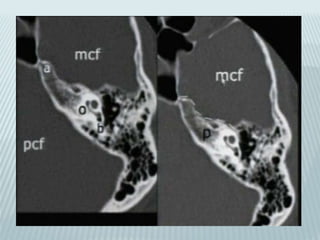
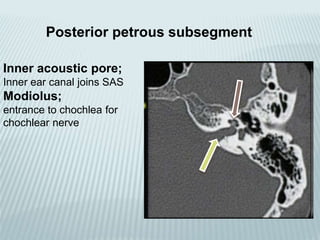
Posterior petrous subsegment
Inner acoustic pore;
Inner ear canal joins SAS
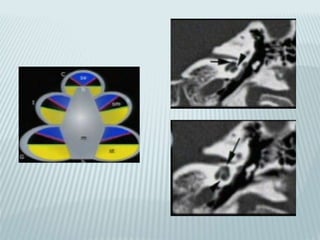
Modiolus;
entrance to chochlea for
chochlear nerve
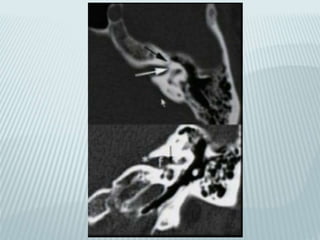
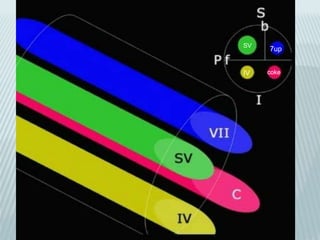
7up
coke
SV
IV
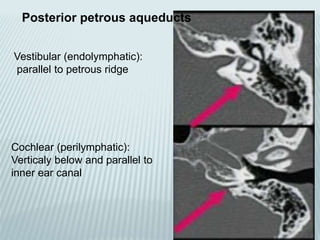
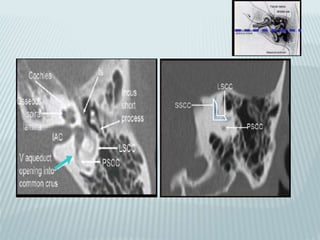
Posterior petrous aqueducts
Vestibular (endolymphatic):
parallel to petrous ridge
Cochlear (perilymphatic):
Verticaly below and parallel to
inner ear canal
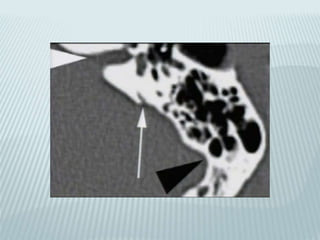
VESTIBULAR AQUEDUCT
 10 mm long endolymphatic duct
 From common crus to post wall of petrous
pyramid
 Joins endolymphatic sac nestled in leaves of
dura
 Equilibration of endolymphatic fluid pressure
 subdural
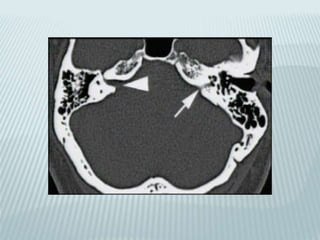
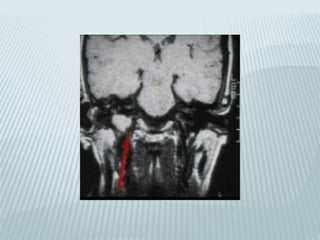
COCHLEAR AQUEDUCT
 8 mm long perilymphatic aqueduct
 From basal turn of cochlea to medial border
of jugular foramen
 Regulation of CSF and perilymphatic fluid
pressure
 Subarachnoid
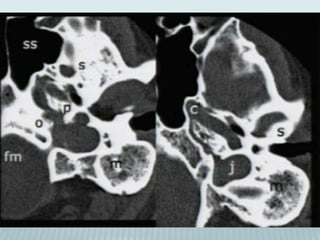
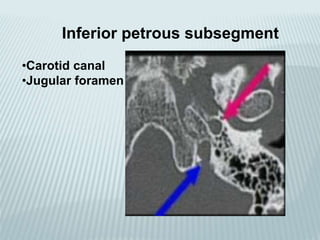
Inferior petrous subsegment
•Carotid canal
•Jugular foramen
Squamous
Mastoid
Petrous
Tympanic
Styloid
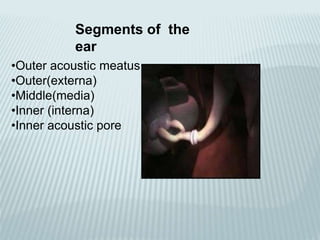
Segments of the
ear
•Outer acoustic meatus
•Outer(externa)
•Middle(media)
•Inner (interna)
•Inner acoustic pore
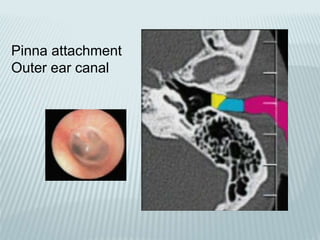
Pinna attachment
Outer ear canal
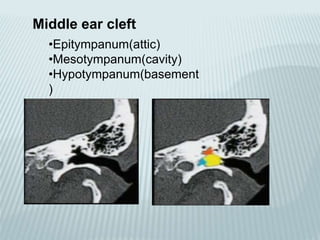
•Epitympanum(attic)
•Mesotympanum(cavity)
•Hypotympanum(basement
)
Middle ear cleft
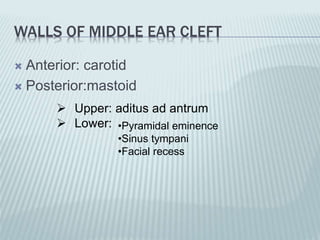
WALLS OF MIDDLE EAR CLEFT
 Anterior: carotid
 Posterior:mastoid
 Upper: aditus ad antrum
 Lower: •Pyramidal eminence
•Sinus tympani
•Facial recess
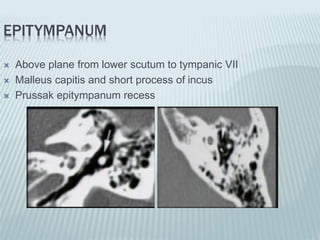
EPITYMPANUM
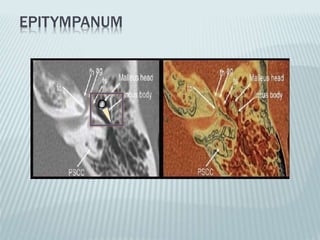
 Above plane from lower scutum to tympanic VII
 Malleus capitis and short process of incus
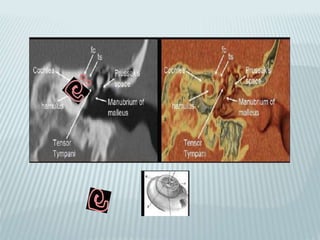
 Prussak epitympanum recess
EPITYMPANUM
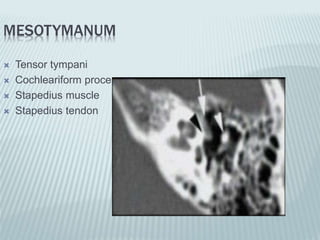
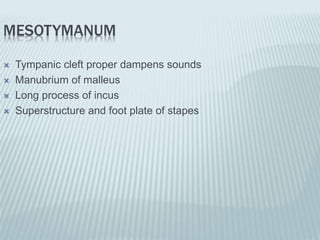
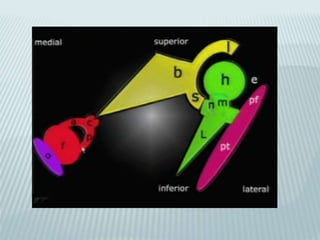
MESOTYMANUM
 Tympanic cleft proper dampens sounds
 Manubrium of malleus
 Long process of incus
 Superstructure and foot plate of stapes
MESOTYMANUM
 Tensor tympani
 Cochleariform process
 Stapedius muscle
 Stapedius tendon
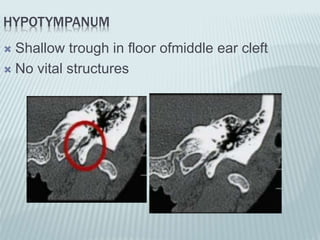
HYPOTYMPANUM
 Shallow trough in floor ofmiddle ear cleft
 No vital structures
Squamous
Mastoid
Petrous
Tympanic
Styloid
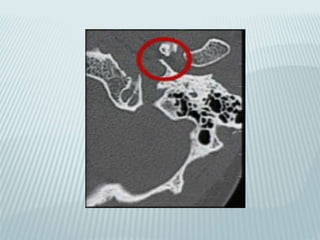
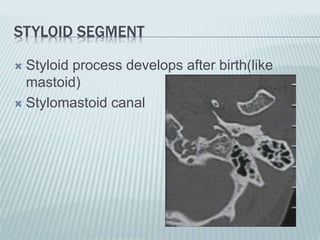
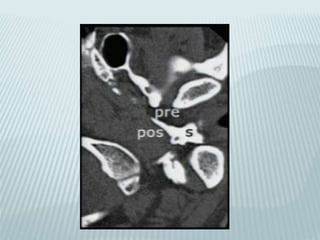
STYLOID SEGMENT
 Styloid process develops after birth(like
mastoid)
 Stylomastoid canal
INNER EAR
 Membranous labyrinth
 Osseus labyrinth
MEMBRANOUS LABYRINTH
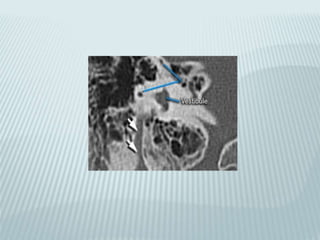
Vestibule: utricle and saccule
Semicircular canals
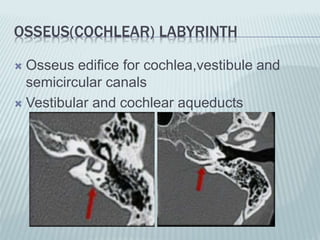
OSSEUS(COCHLEAR) LABYRINTH
 Osseus edifice for cochlea,vestibule and
semicircular canals
 Vestibular and cochlear aqueducts
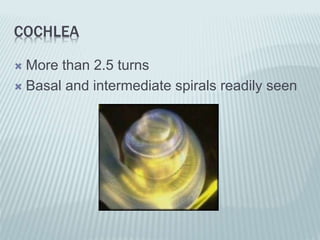
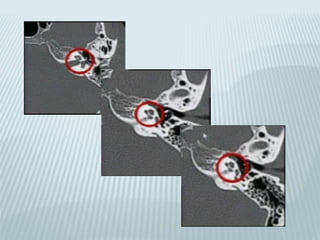
COCHLEA
 More than 2.5 turns
 Basal and intermediate spirals readily seen
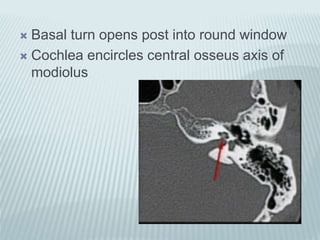
 Basal turn opens post into round window
 Cochlea encircles central osseus axis of
modiolus
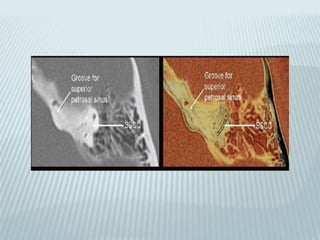
SEMI CIRCULAR CANALS
 Project off superior,posterior and lateral
aspects of vestibule
 Upper margin of superior SCC forms
superior convexity on petrous pyramidal
roof(Arcuate eminence)
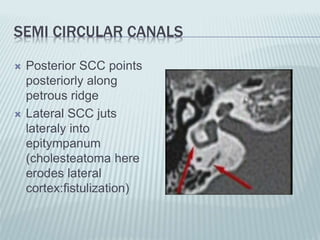
SEMI CIRCULAR CANALS
 Posterior SCC points
posteriorly along
petrous ridge
 Lateral SCC juts
lateraly into
epitympanum
(cholesteatoma here
erodes lateral
cortex:fistulization)
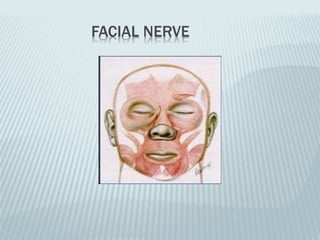
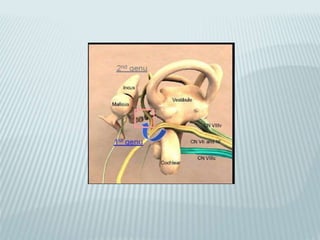
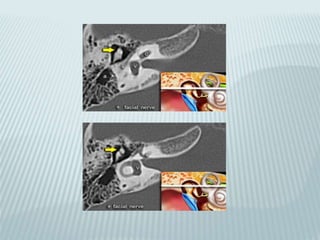
FACIAL NERVE
SEGMENTAL
TEMPORAL BONE ANALYSIS
 Ear or anterior cerebellopontine sulcus
 Ear :outer,middle,inner
 ACPA masses
 Osseus destruction
 Anatomic extent
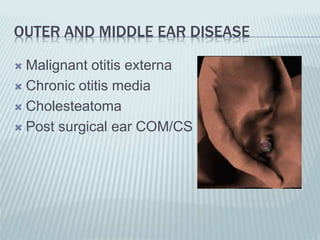
OUTER AND MIDDLE EAR DISEASE
 Malignant otitis externa
 Chronic otitis media
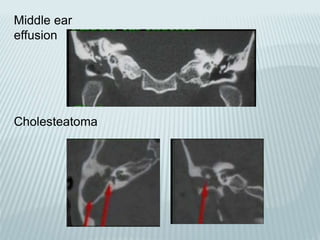
 Cholesteatoma
 Post surgical ear COM/CS
Middle ear
effusion
Cholesteatoma
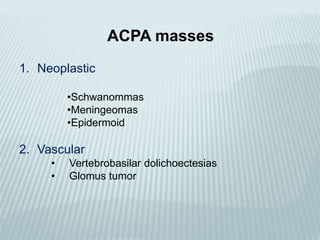
ACPA masses
1. Neoplastic
•Schwanommas
•Meningeomas
•Epidermoid
2. Vascular
• Vertebrobasilar dolichoectesias
• Glomus tumor
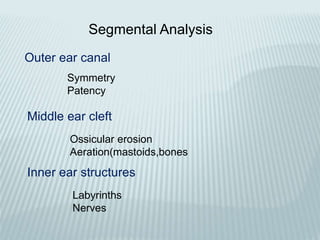
Symmetry
Patency
Outer ear canal
Middle ear cleft
Inner ear structures
Ossicular erosion
Aeration(mastoids,bones
Labyrinths
Nerves
Segmental Analysis
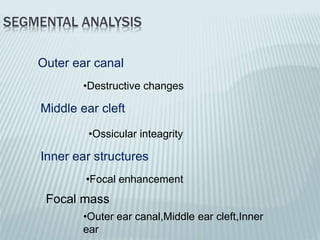
SEGMENTAL ANALYSIS
Outer ear canal
Middle ear cleft
Inner ear structures
Focal mass
•Destructive changes
•Ossicular inteagrity
•Focal enhancement
•Outer ear canal,Middle ear cleft,Inner
ear
Temporal bone

Temporal bone