Kanu Lal Saha
Associate Professor
Otology Division
Department of Otolaryngology & Head-Neck Surgery
Bangabandhu Sheikh Mujib Medical University
Dhaka, Bangladesh.
Imaging of the Temporal Bone
The eyes do not see when brain does not know
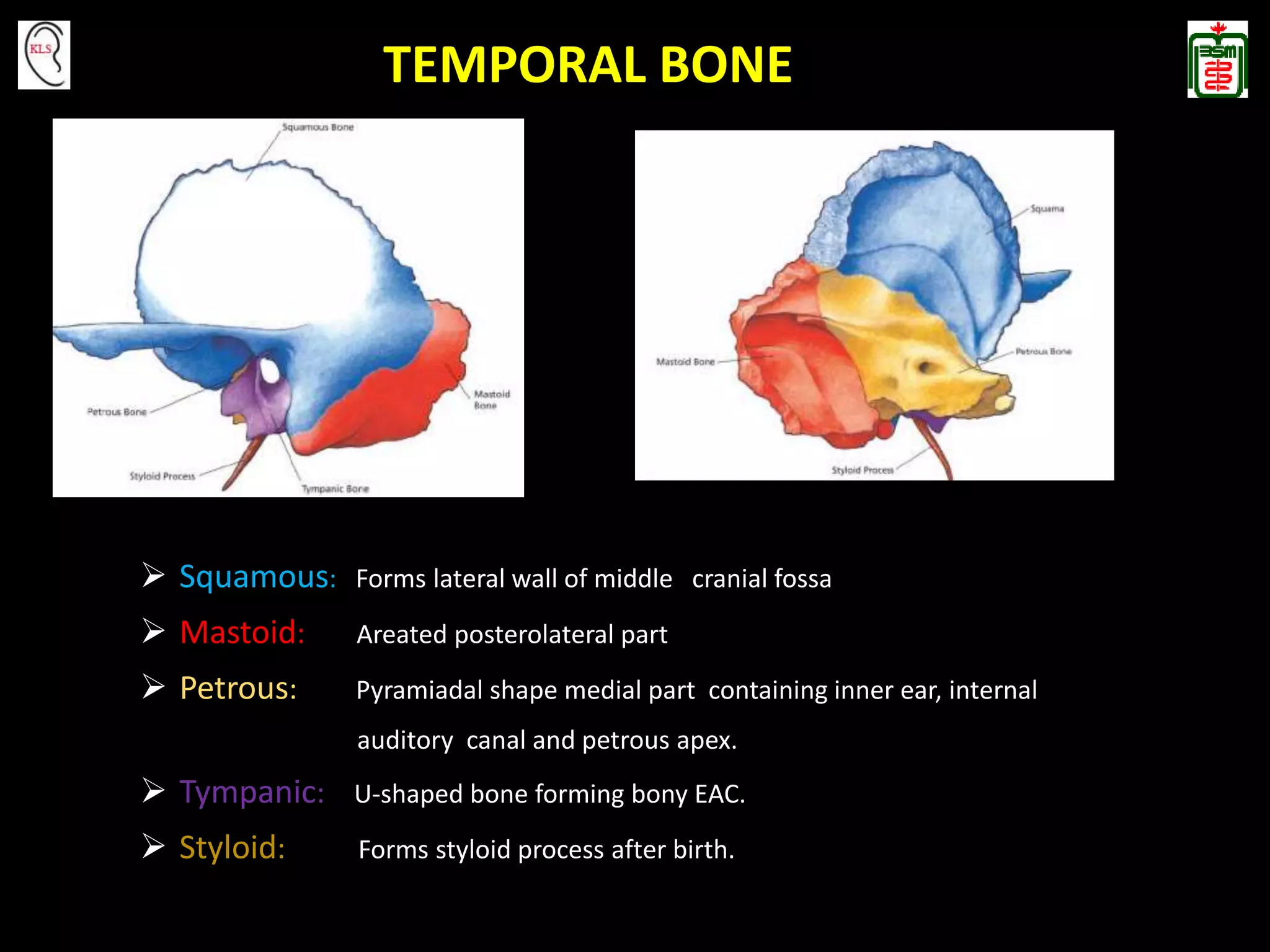
 Squamous: Forms lateral wall of middle cranial fossa
 Mastoid: Areated posterolateral part
 Petrous: Pyramiadal shape medial part containing inner ear, internal
auditory canal and petrous apex.
 Tympanic: U-shaped bone forming bony EAC.
 Styloid: Forms styloid process after birth.
TEMPORAL BONE
Major components of Temporal bone
External auditory canal(EAC)
Middle ear-mastoid(ME-M)
Inner Ear(IE)
Petrous apex(PA)
Internal auditory canal
Facial nerve
Petrous internal carotid
artery(ICA)
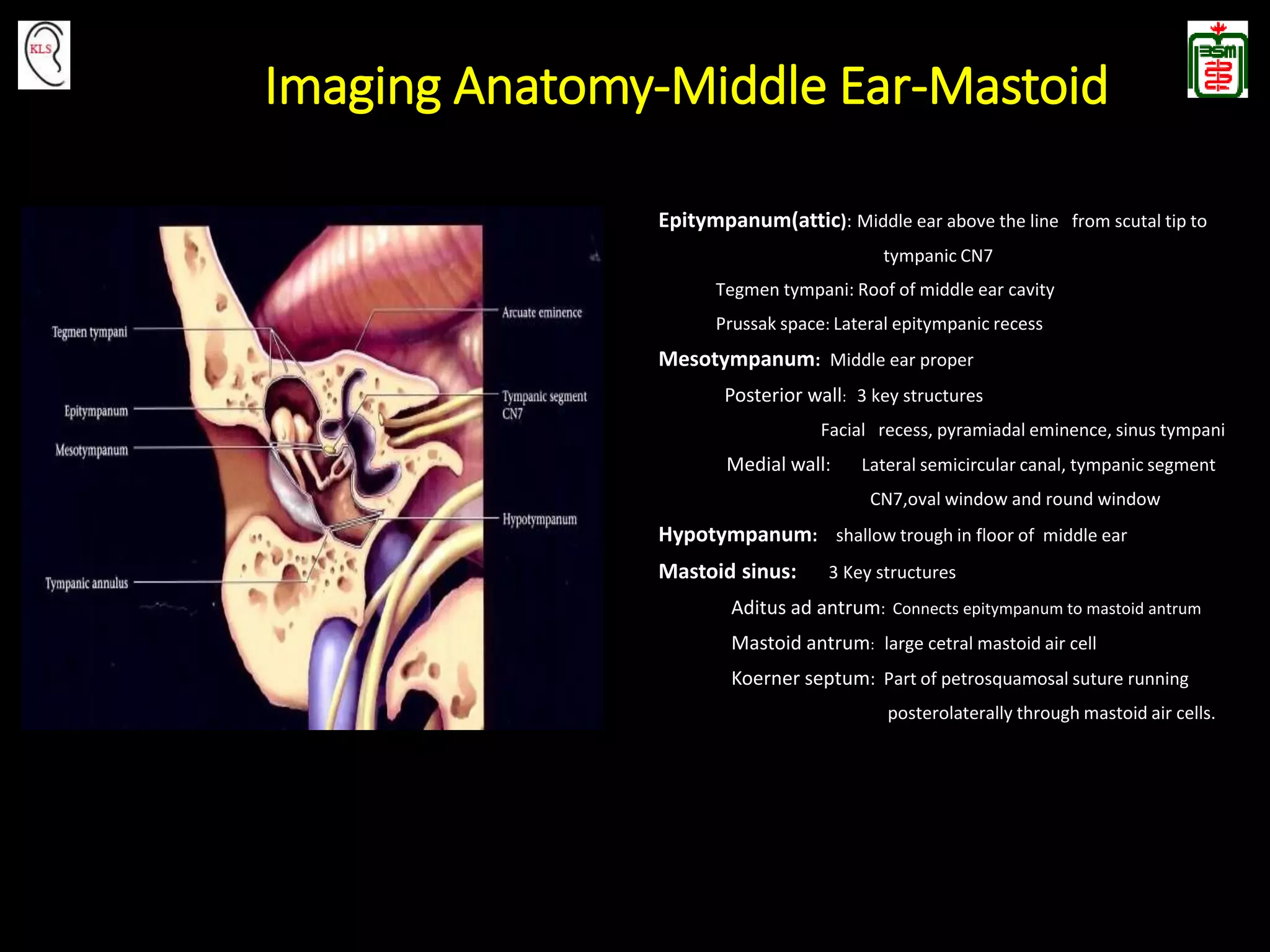
Imaging Anatomy-Middle Ear-Mastoid
Epitympanum(attic): Middle ear above the line from scutal tip to
tympanic CN7
Tegmen tympani: Roof of middle ear cavity
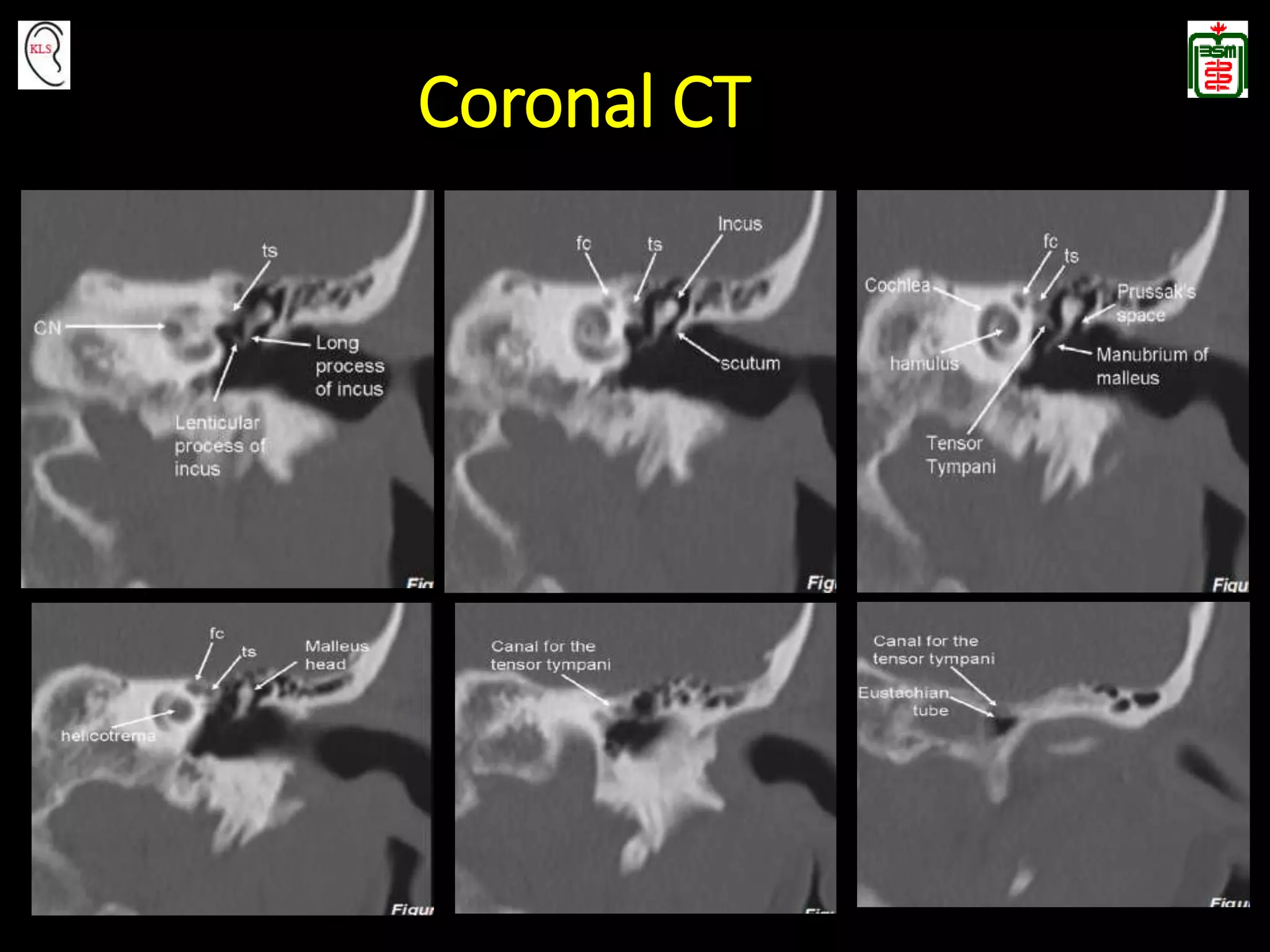
Prussak space: Lateral epitympanic recess
Mesotympanum: Middle ear proper
Posterior wall: 3 key structures
Facial recess, pyramiadal eminence, sinus tympani
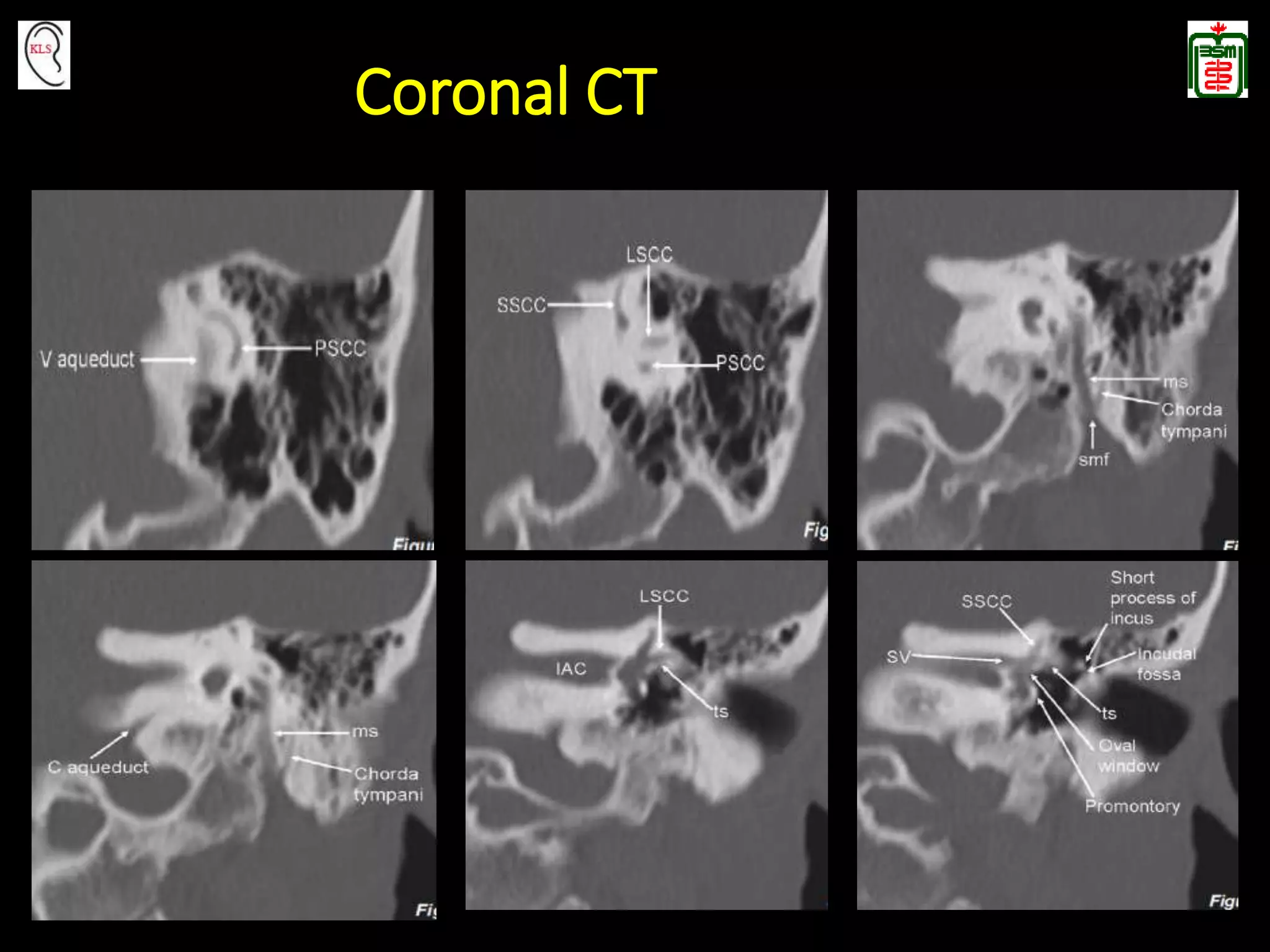
Medial wall: Lateral semicircular canal, tympanic segment
CN7,oval window and round window
Hypotympanum: shallow trough in floor of middle ear
Mastoid sinus: 3 Key structures
Aditus ad antrum: Connects epitympanum to mastoid antrum
Mastoid antrum: large cetral mastoid air cell
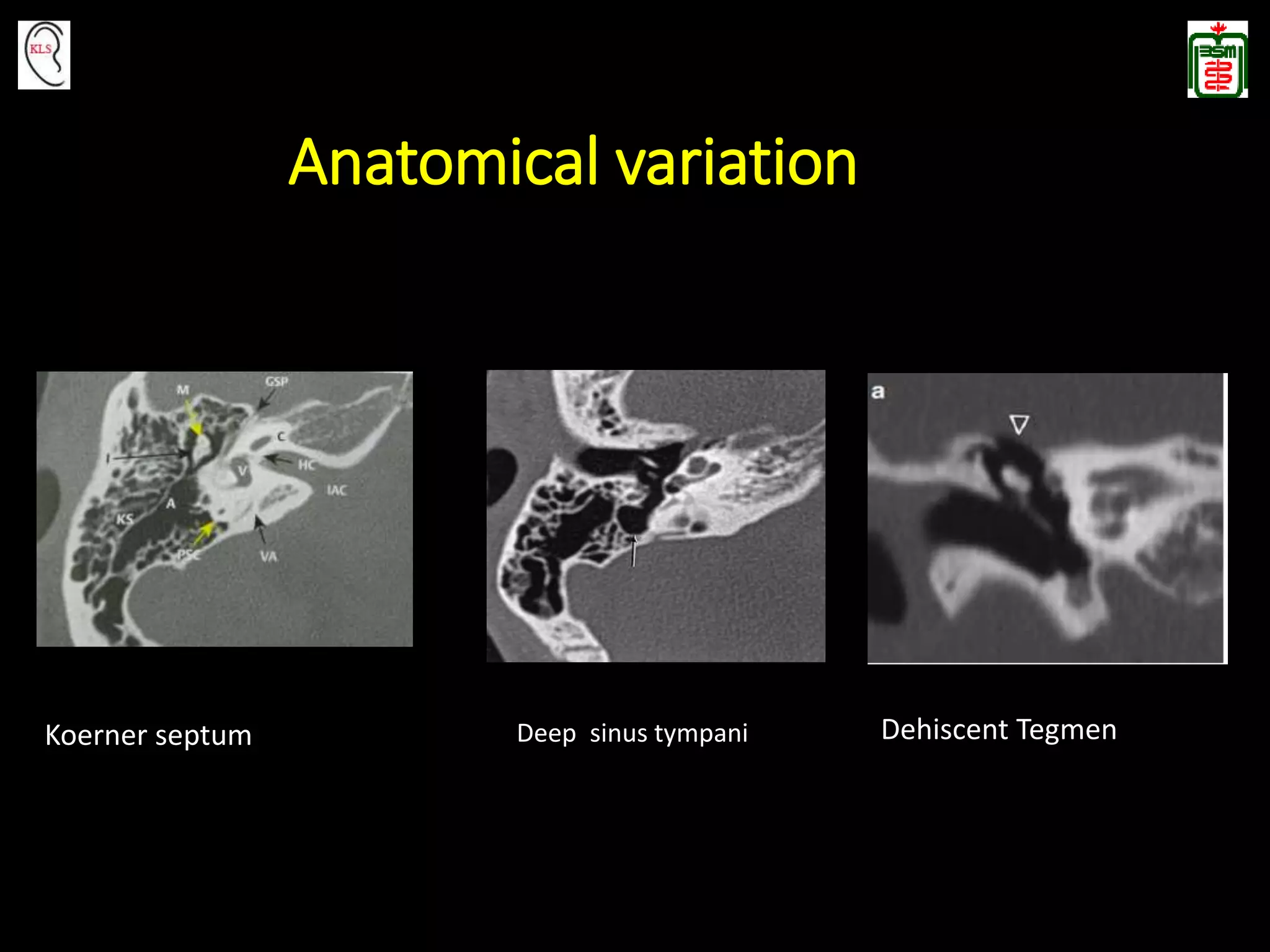
Koerner septum: Part of petrosquamosal suture running
posterolaterally through mastoid air cells.
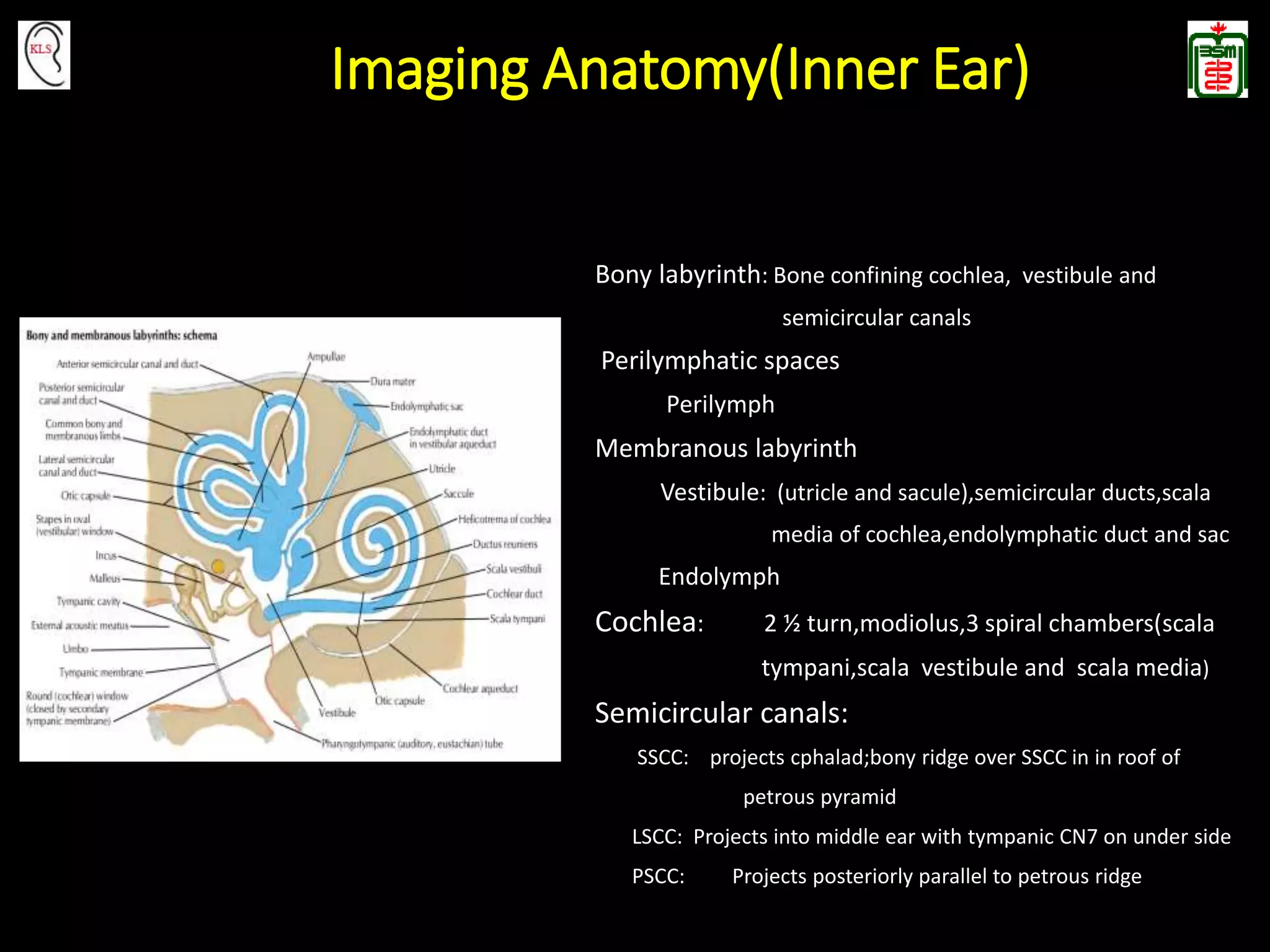
Imaging Anatomy(Inner Ear)
Bony labyrinth: Bone confining cochlea, vestibule and
semicircular canals
Perilymphatic spaces
Perilymph
Membranous labyrinth
Vestibule: (utricle and sacule),semicircular ducts,scala
media of cochlea,endolymphatic duct and sac
Endolymph
Cochlea: 2 ½ turn,modiolus,3 spiral chambers(scala
tympani,scala vestibule and scala media)
Semicircular canals:
SSCC: projects cphalad;bony ridge over SSCC in in roof of
petrous pyramid
LSCC: Projects into middle ear with tympanic CN7 on under side
PSCC: Projects posteriorly parallel to petrous ridge
Imaging Anatomy
Imaging Anatomy
Imaging Anatomy
Imaging Tools
• CT Scan
Conventional CT Scan- High resolution multidetector CT
Cone beam CT
-it employs cone-shaped beam of X-rays
- A single rotation of gantry is sufficient
- Low radiation dose though high spatial resolution.
- Acquisition time is long
- Prone to motion artifacts
• MRI
Conventional(T1,T2)
Diffusion weighted Imaging(DWI-EPI and Non-EPI)
Imaging technique CT Scan
• Fine section - .5 mm to 1 mm thickness.
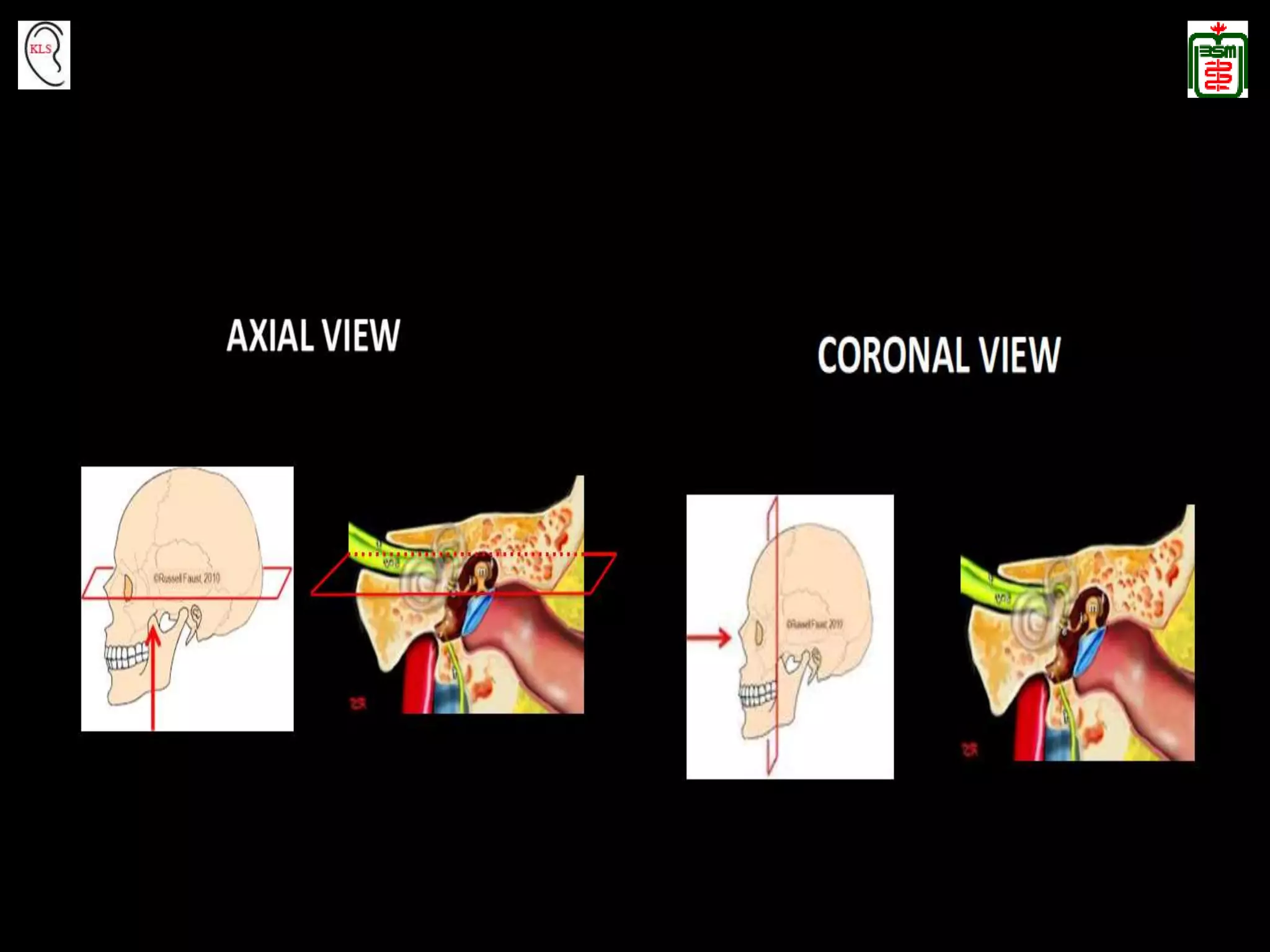
• Axial scan –
Top of petrous apex to inferior tip of mastoid parallel to infraorbitomeatal line
• Coronal scan-
Coronal images are reconstructed from axial images
• Three-dimensional (3D)Image
Depict complex anatomy
• High spatial resolution bone algorithm
• Non-contrast scan in most instances
• Contrast scan in some conditions –
Tumor, vascular lesion, abscess formation, sigmoid sinus thrombosis,
intracranial spread of disease.
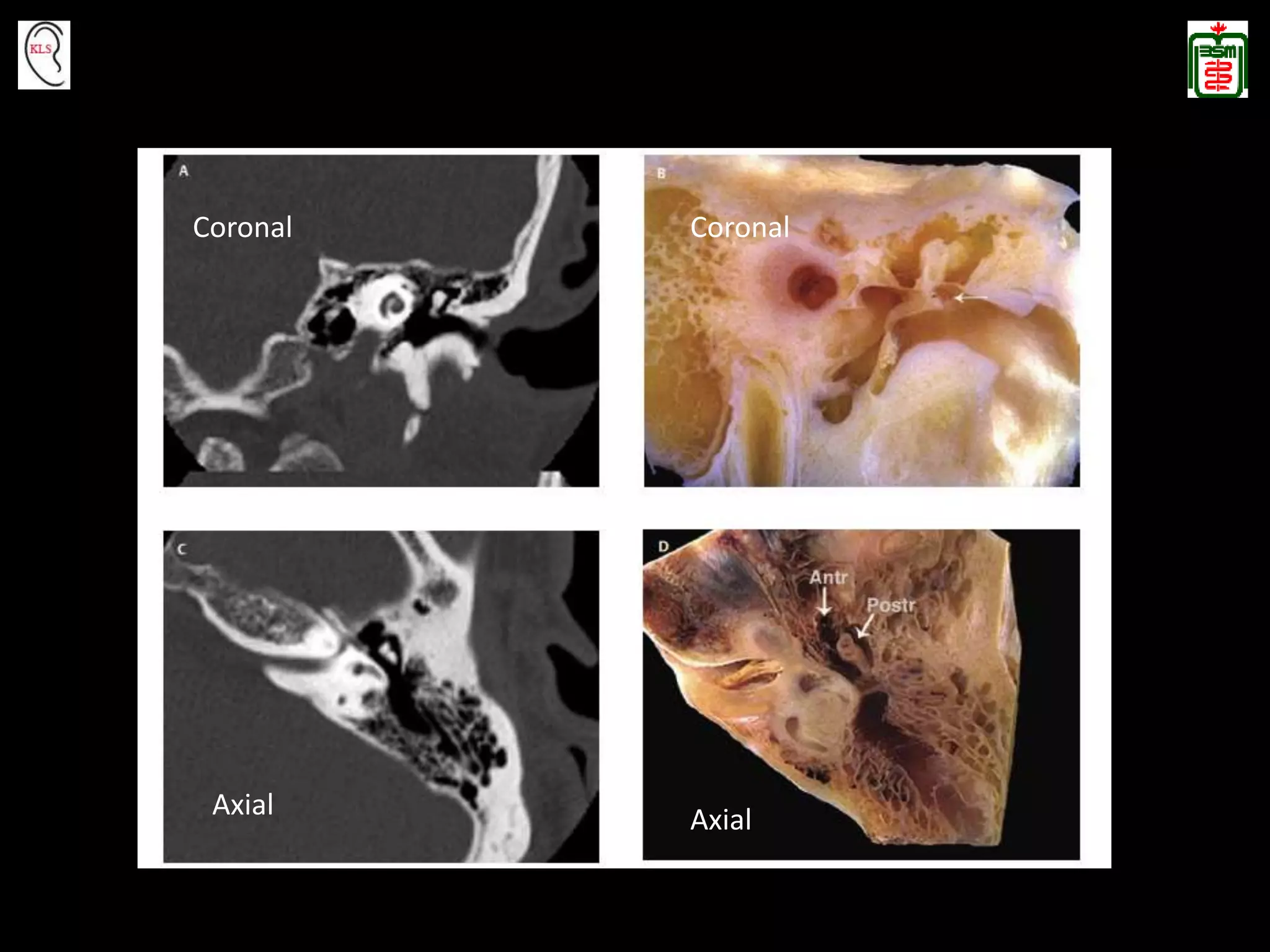
Axial and Coronal section
Coronal Coronal
Axial Axial
How to read CT Temporal Bone
Patient Data (Name & ID No.)
Date of CT Scan
Type of CT Scan
Size of Cuts ( + Contrast)
Bone window verses soft tissue
Evaluation of CT Temporal Bone
Normal anatomy
Normal variants (comparing both side)
 Pathology
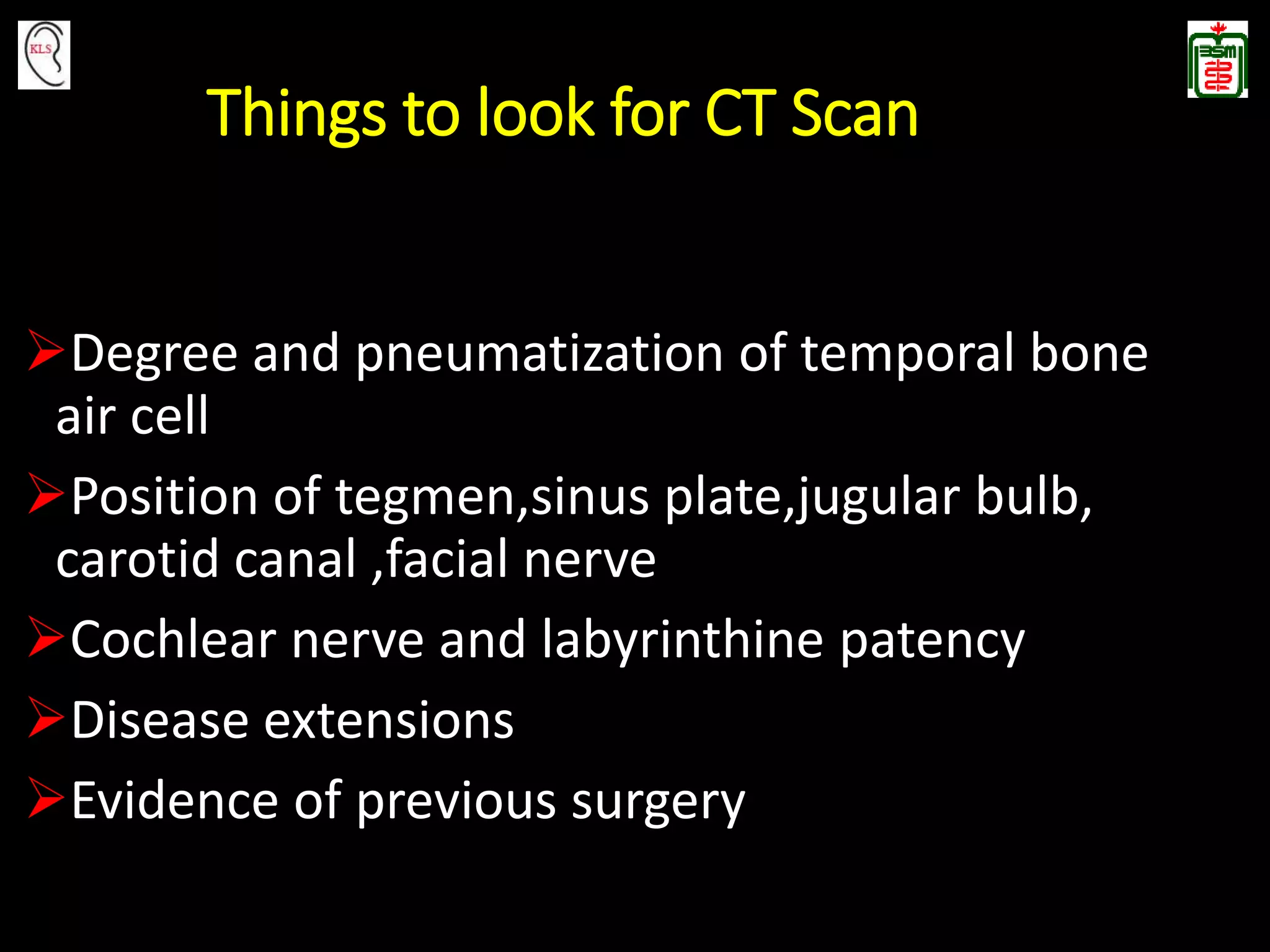
Things to look for CT Scan
Degree and pneumatization of temporal bone
air cell
Position of tegmen,sinus plate,jugular bulb,
carotid canal ,facial nerve
Cochlear nerve and labyrinthine patency
Disease extensions
Evidence of previous surgery
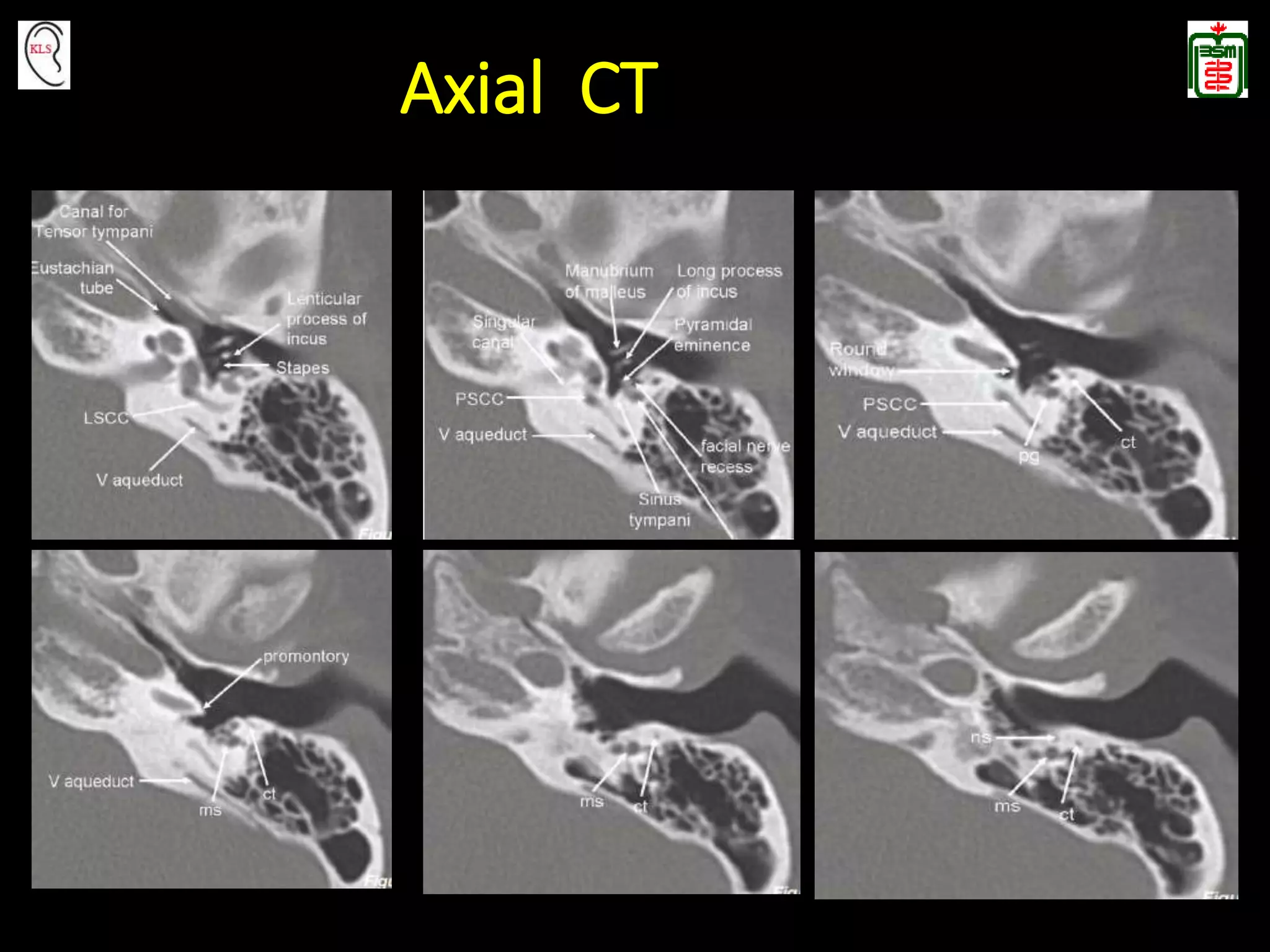
Axial CT
Axial CT
Coronal CT
Coronal CT
Pneumatization of Mastoid air cell
Sclerotic mastoid Diploic mastoid Pneumatized mastoid
Sclerosed Mastoid
Anteriorly positioned sigmoid sinus
Anatomical variation
Koerner septum Deep sinus tympani Dehiscent Tegmen
High riding Jugular Bulb
Low Tegmen
Aberrant Carotid Artery
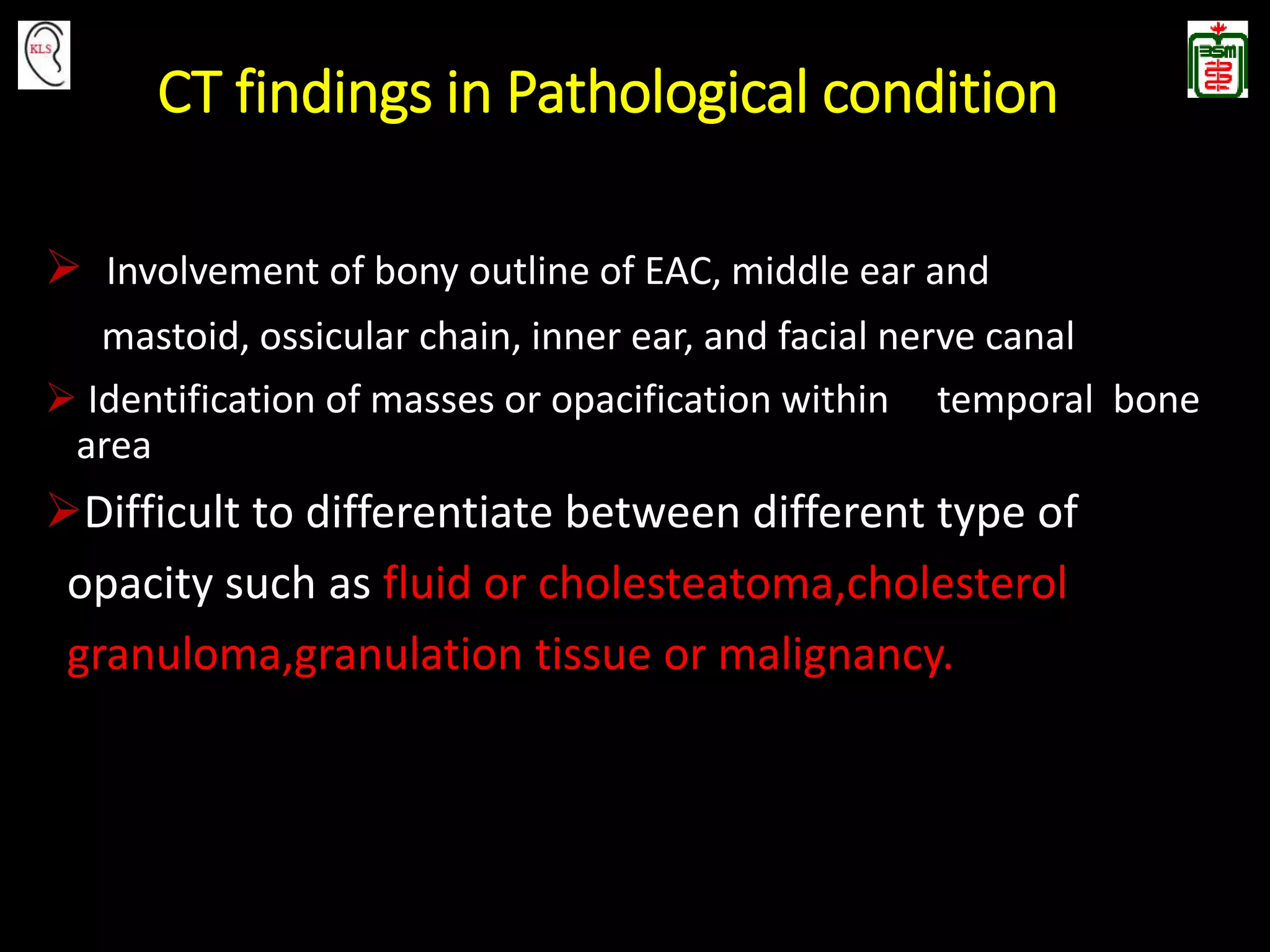
CT findings in Pathological condition
 Involvement of bony outline of EAC, middle ear and
mastoid, ossicular chain, inner ear, and facial nerve canal
 Identification of masses or opacification within temporal bone
area
Difficult to differentiate between different type of
opacity such as fluid or cholesteatoma,cholesterol
granuloma,granulation tissue or malignancy.
Imaging strategy/indications
 Chronic Otitis Media/Chronic Oto-mastoiditis
 Cochlear Implantation
 Congenital Aural dysplasia(CAD), External Auditory Canal lesions
 Aural mass
 Facial nerve disorder
 Temporal Bone trauma
 Otitis externa
 Hearing Loss
 Tinnitus
 Vertigo and Dizziness
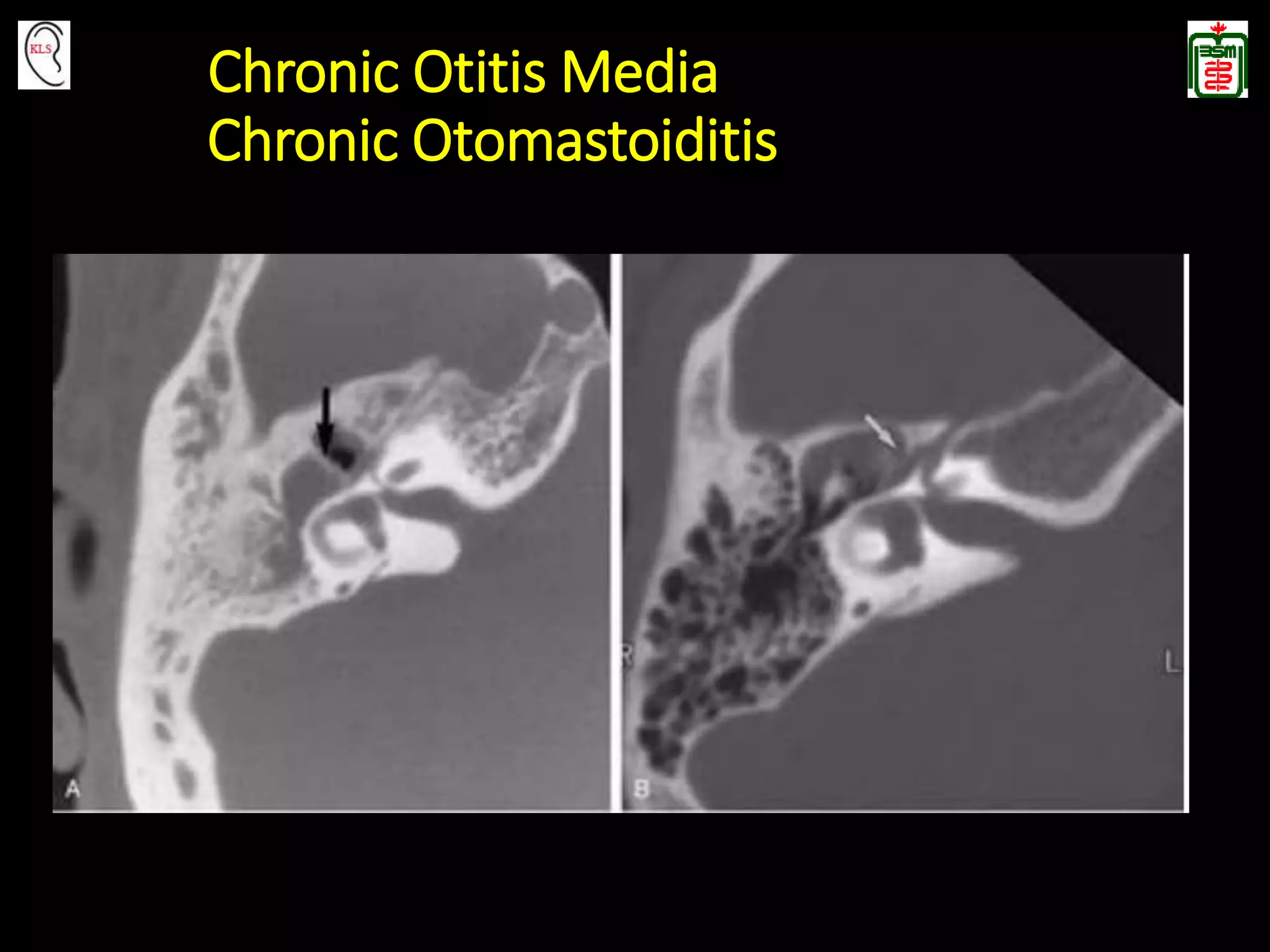
Chronic Otitis Media
Chronic Otomastoiditis
Coalescent Mastoiditis
Cholesteatoma
Limited Cholesteatoma
Cholesteatoma involving Proximal
Tympanic segment of Facial nerve
Dehiscent Facial Nerve Canal
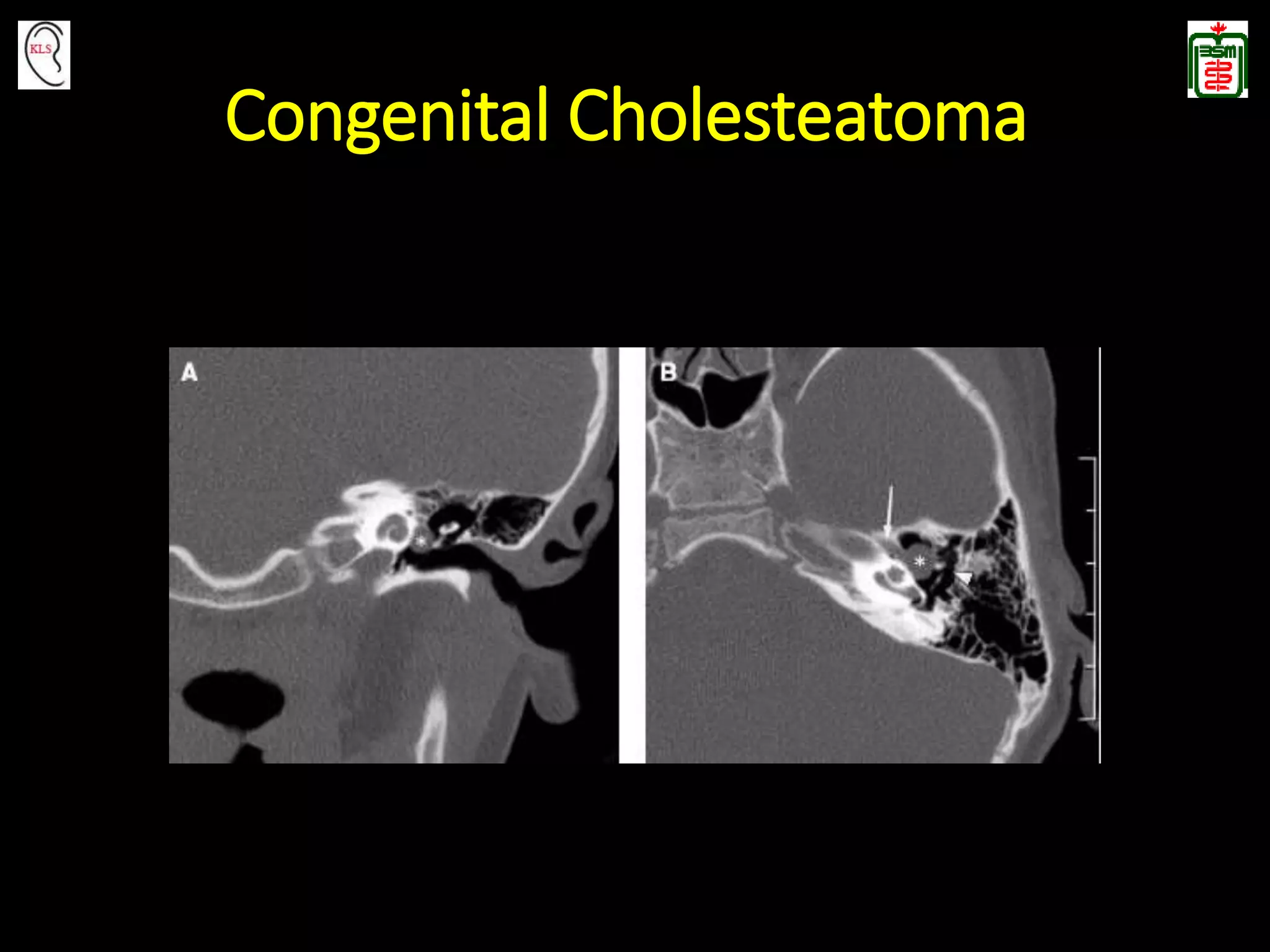
Congenital Cholesteatoma
Post -Surgical case
Pre-op
Post-op
Postsurgical Cholesteatoma
Labyrinthine Fistula
Uneven Mastoid Cavity
Bony overhang
Bony Overhang
Destructed post meatal wall
A B
A B
C
Grade V Retraction
Pre-op
Post-op
Erosion of Ossicle
OME in Imaging
Chronic Otitis Media(COM)
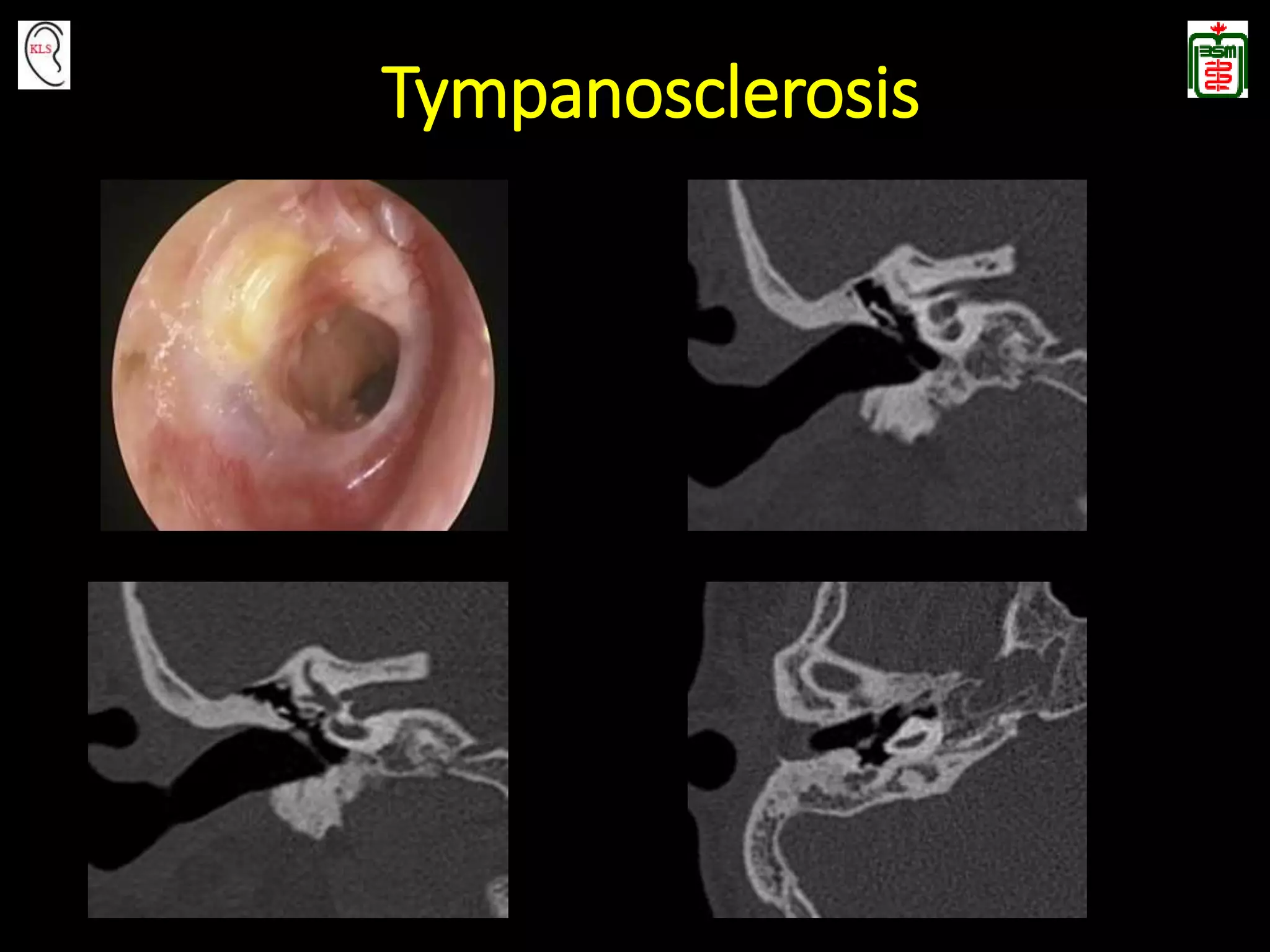
Tympanosclerosis
Aural mass
 Retrotympanic mass
 An auricular mass in EAC
Retrotympanic lesion on otoscopy
CT and MRI are complementary.
Contrast-enhanced MRI –
if the CT findings raise concern for a neoplasm
Fibroepithelial Polyp
Foreign body in EAC
Tympanic Paraganglioma
JuguloTympanic Paraganglioma
Facial Nerve Haemangioma
Temporal Bone Malignancy
Facial Nerve Schwannoma
Malignant Otitis Externa
Temporal Bone Fracture
Imaging in Otosclerosis
Otosclerosis involving Cochlea
CT Scan at Round Window level
Area of Posterior Tympanotomy
Narrow Facial Recess
Normal facial recess Narrow facial recess
Ref. Sennaroglu
Incomplete Partition Type 2
Mondini deformity
Labyrinthine aplasia(Michel deformity)
T2 MRI
T2 MRI
Axial and Coronal MRI
A B
D DC
E
MRI Sagittal section
3D reconstruction of MRI
Unilateral SNHL due to Cochlear nerve Aplasia/Hypoplasia
Axial and coronal CT(Aplasia/Hypoplasia of CN)
Axial and Coronal MRI(Aplasia/Hypoplasia of CN)
Sagittal Oblique Imaging through IAC
(Aplasia/Hypoplasia of CN)
Cochlear Hypoplasia
Cochleovestibular aplasia -Michel Deformity
Ossification of Cochlea
Common cavity
Common Cavity
Small common cavity with the narrow lAC
Labyrinthine Ossificans
Cochlear Nerve Aplasia
Cochlear nerve aplasia
Congenital Aural dysplasia(CAD),
External Auditory Canal lesions
Poschl reformat
Superior Semicircular Canal Dehiscence(SSCD)
Enlarged Endolymphatic Duct and Sac
Sensorineural Hearing Loss
Intracanalicular Tumor in the left IAC
Granulation Tissue / Cholesterol
Granuloma/Cholesteatoma/Effusion
 Appears at CT as nonspecific, nondependent radiopacity
 Granulation tissue enhances intensely with gadolinium on T1-weighted MR images
Cholesteatoma no enhancement with gadolinium on T1-weighted MR images
Cholesterol granuloma has bright signal on all pulse sequences
Courtesy: Dr Sampath
Granulation tissue in CT and MRI
CT and MRI in Cholesteatoma
Cholesterol granuloma in CT and MRI
Mucolele in MRI
Metastasis in Petrous Bone - CT and MRI
Vestibular schwannoma
Vestibular Schwannoma and coexistent Aachnoid Cyst
Conclusion
Inappropriate report misleads the surgeon
Poor image involves wastage of money and radiation hazard
Otologist must know the basics of temporal bone imaging
Radiologist should be aware of expected and useful reporting
Radiologist and Otologist should be always in compliance to get
the real benefit of this excellent tool
THANK YOU
Otology Dr Kanu BMMU Bangladesh
www.drkanuotology.com
drklsaha@gmail.com

Imaging of the temporal bone