K.Roshni (14R91A0585)
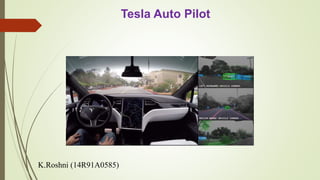
Tesla Auto Pilot
Contents
• Abstract
• Introduction
• Literature survey
• Advantages
• Disadvantages
• System architecture
• Implementation
• Procedure
• Overview
• References
Abstract
 Tesla Autopilot, later marketed as Enhanced Autopilot , is an advanced driver-assistance system feature offered
by Tesla .
 That has lane centering, adaptive cruise control, self-parking, ability to automatically change lanes without
requiring driver steering, and enables the car to be summoned to and from a garage or parking spot.
 Planned improvements to Enhanced Autopilot include transitioning from one freeway to another and exiting the
freeway when your destination is near.
 As an upgrade above and beyond Enhanced Autopilot's capabilities, the company's stated intent is to offer full self-
driving at a future time.
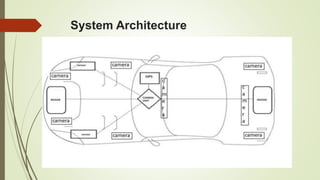
 The hardware includes 8 surround cameras and 12 ultrasonic sensors, in addition to forward-facing radar with
enhanced processing capabilities.
Introduction
 This Auto pilot mode Technology is a research project. By implementing this technology in vehicles
enables it to self-drive in the highway roads without the control of the humans.
 This technology creates a new revolution in the Automobile and transport field.
 It helps the user to save their valuable time which is wasted while driving and it is not necessary for
the drivers to be always seated in the driver seat except the places, where the signals and road
counters present.
 Many accidents are occurred due to the carelessness of the drivers. This can be avoided by
implementing this Autopilot mode technology. In this technology many advanced equipment’s are
going to be used to make a safe journey.
Advantages
 Managing traffic flow to increase road capacity
 Relieving vehicle occupants from driving allowing them to concentrate on other
tasks or to rest during their journeys.
 To avoid accidents.
 Increasing roadway capacity by reducing the distances between cars.
 The current location of vehicle can be determine using global positioning system
(G.P.S) .
Disadvantages
 If the vehicle is using internet which is have less security then From the hackers
point of view in some cases the vehicle can be switched off on the road(in rare
cases).
 Hackers can change the route which is plotted in the system(in rare cases).
 In case of failure of main sensor and backup sensors the vehicle can create a
chance of accident .
System Architecture
Implementation
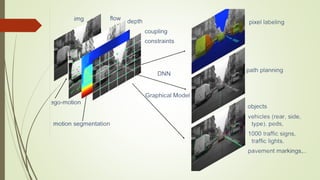
Some of it includes algorithmic functions such as motion segmentation, ego-
motion, camera solving etc, but the really interesting part is the DNN based
functions. Mobileye has deployed the first DNN on the road with Tesla EVs and is
responsible for the following jobs:
 Free Space Pixel Labeling
 Holistic Path Planning
 General Object Detection
 Sign Detection
Procedure
 Information from all the sensors is analyzed by a central computer that
manipulates the steering, accelerator and brakes. Its software must understand the
rules of the road both formal and informal. Based on the information received the
software takes self driving decisions.
 The car uses a combination of sensors and software to locate itself in the real
world combined with highly accurate digital maps. A GPS is used, just like the
satellite navigation systems in most cars, to get a rough location of the car, at
which point radar, lasers and cameras take over to monitor the world around the
car, 360-degrees. The software can recognize objects, people, cars, road
marking, signs and traffic lights, obeying the rules of the road and allowing for
multiple unpredictable hazards, including cyclists. It can even detect road works
and safely navigate around them
Overview
The tesla car’s technologies improves vehicle's stability
helps to minimize loss of control.
tesla cars are designed to minimize accidents by addressing
the main causes of collisions: driving error, distraction and
drowsiness
References
 http://en.wikipedia.org/wiki/driverlesscar
 http://autocontrols.com.au/
 http://www.howstuffworks.com/cruise-control
 http://www.howstuffworks.com/electronic stability control
 https://wccftech.com/tesla-autopilot-story-in-depth-technology/4/
 https://www.youtube.com/watch?v=BPkC69EWcas

Telsa auto pilot

  • 1.
  • 2.
    Contents • Abstract • Introduction •Literature survey • Advantages • Disadvantages • System architecture • Implementation • Procedure • Overview • References
  • 3.
    Abstract  Tesla Autopilot,later marketed as Enhanced Autopilot , is an advanced driver-assistance system feature offered by Tesla .  That has lane centering, adaptive cruise control, self-parking, ability to automatically change lanes without requiring driver steering, and enables the car to be summoned to and from a garage or parking spot.  Planned improvements to Enhanced Autopilot include transitioning from one freeway to another and exiting the freeway when your destination is near.  As an upgrade above and beyond Enhanced Autopilot's capabilities, the company's stated intent is to offer full self- driving at a future time.  The hardware includes 8 surround cameras and 12 ultrasonic sensors, in addition to forward-facing radar with enhanced processing capabilities.
  • 4.
    Introduction  This Autopilot mode Technology is a research project. By implementing this technology in vehicles enables it to self-drive in the highway roads without the control of the humans.  This technology creates a new revolution in the Automobile and transport field.  It helps the user to save their valuable time which is wasted while driving and it is not necessary for the drivers to be always seated in the driver seat except the places, where the signals and road counters present.  Many accidents are occurred due to the carelessness of the drivers. This can be avoided by implementing this Autopilot mode technology. In this technology many advanced equipment’s are going to be used to make a safe journey.
  • 5.
    Advantages  Managing trafficflow to increase road capacity  Relieving vehicle occupants from driving allowing them to concentrate on other tasks or to rest during their journeys.  To avoid accidents.  Increasing roadway capacity by reducing the distances between cars.  The current location of vehicle can be determine using global positioning system (G.P.S) .
  • 6.
    Disadvantages  If thevehicle is using internet which is have less security then From the hackers point of view in some cases the vehicle can be switched off on the road(in rare cases).  Hackers can change the route which is plotted in the system(in rare cases).  In case of failure of main sensor and backup sensors the vehicle can create a chance of accident .
  • 7.
  • 8.
    Implementation Some of itincludes algorithmic functions such as motion segmentation, ego- motion, camera solving etc, but the really interesting part is the DNN based functions. Mobileye has deployed the first DNN on the road with Tesla EVs and is responsible for the following jobs:  Free Space Pixel Labeling  Holistic Path Planning  General Object Detection  Sign Detection
  • 10.
    Procedure  Information fromall the sensors is analyzed by a central computer that manipulates the steering, accelerator and brakes. Its software must understand the rules of the road both formal and informal. Based on the information received the software takes self driving decisions.  The car uses a combination of sensors and software to locate itself in the real world combined with highly accurate digital maps. A GPS is used, just like the satellite navigation systems in most cars, to get a rough location of the car, at which point radar, lasers and cameras take over to monitor the world around the car, 360-degrees. The software can recognize objects, people, cars, road marking, signs and traffic lights, obeying the rules of the road and allowing for multiple unpredictable hazards, including cyclists. It can even detect road works and safely navigate around them
  • 11.
    Overview The tesla car’stechnologies improves vehicle's stability helps to minimize loss of control. tesla cars are designed to minimize accidents by addressing the main causes of collisions: driving error, distraction and drowsiness
  • 12.
    References  http://en.wikipedia.org/wiki/driverlesscar  http://autocontrols.com.au/ http://www.howstuffworks.com/cruise-control  http://www.howstuffworks.com/electronic stability control  https://wccftech.com/tesla-autopilot-story-in-depth-technology/4/  https://www.youtube.com/watch?v=BPkC69EWcas