Agrupamento de Escolas Braga Oeste – EB2/3 CabreirosLíngua estrangeiraTechnologies thatchangedtheworldTelevisionWorkdoneby:Anabela LoboEliana GonçalvesJoão Ferreira24/09/09
Television (TV) is a widely used telecommunication medium for transmitting and receiving moving images, either monochromatic ("black and white") or colour, usually accompanied by sound.
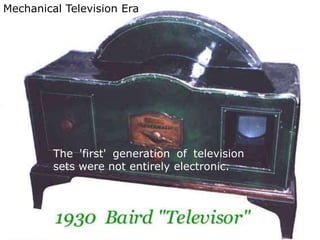
Mechanical Television EraThe 'first' generation of television sets were not entirely electronic.
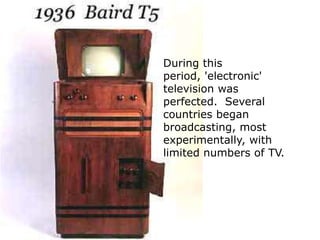
During this period, 'electronic' television was perfected.  Several countries began broadcasting, most experimentally, with limited numbers of TV.
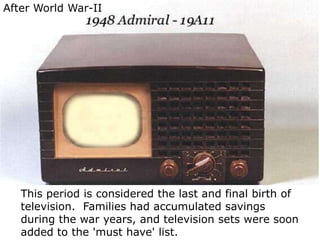
After World War-II This period is considered the last and final birth of television.  Families had accumulated savings during the war years, and television sets were soon added to the 'must have' list. 
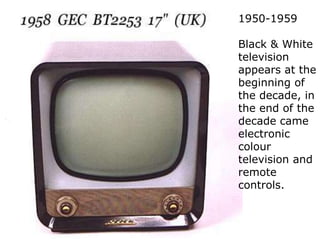
1950-1959Black & White television appears at the beginning of the decade, in the end of the decade came electronic colour television and remote controls.
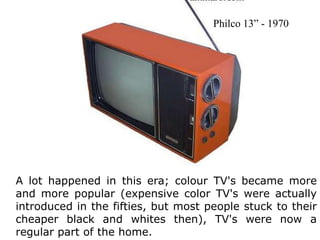
Philco 13” - 1970A lot happened in this era; colour TV's became more and more popular (expensive color TV's were actually introduced in the fifties, but most people stuck to their cheaper black and whites then), TV's were now a regular part of the home.
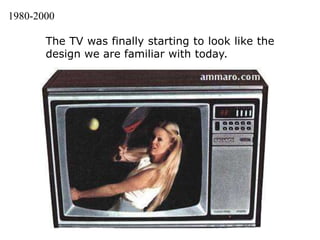
1980-2000The TV was finally starting to look like the design we are familiar with today.
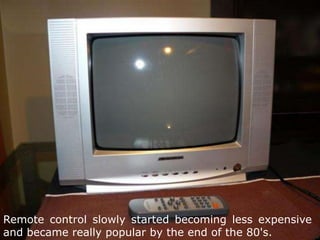
Remote control slowly started becoming less expensive and became really popular by the end of the 80's.
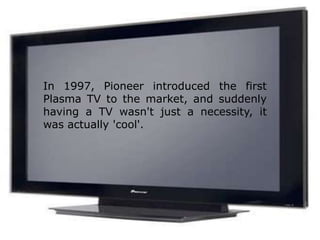
In 1997, Pioneer introduced the first Plasma TV to the market, and suddenly having a TV wasn't just a necessity, it was actually 'cool'.
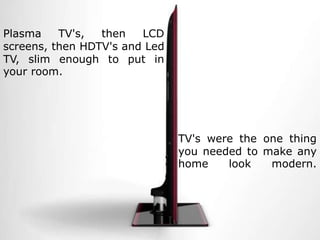
Plasma TV's, then LCD screens, then HDTV's and Led TV, slim enough to put in your room. TV's were the one thing you needed to make any home look modern.
TheimportanceofTelevision The television is one of the most fantastic inventions of the XX century. It brought innumerable benefits for society.
 It shortened the distances, democratized information and opened the canals of knowledge for all, in all the places of the world.TheimportanceofTelevision The TV gives us - information, education and instruction.
 The communication became exact, agile and global.
 The TV shows us the world, other cultures, other people, languages and ideas, introduces us to knowledge.The uses ofTelevisionThe television makes it possible to see what happens far away.We use the television to see: films, events, entertainment, music, sets of documents, news.The television can be used to teach the people to improve its knowledge.
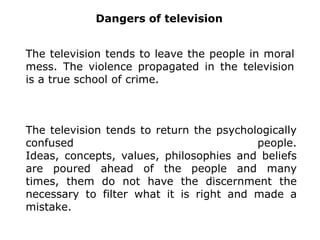
DangersoftelevisionTelevision tends to make people mentally lazy. It attracts, seduces, is addictive and manipulates people.On average people spend three to five hours per day watching television.The television tends to make people emotionally insensitive.

Television

  • 1.
    Agrupamento de EscolasBraga Oeste – EB2/3 CabreirosLíngua estrangeiraTechnologies thatchangedtheworldTelevisionWorkdoneby:Anabela LoboEliana GonçalvesJoão Ferreira24/09/09
  • 2.
    Television (TV) isa widely used telecommunication medium for transmitting and receiving moving images, either monochromatic ("black and white") or colour, usually accompanied by sound.
  • 3.
    Mechanical Television EraThe'first' generation of television sets were not entirely electronic.
  • 4.
    During this period,'electronic' television was perfected.  Several countries began broadcasting, most experimentally, with limited numbers of TV.
  • 5.
    After World War-IIThis period is considered the last and final birth of television.  Families had accumulated savings during the war years, and television sets were soon added to the 'must have' list. 
  • 6.
    1950-1959Black & Whitetelevision appears at the beginning of the decade, in the end of the decade came electronic colour television and remote controls.
  • 7.
    Philco 13” -1970A lot happened in this era; colour TV's became more and more popular (expensive color TV's were actually introduced in the fifties, but most people stuck to their cheaper black and whites then), TV's were now a regular part of the home.
  • 8.
    1980-2000The TV wasfinally starting to look like the design we are familiar with today.
  • 9.
    Remote control slowlystarted becoming less expensive and became really popular by the end of the 80's.
  • 10.
    In 1997, Pioneerintroduced the first Plasma TV to the market, and suddenly having a TV wasn't just a necessity, it was actually 'cool'.
  • 11.
    Plasma TV's, thenLCD screens, then HDTV's and Led TV, slim enough to put in your room. TV's were the one thing you needed to make any home look modern.
  • 12.
    TheimportanceofTelevision The televisionis one of the most fantastic inventions of the XX century. It brought innumerable benefits for society.
  • 13.
    It shortenedthe distances, democratized information and opened the canals of knowledge for all, in all the places of the world.TheimportanceofTelevision The TV gives us - information, education and instruction.
  • 14.
    The communicationbecame exact, agile and global.
  • 15.
    The TVshows us the world, other cultures, other people, languages and ideas, introduces us to knowledge.The uses ofTelevisionThe television makes it possible to see what happens far away.We use the television to see: films, events, entertainment, music, sets of documents, news.The television can be used to teach the people to improve its knowledge.
  • 16.
    DangersoftelevisionTelevision tends tomake people mentally lazy. It attracts, seduces, is addictive and manipulates people.On average people spend three to five hours per day watching television.The television tends to make people emotionally insensitive.