Technology & Innovation 
Management Course 
- 
Session 2
1. Contextual market 
segmentation (jobs-to-be- 
done) 
2. NASA technology 
readiness level
Contextual market segmentation
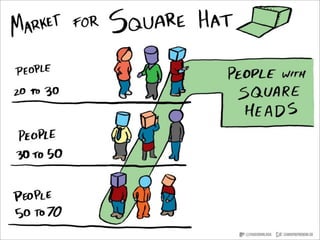
Target markets are not about demographics, sociographics, 
geographic. 
Contextual market segmentation
Target markets are not about demographics, sociographics, 
geographic. 
Contextual market segmentation
“People are not buying quarter-inch drills, they buy 
quarter-inch holes. The drill just happens to be the 
best means available to get the job done.” 
- Ted Leavitt (Harvard Business School) 
Jobs-To-Be-Done
Jobs-To-Be-Done
Jobs-To-Be-Done 
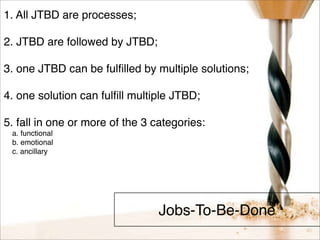
1. All JTBD are processes; 
2. JTBD are followed by JTBD; 
3. one JTBD can be fulfilled by multiple solutions; 
4. one solution can fulfill multiple JTBD; 
5. fall in one or more of the 3 categories: 
a. functional 
b. emotional 
c. ancillary
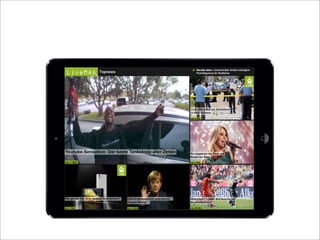
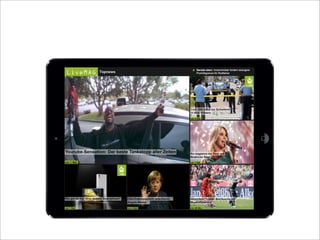
What are the competitors of a news app?
What are the competitors of car manufacturer?
James’ Reading List
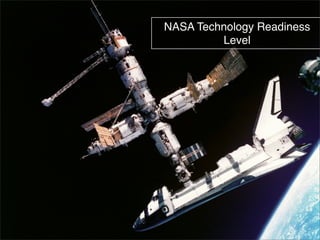
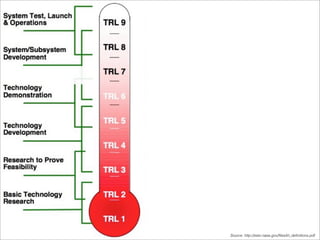
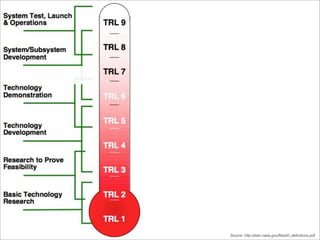
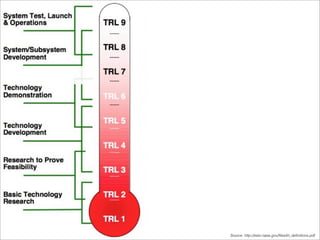
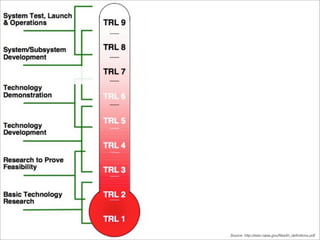
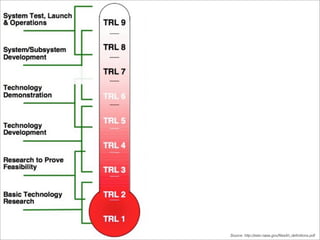
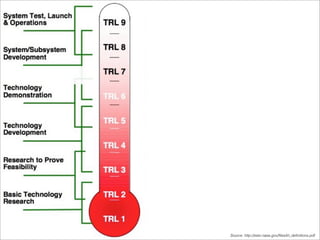
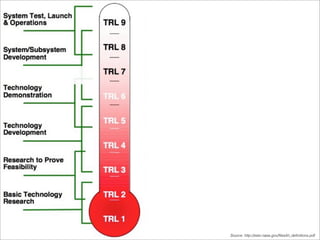
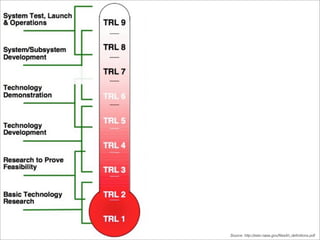
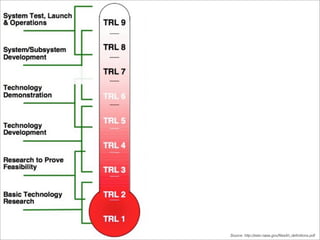
NASA Technology Readiness 
Level
Source: http://esto.nasa.gov/files/trl_definitions.pdf
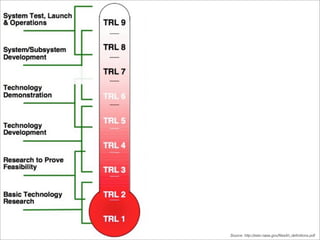
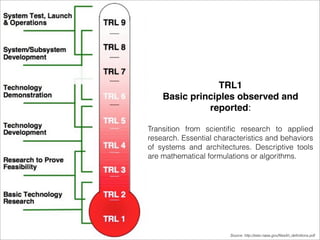
TRL1 
Basic principles observed and 
reported: 
Transition from scientific research to applied 
research. Essential characteristics and behaviors 
of systems and architectures. Descriptive tools 
are mathematical formulations or algorithms. 
Source: http://esto.nasa.gov/files/trl_definitions.pdf
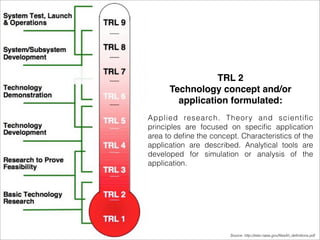
TRL 2 
Technology concept and/or 
application formulated: 
Applied research. Theory and scientific 
principles are focused on specific application 
area to define the concept. Characteristics of the 
application are described. Analytical tools are 
developed for simulation or analysis of the 
application. 
Source: http://esto.nasa.gov/files/trl_definitions.pdf
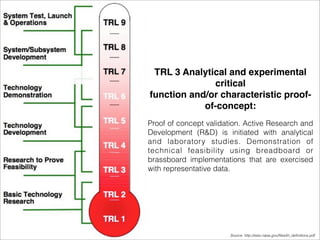
TRL 3 Analytical and experimental 
critical 
function and/or characteristic proof-of- 
concept: 
Proof of concept validation. Active Research and 
Development (R&D) is initiated with analytical 
and laboratory studies. Demonstration of 
technical feasibility using breadboard or 
brassboard implementations that are exercised 
with representative data. 
Source: http://esto.nasa.gov/files/trl_definitions.pdf
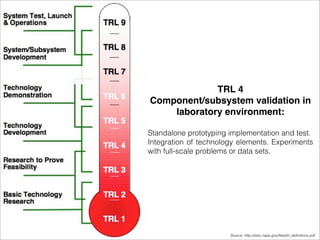
TRL 4 
Component/subsystem validation in 
laboratory environment: 
Standalone prototyping implementation and test. 
Integration of technology elements. Experiments 
with full-scale problems or data sets. 
Source: http://esto.nasa.gov/files/trl_definitions.pdf
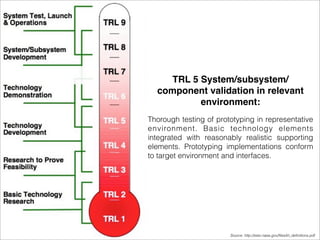
TRL 5 System/subsystem/ 
component validation in relevant 
environment: 
Thorough testing of prototyping in representative 
environment. Basic technology elements 
integrated with reasonably realistic supporting 
elements. Prototyping implementations conform 
to target environment and interfaces. 
Source: http://esto.nasa.gov/files/trl_definitions.pdf
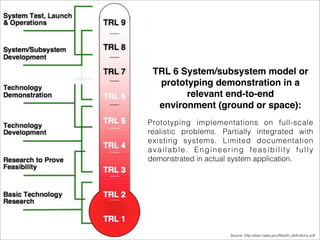
TRL 6 System/subsystem model or 
prototyping demonstration in a 
relevant end-to-end 
environment (ground or space): 
Prototyping implementations on full-scale 
realistic problems. Partially integrated with 
existing systems. Limited documentation 
avai lable. Engineer ing feasibi l i ty ful l y 
demonstrated in actual system application. 
Source: http://esto.nasa.gov/files/trl_definitions.pdf
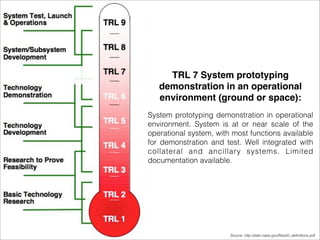
TRL 7 System prototyping 
demonstration in an operational 
environment (ground or space): 
System prototyping demonstration in operational 
environment. System is at or near scale of the 
operational system, with most functions available 
for demonstration and test. Well integrated with 
collateral and ancillary systems. Limited 
documentation available. 
Source: http://esto.nasa.gov/files/trl_definitions.pdf
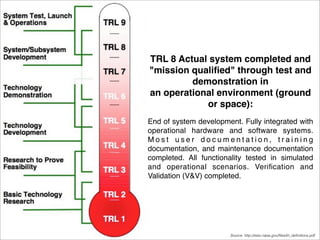
TRL 8 Actual system completed and 
"mission qualified" through test and 
demonstration in 
an operational environment (ground 
or space): 
End of system development. Fully integrated with 
operational hardware and software systems. 
M o s t u s e r d o c u m e n t a t i o n , t r a i n i n g 
documentation, and maintenance documentation 
completed. All functionality tested in simulated 
and operational scenarios. Verification and 
Validation (V&V) completed. 
Source: http://esto.nasa.gov/files/trl_definitions.pdf
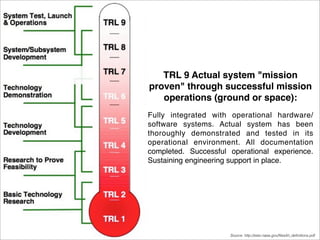
TRL 9 Actual system "mission 
proven" through successful mission 
operations (ground or space): 
Fully integrated with operational hardware/ 
software systems. Actual system has been 
thoroughly demonstrated and tested in its 
operational environment. All documentation 
completed. Successful operational experience. 
Sustaining engineering support in place. 
Source: http://esto.nasa.gov/files/trl_definitions.pdf
Hope you 
have NO 
questions!
email: 
me@danto.ma 
Twitter: 
@toma_dan

Technology & innovation Management Course - Session 2

  • 1.
    Technology & Innovation Management Course - Session 2
  • 2.
    1. Contextual market segmentation (jobs-to-be- done) 2. NASA technology readiness level
  • 3.
  • 4.
    Target markets arenot about demographics, sociographics, geographic. Contextual market segmentation
  • 5.
    Target markets arenot about demographics, sociographics, geographic. Contextual market segmentation
  • 7.
    “People are notbuying quarter-inch drills, they buy quarter-inch holes. The drill just happens to be the best means available to get the job done.” - Ted Leavitt (Harvard Business School) Jobs-To-Be-Done
  • 8.
  • 9.
    Jobs-To-Be-Done 1. AllJTBD are processes; 2. JTBD are followed by JTBD; 3. one JTBD can be fulfilled by multiple solutions; 4. one solution can fulfill multiple JTBD; 5. fall in one or more of the 3 categories: a. functional b. emotional c. ancillary
  • 11.
    What are thecompetitors of a news app?
  • 23.
    What are thecompetitors of car manufacturer?
  • 30.
  • 31.
  • 32.
  • 33.
    TRL1 Basic principlesobserved and reported: Transition from scientific research to applied research. Essential characteristics and behaviors of systems and architectures. Descriptive tools are mathematical formulations or algorithms. Source: http://esto.nasa.gov/files/trl_definitions.pdf
  • 34.
  • 35.
    TRL 2 Technologyconcept and/or application formulated: Applied research. Theory and scientific principles are focused on specific application area to define the concept. Characteristics of the application are described. Analytical tools are developed for simulation or analysis of the application. Source: http://esto.nasa.gov/files/trl_definitions.pdf
  • 36.
  • 37.
    TRL 3 Analyticaland experimental critical function and/or characteristic proof-of- concept: Proof of concept validation. Active Research and Development (R&D) is initiated with analytical and laboratory studies. Demonstration of technical feasibility using breadboard or brassboard implementations that are exercised with representative data. Source: http://esto.nasa.gov/files/trl_definitions.pdf
  • 38.
  • 39.
    TRL 4 Component/subsystemvalidation in laboratory environment: Standalone prototyping implementation and test. Integration of technology elements. Experiments with full-scale problems or data sets. Source: http://esto.nasa.gov/files/trl_definitions.pdf
  • 40.
  • 41.
    TRL 5 System/subsystem/ component validation in relevant environment: Thorough testing of prototyping in representative environment. Basic technology elements integrated with reasonably realistic supporting elements. Prototyping implementations conform to target environment and interfaces. Source: http://esto.nasa.gov/files/trl_definitions.pdf
  • 42.
  • 43.
    TRL 6 System/subsystemmodel or prototyping demonstration in a relevant end-to-end environment (ground or space): Prototyping implementations on full-scale realistic problems. Partially integrated with existing systems. Limited documentation avai lable. Engineer ing feasibi l i ty ful l y demonstrated in actual system application. Source: http://esto.nasa.gov/files/trl_definitions.pdf
  • 44.
  • 45.
    TRL 7 Systemprototyping demonstration in an operational environment (ground or space): System prototyping demonstration in operational environment. System is at or near scale of the operational system, with most functions available for demonstration and test. Well integrated with collateral and ancillary systems. Limited documentation available. Source: http://esto.nasa.gov/files/trl_definitions.pdf
  • 46.
  • 47.
    TRL 8 Actualsystem completed and "mission qualified" through test and demonstration in an operational environment (ground or space): End of system development. Fully integrated with operational hardware and software systems. M o s t u s e r d o c u m e n t a t i o n , t r a i n i n g documentation, and maintenance documentation completed. All functionality tested in simulated and operational scenarios. Verification and Validation (V&V) completed. Source: http://esto.nasa.gov/files/trl_definitions.pdf
  • 48.
  • 49.
    TRL 9 Actualsystem "mission proven" through successful mission operations (ground or space): Fully integrated with operational hardware/ software systems. Actual system has been thoroughly demonstrated and tested in its operational environment. All documentation completed. Successful operational experience. Sustaining engineering support in place. Source: http://esto.nasa.gov/files/trl_definitions.pdf
  • 50.
  • 51.
    Hope you haveNO questions!
  • 53.