Innovation Audits


         C W Mobbs
         April 2011
What are Innovation
           Audits?
•   They are an in-depth analysis of different
    aspects of an organisation’s current innovation
    capabilities, procedures and
    processes, examining key
    indicators, determining strengths and
    weaknesses;
•   The results of the audit will highlight barriers to
    innovation, as well as identify improvements or
    new methods to maximise innovation
    capabilities.
What are the Benefits of
 Innovation Audits? (1)
•   The audit enhances the company’s innovation
    capability;
•   It identifies opportunities for increasing
    innovation;
•   It clarifies where the organisation needs to focus
    to maximise innovation success;
•   It embeds innovation in the company’s
    processes;
What are the Benefits of
 Innovation Audits? (2)
•   The audit can build on individuals’ creativity to
    be innovative;
•   It can identify and control the barriers that stifle
    creativity and innovation;
•   It fosters innovation in the organisation’s culture;
•   It can align the organisation in common purpose
    and action.
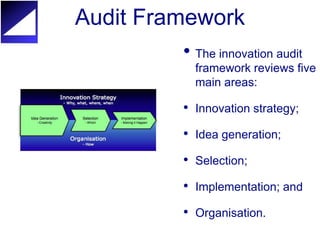
Audit Framework
         • The innovation audit
           framework reviews five
           main areas:

         • Innovation strategy;
         • Idea generation;
         • Selection;
         • Implementation; and
         • Organisation.
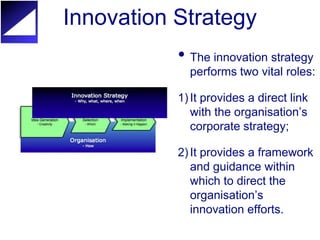
Innovation Strategy
           • The innovation strategy
             performs two vital roles:

           1) It provides a direct link
              with the organisation’s
              corporate strategy;

           2) It provides a framework
              and guidance within
              which to direct the
              organisation’s
              innovation efforts.
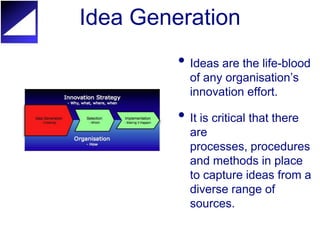
Idea Generation
         • Ideas are the life-blood
           of any organisation’s
           innovation effort.

         • It is critical that there
           are
           processes, procedures
           and methods in place
           to capture ideas from a
           diverse range of
           sources.
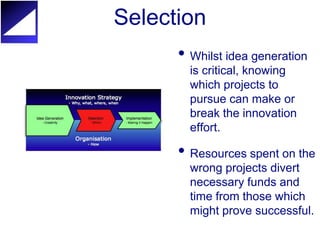
Selection
      • Whilst idea generation
        is critical, knowing
        which projects to
        pursue can make or
        break the innovation
        effort.

      • Resources spent on the
        wrong projects divert
        necessary funds and
        time from those which
        might prove successful.
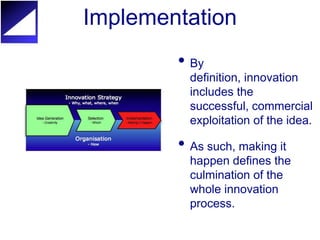
Implementation
        • By
          definition, innovation
          includes the
          successful, commercial
          exploitation of the idea.

        • As such, making it
          happen defines the
          culmination of the
          whole innovation
          process.
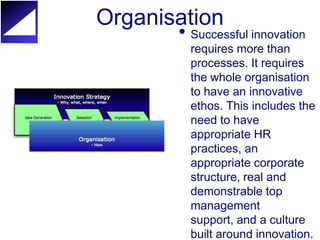
Organisation
       • Successful innovation
         requires more than
         processes. It requires
         the whole organisation
         to have an innovative
         ethos. This includes the
         need to have
         appropriate HR
         practices, an
         appropriate corporate
         structure, real and
         demonstrable top
         management
         support, and a culture
         built around innovation.
Conclusion

•   Innovation audits assist organisations to improve their
    innovation capabilities. Innovation for Growth undertakes
    a desktop audit based on an on-line survey, with a follow
    up report. Alternatively, a more detailed audit can be
    undertaken which uses the on-line survey as the basis for
    a more comprehensive review utilising face-to-face
    interviews.

•   For more information, email Innovation for Growth or see
    our website: www.innovationforgrowth.co.uk
About Innovation for
          Growth
•   Founded in 2010, Innovation for Growth is a business
    consultancy firm that specialises in the provision of advice to
    small and medium sized enterprises. We work with
    companies from all sectors undertaking innovation audits, and
    providing innovation advice so our clients can maximise their
    innovation capabilities and achieve their growth aspirations.

•   We also undertake desktop, business research and
    analysis, enabling our clients to concentrate on running their
    business.

•   For more on our services, please download our Corporate
    Services Document.

•   © 2011 Innovation for Growth

Innovation Audit Slides

  • 1.
    Innovation Audits C W Mobbs April 2011
  • 2.
    What are Innovation Audits? • They are an in-depth analysis of different aspects of an organisation’s current innovation capabilities, procedures and processes, examining key indicators, determining strengths and weaknesses; • The results of the audit will highlight barriers to innovation, as well as identify improvements or new methods to maximise innovation capabilities.
  • 3.
    What are theBenefits of Innovation Audits? (1) • The audit enhances the company’s innovation capability; • It identifies opportunities for increasing innovation; • It clarifies where the organisation needs to focus to maximise innovation success; • It embeds innovation in the company’s processes;
  • 4.
    What are theBenefits of Innovation Audits? (2) • The audit can build on individuals’ creativity to be innovative; • It can identify and control the barriers that stifle creativity and innovation; • It fosters innovation in the organisation’s culture; • It can align the organisation in common purpose and action.
  • 5.
    Audit Framework • The innovation audit framework reviews five main areas: • Innovation strategy; • Idea generation; • Selection; • Implementation; and • Organisation.
  • 6.
    Innovation Strategy • The innovation strategy performs two vital roles: 1) It provides a direct link with the organisation’s corporate strategy; 2) It provides a framework and guidance within which to direct the organisation’s innovation efforts.
  • 7.
    Idea Generation • Ideas are the life-blood of any organisation’s innovation effort. • It is critical that there are processes, procedures and methods in place to capture ideas from a diverse range of sources.
  • 8.
    Selection • Whilst idea generation is critical, knowing which projects to pursue can make or break the innovation effort. • Resources spent on the wrong projects divert necessary funds and time from those which might prove successful.
  • 9.
    Implementation • By definition, innovation includes the successful, commercial exploitation of the idea. • As such, making it happen defines the culmination of the whole innovation process.
  • 10.
    Organisation • Successful innovation requires more than processes. It requires the whole organisation to have an innovative ethos. This includes the need to have appropriate HR practices, an appropriate corporate structure, real and demonstrable top management support, and a culture built around innovation.
  • 11.
    Conclusion • Innovation audits assist organisations to improve their innovation capabilities. Innovation for Growth undertakes a desktop audit based on an on-line survey, with a follow up report. Alternatively, a more detailed audit can be undertaken which uses the on-line survey as the basis for a more comprehensive review utilising face-to-face interviews. • For more information, email Innovation for Growth or see our website: www.innovationforgrowth.co.uk
  • 12.
    About Innovation for Growth • Founded in 2010, Innovation for Growth is a business consultancy firm that specialises in the provision of advice to small and medium sized enterprises. We work with companies from all sectors undertaking innovation audits, and providing innovation advice so our clients can maximise their innovation capabilities and achieve their growth aspirations. • We also undertake desktop, business research and analysis, enabling our clients to concentrate on running their business. • For more on our services, please download our Corporate Services Document. • © 2011 Innovation for Growth