







Techniques for Empathetic
Listening
Rev. David Eisenmenger, MAMFT
Director of Education, Research and Programming
Signature HealthCARE, LLC
Spirituality Pillar
Our Lives are Spent
Communicating
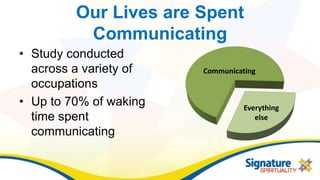
• Study conducted
across a variety of
occupations
• Up to 70% of waking
time spent
communicating
Everything
else
Communicating
How Much Time Do You
Spend?
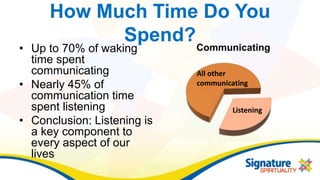
• Up to 70% of waking
time spent
communicating
• Nearly 45% of
communication time
spent listening
• Conclusion: Listening is
a key component to
every aspect of our
lives
Communicating
All other
communicating
Listening
Hearing vs. Listening
Hearing
• A physiological sensory process by which
sensations are received by the ears and
transmitted to the brain
Listening
• A psychological procedure involving interpreting
and understanding the significance of the sensory
process
Listen: An Etymology
Derived from two Old English words:
Hlystan, “hearing”
Hlosnian, “to wait in suspense”
Attending
Attending Behaviors have four
components
• Eye contact
• Body language
• Vocal qualities
• Verbal tracking
Eye Contact
• Get on the same level as the people you are
speaking with
• Give enough eye contact…but not too much
• Most patients:
– Will be comfortable with more eye contact when you’re
talking
– Less eye contact when they’re talking—but this can vary
• Cultures vary greatly in what is considered
appropriate eye contact
Body Language
• Positive body language
• Leaning slightly toward the patient
• Maintaining a relaxed but attentive posture
• Mirroring
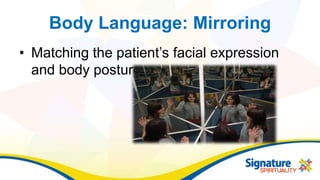
Body Language: Mirroring
• Matching the patient’s facial expression
and body posture
Vocal Qualities
• Refers to the tone and inflections of your
voice
– Not the content of what you say, but how you
say it
• For example: Pacing
– Moving slightly toward matching the patient’s
vocal qualities
• You can also use your vocal qualities to lead
the patient
Verbal Tracking
• Using your words to demonstrate accurate
following
• Includes restating or summarizing
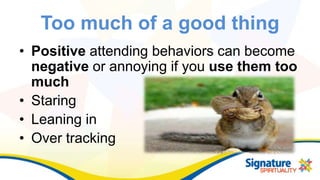
Too much of a good thing
• Positive attending behaviors can become
negative or annoying if you use them too
much
• Staring
• Leaning in
• Over tracking
Negative Attending Behaviors
• Infrequent eye contact
• Turning away from the patient
• Leaning back from the waist up
• Crossing your legs away from the patient
• Folding your arms
Individual and Cultural
Differences
• Every patient is unique
• Listening behaviors to accommodate
individuals
Following
Following Skills
• Door openers
– Open-ended questions
– Going up at the end of your sentence
• Minimal encouragers
• Infrequent questions
• Attentive silence
Door Openers
• Open ended
questions
• “Going up” on the end
of your sentences
Minimal Encourage
• Small words
– Convey that you are listening
– Offers an implied invitation to continue talking
Infrequent questions
• Less is more
Attentive Silence
• Sitting with the patient in the midst of
silence
Reflecting
Paraphrasing
• Summarize, repackage and return what
you hear
• Reflect the content
• Reflect the feelings
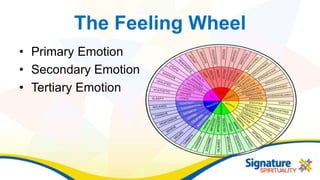
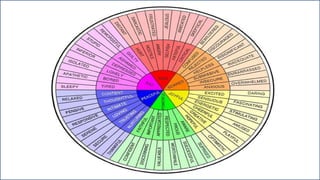
The Feeling Wheel
• Primary Emotion
• Secondary Emotion
• Tertiary Emotion
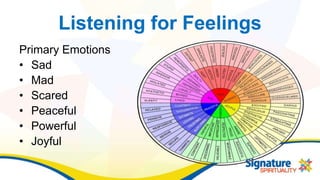
Listening for Feelings
Primary Emotions
• Sad
• Mad
• Scared
• Peaceful
• Powerful
• Joyful
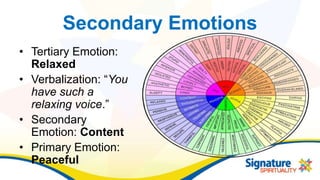
Secondary Emotions
• Tertiary Emotion:
Relaxed
• Verbalization: “You
have such a
relaxing voice.”
• Secondary
Emotion: Content
• Primary Emotion:
Peaceful
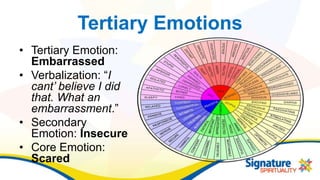
Tertiary Emotions
• Tertiary Emotion:
Embarrassed
• Verbalization: “I
cant’ believe I did
that. What an
embarrassment.”
• Secondary
Emotion: Insecure
• Core Emotion:
Scared
Resources
• Bolton, R. (1979). People skills. New York, NY: Simon
• Ivey, A., et al (1997). Basic attending skills. North Amherst,
MA: Microtraining Associates
• Lanier, S. A. (2000). Foreign to familiar: a guide to
understanding hot- and cold-climate cultures. Hagerstown,
MD: McDougal Pub.
• Lipson, J. G., Minarik, P. A., & Dibble, S. L. (1996). Culture &
nursing care: a pocket guide. San Francisco: UCSF Nursing
Press.
• Wilcox, G. (Array). Feeling Wheel [ PDF ]. Retrieved from
http://med.emory.edu/excel/documents/Feeling Wheel.pdf

Techniques For Empathetic Listening

  • 1.
    Techniques for Empathetic Listening Rev.David Eisenmenger, MAMFT Director of Education, Research and Programming Signature HealthCARE, LLC Spirituality Pillar
  • 2.
    Our Lives areSpent Communicating • Study conducted across a variety of occupations • Up to 70% of waking time spent communicating Everything else Communicating
  • 3.
    How Much TimeDo You Spend? • Up to 70% of waking time spent communicating • Nearly 45% of communication time spent listening • Conclusion: Listening is a key component to every aspect of our lives Communicating All other communicating Listening
  • 4.
    Hearing vs. Listening Hearing •A physiological sensory process by which sensations are received by the ears and transmitted to the brain Listening • A psychological procedure involving interpreting and understanding the significance of the sensory process
  • 5.
    Listen: An Etymology Derivedfrom two Old English words: Hlystan, “hearing” Hlosnian, “to wait in suspense”
  • 6.
  • 7.
    Attending Behaviors havefour components • Eye contact • Body language • Vocal qualities • Verbal tracking
  • 8.
    Eye Contact • Geton the same level as the people you are speaking with • Give enough eye contact…but not too much • Most patients: – Will be comfortable with more eye contact when you’re talking – Less eye contact when they’re talking—but this can vary • Cultures vary greatly in what is considered appropriate eye contact
  • 9.
    Body Language • Positivebody language • Leaning slightly toward the patient • Maintaining a relaxed but attentive posture • Mirroring
  • 10.
    Body Language: Mirroring •Matching the patient’s facial expression and body posture
  • 11.
    Vocal Qualities • Refersto the tone and inflections of your voice – Not the content of what you say, but how you say it • For example: Pacing – Moving slightly toward matching the patient’s vocal qualities • You can also use your vocal qualities to lead the patient
  • 12.
    Verbal Tracking • Usingyour words to demonstrate accurate following • Includes restating or summarizing
  • 13.
    Too much ofa good thing • Positive attending behaviors can become negative or annoying if you use them too much • Staring • Leaning in • Over tracking
  • 14.
    Negative Attending Behaviors •Infrequent eye contact • Turning away from the patient • Leaning back from the waist up • Crossing your legs away from the patient • Folding your arms
  • 15.
    Individual and Cultural Differences •Every patient is unique • Listening behaviors to accommodate individuals
  • 16.
  • 17.
    Following Skills • Dooropeners – Open-ended questions – Going up at the end of your sentence • Minimal encouragers • Infrequent questions • Attentive silence
  • 18.
    Door Openers • Openended questions • “Going up” on the end of your sentences
  • 19.
    Minimal Encourage • Smallwords – Convey that you are listening – Offers an implied invitation to continue talking
  • 20.
  • 21.
    Attentive Silence • Sittingwith the patient in the midst of silence
  • 22.
  • 23.
    Paraphrasing • Summarize, repackageand return what you hear • Reflect the content • Reflect the feelings
  • 24.
    The Feeling Wheel •Primary Emotion • Secondary Emotion • Tertiary Emotion
  • 25.
    Listening for Feelings PrimaryEmotions • Sad • Mad • Scared • Peaceful • Powerful • Joyful
  • 26.
    Secondary Emotions • TertiaryEmotion: Relaxed • Verbalization: “You have such a relaxing voice.” • Secondary Emotion: Content • Primary Emotion: Peaceful
  • 27.
    Tertiary Emotions • TertiaryEmotion: Embarrassed • Verbalization: “I cant’ believe I did that. What an embarrassment.” • Secondary Emotion: Insecure • Core Emotion: Scared
  • 29.
    Resources • Bolton, R.(1979). People skills. New York, NY: Simon • Ivey, A., et al (1997). Basic attending skills. North Amherst, MA: Microtraining Associates • Lanier, S. A. (2000). Foreign to familiar: a guide to understanding hot- and cold-climate cultures. Hagerstown, MD: McDougal Pub. • Lipson, J. G., Minarik, P. A., & Dibble, S. L. (1996). Culture & nursing care: a pocket guide. San Francisco: UCSF Nursing Press. • Wilcox, G. (Array). Feeling Wheel [ PDF ]. Retrieved from http://med.emory.edu/excel/documents/Feeling Wheel.pdf