Techniques for Cloning
Plants
Asexual Reproduction and
Transgenic Plant Culture
Finding the right genes
• Just like for animals and humans,
once we find an individual plant
with a desired trait, we can try to
find the gene for that trait using
gel electrophoresis and PCR.
• Examples of naturally occurring
traits scientists might like to use
include: genes for disease
resistance and drought
resistance.
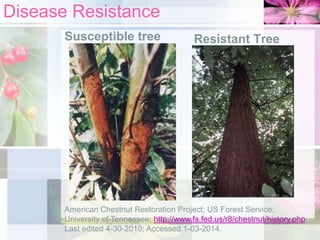
Disease Resistance
Susceptible tree

Resistant Tree

American Chestnut Restoration Project; US Forest Service;
University of Tennessee; http://www.fs.fed.us/r8/chestnut/history.php;
Last edited 4-30-2010; Accessed 1-03-2014.
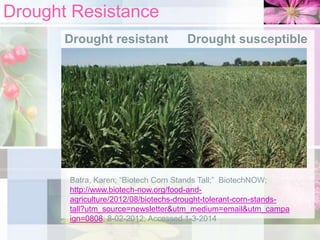
Drought Resistance
Drought resistant

Drought susceptible

Batra, Karen; “Biotech Corn Stands Tall;” BiotechNOW;
http://www.biotech-now.org/food-andagriculture/2012/08/biotechs-drought-tolerant-corn-standstall?utm_source=newsletter&utm_medium=email&utm_campa
ign=0808; 8-02-2012; Accessed 1-3-2014
Traits
• Once the traits have been isolated, scientists
want to grow plants that have both the
desired trait and all of the other good traits
their strain has. For example – you wouldn’t
want resistant corn or chestnuts that tasted
bad.
• Traditional breeding, where each offspring
has a mother and father, can bring in bad
traits with the good ones.
• However, we can use biotech tools to see
which organisms have the genes and which
do not – we don’t have to wait for them to
grow up.
Genetic engineering
• As with animals, we can use
vectors to put the desired
gene, with a marker, into plant
cells.
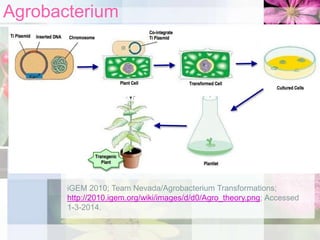
• A vector that is often used by
genetic engineers working with
plants is a bacterium called
agrobacterium.
• Natural agrobacterium already
would work by injecting DNA into
plant cells.
Cloning
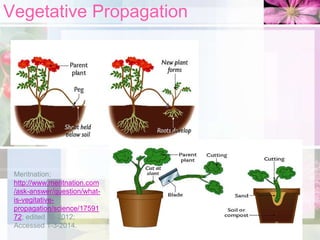
• Unlike with animals, plants respond very
naturally to being cloned. Plant clones occur
in nature when a stem or leaf are buried in
soil, they can develop roots from the stem of
leaf and grow a new plant. Almost all plant
cells can act as stem cells and produce other
plant tissues.
• This is called vegetative propagation and has
been used by farmers and gardeners for
centuries.
• The new plant is genetically identical to the
parent plant.
Vegetative Propagation

Meritnation;
http://www.meritnation.com
/ask-answer/question/whatis-vegitativepropagation/science/17591
72; edited 10-2012;
Accessed 1-3-2014.
In the lab:
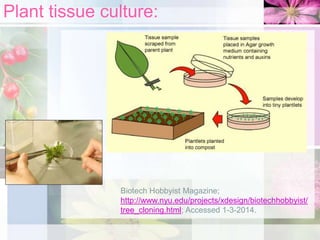
• Samples are often grown on a nutrient
medium, similar to the agar used to
grow bacteria.
• The nutrient is different that bacterial
media – it provides the plant
minerals, nutrients and hormones that
will help young plant clones grow.
• Hormones like auxins and cytokinins
help the plant cells grow into young
“plantlets” or baby plants.
Agrobacterium

iGEM 2010; Team Nevada/Agrobacterium Transformations;
http://2010.igem.org/wiki/images/d/d0/Agro_theory.png; Accessed
1-3-2014.
In the lab:
• Like when bacterial cultures were
grown – it is important to use sterile
technique to prevent unwanted
funguses or other cells from growing.
• Use sterilized tools, surfaces, media
and clean plant samples.
• As with bacteria, you can use flame or
steam sterilization for tools and use
70% alcohol or 10% bleach for
surfaces.
• Avoid touching any samples or tools to
anything that is not sterile – this
includes you.
Plant tissue culture:

Biotech Hobbyist Magazine;
http://www.nyu.edu/projects/xdesign/biotechhobbyist/
tree_cloning.html; Accessed 1-3-2014.

Techniques for cloning plants

  • 1.
    Techniques for Cloning Plants AsexualReproduction and Transgenic Plant Culture
  • 2.
    Finding the rightgenes • Just like for animals and humans, once we find an individual plant with a desired trait, we can try to find the gene for that trait using gel electrophoresis and PCR. • Examples of naturally occurring traits scientists might like to use include: genes for disease resistance and drought resistance.
  • 3.
    Disease Resistance Susceptible tree ResistantTree American Chestnut Restoration Project; US Forest Service; University of Tennessee; http://www.fs.fed.us/r8/chestnut/history.php; Last edited 4-30-2010; Accessed 1-03-2014.
  • 4.
    Drought Resistance Drought resistant Droughtsusceptible Batra, Karen; “Biotech Corn Stands Tall;” BiotechNOW; http://www.biotech-now.org/food-andagriculture/2012/08/biotechs-drought-tolerant-corn-standstall?utm_source=newsletter&utm_medium=email&utm_campa ign=0808; 8-02-2012; Accessed 1-3-2014
  • 5.
    Traits • Once thetraits have been isolated, scientists want to grow plants that have both the desired trait and all of the other good traits their strain has. For example – you wouldn’t want resistant corn or chestnuts that tasted bad. • Traditional breeding, where each offspring has a mother and father, can bring in bad traits with the good ones. • However, we can use biotech tools to see which organisms have the genes and which do not – we don’t have to wait for them to grow up.
  • 6.
    Genetic engineering • Aswith animals, we can use vectors to put the desired gene, with a marker, into plant cells. • A vector that is often used by genetic engineers working with plants is a bacterium called agrobacterium. • Natural agrobacterium already would work by injecting DNA into plant cells.
  • 7.
    Cloning • Unlike withanimals, plants respond very naturally to being cloned. Plant clones occur in nature when a stem or leaf are buried in soil, they can develop roots from the stem of leaf and grow a new plant. Almost all plant cells can act as stem cells and produce other plant tissues. • This is called vegetative propagation and has been used by farmers and gardeners for centuries. • The new plant is genetically identical to the parent plant.
  • 8.
  • 9.
    In the lab: •Samples are often grown on a nutrient medium, similar to the agar used to grow bacteria. • The nutrient is different that bacterial media – it provides the plant minerals, nutrients and hormones that will help young plant clones grow. • Hormones like auxins and cytokinins help the plant cells grow into young “plantlets” or baby plants.
  • 10.
    Agrobacterium iGEM 2010; TeamNevada/Agrobacterium Transformations; http://2010.igem.org/wiki/images/d/d0/Agro_theory.png; Accessed 1-3-2014.
  • 11.
    In the lab: •Like when bacterial cultures were grown – it is important to use sterile technique to prevent unwanted funguses or other cells from growing. • Use sterilized tools, surfaces, media and clean plant samples. • As with bacteria, you can use flame or steam sterilization for tools and use 70% alcohol or 10% bleach for surfaces. • Avoid touching any samples or tools to anything that is not sterile – this includes you.
  • 12.
    Plant tissue culture: BiotechHobbyist Magazine; http://www.nyu.edu/projects/xdesign/biotechhobbyist/ tree_cloning.html; Accessed 1-3-2014.