Teamdynamics revisited
BeyondTuckman	

!
presented atTools 4 AgileTeams,Wiesbaden 2015-09-18
Who am I
• Michael Mahlberg, CEO “The Consulting Guild”, Germany	

• Working as a consultant for more than 25Years	

• Can’t get to sleep well until I know why things have happened
and how I can work with this knowledge in a comparable
situation in the future.
Everything is optional
Who are you?
• Show of hand:	

• Do you know aboutTuckman?	

• Are you a coach or trainer?	

• Do you work in a team?	

• Does a team work for you?
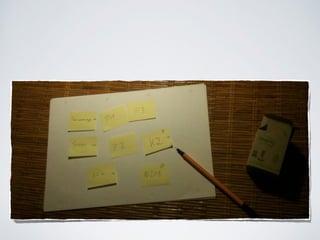
Timelines
• Material	

• Paper (supplied)	

• Post-its (supplied)	

• Pen
Build the environment
• Tables?	

• Paper?
Collect teams from your past
3 Minutes
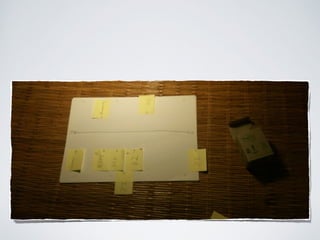
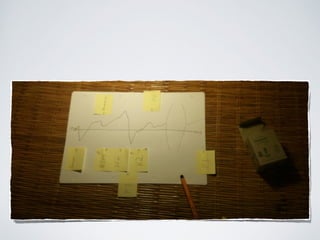
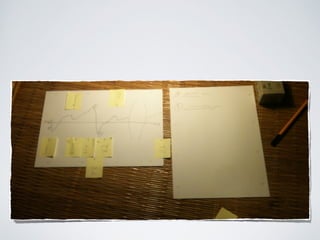
The timeline
• Place theTeams from left to right	

• Leave space for drawing
Mood - line
• How was your overall personal feeling during that time	

• Only the feelings related to teams of course	

• The average of all the team-related feelings at that point in
time
Synchronize
• Do we all have a timeline?
Why was it the way it was?
• What happened at “interesting” points of the timeline?
Tuckman
Forming – Storming – Norming – Performing
Tuckman
Forming	

!
Storming	

Norming	

Performing	

!
Adjourning?
Forming
Storming
Norming
Performing
Adjourning?
Work in groups
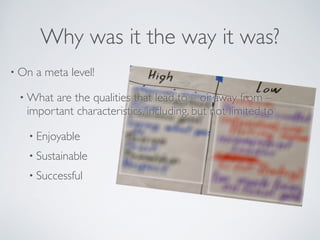
Why was it the way it was?
• On a meta level!	

• What are the qualities that lead to – or away from –
important characteristics, including, but not limited to	

• Enjoyable	

• Sustainable	

• Successful
What is a team anyway?
• According to R. KEVIN GRIGSBY, DSW
• Defined in 2008 	

• Originally aimed at staff in medical organizations
What is a team anyway?
• Committee 	

• Task Force	

• Team
Groups of People
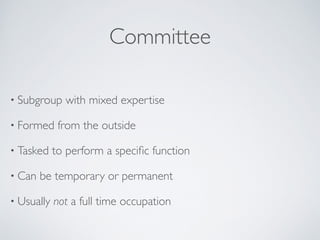
Committee
• Subgroup with mixed expertise	

• Formed from the outside	

• Tasked to perform a specific function	

• Can be temporary or permanent	

• Usually not a full time occupation
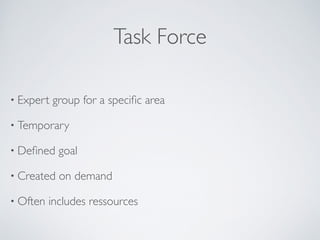
Task Force
• Expert group for a specific area	

• Temporary	

• Defined goal	

• Created on demand	

• Often includes ressources
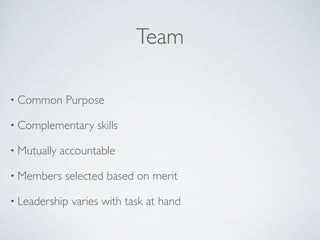
Team
• Common Purpose	

• Complementary skills	

• Mutually accountable 	

• Members selected based on merit	

• Leadership varies with task at hand
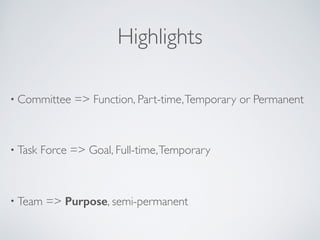
Highlights
• Committee => Function, Part-time,Temporary or Permanent	

!
• Task Force => Goal, Full-time,Temporary	

!
• Team => Purpose, semi-permanent
Audience participation
• Which of the groups you identified earlier where teams, 


 which where committees and 


 which where task forces?	

• Do you work in a team?	

• Does a team work for you?
Drexler / Sibbet
• Tuckman: 1965	

• Allan Drexler and David Sibbet:1990’s
Phases (Drexler / Sibbet)
• Creating a team	

• Sustaining a team
Just search for Drexler/Sibbet on Google Images
From ‘the internet’
Why
(orientation)
Who (Trust
Building)
What (Goal
clarification)
How
(Commitment)
Who, what, when,
where? (Implementation)
Wow (High
performance)	

Why (Renewal)
Choices
Tasks
Working 	

relationships
Meaning
Layers according 	

to Esther Derby, 	

AYE 2008
• If not resolved	

- Disorientation	

- Uncertainty	

- Fear

• If resolved	

- Purpose	

- Team Identity	

- Membership
Why (Orientation)
• If not resolved	

- Caution	

- Mistrust	

- Facade

• If resolved	

- Mutual regard	

- Honesty	

- Reliability
Who (Trust Building)
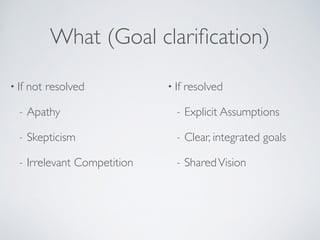
• If not resolved	

- Apathy	

- Skepticism	

- Irrelevant Competition

• If resolved	

- Explicit Assumptions	

- Clear, integrated goals	

- SharedVision
What (Goal clarification)
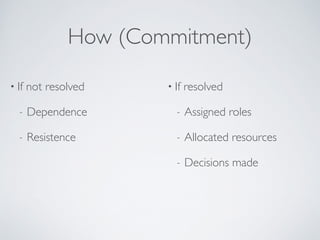
• If not resolved	

- Dependence	

- Resistence

• If resolved	

- Assigned roles	

- Allocated resources	

- Decisions made
How (Commitment)
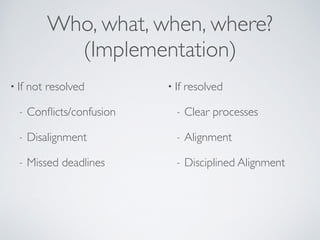
• If not resolved	

- Conflicts/confusion	

- Disalignment	

- Missed deadlines

• If resolved	

- Clear processes	

- Alignment	

- Disciplined Alignment
Who, what, when, where?
(Implementation)
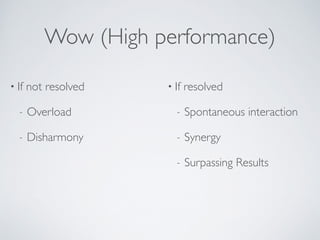
• If not resolved	

- Overload	

- Disharmony

• If resolved	

- Spontaneous interaction	

- Synergy	

- Surpassing Results
Wow (High performance)
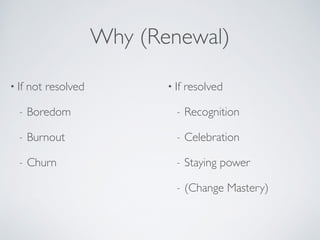
• If not resolved	

- Boredom	

- Burnout	

- Churn

• If resolved	

- Recognition	

- Celebration	

- Staying power	

- (Change Mastery)
Why (Renewal)
• On each wall	

• Map the properties collected earlier to the Drexler/Sibbet
Model	

• Identify indicators for a missing stage and actions to help
with the Step from on stage to the next.
Audience participation
Group Discussion
The other team models
Beyond forming and storming
The other team models
Beyond forming and storming	

!
Facilitated by Michael Mahlberg (google me ;-) )	

Thank You!
Contact Information
• If you have questions, don’t hesitate to contact me via e-mail
at: mm@michaelmahlberg.com	

• You can also find me onTwitter as MMahlberg	

• I sometimes blog on http://agile-aspects.michaelmahlberg.com 	

• My homepage is http://www.michaelmahlberg.com

Team models-t4 at2015

  • 1.
  • 2.
    Who am I •Michael Mahlberg, CEO “The Consulting Guild”, Germany • Working as a consultant for more than 25Years • Can’t get to sleep well until I know why things have happened and how I can work with this knowledge in a comparable situation in the future.
  • 3.
  • 4.
    Who are you? •Show of hand: • Do you know aboutTuckman? • Are you a coach or trainer? • Do you work in a team? • Does a team work for you?
  • 5.
    Timelines • Material • Paper(supplied) • Post-its (supplied) • Pen
  • 6.
    Build the environment •Tables? • Paper?
  • 7.
    Collect teams fromyour past 3 Minutes
  • 9.
    The timeline • PlacetheTeams from left to right • Leave space for drawing
  • 11.
    Mood - line •How was your overall personal feeling during that time • Only the feelings related to teams of course • The average of all the team-related feelings at that point in time
  • 13.
    Synchronize • Do weall have a timeline?
  • 14.
    Why was itthe way it was? • What happened at “interesting” points of the timeline?
  • 16.
    Tuckman Forming – Storming– Norming – Performing
  • 17.
  • 18.
  • 19.
  • 20.
  • 21.
  • 22.
  • 23.
  • 24.
    Why was itthe way it was? • On a meta level! • What are the qualities that lead to – or away from – important characteristics, including, but not limited to • Enjoyable • Sustainable • Successful
  • 25.
    What is ateam anyway? • According to R. KEVIN GRIGSBY, DSW • Defined in 2008 • Originally aimed at staff in medical organizations
  • 26.
    What is ateam anyway? • Committee • Task Force • Team Groups of People
  • 27.
    Committee • Subgroup withmixed expertise • Formed from the outside • Tasked to perform a specific function • Can be temporary or permanent • Usually not a full time occupation
  • 28.
    Task Force • Expertgroup for a specific area • Temporary • Defined goal • Created on demand • Often includes ressources
  • 29.
    Team • Common Purpose •Complementary skills • Mutually accountable • Members selected based on merit • Leadership varies with task at hand
  • 30.
    Highlights • Committee =>Function, Part-time,Temporary or Permanent ! • Task Force => Goal, Full-time,Temporary ! • Team => Purpose, semi-permanent
  • 31.
    Audience participation • Whichof the groups you identified earlier where teams, 
 which where committees and 
 which where task forces? • Do you work in a team? • Does a team work for you?
  • 32.
    Drexler / Sibbet •Tuckman: 1965 • Allan Drexler and David Sibbet:1990’s
  • 33.
    Phases (Drexler /Sibbet) • Creating a team • Sustaining a team
  • 34.
    Just search forDrexler/Sibbet on Google Images From ‘the internet’
  • 35.
    Why (orientation) Who (Trust Building) What (Goal clarification) How (Commitment) Who,what, when, where? (Implementation) Wow (High performance) Why (Renewal) Choices Tasks Working relationships Meaning Layers according to Esther Derby, AYE 2008
  • 36.
    • If notresolved - Disorientation - Uncertainty - Fear
 • If resolved - Purpose - Team Identity - Membership Why (Orientation)
  • 37.
    • If notresolved - Caution - Mistrust - Facade
 • If resolved - Mutual regard - Honesty - Reliability Who (Trust Building)
  • 38.
    • If notresolved - Apathy - Skepticism - Irrelevant Competition
 • If resolved - Explicit Assumptions - Clear, integrated goals - SharedVision What (Goal clarification)
  • 39.
    • If notresolved - Dependence - Resistence
 • If resolved - Assigned roles - Allocated resources - Decisions made How (Commitment)
  • 40.
    • If notresolved - Conflicts/confusion - Disalignment - Missed deadlines
 • If resolved - Clear processes - Alignment - Disciplined Alignment Who, what, when, where? (Implementation)
  • 41.
    • If notresolved - Overload - Disharmony
 • If resolved - Spontaneous interaction - Synergy - Surpassing Results Wow (High performance)
  • 42.
    • If notresolved - Boredom - Burnout - Churn
 • If resolved - Recognition - Celebration - Staying power - (Change Mastery) Why (Renewal)
  • 43.
    • On eachwall • Map the properties collected earlier to the Drexler/Sibbet Model • Identify indicators for a missing stage and actions to help with the Step from on stage to the next. Audience participation
  • 44.
  • 45.
    The other teammodels Beyond forming and storming
  • 46.
    The other teammodels Beyond forming and storming ! Facilitated by Michael Mahlberg (google me ;-) ) Thank You!
  • 47.
    Contact Information • Ifyou have questions, don’t hesitate to contact me via e-mail at: mm@michaelmahlberg.com • You can also find me onTwitter as MMahlberg • I sometimes blog on http://agile-aspects.michaelmahlberg.com • My homepage is http://www.michaelmahlberg.com