
HOW TO
TRANSFORM A
GROUP INTO A
TEAM
“MOVING TOWARDS AN EFFECTIVE TEAM”
Assem Amer
Professional Customer representative
20th November 2016
MSD Sales Office
AGENDA :
• Team Definition.
• Theories that explain how to
transform a group into a team.
• Tuckman’s stages of group
development.
• Team development & growth.
• Do’s & Don’ts
• Team meeting ground rules.
TEAM DEFINITION:
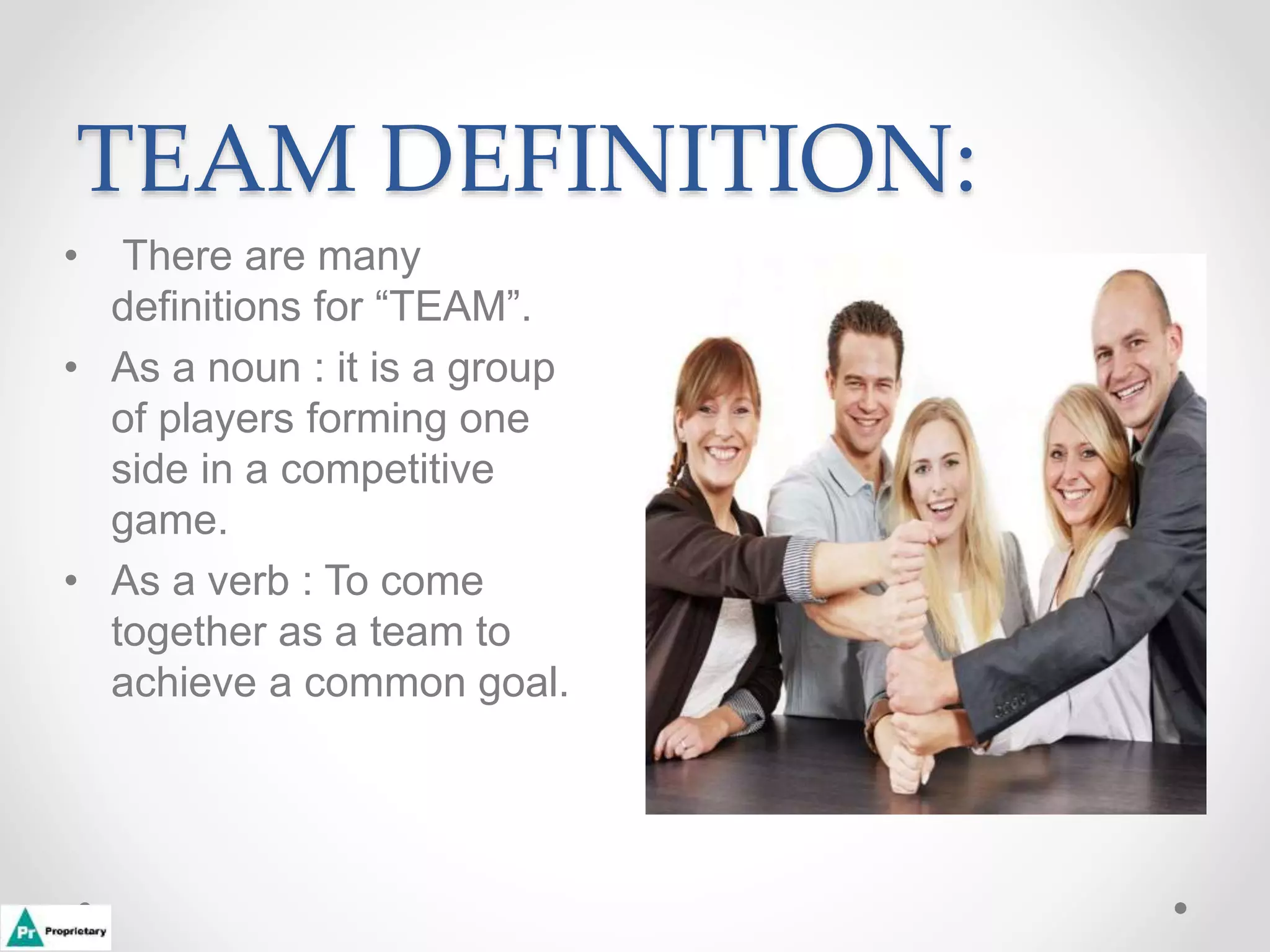
• There are many
definitions for “TEAM”.
• As a noun : it is a group
of players forming one
side in a competitive
game.
• As a verb : To come
together as a team to
achieve a common goal.
TEAM DEFINITION:
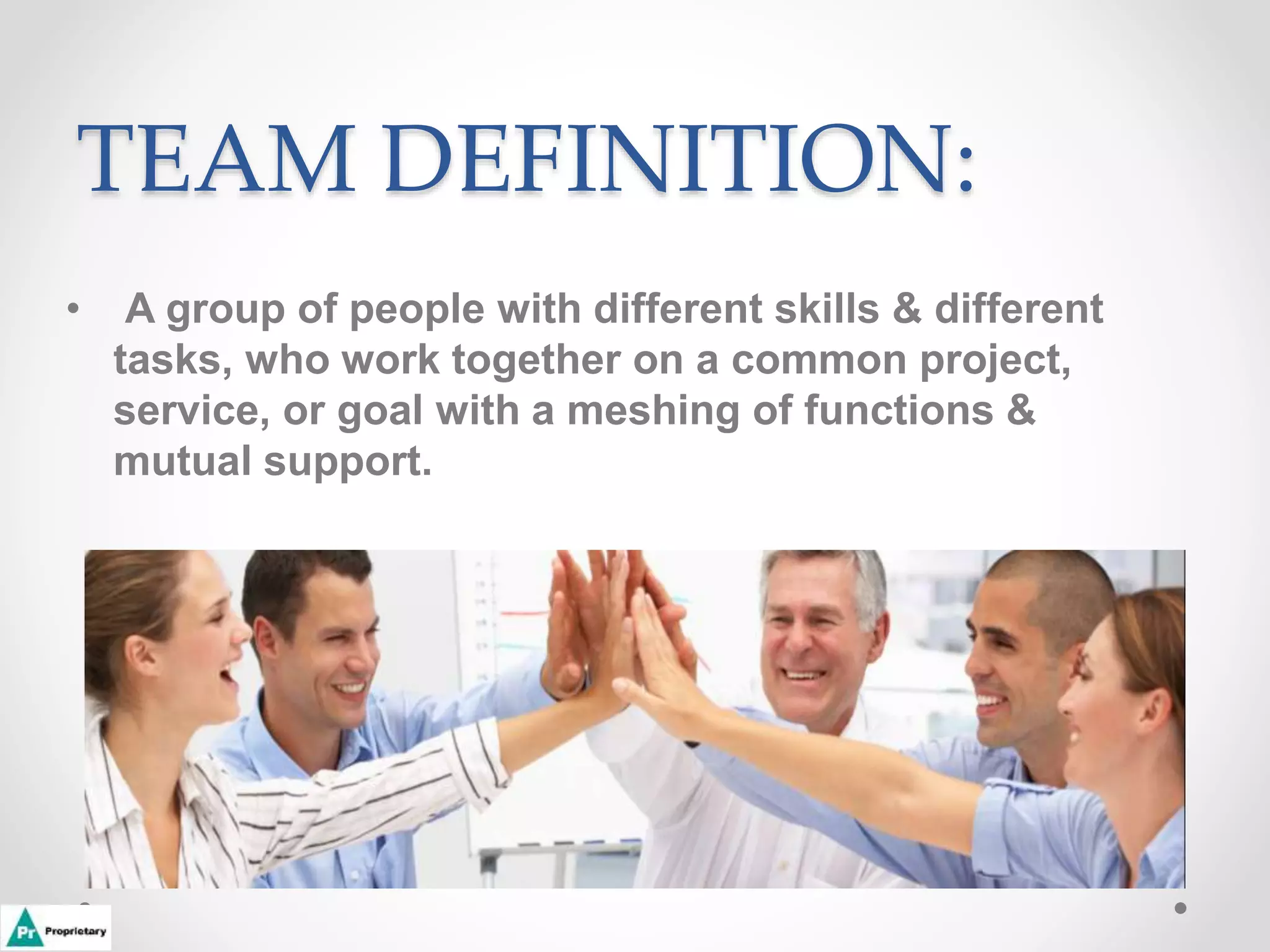
• A group of people with different skills & different
tasks, who work together on a common project,
service, or goal with a meshing of functions &
mutual support.
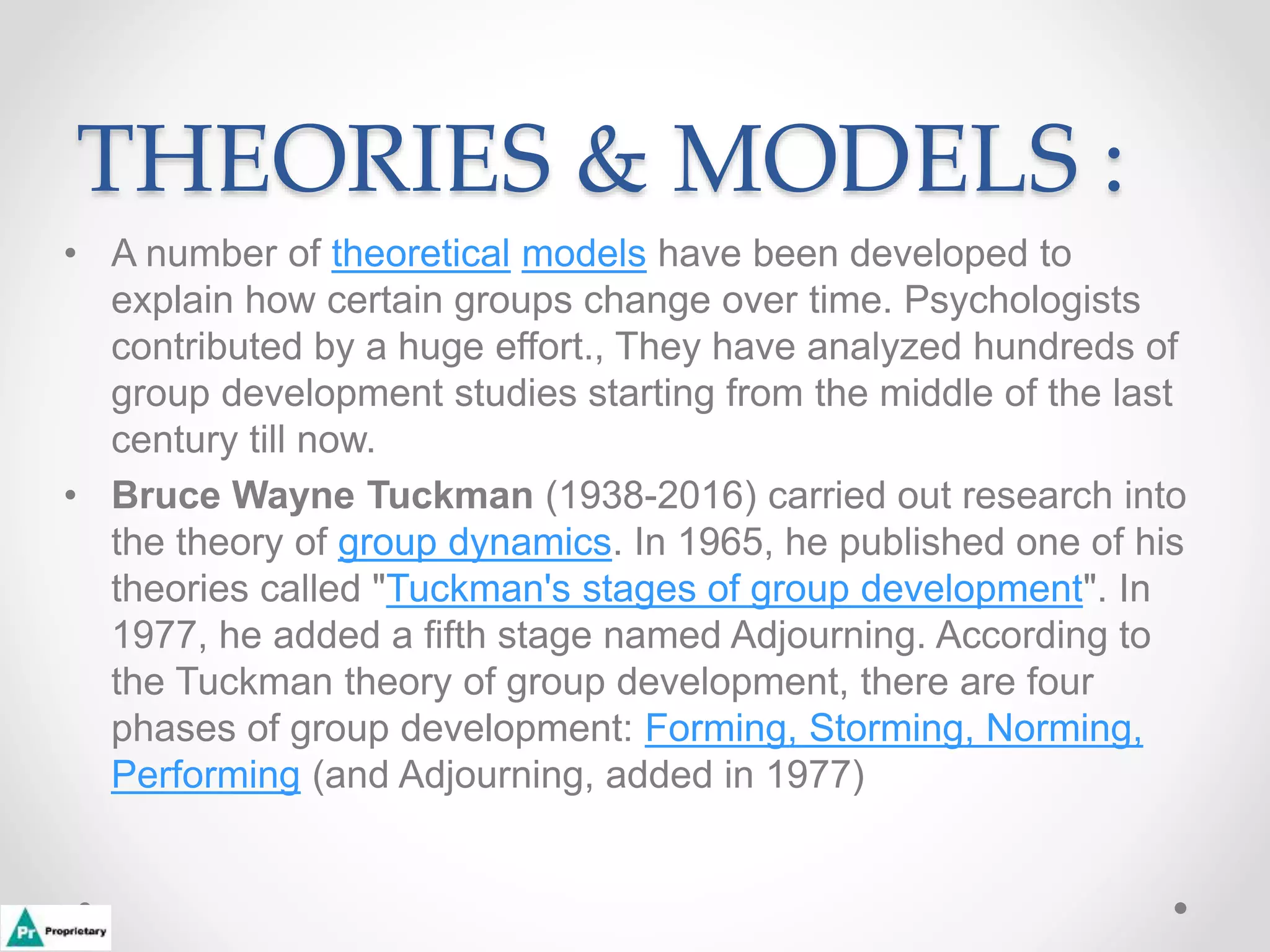
THEORIES & MODELS :
• A number of theoretical models have been developed to
explain how certain groups change over time. Psychologists
contributed by a huge effort., They have analyzed hundreds of
group development studies starting from the middle of the last
century till now.
• Bruce Wayne Tuckman (1938-2016) carried out research into
the theory of group dynamics. In 1965, he published one of his
theories called "Tuckman's stages of group development". In
1977, he added a fifth stage named Adjourning. According to
the Tuckman theory of group development, there are four
phases of group development: Forming, Storming, Norming,
Performing (and Adjourning, added in 1977)
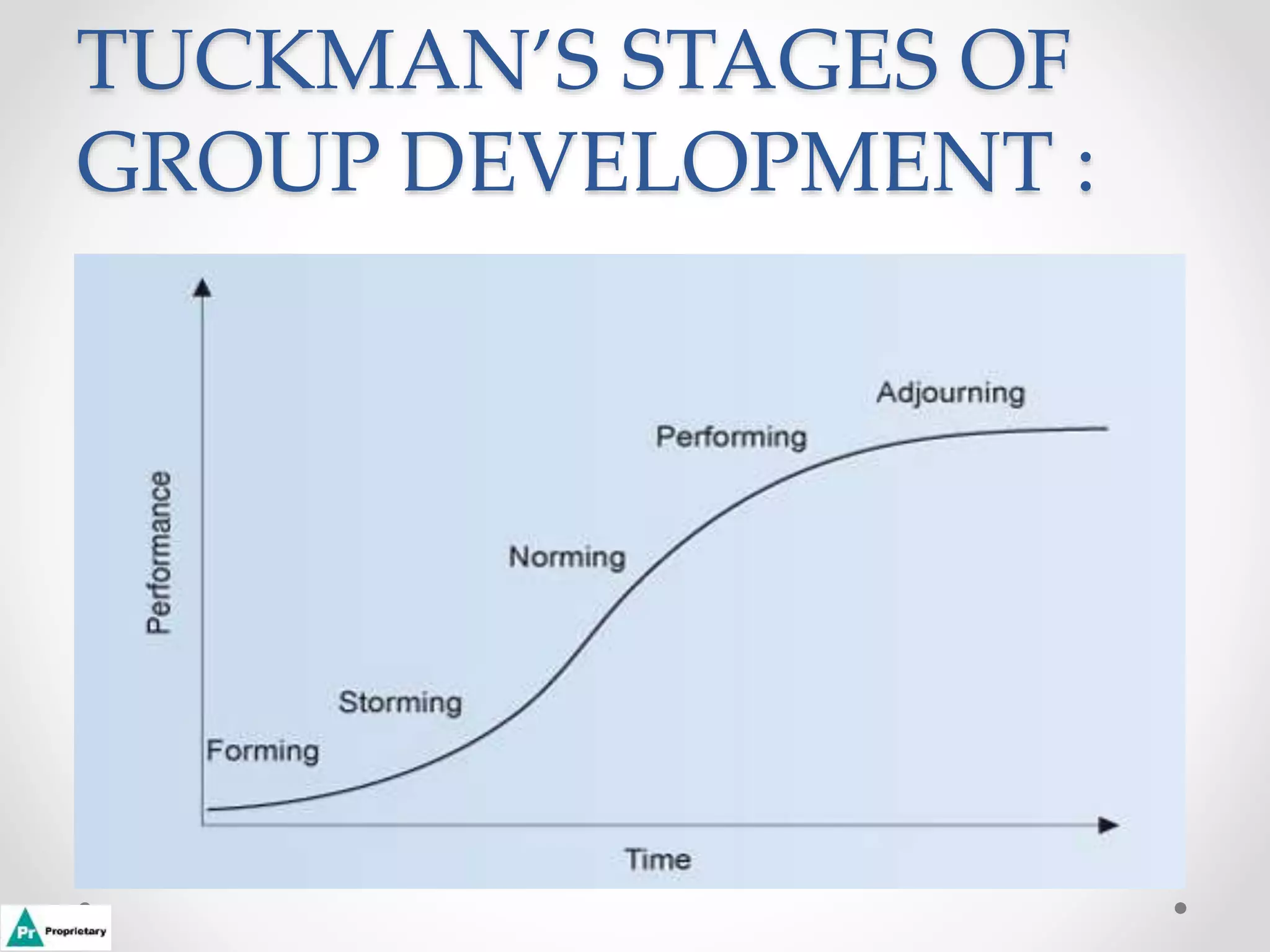
TUCKMAN’S STAGES OF
GROUP DEVELOPMENT :
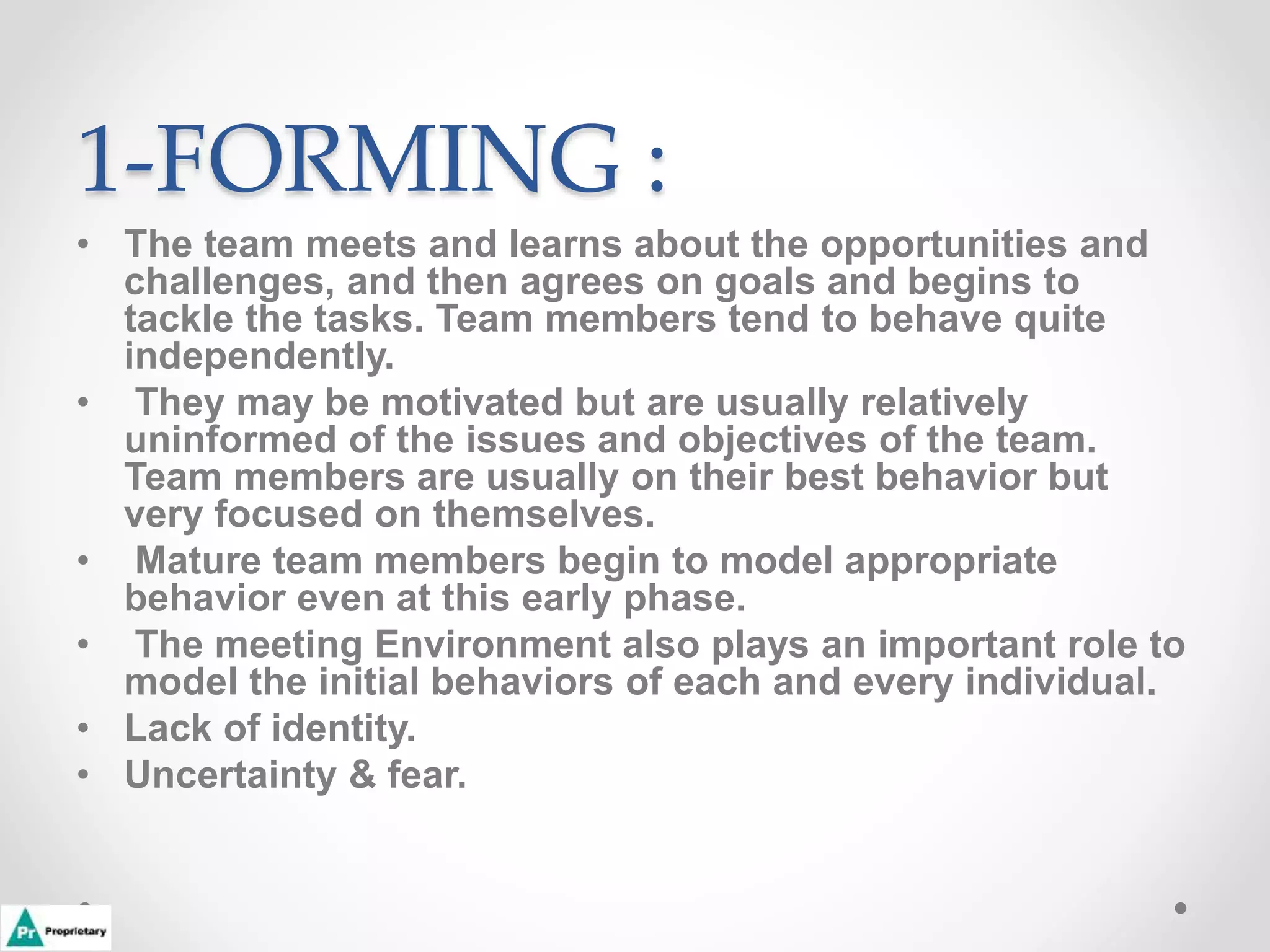
1-FORMING :
• The team meets and learns about the opportunities and
challenges, and then agrees on goals and begins to
tackle the tasks. Team members tend to behave quite
independently.
• They may be motivated but are usually relatively
uninformed of the issues and objectives of the team.
Team members are usually on their best behavior but
very focused on themselves.
• Mature team members begin to model appropriate
behavior even at this early phase.
• The meeting Environment also plays an important role to
model the initial behaviors of each and every individual.
• Lack of identity.
• Uncertainty & fear.
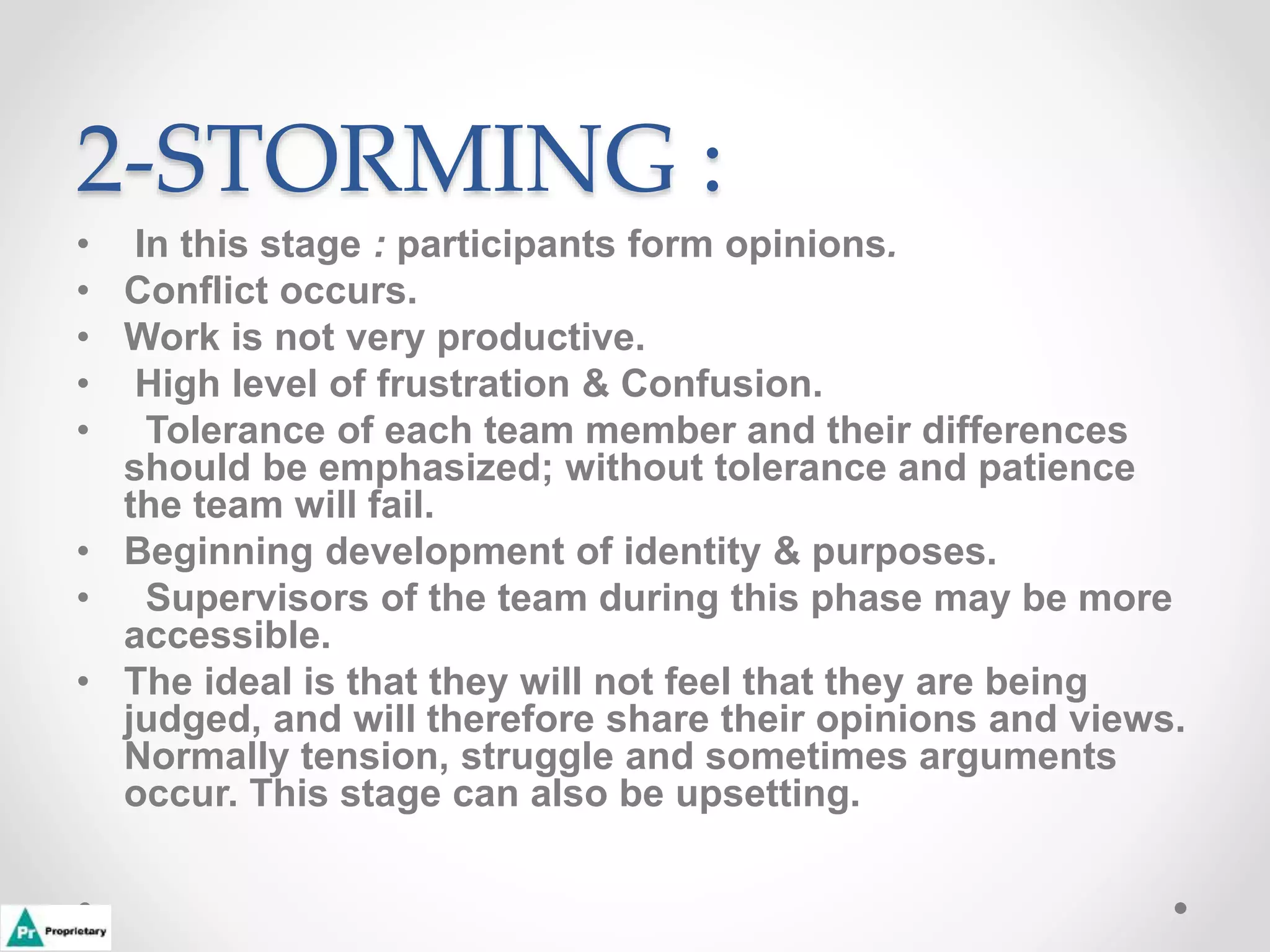
2-STORMING :
• In this stage : participants form opinions.
• Conflict occurs.
• Work is not very productive.
• High level of frustration & Confusion.
• Tolerance of each team member and their differences
should be emphasized; without tolerance and patience
the team will fail.
• Beginning development of identity & purposes.
• Supervisors of the team during this phase may be more
accessible.
• The ideal is that they will not feel that they are being
judged, and will therefore share their opinions and views.
Normally tension, struggle and sometimes arguments
occur. This stage can also be upsetting.
3-NORMING :
• Resolved disagreements and personality clashes
result in greater intimacy, and a spirit of co-operation
emerges.
• Developing goals, roles & relationships.
• All team members take the responsibility and have
the ambition to work for the success of the team.
• They accept others as they are and make an effort
to move on., Conflicts will be about issues not egos
or people.
• Work become enjoyable.
4-PERFORMING :
• Team acts on common goals, with synergy , high
morale & high productivity.
• Easy shifting of roles from one to another.
• Differences are valued.
• Team members look out for one another’s interest.
• Spontaneous & collaborative efforts.
• Sharing of all relevant information.
• Conflict is frequent, but leads to problem solving.
• Supervisors of the team during this phase are almost
always participating. The team will make most of the
necessary decisions.
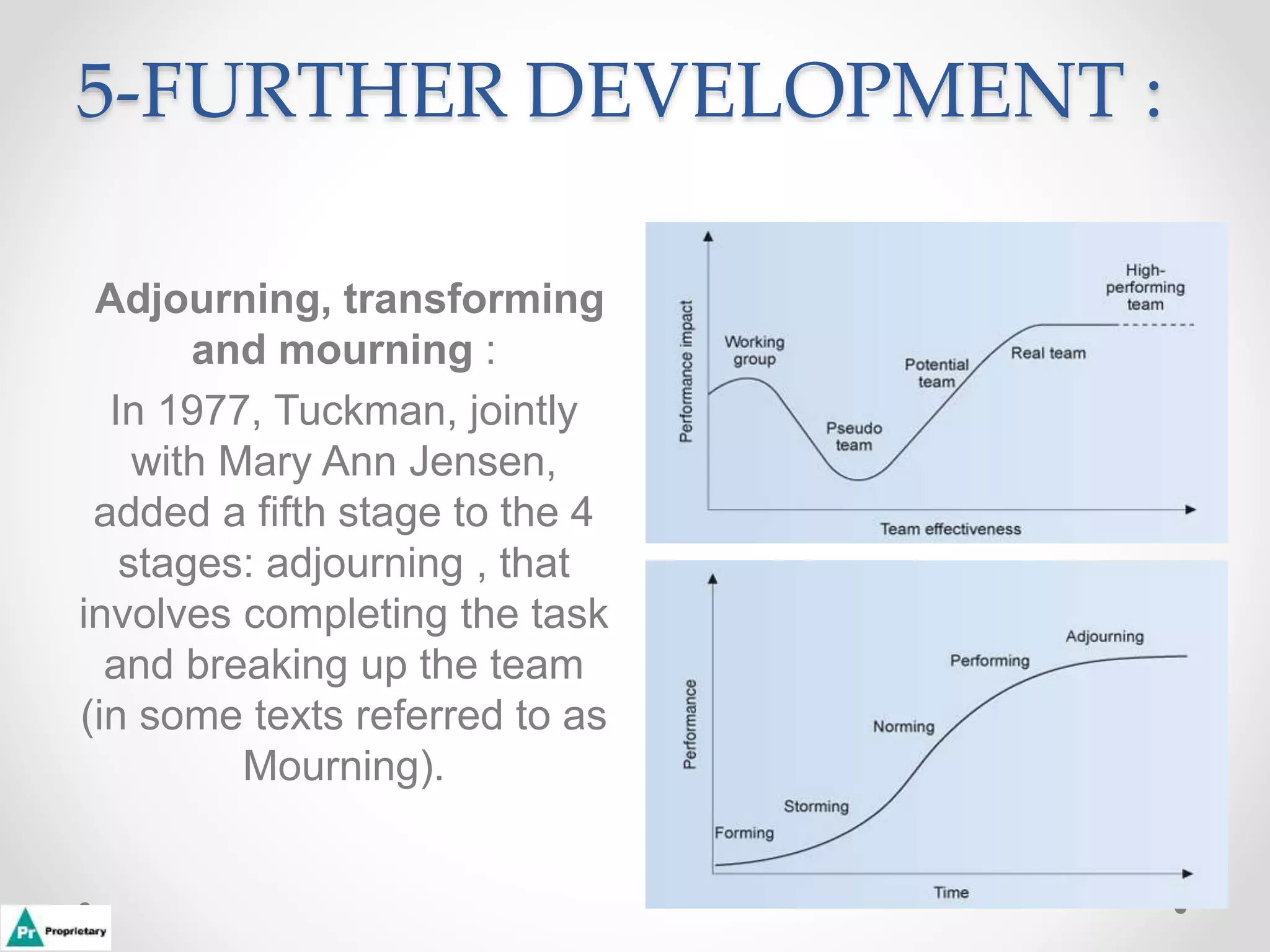
5-FURTHER DEVELOPMENT :
Adjourning, transforming
and mourning :
In 1977, Tuckman, jointly
with Mary Ann Jensen,
added a fifth stage to the 4
stages: adjourning , that
involves completing the task
and breaking up the team
(in some texts referred to as
Mourning).
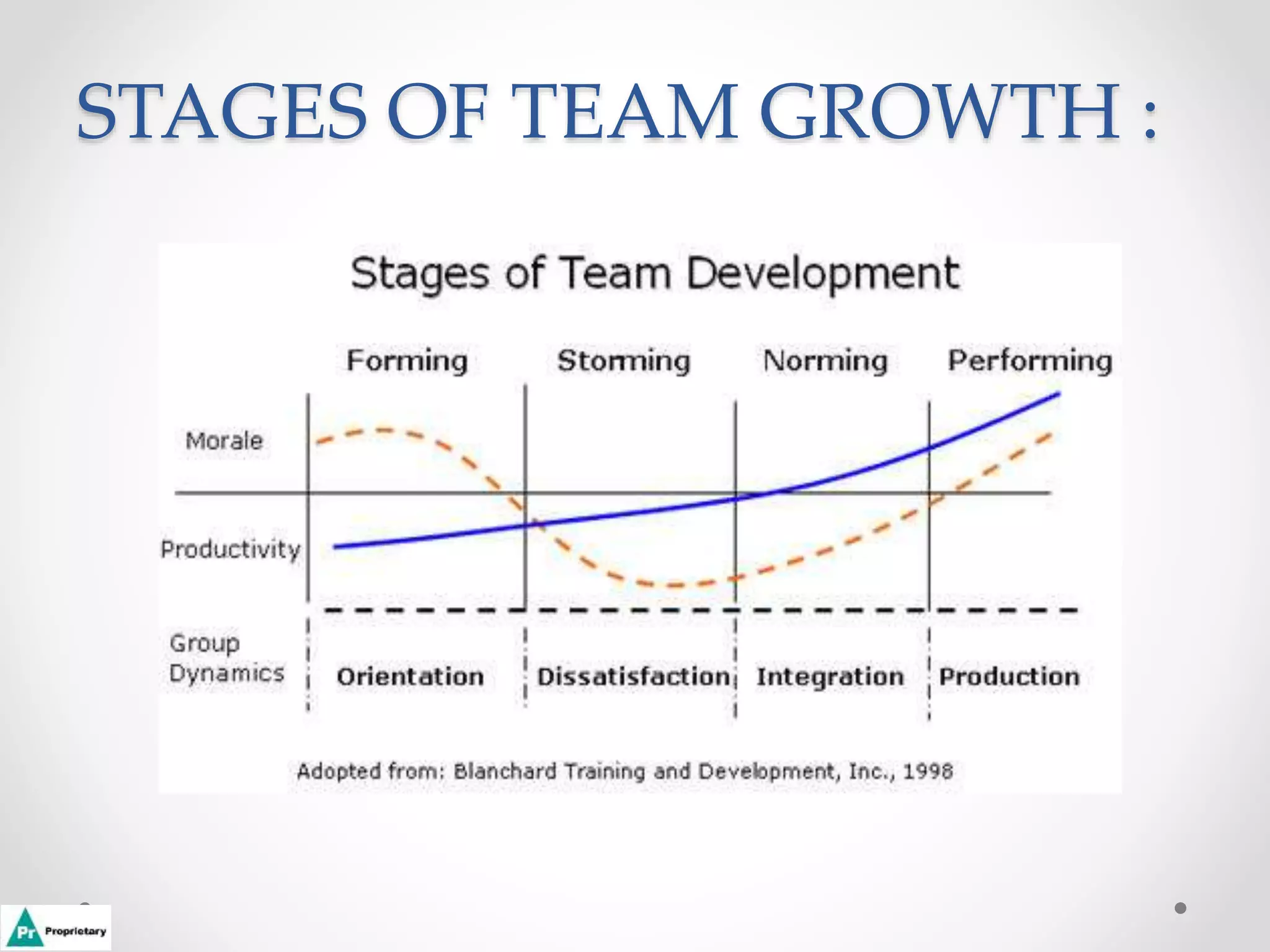
STAGES OF TEAM GROWTH :
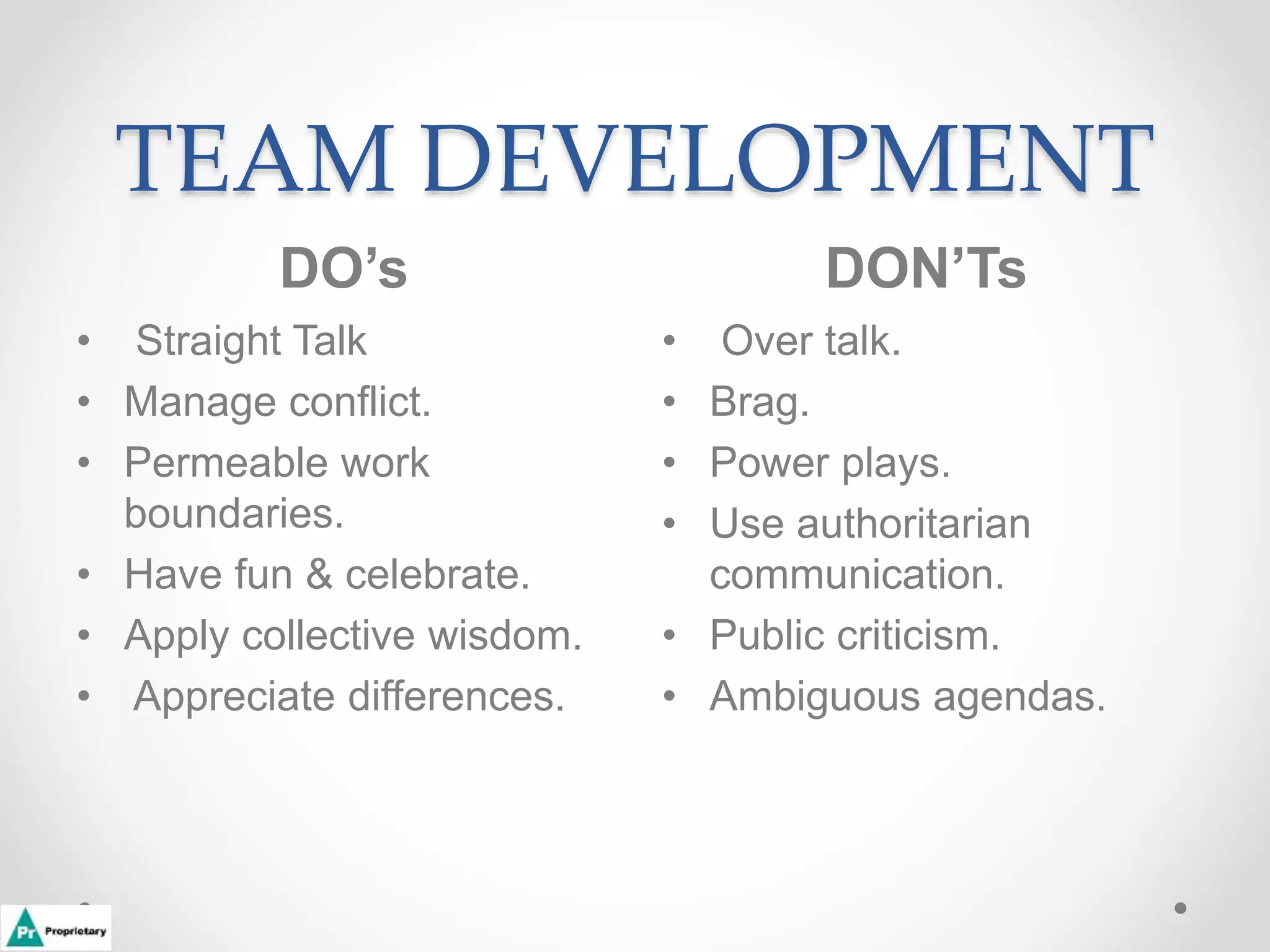
TEAM DEVELOPMENT
DO’s DON’Ts
• Straight Talk
• Manage conflict.
• Permeable work
boundaries.
• Have fun & celebrate.
• Apply collective wisdom.
• Appreciate differences.
• Over talk.
• Brag.
• Power plays.
• Use authoritarian
communication.
• Public criticism.
• Ambiguous agendas.
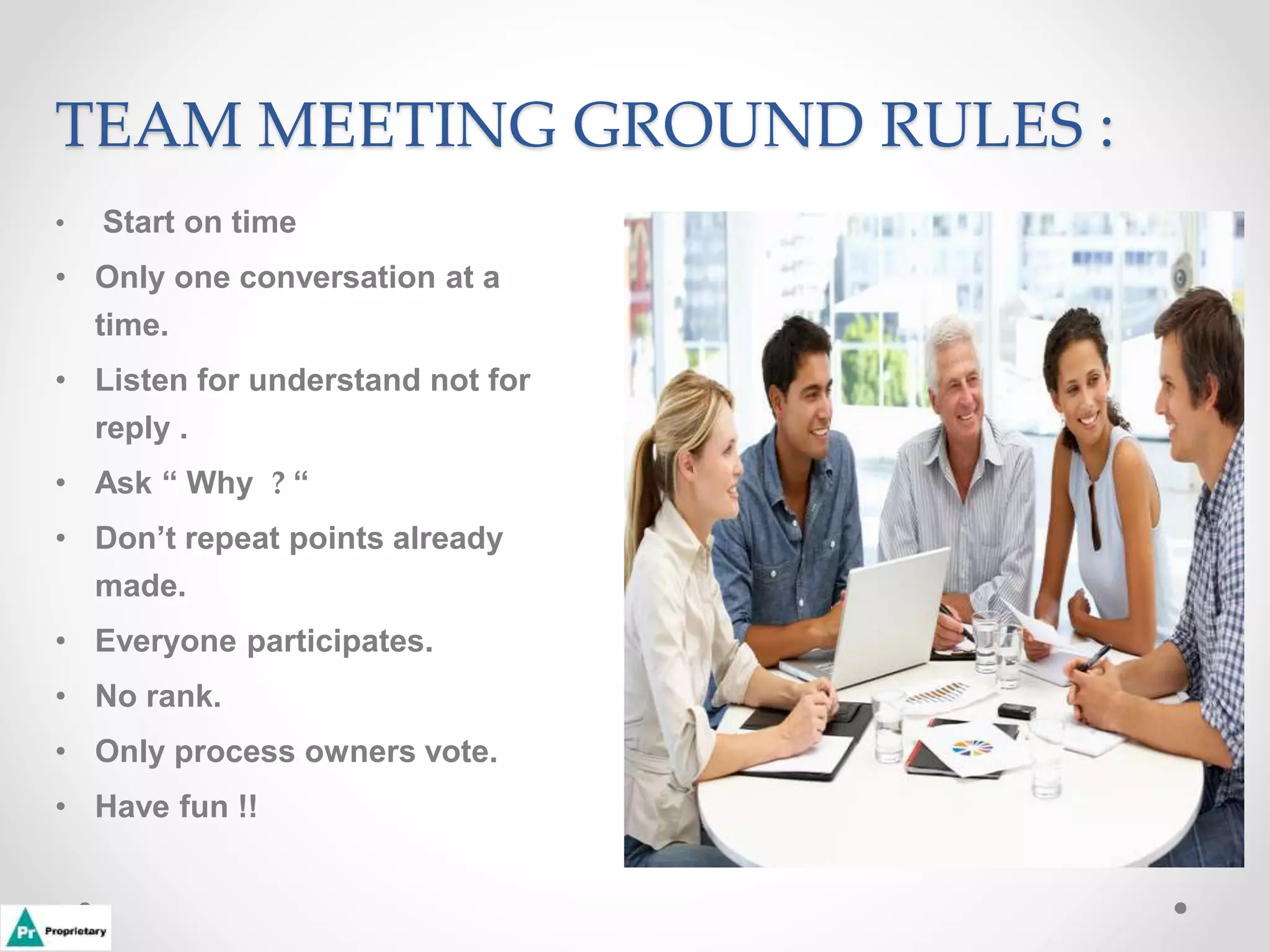
TEAM MEETING GROUND RULES :
• Start on time
• Only one conversation at a
time.
• Listen for understand not for
reply .
• Ask “ Why ? “
• Don’t repeat points already
made.
• Everyone participates.
• No rank.
• Only process owners vote.
• Have fun !!
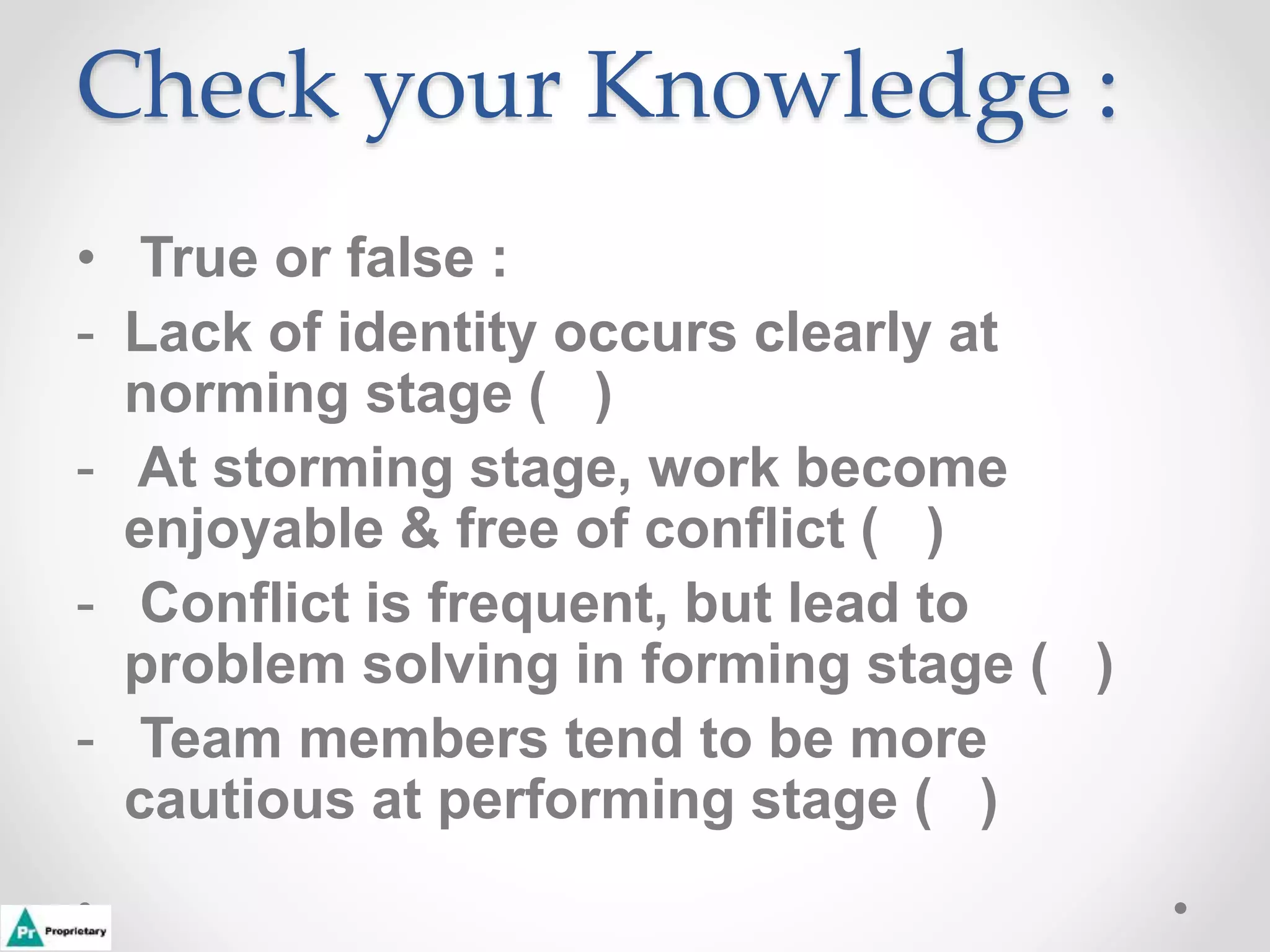
Check your Knowledge :
• True or false :
- Lack of identity occurs clearly at
norming stage ( )
- At storming stage, work become
enjoyable & free of conflict ( )
- Conflict is frequent, but lead to
problem solving in forming stage ( )
- Team members tend to be more
cautious at performing stage ( )
TOGETHER WE CAN
FLY HIGH
Thank you

How to transform a group into a team

  • 1.
    HOW TO TRANSFORM A GROUPINTO A TEAM “MOVING TOWARDS AN EFFECTIVE TEAM” Assem Amer Professional Customer representative 20th November 2016 MSD Sales Office
  • 2.
    AGENDA : • TeamDefinition. • Theories that explain how to transform a group into a team. • Tuckman’s stages of group development. • Team development & growth. • Do’s & Don’ts • Team meeting ground rules.
  • 3.
    TEAM DEFINITION: • Thereare many definitions for “TEAM”. • As a noun : it is a group of players forming one side in a competitive game. • As a verb : To come together as a team to achieve a common goal.
  • 4.
    TEAM DEFINITION: • Agroup of people with different skills & different tasks, who work together on a common project, service, or goal with a meshing of functions & mutual support.
  • 5.
    THEORIES & MODELS: • A number of theoretical models have been developed to explain how certain groups change over time. Psychologists contributed by a huge effort., They have analyzed hundreds of group development studies starting from the middle of the last century till now. • Bruce Wayne Tuckman (1938-2016) carried out research into the theory of group dynamics. In 1965, he published one of his theories called "Tuckman's stages of group development". In 1977, he added a fifth stage named Adjourning. According to the Tuckman theory of group development, there are four phases of group development: Forming, Storming, Norming, Performing (and Adjourning, added in 1977)
  • 6.
  • 7.
    1-FORMING : • Theteam meets and learns about the opportunities and challenges, and then agrees on goals and begins to tackle the tasks. Team members tend to behave quite independently. • They may be motivated but are usually relatively uninformed of the issues and objectives of the team. Team members are usually on their best behavior but very focused on themselves. • Mature team members begin to model appropriate behavior even at this early phase. • The meeting Environment also plays an important role to model the initial behaviors of each and every individual. • Lack of identity. • Uncertainty & fear.
  • 8.
    2-STORMING : • Inthis stage : participants form opinions. • Conflict occurs. • Work is not very productive. • High level of frustration & Confusion. • Tolerance of each team member and their differences should be emphasized; without tolerance and patience the team will fail. • Beginning development of identity & purposes. • Supervisors of the team during this phase may be more accessible. • The ideal is that they will not feel that they are being judged, and will therefore share their opinions and views. Normally tension, struggle and sometimes arguments occur. This stage can also be upsetting.
  • 9.
    3-NORMING : • Resolveddisagreements and personality clashes result in greater intimacy, and a spirit of co-operation emerges. • Developing goals, roles & relationships. • All team members take the responsibility and have the ambition to work for the success of the team. • They accept others as they are and make an effort to move on., Conflicts will be about issues not egos or people. • Work become enjoyable.
  • 10.
    4-PERFORMING : • Teamacts on common goals, with synergy , high morale & high productivity. • Easy shifting of roles from one to another. • Differences are valued. • Team members look out for one another’s interest. • Spontaneous & collaborative efforts. • Sharing of all relevant information. • Conflict is frequent, but leads to problem solving. • Supervisors of the team during this phase are almost always participating. The team will make most of the necessary decisions.
  • 11.
    5-FURTHER DEVELOPMENT : Adjourning,transforming and mourning : In 1977, Tuckman, jointly with Mary Ann Jensen, added a fifth stage to the 4 stages: adjourning , that involves completing the task and breaking up the team (in some texts referred to as Mourning).
  • 12.
  • 13.
    TEAM DEVELOPMENT DO’s DON’Ts •Straight Talk • Manage conflict. • Permeable work boundaries. • Have fun & celebrate. • Apply collective wisdom. • Appreciate differences. • Over talk. • Brag. • Power plays. • Use authoritarian communication. • Public criticism. • Ambiguous agendas.
  • 14.
    TEAM MEETING GROUNDRULES : • Start on time • Only one conversation at a time. • Listen for understand not for reply . • Ask “ Why ? “ • Don’t repeat points already made. • Everyone participates. • No rank. • Only process owners vote. • Have fun !!
  • 15.
    Check your Knowledge: • True or false : - Lack of identity occurs clearly at norming stage ( ) - At storming stage, work become enjoyable & free of conflict ( ) - Conflict is frequent, but lead to problem solving in forming stage ( ) - Team members tend to be more cautious at performing stage ( )
  • 16.
    TOGETHER WE CAN FLYHIGH Thank you