Downloaded 96 times


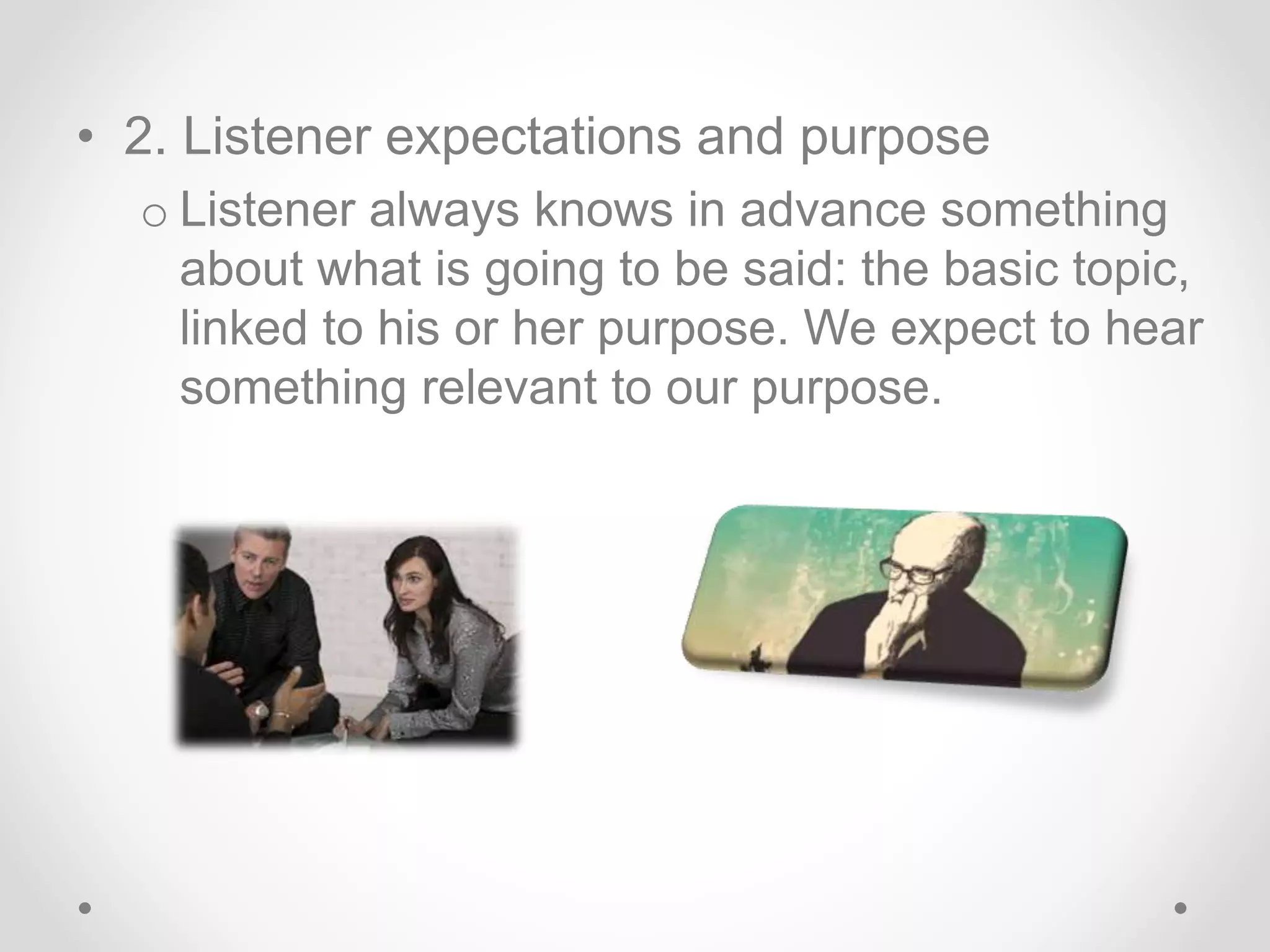
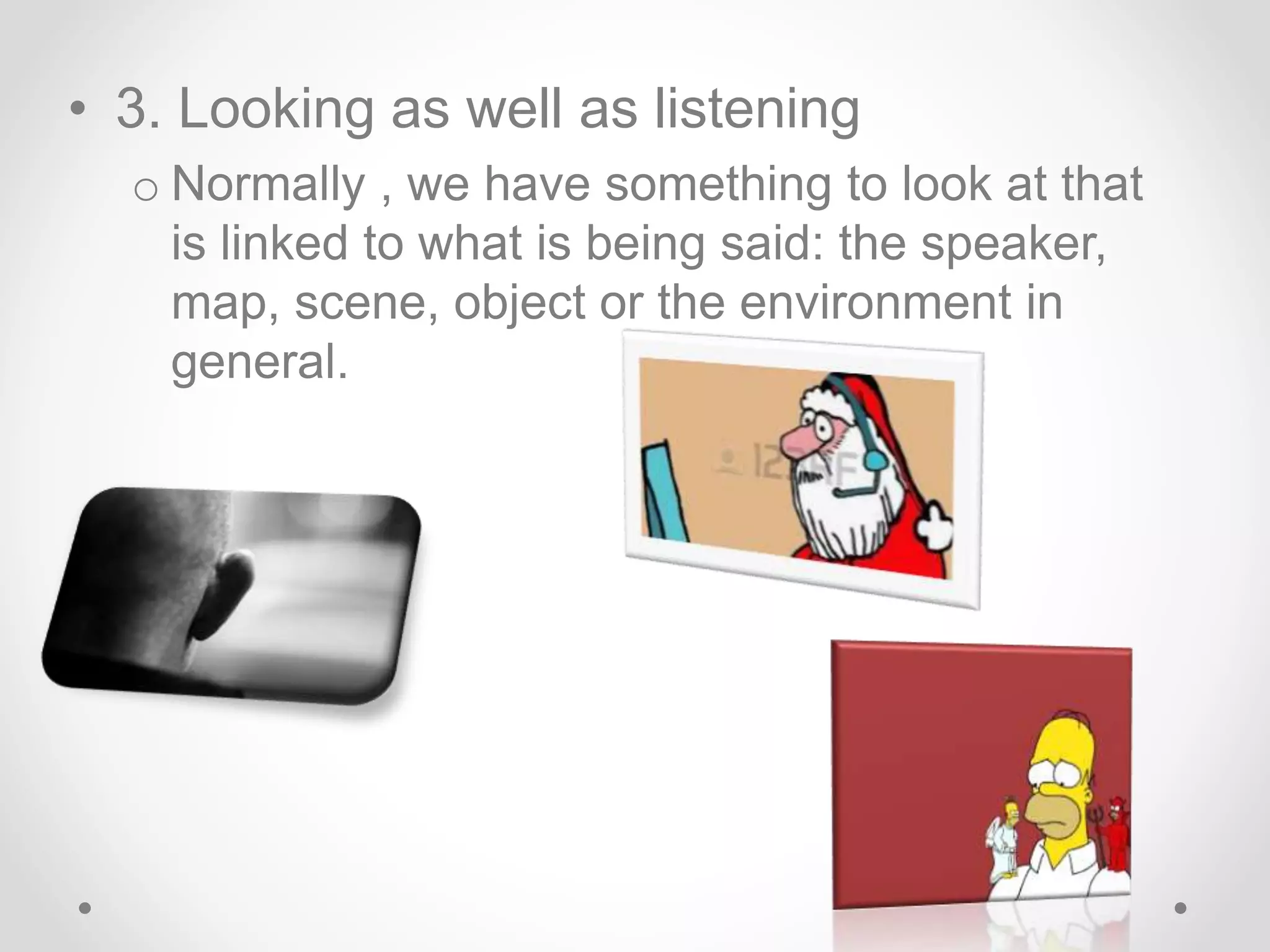


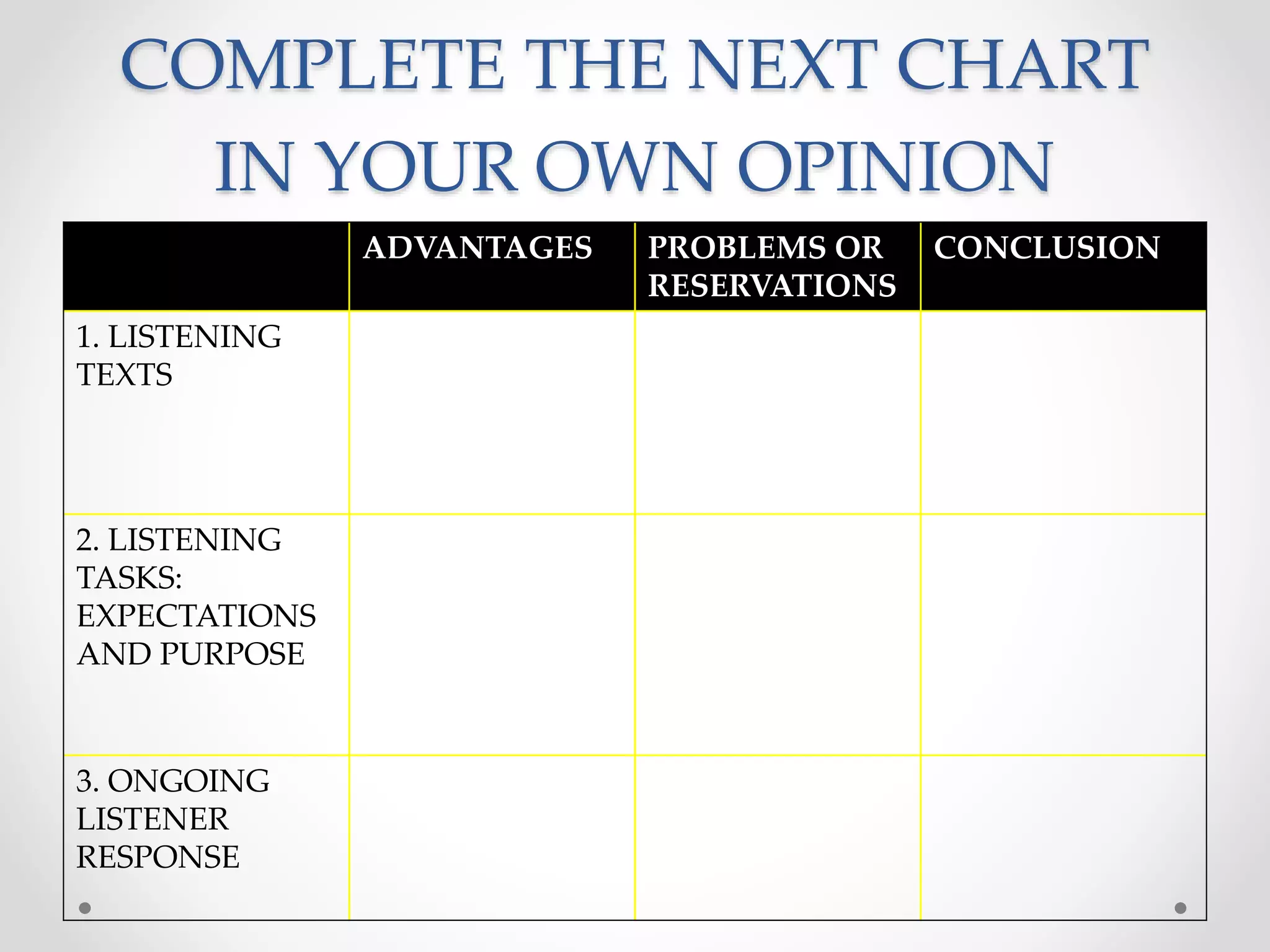

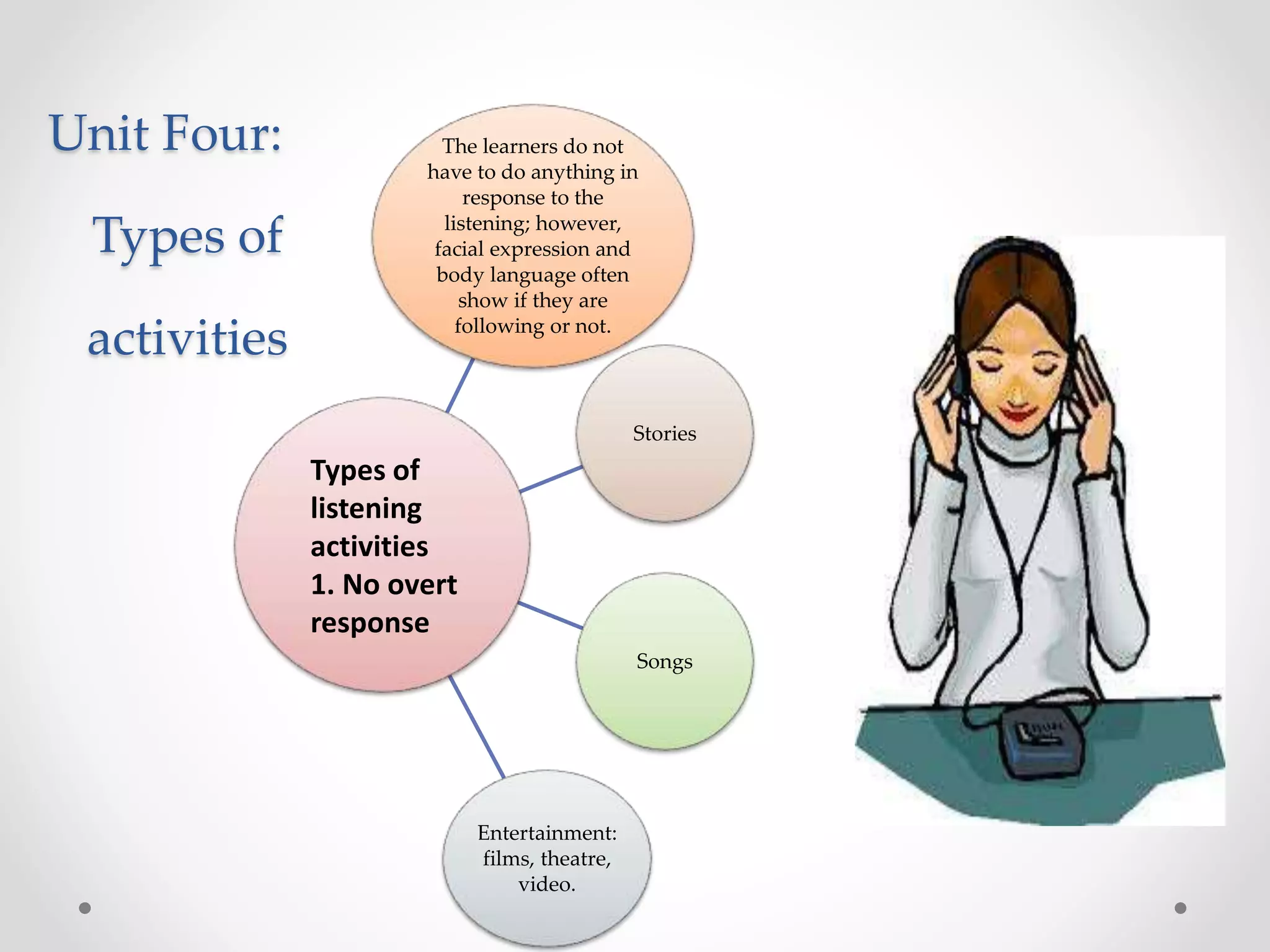


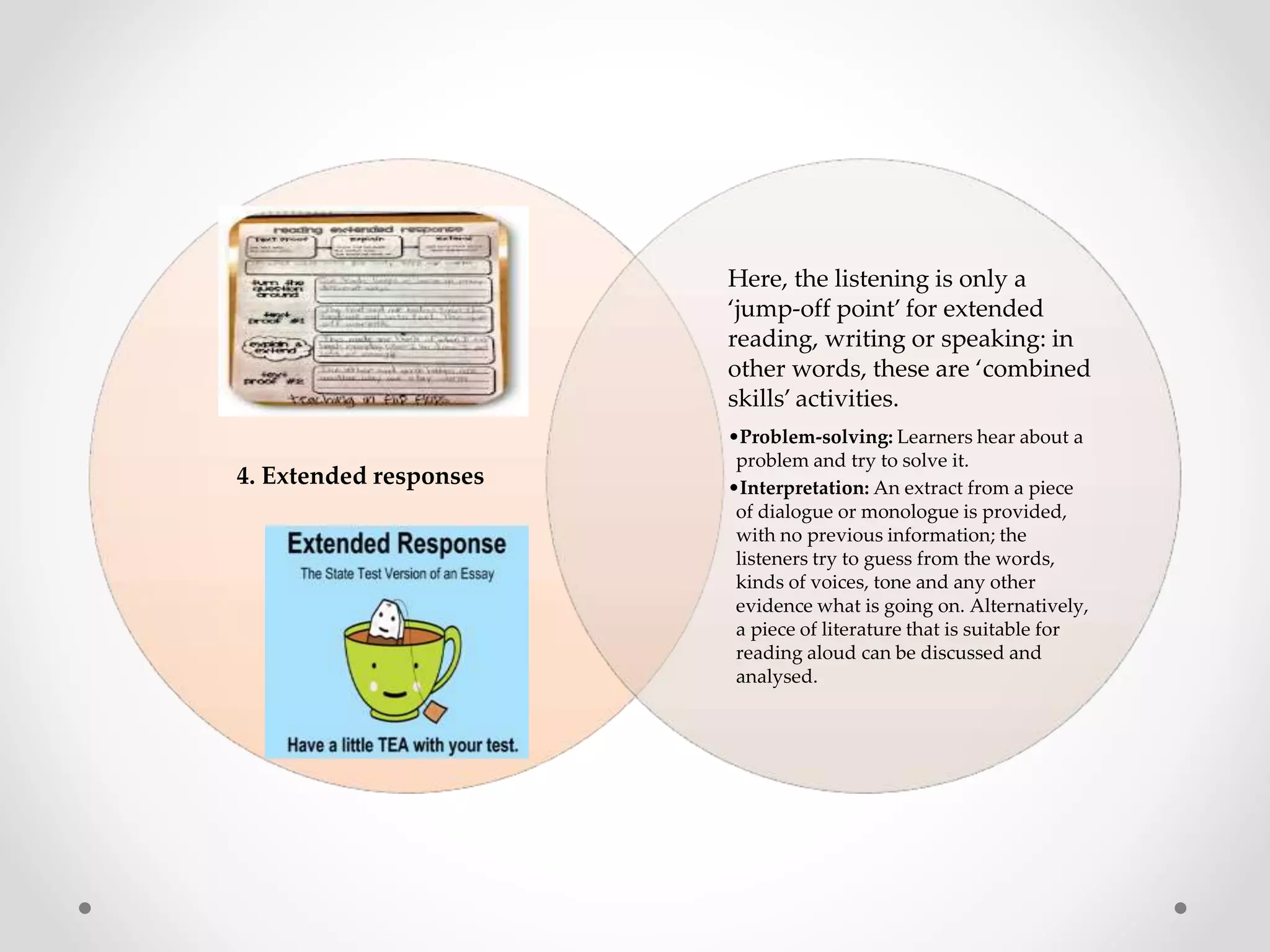
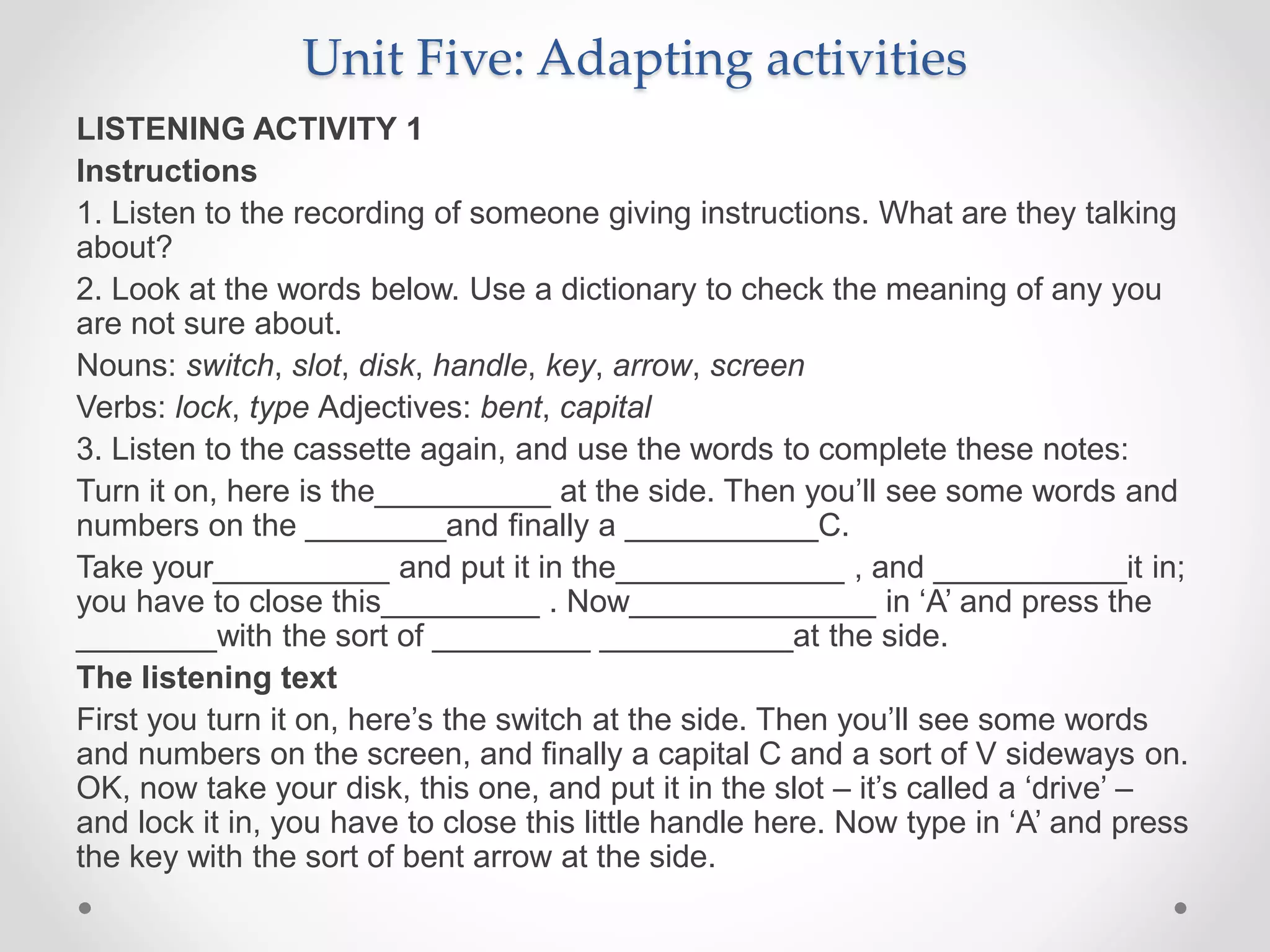


This document discusses teaching listening skills in English as a second language. It begins by stating that the objective of classroom listening is to prepare students for real-life listening situations. It then lists common features of real-life listening situations, such as informal language, noise, redundancy, and ongoing listener response. The document notes that classroom listening does not replicate real-life listening. It recommends basing listening activities on simulated real-life situations to motivate students. Guidelines are provided for listening texts, such as using informal speech, and for listening tasks, such as providing expectations and an ongoing purpose. Finally, examples are given of different types of listening activities and how they can be adapted.
![Richards teaching-listening-speaking[1]](https://cdn.slidesharecdn.com/ss_thumbnails/richards-teaching-listening-speaking1-130611222232-phpapp01-thumbnail.jpg?width=640&height=640&fit=bounds)


![11.%20 listening%20comprehension[1]](https://cdn.slidesharecdn.com/ss_thumbnails/11-130917132437-phpapp01-thumbnail.jpg?width=640&height=640&fit=bounds)


