Teaching Games and Games
         Literacy
               Paul Callaghan
        E: paul.callaghan@gmail.com
          W: www.paulcallaghan.net
      T: www.twitter.com/paul_callaghan
OVERVIEW
About me
• Freelance writer & game developer
• Programmer, designer, writer, educator
• Co-director of Freeplay Independent Games Festival
• Board, Game Developers’ Association of Australia
• Advisory Committee, IF:Book Australia
• Advisory Committee, Screen Futures conference
About the project
• Department of Education and Early Childhood
  Research Project
• Focused on Game Development
• Running in parallel with ‘Serious Games’ and ‘Virtual
  Worlds’
• Began with the question: ‘what would you teach
  teachers about game dev?’
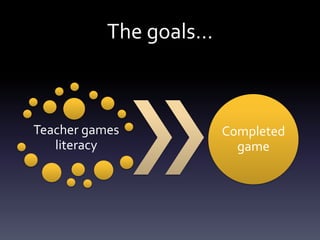
The goals…


Teacher games           Completed
   literacy               game
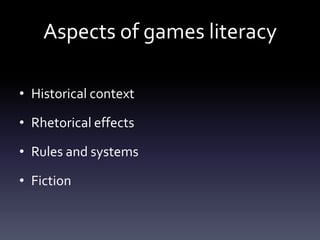
Aspects of games literacy

• Historical context

• Rhetorical effects

• Rules and systems

• Fiction
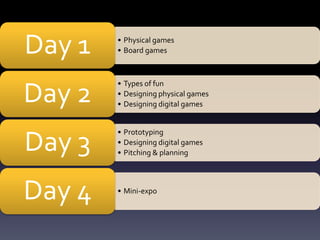
Day 1   • Physical games
        • Board games


        • Types of fun

Day 2   • Designing physical games
        • Designing digital games


        • Prototyping

Day 3   • Designing digital games
        • Pitching & planning


Day 4   • Mini-expo
DAY 1
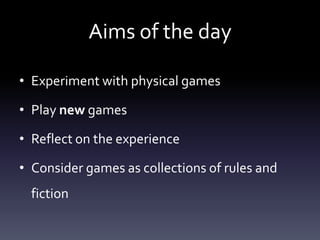
Aims of the day

• Experiment with physical games

• Play new games

• Reflect on the experience

• Consider games as collections of rules and
  fiction
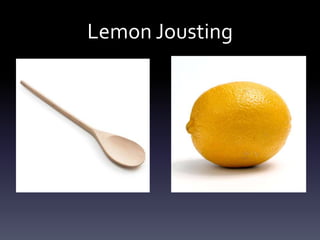
Lemon Jousting
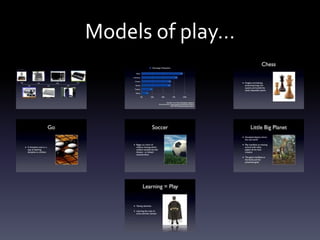
Models of play…
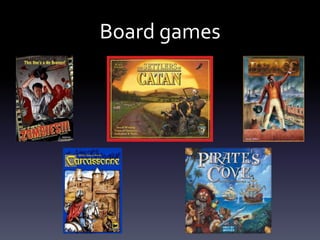
Board games
Reflections

• What worked, what didn’t work?

• The nature of the end-game

• Their emotional experience

• The intersection between fiction & the game’s
  rules
DAY 2
Aims of the day

• Deconstruct their experiences from day 1

• Look at mechanics & what makes games fun

• Rapidly prototype non-digital games

• Werewolves!!

• Design a sample videogame
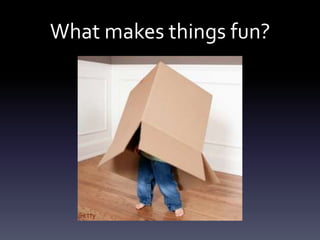
What makes things fun?
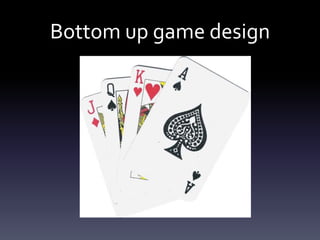
Bottom up game design
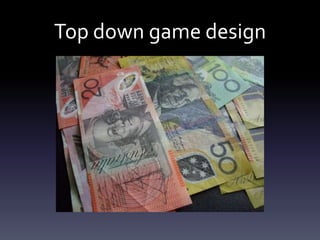
Top down game design
Werewolf
Ways of thinking about games

• Play

• Rules, states, goals

• Verbs & Nouns

• Space

• Story
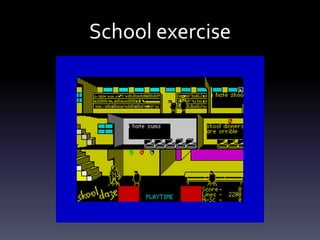
School exercise
DAY 3
Aims of the day


• Bring the students in

• Pull it all together

• Design and pitch a game
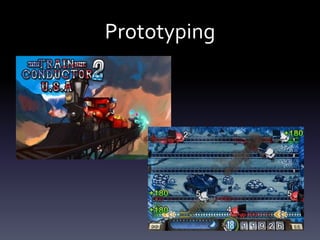
Prototyping
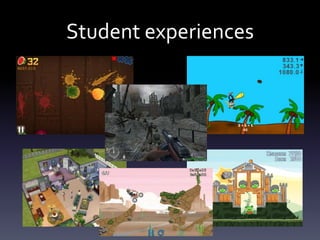
Student experiences
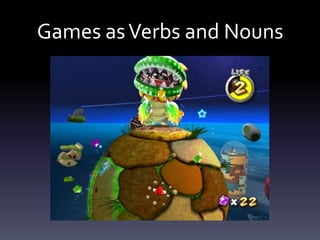
Games as Verbs and Nouns
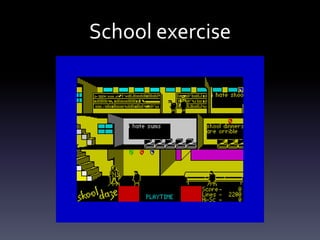
School exercise
Pitch their own…
Design their own…
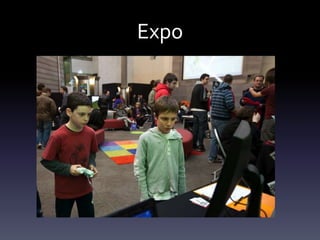
Expo
OUTCOMES & NEXT STEPS
Outcomes
• Bringing in real world game developers
• Pre-digital needs a little push
• Teachers already have strong games literacy
• Students engage quickly with content
• Creates a level playing field between teachers &
  students
Next steps…

• Adapting content for professional developers

• Integrate with technology component

• Integrate into existing curriculum

• ???
Questions…?
  E: paul.callaghan@gmail.com
    W: www.paulcallaghan.net
T: www.twitter.com/paul_callaghan

Teaching Games and Games Literacy

  • 1.
    Teaching Games andGames Literacy Paul Callaghan E: paul.callaghan@gmail.com W: www.paulcallaghan.net T: www.twitter.com/paul_callaghan
  • 2.
  • 3.
    About me • Freelancewriter & game developer • Programmer, designer, writer, educator • Co-director of Freeplay Independent Games Festival • Board, Game Developers’ Association of Australia • Advisory Committee, IF:Book Australia • Advisory Committee, Screen Futures conference
  • 4.
    About the project •Department of Education and Early Childhood Research Project • Focused on Game Development • Running in parallel with ‘Serious Games’ and ‘Virtual Worlds’ • Began with the question: ‘what would you teach teachers about game dev?’
  • 5.
    The goals… Teacher games Completed literacy game
  • 6.
    Aspects of gamesliteracy • Historical context • Rhetorical effects • Rules and systems • Fiction
  • 7.
    Day 1 • Physical games • Board games • Types of fun Day 2 • Designing physical games • Designing digital games • Prototyping Day 3 • Designing digital games • Pitching & planning Day 4 • Mini-expo
  • 8.
  • 9.
    Aims of theday • Experiment with physical games • Play new games • Reflect on the experience • Consider games as collections of rules and fiction
  • 10.
  • 11.
  • 12.
  • 13.
    Reflections • What worked,what didn’t work? • The nature of the end-game • Their emotional experience • The intersection between fiction & the game’s rules
  • 14.
  • 15.
    Aims of theday • Deconstruct their experiences from day 1 • Look at mechanics & what makes games fun • Rapidly prototype non-digital games • Werewolves!! • Design a sample videogame
  • 16.
  • 17.
  • 18.
  • 19.
  • 20.
    Ways of thinkingabout games • Play • Rules, states, goals • Verbs & Nouns • Space • Story
  • 21.
  • 22.
  • 23.
    Aims of theday • Bring the students in • Pull it all together • Design and pitch a game
  • 24.
  • 25.
  • 26.
    Games as Verbsand Nouns
  • 27.
  • 28.
  • 29.
  • 30.
  • 31.
  • 32.
    Outcomes • Bringing inreal world game developers • Pre-digital needs a little push • Teachers already have strong games literacy • Students engage quickly with content • Creates a level playing field between teachers & students
  • 33.
    Next steps… • Adaptingcontent for professional developers • Integrate with technology component • Integrate into existing curriculum • ???
  • 34.
    Questions…? E:paul.callaghan@gmail.com W: www.paulcallaghan.net T: www.twitter.com/paul_callaghan

Editor's Notes

  • #26 Answer the following questions:What does the player do?How does the controller let them do those actions?Who is the player in game?Who are they fighting against or in conflict with?Where does the game take place?Are there any other characters or are you alone?How does the game make you feel?Why is it exciting? Why do you like it?
  • #28 Verbs and nouns first; then characters; then some levels
  • #29 Your game’s genreWhat sort of game it isWho the target market isWhat the important player actions (verbs) areWhat the game objects (nouns) look likeGenre: PlatformerTarget Market: Ages 8-15Short pitch: You are Timmy, who has to save the school from the aliens who have crashlanded by using the objects you find around the classrooms, freeing the other students and teachers, and helping the aliens back to their ship.