Intervention

How can we help
our students?
1. Staff will understand how to
   develop an intervention, set
   goals, and monitor progress
   toward a goal.
2. Staff will understand the SIT
   (Student Intervention Team)
   process.


Objectives
• Instruction that Supplements
    and Intensifies classroom
    curriculum to meet student
    needs
   • Academic or Behavioral
   • A method to ensure that all students are
     successful in the mainstream classroom


What is an Intervention?
• Regular teaching practices
 • Differentiated Instruction
 • Accommodations for struggling
   students
 • A way to get students into special
   education


What isn’t an Intervention?
1.   Evidenced-based pedagogy
2.   A plan for implementation
3.   Criteria for successful response
4.   Assessment to monitor progress


What do Interventions Include?
• What Works Clearinghouse
  http://ies.ed.gov/ncee/wwc/

• Evidence Based Intervention Network
  http://www.ecu.edu/cs-cas/psyc/rileytillmant/EBI-Network-Homepage.cfm

• RTI Center
  http://www.scred.k12.mn.us/School/Index.cfm/go:site.Page/Page:3/Area:4/index.html


  Evidence Based
  Pedagogy
• Who will deliver intervention?
 (classroom teacher, ESP, other support staff)
• When intervention will occur?
 (any time other than lunch or specialist times)
• Frequency & duration of intervention
 (10-15 minutes per day; 20 school days)
• How long intervention will last?
 (4 – 6 weeks per intervention)


Plan for Implementation
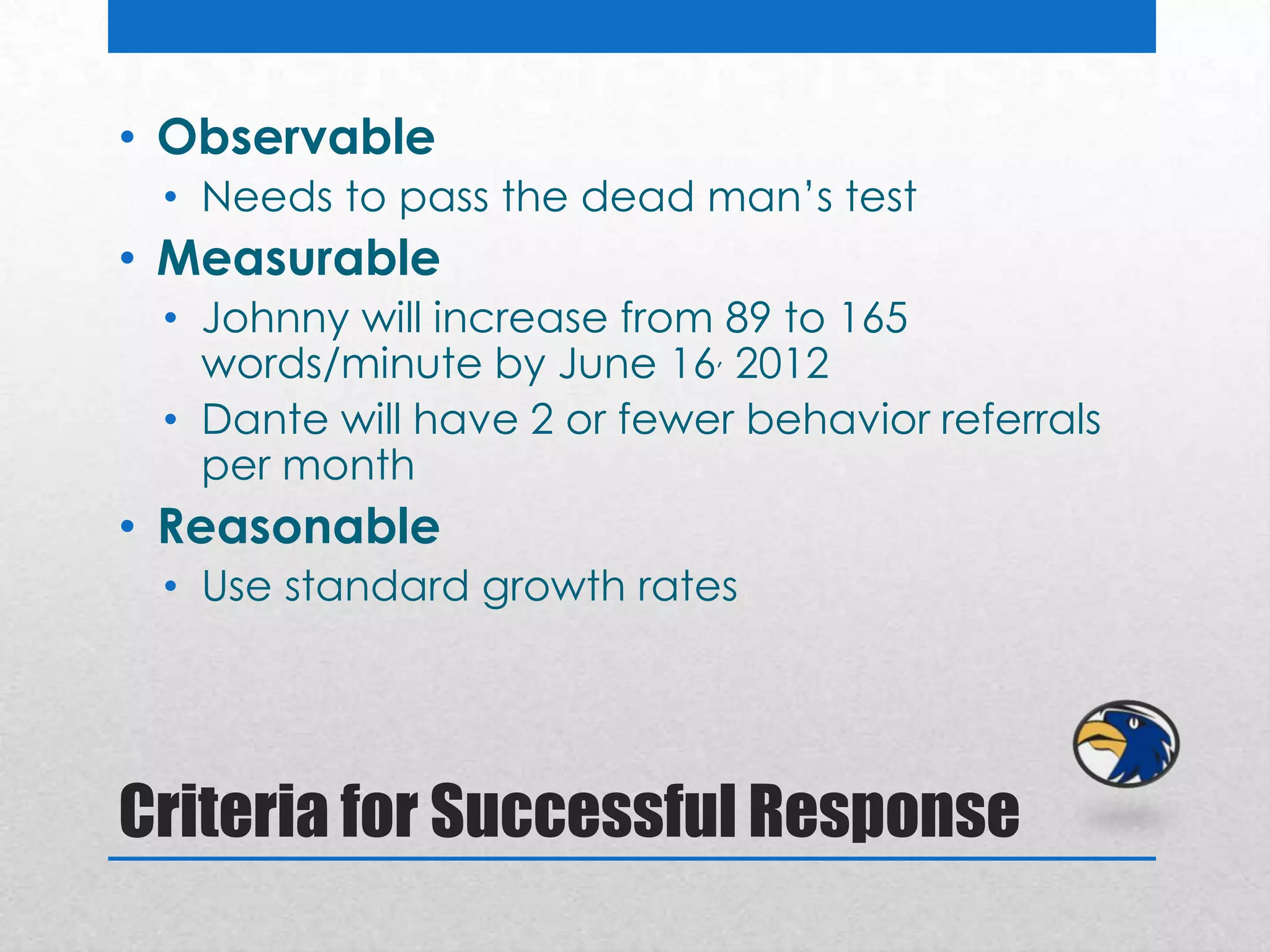
• Observable
 • Needs to pass the dead man’s test
• Measurable
 • Johnny will increase from 89 to 165
   words/minute by June 16, 2012
 • Dante will have 2 or fewer behavior referrals
   per month
• Reasonable
 • Use standard growth rates


Criteria for Successful Response
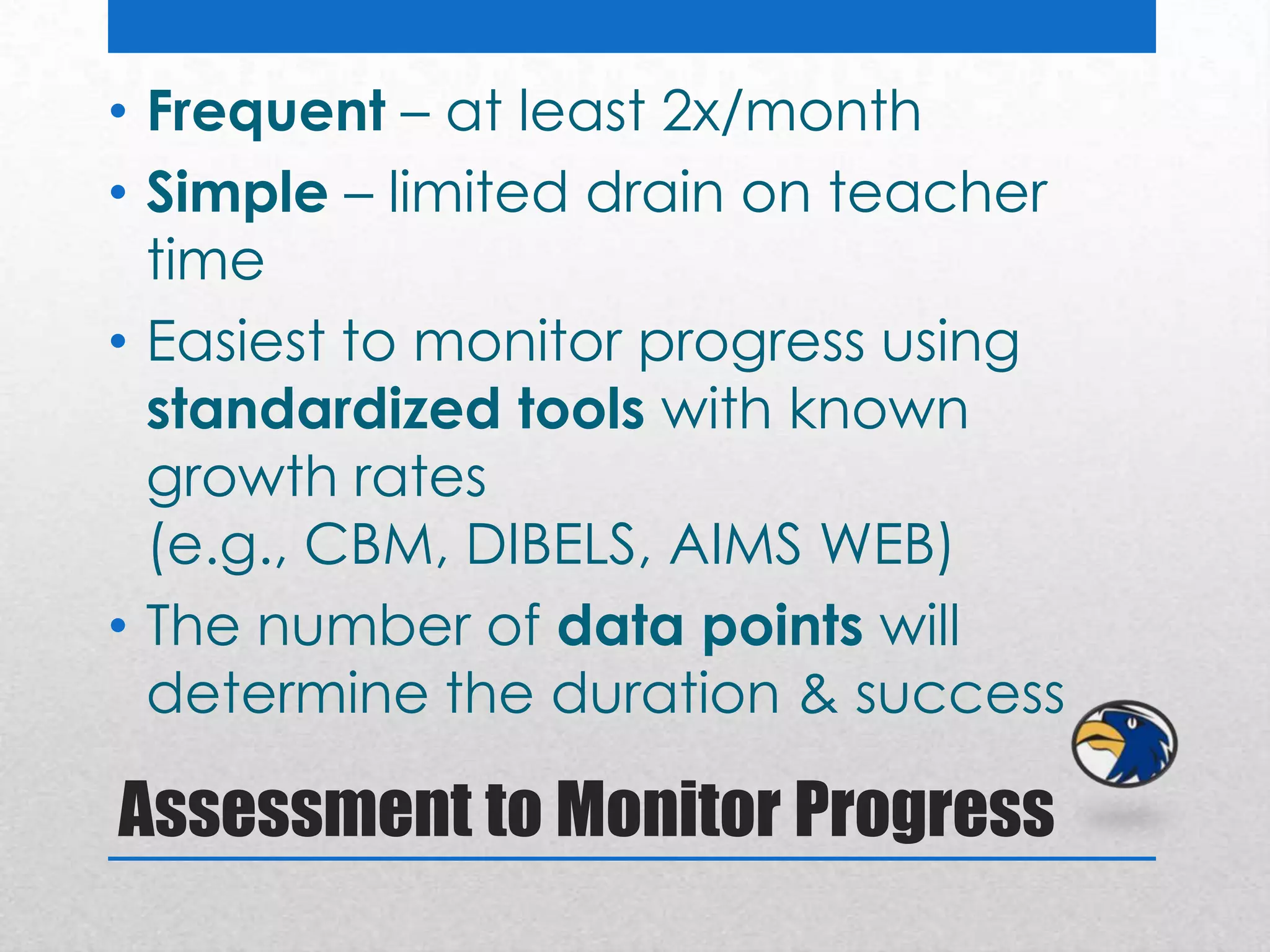
• Frequent – at least 2x/month
• Simple – limited drain on teacher
  time
• Easiest to monitor progress using
  standardized tools with known
  growth rates
  (e.g., CBM, DIBELS, AIMS WEB)
• The number of data points will
  determine the duration & success

Assessment to Monitor Progress
Student
Intervention
Team (SIT)

Review and Update of Processes
and Procedures
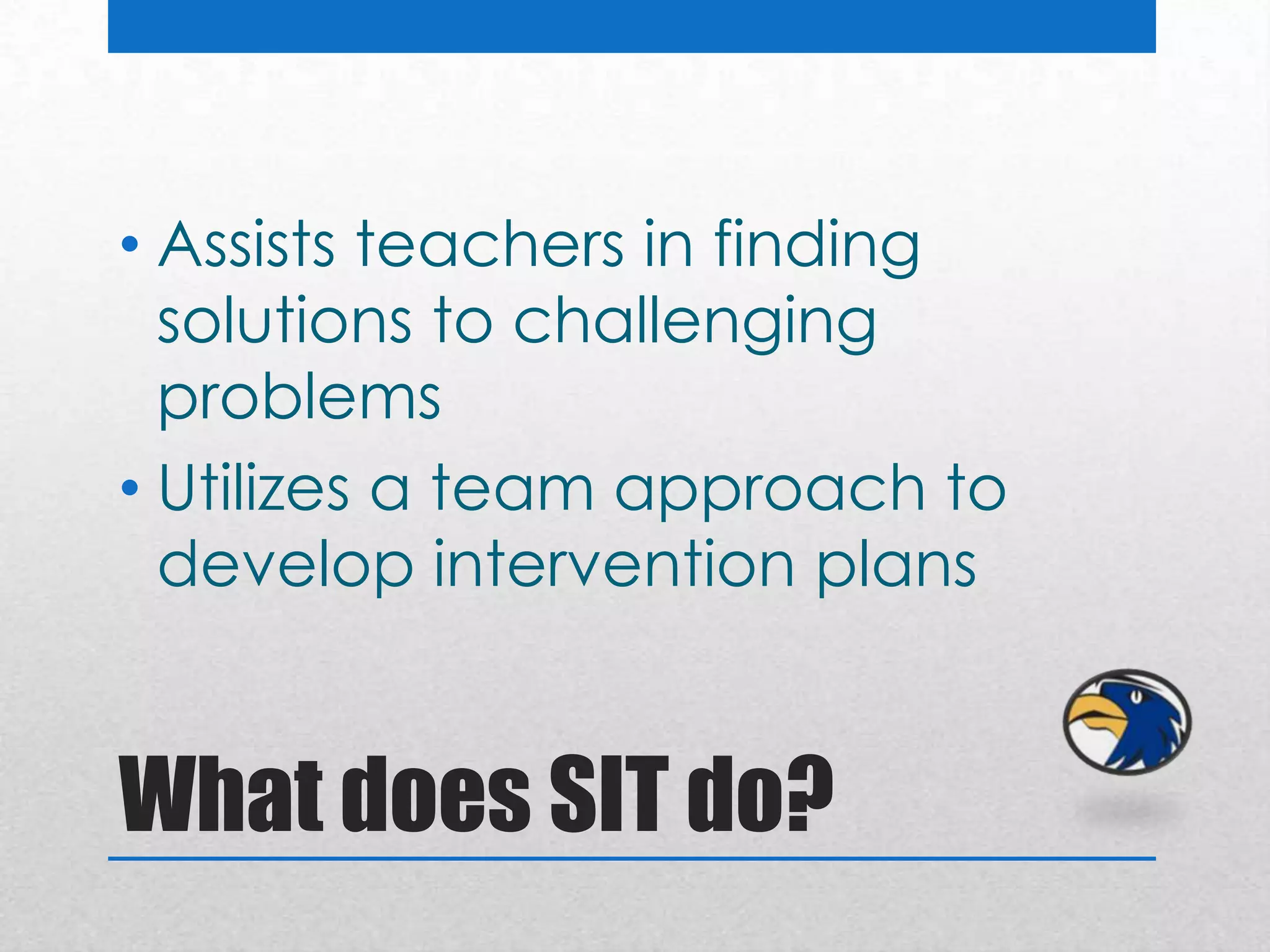
• Assists teachers in finding
  solutions to challenging
  problems
• Utilizes a team approach to
  develop intervention plans


What does SIT do?
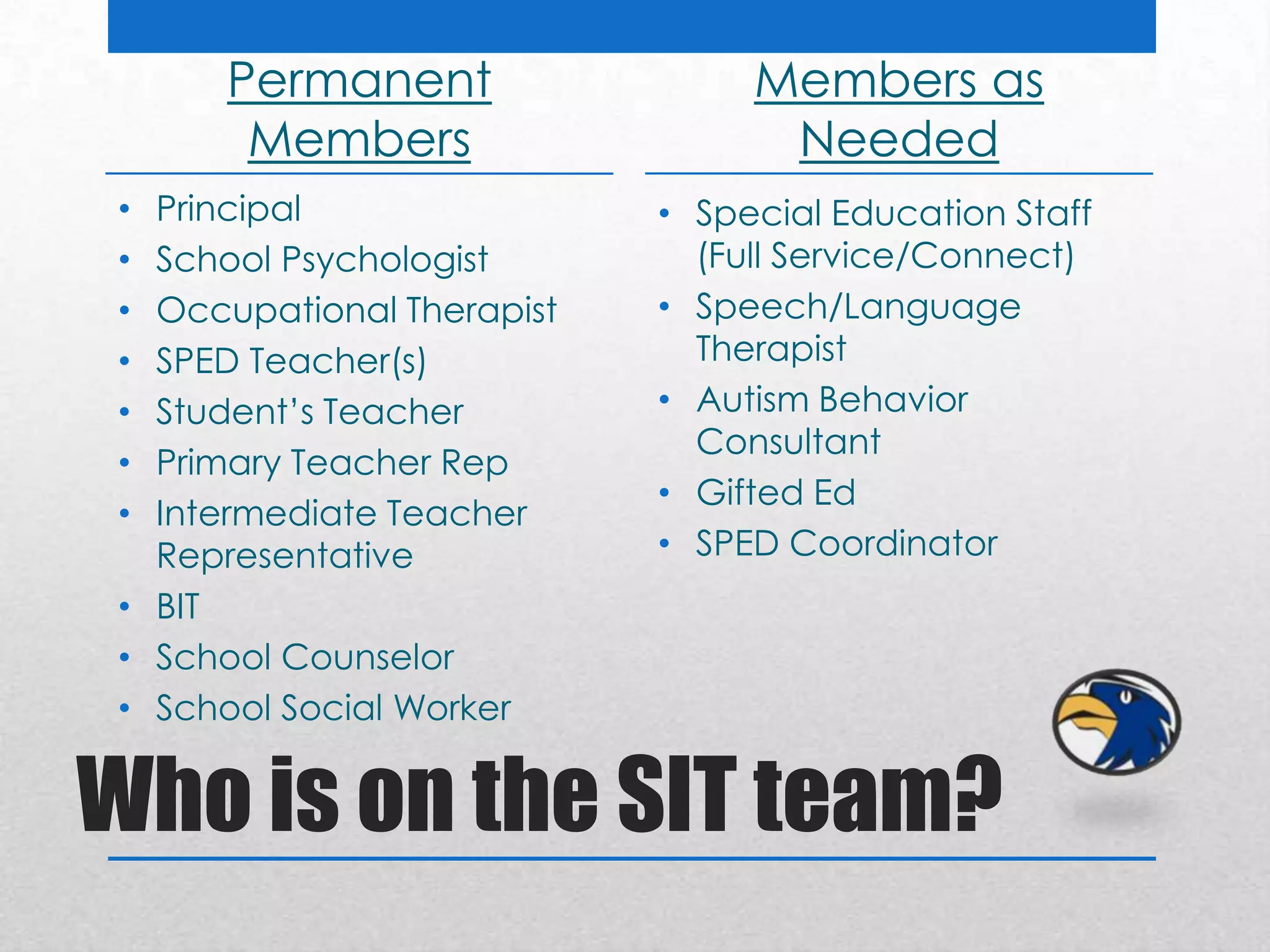
Permanent                  Members as
       Members                    Needed
 • Principal                • Special Education Staff
 • School Psychologist        (Full Service/Connect)
 • Occupational Therapist   • Speech/Language
 • SPED Teacher(s)            Therapist
 • Student’s Teacher        • Autism Behavior
                              Consultant
 • Primary Teacher Rep
                            • Gifted Ed
 • Intermediate Teacher
   Representative           • SPED Coordinator
 • BIT
 • School Counselor
 • School Social Worker


Who is on the SIT team?
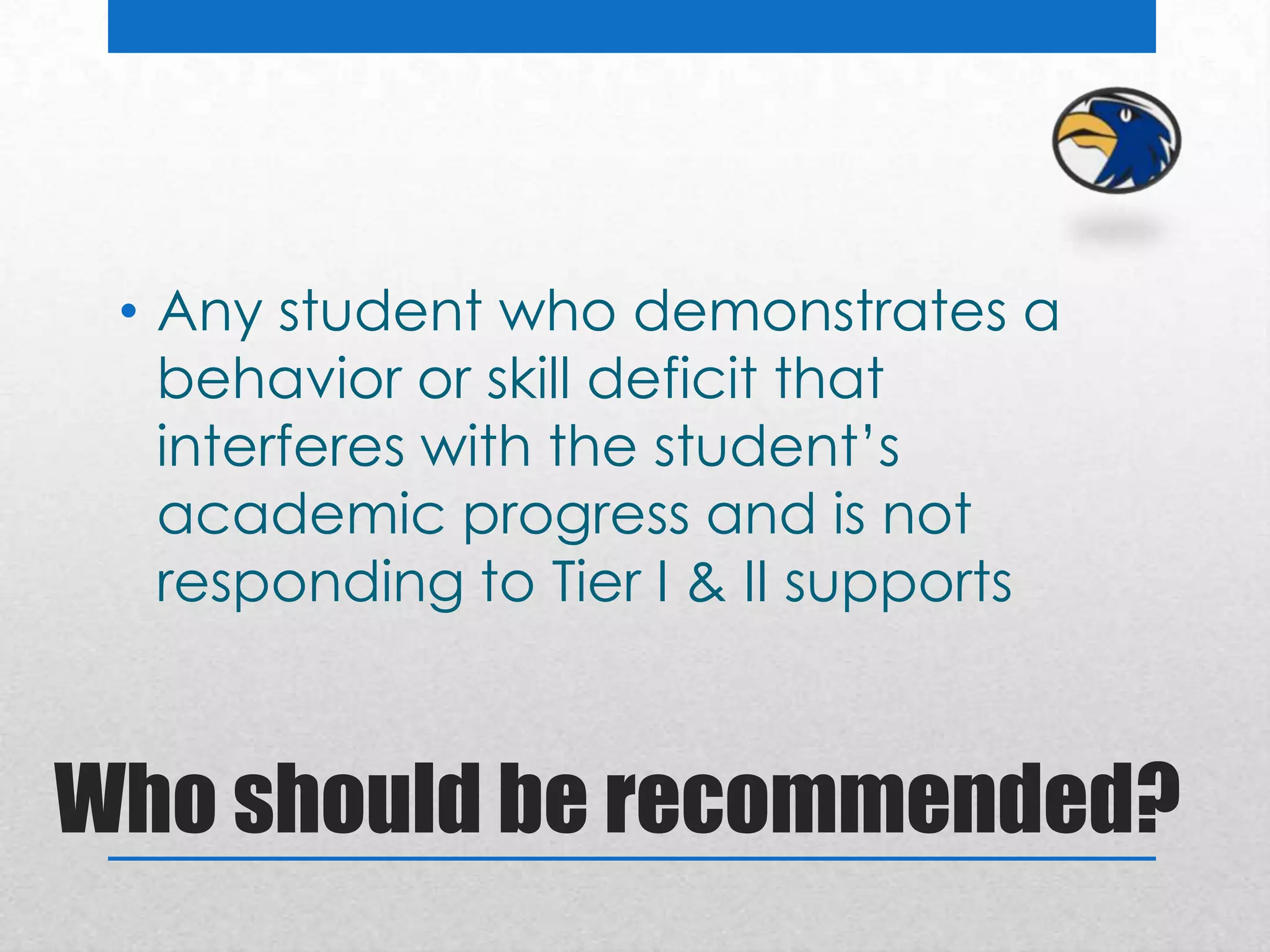
• Any student who demonstrates a
   behavior or skill deficit that
   interferes with the student’s
   academic progress and is not
   responding to Tier I & II supports


Who should be recommended?
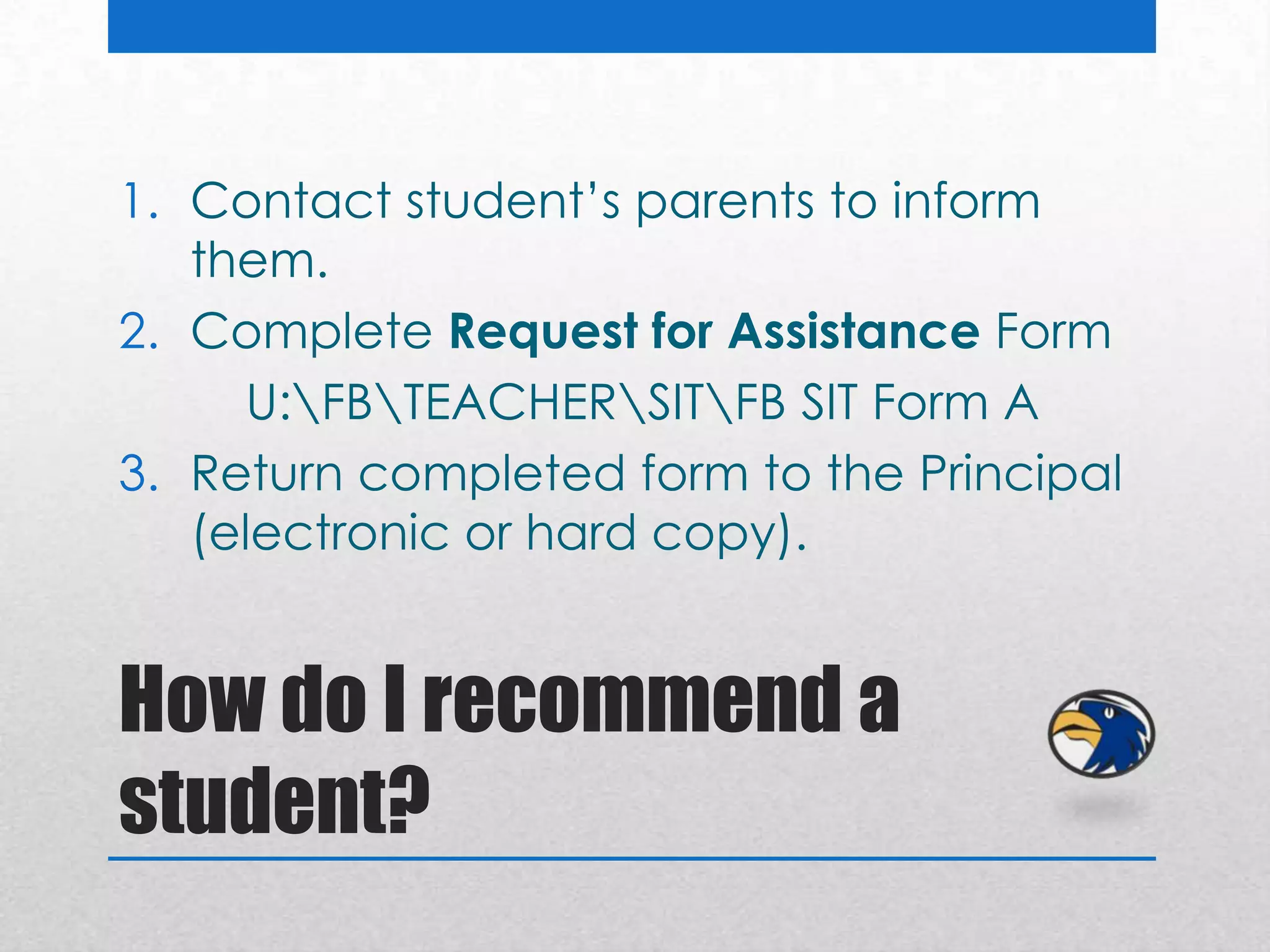
1. Contact student’s parents to inform
   them.
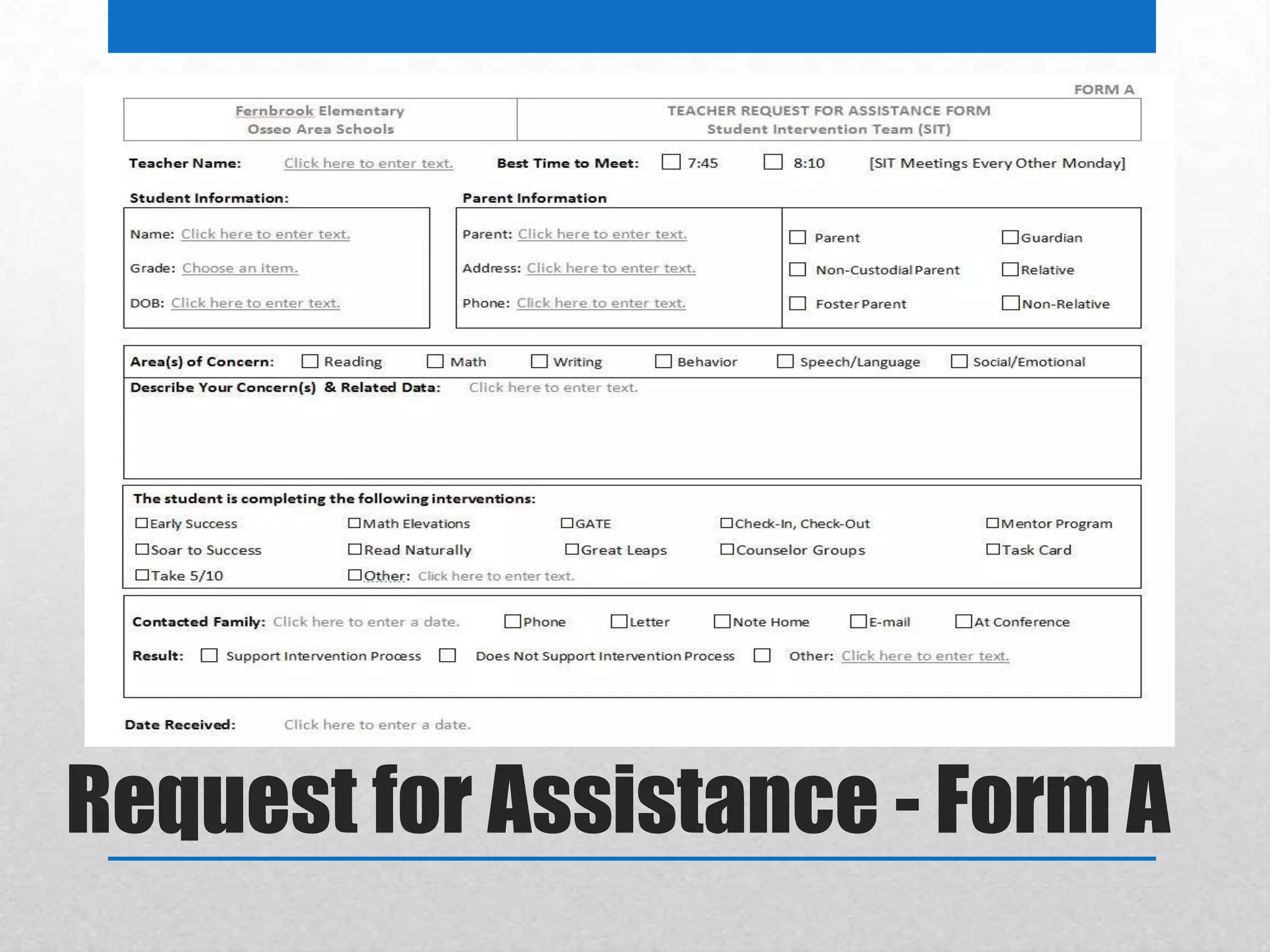
2. Complete Request for Assistance Form
      U:FBTEACHERSITFB SIT Form A
3. Return completed form to the Principal
   (electronic or hard copy).


How do I recommend a
student?
Request for Assistance - Form A
• SIT Team member will meet with
  teacher
• Teacher Completes Form B
• Teacher Schedules
  Appointment w/ SIT Team
• SIT Meeting Occurs

What happens once
recommendation is made?
• Assess your major concerns about the student
• Help you to pick the most important student
  concerns to work on
• Discuss what has already been done for
  interventions and base line data
• Design an intervention plan and goals to help
  the student improve
• Decide how to share information about the
  plan with the student’s parents
• Schedule a follow-up meeting


What happens during the
SIT meeting?
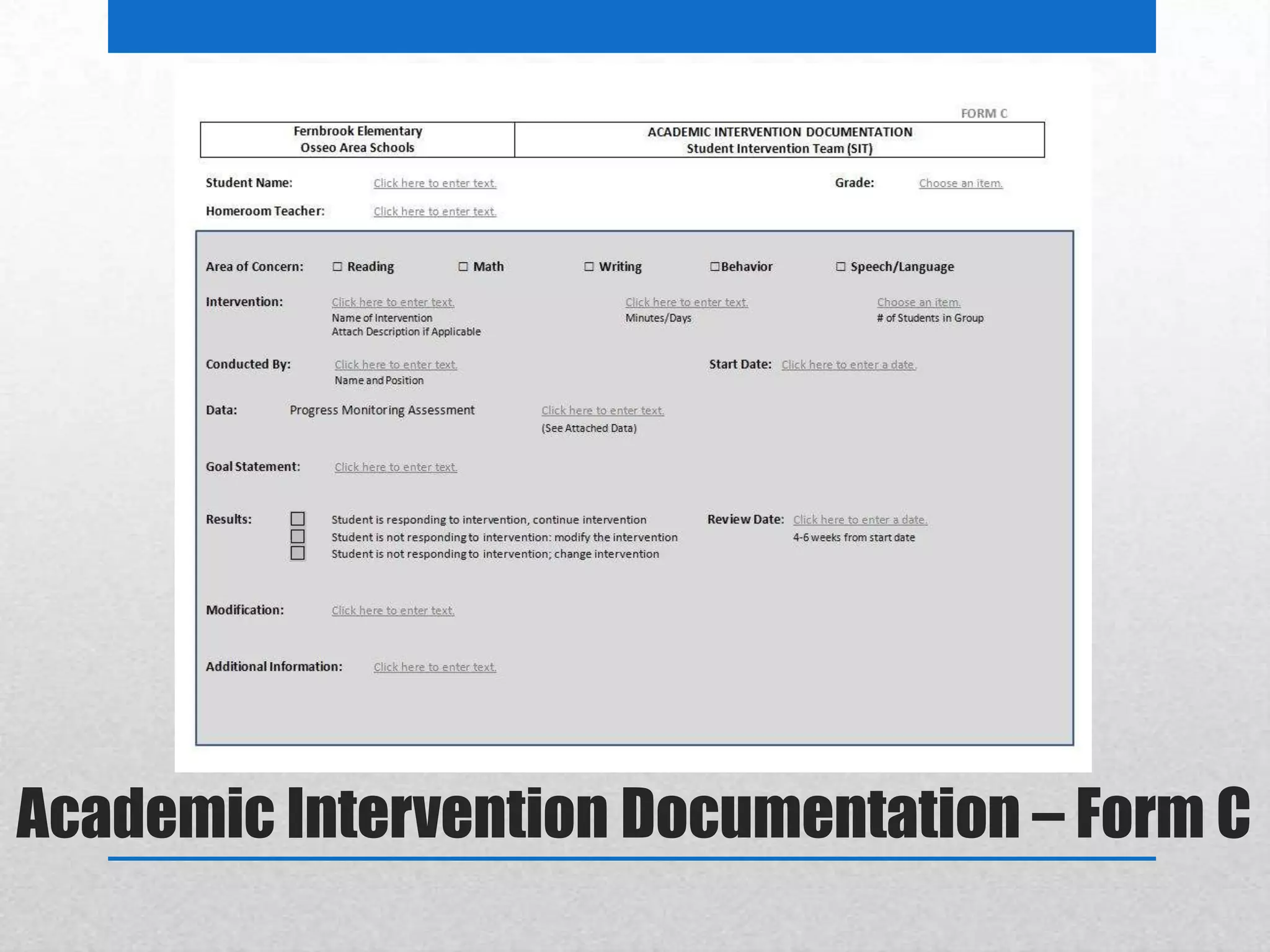
Academic Intervention Documentation – Form C
• Team will evaluate the
  effectiveness of the intervention
  plan
• Team will decide to
  fade, modify, or design a new
  intervention
 • Decision will be based on hypotheses
   of why the plan did or did not work

What happens at the
follow-up meeting?
Questions??

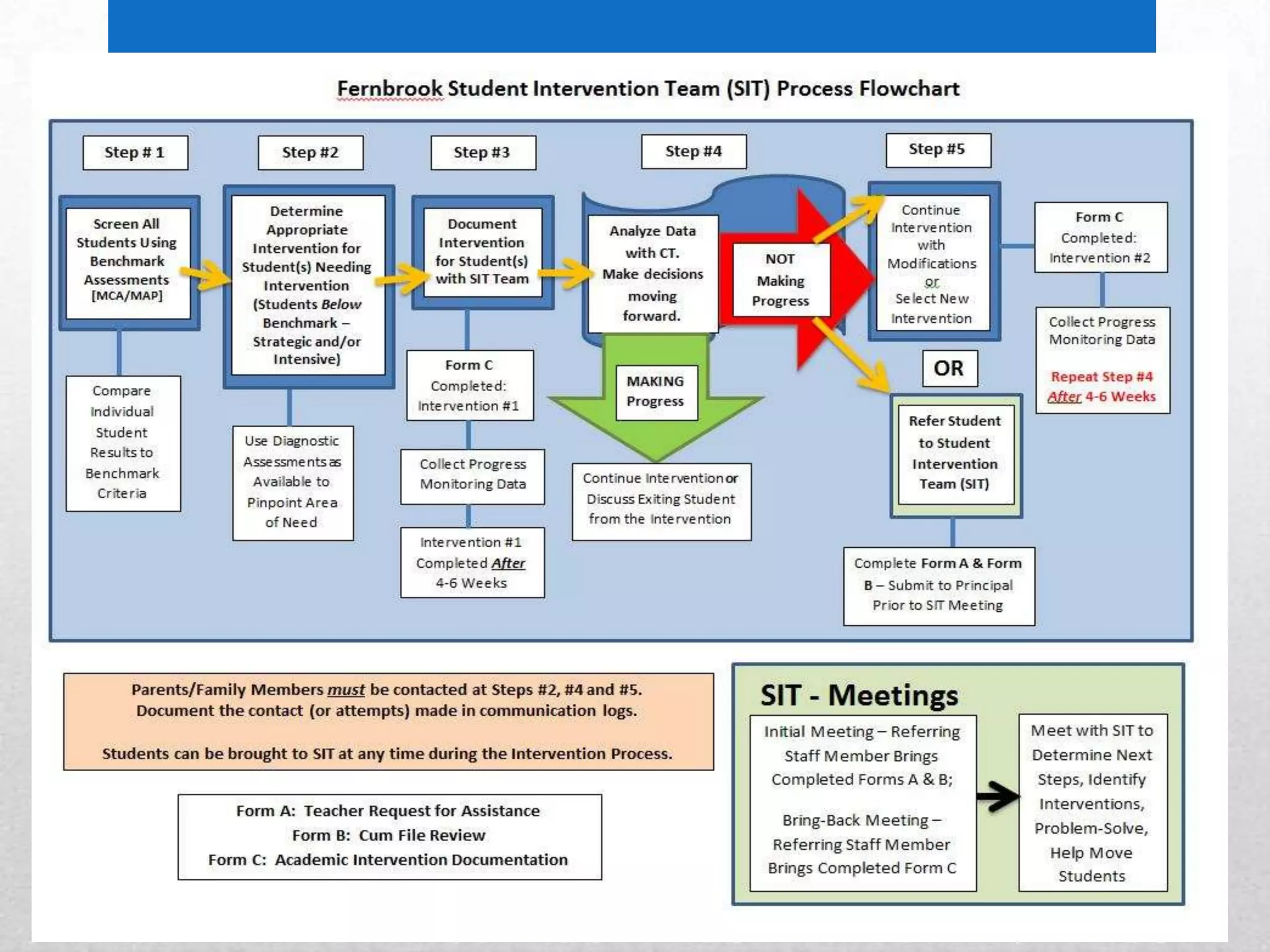
FB SIT Process

  • 1.
    Intervention How can wehelp our students?
  • 2.
    1. Staff willunderstand how to develop an intervention, set goals, and monitor progress toward a goal. 2. Staff will understand the SIT (Student Intervention Team) process. Objectives
  • 4.
    • Instruction thatSupplements and Intensifies classroom curriculum to meet student needs • Academic or Behavioral • A method to ensure that all students are successful in the mainstream classroom What is an Intervention?
  • 5.
    • Regular teachingpractices • Differentiated Instruction • Accommodations for struggling students • A way to get students into special education What isn’t an Intervention?
  • 6.
    1. Evidenced-based pedagogy 2. A plan for implementation 3. Criteria for successful response 4. Assessment to monitor progress What do Interventions Include?
  • 7.
    • What WorksClearinghouse http://ies.ed.gov/ncee/wwc/ • Evidence Based Intervention Network http://www.ecu.edu/cs-cas/psyc/rileytillmant/EBI-Network-Homepage.cfm • RTI Center http://www.scred.k12.mn.us/School/Index.cfm/go:site.Page/Page:3/Area:4/index.html Evidence Based Pedagogy
  • 8.
    • Who willdeliver intervention? (classroom teacher, ESP, other support staff) • When intervention will occur? (any time other than lunch or specialist times) • Frequency & duration of intervention (10-15 minutes per day; 20 school days) • How long intervention will last? (4 – 6 weeks per intervention) Plan for Implementation
  • 9.
    • Observable •Needs to pass the dead man’s test • Measurable • Johnny will increase from 89 to 165 words/minute by June 16, 2012 • Dante will have 2 or fewer behavior referrals per month • Reasonable • Use standard growth rates Criteria for Successful Response
  • 10.
    • Frequent –at least 2x/month • Simple – limited drain on teacher time • Easiest to monitor progress using standardized tools with known growth rates (e.g., CBM, DIBELS, AIMS WEB) • The number of data points will determine the duration & success Assessment to Monitor Progress
  • 11.
    Student Intervention Team (SIT) Review andUpdate of Processes and Procedures
  • 13.
    • Assists teachersin finding solutions to challenging problems • Utilizes a team approach to develop intervention plans What does SIT do?
  • 14.
    Permanent Members as Members Needed • Principal • Special Education Staff • School Psychologist (Full Service/Connect) • Occupational Therapist • Speech/Language • SPED Teacher(s) Therapist • Student’s Teacher • Autism Behavior Consultant • Primary Teacher Rep • Gifted Ed • Intermediate Teacher Representative • SPED Coordinator • BIT • School Counselor • School Social Worker Who is on the SIT team?
  • 15.
    • Any studentwho demonstrates a behavior or skill deficit that interferes with the student’s academic progress and is not responding to Tier I & II supports Who should be recommended?
  • 16.
    1. Contact student’sparents to inform them. 2. Complete Request for Assistance Form U:FBTEACHERSITFB SIT Form A 3. Return completed form to the Principal (electronic or hard copy). How do I recommend a student?
  • 17.
  • 18.
    • SIT Teammember will meet with teacher • Teacher Completes Form B • Teacher Schedules Appointment w/ SIT Team • SIT Meeting Occurs What happens once recommendation is made?
  • 19.
    • Assess yourmajor concerns about the student • Help you to pick the most important student concerns to work on • Discuss what has already been done for interventions and base line data • Design an intervention plan and goals to help the student improve • Decide how to share information about the plan with the student’s parents • Schedule a follow-up meeting What happens during the SIT meeting?
  • 20.
  • 21.
    • Team willevaluate the effectiveness of the intervention plan • Team will decide to fade, modify, or design a new intervention • Decision will be based on hypotheses of why the plan did or did not work What happens at the follow-up meeting?
  • 22.