EngageNY.org
Adapting Module Tasks at the
Lesson Level
EngageNY.org 2
Learning Targets
• I can adapt module lessons to meet students’
specific needs.
• Adapting lessons is important – it enables
teachers to meet their students’ needs and
also to bring their personal artistry to the work.
• It’s critical, however, that adaptations maintain
alignment to the Common Core and the shifts.
• In this session we are going to collaboratively
build a shared understanding of methods that
support quality module adaptation.
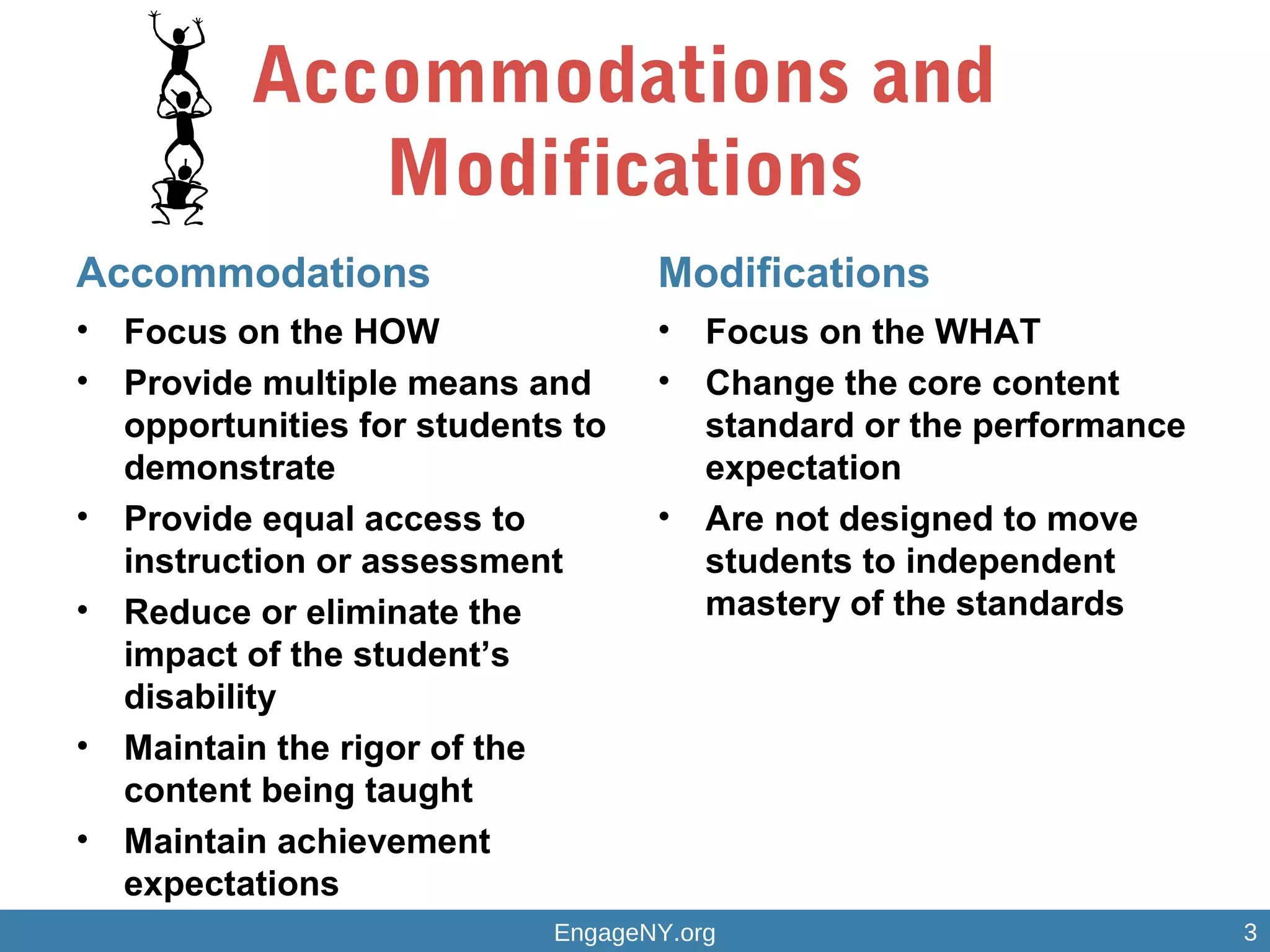
Accommodations and
Modifications
Accommodations
• Focus on the HOW
• Provide multiple means and
opportunities for students to
demonstrate mastery
• Provide equal access to
instruction or assessment
• Reduce or eliminate the
impact of the student’s
disability
• Maintain the rigor of the
content being taught
• Maintain achievement
expectations
Modifications
• Focus on the WHAT
• Change the core content
standard or the performance
expectation
• Are not designed to move
students to independent
mastery of the standards
EngageNY.org 3
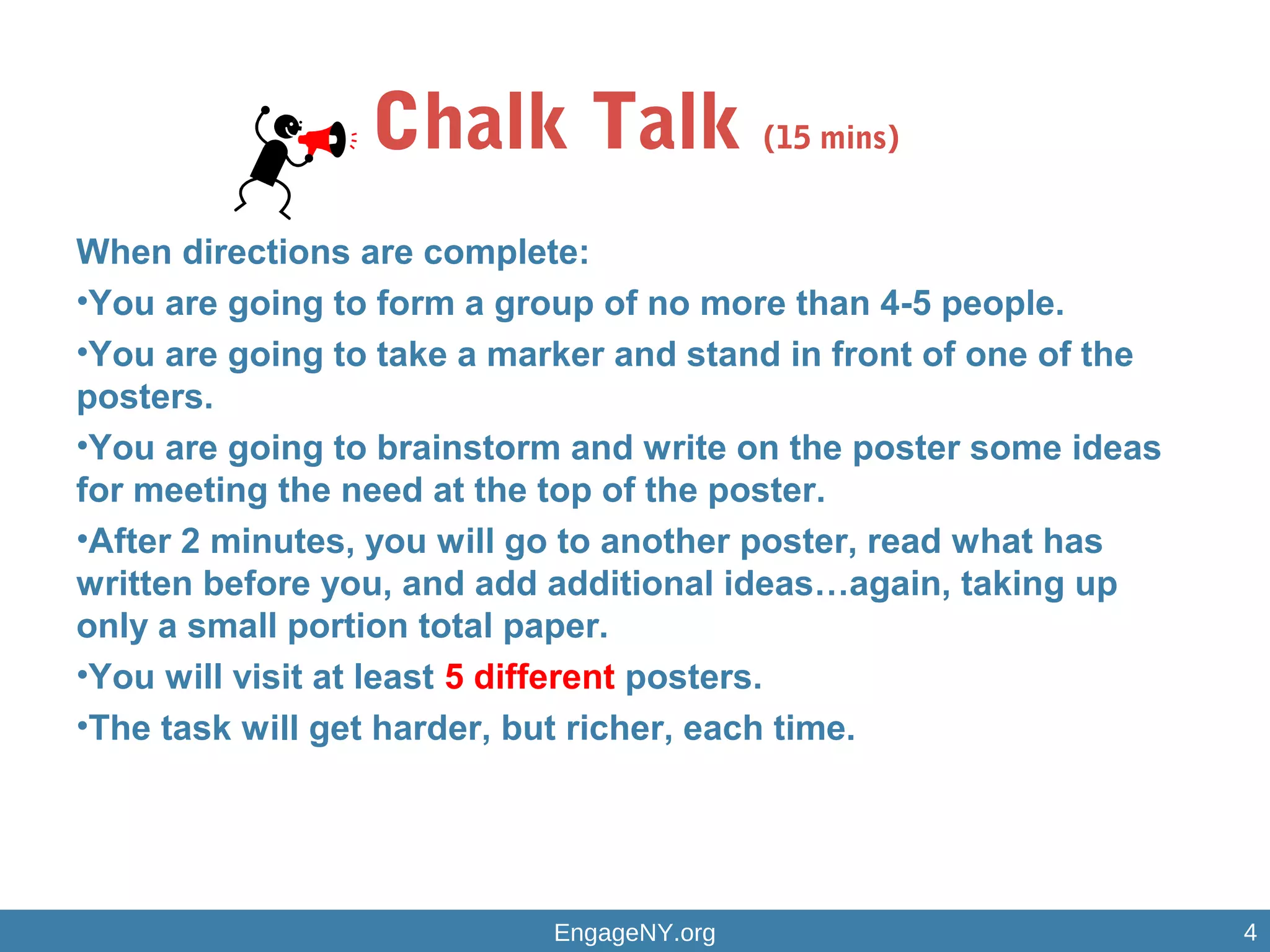
Chalk Talk (15 mins)
When directions are complete:
•You are going to form a group of no more than 4-5 people.
•You are going to take a marker and stand in front of one of the
posters.
•You are going to brainstorm and write on the poster some ideas
for meeting the need at the top of the poster.
•After 2 minutes, you will go to another poster, read what has
written before you, and add additional ideas…again, taking up
only a small portion total paper.
•You will visit at least 5 different posters.
•The task will get harder, but richer, each time.
EngageNY.org 4
Table Discussion
• Review grade 3 Module 1, Unit 3, Lesson 3.
• Discuss adaptations you would make to this
lesson to meet the needs of a third grade class
in your building.
EngageNY.org 5
Student Work
• Examine the student work. (5 minutes)
• Discuss each question (3 minutes each):

How is the work students completed similar and
different?

Did the adapted work meet the same learning
targets? If so, how? If not, why not?

Were these students successful?

What might you have done differently?
EngageNY.org 6
EngageNY.org 7
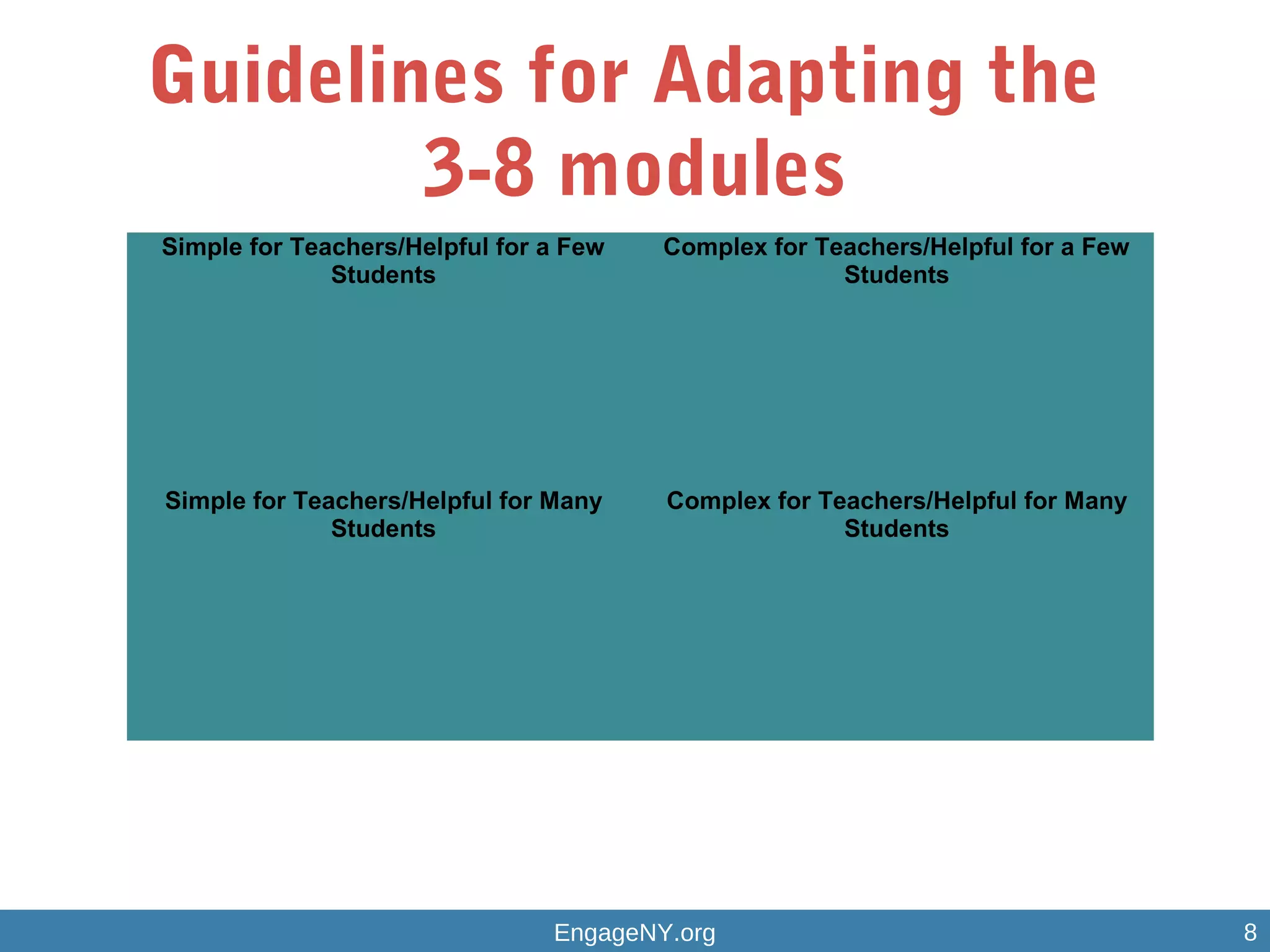
Guidelines for Adapting the
3-8 modules
Simple for Teachers/Helpful for a Few
Students
Complex for Teachers/Helpful for a Few
Students
Simple for Teachers/Helpful for Many
Students
Complex for Teachers/Helpful for Many
Students
EngageNY.org 8
Discuss (5 mins)
• Which adaptations are the simplest yet the
most helpful? Are they using or helping
others use those adaptations?
• Which adaptations are more complex yet
helpful to many students? What support to
teachers need to use those adaptations?
EngageNY.org 9
Thinking it Through
• A reflective tool for teachers who are adapting
lessons.
• Use as part of a conversation about the
changes teachers are typically making to help
them stay aligned with the standards and the
shifts.
EngageNY.org 10
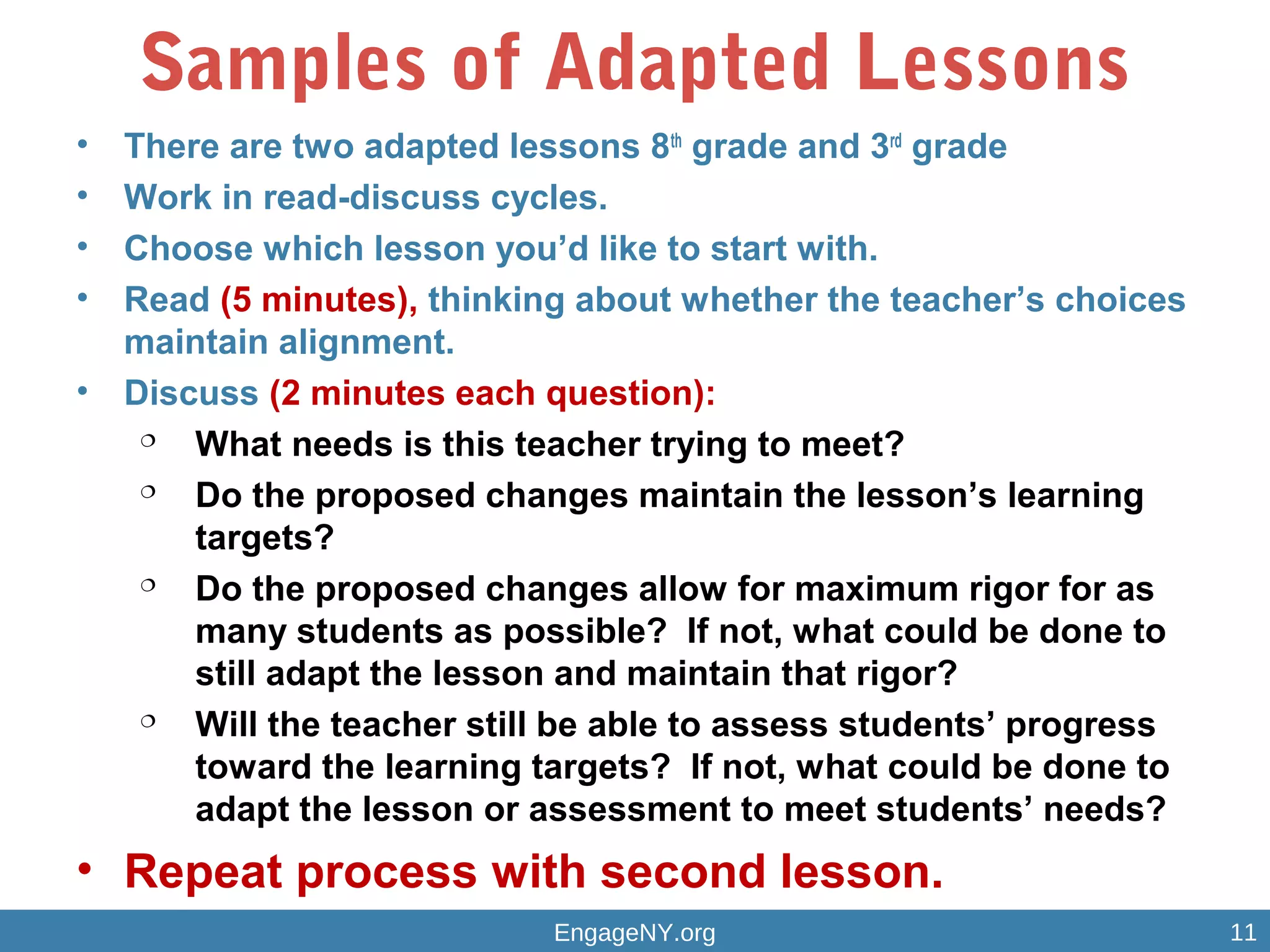
Samples of Adapted Lessons
• There are two adapted lessons 8th
grade and 3rd
grade
• Work in read-discuss cycles.
• Choose which lesson you’d like to start with.
• Read (5 minutes), thinking about whether the teacher’s choices
maintain alignment.
• Discuss (2 minutes each question):

What needs is this teacher trying to meet?

Do the proposed changes maintain the lesson’s learning
targets?

Do the proposed changes allow for maximum rigor for as
many students as possible? If not, what could be done to
still adapt the lesson and maintain that rigor?

Will the teacher still be able to assess students’ progress
toward the learning targets? If not, what could be done to
adapt the lesson or assessment to meet students’ needs?
• Repeat process with second lesson.
EngageNY.org 11
EngageNY.org 12

Adapting lessons ppt

  • 1.
  • 2.
    EngageNY.org 2 Learning Targets •I can adapt module lessons to meet students’ specific needs. • Adapting lessons is important – it enables teachers to meet their students’ needs and also to bring their personal artistry to the work. • It’s critical, however, that adaptations maintain alignment to the Common Core and the shifts. • In this session we are going to collaboratively build a shared understanding of methods that support quality module adaptation.
  • 3.
    Accommodations and Modifications Accommodations • Focuson the HOW • Provide multiple means and opportunities for students to demonstrate mastery • Provide equal access to instruction or assessment • Reduce or eliminate the impact of the student’s disability • Maintain the rigor of the content being taught • Maintain achievement expectations Modifications • Focus on the WHAT • Change the core content standard or the performance expectation • Are not designed to move students to independent mastery of the standards EngageNY.org 3
  • 4.
    Chalk Talk (15mins) When directions are complete: •You are going to form a group of no more than 4-5 people. •You are going to take a marker and stand in front of one of the posters. •You are going to brainstorm and write on the poster some ideas for meeting the need at the top of the poster. •After 2 minutes, you will go to another poster, read what has written before you, and add additional ideas…again, taking up only a small portion total paper. •You will visit at least 5 different posters. •The task will get harder, but richer, each time. EngageNY.org 4
  • 5.
    Table Discussion • Reviewgrade 3 Module 1, Unit 3, Lesson 3. • Discuss adaptations you would make to this lesson to meet the needs of a third grade class in your building. EngageNY.org 5
  • 6.
    Student Work • Examinethe student work. (5 minutes) • Discuss each question (3 minutes each):  How is the work students completed similar and different?  Did the adapted work meet the same learning targets? If so, how? If not, why not?  Were these students successful?  What might you have done differently? EngageNY.org 6
  • 7.
  • 8.
    Guidelines for Adaptingthe 3-8 modules Simple for Teachers/Helpful for a Few Students Complex for Teachers/Helpful for a Few Students Simple for Teachers/Helpful for Many Students Complex for Teachers/Helpful for Many Students EngageNY.org 8
  • 9.
    Discuss (5 mins) •Which adaptations are the simplest yet the most helpful? Are they using or helping others use those adaptations? • Which adaptations are more complex yet helpful to many students? What support to teachers need to use those adaptations? EngageNY.org 9
  • 10.
    Thinking it Through •A reflective tool for teachers who are adapting lessons. • Use as part of a conversation about the changes teachers are typically making to help them stay aligned with the standards and the shifts. EngageNY.org 10
  • 11.
    Samples of AdaptedLessons • There are two adapted lessons 8th grade and 3rd grade • Work in read-discuss cycles. • Choose which lesson you’d like to start with. • Read (5 minutes), thinking about whether the teacher’s choices maintain alignment. • Discuss (2 minutes each question):  What needs is this teacher trying to meet?  Do the proposed changes maintain the lesson’s learning targets?  Do the proposed changes allow for maximum rigor for as many students as possible? If not, what could be done to still adapt the lesson and maintain that rigor?  Will the teacher still be able to assess students’ progress toward the learning targets? If not, what could be done to adapt the lesson or assessment to meet students’ needs? • Repeat process with second lesson. EngageNY.org 11
  • 12.