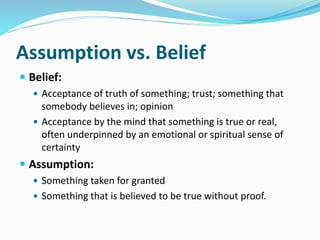
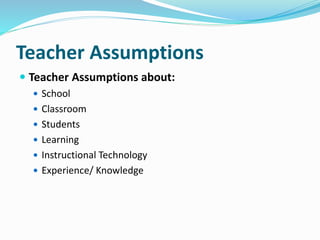
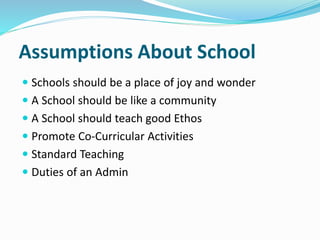
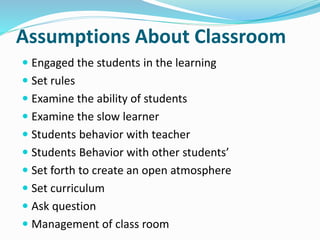
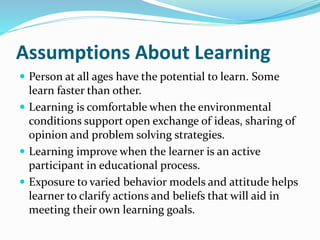
This document discusses teacher assumptions about schools, classrooms, students, learning, and knowledge. It defines the key differences between assumptions and beliefs. Assumptions about schools include that they should be joyful communities that teach good values and promote extracurricular activities. Assumptions about classrooms include engaging students, establishing rules and routines, assessing abilities, and creating an open environment. Assumptions about students range from their learning abilities to how they participate and are judged. Assumptions about learning posit that all ages can learn and that active participation aids the process. Assumptions about knowledge frame it as an interactive, ongoing process rather than just information.