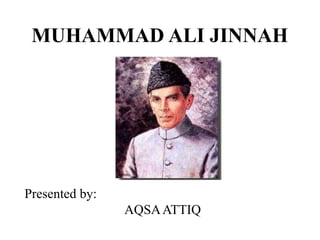
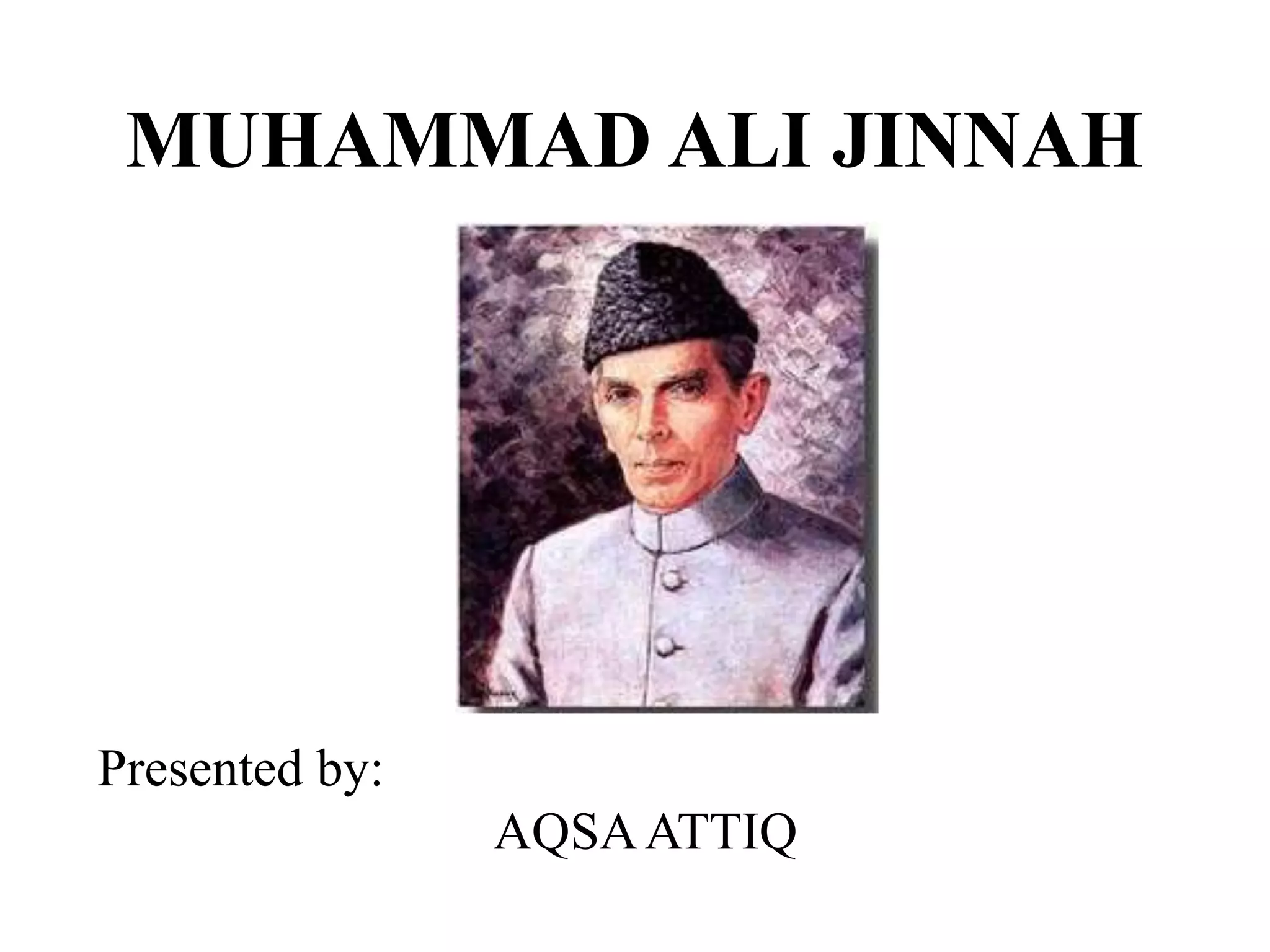
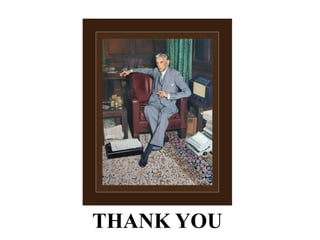
MUHAMMAD ALI JINNAH
Presented by:
AQSAATTIQ
.
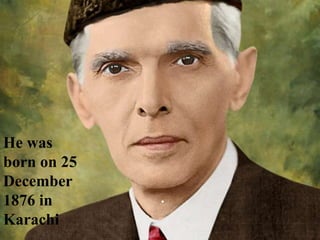
He was
born on 25
December
1876 in
Karachi
Early Life
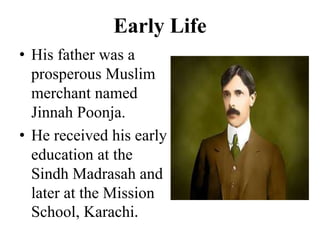
• His father was a
prosperous Muslim
merchant named
Jinnah Poonja.
• He received his early
education at the
Sindh Madrasah and
later at the Mission
School, Karachi.
Cont…
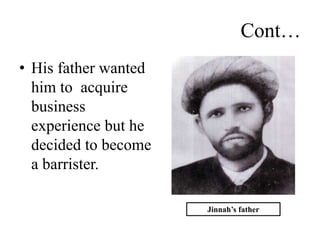
• His father wanted
him to acquire
business
experience but he
decided to become
a barrister.
Jinnah’s father
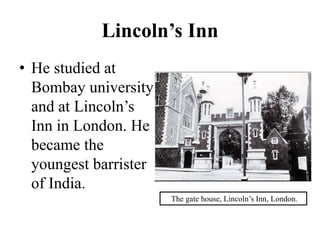
Lincoln’s Inn
• He studied at
Bombay university
and at Lincoln’s
Inn in London. He
became the
youngest barrister
of India.
The gate house, Lincoln’s Inn, London.
Cont…
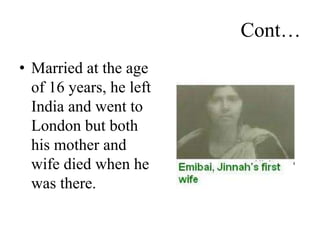
• Married at the age
of 16 years, he left
India and went to
London but both
his mother and
wife died when he
was there.
Cont…
• When he was in England he observed that
many people from India became slaves
and were treated poorly.
• He realized that there’s a difference of
treatment between the rulers and the
ruled.
Political Career
• He started his political life as Dadabhai
Naoroji’s personal secretary.
• Quaid-e-Azam joined Indian National
Congress in 1896.
• In his early career Jinnah supported the
British because he thought that they
would grant Indians political freedom.
Membership of All India
Muslim League
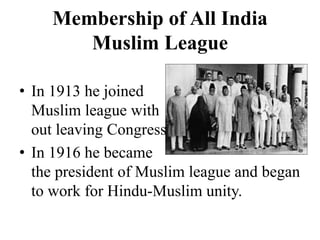
• In 1913 he joined
Muslim league with
out leaving Congress.
• In 1916 he became
the president of Muslim league and began
to work for Hindu-Muslim unity.
Jinnah’s Second Marriage
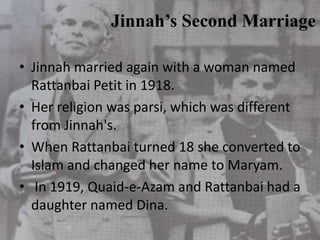
• Jinnah married again with a woman named
Rattanbai Petit in 1918.
• Her religion was parsi, which was different
from Jinnah's.
• When Rattanbai turned 18 she converted to
Islam and changed her name to Maryam.
• In 1919, Quaid-e-Azam and Rattanbai had a
daughter named Dina.
Ambassador of Hindu-Muslim
unity
• The Lucknow pact was a bright chapter
in the dark and gloomy time of Indian
politics. Lucknow pact created a political
homogeneity between the two nations
and Quaid-e-Azam was conferred with a
proud title of Ambassador of Hindu-
Muslim unity.
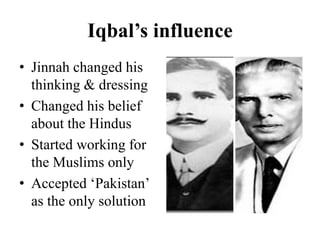
Iqbal’s influence
• Jinnah changed his
thinking & dressing
• Changed his belief
about the Hindus
• Started working for
the Muslims only
• Accepted ‘Pakistan’
as the only solution
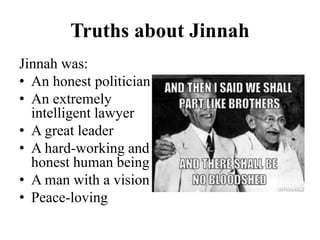
Truths about Jinnah
Jinnah was:
• An honest politician
• An extremely
intelligent lawyer
• A great leader
• A hard-working and
honest human being
• A man with a vision
• Peace-loving
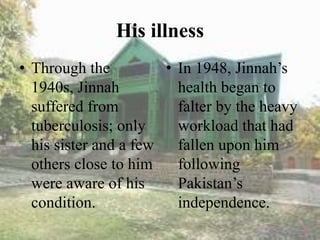
His illness
• Through the
1940s, Jinnah
suffered from
tuberculosis; only
his sister and a few
others close to him
were aware of his
condition.
• In 1948, Jinnah’s
health began to
falter by the heavy
workload that had
fallen upon him
following
Pakistan’s
independence.
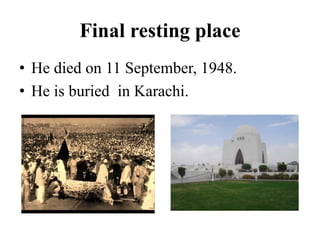
Final resting place
• He died on 11 September, 1948.
• He is buried in Karachi.
THANK YOU

Quaid e azam muhammad ali jinnah

  • 1.
  • 2.
    . He was born on25 December 1876 in Karachi
  • 3.
    Early Life • Hisfather was a prosperous Muslim merchant named Jinnah Poonja. • He received his early education at the Sindh Madrasah and later at the Mission School, Karachi.
  • 4.
    Cont… • His fatherwanted him to acquire business experience but he decided to become a barrister. Jinnah’s father
  • 5.
    Lincoln’s Inn • Hestudied at Bombay university and at Lincoln’s Inn in London. He became the youngest barrister of India. The gate house, Lincoln’s Inn, London.
  • 6.
    Cont… • Married atthe age of 16 years, he left India and went to London but both his mother and wife died when he was there.
  • 7.
    Cont… • When hewas in England he observed that many people from India became slaves and were treated poorly. • He realized that there’s a difference of treatment between the rulers and the ruled.
  • 8.
    Political Career • Hestarted his political life as Dadabhai Naoroji’s personal secretary. • Quaid-e-Azam joined Indian National Congress in 1896. • In his early career Jinnah supported the British because he thought that they would grant Indians political freedom.
  • 9.
    Membership of AllIndia Muslim League • In 1913 he joined Muslim league with out leaving Congress. • In 1916 he became the president of Muslim league and began to work for Hindu-Muslim unity.
  • 10.
    Jinnah’s Second Marriage •Jinnah married again with a woman named Rattanbai Petit in 1918. • Her religion was parsi, which was different from Jinnah's. • When Rattanbai turned 18 she converted to Islam and changed her name to Maryam. • In 1919, Quaid-e-Azam and Rattanbai had a daughter named Dina.
  • 11.
    Ambassador of Hindu-Muslim unity •The Lucknow pact was a bright chapter in the dark and gloomy time of Indian politics. Lucknow pact created a political homogeneity between the two nations and Quaid-e-Azam was conferred with a proud title of Ambassador of Hindu- Muslim unity.
  • 12.
    Iqbal’s influence • Jinnahchanged his thinking & dressing • Changed his belief about the Hindus • Started working for the Muslims only • Accepted ‘Pakistan’ as the only solution
  • 13.
    Truths about Jinnah Jinnahwas: • An honest politician • An extremely intelligent lawyer • A great leader • A hard-working and honest human being • A man with a vision • Peace-loving
  • 14.
    His illness • Throughthe 1940s, Jinnah suffered from tuberculosis; only his sister and a few others close to him were aware of his condition. • In 1948, Jinnah’s health began to falter by the heavy workload that had fallen upon him following Pakistan’s independence.
  • 15.
    Final resting place •He died on 11 September, 1948. • He is buried in Karachi.
  • 16.