3rd International Symposium on
Research in Foreign Language Teaching:
Alternatives in English Language
Teaching to New Realities
Teacher education and
critical thinking:
Systematizing
theoretical perspectives
and formative
experiences in ELT
Yamith José Fandiño
Parra
M.A. in Teaching
Doctoral student in
Education and Society
Agenda
Introduction1
Theory2
Methodology3
Results4
Conclusions5
Introduction
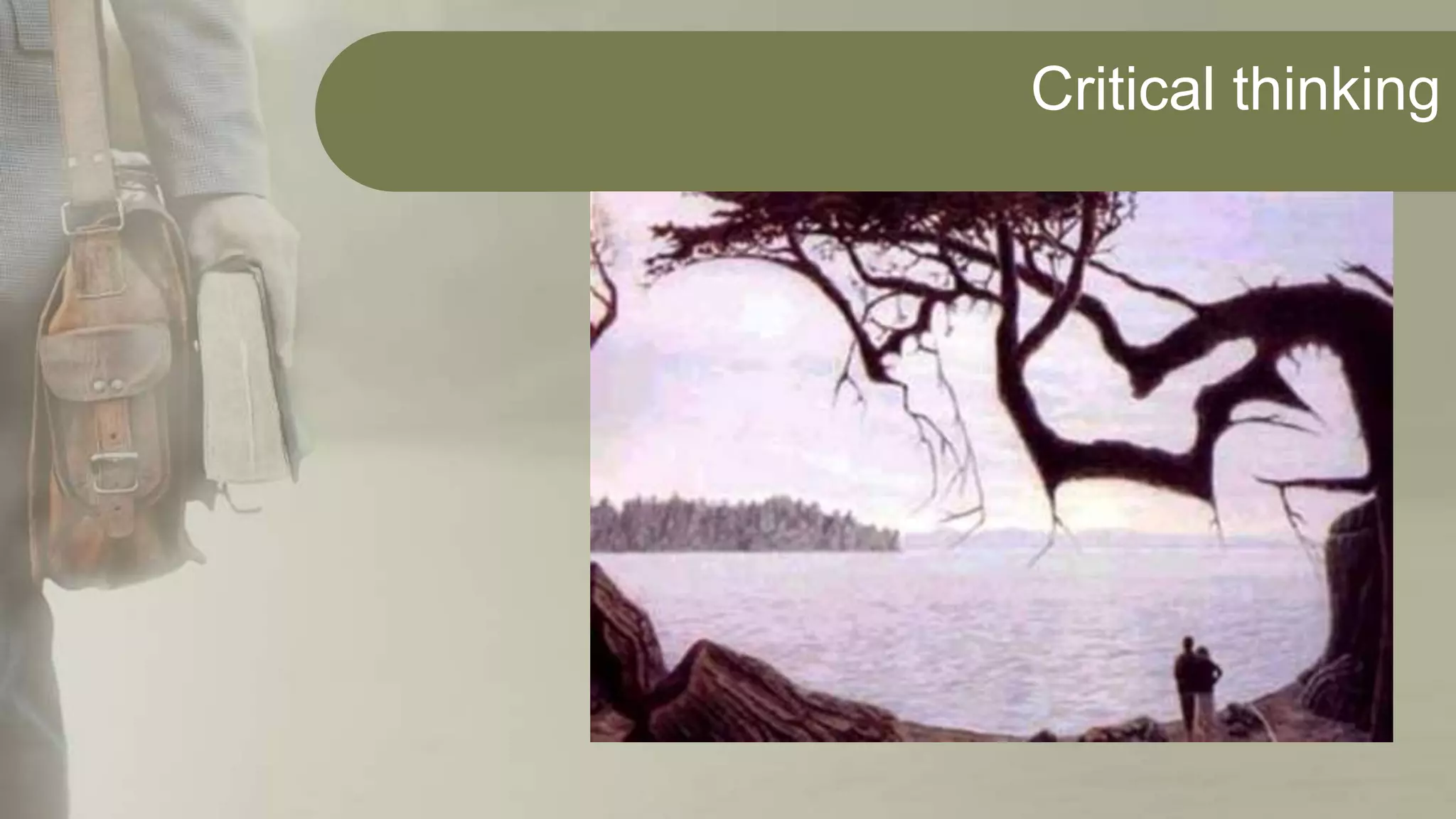
Critical thinking
Critical thinking
Critical thinking
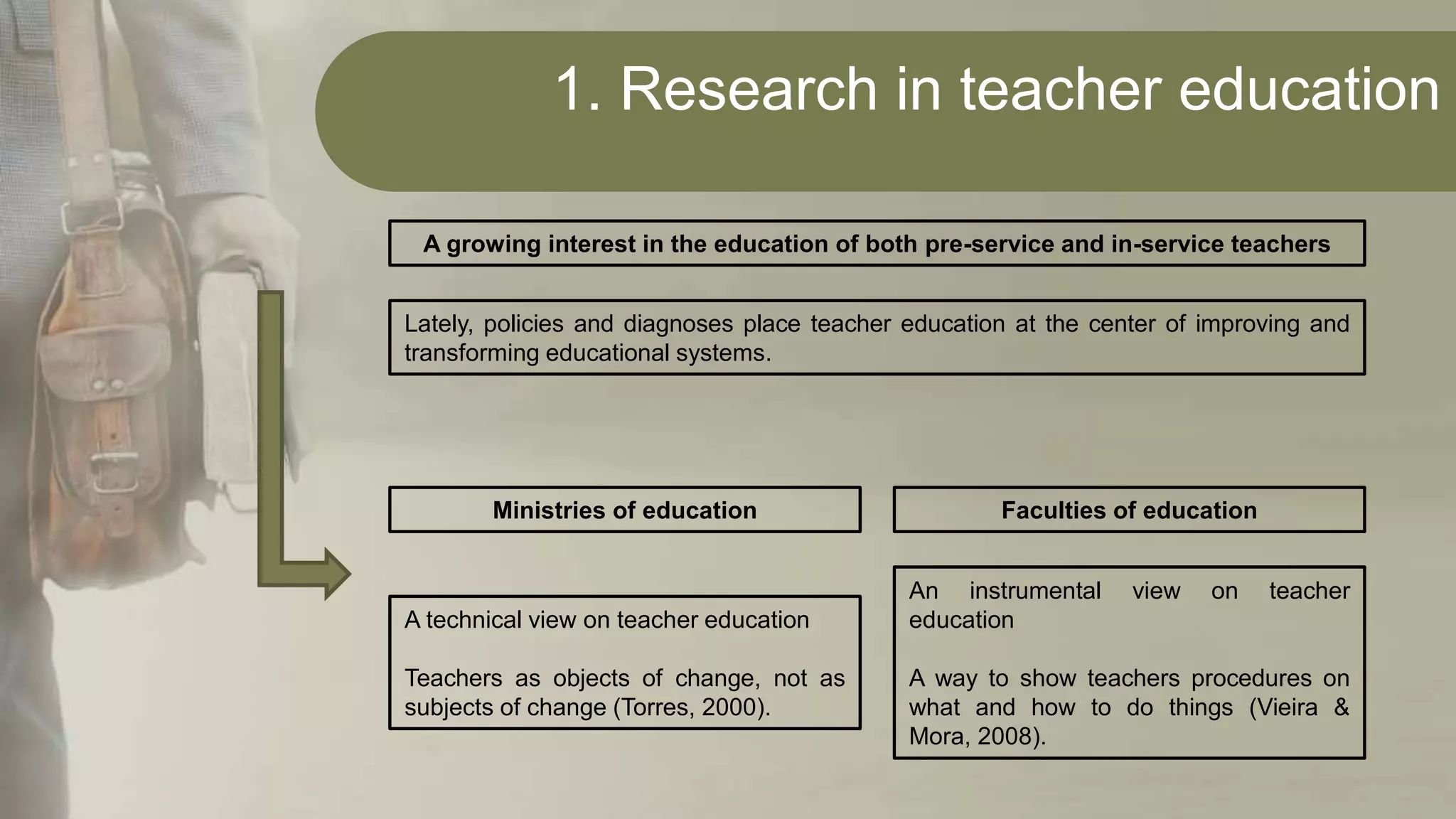
1. Research in teacher education
Lately, policies and diagnoses place teacher education at the center of improving and
transforming educational systems.
A growing interest in the education of both pre-service and in-service teachers
A technical view on teacher education
Teachers as objects of change, not as
subjects of change (Torres, 2000).
Ministries of education
An instrumental view on teacher
education
A way to show teachers procedures on
what and how to do things (Vieira &
Mora, 2008).
Faculties of education
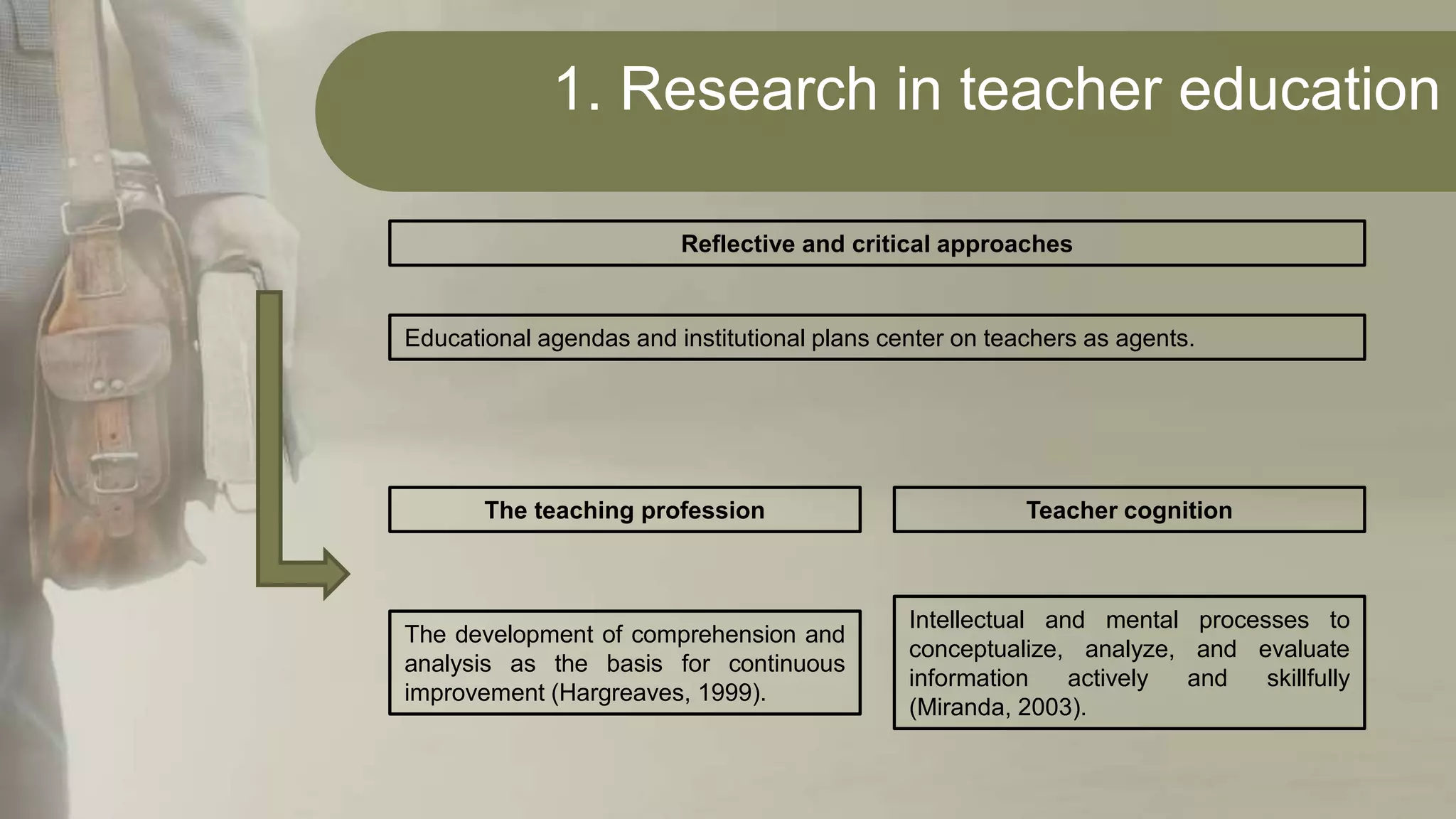
1. Research in teacher education
Educational agendas and institutional plans center on teachers as agents.
Reflective and critical approaches
The development of comprehension and
analysis as the basis for continuous
improvement (Hargreaves, 1999).
The teaching profession
Intellectual and mental processes to
conceptualize, analyze, and evaluate
information actively and skillfully
(Miranda, 2003).
Teacher cognition
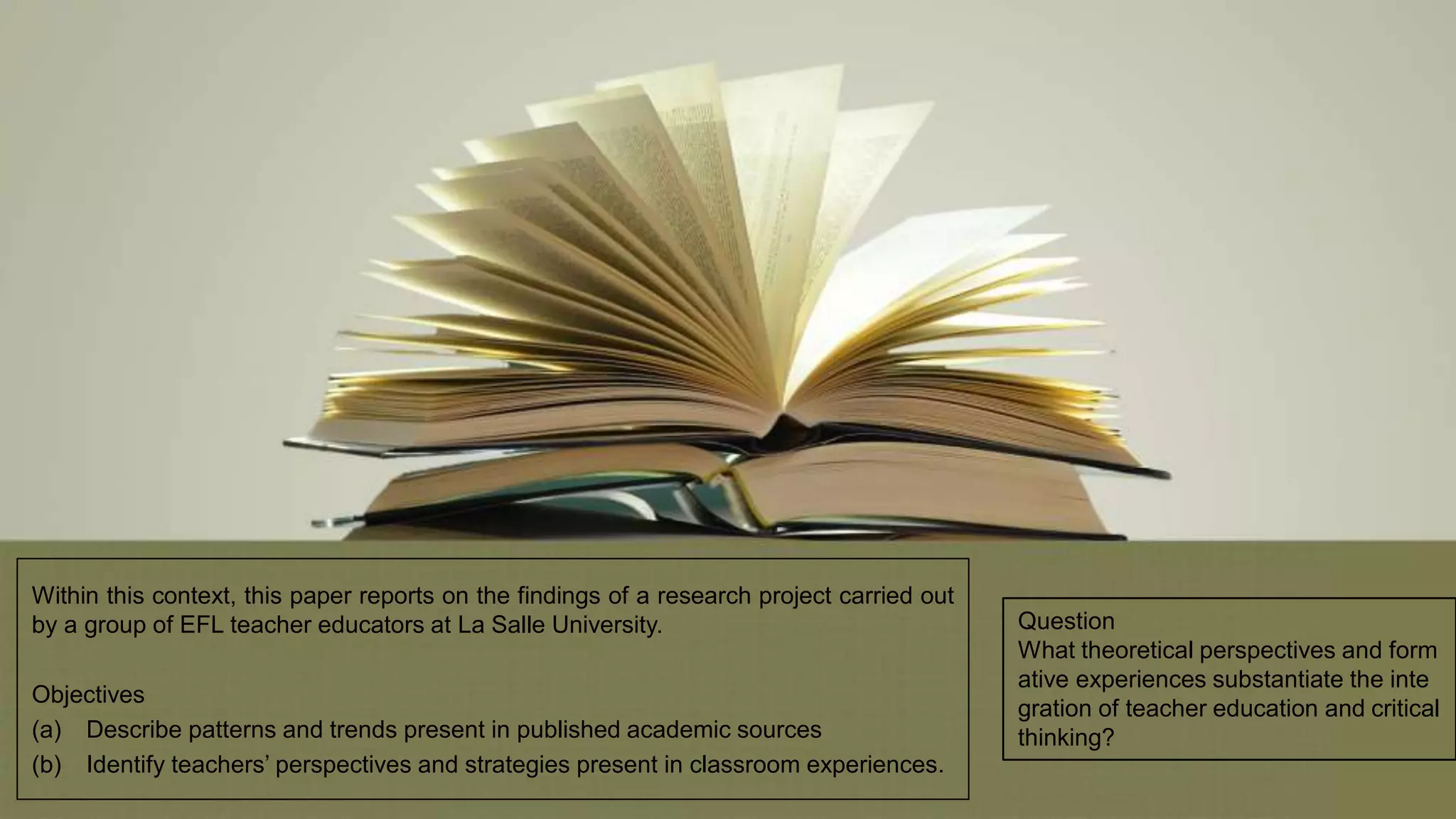
Within this context, this paper reports on the findings of a research project carried out
by a group of EFL teacher educators at La Salle University.
Objectives
(a) Describe patterns and trends present in published academic sources
(b) Identify teachers’ perspectives and strategies present in classroom experiences.
Question
What theoretical perspectives and form
ative experiences substantiate the inte
gration of teacher education and critical
thinking?
Theory
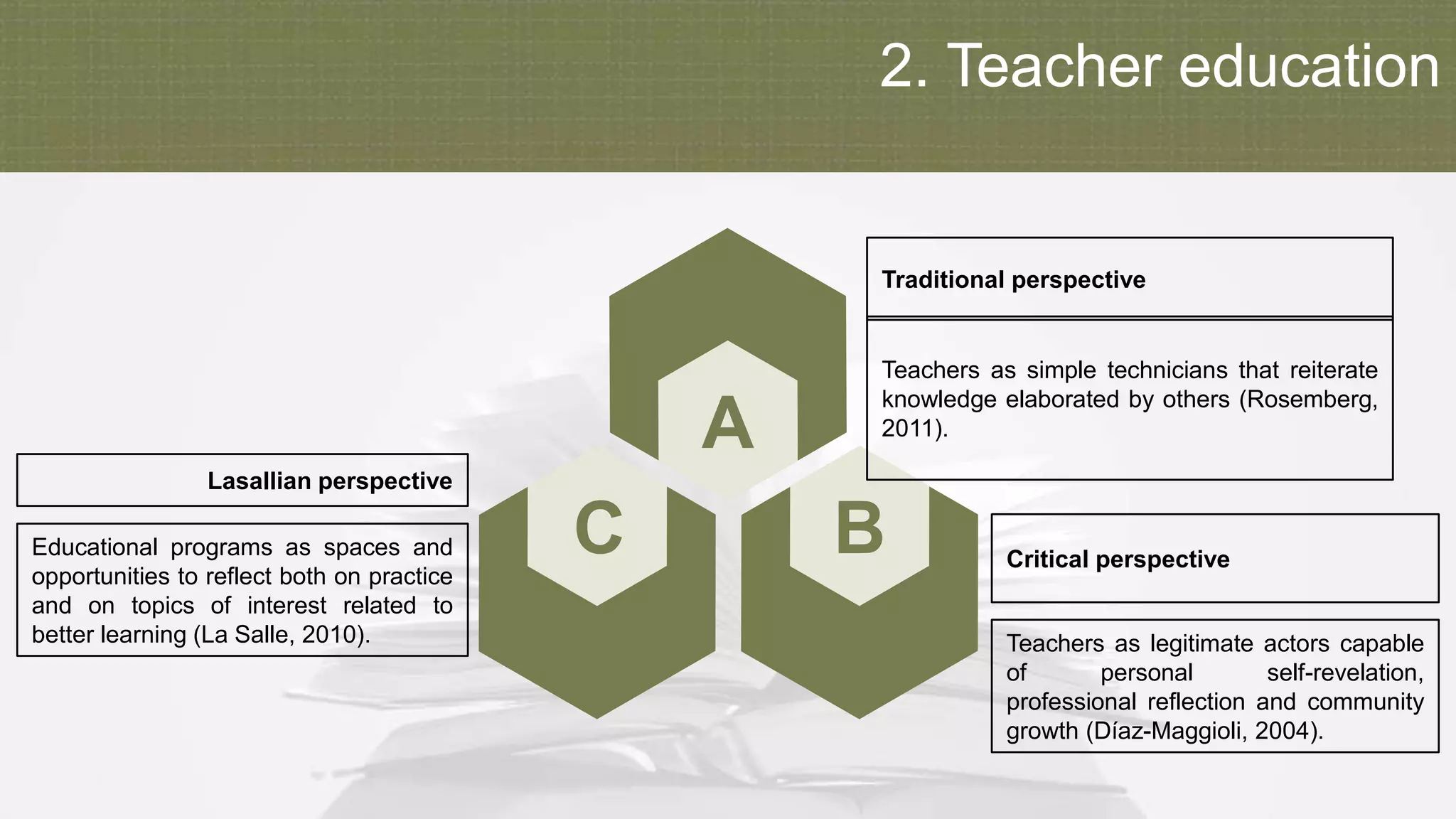
2. Teacher education
C B
A
Educational programs as spaces and
opportunities to reflect both on practice
and on topics of interest related to
better learning (La Salle, 2010).
Lasallian perspective
Teachers as legitimate actors capable
of personal self-revelation,
professional reflection and community
growth (Díaz-Maggioli, 2004).
Critical perspective
Teachers as simple technicians that reiterate
knowledge elaborated by others (Rosemberg,
2011).
Traditional perspective
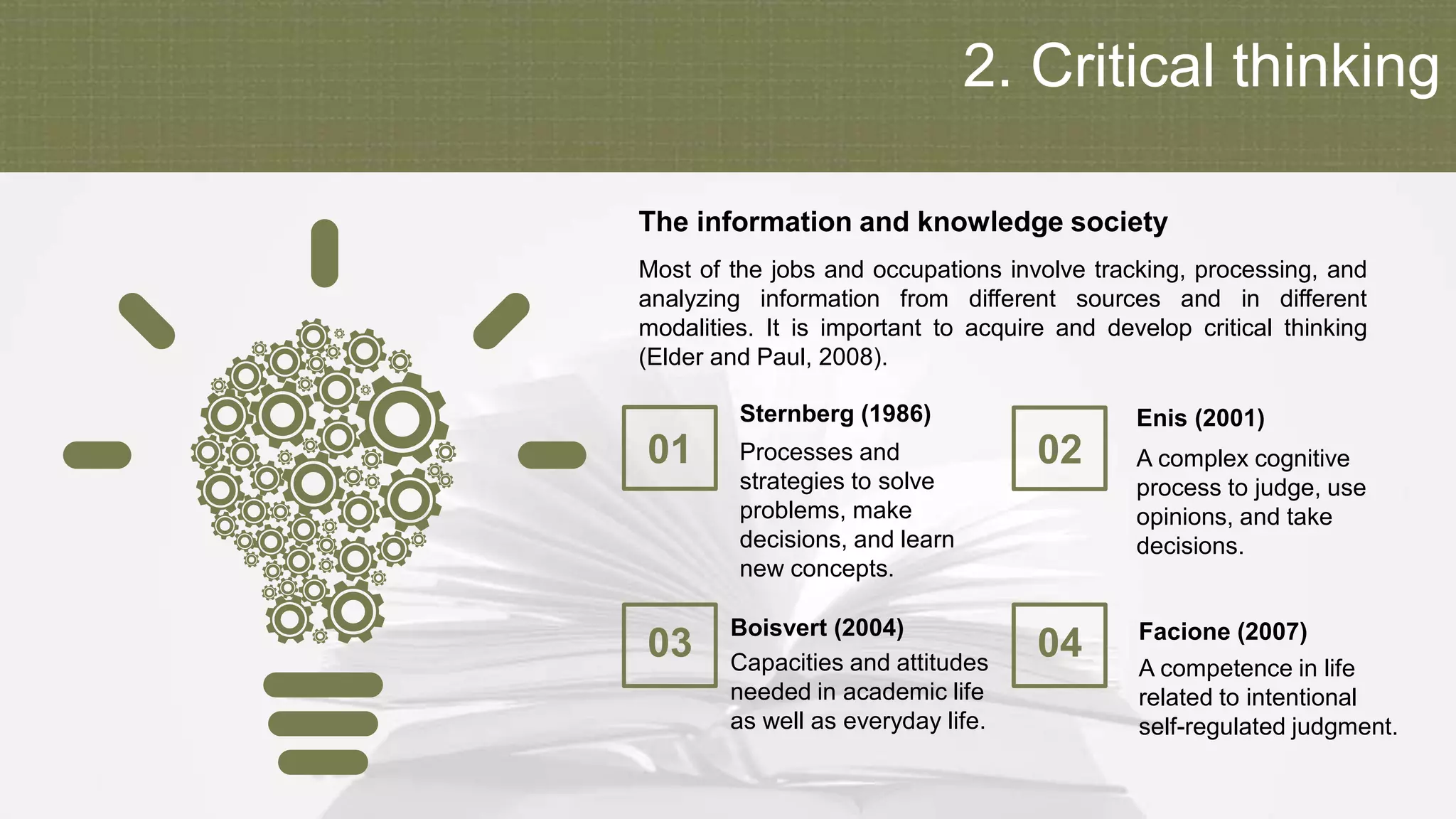
2. Critical thinking
01 Processes and
strategies to solve
problems, make
decisions, and learn
new concepts.
Sternberg (1986)
03 Capacities and attitudes
needed in academic life
as well as everyday life.
Boisvert (2004)
02 A complex cognitive
process to judge, use
opinions, and take
decisions.
Enis (2001)
04 A competence in life
related to intentional
self-regulated judgment.
Facione (2007)
Most of the jobs and occupations involve tracking, processing, and
analyzing information from different sources and in different
modalities. It is important to acquire and develop critical thinking
(Elder and Paul, 2008).
The information and knowledge society
Methodology
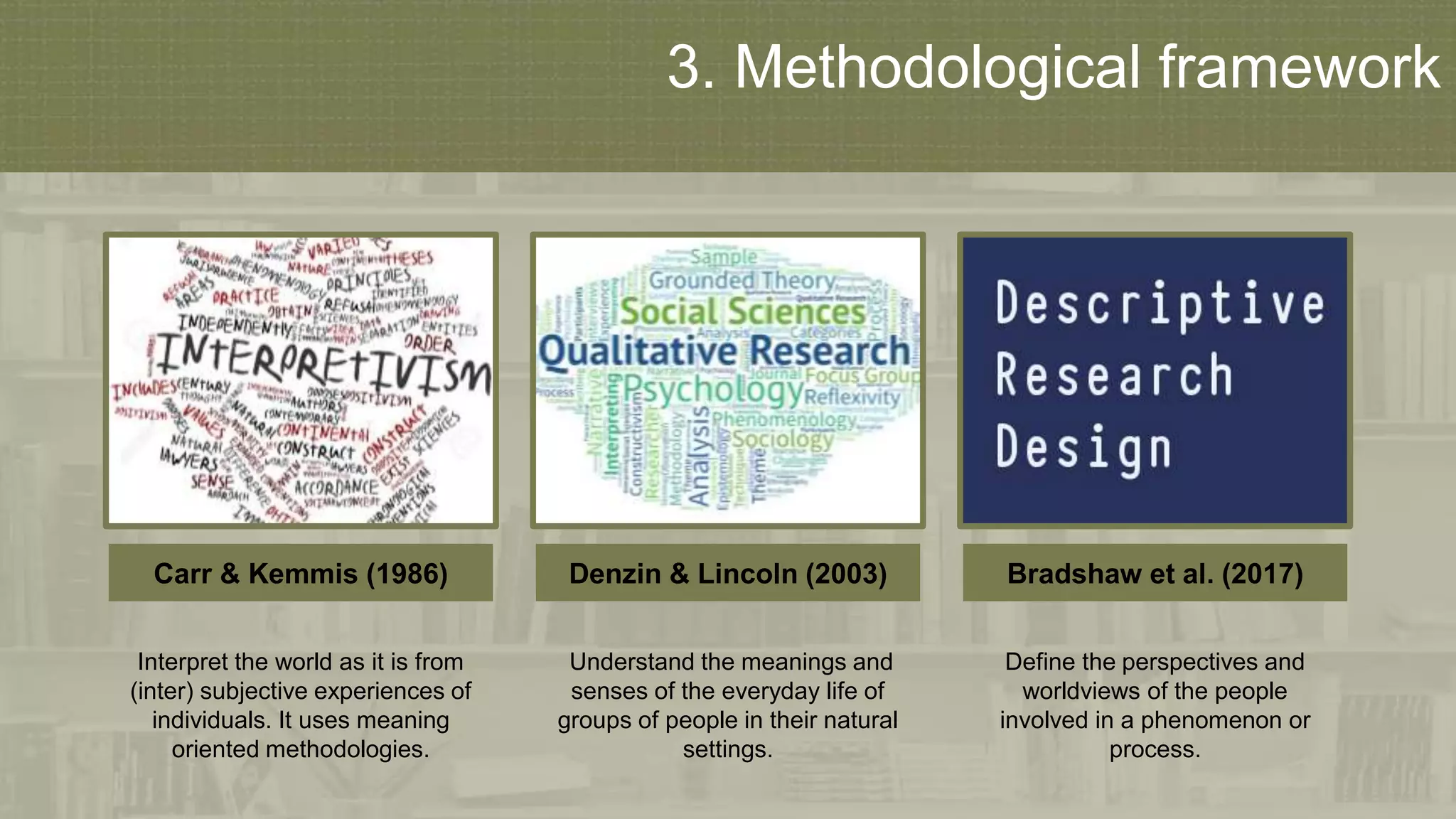
3. Methodological framework
Carr & Kemmis (1986)
Interpret the world as it is from
(inter) subjective experiences of
individuals. It uses meaning
oriented methodologies.
Denzin & Lincoln (2003)
Understand the meanings and
senses of the everyday life of
groups of people in their natural
settings.
Bradshaw et al. (2017)
Define the perspectives and
worldviews of the people
involved in a phenomenon or
process.
3. Methodological framework
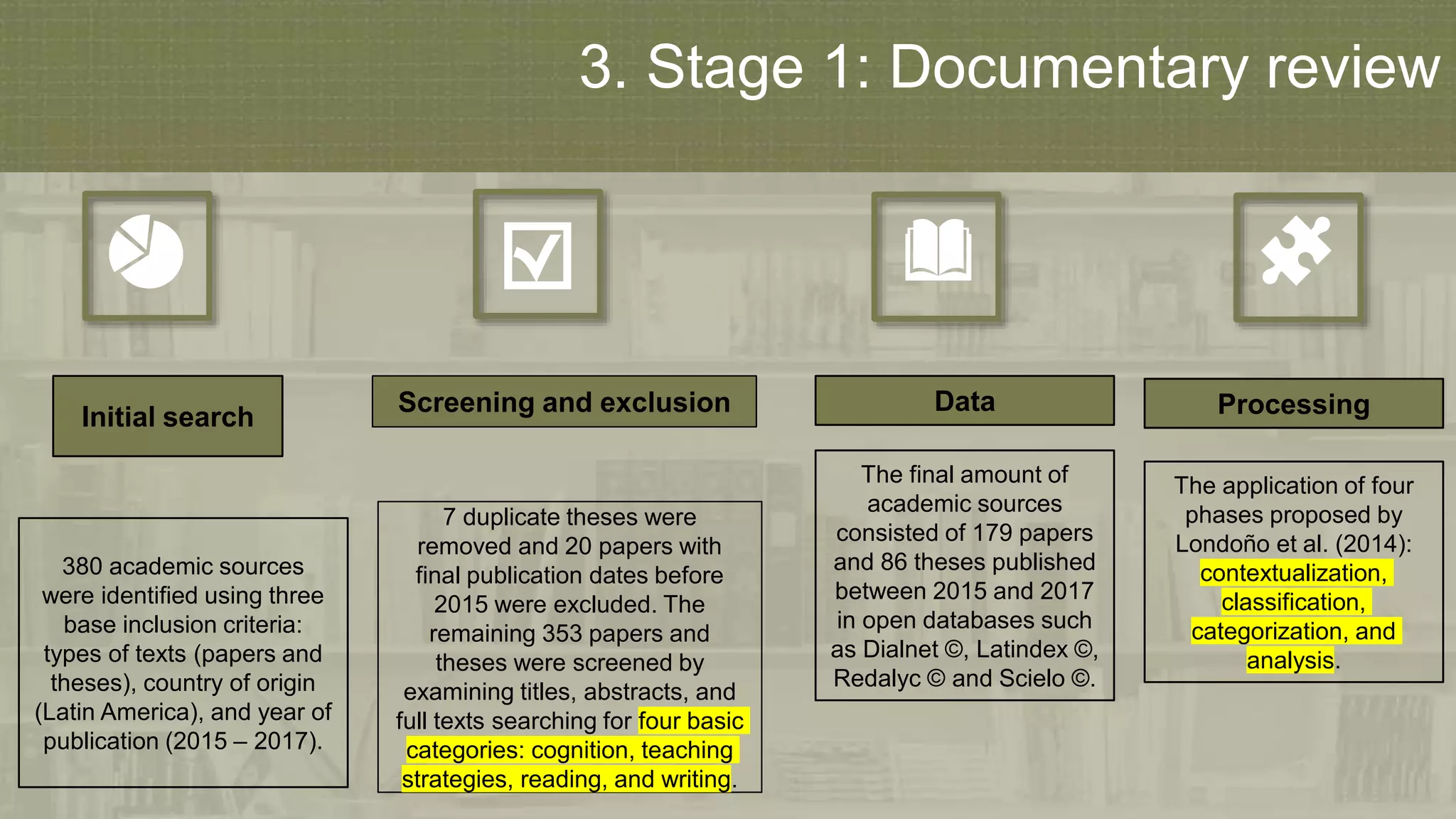
3. Stage 1: Documentary review
The final amount of
academic sources
consisted of 179 papers
and 86 theses published
between 2015 and 2017
in open databases such
as Dialnet ©, Latindex ©,
Redalyc © and Scielo ©.
Data
380 academic sources
were identified using three
base inclusion criteria:
types of texts (papers and
theses), country of origin
(Latin America), and year of
publication (2015 – 2017).
Initial search
7 duplicate theses were
removed and 20 papers with
final publication dates before
2015 were excluded. The
remaining 353 papers and
theses were screened by
examining titles, abstracts, and
full texts searching for four basic
categories: cognition, teaching
strategies, reading, and writing.
Screening and exclusion
The application of four
phases proposed by
Londoño et al. (2014):
contextualization,
classification,
categorization, and
analysis.
Processing
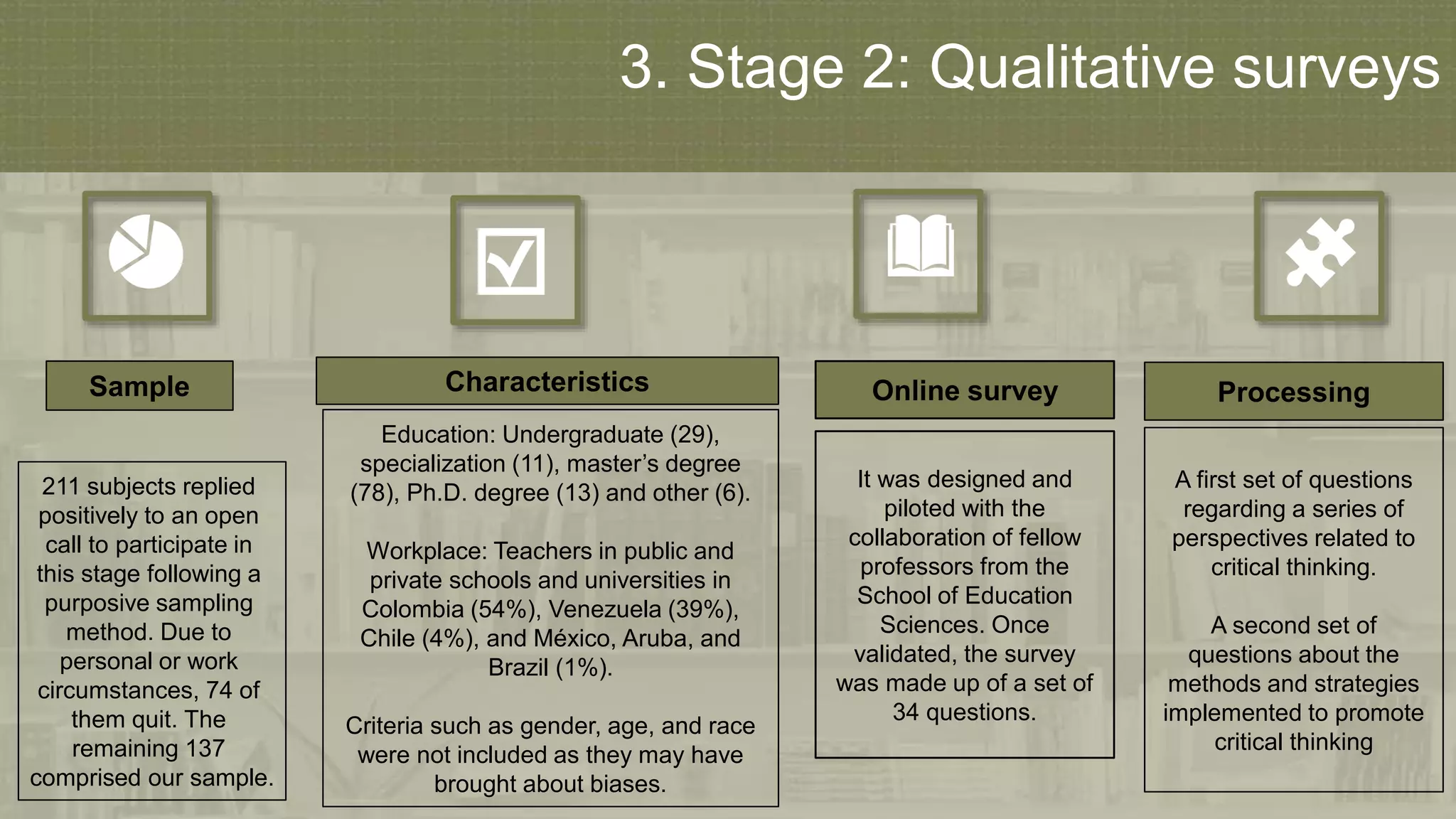
3. Stage 2: Qualitative surveys
It was designed and
piloted with the
collaboration of fellow
professors from the
School of Education
Sciences. Once
validated, the survey
was made up of a set of
34 questions.
Online survey
211 subjects replied
positively to an open
call to participate in
this stage following a
purposive sampling
method. Due to
personal or work
circumstances, 74 of
them quit. The
remaining 137
comprised our sample.
Sample
Education: Undergraduate (29),
specialization (11), master’s degree
(78), Ph.D. degree (13) and other (6).
Workplace: Teachers in public and
private schools and universities in
Colombia (54%), Venezuela (39%),
Chile (4%), and México, Aruba, and
Brazil (1%).
Criteria such as gender, age, and race
were not included as they may have
brought about biases.
Characteristics
A first set of questions
regarding a series of
perspectives related to
critical thinking.
A second set of
questions about the
methods and strategies
implemented to promote
critical thinking
Processing
Results
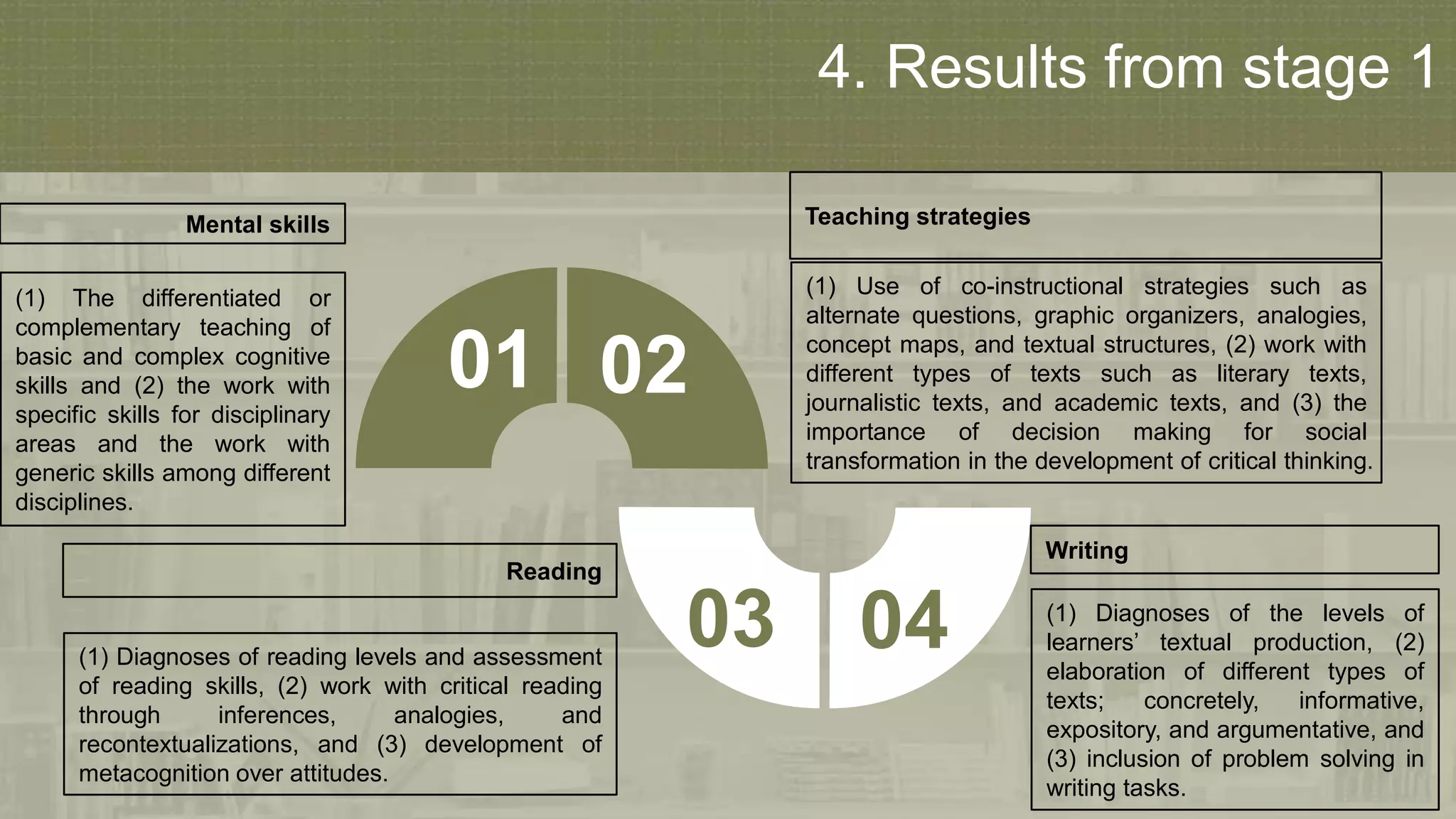
4. Results from stage 1
(1) The differentiated or
complementary teaching of
basic and complex cognitive
skills and (2) the work with
specific skills for disciplinary
areas and the work with
generic skills among different
disciplines.
Mental skills
(1) Diagnoses of reading levels and assessment
of reading skills, (2) work with critical reading
through inferences, analogies, and
recontextualizations, and (3) development of
metacognition over attitudes.
Reading
(1) Use of co-instructional strategies such as
alternate questions, graphic organizers, analogies,
concept maps, and textual structures, (2) work with
different types of texts such as literary texts,
journalistic texts, and academic texts, and (3) the
importance of decision making for social
transformation in the development of critical thinking.
Teaching strategies
(1) Diagnoses of the levels of
learners’ textual production, (2)
elaboration of different types of
texts; concretely, informative,
expository, and argumentative, and
(3) inclusion of problem solving in
writing tasks.
Writing
01 02
03 04
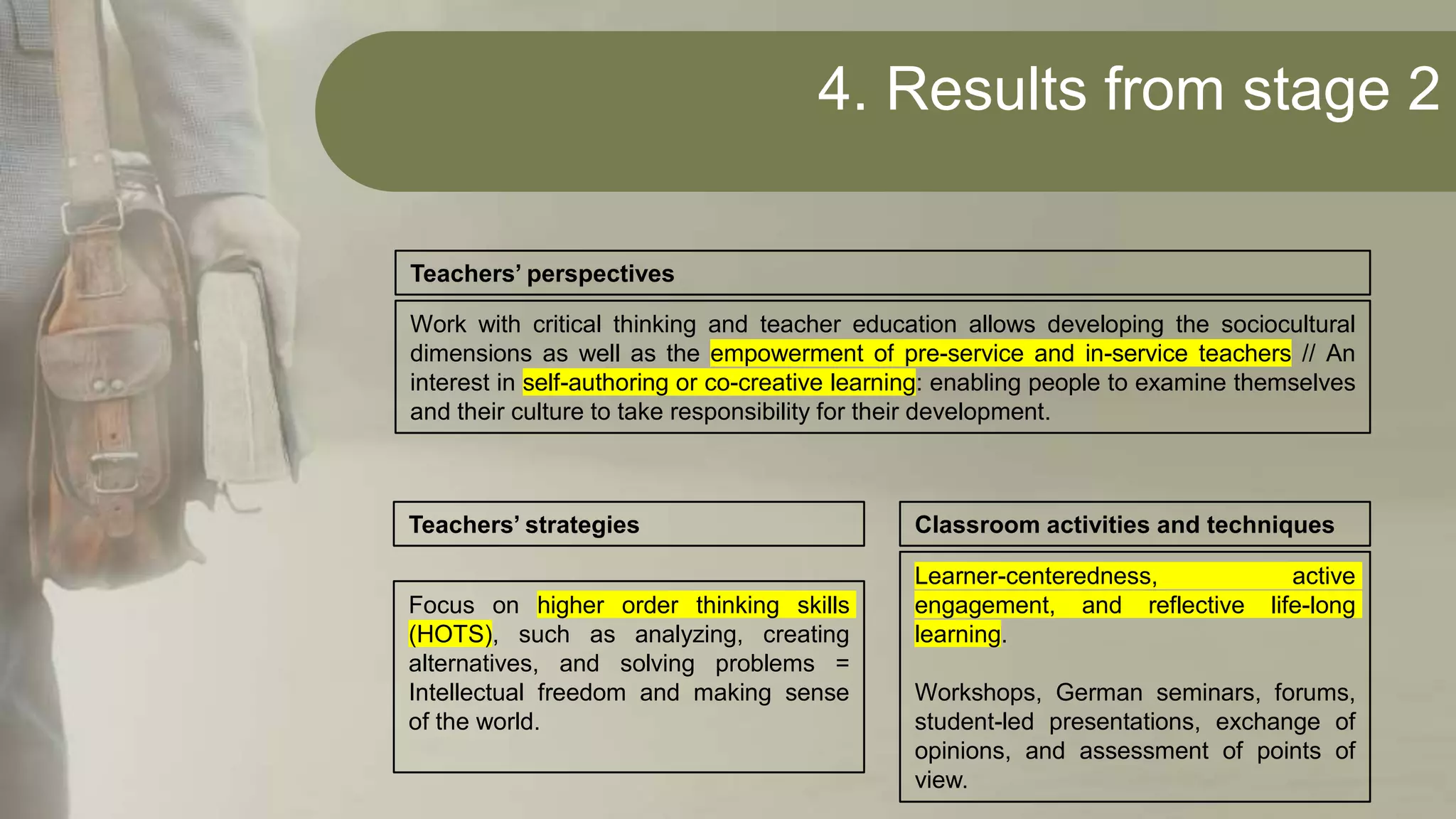
4. Results from stage 2
Work with critical thinking and teacher education allows developing the sociocultural
dimensions as well as the empowerment of pre-service and in-service teachers // An
interest in self-authoring or co-creative learning: enabling people to examine themselves
and their culture to take responsibility for their development.
Teachers’ perspectives
Focus on higher order thinking skills
(HOTS), such as analyzing, creating
alternatives, and solving problems =
Intellectual freedom and making sense
of the world.
Teachers’ strategies
Learner-centeredness, active
engagement, and reflective life-long
learning.
Workshops, German seminars, forums,
student-led presentations, exchange of
opinions, and assessment of points of
view.
Classroom activities and techniques
Conclusions
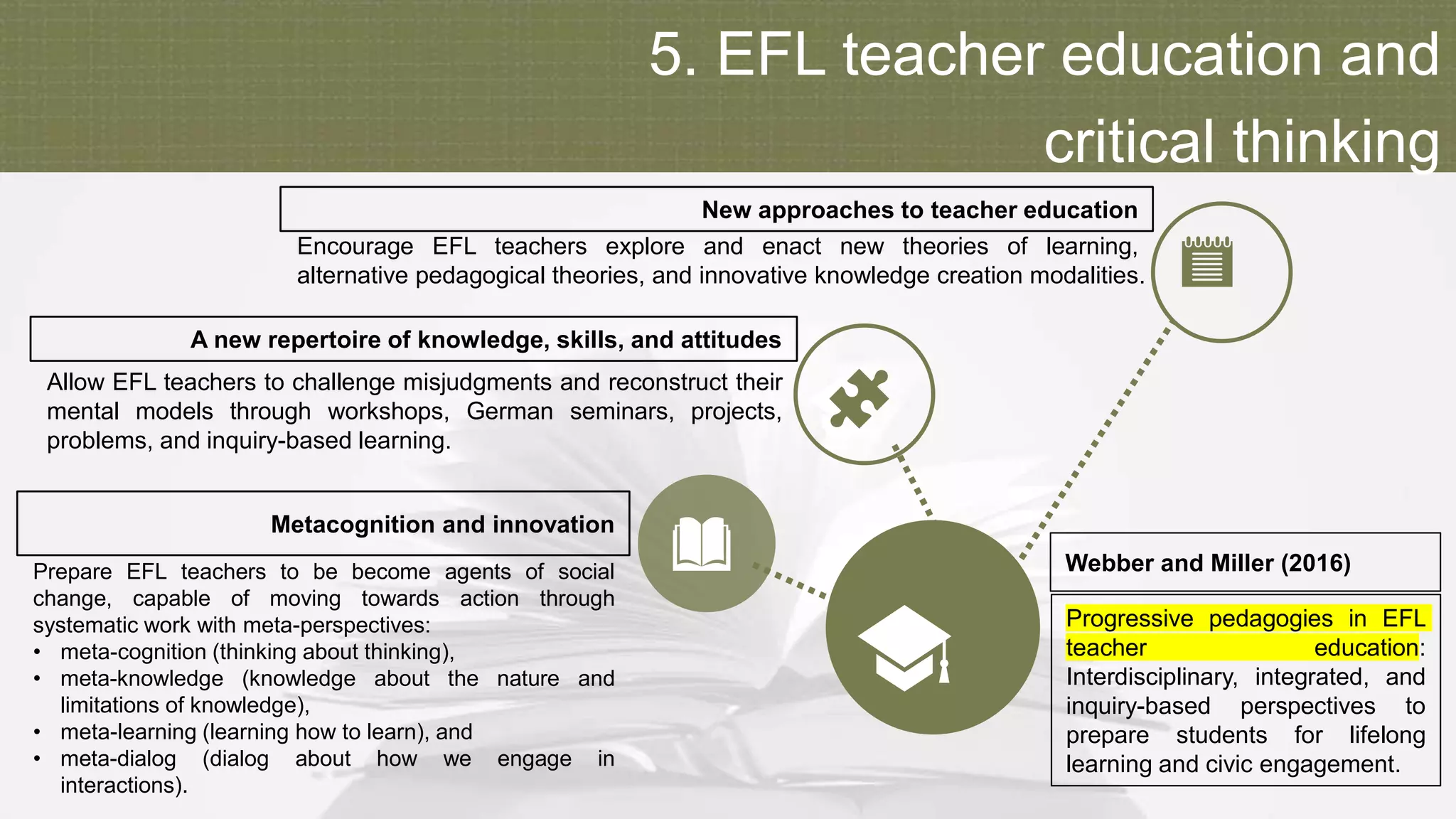
5. EFL teacher education and
critical thinking
Progressive pedagogies in EFL
teacher education:
Interdisciplinary, integrated, and
inquiry-based perspectives to
prepare students for lifelong
learning and civic engagement.
Webber and Miller (2016)Prepare EFL teachers to be become agents of social
change, capable of moving towards action through
systematic work with meta-perspectives:
• meta-cognition (thinking about thinking),
• meta-knowledge (knowledge about the nature and
limitations of knowledge),
• meta-learning (learning how to learn), and
• meta-dialog (dialog about how we engage in
interactions).
Metacognition and innovation
Allow EFL teachers to challenge misjudgments and reconstruct their
mental models through workshops, German seminars, projects,
problems, and inquiry-based learning.
A new repertoire of knowledge, skills, and attitudes
Encourage EFL teachers explore and enact new theories of learning,
alternative pedagogical theories, and innovative knowledge creation modalities.
New approaches to teacher education
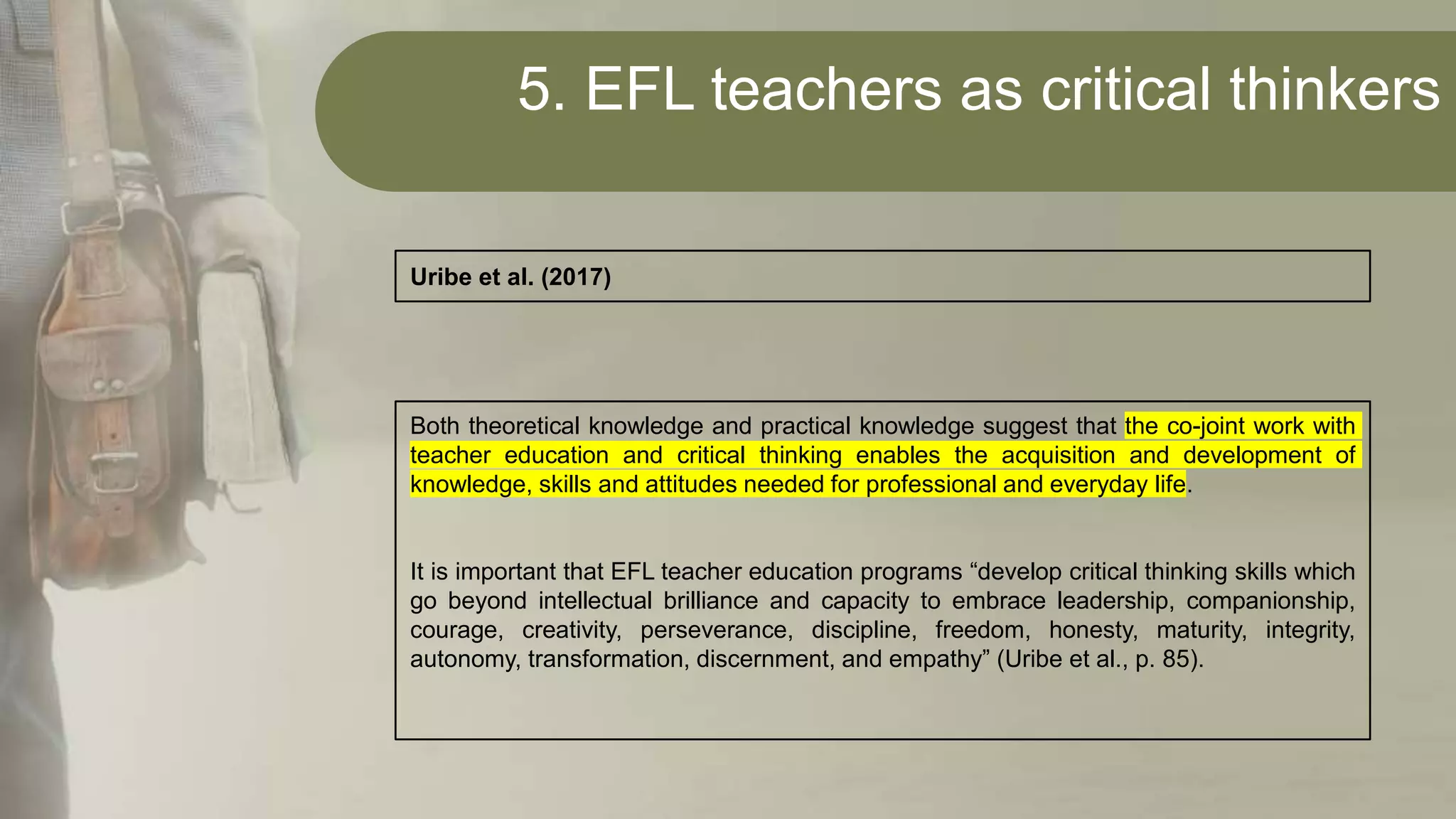
5. EFL teachers as critical thinkers
Both theoretical knowledge and practical knowledge suggest that the co-joint work with
teacher education and critical thinking enables the acquisition and development of
knowledge, skills and attitudes needed for professional and everyday life.
It is important that EFL teacher education programs “develop critical thinking skills which
go beyond intellectual brilliance and capacity to embrace leadership, companionship,
courage, creativity, perseverance, discipline, freedom, honesty, maturity, integrity,
autonomy, transformation, discernment, and empathy” (Uribe et al., p. 85).
Uribe et al. (2017)
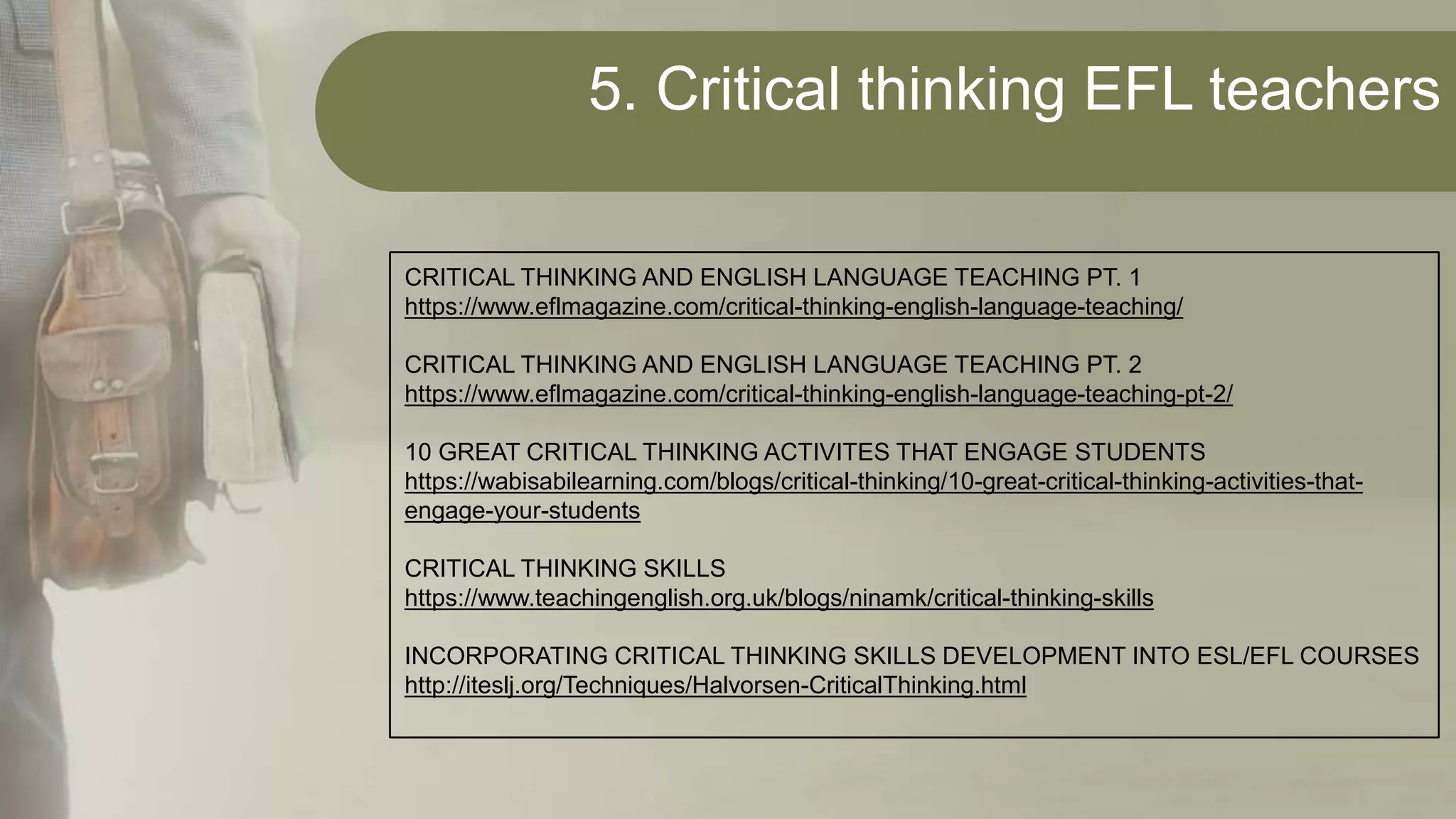
5. Critical thinking EFL teachers
CRITICAL THINKING AND ENGLISH LANGUAGE TEACHING PT. 1
https://www.eflmagazine.com/critical-thinking-english-language-teaching/
CRITICAL THINKING AND ENGLISH LANGUAGE TEACHING PT. 2
https://www.eflmagazine.com/critical-thinking-english-language-teaching-pt-2/
10 GREAT CRITICAL THINKING ACTIVITES THAT ENGAGE STUDENTS
https://wabisabilearning.com/blogs/critical-thinking/10-great-critical-thinking-activities-that-
engage-your-students
CRITICAL THINKING SKILLS
https://www.teachingenglish.org.uk/blogs/ninamk/critical-thinking-skills
INCORPORATING CRITICAL THINKING SKILLS DEVELOPMENT INTO ESL/EFL COURSES
http://iteslj.org/Techniques/Halvorsen-CriticalThinking.html
References
Boisvert, J. (2004). La formación del pensamiento crítico. Fondo de cultura económica.
Bradshaw, C., Atkinson, S., & Doody, O. (2017). Employing a Qualitative Description Approach in Health Care Research. Global
Qualitative Nursing Research, 4(1), 1-8. doi.org/10.1177/2333393617742282
Carr, W. & Kemmis, S. (1986). Becoming critical: Education, knowledge, and action research. Falmer Press
Denzin, N. y Lincoln, Y. (2003). The landscape of qualitative research. Theories and issues. Sage. Díaz-Maggioli, G. (2004).
Teacher-centered professional development. Association for Supervision and Curriculum Development.
Ennis, R. H. (2001). Critical Thinking assessment. Theory into Practice, 2(2), 179-186.
Facione, P. A. (2007). Pensamiento Crítico: ¿Qué es y por qué es importante? https://bit.ly/2ORpa3y
Hargreaves, A. (1999). Hacia una geografía social de la formación docente. En J. Ángulo, J. barquín y A. Pérez (Eds.), Desarrollo
profesional del docente: Política, investigación y práctica (pp. 119-145). MaterPrint, S.L.
Miranda, C. (2003). El pensamiento crítico en docentes de educación general básica en chile: un estudio de impacto. Estudios
pedagógicos (Valdivia), (29), 39-54.
Rosemberg, D. (2011). Introducción. En D. Rosemberg (ed.), ¿Cómo se forma a un buen docente? (pp. 3-6). UNIPE Editorial
Universitaria.
Sternberg, R. J. (1986). Critical Thinking: Its Nature, Measurement, and Improvement. National Institute of Education.
Torres, R. (2000). De agentes de la reforma a sujetos del cambio: La encrucijada docente en américa latina. Revista Perspectivas,
23(2), 1-21.
Universidad de La Salle. (2010). Documento institucional No. 37: La formación y el desarrollo profesional docente. CMYK Diseños e
Impresos.
Uribe, O., Uribe, D., & Vargas, M. (2017). Critical Thinking and its Importance in Education: Some Reflections. Rastros Rostros,
19(34), 78-88.doi:10.16925/ra.v19i34.2144
Vieira, I. & Moreira, M. A. (2008). Reflective teacher education towards learner autonomy: Building a culture of possibility. In M.
Raya and T. Lamb, (eds.), Pedagogy for Autonomy in Language Education: Theory, practice, and teacher education (pp. 266- 282).
Authentik.
Webber, G., & Miller, D. (2016). Progressive pedagogies and teacher education: A review of the literature. McGill journal of
education, 51(3), 1061-1080.
Thank you
Yamith José Fandiño
E-mails: yfandino@unisalle.edu.co; teacheryamith@gmail.com
ORCID: 0000-0002-5567-5465

Teacher education and critical thinking systematizing theory and practice

  • 1.
    3rd International Symposiumon Research in Foreign Language Teaching: Alternatives in English Language Teaching to New Realities Teacher education and critical thinking: Systematizing theoretical perspectives and formative experiences in ELT Yamith José Fandiño Parra M.A. in Teaching Doctoral student in Education and Society
  • 2.
  • 3.
  • 4.
  • 5.
  • 6.
  • 7.
    1. Research inteacher education Lately, policies and diagnoses place teacher education at the center of improving and transforming educational systems. A growing interest in the education of both pre-service and in-service teachers A technical view on teacher education Teachers as objects of change, not as subjects of change (Torres, 2000). Ministries of education An instrumental view on teacher education A way to show teachers procedures on what and how to do things (Vieira & Mora, 2008). Faculties of education
  • 8.
    1. Research inteacher education Educational agendas and institutional plans center on teachers as agents. Reflective and critical approaches The development of comprehension and analysis as the basis for continuous improvement (Hargreaves, 1999). The teaching profession Intellectual and mental processes to conceptualize, analyze, and evaluate information actively and skillfully (Miranda, 2003). Teacher cognition
  • 9.
    Within this context,this paper reports on the findings of a research project carried out by a group of EFL teacher educators at La Salle University. Objectives (a) Describe patterns and trends present in published academic sources (b) Identify teachers’ perspectives and strategies present in classroom experiences. Question What theoretical perspectives and form ative experiences substantiate the inte gration of teacher education and critical thinking?
  • 10.
  • 11.
    2. Teacher education CB A Educational programs as spaces and opportunities to reflect both on practice and on topics of interest related to better learning (La Salle, 2010). Lasallian perspective Teachers as legitimate actors capable of personal self-revelation, professional reflection and community growth (Díaz-Maggioli, 2004). Critical perspective Teachers as simple technicians that reiterate knowledge elaborated by others (Rosemberg, 2011). Traditional perspective
  • 12.
    2. Critical thinking 01Processes and strategies to solve problems, make decisions, and learn new concepts. Sternberg (1986) 03 Capacities and attitudes needed in academic life as well as everyday life. Boisvert (2004) 02 A complex cognitive process to judge, use opinions, and take decisions. Enis (2001) 04 A competence in life related to intentional self-regulated judgment. Facione (2007) Most of the jobs and occupations involve tracking, processing, and analyzing information from different sources and in different modalities. It is important to acquire and develop critical thinking (Elder and Paul, 2008). The information and knowledge society
  • 13.
  • 14.
    3. Methodological framework Carr& Kemmis (1986) Interpret the world as it is from (inter) subjective experiences of individuals. It uses meaning oriented methodologies. Denzin & Lincoln (2003) Understand the meanings and senses of the everyday life of groups of people in their natural settings. Bradshaw et al. (2017) Define the perspectives and worldviews of the people involved in a phenomenon or process.
  • 15.
  • 16.
    3. Stage 1:Documentary review The final amount of academic sources consisted of 179 papers and 86 theses published between 2015 and 2017 in open databases such as Dialnet ©, Latindex ©, Redalyc © and Scielo ©. Data 380 academic sources were identified using three base inclusion criteria: types of texts (papers and theses), country of origin (Latin America), and year of publication (2015 – 2017). Initial search 7 duplicate theses were removed and 20 papers with final publication dates before 2015 were excluded. The remaining 353 papers and theses were screened by examining titles, abstracts, and full texts searching for four basic categories: cognition, teaching strategies, reading, and writing. Screening and exclusion The application of four phases proposed by Londoño et al. (2014): contextualization, classification, categorization, and analysis. Processing
  • 17.
    3. Stage 2:Qualitative surveys It was designed and piloted with the collaboration of fellow professors from the School of Education Sciences. Once validated, the survey was made up of a set of 34 questions. Online survey 211 subjects replied positively to an open call to participate in this stage following a purposive sampling method. Due to personal or work circumstances, 74 of them quit. The remaining 137 comprised our sample. Sample Education: Undergraduate (29), specialization (11), master’s degree (78), Ph.D. degree (13) and other (6). Workplace: Teachers in public and private schools and universities in Colombia (54%), Venezuela (39%), Chile (4%), and México, Aruba, and Brazil (1%). Criteria such as gender, age, and race were not included as they may have brought about biases. Characteristics A first set of questions regarding a series of perspectives related to critical thinking. A second set of questions about the methods and strategies implemented to promote critical thinking Processing
  • 18.
  • 19.
    4. Results fromstage 1 (1) The differentiated or complementary teaching of basic and complex cognitive skills and (2) the work with specific skills for disciplinary areas and the work with generic skills among different disciplines. Mental skills (1) Diagnoses of reading levels and assessment of reading skills, (2) work with critical reading through inferences, analogies, and recontextualizations, and (3) development of metacognition over attitudes. Reading (1) Use of co-instructional strategies such as alternate questions, graphic organizers, analogies, concept maps, and textual structures, (2) work with different types of texts such as literary texts, journalistic texts, and academic texts, and (3) the importance of decision making for social transformation in the development of critical thinking. Teaching strategies (1) Diagnoses of the levels of learners’ textual production, (2) elaboration of different types of texts; concretely, informative, expository, and argumentative, and (3) inclusion of problem solving in writing tasks. Writing 01 02 03 04
  • 20.
    4. Results fromstage 2 Work with critical thinking and teacher education allows developing the sociocultural dimensions as well as the empowerment of pre-service and in-service teachers // An interest in self-authoring or co-creative learning: enabling people to examine themselves and their culture to take responsibility for their development. Teachers’ perspectives Focus on higher order thinking skills (HOTS), such as analyzing, creating alternatives, and solving problems = Intellectual freedom and making sense of the world. Teachers’ strategies Learner-centeredness, active engagement, and reflective life-long learning. Workshops, German seminars, forums, student-led presentations, exchange of opinions, and assessment of points of view. Classroom activities and techniques
  • 21.
  • 22.
    5. EFL teachereducation and critical thinking Progressive pedagogies in EFL teacher education: Interdisciplinary, integrated, and inquiry-based perspectives to prepare students for lifelong learning and civic engagement. Webber and Miller (2016)Prepare EFL teachers to be become agents of social change, capable of moving towards action through systematic work with meta-perspectives: • meta-cognition (thinking about thinking), • meta-knowledge (knowledge about the nature and limitations of knowledge), • meta-learning (learning how to learn), and • meta-dialog (dialog about how we engage in interactions). Metacognition and innovation Allow EFL teachers to challenge misjudgments and reconstruct their mental models through workshops, German seminars, projects, problems, and inquiry-based learning. A new repertoire of knowledge, skills, and attitudes Encourage EFL teachers explore and enact new theories of learning, alternative pedagogical theories, and innovative knowledge creation modalities. New approaches to teacher education
  • 23.
    5. EFL teachersas critical thinkers Both theoretical knowledge and practical knowledge suggest that the co-joint work with teacher education and critical thinking enables the acquisition and development of knowledge, skills and attitudes needed for professional and everyday life. It is important that EFL teacher education programs “develop critical thinking skills which go beyond intellectual brilliance and capacity to embrace leadership, companionship, courage, creativity, perseverance, discipline, freedom, honesty, maturity, integrity, autonomy, transformation, discernment, and empathy” (Uribe et al., p. 85). Uribe et al. (2017)
  • 24.
    5. Critical thinkingEFL teachers CRITICAL THINKING AND ENGLISH LANGUAGE TEACHING PT. 1 https://www.eflmagazine.com/critical-thinking-english-language-teaching/ CRITICAL THINKING AND ENGLISH LANGUAGE TEACHING PT. 2 https://www.eflmagazine.com/critical-thinking-english-language-teaching-pt-2/ 10 GREAT CRITICAL THINKING ACTIVITES THAT ENGAGE STUDENTS https://wabisabilearning.com/blogs/critical-thinking/10-great-critical-thinking-activities-that- engage-your-students CRITICAL THINKING SKILLS https://www.teachingenglish.org.uk/blogs/ninamk/critical-thinking-skills INCORPORATING CRITICAL THINKING SKILLS DEVELOPMENT INTO ESL/EFL COURSES http://iteslj.org/Techniques/Halvorsen-CriticalThinking.html
  • 25.
    References Boisvert, J. (2004).La formación del pensamiento crítico. Fondo de cultura económica. Bradshaw, C., Atkinson, S., & Doody, O. (2017). Employing a Qualitative Description Approach in Health Care Research. Global Qualitative Nursing Research, 4(1), 1-8. doi.org/10.1177/2333393617742282 Carr, W. & Kemmis, S. (1986). Becoming critical: Education, knowledge, and action research. Falmer Press Denzin, N. y Lincoln, Y. (2003). The landscape of qualitative research. Theories and issues. Sage. Díaz-Maggioli, G. (2004). Teacher-centered professional development. Association for Supervision and Curriculum Development. Ennis, R. H. (2001). Critical Thinking assessment. Theory into Practice, 2(2), 179-186. Facione, P. A. (2007). Pensamiento Crítico: ¿Qué es y por qué es importante? https://bit.ly/2ORpa3y Hargreaves, A. (1999). Hacia una geografía social de la formación docente. En J. Ángulo, J. barquín y A. Pérez (Eds.), Desarrollo profesional del docente: Política, investigación y práctica (pp. 119-145). MaterPrint, S.L. Miranda, C. (2003). El pensamiento crítico en docentes de educación general básica en chile: un estudio de impacto. Estudios pedagógicos (Valdivia), (29), 39-54. Rosemberg, D. (2011). Introducción. En D. Rosemberg (ed.), ¿Cómo se forma a un buen docente? (pp. 3-6). UNIPE Editorial Universitaria. Sternberg, R. J. (1986). Critical Thinking: Its Nature, Measurement, and Improvement. National Institute of Education. Torres, R. (2000). De agentes de la reforma a sujetos del cambio: La encrucijada docente en américa latina. Revista Perspectivas, 23(2), 1-21. Universidad de La Salle. (2010). Documento institucional No. 37: La formación y el desarrollo profesional docente. CMYK Diseños e Impresos. Uribe, O., Uribe, D., & Vargas, M. (2017). Critical Thinking and its Importance in Education: Some Reflections. Rastros Rostros, 19(34), 78-88.doi:10.16925/ra.v19i34.2144 Vieira, I. & Moreira, M. A. (2008). Reflective teacher education towards learner autonomy: Building a culture of possibility. In M. Raya and T. Lamb, (eds.), Pedagogy for Autonomy in Language Education: Theory, practice, and teacher education (pp. 266- 282). Authentik. Webber, G., & Miller, D. (2016). Progressive pedagogies and teacher education: A review of the literature. McGill journal of education, 51(3), 1061-1080.
  • 26.
    Thank you Yamith JoséFandiño E-mails: yfandino@unisalle.edu.co; teacheryamith@gmail.com ORCID: 0000-0002-5567-5465