TEACHING CHILDREN
WITH A TBL APPROACH:
IS IT POSSIBLE?
REFLECTING ON THE APPROACH
Lina María Londoño M.
WHAT IS A TBL APPROACH?
Task based learning is an approach in
which:
• A task and its language are set.
• Learners are exposed to the most
natural situations in the target
language.
• Integration of skills is promoted.
WHICH ARE ITS ADVANTAGES?
• Learner centered
• Skill integration
• Meaningful learning
• Team and pair work abilities are
developed as well
• Contextualized
• Engagement and motivation
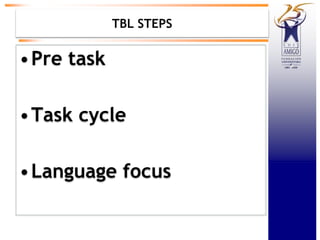
TBL STEPS
•Pre task
•Task cycle
•Language focus
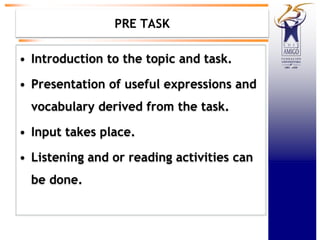
PRE TASK
• Introduction to the topic and task.
• Presentation of useful expressions and
vocabulary derived from the task.
• Input takes place.
• Listening and or reading activities can
be done.
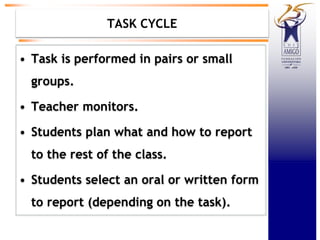
TASK CYCLE
• Task is performed in pairs or small
groups.
• Teacher monitors.
• Students plan what and how to report
to the rest of the class.
• Students select an oral or written form
to report (depending on the task).
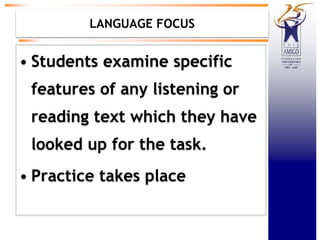
LANGUAGE FOCUS
• Students examine specific
features of any listening or
reading text which they have
looked up for the task.
• Practice takes place
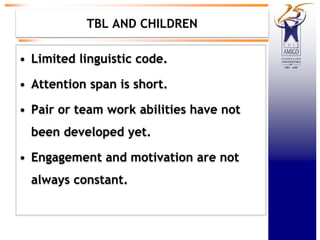
TBL AND CHILDREN
• Limited linguistic code.
• Attention span is short.
• Pair or team work abilities have not
been developed yet.
• Engagement and motivation are not
always constant.
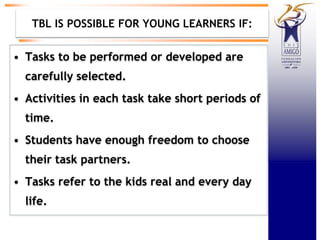
TBL IS POSSIBLE FOR YOUNG LEARNERS IF:
• Tasks to be performed or developed are
carefully selected.
• Activities in each task take short periods of
time.
• Students have enough freedom to choose
their task partners.
• Tasks refer to the kids real and every day
life.
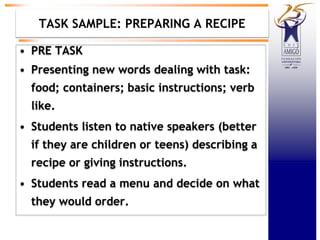
TASK SAMPLE: PREPARING A RECIPE
• PRE TASK
• Presenting new words dealing with task:
food; containers; basic instructions; verb
like.
• Students listen to native speakers (better
if they are children or teens) describing a
recipe or giving instructions.
• Students read a menu and decide on what
they would order.
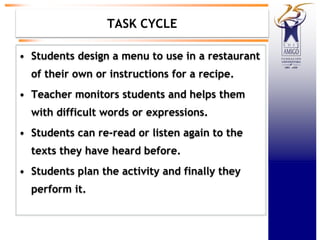
TASK CYCLE
• Students design a menu to use in a restaurant
of their own or instructions for a recipe.
• Teacher monitors students and helps them
with difficult words or expressions.
• Students can re-read or listen again to the
texts they have heard before.
• Students plan the activity and finally they
perform it.
LANGUAGE FOCUS
• Students discuss the difficulties they
had for the task performance.
• Students practice new words and
expressions derived from the task:
food, likes, giving instructions, etc.
• Students may share food or snacks
using the expressions and vocabulary.

Tbl lina

  • 1.
    TEACHING CHILDREN WITH ATBL APPROACH: IS IT POSSIBLE? REFLECTING ON THE APPROACH Lina María Londoño M.
  • 2.
    WHAT IS ATBL APPROACH? Task based learning is an approach in which: • A task and its language are set. • Learners are exposed to the most natural situations in the target language. • Integration of skills is promoted.
  • 3.
    WHICH ARE ITSADVANTAGES? • Learner centered • Skill integration • Meaningful learning • Team and pair work abilities are developed as well • Contextualized • Engagement and motivation
  • 4.
    TBL STEPS •Pre task •Taskcycle •Language focus
  • 5.
    PRE TASK • Introductionto the topic and task. • Presentation of useful expressions and vocabulary derived from the task. • Input takes place. • Listening and or reading activities can be done.
  • 6.
    TASK CYCLE • Taskis performed in pairs or small groups. • Teacher monitors. • Students plan what and how to report to the rest of the class. • Students select an oral or written form to report (depending on the task).
  • 7.
    LANGUAGE FOCUS • Studentsexamine specific features of any listening or reading text which they have looked up for the task. • Practice takes place
  • 8.
    TBL AND CHILDREN •Limited linguistic code. • Attention span is short. • Pair or team work abilities have not been developed yet. • Engagement and motivation are not always constant.
  • 9.
    TBL IS POSSIBLEFOR YOUNG LEARNERS IF: • Tasks to be performed or developed are carefully selected. • Activities in each task take short periods of time. • Students have enough freedom to choose their task partners. • Tasks refer to the kids real and every day life.
  • 10.
    TASK SAMPLE: PREPARINGA RECIPE • PRE TASK • Presenting new words dealing with task: food; containers; basic instructions; verb like. • Students listen to native speakers (better if they are children or teens) describing a recipe or giving instructions. • Students read a menu and decide on what they would order.
  • 11.
    TASK CYCLE • Studentsdesign a menu to use in a restaurant of their own or instructions for a recipe. • Teacher monitors students and helps them with difficult words or expressions. • Students can re-read or listen again to the texts they have heard before. • Students plan the activity and finally they perform it.
  • 12.
    LANGUAGE FOCUS • Studentsdiscuss the difficulties they had for the task performance. • Students practice new words and expressions derived from the task: food, likes, giving instructions, etc. • Students may share food or snacks using the expressions and vocabulary.