Merger
with

and

1
Presented By: •
•
•
•
•

Vishal Gunjalkar
Mangesh Dongade
Chetan Kadam
Pratik Gupta
Rohit Dhoundiyal

2
Preface of the Merger


On June 2008, TATA Motors acquired Jaguar & Land Rover(JLR)



Deal was worth US$ 2.3 billion



Acquire global footprint and entry in high-end premium segment
of automobile industry



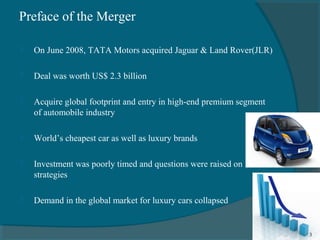
World’s cheapest car as well as luxury brands



Investment was poorly timed and questions were raised on
strategies



Demand in the global market for luxury cars collapsed

3
TATA Motors


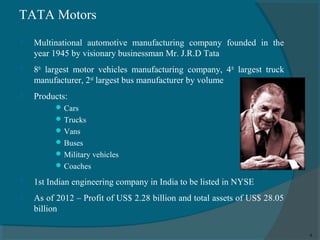
Multinational automotive manufacturing company founded in the
year 1945 by visionary businessman Mr. J.R.D Tata



8th largest motor vehicles manufacturing company, 4 th largest truck
manufacturer, 2nd largest bus manufacturer by volume



Products:
 Cars
 Trucks
 Vans
 Buses
 Military vehicles
 Coaches



1st Indian engineering company in India to be listed in NYSE



As of 2012 – Profit of US$ 2.28 billion and total assets of US$ 28.05
billion
4
Jaguar Land Rover


Jaguar cars was founded in the year 1922 by Mr. William
Walmsley & Mr. William Lyons as “Swallow Sidecar Company”



Land Rover was founded in the year 1978



Ford Motors acquired Jaguar 1989 for US$ 2.5 billion and Land
Rover in 2000 for US$ 2.75 billion



Both the company are manufacturers of luxury cars/premium
segment cars & SUV



As of 2013 – Profit of £ 1.215 billion

5
British brand under Ford


Ford is a leading automaker & 5th largest automobile company
founded in the year 1903



Ford established Premier Automotive Group(PAG) in the year
1999 which consisted of Jaguar, Ashton Martin, Lincoln and later
Land Rover



Reasons for selling JLR:
 Unprofitable Venture
 Unstable market & economic condition
 High cost of labour



Other brands sold by Ford:
 Ashton Martin
 Volvo
6
Ford sells JLR


September 2006, Mr. Allan Mulally assumed charge of president
& CEO of Ford



Decided to dismantle PAG(Premier Automotive Group)



In June 2007, Ford announced to sell JLR

7
The Deal


On 12th June 2007, Ford announced its plan to sell Land Rover &
Jaguar



Likely buyers for JLR were:
 TATA Motors
 Mahindra & Mahindra
 Cereberus Capital Management
 TPG Capital



TATA wins the bid for acquiring JLR



The price paid by Tata was approximately half of what Ford paid
to buy Jaguar and Land Rover



The deal took over a year to agree - which may have helped with
the post-merger integration. Tata recognised that it would
continue to need support from Ford who is a main supplier of car
components to the two brands
8
The Deal


No significant change proposed to the businesses by Tata. They
claimed that staff, trade unions and the UK government had been
kept informed about the proposed takeover and supported the
move



The deal has been endorsed by trade unions, which secured a
commitment from Tata to continue with JLR’s production plans
until the end of 2011. This includes development of new models



Contd...

TATA charted out plans to raise Rs. 4200 crore via rights issue
and around US$ 600 million through Global Depository Receipt
(GDR)

9
Key motives of the merger - TATA Motors


Acquiring JLR would provide significant potential for revenue
synergies, including giving Tata greater international distribution,
broader product range and better customer service skills



Tata gains access to world-class engineering capability



Strengthens relationship between Tata’s steel and motoring
businesses

10
Key motives of the merger - JLR


JLR suffering from huge loss



TATA Corus was a leader in automotive grade steel in the
European Market



TCS provides services like engineering designs, manufacturing
solution and consultancy services to automotive manufacturer like
Chrysler, Ford and General Motors

11
Challenges in the merger


Complexity in raising fund



Global financial crisis had severely affected the global
automobile industry especially in luxury car segment



Increasing material and fuel prices had slowed down
demand of vehicles



TATA was planning to invest another US$ 1 billion in
JLR. Huge capital incurred on development of Nano and
on joint venture with Fiat



Morgan Stanley reported that JLR acquisition will lead
to earning volatility of TATA

12
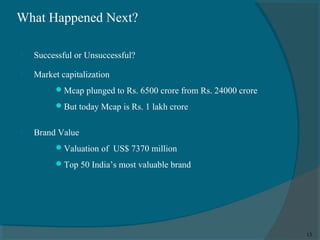
What Happened Next?


Successful or Unsuccessful?



Market capitalization
 Mcap plunged to Rs. 6500 crore from Rs. 24000 crore
 But today Mcap is Rs. 1 lakh crore



Brand Value
 Valuation of US$ 7370 million
 Top 50 India’s most valuable brand

13
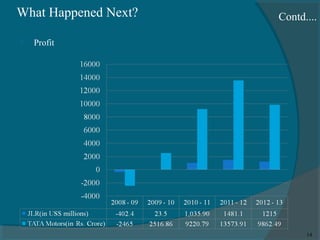
What Happened Next?


Contd....

Profit

14
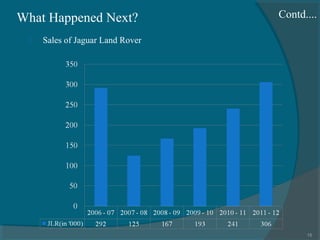
What Happened Next?


Contd....

Sales of Jaguar Land Rover

15
Conclusion

16

Tata Motors & JLR Merger

  • 1.
  • 2.
    Presented By: • • • • • VishalGunjalkar Mangesh Dongade Chetan Kadam Pratik Gupta Rohit Dhoundiyal 2
  • 3.
    Preface of theMerger  On June 2008, TATA Motors acquired Jaguar & Land Rover(JLR)  Deal was worth US$ 2.3 billion  Acquire global footprint and entry in high-end premium segment of automobile industry  World’s cheapest car as well as luxury brands  Investment was poorly timed and questions were raised on strategies  Demand in the global market for luxury cars collapsed 3
  • 4.
    TATA Motors  Multinational automotivemanufacturing company founded in the year 1945 by visionary businessman Mr. J.R.D Tata  8th largest motor vehicles manufacturing company, 4 th largest truck manufacturer, 2nd largest bus manufacturer by volume  Products:  Cars  Trucks  Vans  Buses  Military vehicles  Coaches  1st Indian engineering company in India to be listed in NYSE  As of 2012 – Profit of US$ 2.28 billion and total assets of US$ 28.05 billion 4
  • 5.
    Jaguar Land Rover  Jaguarcars was founded in the year 1922 by Mr. William Walmsley & Mr. William Lyons as “Swallow Sidecar Company”  Land Rover was founded in the year 1978  Ford Motors acquired Jaguar 1989 for US$ 2.5 billion and Land Rover in 2000 for US$ 2.75 billion  Both the company are manufacturers of luxury cars/premium segment cars & SUV  As of 2013 – Profit of £ 1.215 billion 5
  • 6.
    British brand underFord  Ford is a leading automaker & 5th largest automobile company founded in the year 1903  Ford established Premier Automotive Group(PAG) in the year 1999 which consisted of Jaguar, Ashton Martin, Lincoln and later Land Rover  Reasons for selling JLR:  Unprofitable Venture  Unstable market & economic condition  High cost of labour  Other brands sold by Ford:  Ashton Martin  Volvo 6
  • 7.
    Ford sells JLR  September2006, Mr. Allan Mulally assumed charge of president & CEO of Ford  Decided to dismantle PAG(Premier Automotive Group)  In June 2007, Ford announced to sell JLR 7
  • 8.
    The Deal  On 12thJune 2007, Ford announced its plan to sell Land Rover & Jaguar  Likely buyers for JLR were:  TATA Motors  Mahindra & Mahindra  Cereberus Capital Management  TPG Capital  TATA wins the bid for acquiring JLR  The price paid by Tata was approximately half of what Ford paid to buy Jaguar and Land Rover  The deal took over a year to agree - which may have helped with the post-merger integration. Tata recognised that it would continue to need support from Ford who is a main supplier of car components to the two brands 8
  • 9.
    The Deal  No significantchange proposed to the businesses by Tata. They claimed that staff, trade unions and the UK government had been kept informed about the proposed takeover and supported the move  The deal has been endorsed by trade unions, which secured a commitment from Tata to continue with JLR’s production plans until the end of 2011. This includes development of new models  Contd... TATA charted out plans to raise Rs. 4200 crore via rights issue and around US$ 600 million through Global Depository Receipt (GDR) 9
  • 10.
    Key motives ofthe merger - TATA Motors  Acquiring JLR would provide significant potential for revenue synergies, including giving Tata greater international distribution, broader product range and better customer service skills  Tata gains access to world-class engineering capability  Strengthens relationship between Tata’s steel and motoring businesses 10
  • 11.
    Key motives ofthe merger - JLR  JLR suffering from huge loss  TATA Corus was a leader in automotive grade steel in the European Market  TCS provides services like engineering designs, manufacturing solution and consultancy services to automotive manufacturer like Chrysler, Ford and General Motors 11
  • 12.
    Challenges in themerger  Complexity in raising fund  Global financial crisis had severely affected the global automobile industry especially in luxury car segment  Increasing material and fuel prices had slowed down demand of vehicles  TATA was planning to invest another US$ 1 billion in JLR. Huge capital incurred on development of Nano and on joint venture with Fiat  Morgan Stanley reported that JLR acquisition will lead to earning volatility of TATA 12
  • 13.
    What Happened Next?  Successfulor Unsuccessful?  Market capitalization  Mcap plunged to Rs. 6500 crore from Rs. 24000 crore  But today Mcap is Rs. 1 lakh crore  Brand Value  Valuation of US$ 7370 million  Top 50 India’s most valuable brand 13
  • 14.
  • 15.
  • 16.