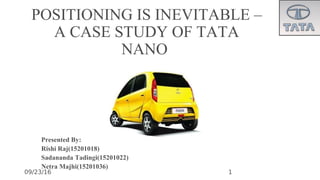
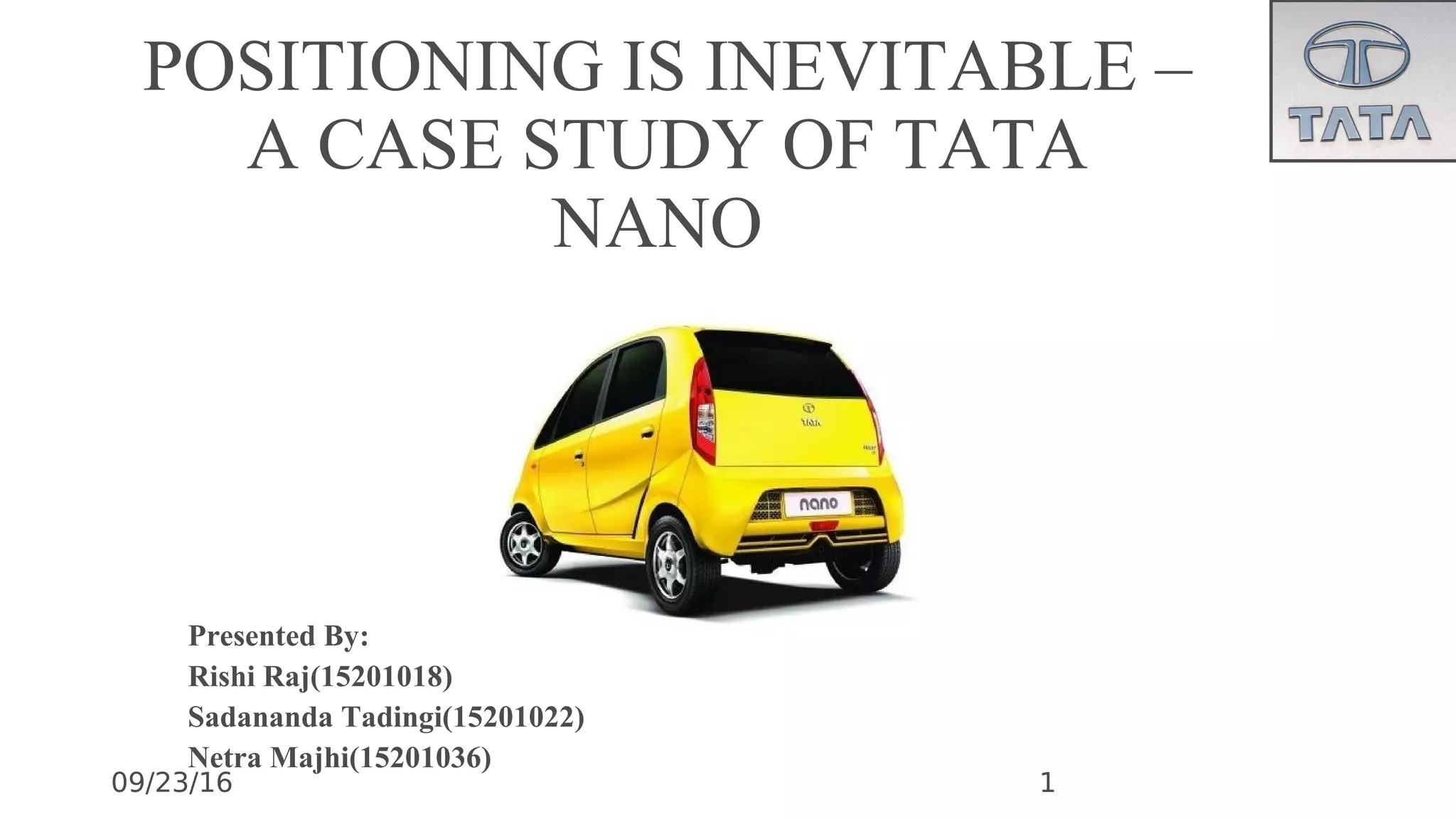
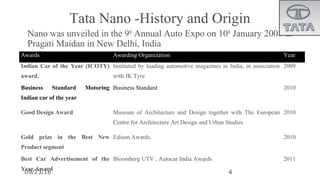
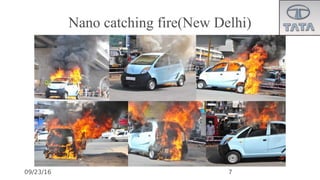
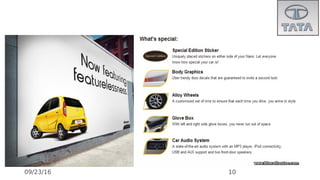
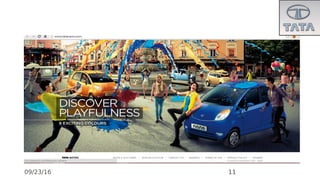
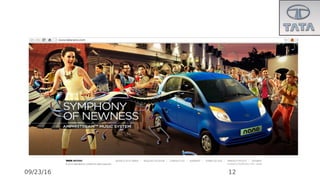
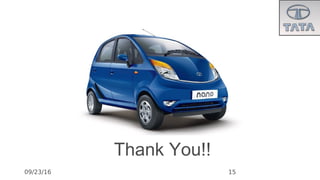
Tata Nano was initially positioned as the world's most affordable car, targeting lower and middle income families in India. However, this price-based positioning led Nano to be perceived as a "poor man's car" and issues like vehicle fires further damaged its reputation for quality. Tata later repositioned Nano with a focus on features, personalization options, and promoting it as a "smart city car" to move away from perceptions of low quality. The case study demonstrates the importance of developing an effective positioning strategy that considers customer perceptions beyond just price. It also shows how positioning can be detrimental if not properly planned and corrected when needed.