


Systemic Sclerosis Samar Tharwat Radwan
Lecturer of Internal Medicine
(Rheumatology & Immunology)
Mansoura University
Definintion
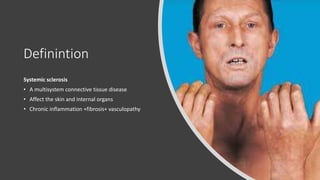
Systemic sclerosis
• A multisystem connective tissue disease
• Affect the skin and internal organs
• Chronic inflammation +fibrosis+ vasculopathy
Incidence and Prevalence
• A rare disease
• Incidence:18-20 cases per million population per year
• Prevalence: 100 -300 cases per million population
• Age:35 -50
• More common among women (3 to 7 : 1 female-to-male ratio)
General Principles
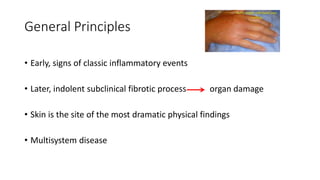
• Early, signs of classic inflammatory events
• Later, indolent subclinical fibrotic process organ damage
• Skin is the site of the most dramatic physical findings
• Multisystem disease
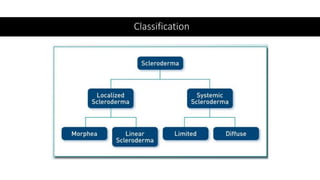
Classification
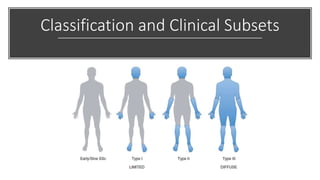
Classification and Clinical Subsets
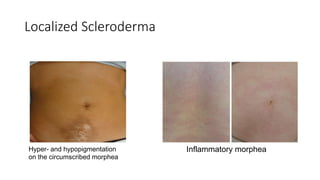
Localized
Scleroderma
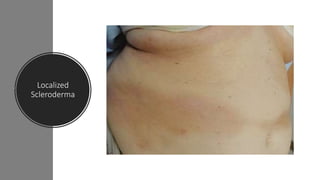
Localized Scleroderma
Inflammatory morpheaHyper- and hypopigmentation
on the circumscribed morphea
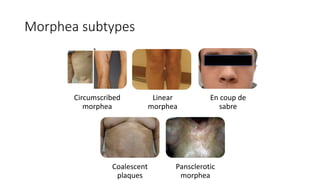
Morphea subtypes
Circumscribed
morphea
Linear
morphea
En coup de
sabre
Coalescent
plaques
Pansclerotic
morphea
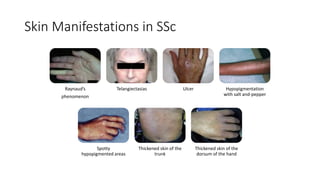
Skin Manifestations in SSc
Raynaud’s
phenomenon
Telangiectasias Ulcer Hypopigmentation
with salt and-pepper
Spotty
hypopigmented areas
Thickened skin of the
trunk
Thickened skin of the
dorsum of the hand
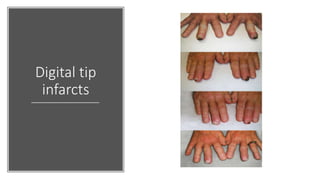
Digital tip
infarcts
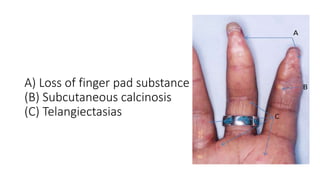
A) Loss of finger pad substance
(B) Subcutaneous calcinosis
(C) Telangiectasias
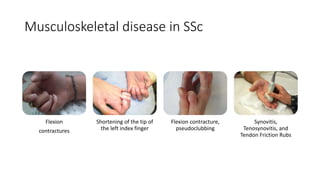
Musculoskeletal disease in SSc
Flexion
contractures
Shortening of the tip of
the left index finger
Flexion contracture,
pseudoclubbing
Synovitis,
Tenosynovitis, and
Tendon Friction Rubs
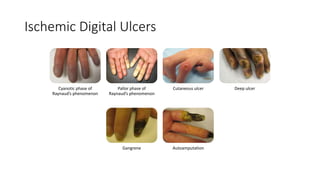
Ischemic Digital Ulcers
Cyanotic phase of
Raynaud’s phenomenon
Pallor phase of
Raynaud’s phenomenon
Cutaneous ulcer Deep ulcer
Gangrene Autoamputation
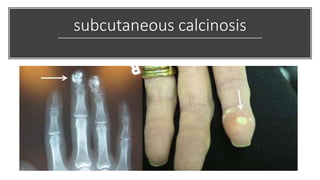
subcutaneous calcinosis
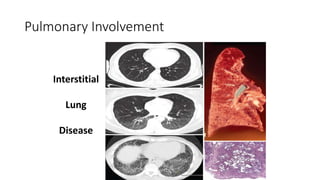
Pulmonary Involvement
Interstitial
Lung
Disease
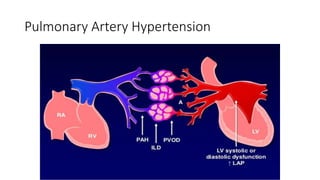
Pulmonary Artery Hypertension
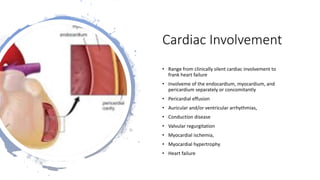
Cardiac Involvement
• Range from clinically silent cardiac involvement to
frank heart failure
• Involveme of the endocardium, myocardium, and
pericardium separately or concomitantly
• Pericardial effusion
• Auricular and/or ventricular arrhythmias,
• Conduction disease
• Valvular regurgitation
• Myocardial ischemia,
• Myocardial hypertrophy
• Heart failure
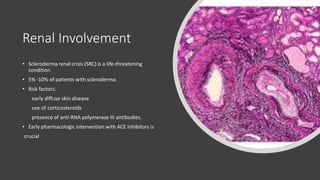
Renal Involvement
• Scleroderma renal crisis (SRC) is a life-threatening
condition
• 5% -10% of patients with scleroderma.
• Risk factors:
early diffuse skin disease
use of corticosteroids
presence of anti-RNA polymerase III antibodies.
• Early pharmacologic intervention with ACE inhibitors is
crucial
Renal Involvement: may be due to
• Medication adverse effects
• Comorbid conditions
• Associated heart disease
• GI disease
• Lung disease
• Pauci-immune necrotizing crescentic glomerulonephritis
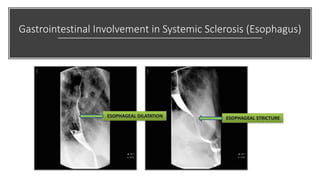
Gastrointestinal Involvement in Systemic Sclerosis (Esophagus)
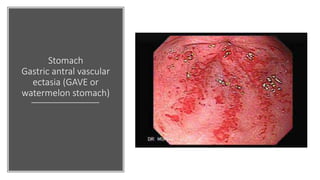
Stomach
Gastric antral vascular
ectasia (GAVE or
watermelon stomach)
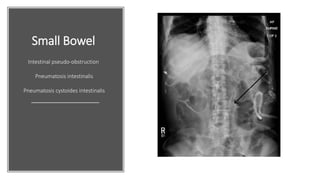
Small Bowel
Intestinal pseudo-obstruction
Pneumatosis intestinalis
Pneumatosis cystoides intestinalis
Colon and Anorectal Disorders
Constipation
Fecal
incontinence
Psychosocial Aspects
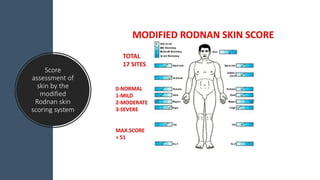
Score
assessment of
skin by the
modified
Rodnan skin
scoring system
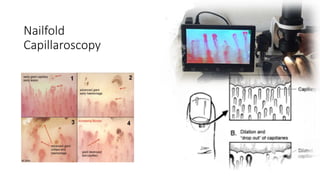
Nailfold
Capillaroscopy
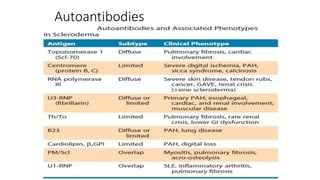
Autoantibodies
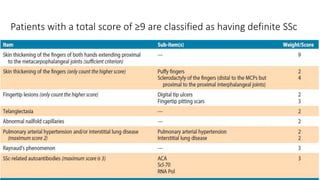
Patients with a total score of ≥9 are classified as having definite SSc
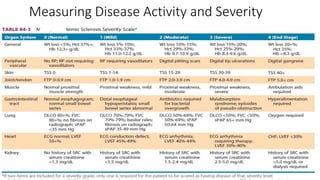
Measuring Disease Activity and Severity
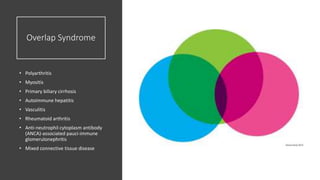
Overlap Syndrome
• Polyarthritis
• Myositis
• Primary biliary cirrhosis
• Autoimmune hepatitis
• Vasculitis
• Rheumatoid arthritis
• Anti-neutrophil cytoplasm antibody
(ANCA)-associated pauci-immune
glomerulonephritis
• Mixed connective tissue disease
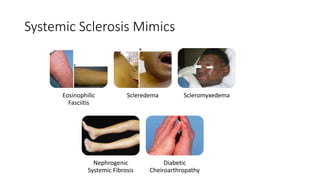
Systemic Sclerosis Mimics
Eosinophilic
Fasciitis
Scleredema Scleromyxedema
Nephrogenic
Systemic Fibrosis
Diabetic
Cheiroarthropathy
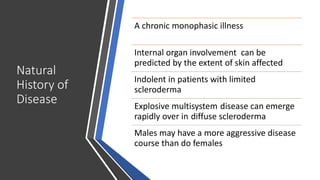
Natural
History of
Disease
A chronic monophasic illness
Internal organ involvement can be
predicted by the extent of skin affected
Indolent in patients with limited
scleroderma
Explosive multisystem disease can emerge
rapidly over in diffuse scleroderma
Males may have a more aggressive disease
course than do females
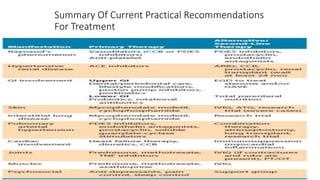
Summary Of Current Practical Recommendations
For Treatment
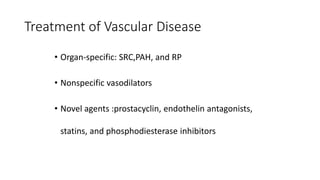
Treatment of Vascular Disease
• Organ-specific: SRC,PAH, and RP
• Nonspecific vasodilators
• Novel agents :prostacyclin, endothelin antagonists,
statins, and phosphodiesterase inhibitors
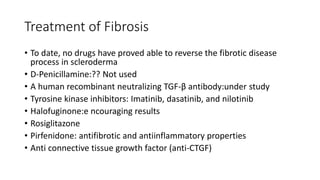
Treatment of Fibrosis
• To date, no drugs have proved able to reverse the fibrotic disease
process in scleroderma
• D-Penicillamine:?? Not used
• A human recombinant neutralizing TGF-β antibody:under study
• Tyrosine kinase inhibitors: Imatinib, dasatinib, and nilotinib
• Halofuginone:e ncouraging results
• Rosiglitazone
• Pirfenidone: antifibrotic and antiinflammatory properties
• Anti connective tissue growth factor (anti-CTGF)
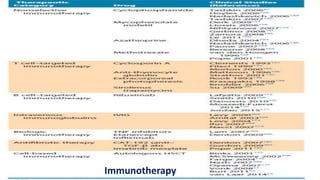
Immunotherapy
Systemic Sclerosis
Systemic Sclerosis

Systemic Sclerosis

Editor's Notes