









SLERODERMA 
Prof Ariyanto Harsono MD PhD SpA(K)
Introduction 
The term scleroderma is derived from the Greek 
words skleros (hard or indurated) and derma 
(skin) and it is used to describe a disease 
characterized by progressive skin hardening and 
induration. Hippocrates first described this 
condition as thickened skin. 
Prof Ariyanto Harsono MD PhD SpA(K) 2
Definition 
The term systemic sclerosis is used to describe a 
systemic autoimmune disease of unknown origin 
characterized by excessive deposition of collagen and 
other connective tissue macromolecules in skin and 
multiple internal organs, prominent and often severe 
fibroproliferative alterations in the microvasculature, 
and numerous humoral and cellular immunologic 
abnormalities. Although systemic sclerosis is not 
inherited, a genetic predisposition plays an 
important role in its development. 
Prof Ariyanto Harsono MD PhD SpA(K) 3
 Systemic sclerosis is a complex and 
heterogeneous disease with clinical forms ranging 
from limited skin involvement (limited cutaneous 
systemic sclerosis) to forms with diffuse skin 
sclerosis and severe and often progressive 
internal organ involvement (diffuse cutaneous 
systemic sclerosis), and occasionally a fulminant 
course (fulminant systemic sclerosis). 
Prof Ariyanto Harsono MD PhD SpA(K) 4
 Limited cutaneous systemic sclerosis involves 
areas distal to the elbows and knees but may 
involve the face and neck. CREST syndrome 
(Calcinosis, Raynaud phenomenon, Esophageal 
dysmotility, Sclerodactyly, and Telangiectasias— 
although not all are needed for the disorder to 
be called CREST) is an older term used to 
describe this subset of limited cutaneous 
systemic sclerosis. 
Prof Ariyanto Harsono MD PhD SpA(K) 5
 Diffuse cutaneous systemic sclerosis refers to 
skin thickening affecting the trunk and the skin of 
the extremities proximal to the elbows and knees 
besides involvement of the face. There are rare 
cases of typical systemic sclerosis internal organ 
involvement in the absence of clinically apparent 
cutaneous involvement, a clinical subset known as 
“scleroderma sine scleroderma”. 
Prof Ariyanto Harsono MD PhD SpA(K) 6
Pathophysiology 
Systemic sclerosis is a systemic disease that besides the skin 
affects numerous organ systems. The pathogenesis of 
systemic sclerosis is complex. The clinical and pathologic 
manifestations result from three distinct processes: 
1) severe fibroproliferative vascular lesions of small arteries 
and arterioles, 
2) excessive and often progressive deposition of collagen 
and other extracellular matrix (ECM) macromolecules in 
skin and various internal organs, and 
3) alterations of humoral and cellular immunity. It is not 
clear which of these processes is of primary importance or 
how they are temporally related during the development 
and progression of the disease. 
Prof Ariyanto Harsono MD PhD SpA(K) 7
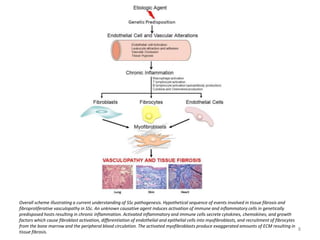
Overall scheme illustrating a current understanding of SSc pathogenesis. Hypothetical sequence of events involved in tissue fibrosis and 
fibroproliferative vasculopathy in SSc. An unknown causative agent induces activation of immune and inflammatory cells in genetically 
predisposed hosts resulting in chronic inflammation. Activated inflammatory and immune cells secrete cytokines, chemokines, and growth 
factors which cause fibroblast activation, differentiation of endothelial and epithelial cells into myofibroblasts, and recruitment of fibrocytes 
from the bone marrow and the peripheral blood circulation. The activated myofibroblasts produce exaggerated amounts of ECM resulting in 
tissue fibrosis. 
8
The endothelial cell dysfunction allows the 
chemokine- and cytokine-mediated attraction of 
inflammatory cells and fibroblast precursors 
(fibrocytes) from the bloodstream and bone 
marrow and their transmigration into the 
surrounding tissues, resulting in the establishment 
of a chronic inflammatory process with 
participation of macrophages and T and B 
lymphocytes, with further production and 
secretion of cytokines and growth factors from 
these cells. 
Prof Ariyanto Harsono MD PhD SpA(K) 9
Recent evidence supports the concept that 
endothelial dysfunction and fibrosis are closely 
related phenomena and it has been suggested 
that the vascular alterations, including the 
phenotypic conversion of endothelial cells into 
activated mesenchymal myofibroblasts, may be 
the initiating event and the common 
pathogenetic alteration leading to the fibrotic 
and chronic inflammatory involvement of 
multiple organs. 
Prof Ariyanto Harsono MD PhD SpA(K) 10
Etiology 
The exact etiology of systemic sclerosis is not known. Systemic 
sclerosis is not inherited, although a genetic predisposition plays 
an important role in its development. Environmental factors (eg, 
triggers or accelerators) may contribute to the development of 
systemic sclerosis in the proper genetic background. These include 
the following: 
 Silica exposure 
 Solvent exposure (vinyl chloride, trichloroethylene, epoxy resins, 
benzene, carbon tetrachloride) 
 Radiation exposure or radiotherapy 
 Cytomegalovirus, human herpesvirus 5, and parvovirus B19 have 
been proposed as viral accelerating factors. 
Prof Ariyanto Harsono MD PhD SpA(K) 11
Complications 
Complications of systemic sclerosis include the following: 
o Digital infarctions 
o Pulmonary hypertension 
o Myositis 
o Renal failure 
o Wound infections 
Prof Ariyanto Harsono MD PhD SpA(K) 12
Mortality/morbidity 
Systemic sclerosis has the highest case-specific mortality among the systemic 
autoimmune diseases. Pulmonary hypertension, pulmonary fibrosis 
(interstitial lung disease), and scleroderma renal crisis are the most 
frequent causes of mortality. 
Survival has improved in recent decades and correlates best with the clinical 
disease subtype (diffuse cutaneous vs limited cutaneous) and with the 
extent of organ involvement. Five-year survival among patients with 
diffuse cutaneous systemic sclerosis has improved significantly, from 69% 
in the 1990–1993 cohort to 84% in the 2000–2003 cohort. Five-year 
survival among the patients with limited cutaneous systemic sclerosis 
remained very high and unchanged for the same periods (93% and 91%, 
respectively). 
Mortality associated with scleroderma renal crisis has declined significantly 
during the last decades, as use of angiotensin-converting enzyme (ACE) 
inhibitors. In contrast, pulmonary involvement (interstitial lung disease 
and/or pulmonary arterial hypertension) has become the most common 
cause of death in patients with systemic sclerosis. 
Prof Ariyanto Harsono MD PhD SpA(K) 13
Clinical Manifestations 
 Skin manifestations 
Skin manifestations of systemic sclerosis are as follows: 
o Progressive skin tightness and induration, often preceded by swelling and 
puffiness (edematous stage) that does not respond to diuretic therapy 
o Skin induration initially affects the fingers (sclerodactyly) and extends proximally. 
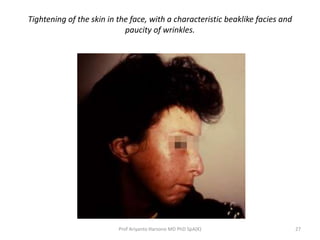
o Tightening of the skin in the face, with a characteristic beaklike facies and paucity 
of wrinkles. 
o Tightening of the skin in the face is often noted very early in the course of the 
disease 
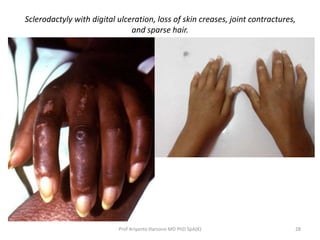
o Sclerodactyly with digital ulceration, loss of skin creases, joint contractures, and 
sparse hair. 
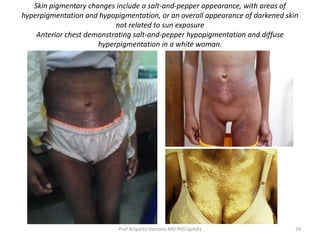
o Prominent skin pigmentary changes both hyperpigmentation and 
hypopigmentation 
o Anterior chest demonstrating salt-and-pepper hypopigmentation and diffuse 
hyperpigmentation in a white woman. 
o Diffuse pruritus 
Prof Ariyanto Harsono MD PhD SpA(K) 14
 Vascular manifestations 
o Raynaud phenomenon is part of the initial presentation in 70% of 
patients with systemic sclerosis; 95% eventually develop it during the 
course of their disease. Raynaud phenomenon may precede obvious 
systemic sclerosis features by months or even years. 
Raynaud phenomenon that is not associated with systemic sclerosis 
or other autoimmune diseases is known as primary Raynaud 
phenomenon. It occurs in 5-15% of the general population. The 
female-to-male ratio is 4:1, with onset occurring usually during 
adolescence. 
Other vascular manifestations of systemic sclerosis include the 
following: 
o Healed pitting ulcers in fingertips 
o Large fingertip ulcers may lead to finger amputation 
o Cutaneous and mucosal telangiectasias 
o Evidence of macrovascular involvement including non-atherosclerotic 
myocardial infarction 15
 Gastrointestinal manifestations 
GI findings in systemic sclerosis include the following: 
o Gastroesophageal reflux caused by lower esophageal sphincter (LES) 
incompetence and decreased or absent peristalsis in the lower two 
thirds of the esophagus (may lead to hoarseness, dysphagia and 
aspiration pneumonia) 
o Dyspepsia, bloating, and early satiety 
o Intestinal pseudo-obstruction 
o Constipation alternating with diarrhea from bacterial overgrowth 
(may lead to malabsorption) 
o Fecal incontinence 
o Malnutrition from inadequate caloric intake 
o Chronic iron deficiency anemia from occult blood loss 
Prof Ariyanto Harsono MD PhD SpA(K) 16
Respiratory manifestations 
Respiratory compaints in systemic sclerosis include 
the following: 
o Progressive dyspnea 
o Chest pain (precordial) due to pulmonary artery 
hypertension 
o Dry persistent cough due to restrictive lung 
disease 
Prof Ariyanto Harsono MD PhD SpA(K) 17
Musculoskeletal manifestations 
Musculoskeletal complaints in systemic sclerosis 
include the following: 
o Arthralgia 
o Myalgia 
o Loss in joint range of motion and joint flexion 
contractures 
o Tendon friction rubs 
o Symptoms of carpal tunnel syndrome 
o Muscle weakness 
Prof Ariyanto Harsono MD PhD SpA(K) 18
 Cardiac manifestations 
Cardiac signs and symptoms in systemic sclerosis include the 
following: 
o Dyspnea due to congestive heart failure or myocardial 
fibrosis 
o Palpitations, irregular heart beats, and syncope due to 
arrhythmias or conduction abnormalities 
o Symptoms of congestive heart failure or right sided heart 
failure 
o Systemic sclerosis is an independent risk factor for acute 
myocardial infarction 
Prof Ariyanto Harsono MD PhD SpA(K) 19
Renal manifestations 
Renal signs and symptoms in systemic sclerosis 
include the following: 
o Hypertension 
o Renal crisis 
o Chronic renal insufficiency 
o History of high dose corticosteroid use. 
Prof Ariyanto Harsono MD PhD SpA(K) 20
Genitourinary manifestations 
Patients with systemic sclerosis may present with 
the following: 
o Erectile dysfunction 
o Bladder fibrosis 
o Dyspareunia (if introitus is affected) 
o Vaginal narrowing, dryness and pain caused by 
vaginal fibrosis 
Prof Ariyanto Harsono MD PhD SpA(K) 21
 Eyes, ears, nose, and throat manifestations 
Patients may present with the following: 
Sicca syndrome 
o Poor dentition secondary to sicca syndrome 
o Loosening of dentition caused by alterations in the tooth 
suspensory ligament and thickening of the periodontal 
membrane 
o Hoarseness due to acid reflux with vocal cord 
inflammation or fibrosis 
o Decreased oral aperture 
o Blindness caused by retinal artery occlusion 
Prof Ariyanto Harsono MD PhD SpA(K) 22
Neurologic/psychiatric manifestations 
Patients may present with the following: 
o Facial pain and decreased sensation due to 
trigeminal neuralgia 
o Hand paresthesias and weakness due to carpal 
tunnel peripheral entrapment neuropathy 
o Headache and stroke during hypertensive renal crisis 
o Depression and anxiety 
Prof Ariyanto Harsono MD PhD SpA(K) 23
Constitutional manifestations 
Constitutional complaints in systemic sclerosis 
include the following: 
o Fatigue 
o Weight loss 
o Loss of appetite 
Prof Ariyanto Harsono MD PhD SpA(K) 24
Physical Examination 
 Skin 
The skin of the hands may be edematous or swollen early in systemic 
sclerosis and the patient may initially report these changes as 
puffiness. This edematous stage precedes the indurated sclerotic 
stage. Slow progression of the sclerotic phase is associated with a 
better prognosis, whereas a rapid progression of cutaneous sclerosis 
indicates a worse prognosis and more extensive and severe visceral 
organ involvement with an increased risk of renal crisis or interstitial 
lung disease and higher mortality. 
In the sclerotic phase, the skin appears tight and shiny (see image 
below), with a characteristic loss of hair, decreased sweating, and 
loss of the ability to make a skin fold. This process of skin thickening 
usually begins distally on the fingers (sclerodactyly) and progresses 
proximally in a continuous symmetrical fashion. 
Prof Ariyanto Harsono MD PhD SpA(K) 25
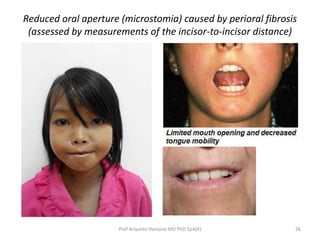
Reduced oral aperture (microstomia) caused by perioral fibrosis 
(assessed by measurements of the incisor-to-incisor distance) 
Prof Ariyanto Harsono MD PhD SpA(K) 26
Tightening of the skin in the face, with a characteristic beaklike facies and 
paucity of wrinkles. 
Prof Ariyanto Harsono MD PhD SpA(K) 27
Sclerodactyly with digital ulceration, loss of skin creases, joint contractures, 
and sparse hair. 
Prof Ariyanto Harsono MD PhD SpA(K) 28
Skin pigmentary changes include a salt-and-pepper appearance, with areas of 
hyperpigmentation and hypopigmentation, or an overall appearance of darkened skin 
not related to sun exposure 
Anterior chest demonstrating salt-and-pepper hypopigmentation and diffuse 
hyperpigmentation in a white woman. 
Prof Ariyanto Harsono MD PhD SpA(K) 29
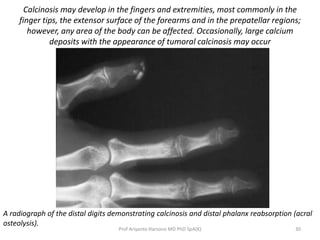
Calcinosis may develop in the fingers and extremities, most commonly in the 
finger tips, the extensor surface of the forearms and in the prepatellar regions; 
however, any area of the body can be affected. Occasionally, large calcium 
deposits with the appearance of tumoral calcinosis may occur 
A radiograph of the distal digits demonstrating calcinosis and distal phalanx reabsorption (acral 
osteolysis). 
Prof Ariyanto Harsono MD PhD SpA(K) 30
 Eyes, ears, nose, and throat 
o Salivary production may be decreased and spontaneous 
sublingual pooling of saliva may be absent. 
o Xerostomia and xerophthalmia may be part of the 
examination findings. A confirmatory minor salivary gland 
biopsy may show fibrosis without the pronounced 
lymphocytic aggregates that would be expected with 
primary Sjögren syndrome. Furthermore, patients with 
systemic sclerosis typically do not harbor anti-Ro and anti- 
La antibodies. 
o Funduscopic examination during the hypertensive episodes 
of scleroderma renal crisis may reveal exudates and 
vascular alterations. Retinal artery occlusion causing acute 
loss of vision has been described in rare instances. 
Prof Ariyanto Harsono MD PhD SpA(K) 31
Vascular changes 
Raynaud phenomenon results in characteristic color 
changes of pallor, cyanosis, and then erythema 
(white, blue, red) in the fingers, toes and other acral 
body parts, and is usually accompanied by numbness, 
tingling, or pain. These events are triggered by cold 
exposure, smoking, or emotional stress. Subintimal 
hyperplasia, typically present in systemic sclerosis 
vessels, can cause a severe reduction of their luminal 
diameter, limiting blood flow. The baseline reduction 
in vessel lumen coupled to an exaggerated response 
to vasoconstricting stimuli accounts for the severity of 
Raynaud phenomenon in systemic sclerosis. 
Prof Ariyanto Harsono MD PhD SpA(K) 32
 Other manifestations of vascular involvement are as follows: 
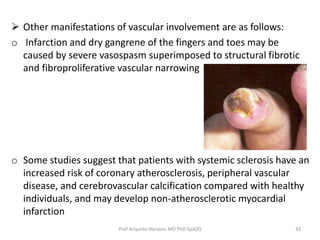
o Infarction and dry gangrene of the fingers and toes may be 
caused by severe vasospasm superimposed to structural fibrotic 
and fibroproliferative vascular narrowing 
o Some studies suggest that patients with systemic sclerosis have an 
increased risk of coronary atherosclerosis, peripheral vascular 
disease, and cerebrovascular calcification compared with healthy 
individuals, and may develop non-atherosclerotic myocardial 
infarction 
Prof Ariyanto Harsono MD PhD SpA(K) 33
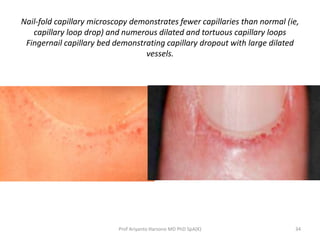
Nail-fold capillary microscopy demonstrates fewer capillaries than normal (ie, 
capillary loop drop) and numerous dilated and tortuous capillary loops 
Fingernail capillary bed demonstrating capillary dropout with large dilated 
vessels. 
Prof Ariyanto Harsono MD PhD SpA(K) 34
Diagnosis 
 Approach Considerations 
The diagnosis of systemic sclerosis is based on the clinical manifestations. 
Nevertheless, a number of tests and procedures may be used in the initial 
diagnosis (eg, to exclude alternative diagnosis), the assessment of organ 
involvement, and monitoring of disease progression. 
Laboratory testing may include the following: 
o Complete blood cell count (CBC) 
o Serum muscle enzyme levels 
o Erythrocyte sedimentation rate 
o N-terminal pro-brain natriuretic peptide 
o Autoantibody assays: Fibrillarin antibodies and antibodies to ribonucleoprotein 
(RNP) may be present. Anti-RNP is present mostly in patients with diffuse 
disease with overlap syndromes and in patients with MCTD. These antibodies 
are more common in patients with skeletal muscle involvement and pulmonary 
disease. 
o Assessment of gastrointestinal involvement 
Prof Ariyanto Harsono MD PhD SpA(K) 35
Atrophy of smooth muscle and submucosal fibrotic changes leading to decreased 
peristalsis throughout the gastrointestinal (GI) tract cause gastroesophageal reflux 
disease [GERD], gastroparesis, severe constipation, and pseudo-obstruction. 
Barium swallow demonstrating reflux into the distal esophagus, as well as an accordion 
appearance in the duodenum. 
Prof Ariyanto Harsono MD PhD SpA(K) 36
Electrocardiograms (ECGs) should be performed 
routinely to identify arrhythmias and conduction 
defects. ECGs can identify early changes of right 
ventricular strain caused by pulmonary 
hypertension, and in advanced states, right atrial 
hypertrophy. Perform 24-hour ambulatory 
Holter monitoring to evaluate arrhythmias and 
serious conduction defects. 
Prof Ariyanto Harsono MD PhD SpA(K) 37
Histologic Findings 
The histopathological findings in the skin include 
marked thickening of the dermis with massive 
accumulation of dense collagen causing 
epidermal atrophy, flattening of the rete pegs, 
and replacement of sebaceous and sweat glands, 
as well as hair follicles. A prominent 
inflammatory infiltrate is often present at the 
dermal-adipose tissue interphase, especially in 
early lesions. The small vessels of the lower 
dermis show fibrous thickening but evidence of 
vasculitis is absent. 
Prof Ariyanto Harsono MD PhD SpA(K) 38
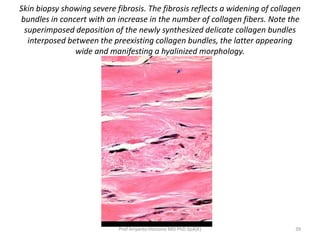
Skin biopsy showing severe fibrosis. The fibrosis reflects a widening of collagen 
bundles in concert with an increase in the number of collagen fibers. Note the 
superimposed deposition of the newly synthesized delicate collagen bundles 
interposed between the preexisting collagen bundles, the latter appearing 
wide and manifesting a hyalinized morphology. 
Prof Ariyanto Harsono MD PhD SpA(K) 39
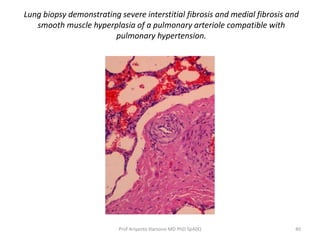
Lung biopsy demonstrating severe interstitial fibrosis and medial fibrosis and 
smooth muscle hyperplasia of a pulmonary arteriole compatible with 
pulmonary hypertension. 
Prof Ariyanto Harsono MD PhD SpA(K) 40
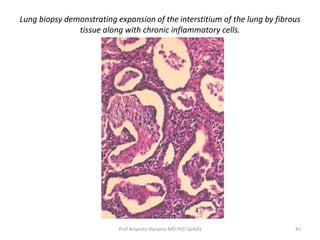
Lung biopsy demonstrating expansion of the interstitium of the lung by fibrous 
tissue along with chronic inflammatory cells. 
Prof Ariyanto Harsono MD PhD SpA(K) 41
Treatment 
 Approach Considerations 
Current treatment of systemic sclerosis is directed toward 
managing complications and providing symptomatic relief. 
In addition, a range of disease-modifying treatments have 
been investigated. 
Disease-modifying treatment aims at inhibiting tissue fibrosis 
and vascular and immune system alterations, which are the 
three crucial components of disease pathogenesis. To date, 
however, the US Food and Drug Administration (FDA) has 
not approved any disease-modifying therapies for systemic 
sclerosis. 
Prof Ariyanto Harsono MD PhD SpA(K) 42
o No placebo-controlled studies have 
demonstrated clear superiority for any drug 
except for a modest benefit from use of 
methotrexate. Numerous uncontrolled 
prospective and retrospective trials along with 
post-hoc analysis have suggested a beneficial 
effect from mycophenolate mofetil. 
o Retrospective uncontrolled studies also 
supported a beneficial role for D-penicillamine, 
but a large high-dose versus low-dose controlled 
trial failed to demonstrate benefits of the higher 
dose versus the lower dose. 
Prof Ariyanto Harsono MD PhD SpA(K) 43
o Sildenafil, an inhibitor of phosphodiesterase 5 
(PDE-5), has been approved for treatment of 
pulmonary hypertension. In addition, it has been 
shown to be effective and well tolerated in 
patients with Raynaud phenomenon. 
Treatments for gastrointestinal symptoms of 
systemic sclerosis include the following: 
o Antacids 
o Histamine 2 (H2) blockers 
Prof Ariyanto Harsono MD PhD SpA(K) 44
Pulmonary Fibrosis/Alveolitis 
Although there is some controversy regarding the 
beneficial effects of immunosuppressive therapy 
in idiopathic pulmonary fibrosis, numerous 
studies support the use of these agents in 
systemic sclerosis–associated interstitial lung 
disease. Pulmonary fibrosis in systemic sclerosis 
has been successfully treated with 
o cyclophosphamide, either orally or in intravenous 
pulses. Several recent nonrandomized studies 
have also shown benefit from 
o mycophenolate mofetil. 
Prof Ariyanto Harsono MD PhD SpA(K) 45
Myositis may be treated cautiously with steroids 
(first choice), or with methotrexate or 
azathioprine in corticosteroid-resistant cases or 
when there are contraindications to 
corticosteroid use. Doses of prednisone greater 
than 40 mg/d are associated with a higher 
incidence of scleroderma renal crisis. 
Prof Ariyanto Harsono MD PhD SpA(K) 46
Prognosis 
Survival in patients with diffuse cutaneous disease has improved 
significantly; currently, the 5-year survival is estimated to be 
about 80%. Five-year survival in patients with limited cutaneous 
disease is approximately 90%. 
Factors associated with a more severe prognosis are as follows: 
o Younger age 
o African descent 
o Rapid progression of skin symptoms 
o Greater extent of skin involvement 
o Anemia 
o Elevated erythrocyte sedimentation rate (ESR) 
o Pulmonary, renal, and cardiac involvement 
Prof Ariyanto Harsono MD PhD SpA(K) 47
Patient Education 
To minimize the risk of Raynaud phenomenon 
flare, instruct patients to maintain their core 
body temperature; strongly encourage smoking 
cessation in patients who smoke, and advise all 
patients to avoid exposure to cigarette smoke. 
Instruct the patient to avoid digital or skin 
trauma and prolonged cold exposure. 
Prof Ariyanto Harsono MD PhD SpA(K) 48
Reference 
Jimenez SA; Chief Editor: Diamond HS: 
Sleroderma. 
http://emedicine.medscape.com/article/3318 
64-overview, Accessed 3-Oct, 2014. 
Prof Ariyanto Harsono MD PhD SpA(K) 49
Thank you 
Prof Ariyanto Harsono MD PhD SpA(K) 50

Sleroderma

  • 1.
    SLERODERMA Prof AriyantoHarsono MD PhD SpA(K)
  • 2.
    Introduction The termscleroderma is derived from the Greek words skleros (hard or indurated) and derma (skin) and it is used to describe a disease characterized by progressive skin hardening and induration. Hippocrates first described this condition as thickened skin. Prof Ariyanto Harsono MD PhD SpA(K) 2
  • 3.
    Definition The termsystemic sclerosis is used to describe a systemic autoimmune disease of unknown origin characterized by excessive deposition of collagen and other connective tissue macromolecules in skin and multiple internal organs, prominent and often severe fibroproliferative alterations in the microvasculature, and numerous humoral and cellular immunologic abnormalities. Although systemic sclerosis is not inherited, a genetic predisposition plays an important role in its development. Prof Ariyanto Harsono MD PhD SpA(K) 3
  • 4.
     Systemic sclerosisis a complex and heterogeneous disease with clinical forms ranging from limited skin involvement (limited cutaneous systemic sclerosis) to forms with diffuse skin sclerosis and severe and often progressive internal organ involvement (diffuse cutaneous systemic sclerosis), and occasionally a fulminant course (fulminant systemic sclerosis). Prof Ariyanto Harsono MD PhD SpA(K) 4
  • 5.
     Limited cutaneoussystemic sclerosis involves areas distal to the elbows and knees but may involve the face and neck. CREST syndrome (Calcinosis, Raynaud phenomenon, Esophageal dysmotility, Sclerodactyly, and Telangiectasias— although not all are needed for the disorder to be called CREST) is an older term used to describe this subset of limited cutaneous systemic sclerosis. Prof Ariyanto Harsono MD PhD SpA(K) 5
  • 6.
     Diffuse cutaneoussystemic sclerosis refers to skin thickening affecting the trunk and the skin of the extremities proximal to the elbows and knees besides involvement of the face. There are rare cases of typical systemic sclerosis internal organ involvement in the absence of clinically apparent cutaneous involvement, a clinical subset known as “scleroderma sine scleroderma”. Prof Ariyanto Harsono MD PhD SpA(K) 6
  • 7.
    Pathophysiology Systemic sclerosisis a systemic disease that besides the skin affects numerous organ systems. The pathogenesis of systemic sclerosis is complex. The clinical and pathologic manifestations result from three distinct processes: 1) severe fibroproliferative vascular lesions of small arteries and arterioles, 2) excessive and often progressive deposition of collagen and other extracellular matrix (ECM) macromolecules in skin and various internal organs, and 3) alterations of humoral and cellular immunity. It is not clear which of these processes is of primary importance or how they are temporally related during the development and progression of the disease. Prof Ariyanto Harsono MD PhD SpA(K) 7
  • 8.
    Overall scheme illustratinga current understanding of SSc pathogenesis. Hypothetical sequence of events involved in tissue fibrosis and fibroproliferative vasculopathy in SSc. An unknown causative agent induces activation of immune and inflammatory cells in genetically predisposed hosts resulting in chronic inflammation. Activated inflammatory and immune cells secrete cytokines, chemokines, and growth factors which cause fibroblast activation, differentiation of endothelial and epithelial cells into myofibroblasts, and recruitment of fibrocytes from the bone marrow and the peripheral blood circulation. The activated myofibroblasts produce exaggerated amounts of ECM resulting in tissue fibrosis. 8
  • 9.
    The endothelial celldysfunction allows the chemokine- and cytokine-mediated attraction of inflammatory cells and fibroblast precursors (fibrocytes) from the bloodstream and bone marrow and their transmigration into the surrounding tissues, resulting in the establishment of a chronic inflammatory process with participation of macrophages and T and B lymphocytes, with further production and secretion of cytokines and growth factors from these cells. Prof Ariyanto Harsono MD PhD SpA(K) 9
  • 10.
    Recent evidence supportsthe concept that endothelial dysfunction and fibrosis are closely related phenomena and it has been suggested that the vascular alterations, including the phenotypic conversion of endothelial cells into activated mesenchymal myofibroblasts, may be the initiating event and the common pathogenetic alteration leading to the fibrotic and chronic inflammatory involvement of multiple organs. Prof Ariyanto Harsono MD PhD SpA(K) 10
  • 11.
    Etiology The exactetiology of systemic sclerosis is not known. Systemic sclerosis is not inherited, although a genetic predisposition plays an important role in its development. Environmental factors (eg, triggers or accelerators) may contribute to the development of systemic sclerosis in the proper genetic background. These include the following:  Silica exposure  Solvent exposure (vinyl chloride, trichloroethylene, epoxy resins, benzene, carbon tetrachloride)  Radiation exposure or radiotherapy  Cytomegalovirus, human herpesvirus 5, and parvovirus B19 have been proposed as viral accelerating factors. Prof Ariyanto Harsono MD PhD SpA(K) 11
  • 12.
    Complications Complications ofsystemic sclerosis include the following: o Digital infarctions o Pulmonary hypertension o Myositis o Renal failure o Wound infections Prof Ariyanto Harsono MD PhD SpA(K) 12
  • 13.
    Mortality/morbidity Systemic sclerosishas the highest case-specific mortality among the systemic autoimmune diseases. Pulmonary hypertension, pulmonary fibrosis (interstitial lung disease), and scleroderma renal crisis are the most frequent causes of mortality. Survival has improved in recent decades and correlates best with the clinical disease subtype (diffuse cutaneous vs limited cutaneous) and with the extent of organ involvement. Five-year survival among patients with diffuse cutaneous systemic sclerosis has improved significantly, from 69% in the 1990–1993 cohort to 84% in the 2000–2003 cohort. Five-year survival among the patients with limited cutaneous systemic sclerosis remained very high and unchanged for the same periods (93% and 91%, respectively). Mortality associated with scleroderma renal crisis has declined significantly during the last decades, as use of angiotensin-converting enzyme (ACE) inhibitors. In contrast, pulmonary involvement (interstitial lung disease and/or pulmonary arterial hypertension) has become the most common cause of death in patients with systemic sclerosis. Prof Ariyanto Harsono MD PhD SpA(K) 13
  • 14.
    Clinical Manifestations Skin manifestations Skin manifestations of systemic sclerosis are as follows: o Progressive skin tightness and induration, often preceded by swelling and puffiness (edematous stage) that does not respond to diuretic therapy o Skin induration initially affects the fingers (sclerodactyly) and extends proximally. o Tightening of the skin in the face, with a characteristic beaklike facies and paucity of wrinkles. o Tightening of the skin in the face is often noted very early in the course of the disease o Sclerodactyly with digital ulceration, loss of skin creases, joint contractures, and sparse hair. o Prominent skin pigmentary changes both hyperpigmentation and hypopigmentation o Anterior chest demonstrating salt-and-pepper hypopigmentation and diffuse hyperpigmentation in a white woman. o Diffuse pruritus Prof Ariyanto Harsono MD PhD SpA(K) 14
  • 15.
     Vascular manifestations o Raynaud phenomenon is part of the initial presentation in 70% of patients with systemic sclerosis; 95% eventually develop it during the course of their disease. Raynaud phenomenon may precede obvious systemic sclerosis features by months or even years. Raynaud phenomenon that is not associated with systemic sclerosis or other autoimmune diseases is known as primary Raynaud phenomenon. It occurs in 5-15% of the general population. The female-to-male ratio is 4:1, with onset occurring usually during adolescence. Other vascular manifestations of systemic sclerosis include the following: o Healed pitting ulcers in fingertips o Large fingertip ulcers may lead to finger amputation o Cutaneous and mucosal telangiectasias o Evidence of macrovascular involvement including non-atherosclerotic myocardial infarction 15
  • 16.
     Gastrointestinal manifestations GI findings in systemic sclerosis include the following: o Gastroesophageal reflux caused by lower esophageal sphincter (LES) incompetence and decreased or absent peristalsis in the lower two thirds of the esophagus (may lead to hoarseness, dysphagia and aspiration pneumonia) o Dyspepsia, bloating, and early satiety o Intestinal pseudo-obstruction o Constipation alternating with diarrhea from bacterial overgrowth (may lead to malabsorption) o Fecal incontinence o Malnutrition from inadequate caloric intake o Chronic iron deficiency anemia from occult blood loss Prof Ariyanto Harsono MD PhD SpA(K) 16
  • 17.
    Respiratory manifestations Respiratorycompaints in systemic sclerosis include the following: o Progressive dyspnea o Chest pain (precordial) due to pulmonary artery hypertension o Dry persistent cough due to restrictive lung disease Prof Ariyanto Harsono MD PhD SpA(K) 17
  • 18.
    Musculoskeletal manifestations Musculoskeletalcomplaints in systemic sclerosis include the following: o Arthralgia o Myalgia o Loss in joint range of motion and joint flexion contractures o Tendon friction rubs o Symptoms of carpal tunnel syndrome o Muscle weakness Prof Ariyanto Harsono MD PhD SpA(K) 18
  • 19.
     Cardiac manifestations Cardiac signs and symptoms in systemic sclerosis include the following: o Dyspnea due to congestive heart failure or myocardial fibrosis o Palpitations, irregular heart beats, and syncope due to arrhythmias or conduction abnormalities o Symptoms of congestive heart failure or right sided heart failure o Systemic sclerosis is an independent risk factor for acute myocardial infarction Prof Ariyanto Harsono MD PhD SpA(K) 19
  • 20.
    Renal manifestations Renalsigns and symptoms in systemic sclerosis include the following: o Hypertension o Renal crisis o Chronic renal insufficiency o History of high dose corticosteroid use. Prof Ariyanto Harsono MD PhD SpA(K) 20
  • 21.
    Genitourinary manifestations Patientswith systemic sclerosis may present with the following: o Erectile dysfunction o Bladder fibrosis o Dyspareunia (if introitus is affected) o Vaginal narrowing, dryness and pain caused by vaginal fibrosis Prof Ariyanto Harsono MD PhD SpA(K) 21
  • 22.
     Eyes, ears,nose, and throat manifestations Patients may present with the following: Sicca syndrome o Poor dentition secondary to sicca syndrome o Loosening of dentition caused by alterations in the tooth suspensory ligament and thickening of the periodontal membrane o Hoarseness due to acid reflux with vocal cord inflammation or fibrosis o Decreased oral aperture o Blindness caused by retinal artery occlusion Prof Ariyanto Harsono MD PhD SpA(K) 22
  • 23.
    Neurologic/psychiatric manifestations Patientsmay present with the following: o Facial pain and decreased sensation due to trigeminal neuralgia o Hand paresthesias and weakness due to carpal tunnel peripheral entrapment neuropathy o Headache and stroke during hypertensive renal crisis o Depression and anxiety Prof Ariyanto Harsono MD PhD SpA(K) 23
  • 24.
    Constitutional manifestations Constitutionalcomplaints in systemic sclerosis include the following: o Fatigue o Weight loss o Loss of appetite Prof Ariyanto Harsono MD PhD SpA(K) 24
  • 25.
    Physical Examination Skin The skin of the hands may be edematous or swollen early in systemic sclerosis and the patient may initially report these changes as puffiness. This edematous stage precedes the indurated sclerotic stage. Slow progression of the sclerotic phase is associated with a better prognosis, whereas a rapid progression of cutaneous sclerosis indicates a worse prognosis and more extensive and severe visceral organ involvement with an increased risk of renal crisis or interstitial lung disease and higher mortality. In the sclerotic phase, the skin appears tight and shiny (see image below), with a characteristic loss of hair, decreased sweating, and loss of the ability to make a skin fold. This process of skin thickening usually begins distally on the fingers (sclerodactyly) and progresses proximally in a continuous symmetrical fashion. Prof Ariyanto Harsono MD PhD SpA(K) 25
  • 26.
    Reduced oral aperture(microstomia) caused by perioral fibrosis (assessed by measurements of the incisor-to-incisor distance) Prof Ariyanto Harsono MD PhD SpA(K) 26
  • 27.
    Tightening of theskin in the face, with a characteristic beaklike facies and paucity of wrinkles. Prof Ariyanto Harsono MD PhD SpA(K) 27
  • 28.
    Sclerodactyly with digitalulceration, loss of skin creases, joint contractures, and sparse hair. Prof Ariyanto Harsono MD PhD SpA(K) 28
  • 29.
    Skin pigmentary changesinclude a salt-and-pepper appearance, with areas of hyperpigmentation and hypopigmentation, or an overall appearance of darkened skin not related to sun exposure Anterior chest demonstrating salt-and-pepper hypopigmentation and diffuse hyperpigmentation in a white woman. Prof Ariyanto Harsono MD PhD SpA(K) 29
  • 30.
    Calcinosis may developin the fingers and extremities, most commonly in the finger tips, the extensor surface of the forearms and in the prepatellar regions; however, any area of the body can be affected. Occasionally, large calcium deposits with the appearance of tumoral calcinosis may occur A radiograph of the distal digits demonstrating calcinosis and distal phalanx reabsorption (acral osteolysis). Prof Ariyanto Harsono MD PhD SpA(K) 30
  • 31.
     Eyes, ears,nose, and throat o Salivary production may be decreased and spontaneous sublingual pooling of saliva may be absent. o Xerostomia and xerophthalmia may be part of the examination findings. A confirmatory minor salivary gland biopsy may show fibrosis without the pronounced lymphocytic aggregates that would be expected with primary Sjögren syndrome. Furthermore, patients with systemic sclerosis typically do not harbor anti-Ro and anti- La antibodies. o Funduscopic examination during the hypertensive episodes of scleroderma renal crisis may reveal exudates and vascular alterations. Retinal artery occlusion causing acute loss of vision has been described in rare instances. Prof Ariyanto Harsono MD PhD SpA(K) 31
  • 32.
    Vascular changes Raynaudphenomenon results in characteristic color changes of pallor, cyanosis, and then erythema (white, blue, red) in the fingers, toes and other acral body parts, and is usually accompanied by numbness, tingling, or pain. These events are triggered by cold exposure, smoking, or emotional stress. Subintimal hyperplasia, typically present in systemic sclerosis vessels, can cause a severe reduction of their luminal diameter, limiting blood flow. The baseline reduction in vessel lumen coupled to an exaggerated response to vasoconstricting stimuli accounts for the severity of Raynaud phenomenon in systemic sclerosis. Prof Ariyanto Harsono MD PhD SpA(K) 32
  • 33.
     Other manifestationsof vascular involvement are as follows: o Infarction and dry gangrene of the fingers and toes may be caused by severe vasospasm superimposed to structural fibrotic and fibroproliferative vascular narrowing o Some studies suggest that patients with systemic sclerosis have an increased risk of coronary atherosclerosis, peripheral vascular disease, and cerebrovascular calcification compared with healthy individuals, and may develop non-atherosclerotic myocardial infarction Prof Ariyanto Harsono MD PhD SpA(K) 33
  • 34.
    Nail-fold capillary microscopydemonstrates fewer capillaries than normal (ie, capillary loop drop) and numerous dilated and tortuous capillary loops Fingernail capillary bed demonstrating capillary dropout with large dilated vessels. Prof Ariyanto Harsono MD PhD SpA(K) 34
  • 35.
    Diagnosis  ApproachConsiderations The diagnosis of systemic sclerosis is based on the clinical manifestations. Nevertheless, a number of tests and procedures may be used in the initial diagnosis (eg, to exclude alternative diagnosis), the assessment of organ involvement, and monitoring of disease progression. Laboratory testing may include the following: o Complete blood cell count (CBC) o Serum muscle enzyme levels o Erythrocyte sedimentation rate o N-terminal pro-brain natriuretic peptide o Autoantibody assays: Fibrillarin antibodies and antibodies to ribonucleoprotein (RNP) may be present. Anti-RNP is present mostly in patients with diffuse disease with overlap syndromes and in patients with MCTD. These antibodies are more common in patients with skeletal muscle involvement and pulmonary disease. o Assessment of gastrointestinal involvement Prof Ariyanto Harsono MD PhD SpA(K) 35
  • 36.
    Atrophy of smoothmuscle and submucosal fibrotic changes leading to decreased peristalsis throughout the gastrointestinal (GI) tract cause gastroesophageal reflux disease [GERD], gastroparesis, severe constipation, and pseudo-obstruction. Barium swallow demonstrating reflux into the distal esophagus, as well as an accordion appearance in the duodenum. Prof Ariyanto Harsono MD PhD SpA(K) 36
  • 37.
    Electrocardiograms (ECGs) shouldbe performed routinely to identify arrhythmias and conduction defects. ECGs can identify early changes of right ventricular strain caused by pulmonary hypertension, and in advanced states, right atrial hypertrophy. Perform 24-hour ambulatory Holter monitoring to evaluate arrhythmias and serious conduction defects. Prof Ariyanto Harsono MD PhD SpA(K) 37
  • 38.
    Histologic Findings Thehistopathological findings in the skin include marked thickening of the dermis with massive accumulation of dense collagen causing epidermal atrophy, flattening of the rete pegs, and replacement of sebaceous and sweat glands, as well as hair follicles. A prominent inflammatory infiltrate is often present at the dermal-adipose tissue interphase, especially in early lesions. The small vessels of the lower dermis show fibrous thickening but evidence of vasculitis is absent. Prof Ariyanto Harsono MD PhD SpA(K) 38
  • 39.
    Skin biopsy showingsevere fibrosis. The fibrosis reflects a widening of collagen bundles in concert with an increase in the number of collagen fibers. Note the superimposed deposition of the newly synthesized delicate collagen bundles interposed between the preexisting collagen bundles, the latter appearing wide and manifesting a hyalinized morphology. Prof Ariyanto Harsono MD PhD SpA(K) 39
  • 40.
    Lung biopsy demonstratingsevere interstitial fibrosis and medial fibrosis and smooth muscle hyperplasia of a pulmonary arteriole compatible with pulmonary hypertension. Prof Ariyanto Harsono MD PhD SpA(K) 40
  • 41.
    Lung biopsy demonstratingexpansion of the interstitium of the lung by fibrous tissue along with chronic inflammatory cells. Prof Ariyanto Harsono MD PhD SpA(K) 41
  • 42.
    Treatment  ApproachConsiderations Current treatment of systemic sclerosis is directed toward managing complications and providing symptomatic relief. In addition, a range of disease-modifying treatments have been investigated. Disease-modifying treatment aims at inhibiting tissue fibrosis and vascular and immune system alterations, which are the three crucial components of disease pathogenesis. To date, however, the US Food and Drug Administration (FDA) has not approved any disease-modifying therapies for systemic sclerosis. Prof Ariyanto Harsono MD PhD SpA(K) 42
  • 43.
    o No placebo-controlledstudies have demonstrated clear superiority for any drug except for a modest benefit from use of methotrexate. Numerous uncontrolled prospective and retrospective trials along with post-hoc analysis have suggested a beneficial effect from mycophenolate mofetil. o Retrospective uncontrolled studies also supported a beneficial role for D-penicillamine, but a large high-dose versus low-dose controlled trial failed to demonstrate benefits of the higher dose versus the lower dose. Prof Ariyanto Harsono MD PhD SpA(K) 43
  • 44.
    o Sildenafil, aninhibitor of phosphodiesterase 5 (PDE-5), has been approved for treatment of pulmonary hypertension. In addition, it has been shown to be effective and well tolerated in patients with Raynaud phenomenon. Treatments for gastrointestinal symptoms of systemic sclerosis include the following: o Antacids o Histamine 2 (H2) blockers Prof Ariyanto Harsono MD PhD SpA(K) 44
  • 45.
    Pulmonary Fibrosis/Alveolitis Althoughthere is some controversy regarding the beneficial effects of immunosuppressive therapy in idiopathic pulmonary fibrosis, numerous studies support the use of these agents in systemic sclerosis–associated interstitial lung disease. Pulmonary fibrosis in systemic sclerosis has been successfully treated with o cyclophosphamide, either orally or in intravenous pulses. Several recent nonrandomized studies have also shown benefit from o mycophenolate mofetil. Prof Ariyanto Harsono MD PhD SpA(K) 45
  • 46.
    Myositis may betreated cautiously with steroids (first choice), or with methotrexate or azathioprine in corticosteroid-resistant cases or when there are contraindications to corticosteroid use. Doses of prednisone greater than 40 mg/d are associated with a higher incidence of scleroderma renal crisis. Prof Ariyanto Harsono MD PhD SpA(K) 46
  • 47.
    Prognosis Survival inpatients with diffuse cutaneous disease has improved significantly; currently, the 5-year survival is estimated to be about 80%. Five-year survival in patients with limited cutaneous disease is approximately 90%. Factors associated with a more severe prognosis are as follows: o Younger age o African descent o Rapid progression of skin symptoms o Greater extent of skin involvement o Anemia o Elevated erythrocyte sedimentation rate (ESR) o Pulmonary, renal, and cardiac involvement Prof Ariyanto Harsono MD PhD SpA(K) 47
  • 48.
    Patient Education Tominimize the risk of Raynaud phenomenon flare, instruct patients to maintain their core body temperature; strongly encourage smoking cessation in patients who smoke, and advise all patients to avoid exposure to cigarette smoke. Instruct the patient to avoid digital or skin trauma and prolonged cold exposure. Prof Ariyanto Harsono MD PhD SpA(K) 48
  • 49.
    Reference Jimenez SA;Chief Editor: Diamond HS: Sleroderma. http://emedicine.medscape.com/article/3318 64-overview, Accessed 3-Oct, 2014. Prof Ariyanto Harsono MD PhD SpA(K) 49
  • 50.
    Thank you ProfAriyanto Harsono MD PhD SpA(K) 50