System Analysis and
Design- Logical Design
Created By:
Girdhar Ratne
B.Sc.(I.T.)5th Semester
Introduction to System Design
Architectural Design
Physical Design
Logical Design
Types of Design
User Interface Design
Forms and Reports
Designing Interfaces and Dialogues
Objectives
Introduction to System Design
Systems design is the process of defining the
architecture, modules, interfaces, and data for
a system to satisfy specified requirements.
System Design classified into:
Architectural Design
Physical Design
Logical Design
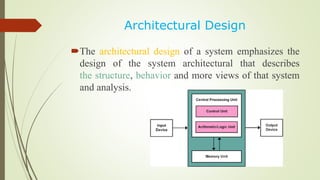
Architectural Design
The architectural design of a system emphasizes the
design of the system architectural that describes
the structure, behavior and more views of that system
and analysis.
Physical Design
The physical design relates to the actual input and output
processes of the system.
This is explained in terms of how data is input into a
system, how it is verified/authenticated, how it is
processed, and how it is displayed.
In physical design, requirements about the system
 Input requirement,
 Output requirements,
 Storage requirements,
 Processing requirements,
 System control and backup or recovery.
Logical Design
The logical design of a system pertains to an abstract
representation of the data flows, inputs and outputs of
the system.
Data flows: DFD, ERD and so on.
Inputs and Outputs:
Form as input
Report as output
Logical Design Process
Transformation
 Translate from ERD to tables
 Represent relationships
 Transform relationships
 Create preliminary list of tables, and indicate primary,
alternate, candidate, and foreign keys.
Normalization
Norms form:1NF, 2NF, etc.
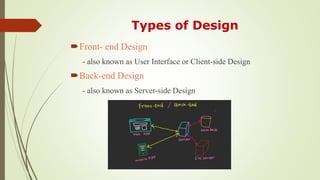
Types of Design
Front- end Design
- also known as User Interface or Client-side Design
Back-end Design
- also known as Server-side Design
User Interface Design
A user interface is the part of the system with which user
interact.
It includes the screen displays that provide navigation
through the system.
The screen and forms that capture data, and the report that
the system produces.
It includes:
Navigation Mechanism
Input Mechanism
Output Mechanism
Forms and Reports
Form:
-A Form is a business document that contains
some predefined data and often includes some
areas where additional data are to be filled in.
Report:
-A Report is also a business document that contains
only predefined data; it is a passive document used
for reading or viewing.
Designing Interfaces and
Dialogues
Process of Designing:
User focused activity
Follow-up prototype approach
Requirement determination
Designing Interfaces:
Designing Layout
Controlling in Input
Provide Feedback
Providing Help
Designing Dialogues:
A dialogue is the sequence in which information is
displayed to and obtained from a user.
The dialogue design process consists of three major
steps:
Designing the dialogue sequence
Building a prototype
Assessing usability
References
 System Analysis and Design
- Dennis, Wixom, Roth
 Modern Systems Analysis and Design
- Joseph S.Valacich, Joey F. George
 http://easyux.net/wp-content/uploads/2016/05/14-6.jpg
 https://swimage.com/wpcontent/uploads/2018/09/ActivityReportSample1.png
System analysis and design  logical design

System analysis and design logical design

  • 1.
    System Analysis and Design-Logical Design Created By: Girdhar Ratne B.Sc.(I.T.)5th Semester
  • 2.
    Introduction to SystemDesign Architectural Design Physical Design Logical Design Types of Design User Interface Design Forms and Reports Designing Interfaces and Dialogues Objectives
  • 3.
    Introduction to SystemDesign Systems design is the process of defining the architecture, modules, interfaces, and data for a system to satisfy specified requirements. System Design classified into: Architectural Design Physical Design Logical Design
  • 4.
    Architectural Design The architecturaldesign of a system emphasizes the design of the system architectural that describes the structure, behavior and more views of that system and analysis.
  • 5.
    Physical Design The physicaldesign relates to the actual input and output processes of the system. This is explained in terms of how data is input into a system, how it is verified/authenticated, how it is processed, and how it is displayed. In physical design, requirements about the system  Input requirement,  Output requirements,  Storage requirements,  Processing requirements,  System control and backup or recovery.
  • 6.
    Logical Design The logicaldesign of a system pertains to an abstract representation of the data flows, inputs and outputs of the system. Data flows: DFD, ERD and so on. Inputs and Outputs: Form as input Report as output
  • 7.
    Logical Design Process Transformation Translate from ERD to tables  Represent relationships  Transform relationships  Create preliminary list of tables, and indicate primary, alternate, candidate, and foreign keys. Normalization Norms form:1NF, 2NF, etc.
  • 8.
    Types of Design Front-end Design - also known as User Interface or Client-side Design Back-end Design - also known as Server-side Design
  • 9.
    User Interface Design Auser interface is the part of the system with which user interact. It includes the screen displays that provide navigation through the system. The screen and forms that capture data, and the report that the system produces. It includes: Navigation Mechanism Input Mechanism Output Mechanism
  • 10.
    Forms and Reports Form: -AForm is a business document that contains some predefined data and often includes some areas where additional data are to be filled in. Report: -A Report is also a business document that contains only predefined data; it is a passive document used for reading or viewing.
  • 11.
    Designing Interfaces and Dialogues Processof Designing: User focused activity Follow-up prototype approach Requirement determination
  • 12.
    Designing Interfaces: Designing Layout Controllingin Input Provide Feedback Providing Help
  • 13.
    Designing Dialogues: A dialogueis the sequence in which information is displayed to and obtained from a user. The dialogue design process consists of three major steps: Designing the dialogue sequence Building a prototype Assessing usability
  • 14.
    References  System Analysisand Design - Dennis, Wixom, Roth  Modern Systems Analysis and Design - Joseph S.Valacich, Joey F. George  http://easyux.net/wp-content/uploads/2016/05/14-6.jpg  https://swimage.com/wpcontent/uploads/2018/09/ActivityReportSample1.png