LANGUAGE AND PROCESSORS FOR
REQUIREMENTS SPECIFICATION
S.Nandhini
II- Msc (CS&IT)
Nadar Saraswathi college of Arts &Science
Theni
LANGUAGES AND PROCESSORS FOR
REQUIREMENTS SPECIFICATION
 A number of special purpose languages and processors
have been developed to permit concise statement and
automated analysis of requirements specification for
software.
 our purpose is to provide a brief introduction to
requirements specification languages and processors.
PSL/PSA
 problem statement language(PSL) was developed by professor
Daniel teich row at the university on Michigan
 The problem statement analyzer is the PSL processor
 PSL and PSA system is sometimes referred to as components
of the ISDOS project
 PSL/PSA system is sometimes referred to as the ISDOS
system
 PSL system descriptions can be divided into eight major
aspects:
 system input/output flow
 System structure
 Data structure
 Data derivation
 System size and volume
 System dynamics
 System properties
 project management
 System input/output flow
 The system I/o flow aspect deals with the interaction
between a system and its environment.
 System structure
 system structure is concerned with the hierarchies among objects in
a system.
 Data structure
 data structure aspect includes all the relationships that exist among
data used and/or manipulated by a system as seen by the users of
the system.
 Data derivation
 The data derivation aspect of the system description specifies
which data object are involved in particular processes in the system.
 System size and volume
 The system size and volume aspect is concerned with the size of the system
and those factors the volume of processing required.
 System dynamic
 Aspect of a system description presents the manner in which the system”
behaves” over time.
 project management requires that project related information.
PSA (PROBLEM STATEMENT
ANALYZER)
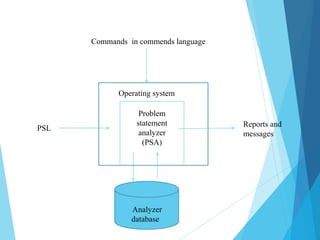
 PSA is an automated analyzer for processing requirements
stated in PSL.
 PSA system can provide reports in four categories
 Data base modification reports , reference reports , summary
reports and analysis reports
Operating system
Problem
statement
analyzer
(PSA)
Commands in commends language
Analyzer
database
PSL
Reports and
messages
RSL/REVS
 The requirements statement language(RSL) was developed by the
TRW defense and space Systems group to permit concise .
 The Requirements engineering validation system(REVS)processes
and analyzes RSL statements.
 The fundamental characteristic of RSL is the flow oriented approach
used to describe real-time systems.
 The requirements engineering and validation system (REVS)
operates on RSL statements.
REVS CONSISTS OF THREE MAJOR
COMPONENTS
 A translator for RSL
 A centeralized data base the Abstract System Semantic
Model(ASSM).
 A set of automated tools for processing information in ASSM.
STRUCTURED ANALYSIS AND DESIGN
TECHNIQUE (SADT)
 SADT was developed by D.T Ross and colleagues at
softtech, inc.
 The SADT language is called the language of Structured
Analysis(SA).
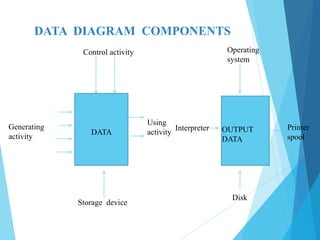
 Data diagram specify data object in the nodes and activities
on the arcs.
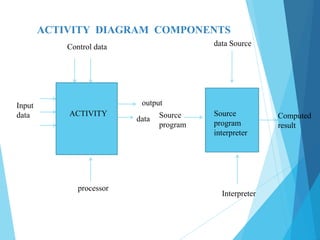
 Activity diagram the inputs and output are data flows and the
mechanisms are processors control is data that is used, but not
modified
ACTIVITY DIAGRAM COMPONENTS
ACTIVITY Source
program
interpreter
Interpreter
data Source
Source
program
Computed
result
Input
data
Control data
processor
output
data
DATA DIAGRAM COMPONENTS
DATA OUTPUT
DATA
Operating
system
Generating
activity
Control activity
Storage device
Using
activity
Disk
Printer
spool
Interpreter
THANK YOU

Language and Processors for Requirements Specification

  • 1.
    LANGUAGE AND PROCESSORSFOR REQUIREMENTS SPECIFICATION S.Nandhini II- Msc (CS&IT) Nadar Saraswathi college of Arts &Science Theni
  • 2.
    LANGUAGES AND PROCESSORSFOR REQUIREMENTS SPECIFICATION  A number of special purpose languages and processors have been developed to permit concise statement and automated analysis of requirements specification for software.  our purpose is to provide a brief introduction to requirements specification languages and processors.
  • 3.
    PSL/PSA  problem statementlanguage(PSL) was developed by professor Daniel teich row at the university on Michigan  The problem statement analyzer is the PSL processor  PSL and PSA system is sometimes referred to as components of the ISDOS project  PSL/PSA system is sometimes referred to as the ISDOS system
  • 4.
     PSL systemdescriptions can be divided into eight major aspects:  system input/output flow  System structure  Data structure  Data derivation  System size and volume  System dynamics  System properties  project management  System input/output flow  The system I/o flow aspect deals with the interaction between a system and its environment.
  • 5.
     System structure system structure is concerned with the hierarchies among objects in a system.  Data structure  data structure aspect includes all the relationships that exist among data used and/or manipulated by a system as seen by the users of the system.  Data derivation  The data derivation aspect of the system description specifies which data object are involved in particular processes in the system.
  • 6.
     System sizeand volume  The system size and volume aspect is concerned with the size of the system and those factors the volume of processing required.  System dynamic  Aspect of a system description presents the manner in which the system” behaves” over time.  project management requires that project related information.
  • 7.
    PSA (PROBLEM STATEMENT ANALYZER) PSA is an automated analyzer for processing requirements stated in PSL.  PSA system can provide reports in four categories  Data base modification reports , reference reports , summary reports and analysis reports
  • 8.
    Operating system Problem statement analyzer (PSA) Commands incommends language Analyzer database PSL Reports and messages
  • 9.
    RSL/REVS  The requirementsstatement language(RSL) was developed by the TRW defense and space Systems group to permit concise .  The Requirements engineering validation system(REVS)processes and analyzes RSL statements.  The fundamental characteristic of RSL is the flow oriented approach used to describe real-time systems.  The requirements engineering and validation system (REVS) operates on RSL statements.
  • 10.
    REVS CONSISTS OFTHREE MAJOR COMPONENTS  A translator for RSL  A centeralized data base the Abstract System Semantic Model(ASSM).  A set of automated tools for processing information in ASSM.
  • 11.
    STRUCTURED ANALYSIS ANDDESIGN TECHNIQUE (SADT)  SADT was developed by D.T Ross and colleagues at softtech, inc.  The SADT language is called the language of Structured Analysis(SA).  Data diagram specify data object in the nodes and activities on the arcs.  Activity diagram the inputs and output are data flows and the mechanisms are processors control is data that is used, but not modified
  • 12.
    ACTIVITY DIAGRAM COMPONENTS ACTIVITYSource program interpreter Interpreter data Source Source program Computed result Input data Control data processor output data
  • 13.
    DATA DIAGRAM COMPONENTS DATAOUTPUT DATA Operating system Generating activity Control activity Storage device Using activity Disk Printer spool Interpreter
  • 14.