The document discusses the concept of information, defining it as meaningful stimuli and distinguishing it from data, which refers to information stored in computers. It outlines various types of information, their relationship to information technology, and identifies deficiencies in current systems while proposing goals and alternative solutions for improvement. Additionally, it emphasizes the importance of feasibility analysis and different methods of system installation.
What is Information?
•Information is stimuli that has meaning in some context for its receiver.
• When information is entered into and stored in a computer,
• it is generally referred to as data.
• After processing (such as formatting and printing),
• output data can again be perceived as information.
Introduction To InformationTechnology
Defining Information
• What is Information?
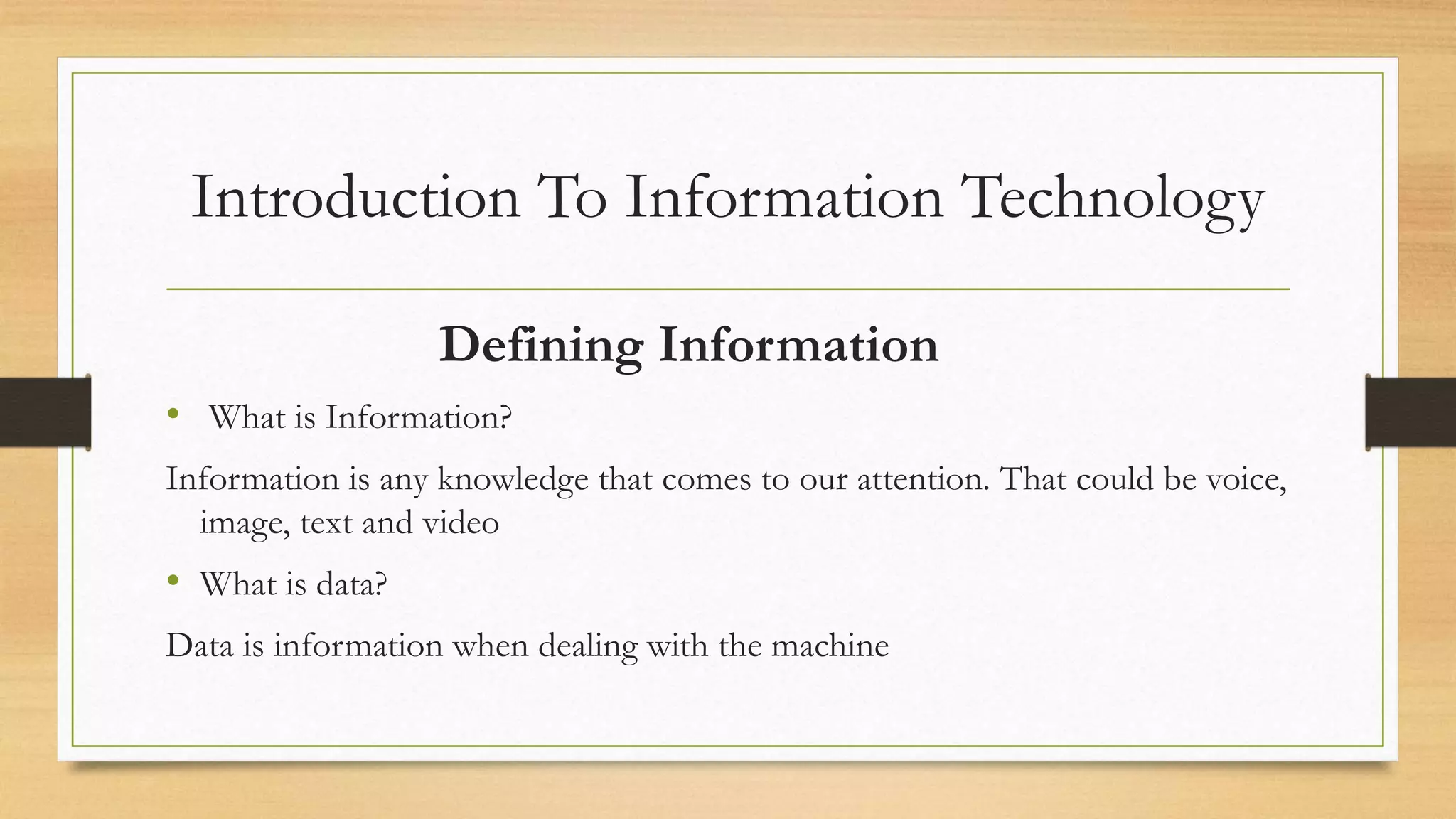
Information is any knowledge that comes to our attention. That could be voice,
image, text and video
• What is data?
Data is information when dealing with the machine
5.
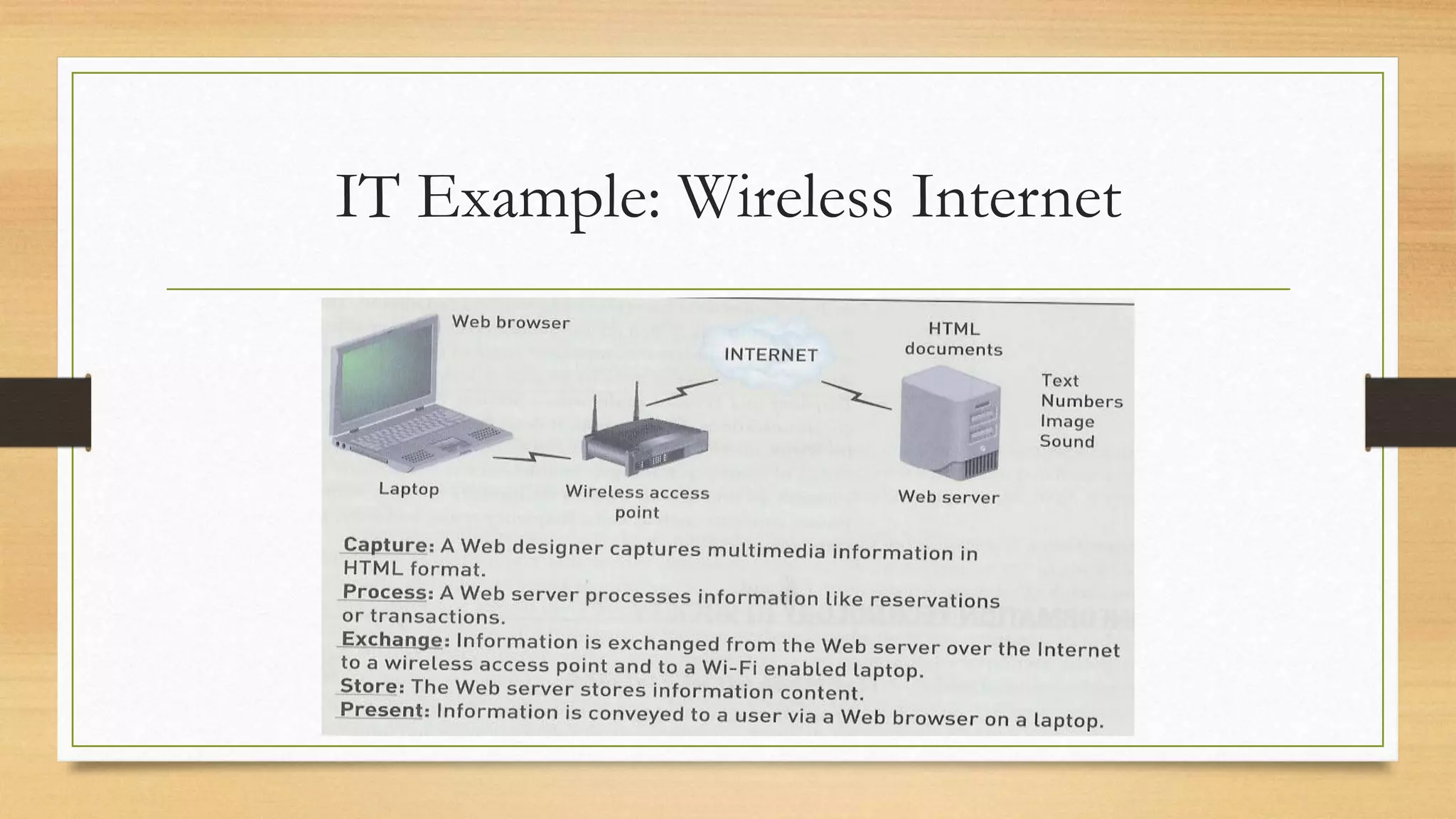
Defining Information Technology
•Information Technologies are systems
of hardware and software that
capture, process, exchange, store and
present information using electrical,
magnetic and electromagnetic energy.
CASE STUDY
Current systemdeficiencies identifying:
MISING FUNCTIONS
• Daily rate calculation not updated frequently.
• Purchases not consolidated etc.
• Menu not planned for balanced nutrition and low cost.
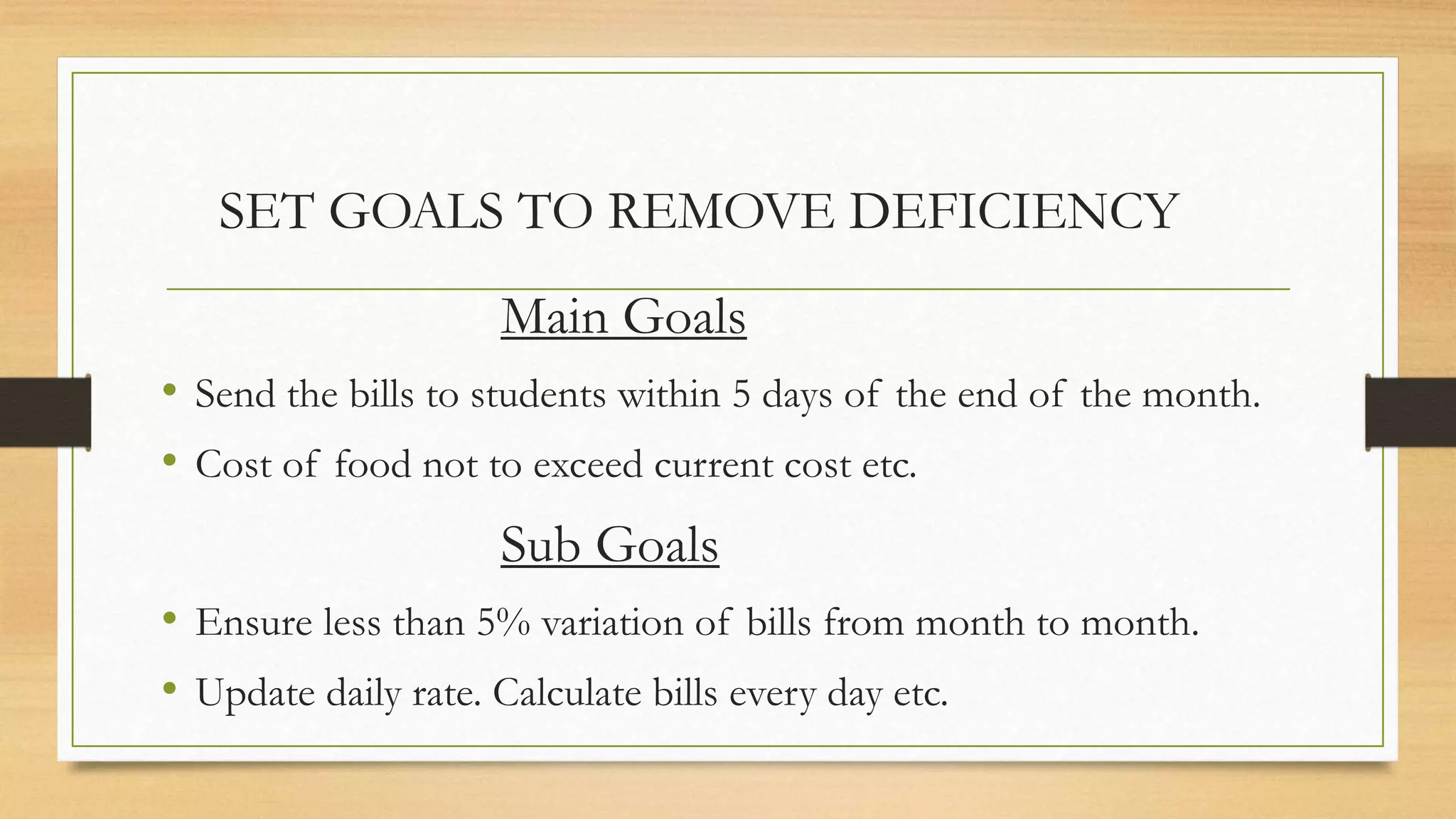
SET GOALS TOREMOVE DEFICIENCY
Main Goals
• Send the bills to students within 5 days of the end of the month.
• Cost of food not to exceed current cost etc.
Sub Goals
• Ensure less than 5% variation of bills from month to month.
• Update daily rate. Calculate bills every day etc.
11.
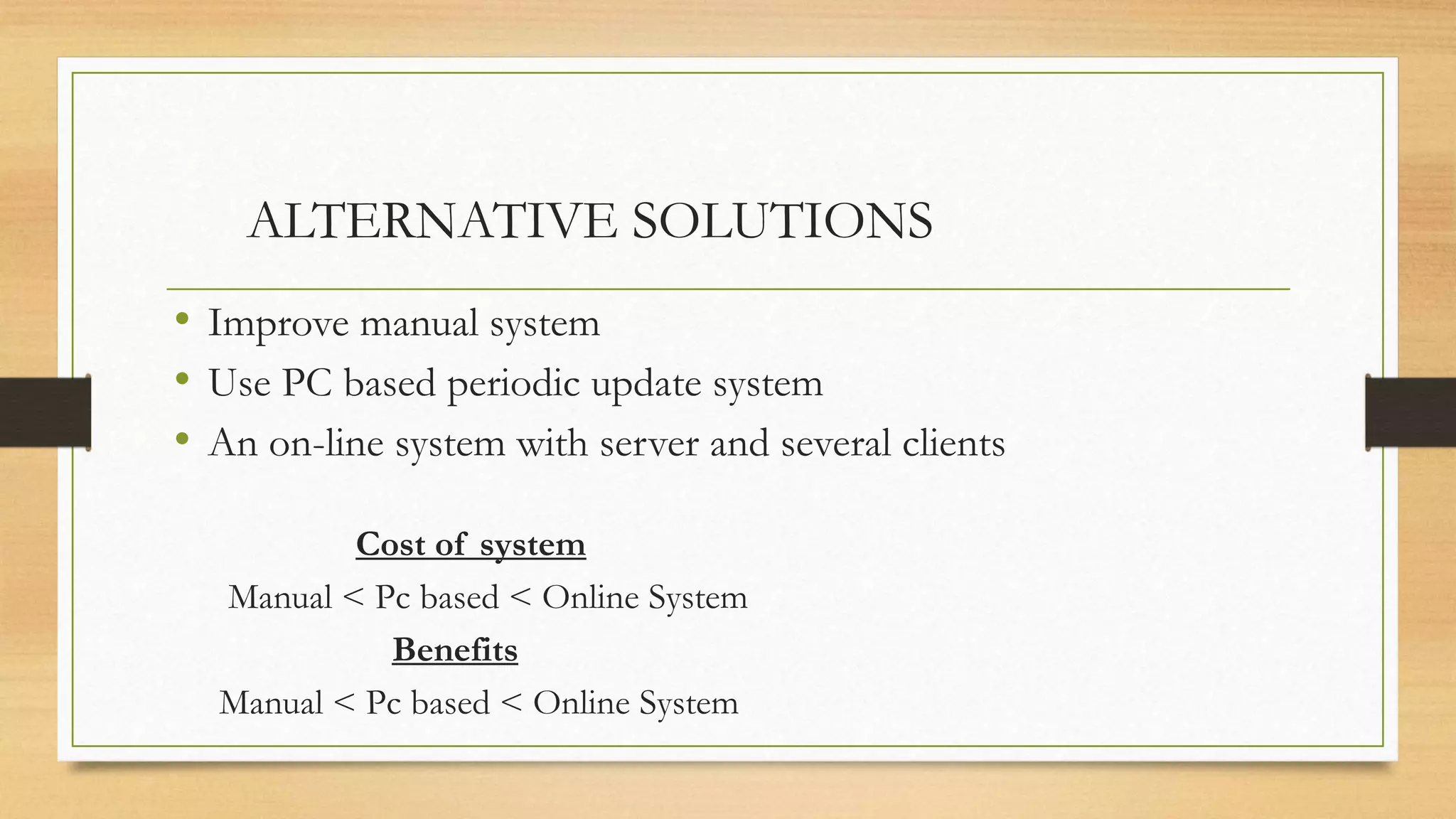
ALTERNATIVE SOLUTIONS
• Improvemanual system
• Use PC based periodic update system
• An on-line system with server and several clients
Cost of system
Manual < Pc based < Online System
Benefits
Manual < Pc based < Online System
12.
Feasibility Analysis
• Detailedbusiness case for the project
• Compiled into a feasibility study
• Critically important to reassess feasibility throughout the project
13.
Economic Feasibility
• Identifycosts and benefits
• Assign values to costs and benefits
• Determine cash flow
• Assess financial viability
14.
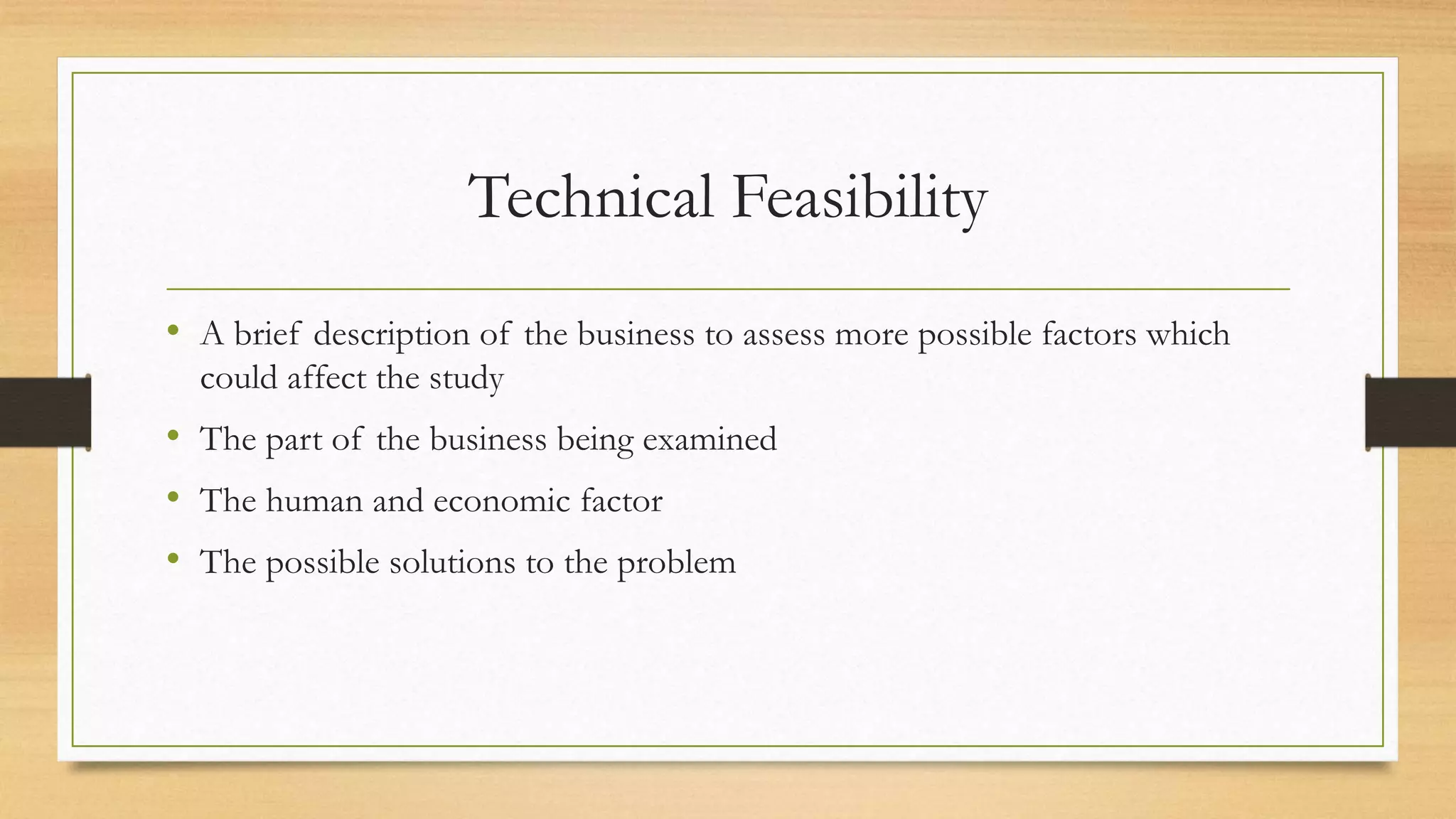
Technical Feasibility
• Abrief description of the business to assess more possible factors which
could affect the study
• The part of the business being examined
• The human and economic factor
• The possible solutions to the problem
System Installation
Installation isthe setup or making the system ready for execution
and available for users.
System often come with a specialized program for installation
referred to as installer.
17.
Attended installation
• Aninstallation process that needs a user who attends to it in order to
make choices, such as accepting or declining and installation location.
Unattended installation
It does not require the user to supply any information. They use an answer file, a file
that contains all the necessary parameters prior to the start of installation.
18.
Silent installation
• Installationthat does not display messages or windows during its progress.
Scheduled or automated installation
An installation process that runs on a preset time or when a predefined
condition is met installations of updates when the machine is idle or weekly
antivirus updates
19.
Clean installation
• Donein the absence of any interfering elements such as
old versions of the computer program being installed or
leftovers from a previous installation.











![Chap12 Developing Business It Solutions[1]](https://cdn.slidesharecdn.com/ss_thumbnails/chap12developingbusiness-itsolutions1-090731062341-phpapp02-thumbnail.jpg?width=640&height=640&fit=bounds)


