Kyrgyzstan	
  

Tajikistan	
  

Kazakhstan	
  

GROUNDWATER	
  MANAGEMENT	
  IN	
  THE	
  SYR	
  
DARYA	
  TRANSBOUNDARY	
  BASIN	
  

MANAGING	
  THE	
  SUBSURFACE	
  SPACE	
  
by	
  
ANDREA	
  MERLA	
  

PROJECT	
  PREPARATION	
  PHASE	
  
INCEPTION	
  MEETING	
  
Paris	
  –	
  February	
  3-­‐4,	
  2014	
  
Use	
  of	
  the	
  subsurface	
  has	
  become	
  steadily	
  more	
  
intensive,	
  both	
  by	
  the	
  intensificaRon	
  of	
  convenRonal	
  
uses	
  of	
  the	
  subsurface	
  and	
  its	
  resources,	
  and	
  by	
  the	
  
emergence	
  of	
  relaRvely	
  new,	
  non-­‐convenRonal	
  uses.	
  
The	
  first	
  category	
  includes	
  groundwater	
  abstracRon	
  and	
  
the	
  extracRon	
  of	
  minerals	
  and	
  hydrocarbons.	
  Using	
  the	
  
subsurface	
  for	
  developing	
  geothermal	
  energy,	
  for	
  
systemaRc	
  disposal	
  of	
  hazardous	
  waste	
  or	
  for	
  various	
  
injecRon/recovery	
  applicaRons	
  started	
  more	
  recently.	
  
Subsurface	
  construcRng	
  may	
  be	
  a	
  convenRonal	
  acRvity,	
  
but	
  its	
  quickly	
  increasing	
  intensity	
  in	
  numerous	
  areas	
  is	
  
unprecedented.	
  	
  Likewise,	
  groundwater	
  abstracRon	
  is	
  in	
  
some	
  areas	
  shi]ing	
  to	
  aquifers	
  at	
  greater	
  depths	
  than	
  
ever	
  before.	
  	
  
Category	
  

Type	
  of	
  AcRvity	
  

DistribuRon	
  

Pushing	
  the	
  Aquifer	
  
fronRer	
  

Groundwater	
  withdrawal	
  from	
  deeper	
   Sedimentary	
  basins	
  
aquifers	
  (>500m)	
  

Subsurface	
  Energy	
  
Development	
  

Oil	
  &	
  Gas	


Geothermal	
  energy	
  

Major	
  sedimentary	
  Basins	


Thermally	
  anomalous	
  areas	


Disposal/storage	
  of	
  
Hazardous	
  wastes	
  

Deep	
  Well	
  InjecRon	
  

Areas	
  associated	
  with	
  oil	
  &	
  
gas	
  industry	
  

InjecRon	
  and	
  
recovery	
  

SoluRon	
  mining	
  
ReinjecRon	
  spent	
  geothermal	
  fluids	
  
Fracking	
  
Carbon	
  Capture	
  and	
  SequestraRon	
  

Mining	
  areas	
  
Geothermal	
  fields	
  
Shale	
  gas	
  formaRons	
  
Tests	
  in	
  Canada,	
  Algeria,	
  N.	
  
Sea	
  

ConstrucRons	
  

Pipelines,	
  sewerage,	
  cables	
  
Tunnels,	
  railways	
  
Car	
  parks	
  etc.	
  

General,	
  Urban	
  Areas	
  

Aquifer	
  Recharge	
  

Managed	
  Aquifer	
  Recharge	
  
Aquifers	
  Storage	
  and	
  Recovery	
  

General	
  
THE	
  FOUR	
  MAIN	
  SUBSURFACE	
  RESOURCES	
  
AQUIFER	
  
STORAGE	
  AND	
  
RECOVERY	
  

DEEP	
  WELL	
  
INJECTION	
  
TIBET	
  

SINGAPORE	
  
Decision-­‐makers	
  and	
  stakeholders	
  need	
  
to	
  be	
  aware	
  of	
  the	
  many	
  potenRal	
  uses	
  
and	
  the	
  current	
  uses	
  of	
  the	
  subsurface	
  
and	
  subsurface	
  resources	
  in	
  the	
  area	
  of	
  
their	
  concern.	


Furthermore,	
  they	
  need	
  to	
  have	
  a	
  
reliable	
  picture	
  of	
  the	
  benefits,	
  costs	
  
and	
  risks	
  of	
  the	
  individual	
  subsurface	
  
acRviRes	
  (in	
  comparison	
  with	
  those	
  of	
  
non-­‐subsurface	
  alternaRves).	
  
UncertainRes	
  exist	
  on	
  the	
  assumed	
  properRes	
  
and	
  potenRal	
  of	
  the	
  underground.	
  Many	
  
processes	
  that	
  produce	
  change	
  in	
  the	
  
subsurface	
  are	
  virtually	
  irreversible,	
  on	
  a	
  
human	
  Rme	
  scale.	


Those	
  responsible	
  for	
  groundwater	
  
resources	
  management	
  should	
  
make	
  sure	
  that	
  all	
  new	
  iniRaRves	
  
for	
  subsurface	
  acRviRes	
  are	
  known	
  
to	
  them	
  in	
  Rme	
  

Syr darya 5

  • 1.
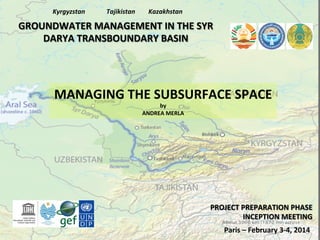
    Kyrgyzstan   Tajikistan   Kazakhstan   GROUNDWATER  MANAGEMENT  IN  THE  SYR   DARYA  TRANSBOUNDARY  BASIN   MANAGING  THE  SUBSURFACE  SPACE   by   ANDREA  MERLA   PROJECT  PREPARATION  PHASE   INCEPTION  MEETING   Paris  –  February  3-­‐4,  2014  
  • 2.
    Use  of  the  subsurface  has  become  steadily  more   intensive,  both  by  the  intensificaRon  of  convenRonal   uses  of  the  subsurface  and  its  resources,  and  by  the   emergence  of  relaRvely  new,  non-­‐convenRonal  uses.   The  first  category  includes  groundwater  abstracRon  and   the  extracRon  of  minerals  and  hydrocarbons.  Using  the   subsurface  for  developing  geothermal  energy,  for   systemaRc  disposal  of  hazardous  waste  or  for  various   injecRon/recovery  applicaRons  started  more  recently.   Subsurface  construcRng  may  be  a  convenRonal  acRvity,   but  its  quickly  increasing  intensity  in  numerous  areas  is   unprecedented.    Likewise,  groundwater  abstracRon  is  in   some  areas  shi]ing  to  aquifers  at  greater  depths  than   ever  before.    
  • 3.
    Category   Type  of  AcRvity   DistribuRon   Pushing  the  Aquifer   fronRer   Groundwater  withdrawal  from  deeper   Sedimentary  basins   aquifers  (>500m)   Subsurface  Energy   Development   Oil  &  Gas     Geothermal  energy   Major  sedimentary  Basins     Thermally  anomalous  areas     Disposal/storage  of   Hazardous  wastes   Deep  Well  InjecRon   Areas  associated  with  oil  &   gas  industry   InjecRon  and   recovery   SoluRon  mining   ReinjecRon  spent  geothermal  fluids   Fracking   Carbon  Capture  and  SequestraRon   Mining  areas   Geothermal  fields   Shale  gas  formaRons   Tests  in  Canada,  Algeria,  N.   Sea   ConstrucRons   Pipelines,  sewerage,  cables   Tunnels,  railways   Car  parks  etc.   General,  Urban  Areas   Aquifer  Recharge   Managed  Aquifer  Recharge   Aquifers  Storage  and  Recovery   General  
  • 5.
    THE  FOUR  MAIN  SUBSURFACE  RESOURCES  
  • 6.
    AQUIFER   STORAGE  AND   RECOVERY   DEEP  WELL   INJECTION  
  • 7.
  • 8.
    Decision-­‐makers  and  stakeholders  need   to  be  aware  of  the  many  potenRal  uses   and  the  current  uses  of  the  subsurface   and  subsurface  resources  in  the  area  of   their  concern.     Furthermore,  they  need  to  have  a   reliable  picture  of  the  benefits,  costs   and  risks  of  the  individual  subsurface   acRviRes  (in  comparison  with  those  of   non-­‐subsurface  alternaRves).   UncertainRes  exist  on  the  assumed  properRes   and  potenRal  of  the  underground.  Many   processes  that  produce  change  in  the   subsurface  are  virtually  irreversible,  on  a   human  Rme  scale.       Those  responsible  for  groundwater   resources  management  should   make  sure  that  all  new  iniRaRves   for  subsurface  acRviRes  are  known   to  them  in  Rme