Created By : 
Medina Indriati (J2C 007 030) 
Melly Wahyuningsih (J2C 007 031) 
Milka Ironia Realita (J2C 007 032)
What is Chromium(II)acetate 
Hydrate??? 
 Chromium(II) acetate, better 
known as chromous acetate, is 
the coordination compound with 
the formula Cr2(CH3CO2)4(H2O)2 or 
Cr2(OAc)4(H2O)2
Properties 
 Molecular formula C8H16Cr2O10 
 Molar mass 376.2 g/mol 
 Appearance brick-red solid 
 Density 1.79 g/cm3 
 Melting point dehydrates >100C 
 Solubility in water soluble in hot 
water, MeOH
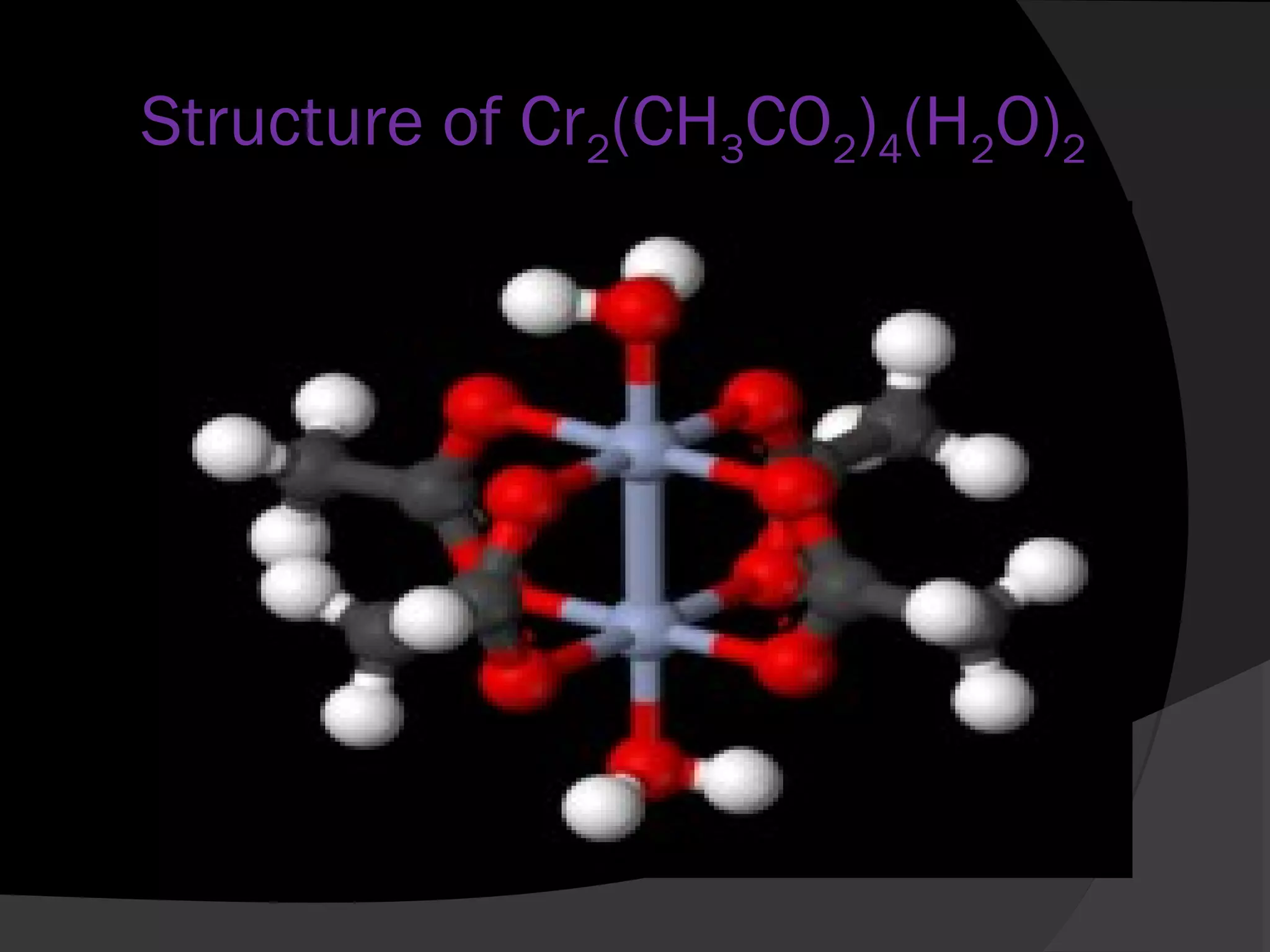
Structure of Cr2(CH3CO2)4(H2O)2
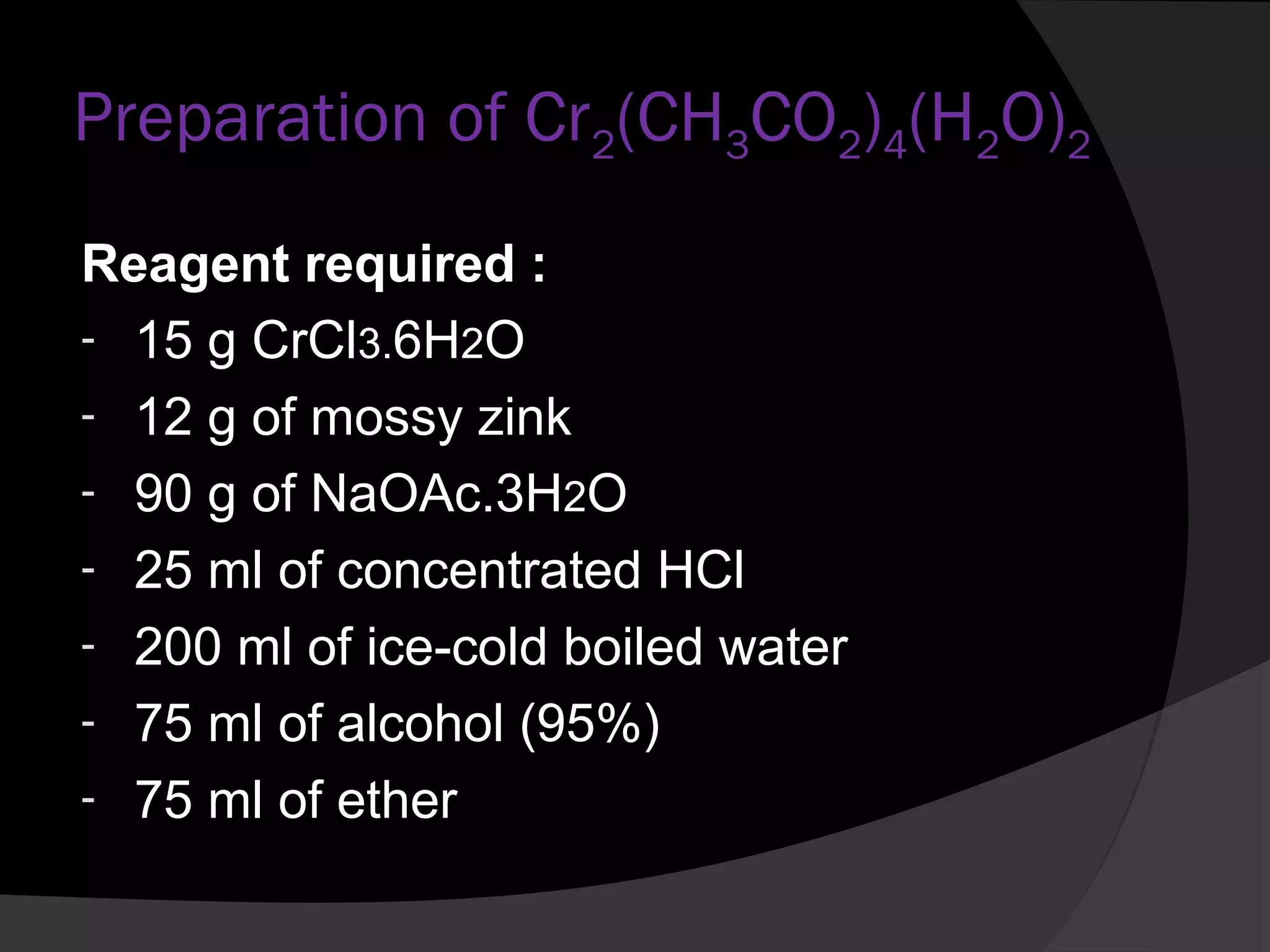
Preparation of Cr2(CH3CO2)4(H2O)2 
Reagent required : 
- 15 g CrCl3.6H2O 
- 12 g of mossy zink 
- 90 g of NaOAc.3H2O 
- 25 ml of concentrated HCl 
- 200 ml of ice-cold boiled water 
- 75 ml of alcohol (95%) 
- 75 ml of ether
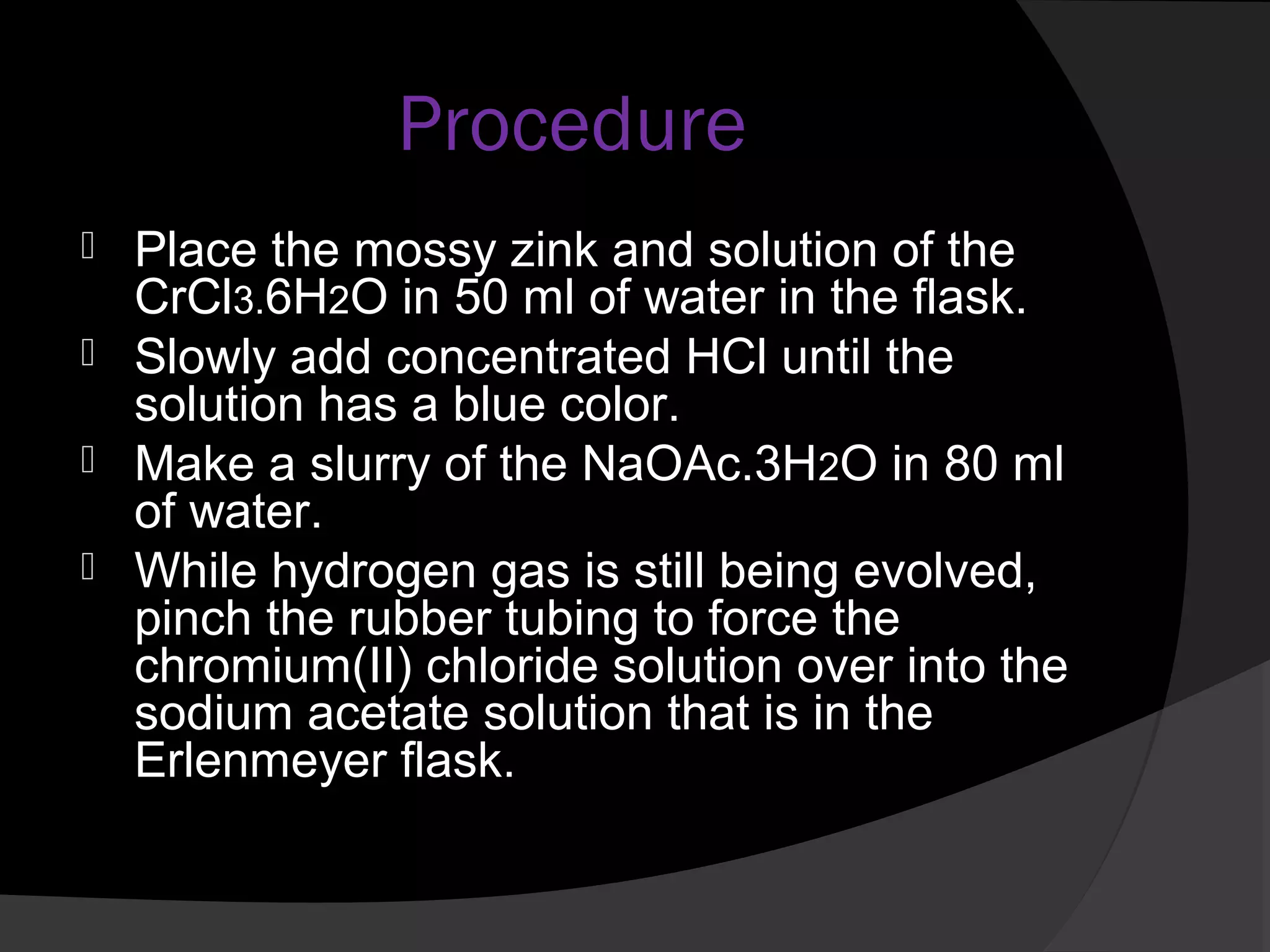
Procedure 
 Place the mossy zink and solution of the 
CrCl3.6H2O in 50 ml of water in the flask. 
 Slowly add concentrated HCl until the 
solution has a blue color. 
 Make a slurry of the NaOAc.3H2O in 80 ml 
of water. 
 While hydrogen gas is still being evolved, 
pinch the rubber tubing to force the 
chromium(II) chloride solution over into the 
sodium acetate solution that is in the 
Erlenmeyer flask.
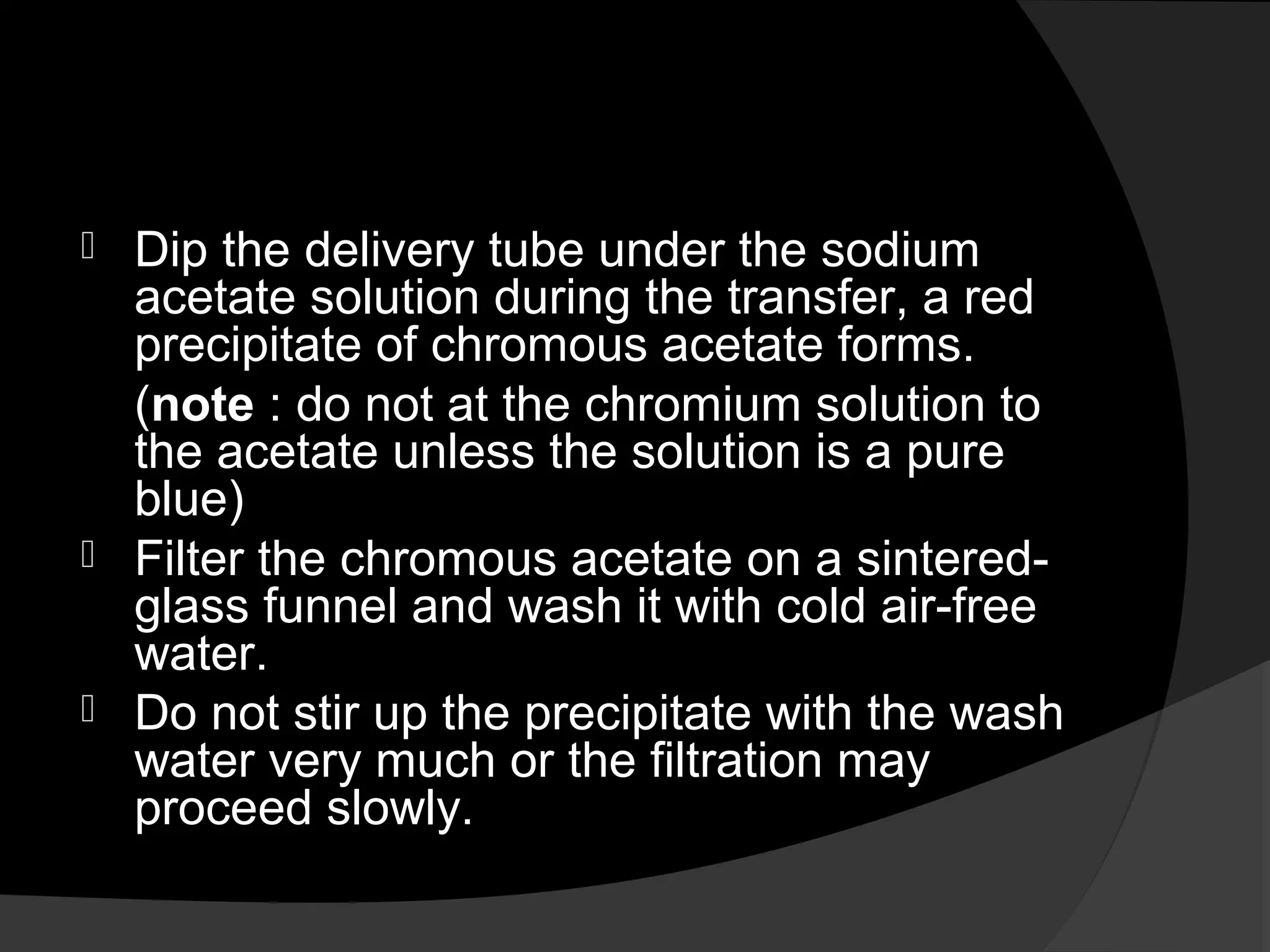
 Dip the delivery tube under the sodium 
acetate solution during the transfer, a red 
precipitate of chromous acetate forms. 
(note : do not at the chromium solution to 
the acetate unless the solution is a pure 
blue) 
 Filter the chromous acetate on a sintered-glass 
funnel and wash it with cold air-free 
water. 
 Do not stir up the precipitate with the wash 
water very much or the filtration may 
proceed slowly.
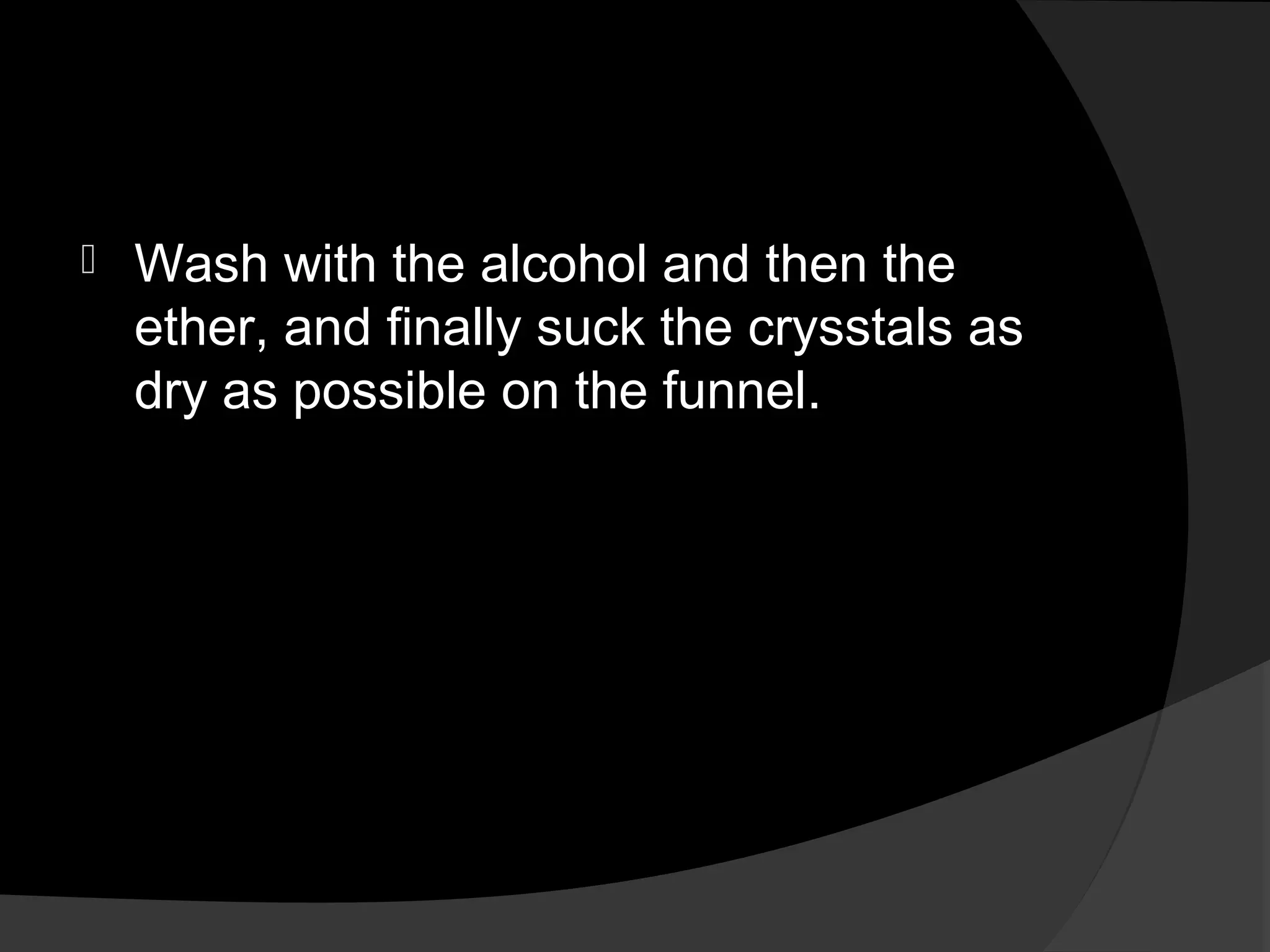
 Wash with the alcohol and then the 
ether, and finally suck the crysstals as 
dry as possible on the funnel.
Characterization 
 If air is admitted to the sample, it will 
gradually turn to the gray-green color 
characteristic of the oxidized material. 
 Pure[Cr(OAc)2]2.2H2O is diamagnetic
Analysis 
 [Cr(OAc)2]2·2H20 can be 
analyzed by Spectroscopy 
Infared (IR)
Reaction 
 2 Cr3+ + Zn → 2 Cr2+ + Zn2+ 
 2 Cr2+ + 4 OAc- + 2 H2O → Cr2(OAc)4(H2O)2 
 4 HO2CR + 2 Cr(C5H5)2 → Cr2(O2CR)4 + 4 C5H6 
The overall net reaction is the sum of the above 
reaction : 
2CrCl3·6H2O + Zn + 4 NaOAc·3H2O 
→[Cr(OAc)2]2·2H20 + ZnCl2 + 4 NaCl + 22 H20
THANK YOU…

Synthesis of chromium(ii)acetate hydrate

  • 1.
    Created By : Medina Indriati (J2C 007 030) Melly Wahyuningsih (J2C 007 031) Milka Ironia Realita (J2C 007 032)
  • 2.
    What is Chromium(II)acetate Hydrate???  Chromium(II) acetate, better known as chromous acetate, is the coordination compound with the formula Cr2(CH3CO2)4(H2O)2 or Cr2(OAc)4(H2O)2
  • 3.
    Properties  Molecularformula C8H16Cr2O10  Molar mass 376.2 g/mol  Appearance brick-red solid  Density 1.79 g/cm3  Melting point dehydrates >100C  Solubility in water soluble in hot water, MeOH
  • 4.
  • 5.
    Preparation of Cr2(CH3CO2)4(H2O)2 Reagent required : - 15 g CrCl3.6H2O - 12 g of mossy zink - 90 g of NaOAc.3H2O - 25 ml of concentrated HCl - 200 ml of ice-cold boiled water - 75 ml of alcohol (95%) - 75 ml of ether
  • 6.
    Procedure  Placethe mossy zink and solution of the CrCl3.6H2O in 50 ml of water in the flask.  Slowly add concentrated HCl until the solution has a blue color.  Make a slurry of the NaOAc.3H2O in 80 ml of water.  While hydrogen gas is still being evolved, pinch the rubber tubing to force the chromium(II) chloride solution over into the sodium acetate solution that is in the Erlenmeyer flask.
  • 7.
     Dip thedelivery tube under the sodium acetate solution during the transfer, a red precipitate of chromous acetate forms. (note : do not at the chromium solution to the acetate unless the solution is a pure blue)  Filter the chromous acetate on a sintered-glass funnel and wash it with cold air-free water.  Do not stir up the precipitate with the wash water very much or the filtration may proceed slowly.
  • 8.
     Wash withthe alcohol and then the ether, and finally suck the crysstals as dry as possible on the funnel.
  • 9.
    Characterization  Ifair is admitted to the sample, it will gradually turn to the gray-green color characteristic of the oxidized material.  Pure[Cr(OAc)2]2.2H2O is diamagnetic
  • 10.
    Analysis  [Cr(OAc)2]2·2H20can be analyzed by Spectroscopy Infared (IR)
  • 11.
    Reaction  2Cr3+ + Zn → 2 Cr2+ + Zn2+  2 Cr2+ + 4 OAc- + 2 H2O → Cr2(OAc)4(H2O)2  4 HO2CR + 2 Cr(C5H5)2 → Cr2(O2CR)4 + 4 C5H6 The overall net reaction is the sum of the above reaction : 2CrCl3·6H2O + Zn + 4 NaOAc·3H2O →[Cr(OAc)2]2·2H20 + ZnCl2 + 4 NaCl + 22 H20
  • 12.