SURVEYING
Surveying is involved in a project from conceptual stage to
construction and afterwards in maintenance also.
Depending on the stage at which surveying is carried out it
can be called :
i) Pre construction
survey
Feasibility survey
ii) Construction
survey
To maintain alignment and Geometry
control during construction
iii) Post construction
survey
Maintenance survey
I. Basic Concepts in Surveying
Surveying is the art of determining the relative positions of points
on, above or beneath the surface of the earth by means of direct
or indirect measurements of distance, direction and elevation.
Levelling is a branch of surveying, the object of which is to find the
elevations of points with respect to a given or assumed datum,
and to establish points at a given elevation or at different
elevations with respect to a given or assumed datum.
In general, surveying deals with measurements in a horizontal
plane where as levelling deals with measurements in a vertical
plane.
Primary Divisions of Survey
The two primary divisions of survey are :
1.Plane surveying
2.Geodetic surveying
Plane Surveying
It is that type of surveying in which the mean surface of the
earth is considered as plane and the spheroidal shape is
neglected. All triangles formed by survey lines are considered
as plane triangles. The level line is considered as straight and
plumb lines are considered parallel. In other words, when small
areas are to be surveyed, the curvature of the earth’s surface is
ignored and such a surveying is called plane surveying.
Geodetic Surveying
It is that type of surveying in which the curved shape of
the earth is taken in to account. The object of geodetic
survey is to determine the precise position on the surface of
the earth, of a system of widely distant points which form
control stations in which surveys of less precision may be
referred.
Accuracy & Precision
WHAT IS ACCURACY ?
• Accuracy is the nearness of your measurements to the true value.
WHAT IS PRECISION ?
• Precision is the amount by which a measurement
deviates from its mean.
Suppose the true length of a line is 736.72 m and
you are measuring the same line 5 times.
• The first party reports the following measurements:
736.80, 736.70, 736.75, 736.85, and 736.65 m.
more accurate
The second party reports the following measurements:
736.42, 736.40, 736.40, 736.42, and 736.41 m.
• more precise
Classification of Surveys
Surveys may be classified based on the nature of
the field of survey, object of survey and instruments
used. Some of the important surveys are :
• Topographical surveys
They are carried out to determine the positions of
natural features of a region such as rivers, streams,
hills etc. and artificial features such as roads and
canals. The purpose of such surveys is to prepare
maps and such maps are called topo-sheets.
• Hydrographic Survey
Hydro-graphic survey is carried out to determine M.S.L.
(Mean Sea Level), water spread area, depth of water bodies,
velocity of flow in streams, cross-section area of flow etc.
• Astronomical Survey
Astronomical Survey is carried out to determine the
absolute location of any point on the surface of earth. This
survey consists of making observations to heavenly bodies
such as sun, stars.
• Engineering Survey
This type of survey is undertaken whenever sufficient data
is to be collected for the purpose of planning and designing
engineering works such as roads, bridges and reservoirs.
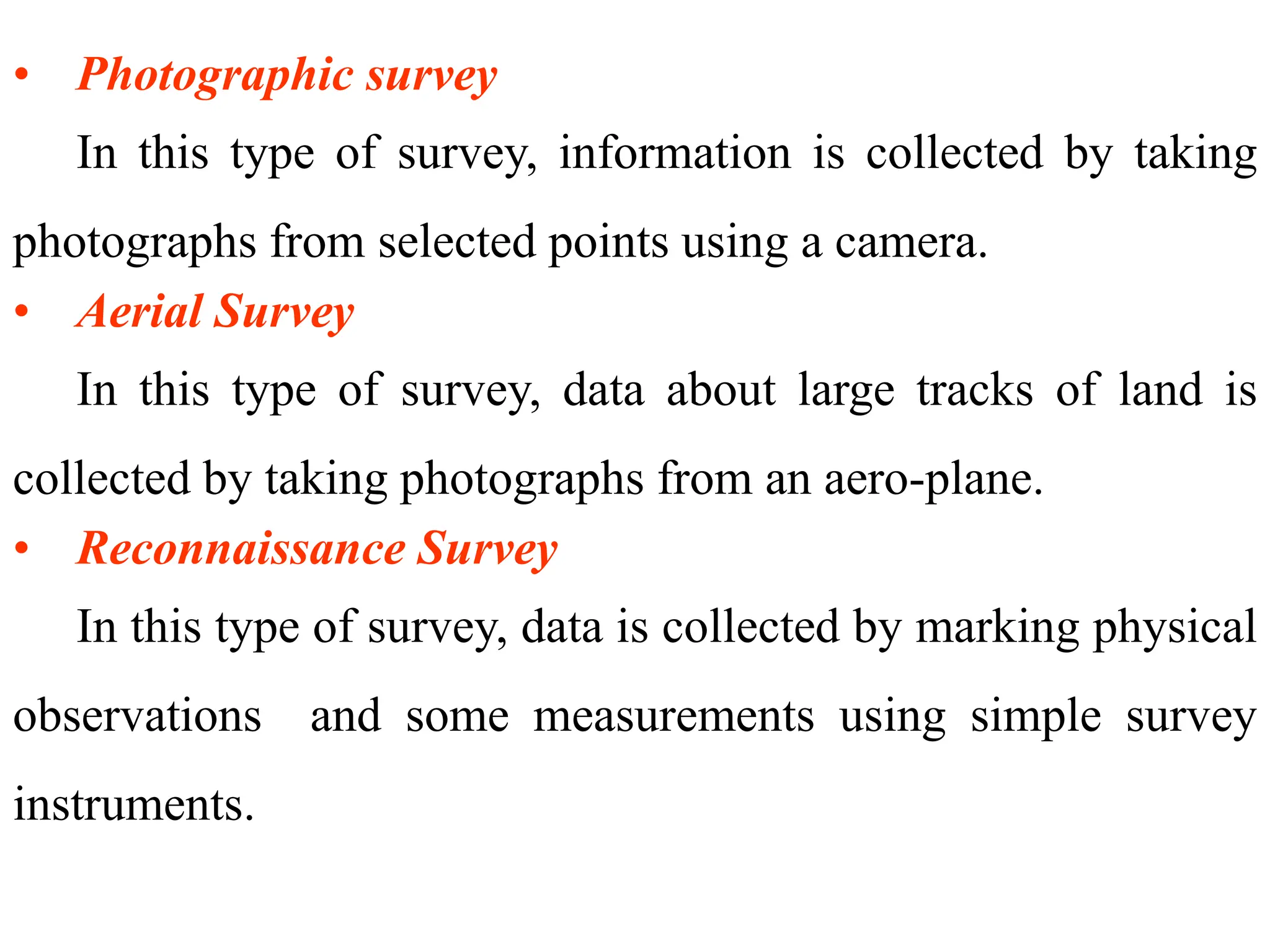
• Photographic survey
In this type of survey, information is collected by taking
photographs from selected points using a camera.
• Aerial Survey
In this type of survey, data about large tracks of land is
collected by taking photographs from an aero-plane.
• Reconnaissance Survey
In this type of survey, data is collected by marking physical
observations and some measurements using simple survey
instruments.
 Levelling is the process by which differences in height
between two or more points can be determined.
 Leveling is a branch of surveying, the object of which is
to find or establish the elevation of a given point with
respect to the given or assumed Datum (reference point).
 Common leveling instruments include the spirit level,
the dumpy level, the digital level, laser level, wye level,
tilting level, auto level
 Spirit Level - or bubble level is an instrument
designed to indicate whether a surface is level
or plumb
 Varying Lengths 8in to 16ft
 Can also be magnetic
 Quality of Levels vary markedly
 The tube is filled with water so that the water level is ab
out 3 ft high in each of the tube ends. It is essential that
no air bubbles be trapped in the tube. Air bubbles can be
removed by tapping the tube with the finger.
It is simple compact and stable.
The telescope is rigidly fixed to its
support therefore cannot be rotated
about its longitudinal axis. A long
bubble tube is attached to the top of
telescope. Dumpy literally means
short and thick.
Dumpy Level
A builders level is an optical instrument used to establish or
check points in the same horizontal plane. It is used in survey
ing and building to transfer, measure, or set horizontal levels
Bubble
When bubble is centred the instruments standing axis is
approximately vertical. The compensators in the instrument take
over and adjust the optical Line of Collimation so that it is horizo
ntal (hopefully)
 Line of Collimation – Imaginary line that passes through center of
eyepiece and center of Cross Hairs and its continuation up to staff
position.
Relationship Of Line Of Sight With Vertical Axis And Bubble
Tube Axis
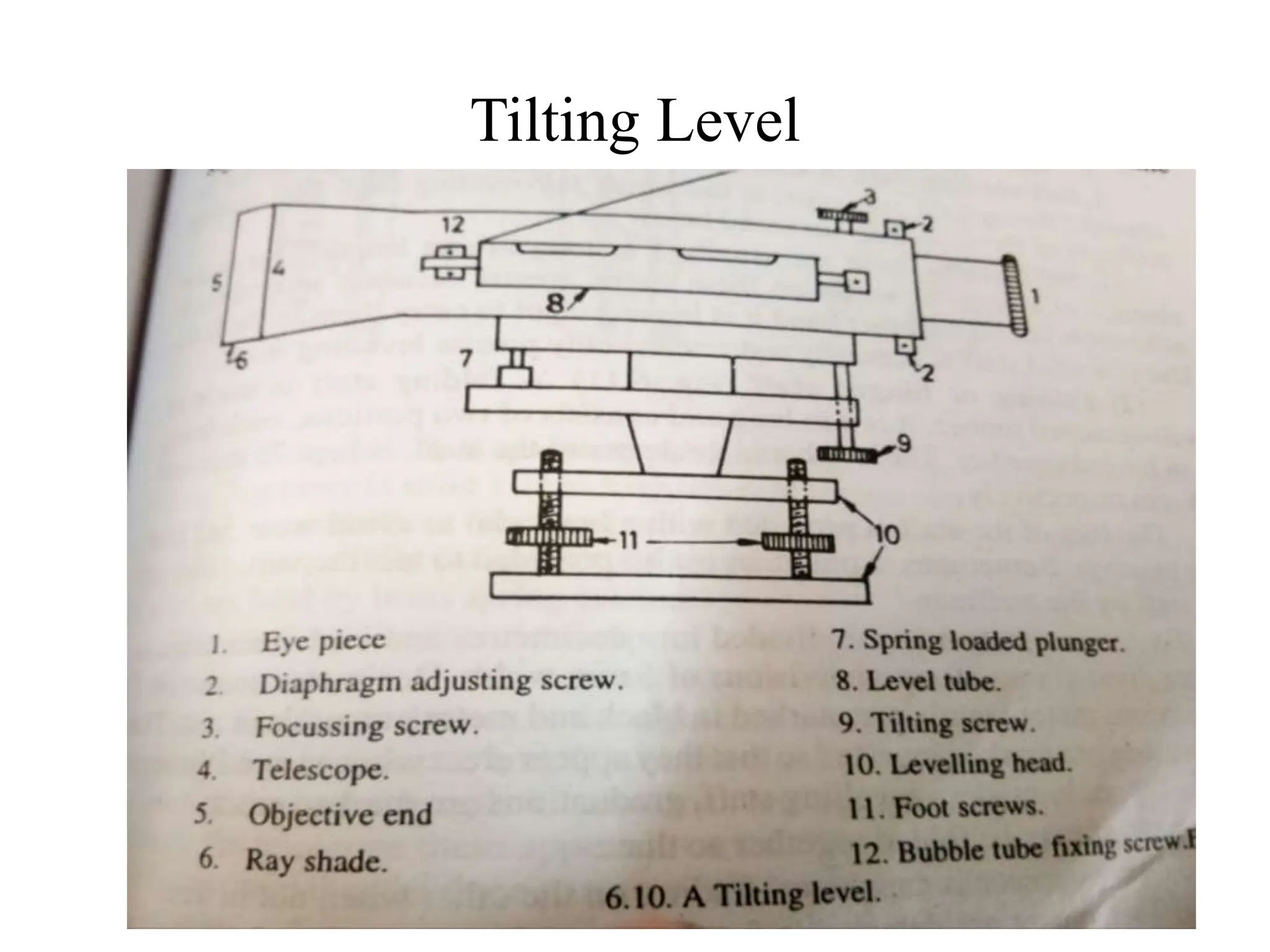
It consists of a telescope a
ttached with a level tube
which can be tilted withi
n few degrees in vertical
plane by a tilting screw.
Very Accurate
Very Difficult to Set Up
Can also set grades
Works similar to a plumbers
pipe level
Have been replaced by Total
Stations
Tilting Level
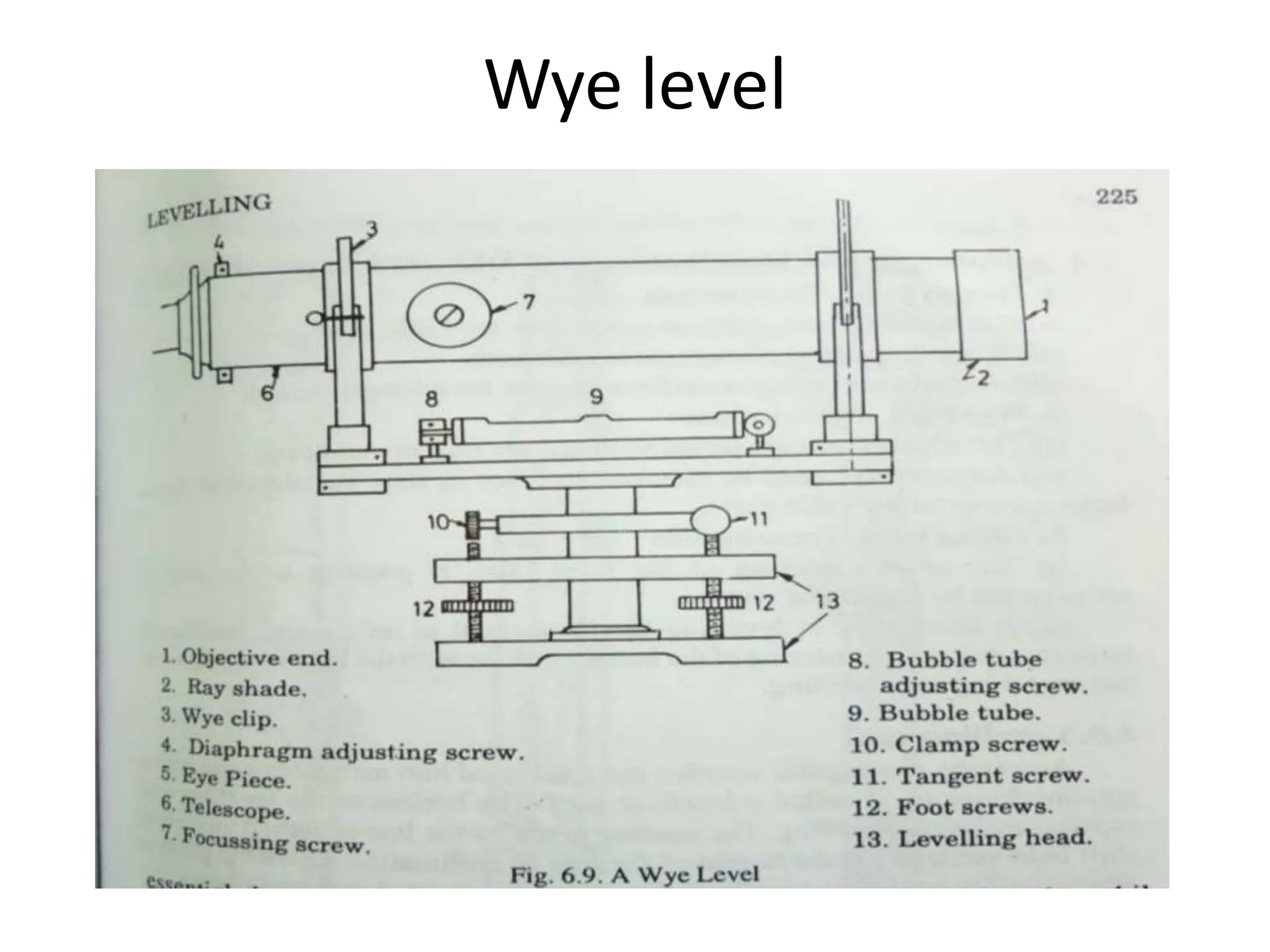
Wye level
Tilting level
Tilting Level
1. Base Plate
2. Horizontal Circle
3. Eyepiece
4. Circular Bubble
5. Sighting Pointer
6. Objective Lens
7. Focusing Knob
8. Fine Motion Drive
9. Footscrew
10. Bubble Mirror
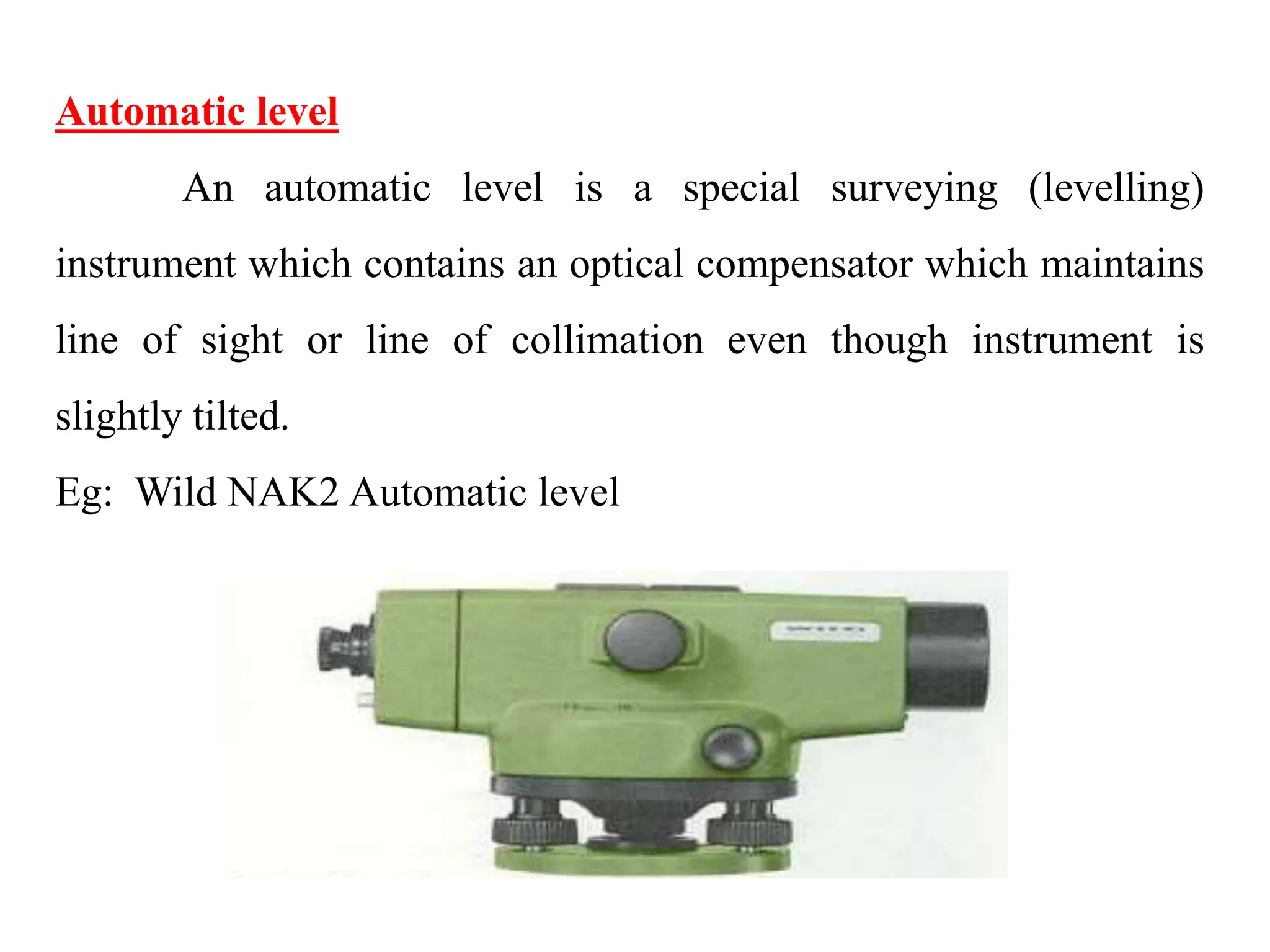
Automatic level
An automatic level is a special surveying (levelling)
instrument which contains an optical compensator which maintains
line of sight or line of collimation even though instrument is
slightly tilted.
Eg: Wild NAK2 Automatic level
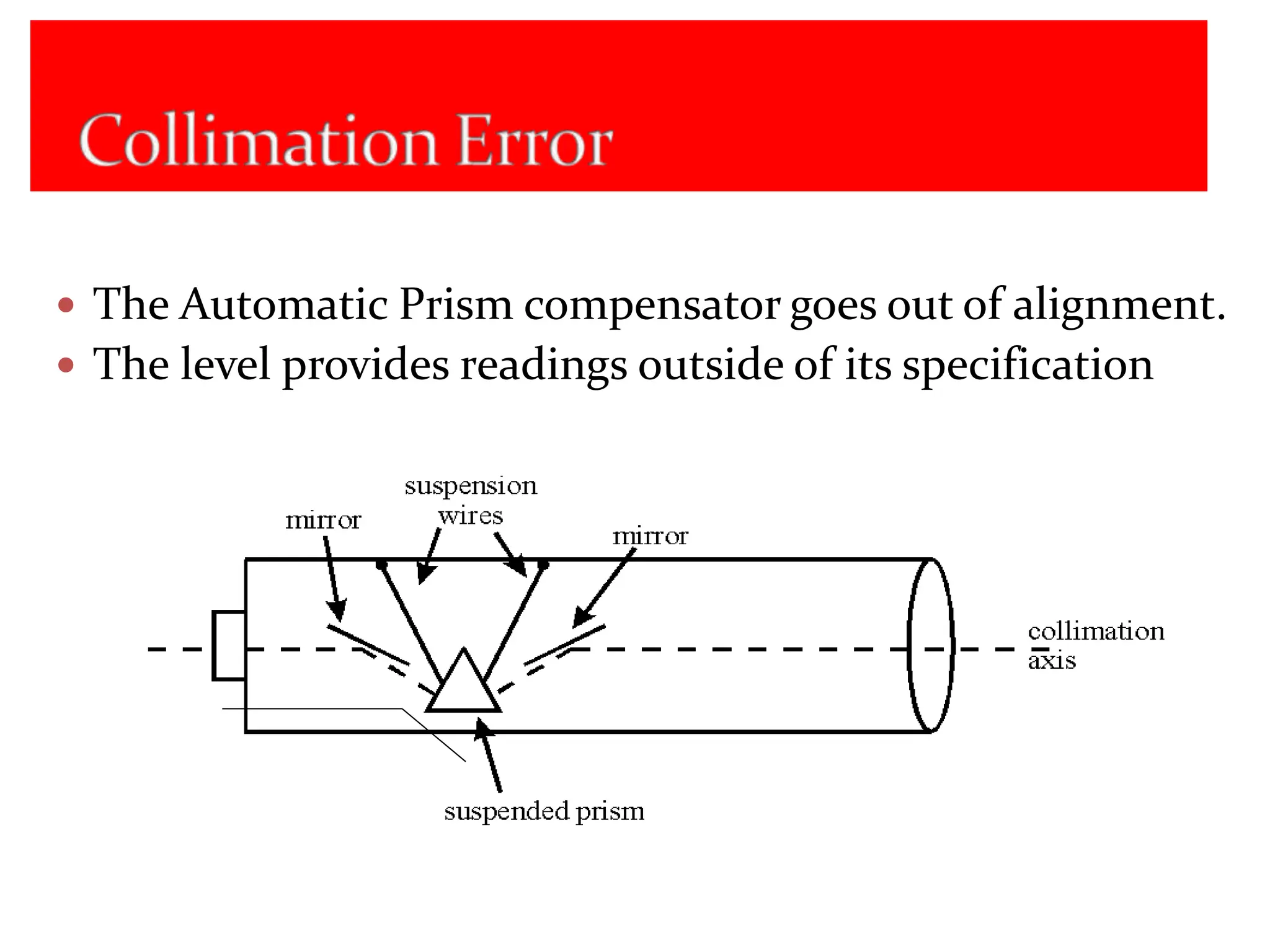
 The Automatic Prism compensator goes out of alignment.
 The level provides readings outside of its specification
 Has a compensator similar to Automatic Level
 Radiates a Laser Beam 360 through line of collimation
 Laser is then picked by a receiver to indicate line of collima
tion
 Some lasers are self leveling
 Survey quality laser levels are designed with two features:
 Visible or non-visible
 Rotating or non-rotating
 For a sight length of 300 ft the effect is only 1mm.
 Keep Sight lengths under 150 ft
 the effect is eliminated by using equal sight lengths fo
r fore- and backsights.
Diaphragm and reticule in level
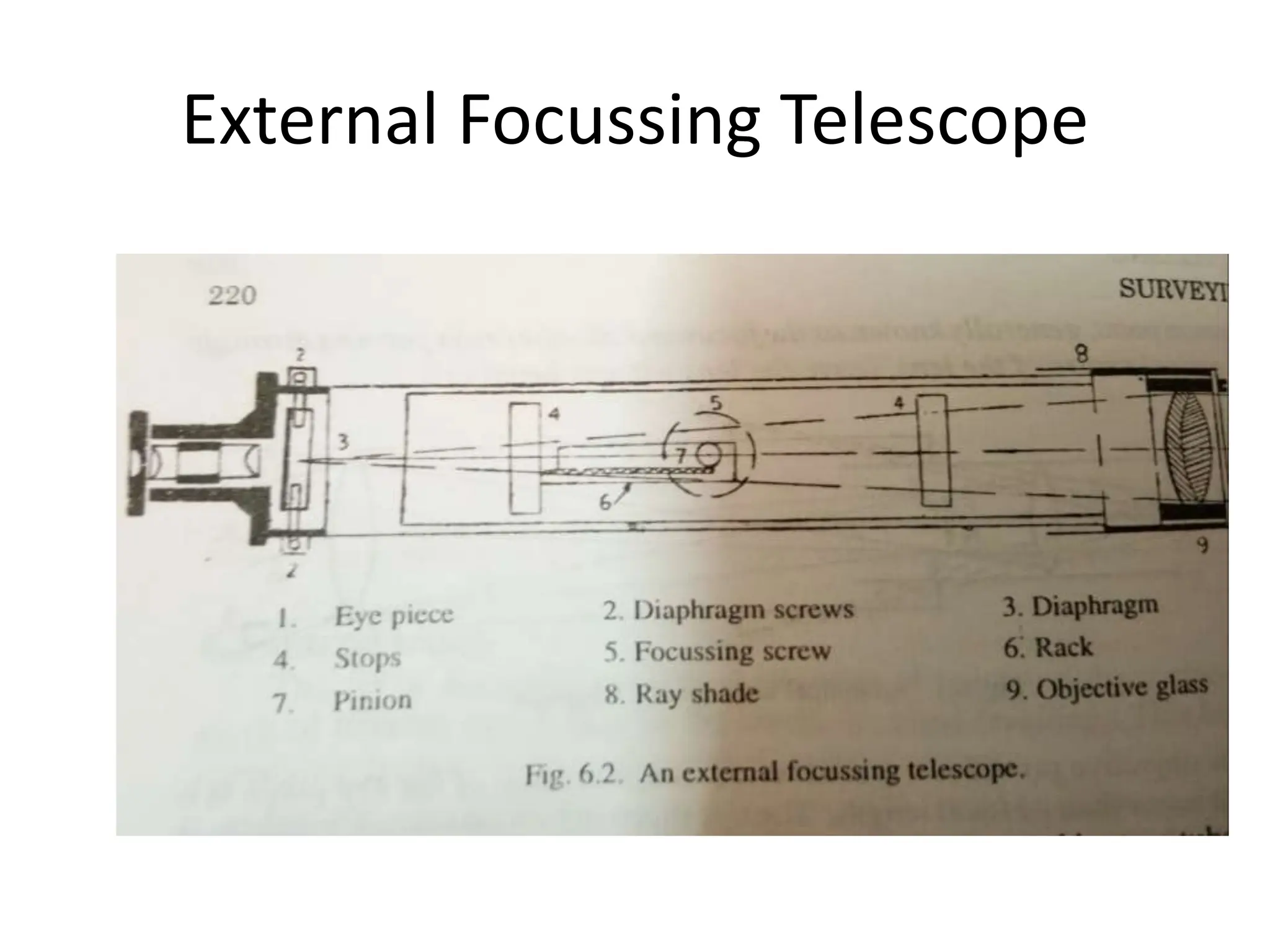
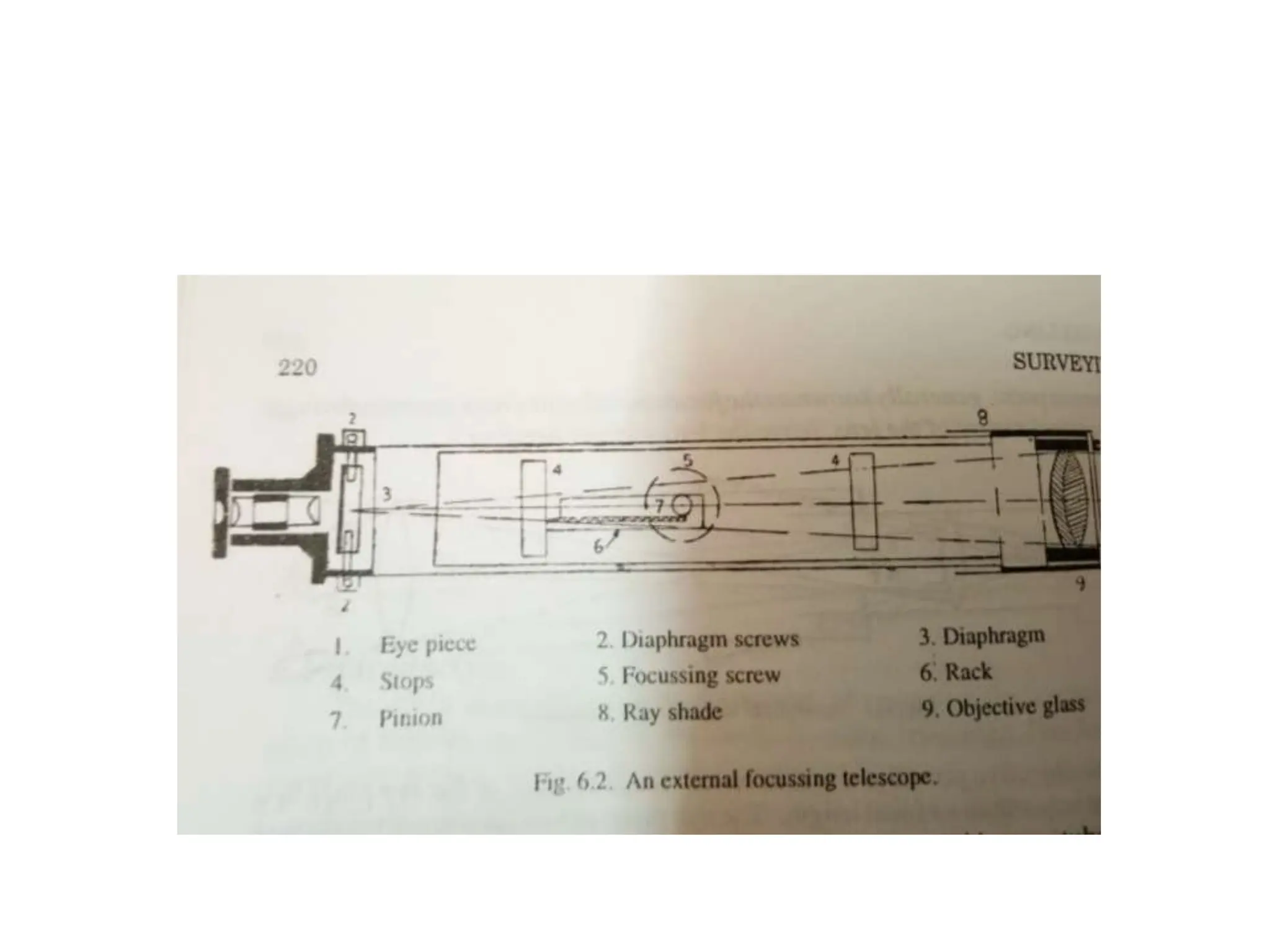
External Focussing Telescope
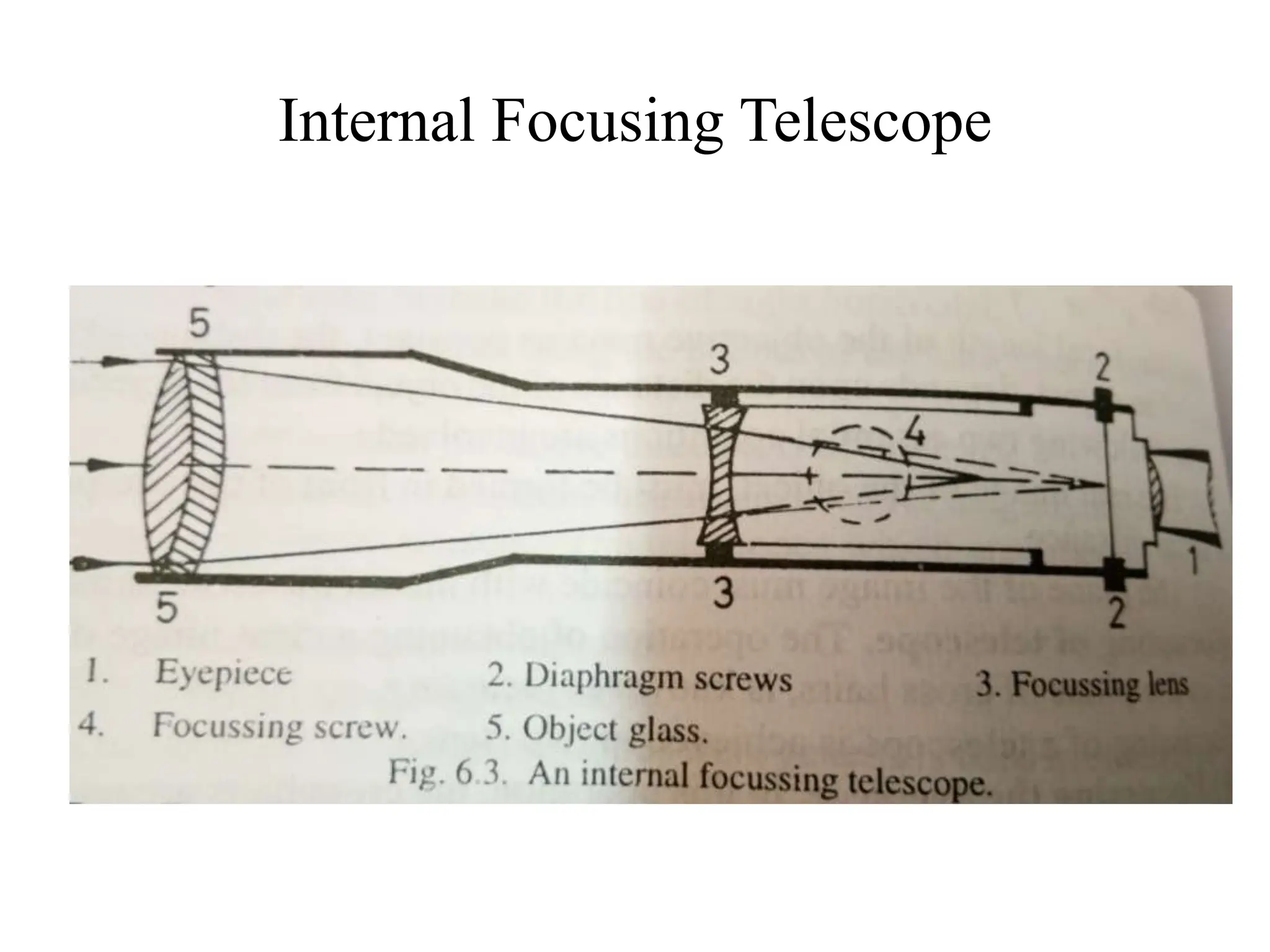
Internal Focusing Telescope
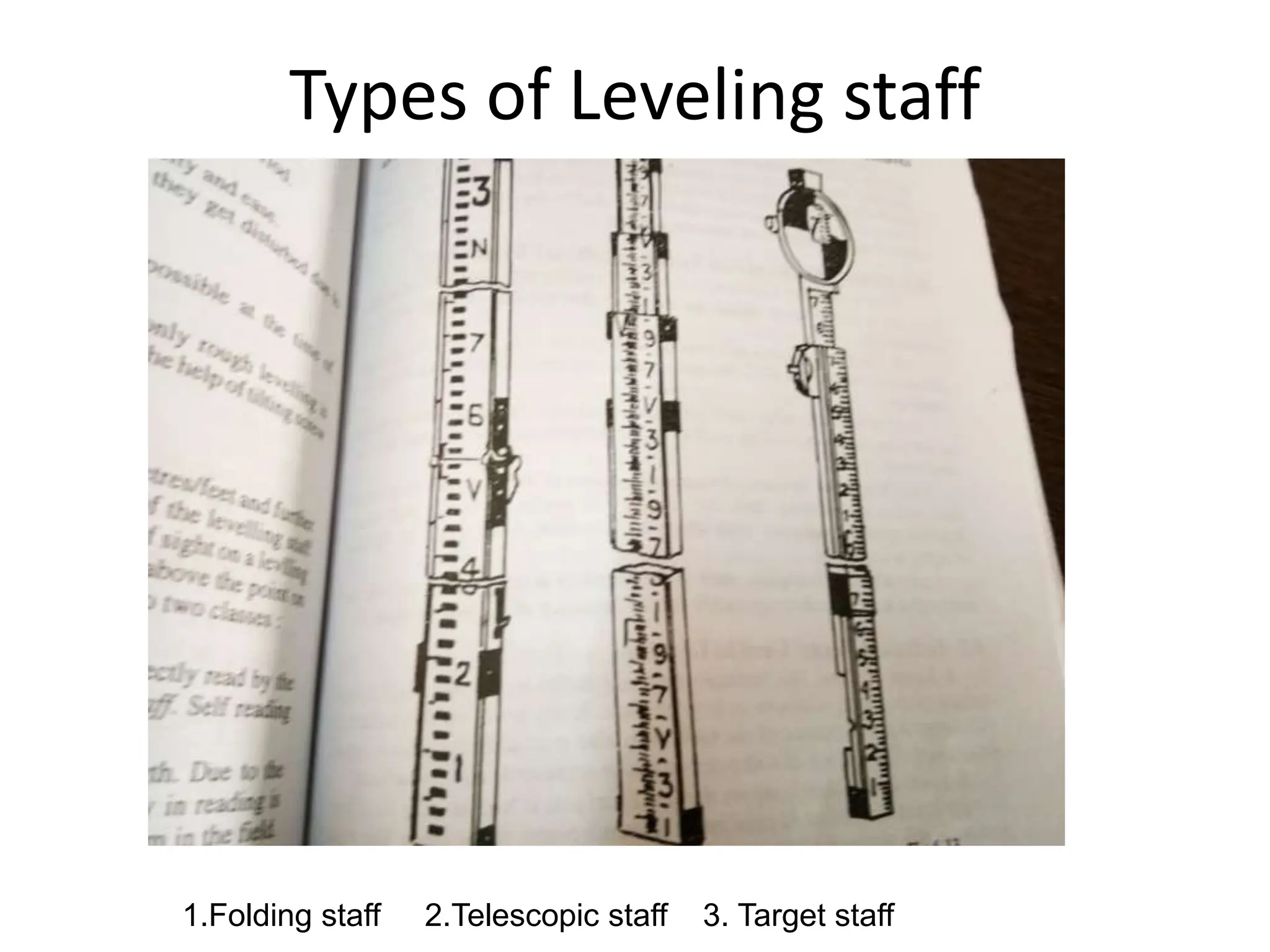
Types of Leveling staff
1.Folding staff 2.Telescopic staff 3. Target staff
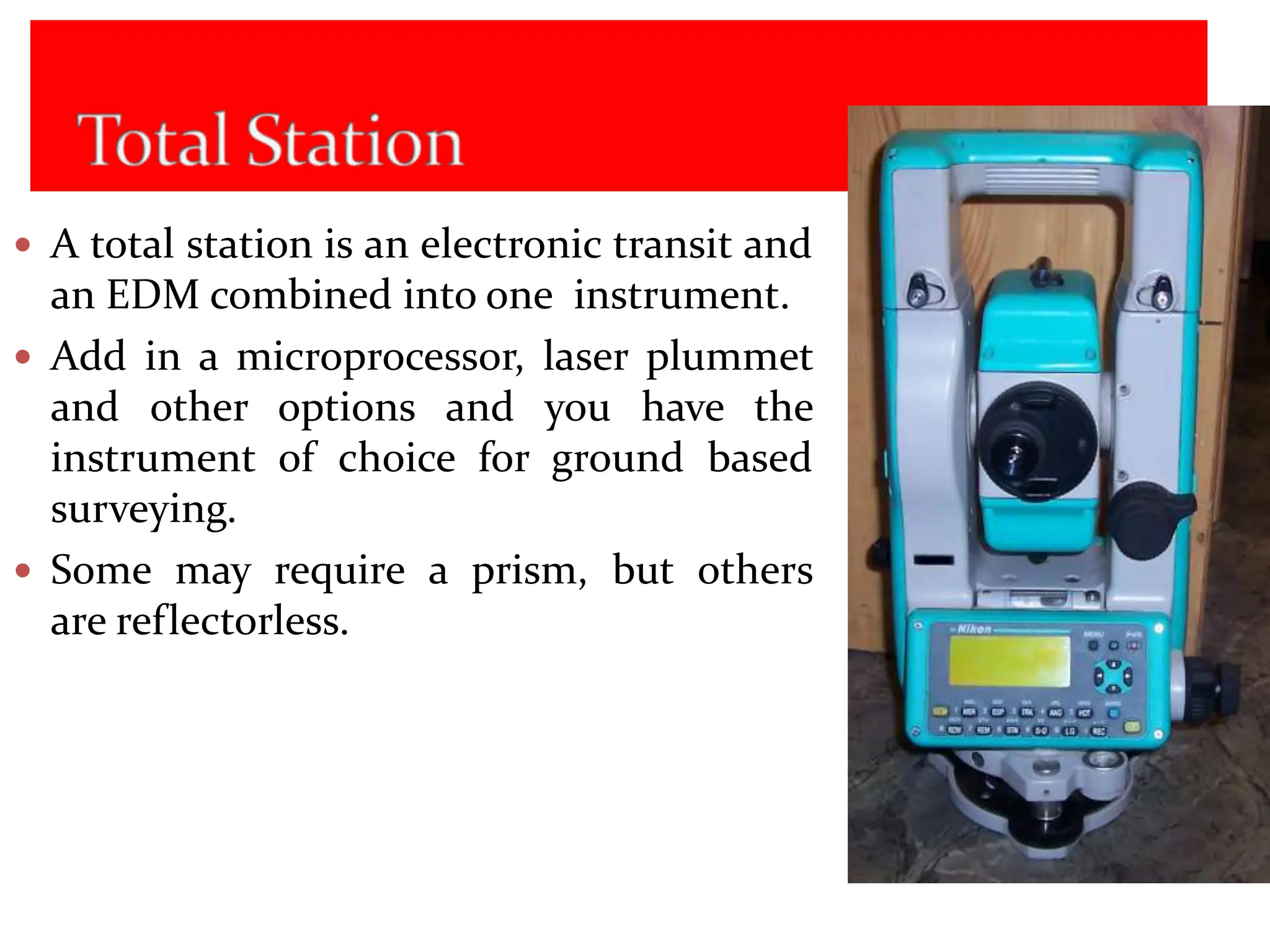
 A total station is an electronic transit and
an EDM combined into one instrument.
 Add in a microprocessor, laser plummet
and other options and you have the
instrument of choice for ground based
surveying.
 Some may require a prism, but others
are reflectorless.

surveying.levelling ppt.ppt

  • 1.
    SURVEYING Surveying is involvedin a project from conceptual stage to construction and afterwards in maintenance also. Depending on the stage at which surveying is carried out it can be called : i) Pre construction survey Feasibility survey ii) Construction survey To maintain alignment and Geometry control during construction iii) Post construction survey Maintenance survey
  • 2.
    I. Basic Conceptsin Surveying Surveying is the art of determining the relative positions of points on, above or beneath the surface of the earth by means of direct or indirect measurements of distance, direction and elevation. Levelling is a branch of surveying, the object of which is to find the elevations of points with respect to a given or assumed datum, and to establish points at a given elevation or at different elevations with respect to a given or assumed datum. In general, surveying deals with measurements in a horizontal plane where as levelling deals with measurements in a vertical plane.
  • 3.
    Primary Divisions ofSurvey The two primary divisions of survey are : 1.Plane surveying 2.Geodetic surveying
  • 4.
    Plane Surveying It isthat type of surveying in which the mean surface of the earth is considered as plane and the spheroidal shape is neglected. All triangles formed by survey lines are considered as plane triangles. The level line is considered as straight and plumb lines are considered parallel. In other words, when small areas are to be surveyed, the curvature of the earth’s surface is ignored and such a surveying is called plane surveying.
  • 5.
    Geodetic Surveying It isthat type of surveying in which the curved shape of the earth is taken in to account. The object of geodetic survey is to determine the precise position on the surface of the earth, of a system of widely distant points which form control stations in which surveys of less precision may be referred.
  • 6.
    Accuracy & Precision WHATIS ACCURACY ? • Accuracy is the nearness of your measurements to the true value. WHAT IS PRECISION ? • Precision is the amount by which a measurement deviates from its mean. Suppose the true length of a line is 736.72 m and you are measuring the same line 5 times. • The first party reports the following measurements: 736.80, 736.70, 736.75, 736.85, and 736.65 m. more accurate The second party reports the following measurements: 736.42, 736.40, 736.40, 736.42, and 736.41 m. • more precise
  • 7.
    Classification of Surveys Surveysmay be classified based on the nature of the field of survey, object of survey and instruments used. Some of the important surveys are : • Topographical surveys They are carried out to determine the positions of natural features of a region such as rivers, streams, hills etc. and artificial features such as roads and canals. The purpose of such surveys is to prepare maps and such maps are called topo-sheets.
  • 8.
    • Hydrographic Survey Hydro-graphicsurvey is carried out to determine M.S.L. (Mean Sea Level), water spread area, depth of water bodies, velocity of flow in streams, cross-section area of flow etc. • Astronomical Survey Astronomical Survey is carried out to determine the absolute location of any point on the surface of earth. This survey consists of making observations to heavenly bodies such as sun, stars. • Engineering Survey This type of survey is undertaken whenever sufficient data is to be collected for the purpose of planning and designing engineering works such as roads, bridges and reservoirs.
  • 9.
    • Photographic survey Inthis type of survey, information is collected by taking photographs from selected points using a camera. • Aerial Survey In this type of survey, data about large tracks of land is collected by taking photographs from an aero-plane. • Reconnaissance Survey In this type of survey, data is collected by marking physical observations and some measurements using simple survey instruments.
  • 10.
     Levelling isthe process by which differences in height between two or more points can be determined.  Leveling is a branch of surveying, the object of which is to find or establish the elevation of a given point with respect to the given or assumed Datum (reference point).  Common leveling instruments include the spirit level, the dumpy level, the digital level, laser level, wye level, tilting level, auto level
  • 12.
     Spirit Level- or bubble level is an instrument designed to indicate whether a surface is level or plumb
  • 13.
     Varying Lengths8in to 16ft  Can also be magnetic  Quality of Levels vary markedly
  • 14.
     The tubeis filled with water so that the water level is ab out 3 ft high in each of the tube ends. It is essential that no air bubbles be trapped in the tube. Air bubbles can be removed by tapping the tube with the finger.
  • 15.
    It is simplecompact and stable. The telescope is rigidly fixed to its support therefore cannot be rotated about its longitudinal axis. A long bubble tube is attached to the top of telescope. Dumpy literally means short and thick.
  • 16.
  • 17.
    A builders levelis an optical instrument used to establish or check points in the same horizontal plane. It is used in survey ing and building to transfer, measure, or set horizontal levels
  • 18.
    Bubble When bubble iscentred the instruments standing axis is approximately vertical. The compensators in the instrument take over and adjust the optical Line of Collimation so that it is horizo ntal (hopefully)
  • 19.
     Line ofCollimation – Imaginary line that passes through center of eyepiece and center of Cross Hairs and its continuation up to staff position.
  • 20.
    Relationship Of LineOf Sight With Vertical Axis And Bubble Tube Axis
  • 21.
    It consists ofa telescope a ttached with a level tube which can be tilted withi n few degrees in vertical plane by a tilting screw. Very Accurate Very Difficult to Set Up Can also set grades Works similar to a plumbers pipe level Have been replaced by Total Stations
  • 22.
  • 23.
  • 24.
  • 25.
  • 26.
    1. Base Plate 2.Horizontal Circle 3. Eyepiece 4. Circular Bubble 5. Sighting Pointer 6. Objective Lens 7. Focusing Knob 8. Fine Motion Drive 9. Footscrew 10. Bubble Mirror
  • 27.
    Automatic level An automaticlevel is a special surveying (levelling) instrument which contains an optical compensator which maintains line of sight or line of collimation even though instrument is slightly tilted. Eg: Wild NAK2 Automatic level
  • 28.
     The AutomaticPrism compensator goes out of alignment.  The level provides readings outside of its specification
  • 29.
     Has acompensator similar to Automatic Level  Radiates a Laser Beam 360 through line of collimation  Laser is then picked by a receiver to indicate line of collima tion  Some lasers are self leveling  Survey quality laser levels are designed with two features:  Visible or non-visible  Rotating or non-rotating
  • 31.
     For asight length of 300 ft the effect is only 1mm.  Keep Sight lengths under 150 ft  the effect is eliminated by using equal sight lengths fo r fore- and backsights.
  • 32.
  • 33.
  • 34.
  • 36.
    Types of Levelingstaff 1.Folding staff 2.Telescopic staff 3. Target staff
  • 37.
     A totalstation is an electronic transit and an EDM combined into one instrument.  Add in a microprocessor, laser plummet and other options and you have the instrument of choice for ground based surveying.  Some may require a prism, but others are reflectorless.